Nathan Lane, Laurie Metcalf Bring Out Truths for Our Time in an Ageless ‘Death of a Salesman’ (9 Tony nominations)
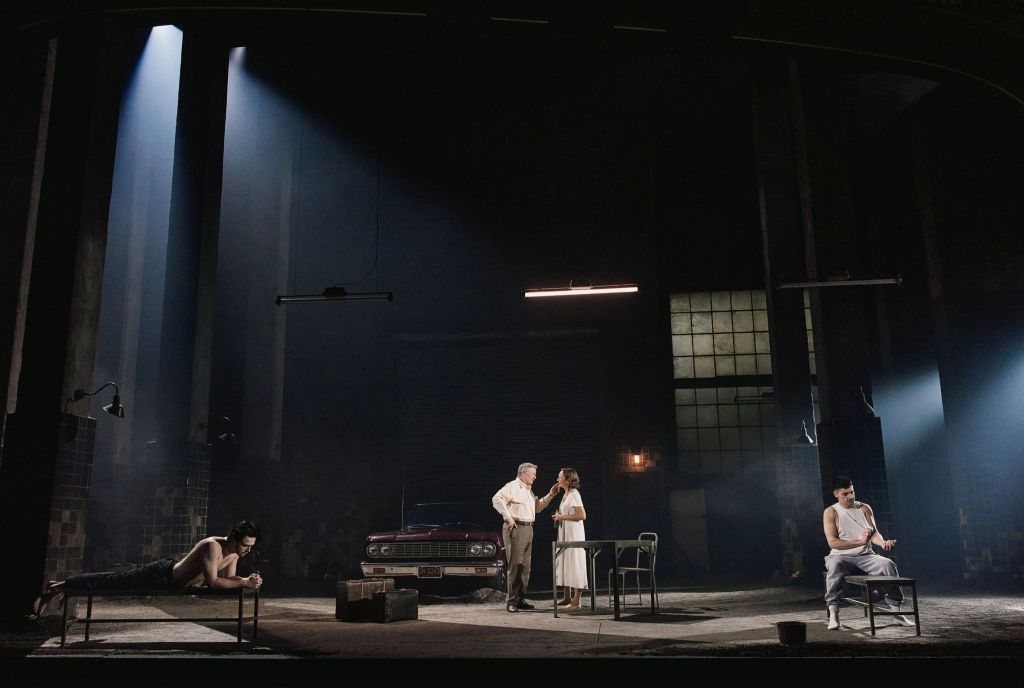
Considered Arthur Miller’s masterpiece of the average guy as a tragic figure, Death of a Salesman has been a hard sell for me as Miller’s greatest play. However, Joe Mantello’s searing direction that teases out incredible performances from Nathan Lane (Willy Loman), Laurie Metcalf (Linda Loman), Chrisopher Abbott (Biff) and Ben Ahlers (Happy), made me a convert. Presented on the cavernous stage of the Winter Garden Theatre in its sixth Broadway revival, the Loman family’s psychological travails between reality and hopeful dreams unfold their flawed humanity with pathos until August 9, 2026.
This magnificent revival in Mantello’s expansive vision conveys the characters as middle class archetypes of American citizens that are manufactured, used up and spit out by a devouring corporate culture, obsessed by success, money and status as definitions of power and greatness (“the American Dream”). Industrialization, production and “progress” are the means used to propagandize and process worker-citizens away from an appreciation of their soul worth and self identification as valuable to themselves and their families.
To underscore this overarching theme of the Lomans snared by this cultural processing with the use of the American Dream to drain their hopes, keep them ensnared and perpetuate the elusive lies of easy prosperity inferred by Willy’s Uncle Ben-Jonathan Cake (you walk into a jungle and bring out diamonds), Mantello uses a stylized set design superbly realized by Chloe Lamford. Additionally, the sound design by Mikaal Sulaiman, haunting music by Pulitzer Prize-winning composer Caroline Shaw, and lighting design by Jack Knowles beautifully carry Mantello’s dark, foreboding insights which the superb ensemble enlivens in a production whose like won’t be seen again.
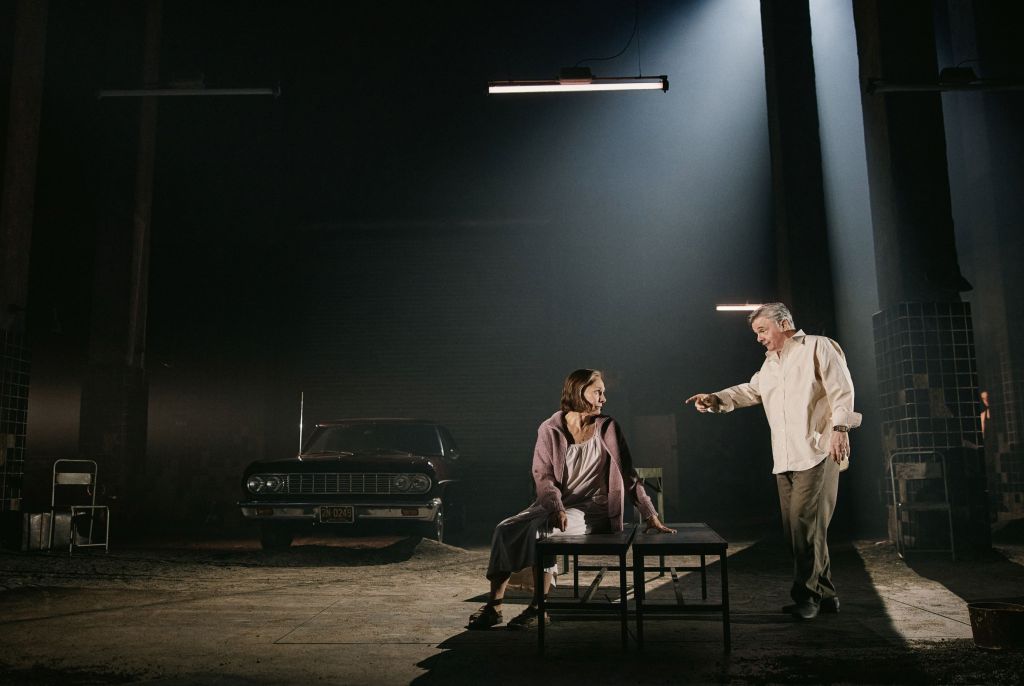
This production of Miller’s Salesman is perfectly synchronized to reflect citizens in our country, currently under siege from the very forces which isolate the Lomans from helping each other. Set adrift in misery, loneliness, distraction and despair, they have little recourse or salvation except delusions, hallucinations and denial. Even a form of success is never enough as suggested by Ahlers’ Happy, who references a prosperous boss who builds an estate but “doesn’t have the peace of mind to live in it.”
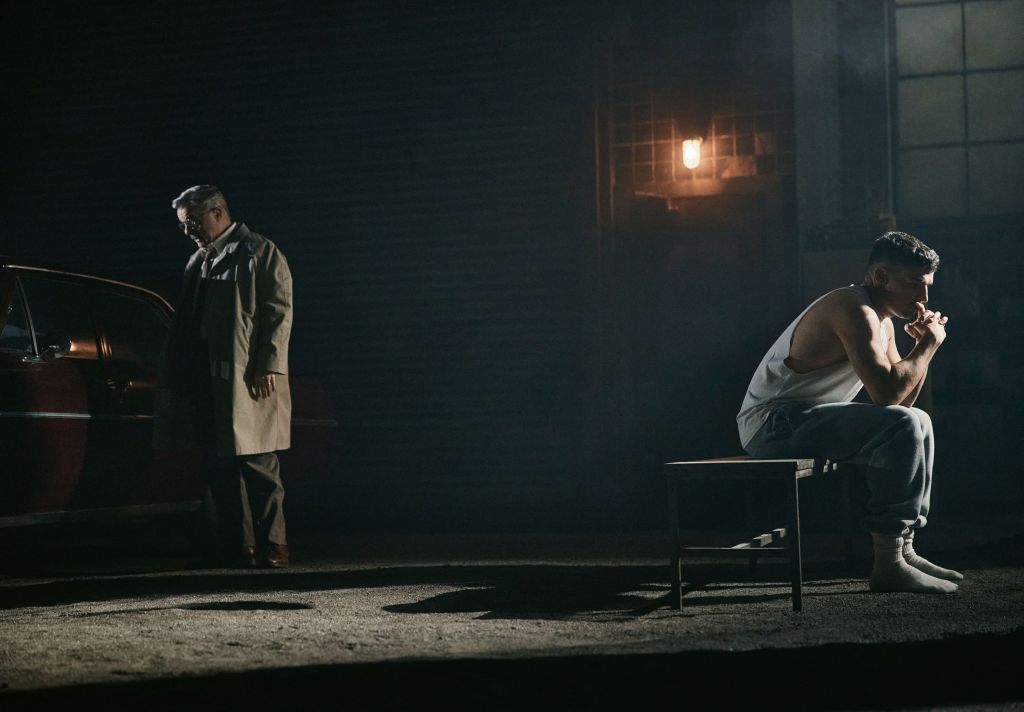
The symbol of what made America great, the car (automobile production and its attendant feeder industries, oil, gas, rubber, etc.), becomes that which Willy chooses as his place to die. Mantello features Willy’s car as ever-present and onstage throughout. The car is where Willy spent most of his life alone, traveling through New England with his dreams, and longing of returning home to see his sons, chiefly Biff who he lives his successes through until Biff has a breakdown. At the play’s beginning it also becomes his place of terror, of failure, of disorientation where he can no longer survive for any length of time on a road trip. Finally, he converts it to his way out of a tormenting hellish life he can’t bear, that promises more hope for his family in his death.
The play opens as Lane’s Willy, exhausted and broken down, returns from his aborted sales trip and drives the car onstage into the humongous, grey space that is the Loman’s stylized home. Unlike previous revivals, this place is nothing like an American home the bank would hold in a mortgage. It is similar to an empty factory or warehouse with rectangular, peeling tiled columns and no vibrant colors. It is dimly lit with a grid of dirty window panes on the backstage wall that barely let light in.
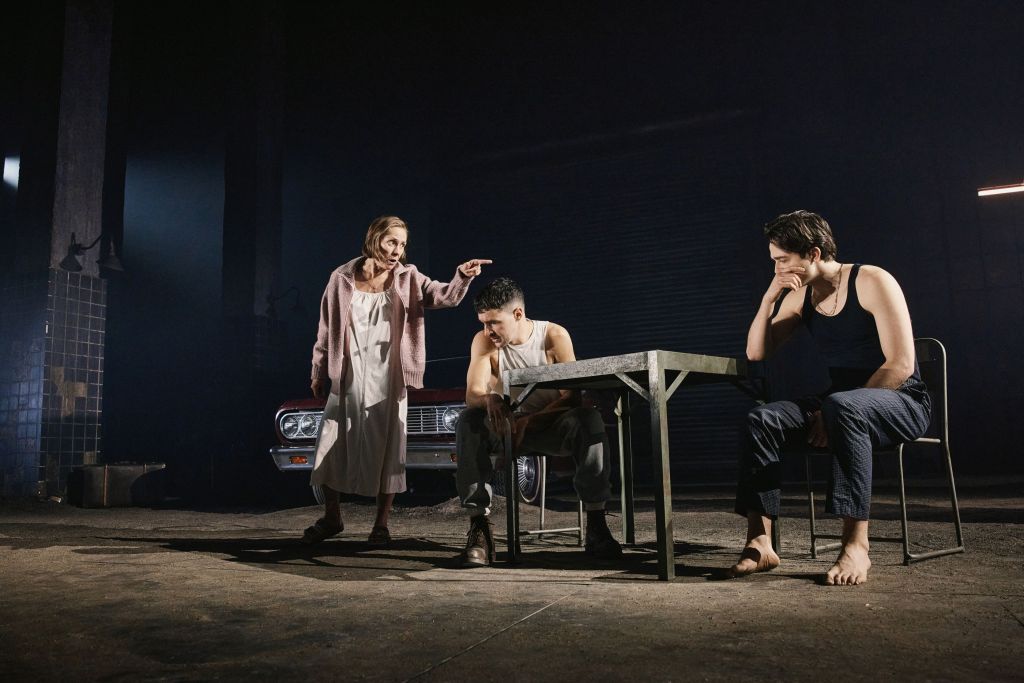
The space is symbolic and interpretive. Far stage left is the basement with Willy’s possible instrument of suicide, the gas water heater, and downstage left is the bit of soil where Lane’s Willy hopefully plants seeds he will never see grow. The characters remain onstage, moving around uncomfortable, factory-type, metal “furniture” to define areas they set up mostly away from each other. They sometimes become inconsequential dim shadows when they don’t speak and other family members do.
Spot lit when there are interactions is Mantello’s approach. But for their interactions darkness and isolation surround them. As spots come up on the initial scene between Willy and Linda when she asks why he came back home, Biff and Happy each lie on a bench on opposite sides of the stage in their ersatz beds and bedrooms, as their parents talk “downstairs.” The spots illuminate the life and interaction of Linda and Willy to a break point, then the darkness encroaches. The symbolism is affecting and effective, revealing the disjointedness of this family, their fears, their isolation, their solitary struggles, their inability to communicate with efficacy to bring about their listener’s understanding toward change.
Willy’s dire emotional and psychic state which impacts the family is also symbolized with the set when the characters move as if in timeless space, like Uncle Ben-Jonahan Cake-who floats onstage and off, as his words float in and out of Willy’s mind. Initially, he uses Ben to inspire him, but also his words and values are a truncheon that Willy uses to bludgeon himself for his failed life. There are also the recriminating memories of guilt that devastate him and push him toward self-annihilation provoked by grown up Bernard (Michael Benjamin Washington) who asks what happened in Boston, the turning point after which Biff and Willy are separated from each other by a gulf of lies and pretenses to protect Linda and damn each other, .
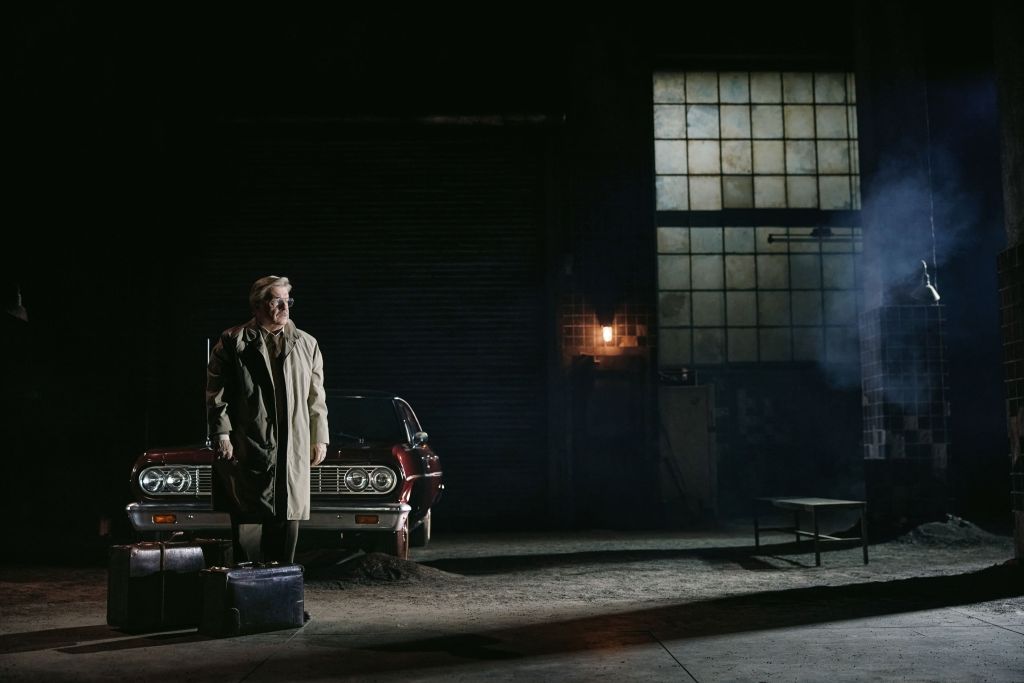
Importantly, Mantello/Lamford and the creative team have created an environment of bleakness and gloom removing any sense of warmth or comfort that a homely kitchen set or living room would suggest. Indeed, Willy and his family move in this towering oppressive, dark space that crushes them but for their connection to each other, which is their real and lasting hope, if they could see it and give each other more kind words and love instead of recriminations. However, even when they argue, insult, indict or chide each other as the glorious Metcalf does in a moment-to-breathtaking-moment take down of Biff, then Happy, her scorching speeches, one about how they left Willy alone babbling in the restaurant, are better than the silent, darkness above, behind and around them.
Mantello/Lamford also use the car to travel through time into the past. For example, one of Willy’s comforting reminiscences is when Young Biff (Joaquin Consuelos) and Young Happy (Jake Termine) follow Willy’s instructions to simonize, shine and buff the car. It is the family’s prize possession that helps provide Willy’s means of support and allows them to go to Ebbets Field on a celebratory day. It represents Willy’s pride in Biff’s scholarship success, as he stands on the roof of the car, the lighting in a golden bronze to family cheers on game day. Happy, happy recollection when Willy is their fine father, Biff has the world at his feet, and Linda looks on her brood “pleased as punch,” a successful mother and wife. Even their giving neighbor Charley (the fine K. Ttodd Freeman) comes out to tease them on this greatest of days for Biff and Willy.
Lane convinces us that Willy is who he claims he is, until he isn’t. Out of the remembrances into the gloom of grey reality he tells his sons, “the woods are burning,” and Linda tells the incredulous Happy and anger-suppressing Biff their dad is dying. With a raw fierceness and edgy emotional plea, Metcalf’s Linda tells Biff and Happy that they can’t just come to visit her, because she loves Willy. “He’s the dearest man in the world to me.” Metcalf’s Linda means it and because of her strength of character and force of will, we take a second look at Willy and see him through her eyes with poignance, and weep for this desolate family.
As the play progresses, Miller via Mantello reveals, the reminiscences are in fact hallucinations that Willy uses to torment himself when Biff visits. Willy’s hallucination in the restaurant after his sons desert him is guilt-laden. He relives Biff catching him with a woman and calling him a liar. Willy knows he let his son down, but he can’t admit it and will never forgive himself for it, turning psychically sick. After that incident in Boston Biff and Willy can’t have a heart to heart. Even toward the conclusion when Biff tells his father he will never be the man Willy wants him to be, Willy can’t hear him and misunderstands.
It’s a superb theatrical moment between Lane and Abbott, who passionately steps into the heartfelt, truthful Biff, releases his anger and turns to his father. Willy, still lost, conflating past and present, incapable of recognizing Biff’s truth proclaims,”He cried to me.” In the final most dangerous of Willy’s hallucinations, Cake’s Ben agrees with Willy that Biff will be magnificent with twenty-thousand to back him. Lane’s portrayal of Willy humanizes him and makes him identifiable.
As the second brother given short shrift by the family, Ahlers Happy repeats himself to get attention and uplift Linda. His, “I’m gonna get married, mom,” is as plaintive a cry as any grown manchild’s cry is, yearning for recognition and love but feeling he is incapable of receiving it. Ahlers’ Happy is endearing and charming in a standout portrayal, I haven’t seen before. Still carrying the American Dream to “make it” after seeing what happened to his brother and father, we note his denial like Linda’s, as the inevitable comes and brings her a terrible freedom.
Death of a Salesman runs 2 hours, 50 minutes with one intermission at the Winter Garden Theater through August 9, 2026. salesmanbroadway.com.

Posted on April 28, 2026, in Broadway and tagged Arthur Miller, Ben Ahlers, Chrisopher Abbott, Death of a Salesman, introduction, Joe Mantello, Laurie Metcaalf, literature, Nathan Lane, reviews, theatre. Bookmark the permalink. 1 Comment.


Excellent review
LikeLike