Category Archives: cd
The Tribute Artist by Charles Busch

L to R: Cynthia Harris and Charles Busch in The Tribute Artist by Charles, presented by Primary Stages at 59E59 Theaters. Photo by James Leynse.
Buying and selling Manhattan real estate! It’s all about being in the right place at the right time with the right clients. If the opportunity to sign a deal on a most fabulous place in Greenwich Village just dropped in your lap, you’d probably leap at it. What if it involved a smidgeon of shadiness and a soupcon of fraud?
The Tribute Artist by Charles Busch presents a hilarious scenario of three rather desperate, down on their luck characters, one attractive and potentially nefarious thief, and a $12 million dollar townhouse whose occupant has recently died. From soup to nuts, this two act play is a cleverly written comedy that is beautifully acted by the ensemble cast and tightly directed by Carl Andress. Charles Busch, a Drama Desk Award winner for “Career Achievement as Playwright and Performer,” once again delights with his impeccable timing and comic genius in a play that skirts the edges of farce. The Tribute Artist’s trending humor, themes and ironies are incisive and just shy of brilliant.
The play opens to the sumptuous living room of a Greenwich Village townhouse where we meet grand dame Adriana (the lively and funny Cynthia Harris), the alleged homeowner. We appreciate Adriana’s sulfuric wit which she states, “is not nastiness, but my European sense of irony.” This upper crust lady is a former clothing designer and she is entertaining her down-to-earth and frenetic real estate broker, Rita (the excellent Julie Halston), who may or may not broker the townhouse sale. Jimmy (Charles Busch) a recently fired Las Vegas drag queen, who prefers to be called a “celebrity tribute artist,” is staying with Adriana for a while. When we are introduced to Rita and Jimmy, both are modeling Adriana’s designer clothing and Jimmy is modeling one of her wigs. Rita and Jimmy have been long time friends and they enjoy Adriana’s hospitality as she fills in details from her past which, unbeknownst to them, are portentous to their future. When they all fall asleep from rather too much drink, the scene shifts to morning and the comedy and plot complications jolt into the most interesting of wonderful possibilities.

Charles Busch as Jimmy impersonating Adriana in The Tribute Artist by Charles Busch presented by Primary Stages at 59E59 Theaters. Photo by James Leynse
During the night, Adriana has passed; she did say she was dying, but Jimmy and Rita didn’t believe her. No one will inherit this lovely house and it will end up in the hands of the government since there are no inheritors and no will. The path appears to be clear that Adriana wants the house sold and is exerting her will that this should be exacted by those who are present. They are a perfect combination: a real estate broker and a female impersonator who just happens to have in his repertoire all the greats from Marilyn Monroe to Betty Davis. Impersonating “Adriana” will be easy. Jimmy and Rita talk themselves into the devilish plan (a hilarious segue), plotting that Jimmy will become Adriana for the time it takes Rita to sell the house. In the clear, they will split their “winnings” fifty/fifty. They even have the perfect resolution for how to deal with Adriana’s remains. Through their euphoria, they both agree that they may have forgotten something, only they aren’t sure what.
What they’ve forgotten shows up in the next scenes, creates havoc and additional conundrums. The plot complications humorously involve the real heirs who will take the townhouse away from Rita and Jimmy. The inheritors are Adriana’s late husband’s loathsome relatives, niece Christina (a perfectly overwrought Mary Bacon) and grandniece Rachel Oliver (a fine Keira Keeley). An additional complication involves one of Adriana’s former lovers, the sexy and very masculine Rodney (Jonathan Walker in a hysterical performance). Somehow Rita and Jimmy deal with these “interlopers” and Jimmy’s impersonation of Adriana goes swimmingly for a time until Rodney throws the switch that could overturn their peaceful coexistence. Once again the elements of farce are stepped up with the added suspense that Rodney may be up to something worse than the “silly little fraud” that Rita and Jimmy had hoped to commit.

L to R: Keira Keeley, Charles Busch, Julie Halston, Mary Bacon, Jonathan Walker in The Tribute Artist by Charles Busch, presented by Primary Stages at 59E59 Theaters. Photo by James Leynse.
While spinning these humorous events, the playwright carefully weaves in issues of class, gender, identity and social injustice. He does this with wit and subtle undercurrents of poignancy in keeping with the comedic pacing. Added to the glee, Jimmy unleashes his repertoire of old-time celebrity actresses with snippets of dialogue from their most famous scenes. Rosalyn Russel, Katherine Hepburn, Betty Davis and others show up and aptly spout “wisdom” to heighten the madness. In his impersonations Busch is at the apex of his powers. His “Running Wild” is superb. If you don’t know which actress performed the song from which iconic film, then you’ll have to get yourself to 59E59 Theaters where the production is being performed. Rita will clue you in to the impersonations just in case you were born after 1980.
The playwright ties up all the complications and reveals the inner workings of each character reinforcing one of the main themes: one never knows how things will out in the end. In Busch’s iteration the phrasing is more poetic. The production will be running until March 16th. It is being presented by Primary Stages at 59E59 Theaters.
The review first appeared on Blogcritics. Click Here.
Barolo’s Cannubi Master Class at #Vinitaly International Tour in NYC

Barolo Cannubis at the tasting.
Vinitaly International Tour has launched the Vinitaly International Academy which is an innovative educational initiative about Italian wines. Master Classes on various Italian wines are being presented so that members of the wine trade can deepen their knowledge of Italian wines for sale, promotion and enjoyment purposes. This initiative was successfully launched at Vinitaly International Tour’s largest wine event in the U.S. in NYC on February 3rd at the Metropolitan Pavilion. And the initiative will continue as Vinitaly International Tour goes around the world to mainland China, Hong Kong, Russia and back to Italy’s largest wine event in Verona, Italy on April 5th.
The first of the Master Classes was on Barolo’s Cannubi. These wines are Italy’s oldest and most famous Grand Cru. This designation taken from the French means great vintages from specific areas, terrains and vineyards. Ian D’Agata, Vinitaly’s Scientific Director of the VIA (Vinitaly International Academy) presented at the tasting of these Barolo Cannubi wines and highlighted which ones were upcoming and which were more established producers. The tastings and information were a great way to find new Italian wines to love and to ask for.

Ian D’Agata, Scientific Director of Vinitaly International Academy at the Barolo Cannubi presentation and tasting.
Thsee wines are Nebbiolo grapes grown in the Piedmont and specifically the Barolo region. Some producers add other grapes like Muscatel or San Lorenzo. As for Barolo Cannubi? Cannubi is a long hill with a gradual slope lying in the heart of the Barolo area. The soils are rich in magnesium and maganese carbonate that are enhanced and weathered to richness by the air and unique microclimate. Surrounded by higher hills, Cannubi hill is protected from storms and extreme wind. Soil and exceptional microclimate give Cannubi a completeness and balance melding perfectly the structure and aromas and very elegant tannins making it an imminently drinkable wine.
Many of the wines we tasted were absolutely lovely, full bodied and elegant. deep- some with hints of red cherry others with raspberry notes, others spice. Aged in wood barrels, the spice and wood notes blend beautifully. Garnet-red in color, they cast ruby reflections. D’Agata asserted that the colors vary from a bright red that deepens with aging. The color is never inky black as some would want to claim. They offered a fine nose of penetrating clean scents: roses, vanilla, licorice, spices, toasted oak. Certainly a perfume of graceful power.
The Barolo Cannubi achieves maturity after 6 years from the harvest. As it ages well, it can be enjoyed throughout its life between 6 and 25 years. The prestige of the wines are site specific depending on the vintage and history of the vineyard. The bottles of Barolo Cannubbi can run $100 more at auction than a Barolo, again site specific with the reputation of the vineyard and vintage determining price.

This is a list of the wines presented:
Brezza Giacomo E Figli (Cannubbi)
Cascina Bruciata (Cannubi Muscatel)
Ceretto (Cannubi San Lorenzo)
Chiara Boschis (Cannubi)
Damilano (Cannubi)
Michele Chiarlo (Cannubi)
Scavino Paolo (Cannubi)
Virna (Cannubi Boschis)
If you, like me, are in a gastronomic paradise like New York City, San Francisco or Chicago and are always looking for lovely wines to go with fabulous cuisine, try one of these Cannubis. You can have them with cheeses and with fine (preferably free ranged, humanely slaughtered and anti-biotic free) red meats,like braised short ribs, steak, veal, roasts, game dishes. If you are in the wine trade, then get the word out about Italy’s oldest and finest “Grand Cru.”
Restaurant Review (NYC): Il Buco Alimentari & Vineria
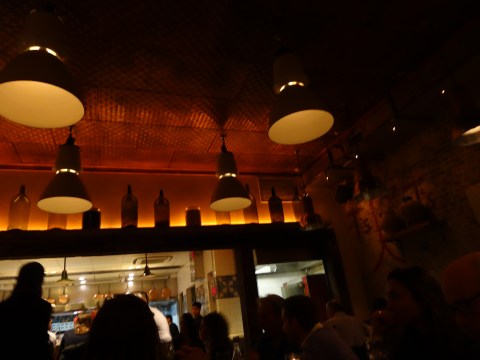
Il Buco Alimentari et Vineria view of the kitchen from where we were seated.
Ever since I went to a wine tasting of Marco Capri wines last year at Il Buco Alimentari et Vineria, (Facebook page),
I wanted to return and sample more of Chef Justin Smillie’s fare. A friend and I share the same birthday, so we decided to go for dinner and were happy we did. We received the royal treatment.
Following recommendations from New York Times, Foursquare, Immaculate Infatuation, and my own experience the prior year, I was completely thrilled with the dishes I ordered as were my friends. So were our neighbors at the table sitting next to us. Repeat diners they were ecstatic with their “to die for” Porchetta Alla Romana. The previous couples had scarfed down the “Spit-roasted Short Ribs” and left an large empty plate of the remains of the dish which was the main rib bone. Hmm. I was encouraged.
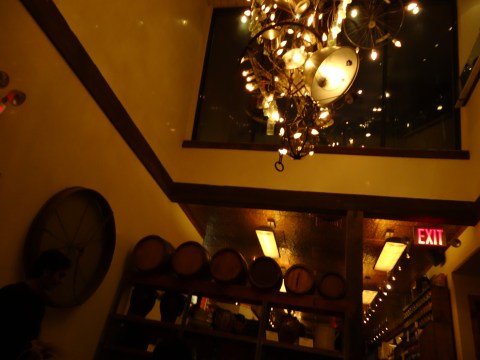
Il Buco Alimentaria et Vineria with the camera viewing the opposite direction from the kitchen.
The decor is rustic and the atmosphere is relaxed. We sat in a section that was family style, conducive to speaking to your neighbor which is fun because I am nosy. I like viewing what others have ordered and if the group is friendly I will ask about their enjoyment of their various dishes. This homely, family style approach is what I think is the beauty of this restaurant which guys really love because it is not self-aggrandizing, nor pretentious. Indeed, it is an informal wine bar and restaurant that serves breakfast, lunch and dinner.
In answer to those “foodies” (?) outraged that the New York Times gave it three stars because they thought it was like a sandwich shop (see the reference in Immaculate Infatuation), I would say that perhaps they are less flexible and more into their own pretension and conceptualization of “branding” than gorgeous tasting food. The idea of a market section up front where one can buy some of “the best salumi della casa in NYC, gelato, and other home made products beggars their idea of “three stars.” Well, I’ve gone to Michelin starred restaurants and the food was neither deliciously prepared nor were the elements combined well. So, it’s all in the perception and it brings to mind that with regard to restaurants, sometimes, the emperor is naked (The Emperor’s New Clothes) but no one wants to say it.

Bread basket, we’ve devoured most of the bread.
Back to our meal. First, came the basket of bread. If you adore crusty, substantial and sumptuous bread, Kamel Saci creates his bread’s magic from his own recipe and bakes it on the premises. Add Il Buco Extra Virgin Olive Oil, which is green, fresh and exceptional and you are home. My birthday buddy adores bread, so she was in heaven. If your taste doesn’t run to olive oil, and you’re a dairy fanatic, they will bring you delicious, fresh butter to spread on the fabulous bread.
We had appetizers and sides and then for some of us the Primi was the main meal and others, the Secondi.

Lattuga
Lattuga was just what I wanted: little gem lettuce, pickled onions, anchovies, tarragon, red radish. The combination of ingredients melded beautifully and seasoned with the unique taste of the tarragon. The lemon dressing was light and accentuated the freshness of the greens.
Crispy Artichokes
The Crispy Artichokes with lemon were wonderfully delicious. They were thin and curled by the char and dark browned to a perfect crunchiness. My friend who thought the gem lettuce was “romaine” which she hates, selected these as a veggie. There wasn’t a crumb left on her plate after we each had a little taste.
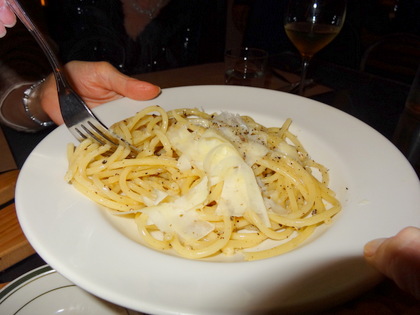
Bucatini Cacio E Pepe
The Bucatini Cacio e Pepe is pasta setaro with fresh pecorino romano and black pepper. The pasta is all home made on the premises and was of course, perfectly al dente. My birthday buddy Andrea said it was really good, a compliment that one does not hear often dropped from her lips as she frequently orders pasta dishes and they are mostly, (silence), “OK,” or “good.” She is a pasta fan and gave Emily and Margaret a taste, but did not share the plate with Emily who was a bit disappointed as she loves pasta. But the pasta was Andrea’s main course. Do you blame her for not wanting to share it?

Polletto al Forno
Polletto al Forno is poussin, roasted meyer lemon, capers and bread crumbs. Margaret thought this dish very good. Again, these are words I don’t normally hear, especially when they are said with the enthusiastic and emphatic pronouncement that Margaret made. Chef Smillie created the perfect combinations of ingredients and flavor textures and tastes with this dish. The beauty with all these dishes is that they are spot on, having achieved a regularity that is duplicated, without variation or unevenness.
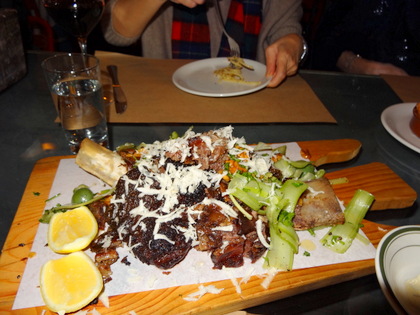
The OMG, Spit-Roasted Short Ribs.
The Slow-roasted or Spit-roasted Short Ribs are like that as well. These are the rave of city reviewers everywhere, whether for lunch in a sandwich or for dinner. OMG! I say amen to that. I do think they are amongst the best short ribs in the city and in a portion large enough to share with four. They were cooked to tender, flavorful moistness, complemented by the castelvetrano olives, celery, walnuts, horseradish and lemon which, squeezed on the meat, was a wonderful, unique addition. This is Chef Smillie’s creation of perfection. I had been waiting for a year and it was worth it. Absolutely marvelous.
To round out our luscious main courses we added Contorni.
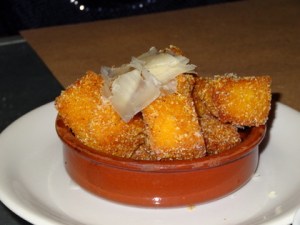
Polenta
The Crispy Polenta was amazing, crunchy with the salty, pungent taste of the parmesian on the outside and moist softness with milder notes of the corn/polenta on the inside. This was a delicious and wonderfully different way to morph polenta which I have found tiresome when it is served the usual way under the short ribs or meat. Same, same, enough already.

Carrots salsa verde
Carrots salsa verde. These had an incredible and luscious char which combined with their sweetness and hinted of other seasonings. They too offered a taste that was exceptional and interesting. The carrot plate was empty by the end of the meal and the pieces of polenta that were left, Margaret took home for her husband. They were devoured that evening.
Fingerling Potatoes valdeon we didn’t try. I wish we noted them because if they were anything like their brother contorni, they were probably wonderful and unique also.

The remains of the Spit-Roasted Short Ribs.

Seasonal Fruit Crostata and Vanilla Gelato and Flourless Chocolate Cake and Gelato
Our shared dessert was home made seasonal Fruit Crostata and Vanilla Gelato, and Flourless Chocolate Cake and Gelato. Yum. The espresso and cappuccinos rounded off the dinner.
Il Buco Alimentari et Vineria is a NYC treasure. (See menu which is seasonal and changes.) And the beauty is you can go for breakfast, lunch or dinner. In fact the breakfast sandwich with 2 organic eggs, salame rosa, rupert cheese and focaccia fino is an incredible value. You will probably want to order a few Brioches for take away, since they go beyond originality in the flavor palette with the following varieties: “White Chocolate,” Chocolate Cherry, and Pistachio and Apricot Brioches. And then there are the Bombolone plain or filled with jam or dulce de leche. I don’t think it gets much better than this.
Veneto Wines: Appreciating Prosecco and Soave During Move the Passion Tasting
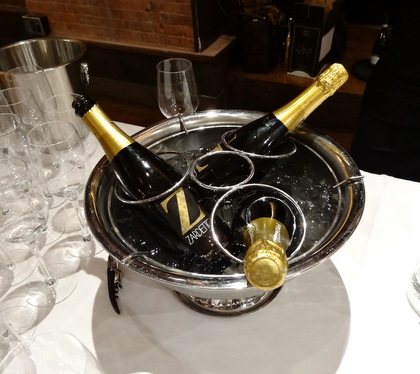
Italian Proseccos from the Veneto at Move the Passion Wine Tour NYC (Astor Center)
Move the Passion! Sounds hot, yes? Well, I took in two venues during the Move the Passion Walking Tour of NYC on December 3rd. The tasting encompassed seven venues around Manhattan where one could sample the various wines offered and enjoy various appetizers which paired well with the wines.
If you enjoy the Veneto region of Italy, you know the province that takes in Venice, Verona, Padua, Treviso, etc., in the northwest corner of Italy on the Adriatic, you probably have tasted Soave and Prosecco that are produced in the Veneto. Because the climate and terroir are conducive to wine making and grape cultivation in that area going back to Roman times and before, the vintners know what they are doing and have perfected their skills to create some incredible wines which give great value.
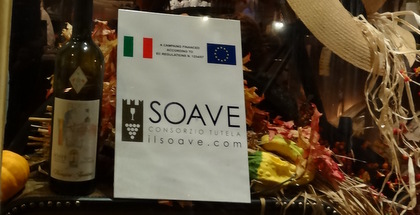
Soave the lovely white wine from the Veneto region of Italy. Tasting at Risotteria Melotti on the Wine Walking Tour, NYC, Move the Passion
I haven’t been to Italy in a few years and feel fortunate to be able to experience Italy around the city at wine tastings (#Vinataly and Slow Wine are presenting their mammoth tasting on on February 3rd at the Metropolitan Pavilion) at Eataly events which have featured wines from Umbria and the Veneto, and at special presentations like the “Pausa de Luce,” in upscale Italian retailers. Move the Passion was such a lovely event which I hope returns again next year because the city’s wine lovers are unstoppable once they are on notice there is an event.

Prosecco from the Veneto. Walking Wine Tour NYC, Move the Passion (Astor Center venue)
Though I had other events to attend, I made sure to drop in to The Astor Center which featured some delicious Proseccos. I then dropped in to Risotteria Melotti for some interesting Soave. In both instances I had never tried these wines before and I have put down my markers to make sure to ask for them when I am looking for a pairing for fish or to have a Prosecco as a pre-appetizer wine and appetizer wine.
For years I have disagreed with my cousin who prefers Prosecco to champagne. Learning about Prosecco, becoming educated to its smooth, refreshing taste, understanding its quality and value, I have changed my mind. I now prefer it to champagne which has been over- hyped up for centuries because of the relationship of France to this country. In my estimation, the “fantasy” and the reality are very different. Champagne’s value, quality and taste doesn’t comparewith Prosecco. Prosecco is the best kept secret for sparkling wine lovers. Good! More for us and great value!
Of course, if you are a wine snob and are a CEO of a hedge fund or corporate, then you can drink Cristal 2005 ($274.00 a bottle on one website) like water and won’t know the difference. Go for it. I’ll throw in my lot with the 99% of the global wine lovers and leave the .001% to its palate. I do hope my estimation is wrong and the .001% also drinks Prosecco. If they don’t, they are missing a fabulous experience.
Here are some other delicious Proseccos I tried at the Astor Center. They are double processed, steel barrel aged, DOC and DOCG ensuring the highest quality and standards. The only Prosecco is an Italian Prosecco from Northern Italy. Don’t be fooled into drinking an Australian sparkling white which is NOT Prosecco. Check out my posts about this from last year’s article on #Vinatly…CLICK HERE.
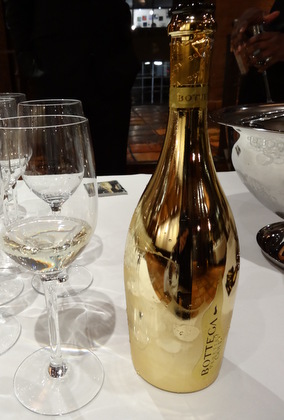
Prosecco from the Veneto, Italy sampled at Move the Passion Wine Walking Tour NYC (Astor Center venue)

Delicious Prosecco tasted at the Astor Center (see above)

Prosecco from the Veneto in Italy. Move the Passion Walking Wine Tour, NYC (Astor Center venue)

Prosecco from the Veneto, Move the Passion Walking Wine Tour, NYC (Astor Center venue)
The Soave white wines from the Veneto were equally delicious and surprising as I had not tried these vintners before and found them to be drinkable with a wide range of foods and cuisines, for dinner or as an aperitif. A number I tried (I wish I had more time…it was at closing) were lighter and refined for easy enjoyment. The Soave tasting was held at Risotteria Melotti in the Village.
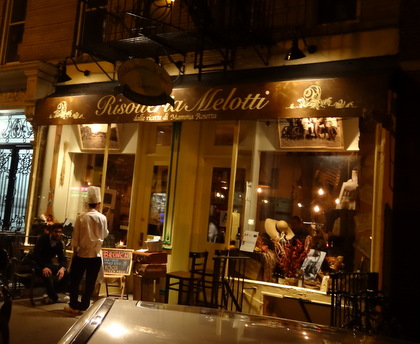
Risotteria Melotti in the East Village on 5th St. between 1st and 2nd. Venue for the Soave tasting during Move the Passion Walking Wine Tour NYC
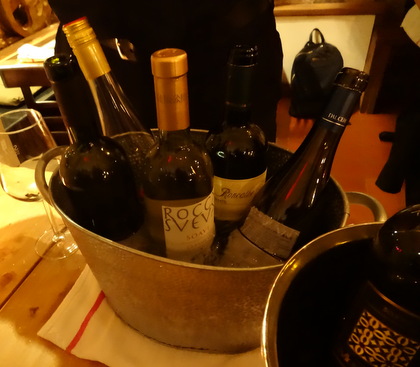
Soave wines from the Veneto. Tasting at Risotteria Melotti, Move the Passion Walking Wine Tour, NYC

Soave Wine from the Veneto at the tasting during Move the Passion Walking Wine Tour, NYC (venue Risotteria Melotti)

A delicious Soave at the tasting during Move the Passion NYC Walking Wine Tour (venue Risotteria Melotti)
This Soave (pictured above) was featured in the window next to the Soave Consortium sign in the above picture at the beginning of the article. There are 4 types of Soave: 1) Soave DOC 2)Soave Classico DOC, 3) Soave Superiore DOCG and 4)Reciotodi Soave DOCG. Soave is mainly composed of two grapesGarganega (70-100%) and Trebbiano de Soave. The wines are fermented in stainless steel, which brings out the lively acidity and fresh fruit notes.
The Soave producers featured at the tasting at Risotteria Melotti were

Risotteria Melotti the venue for the Soave tasting during Move the Passion NYC Wine Tour serves delicious risotto dishes and has been positively review on Yelp, the Go-To New Yorkers restaurant site.
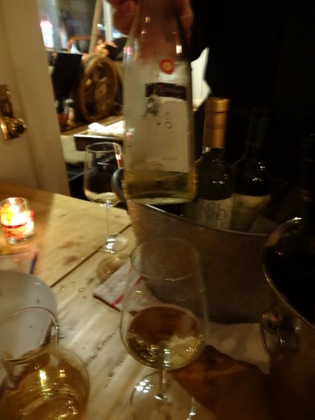
This is a delicious Soave offered for tasting at Move the Passion Wine Tour NYC (venue Risotteria Melotti)
The pictures of the Soave white wines were taken at Risotteria Melotti, a wonderful restaurant in the Village whose menu you should check out because it is gluten-free and serves delicious risotto that IS ORGANIC AND IMPORTED. HELLO FOLKS! (Check out the duck risotto and great salads on the menu and gluten-free desserts)
DECEMBER IS THE MONTH FOR VENETO WINES. THERE WILL BE TASTINGS AND EVENTS AROUND THE CITY. EATALY WILL BE OFFERING TASTINGS ON FRIDAYS AFTER 6:00 PM DURING THE MONTH OF DECEMBER. THERE ARE 32 PRODUCERS THAT ARE REPRESENTED AT EATALY IN THE WINE SHOP AND AT THEIR RESTAURANTS. SO TRY A GLASS AT ONE OF THE RESTAURANTS OR STOP OFF AT THE WINE STORE FOR A TASTING. CLICK HERE FOR EATALY’S WINE SHOP AND LOOK FOR THE VENETO TASTINGS ON FRIDAYS BETWEEN 6-8 PM.
Cinderella’s Magical Wheelchair by Jewel Kats, Illustrations by Richa Kinra
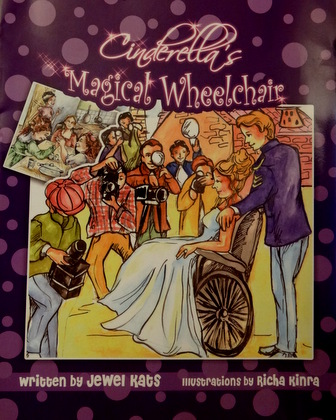
Cinderella’s Magical Wheelchair by Jewel Kats, Illustrations by Richa Kinra
In a land far, far away there was magic and there was brutal reality. If that sounds like a bit of a fairy tale, so it is. But when you think about the long haul of eternity, life is a bit of a fairy-tale in its beauty and pain. There are magical times and then there is the brutal reality of sorrow and loss, But with faith and effort, there is overcoming. Such are the themes of the modern fairy-tale Cinderella’s Magical Wheelchair told by Jewel Kats (illustrations by Richa Kinra) with the caveat that we can have a wonderful things, but there might be some things we will never have.
Most of us are familiar with the iconic Disney animated film with Cinderella’s fairy godmother, the pumpkin coach and the mice attendants who outfit our heroine for the ball. If you visited NYC, you might have taken your daughters to Rodgers and Hammerstein’s Cinderella on Broadway. There are film versions and adaptations, for example Ever After: A Cinderella Story starring Drew Barrymore and Kenneth Branagh has directed a live action Cinderella which is slated to come out in March 2015.
The Cinderella story is mythic, digging into the heart of every girl’s and every woman’s unconscious needs. The handsome, wealthy prince takes kind, sweet Cinderella away from the horror of her wretched, abusive Stepmother and wicked, ugly, demeaning Stepsisters. For the rest of her life as Mrs. Prince, Cinderella “lives happily ever after,” while the Prince with his inherited family wealth supports her in comfort and style, wiping out all the sad memories of her hurtful treatment by the “Steps.” The irony is a man, Charles Perralt, wrote the story in 1697, not a woman. Indeed, the story supports a paternalistic, oppressive culture which inspires women to endure the drudgery of life with the hope that “one day, their prince will come” and if she is proposed to, her man is her prince and “king of his castle.” Such is the stuff that inspires Golddiggers and naive brides alike. Unfortunately, the reality of marriage and “happily ever after” is very different.
That is why I like Jewel Kats’ retelling of Cinderella. In Cinderella’s Magical Wheelchair. Kats’ Cinderella is disabled. However, her spirit and attitude are not broken. When the fairy godmother comes to transport her to the ball, she doesn’t touch her wand to Cinderella’s feet or legs creating mobility. Some things do not change; at 12:00 AM, all returns to what it was before. But something magical does happen to Cinderella’s wheelchair. At the ball, the prince is intrigued by this woman and forgets about her disability. What he understands about her touches his heart.
At 12:00 AM they part and reality sets in once more, but the ball has opened Cinderella’s eyes. She leaves the miserable life she led with her Steps, packs up and sets out on her own. This is a self-reliant woman who knows how to take her skills and use them to live and support herself. She is not “waiting for her prince to come.” She will make it on her own.
What happened at the ball? Does she eventually meet up with the prince again? Well, you’ll have to find out for yourself. I’m not telling. I do think that Kats’ version is the most modern and prescient of all. What I love about it is that to a great extent, it explodes the dangerous myth that there is “happily ever after” in marriage. Not that there isn’t, but that you have to work at it and some things, some realities, you cannot change. You must adjust to them.
This is a very important message to bring to young girls. Life can hold magic and pain, and the most disabled are those who are wicked, jealous and cruel.
PS…
Some fairy tales are not told by paternalists, but are retold by resilient, smart women.
A very special thank you to Chris Miller who introduced me to the work of Jewel Kats.
The timeless story of “Cinderella” dates back to 1697 when first created by Charles Perrault,
‘Sacred Elephant’ by Heathcote Williams. Adapted for the stage by Geoffrey Hyland and Jeremy Crutchley

Jeremy Crutchley in Sacred Elephant
Sacred Elephant, based on a poem by Heathcote Williams, has been brilliantly adapted for the stage by director Geoffrey Hyland and Jeremy Crutchley. Crutchley also acts the role of The Other, the spiritual ethos of the elephant of the title. The production is currently at La Mama’s First Floor Theatre until September 22. This U.S. premier and all that Crutchley embodies in the role must be seen and witnessed to be believed. It is magnificent.
This is not an easy entertainment, though. In fact it is devastating in the import of the message and experience it offers. However, that is one element of what the poet and artistic creators intend. One cannot walk away untouched by Crutchley’s performance, which awakens our empathy and opens our minds and hearts to the torment of these wonderful creatures.

Jeremy Crutchley as The Other. “The shape of an African elephant’s ear is the shape of Africa.” Photo by Jingxi Zhang
Through graceful movements and meaningful and magnetic voices and renderings, Crutchley enacts the poem, becoming The Other and invoking its spiritual dimensions. By this very embodiment of the elephant and all it represents throughout history to the current time, he engages our sensibilities, reaching for our spirits to force us to hear, see and feel the beauty of who The Other is as we acknowledge our kinship with him/her/it.
We also experience the soul-sickening malady of our own degradation. We’ve allowed The Other to be maltreated and destroyed for our pleasure, almost like a whimsical afterthought. And no one dares stop us. We do it because we can, harming ourselves in the process. Though we know better, we effect The Other’s and our destruction anyway.

Jeremy Crutchley embodies the ethos of the elephant. “To the early Christians, the elephant was the Bearer of All Infirmities.” Photo by Rob Keith
The revelation penetrates like a bullet between the eyes and the question “Why?” hovers in the air as the poet and artistic executioners Hyland and Crutchley tether us to the long chain of abuses society has inflicted upon the elephant in its irrational lust for the “fun of it.” The puzzle of our humanity or lack of humanity deepens. What glory to repeatedly sacrifice, maim and imprison these creatures for the fleeting mood elevations of children and families? Where is the intelligence? Who indeed are the dumb beasts?
Even better, how does their torture relate to those activists at the tail end of consumer culture who would never traffic in ivory or advocate the abuse and poaching of these marvelous creatures? And yet, here we are, watching a stage play of Sacred Elephant for our pleasure, a play showing the misery of The Other. The irony is a cruel one, and I can’t really smile at its darkness, nor forget easily. And that is another thematic point this production makes.
The lighting (Luke Ellenbogen), music, set, sound design and staging (Hyland) are effective assists to Crutchely as is the costuming (Ilka Louw). The frames of light and shadow, the three boxes Crutchley lifts and rearranges and sits upon, the sway of his grey and white dusted flow of costume, all masterfully work with the music of Heathcote’s phrases and word jewels. The spectacle enhances the message of the power of life and the misery of the dissolution we’ve wreaked on The Other.

Jeremy Crutchley: “When elephants are allowed to die in their own time and space, they will sometimes hold up a fallen body as if forming a funeral cortege.” Photo by Rob Keith.
From historical veneration by ancient cultures to the elephant’s current decline exacted by global “progress,” this production of Sacred Elephant reminds us of how “far” we’ve come and what we’ve sacrificed to get here. It’s a banal evil, all the more rotten for what we’ve allowed, whether directly or unwittingly. Hyland’s and Crutchley’s adaptation shows that we’ve been separated from what is divine, majestic, awe-inspiring and magical in ourselves and The Other. We’ve been alienated from the spirituality of our past and have destroyed our inheritance to face an isolated, loveless future, unknown to ourselves and the creatures that are our kin.
The message is potent. The production delivers. See it to see The Other. It runs until September 22.

And from a shared aquatic past,
The elephant inherits the one quality
That Homo sapiens has always arrogantly assumed
Distinguishes him from the brute beast –
An elephant in distress
Will weep salt tears.
The Nance: Nathan Lane in the Performance of a Lifetime.
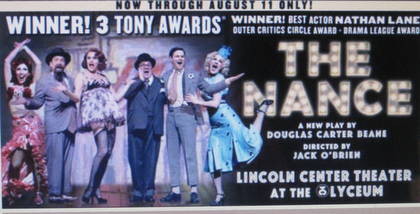
The Nance is a heavenly vehicle for comedic singer/ dramatic actor Nathan Lane, who plays 1930s vaudeville performer Chauncey Miles in the Lincoln Center production now at the Lyceum Theatre on 45th Street. Supported by an exceptional ensemble – Jonny Orsini (Ned), Lewis J. Stadlen (Efram), Cady Huffman (Sylvie), Jenni Barber (Joan), and Andrea Burns (Carmen) – Lane’s performance is a powerhouse, expressing a variegated population of emotions that stretch the audience along a rubber band from zany belly-laughs to poignant tears as we identify with this gay burlesque performer who forces himself to walk a tightrope of contradictory impulses toward love and hate, cynicism and hope, self-acceptance and self-loathing, empowerment and weakness.
Douglas Carter Beane, it has been reported, wrote the play with Nathan Lane in mind. Who better to portray a caricatured “Nance,” the stereotypical, effeminate “pansy” (usually in vaudeville played by a straight man) of burlesque, who spurs on laughs with double entendres and quippy one-liners between female strip acts, cooling down the steam stoked by bare women who must change for their next peeling reveal. Who better than a “Nance” to encourage the audience males about their virility as they ogle the strippers’ nudity, enjoy the sexual thrill of it and laugh at the “bloke” who is more interested in watching them than the tasseled nipples of the lightly clad ladies. Who better than Nathan Lane to play a “Nance”? Didn’t this amazing chameleon-like showman catapult us into a laugh track with his broad histrionics and heart-opening portrayal of lovable Albert Goldman in the Mike Nichols film The Birdcage (1996)? Beane has spun circles around this irony and delivered an amazing play and the director, Jack O’Brien, with Glen Kelly (Original Music), Joey Pizzi (Choreography), John Lee Beatty (Sets), and Ann Roth (Costumes) to name a few, have brought together a magnificent conceptualization with a tragi-comical punch line as the dominoes of irony tumble on each other at the play’s symbolic conclusion.

Chauncey Miles (Nathan Lane) at the automat (photo Jean Marcus)
The theme and tensions of duality between what is real and what is masked pretense thread throughout the entire production performed with aptly giltless sets including a revolving platform upon which Chauncey unfolds the roiling aspects of his existence traveling between his fun, madcap, self-deprecatory “fag” antics onstage (that are poignant and real) and offstage as the straight, intellectual poseur, a frame to enclose his surreptitious gay affairs, moments enacted in an automat, staging ground for covert gay trysts where one can secretly troll for sex partners who are then brought back to the privacy of Chauncey’s apartment.
His duality manifests when we watch Chauncey’s “poseur” persona lure young, beautiful, down-on-his-luck Ned, who Chauncey, with carefully nuanced signals and occult gay innuendo and subterfuge (part of the act) brings to his apartment. Despite Chauncey’s reluctance (his poseur self) and desire to maintain the orderly division between what is real and what is acting, he violates his best intentions allowing Ned to stay. He is falling in love. The tearing of the curtain between reality and illusion between life and art has begun in their morning after scene when Lane brilliantly begins the morph from the initially strained, cynically laced, intellectually conservative Republican straight Chauncey into the increasingly truthful, loving, caring Chauncey, a harmless, humorous, gifted “Nance” (as seen by the culture, but who the audience sees as the eternally, mystical, tragic-comic clown/fool).

Jonny Orsini (Ned) and Nathan Lane (Chauncey)
Beane’s dual threads are fraught with complexity and can easily be underestimated because of the subtle interplay between Chauncey’s burlesque pansy act and Chauncey’s real life straight poseur which he acts out as a conservative Republican who glorifies NYC Mayor La Guardia. The shifts between onstage reality and offstage acting are reminiscent of Cabaret, but here function as an amazing reversal of the Candor and Ebb musical; the Nance act is the real thing, the real life is the act, until a certain character, Ned, shows up. The truth which Ned forces Chauncey to confront is his faux existence and after Chauncey falls hard for Ned, he no longer wants to be two different people.
Beane reveals the evolution of Chauncey and Lane is spot on as he unhappily struggles to be the poseur, a closeted gay man, who has fallen in love with married Ned, a discovering gay, as both are forced to live the lies of straights while masking their feelings, identities, beings. Lane’s Chauncey helplessly entangles himself in his true love for Ned. He becomes enraged and dislocated. Not only has he shredded the curtain between his real self and the act which ensured his former easy existence and world view, he no longer wants to repair the curtain sustaining the two person duality and its emotionally disastrous attendant issues. He enjoys the singularity of love and its feeling truths and his new, free statehood.

Nathan Lane (Chauncey) and Lewis J. Stadlen (Efram) (Photo credit Jean Marcus)
With this freedom has come empowerment. He becomes upfront about despising hypocrites like prudish Paul Moss (a failed theatrical, lifelong bachelor and “dandy.”) Mayor La Guardia’s watchdog mandated to curtail stage indecency, closing down perverse “Nance” acts. Moss and the La Guardia administration have labeled as perverted the love that healed the schism in Chauncey’s soul, a schism that had made him emotionally unfeeling and alien. Though Ned’s uncomplicated, authentic, self nurtured Chauncey’s individuality into a healthier state, Chauncey’s new identity/truth explodes with rage and vision. Like an artist out of his time, he is doomed for it. Of course, the irony of the play’s action is that the more Ned and Chauncey love, come alive and receive authenticity from each other, the more their straight “act” falls away. The new fusion jeopardizes their lives and both must be sacrificed on an alter of oppression.
All semblance of the curtain separating his duality is completely destroyed by Chauncey when, during his act onstage, Moss shows up and Chauncey lathered in fury shouts out at the audience and Moss With a singular will and determination he provokes his own arrest and in-jail brutality. We later discover the rumors of his love relationship with Ned have suggested he is a real pansy, an illegality the La Guardia administration in NYC will not tolerate if it is exposed.
The second act opens with Chauncey alone in front of the Lyceum theatre stage curtain. He is in court and we hear the loud gavel as if banging down on his head; the judge is silent and Chauncey responds as if the judge’s questions were audible to us, though they are not. In seething, bile-filled humor he puts on his (No one is there…in a way the scene represents Chauncey’s battle struggling between his duality: the judge/Republican poseur and the Nance) poseur straight act. He justifies the harmlessness of double entendres in the pansy act which make folks laugh. Though he makes it out of court, Chauncey has lost hold of his ordered former existence where he could easily move himself in and out of offstage illusion and onstage reality. During the court scene and after, we see he is at the end of his rope, but not the end of his very raw emotional state which has blossomed because of his relationship with Ned. Chauncey must survive: he has “to get his act together” and leave show business or put the curtain down between his two personas and live his former life of duality. Will he be able to after having been healed to oneness in the freedom of love?

After jail, Chauncey returns to his friends, muddled. Theatrical protests are forming to “save the Nance acts.” Chauncey has refused to protest, pooh-poohing any hope of success with his conservative poseur sardonic self and we are duped into believing him as the others crowd around the radio to hear the results, never once considering he is back in his straight “act” for a good reason. He has been bullied there. He can’t protest; he has been on the front lines in jail and has seen the face of discriminatory brutality. Repression and abuse have stymied him. When the protest fails, his “I told you sos” ring clear. Banned, his stage act is over; his offstage act must go on. But how can it if Ned is around?
Through oppressive cultural circumstances, Chauncey converts his reality of love to a lie; call it his material survival and soul death. Onstage, his act which had once been more real than his offstage life has taken a turn into hyperbole when he is forced to play a role that ridicules both sexes. Not only has the Nance gone undercover, he has engaged the double-edged ridicule of men and women (a further perversion wrought by an oppressive government). This ridicule of both sexes is heightened in his portrayal of drag queen Hortense. A Nance in drag, he is neither convincing, good-looking or adorable as he once was, though his humor is in tact. Nevertheless, the irony is impeccable. In drag as Hortense, Chauncey has become freakish, unfeminine, weak and unlovable. He is barely capable of carrying through with his act because it is so far removed from himself. In ridiculing the ridiculed and oppressed (women) he receives no empowerment, only the inherent humorous degradation of taking on the xx chromosome. As the Nance, he was free to be himself onstage and in a role that both empowered and uplifted him to get to the next day, the next tryst, the next stage performance.
We understand how the Hortense act stifles Chauncey’s real impulses and provides no outlet for his true self (as the Nance) when, during his Hortense “act” reality intrudes. Chauncey breaks down and sobs. He has lost himself, Ned, freedom and love. But the oppressive show must go on. He recoups after a long pause and with a one-liner gets a belly laugh. The audience gets what they came for, an hour to forget their troubles. And this tragic fool on the stage? He gets to see the curtain going down on a most wondrous part of his life and his ability to be real anywhere.
The playwright has so aptly woven the notes of Chauncey’s character with perfect writing and Lane hits every single one of them with a sledgehammer, nailing down Chauncey’s spiritual/soulish coffin. By the end, as Chauncey packs up his parapherenalia to return home, there is a huge bang-crash. A fixture drops nearly on his head, barely missing him. He looks off staring into the future. When I first saw the production, I missed an important detail that I caught the second time I saw it when I was sitting in the front row: the black shadow of a rope tied in a noose, swinging high from the backstage rafters.
The symbolism is furtive with multiple meanings foreshadowed. Certainly, the noose shadow suggests the La Guardia administration’s unforgiving and brutal noose tightening toward homosexuals, a cultural attitude which only loosened after the 1990s and hard won battles to break down injustices against gays. In parts of the country, the noose is still hanging; certainly the online bullying of gay youngsters has caused one too many to take their own lives. Related to Chauncey (Chancey) it is moot whether he will be able to maintain the curtain separating his dual selves. Will he be able to forgive himself, knowing all he has been forced to give up and has allowed himself to give up, the stereotype of a weak willed woman? Will his bitterness and self-hatred get the best of him one dark night when he decides it is better not to live at all than to live a life of lies onstage and off with no outlet for his soul’s fulfillment?
It’s all there and more in Lane’s and cast’s performances, in the direction and spectacle, in Beane’s writing, and it’s marvelous to behold. If you love Lane don’t miss this. Treat yourself to this work of art which won three Tony Awards and the performance of a lifetime by Nathan Lane who won the Outer Circle Critics Award and the Drama League Award.
The Nance runs through August 11, 2013 in an extended performance.
Production photo credits by Jean Marcus.
Gore Vidal: In Memoriam
I adore Vidal’s work. Read his American history series, his memoirs and his Caligula in addition to his books of essays. Saw The Best Man with James Earl Jones, John Larroquette, Candice Bergen twice on Broadway (2012) which is still garnering a wide audience, and viewed him whenever I could when he was on Charlie Rose and elsewhere.
I appreciated him only when I was older, after I’d read his work. In my youth, I thought him defensive and somewhat sad, viewing him in his arguments with Buckley (I am not or ever was a conservative) who bested him roundly and then litigated against him. Hmm. But they parted if not friends, in the last, with no legal bindings between them as Gore apologized truthfully, tweakingly telling Buckley he had joked calling him a “Crypto-Nazi.” If you think about it, it is bitingly funny while Buckley’s retort was not. Buckley got personal and farted an epithet toward Vidal’s gay sexual preference, revealing Buckley’s own homophobia and hovering cruelty which at the time carried a weight of legitimacy.
Today, viewing the video clip where Vidal and Buckley gnaw each other’s throats, Gore comes out ahead. Bravo, Vidal! You have withstood the test of time, as I truly believe will your writings. You are a genius and we are the better for it as Americans, having read your edgy, insightful thoughts. You were a beacon and now have quite blown yourself out. To me, you will always remain.
This sonnet is a tribute to him who I adore for his humor, his writerly acumen and his artistic genius. Your words live. Thanks.
GORE VIDAL
Acerbic, vitriolic, searing words,
In you fermented, then poured out, a draught
Of wine. We sipped refreshed the wisdom heard.
It quenched our ravaged souls and spirits wrought.
We culturally dispossessed? You raised us high.
Redeemed our history’s worth with wit and grace,
And literary gifts none could decry.
Your genius ne’r could Truman er’ displace.
Self-described emotionally cold were you
Patrician, righteous, prophet of the age,
To Buckley calumnious, to Mailer crude,
Tiresias: forthright, just, a humorous sage.
Your writings live, though Death choked off your time.
You lived a maverick’s life, one of a kind.
 CAROLE DI TOSTI

