Category Archives: New York Botanical Garden

New York Botanical Garden ‘Holiday Train Show’ Lights up The Season

Enid A. Haupt Conservatory replica completed in 2014, NYBG ‘Holiday Train Show’ (Carole Di Tosti)
The Holiday Train Show is always a spectacular reaffirmation of what is beautiful, shining and creative in the human spirit. This year seems more so against a backdrop of tumultuous, grimy political scandals and redundant “breaking news” moments that jar the nerves and chill one’s core. I heartily appreciate an escape from the unsettling thesis of chaos to the antithesis of children’s screams of laughter and twinkling, colorful Holiday lights of assurance. The felt innocence is more lovely than the low details of worldly goings on. And I am uplifted to remember that throughout the labored struggles of men and women who strive to retain power, there is something more worthy and spiritual in the human soul that the season reminds us to seek and direct our attention to.

All trains (more than 25 varieties) are G-scale, NYBG ‘Holiday Train Show’ by Applied Imagination (Carole Di Tosti)

Passenger train speeding over Brooklyn Bridge, above the Coney Island exhibit, NYBG ‘Holiday Train Show’ (Carole Di Tosti)

Locomotive with engineer in at the helm, NYBG ‘Holiday Train Show’ (Carole Di Tosti)
Thus, for me especially this year, and for the friends I visit with, The Holiday Train Show in the New York Botanical Garden is a sanctuary of refinement, a haven of peace. Amidst the lovingly arranged pageantry, the plantings strike poses between the stunning miniature replicas of New York’s icons, historical landmarks and stupendous structures of the gilded age, made into museums or torn down because they were too expensive to maintain.

Senator William Clarke mansion (Clarke’s Folly) the end of the Gilded Age, finished 1911, demolished 1927, created by Paul Busse and his team at Applied Imagination, NYBG ‘Holiday Train Show’ (Carole Di Tosti)

Detail, Senator William Clarke’s mansion, NYBG ‘Holiday Train Show’ by Applied Imagination and Paul Busse (Carole Di Tosti)
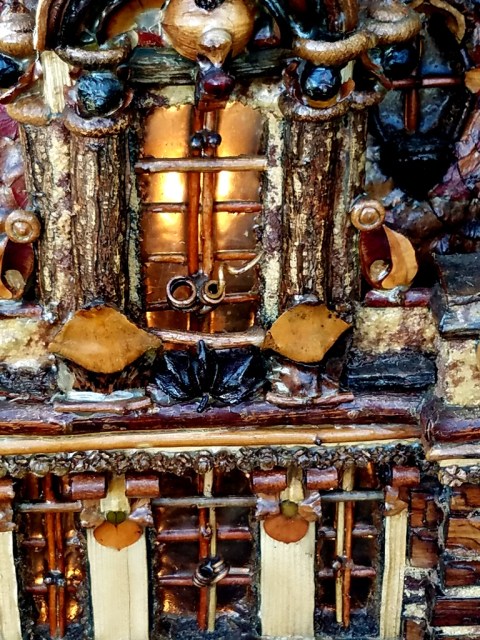
Window detail of leaves, twigs, berries, bark on the replica of Senator William Clarke mansion, NYBG ‘Holiday Train Show’ (Carole Di Tosti)
As I note the complexity of the constructions from plant parts as tiny as a barely seed and as large as a gourd, and wander slowly in amazement at the specificity of creation, solace is delivered in cupfuls and happiness in bushels. I take picture after picture, trying to stir my memories about the location of the recreations in previous years.

Replica of Poe Cottage, Fordham in the Bronx, NYBG ‘Holiday Train Show, Applied Imagination (Carole Di Tosti)
If I take my time without rushing to the show finale, my memory serves me. The Poe house is situated more prominently this year on the opposite side of the central theatrical showcase. I am glad because I am writing a play about Poe and I feel akin to this replica. For example, I know that Poe’s wife Virginia Clemm died of tuberculous in Poe Cottage which is in Fordham in the Bronx a few miles from the Garden. The replica is modest, a no frills structure which is a miniature facsimile of the real Poe Cottage. The Poes were impoverished for all of their marriage a terrific irony considering just one of Poe’s short handwritten letters brought in almost $100,000 at auction a few years ago.

Replica of the Stephen A. Schwarzman Building (NYPL), NYBG ‘Holiday Train Show’ by Applied Imagination team (Carole Di Tosti)

Coney Island Exhibit, Brooklyn Bridge, Wonder Wheel, Luna Park and more, NYBG ‘Holiday Train Show’ (Carole Di Tosti)
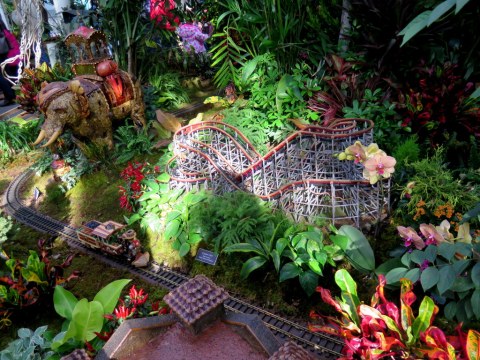
Coney Island display, Elephantine Colossus, Cyclone, train of plant parts, NYBG ‘Holiday Train Show’ (Carole Di Tosti)

Elephantine Colossus Hotel replica, Coney Island Display, NYBG ‘Holiday Train Show,’ by Applied Imagination team and its founder Paul Busse (Carole Di Tosti)
I see that the New York Public Library (Stephen A Schwartzman building) is up front and center as it should be. The Fifth Avenue Manhattan library with the stentorian lions is under renovation and receiving technological updates that will be completed by 2020. I note that the Coney Island display is prominent with the Elephantine Colossus, Wonder Wheel (now a film of the same name by Woody Allen about Coney Island and gangsters), The Steeple Chase, Luna Park, the Cyclone (with moving parts) and more. These structures backdropped with waterfall and reflecting pools are encircled by sauntering trains lazily enjoying their pace in the 360 degree central showcase of the Enid A. Haupt Conservatory. Last year they were in the Palms of the World Gallery.

Coney Island display, Wonder Wheel, Lighthouse, Brooklyn Bridge, NYBG ‘Holiday Train Show,’ by Applied Imagination team (Carole Di Tosti)
As I appreciate the Elephantine Colossus so carefully and brilliantly created out of variously shaped gourds and other plant pieces, I consider Leslie Salka’s (Director of Applied Imagination whose creations we love) comments about the construction of the replica of the Elephant shaped hotel. The unusual structure was an example of the period’s novelty architecture, designed by James V. Lafferty to bring in tourists. The seven-story building, which served as a hotel, concert hall and amusement bazaar, stood above Surf Avenue from 1885 to 1896 when it burned down. Leslie decided they should include the hotel in the Coney Island display in memoriam of Topsy the female elephant who was electrocuted in Coney Island’s Luna Park in 1903.

Elephantine Colossus Hotel replica at Coney Island display, NYBG ‘Holiday Train Show’ (Carole Di Tosti)

Mushrooms, gourds in detail of Elephantine Colossus Hotel replica, Coney Island display, NYBG ‘Holiday Train Show’ (Carole Di Tosti
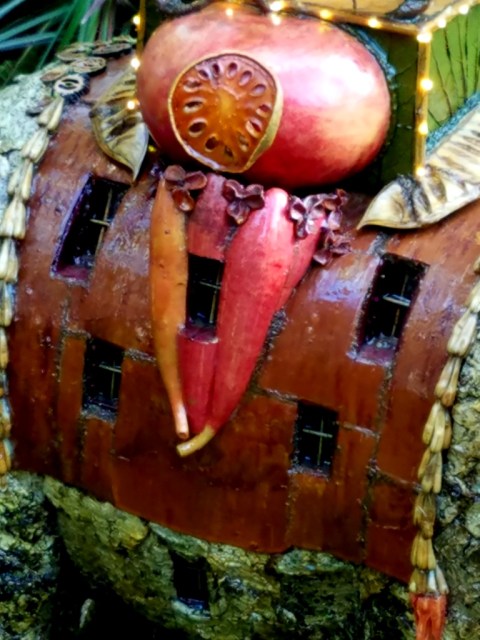
Detail of plant parts, Elephantine Colossus Hotel replica, Coney Island display, NYBG ‘Holiday Train Show,’ Applied Imagination (Carole Di Tosti)
Topsy’s demise had been all but forgotten until someone noted a film had been made of her electrocution and clips of it were included in a Ric Burns documentary about Coney Island. After Burns’ film the subject of Topsy’s death has been featured in popular culture and media and has been the subject of poetry, fiction, songs and journalist Michael Daly’s book about her. Contrary to belief there is no purported direct association of Topsy’s death at Luna Park with Thomas Edison. Though Edison did electrocute animals 15 years earlier during the War of Currents when he was attempting to demonstrate the dangers of alternating current, he was not responsible for Topsy’s death. The Elephantine Colossus replica is gorgeous and the backstory of Topsy’s life and death, the preservation of the film clip, and her rise to celebrity is a notable piece of history found in The Holiday Train Show if you enjoy digging deeper.

Macy’s sign is made up of white barley seeds and cayenne pepper flakes, NYBG ‘Holiday Train Show’ (Carole Di Tosti)

Novelty car, NYBG ‘Holiday Train Show’ (Carole Di Tosti)

Painted butterfly on novelty car, NYBG ‘Holiday Train Show,’ Applied Imagination (Carole Di Tosti)
What I particularly appreciate about The Holiday Train Show is that there is something for everyone young and ancient. Children see the trains and love to hear and watch them. Adults see the history, and depending upon their day and mood go deep or gloss over the displays. No one sees all of it during each visit. If you glean 20% of the entire production which pays homage to history, trains, New York, the five New York City boroughs and their landmarks interspersed fancifully throughout the Garden’s botanical kingdom, you will have walked away with a treasure.
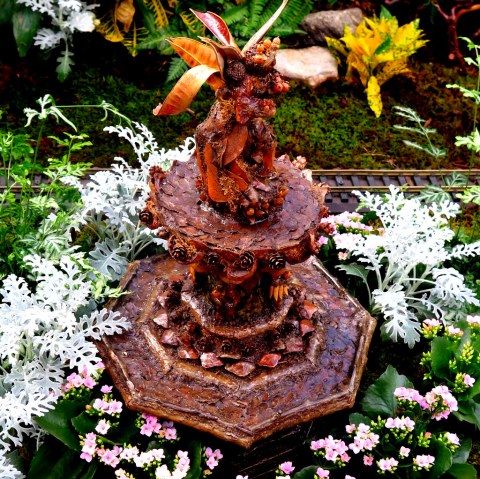
Angel of the Waters replica, Central Park display, NYBG ‘Holiday Train Show,’ Applied Imagination (Carole Di Tosti)
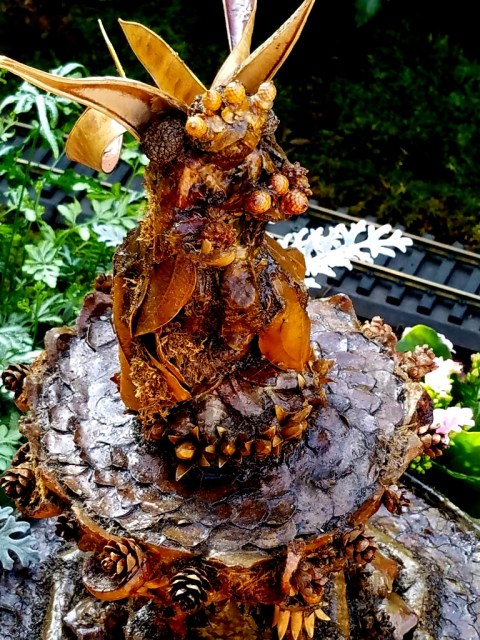
Detail berries, mini pine cones, seeds, leaves, twigs, bark, pods, Angel of the Waters, NYBG ‘Holiday Train Show’ (Carole Di Tosti)
The Show is overwhelming. So one may jaunt through it appreciating the overarching dazzling spectacle and briefly glance at the replicas, taking a few moments to identify the name of a particularly striking recreation. Or you may more closely observe, inspect and take a leisurely microscopic view of how each of the replicas was assembled ingeniously with twigs, varieties of flower and grain seeds, pine cones, stems, leaves, nut shells, acorn caps, pods, gourds, varieties of moss, mushrooms, flowers, herbs, spices and more.

streetcar over Brooklyn Bridge, NYBG ‘Holiday Train Show’ (Carole Di Tosti)
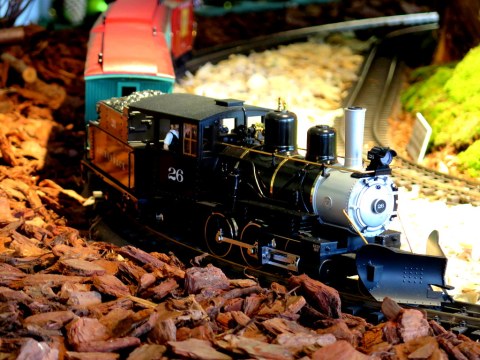
NYBG ‘Holiday Train Show’ (Carole Di Tosti)
And the trains? Use your phone video feature to capture the particularly cool passenger trains or trolleys flying over the Manhattan or Queensboro bridge high above your head. Most NYC bridges (five out of the nine) are featured. Or snap the cute novelty cars painted with butterflies or other insects trolling back and forth over the tracks. All of the trains are G-scale, whether ancient or modern, whether locomotives and freight cars or diesel engines, electrified passenger trains, trolleys and streetcars. There are over 25 full fledged train set ups clanging, whirling, zipping, steaming, chugging, purring and careening over 1/2 mile of track situated between rocks, over bridges and water features, through tree stump tunnels and under low hanging tree branches throughout the conservatory.

Trains coming out of historic Penn Station, NYBG ‘Holiday Train Show’ (Carole Di Tosti)

Hudson Valley train station, since demolished, NYBG ‘Holiday Train Show’ (Carole Di Tosti0

Historic Penn Station demolished in 1963, NYBG ‘Holiday Train Show’ (Carole Di Tosti)
In the 3000 foot 360 degree display whose extension was added a few years ago, you’ll see a grand memorial to traindome. You’ll note various New York historical station replicas that are throwbacks to a time when travelers stayed at inns before they journeyed to relatives. These have since been torn down to make way for flat-looking, rectangular, unappealing buildings signifying what has been lost to progress. You will note Grand Central Station saved by Jacqueline Onassis and the magnificent station that developers couldn’t wait to get their grimy hands on, the Beaux Arts beauty, built in 1910, Pennsylvania Station. The Applied Imagination replica is a memorial to history, grand architectural effort that remains timeless though Penn Station itself was torn down in 1963. But there the miniature building stands for us to admire at The Holiday Train Show. Just consider that for a second or two.

Palms of the World Gallery, mid-town Manhattan display, NYBG ‘Holiday Train Show’ (Carole Di Tosti)
The Palms of the World Gallery exhibit is the glorious conclusion that sends you out into the sterling night of stars if you go to Bar Car Nights (December 22, 23, 29, 30, January 6, 13) with a date, friends or are just slumming by yourself. Or if brushing by the palm fronds with goodbyes to Garden staff dressed as train engineers you slip from the tropical paradise into the bright, cold atmosphere and sunshine with a beaming smile on your face because the final exhibit is just…just. Well! You’ll have to go and see the show and come up with your own descriptors. Marvelous? Rising? Scintillating? Neat? Memorable? Illustrious?

Ellis Island display, NYBG ‘Holiday Train Show’ (Carole Di Tosti)
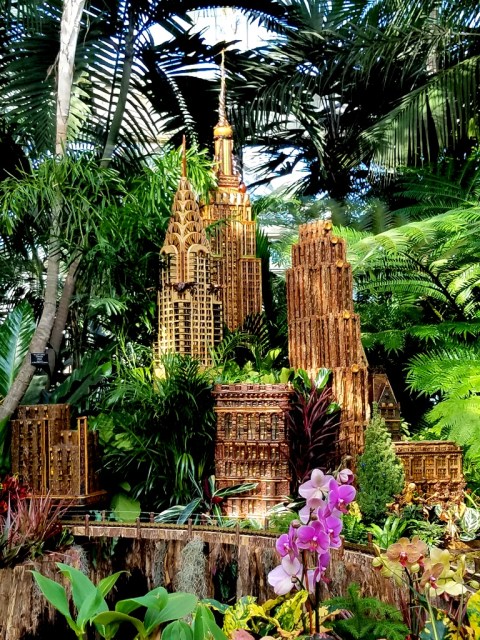
Chrysler Building, Empire State Building, GE Building replicas renovated as new. NYBG ‘Holiday Train Show’ (Carole Di Tosti)

Palms of the World Gallery, NYBG ‘Holiday Train Show’ (Carole Di Tosti)

Palms of the World Gallery, NYBG ‘Holiday Train Show’ (Carole Di Tosti)
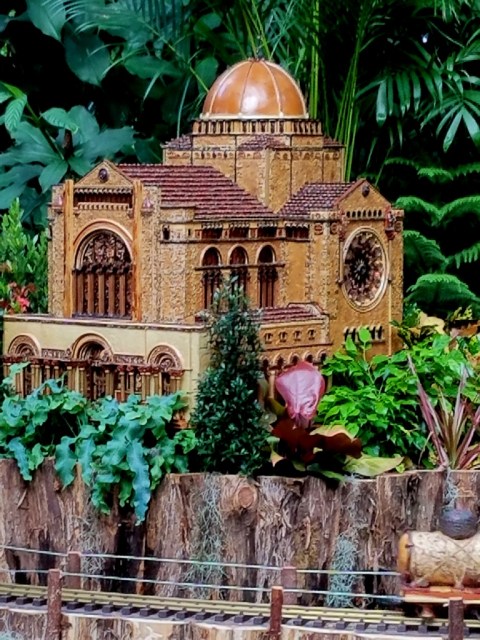
St. Bartholomew replica, Palms of the World Gallery, NYBG ‘Holiday Train Show’ (Carole Di Tosti)

Statue of Liberty drape is made of bamboo, NYBG ‘Holiday Train Show’ (Carole Di Tosti)
It’s all of that and more as the display in the large reflecting pool glimmers and splits into double images which lengthen the buildings and set them skimming across the water. This segment in particular memorializes why Manhattan is its own tribute to itself: skyscraper-particular, iconic, architecturally astonishing, mesmerizing, glowing. Whether its Rockefeller Plaza, Ellis Island, the Statue of Liberty, the GE Building, the Empire State Building, the Chrysler Building, St. Bartholomew’s Church, this is what tourists, natives and even botanical adventurers love about New York City. Take some time to especially view the last four replicas listed here, all of which are new.
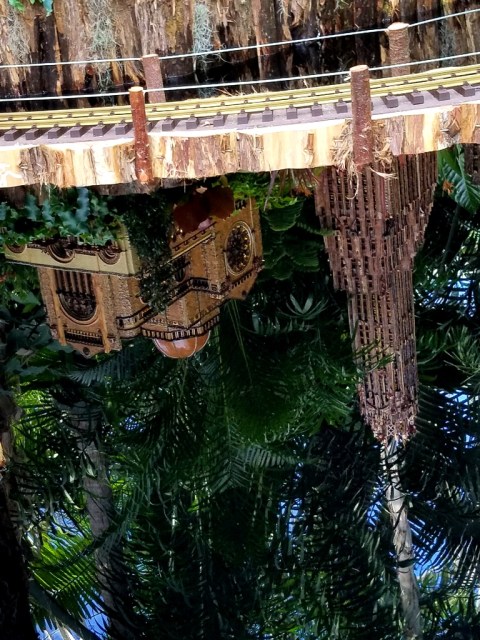
Reflections in water, Empire State Building replica, St. Bartholomew replica upside down, Palms of the World Gallery, NYBG ‘Holiday Train Show’ (Carole Di Tosti)

Upside down reflections, Queensboro Bridge in mid-Manhattan display, Palms of the World Gallery, NYBG ‘Holiday Train Show’ (Carole Di Tosti)
I was struck by the extravagant details and was rather gobsmacked at the illusion which is created in this gallery. These buildings effect their namesakes, but are built with completely organic, sustainable materials, unlike their reality of concrete, glass and steel. The effect will draw you in as you remember the essence of the Applied Imagination’s vision to set a monument to nature’s ineffable and infinite botanical variety and the wonder of at plants’ creative usefulness as building blocks for humans. Read that sentence again, to ken the full meaning. Heart!

Mid-town Manhattan display, another view, Palms of the World Gallery, NYBG ‘Holiday Train Show’ (Carole Di Tosti)

Laura Busse Dolan, owner of Applied Imagination, daughter of Paul Busse. NYBG ‘Holiday Train Show,’ Palms of the World Gallery (Carole Di Tosti)
There is no leaving the Palms of the World Gallery after the first minute of arrival. You leave when you receive the full effect of the display upon your senses and decide that The Holiday Train Show is a celebration of the best of who we can be as creators and lovers of nature’s bounty of which we are an integral part.
For all the intriguing programming during the Train Show, from the Evergreen Express and family events, Billy Collins poetry reading and more, go to the Garden website HERE. For BAR CAR NIGHTS, HERE. To learn about Paul Busse artistic visionary, founder and 25 year creator of Applied Imagination replicas and themes with his team click HERE.

Chihuly and Pumpkins at New York Botanical Garden’s Fall Weekend
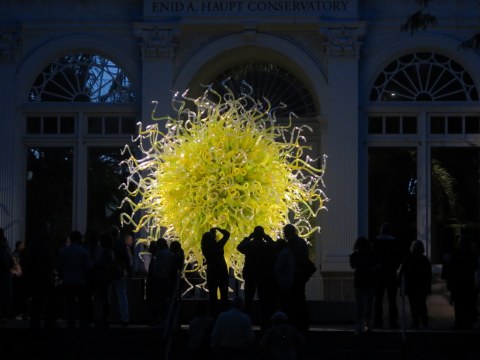
Chihuly Exhibit, ‘Sol de Citron,’ NYBG 2017, Dale Chihuly, Chihuly Nights (Carole Di Tosti)
Last weekend at the New York Botanical Garden was my last time to say goodbye to the Chihuly Exhibit. I have visited the exhibit a number of times, but each time is fresh and different. One reason is because Dale Chihuly’s outdoor sculptures refract and reflect the changes in sunlight during the changing seasons, from spring to fall.

Stunning Chihuly chandeliers at the NYBG Chihuly Exhibit, Dale Chihuly, New York Botanical Garden, Chihuly Nights (Carole Di Tosti)
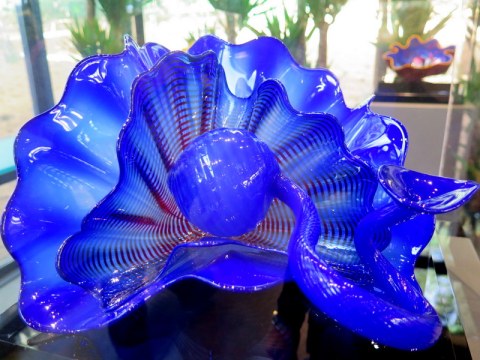
Dale Chihuly’s art glass for sale in the NYBG Garden Shop, Chihuly Exhibit, NYBG (Carole Di Tosti)

Dale Chihuly’s ‘Macchia Forrest’ (2017), ‘Jazz & Chihuly, Songs of Protest & Reconciliation’ NYBG summer concert series (Carole Di Tosti)

Dale Chihuly’s ‘Macchia Forrest’ (2017), another view, Chihuly Nights, NYBG (Carole Di Tosti)
Another reason is because no matter how closely you look at a piece, you will notice something unique every time. Perhaps it is the way the colors merge into each other on some pieces or the way the glass curves or projects starkly upward. With the sculptures that are housed indoors at the Enid A. Haupt conservatory, for example Macchia Forest, 2017, Chihuly’s vibrant colors startle in multi-colored tulip-shaped cups arising from iron-like stems in the conservatory’s indoor pond and fountain gorgeously arranged with hanging flowering plantings. One could remain there all day or in the evening with a drink during Chihuly Nights. The rich ambience delights and the sounds of water splaying in the fountain soothe. As with all of Chihuly’s sculptures thoughtfully arranged in or around water, the reflections dazzle and enthrall with their multi-dimensional views.
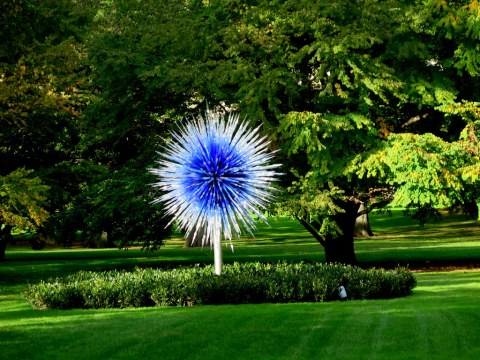
Chihuly Exhibit, ‘Sapphire Star,’ 2010, NYBG 2017, Dale Chihuly (Carole Di Tosti)

‘Dale Chihuly’s ‘Sapphire Star’ 2010, NYBG 2017, Chihuly Nights (Carole Di Tosti)
I will sorely miss this exhibit which stirs the imagination toward infinite and graceful fantasies that one conjures up in brilliant dreams. I have become used to catching the falling sunlight at dusk as it stirs the effervescence and evolving, sparkling, deep blue, shimmering hues on Sapphire Star 2010, NYBG 2017 amidst the darkening shadowy green of the landscape and deepening black shapes of the trees. Sapphire Star 2010, installed at NYBG 2017 is my favorite. I enjoyed seeing it in high noon brilliance or in the surrounding darkness enhanced with a few ground lights along the Garden path that is out of the Chronicles of Narnia. My imagination runs wild. And if I were indeed alone without anyone near me, I would expect a unicorn or centaur to jump out from behind a tree and admiringly gaze at this groundling star whose other-worldy beauty beckons.

Chihuly Exhibit, ‘Float Boat and Koda Studies #1 & 2,’ Chihuly Nights, NYBG 2017 (Carole Di Tosti)
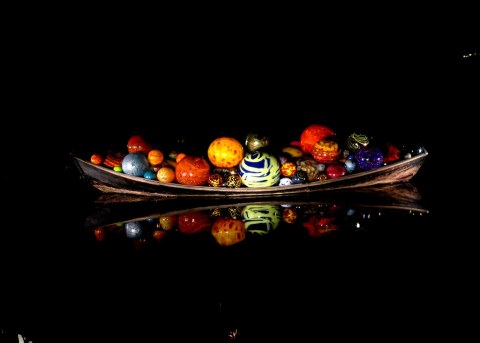
A closer view! Chihuly Exhibit, ‘Float Boat and Koda Studies #1 & 2,’ Chihuly Nights, NYBG 2017 (Carole Di Tosti)

A closer view!! Chihuly Exhibit, ‘Float Boat and Koda Studies #1 & 2,’ Chihuly Nights, NYBG 2017 (Carole Di Tosti)
This past weekend I also strayed beyond the Everett Children’s Adventure Garden to visit the Native Plant Garden where Chihuly’s Float Boat and Koda Studies #1 and #2 herald all that might be accomplished when the creative spirit is allowed to run wild amidst a natural platform. Again, Dale Chihuly combines contrasting shapes, sizes and forms. There are the comforting huge glass balls of every shining hue imaginable displayed in a an oblong vessel held up by a flowing water pond.. In the nighttime, the view widens its depth. Which is is solid? Which is fluid? And indeed physics will explain that both are double images of each other for all contain infinitesimal atoms which spin at incredible speeds and play havoc with what appears to be real but which is something else entirely. A true mind-blast and pageantry of excellence.
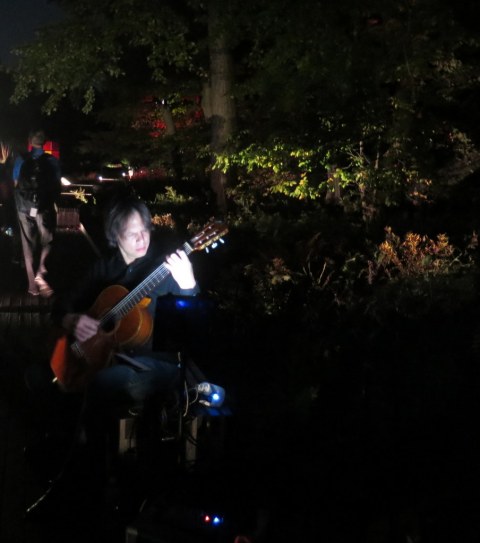
Guitar player accompanying our views in the Native Plant Garden, NYBG, Chihuly Nights (Carole Di Tosti)
That evening a guitar player shared his repertoire as we hailed the Chihuly’s Koda Studies # 1 and 2. Chihuly designed these specifically for the exhibit, honoring his original Artpark installation designed with friend Seaver Leslie in Lewiston, New York in 1975. That significant installation launched Dale Chihuly as a glass artisan and he has been flying into glory ever since.
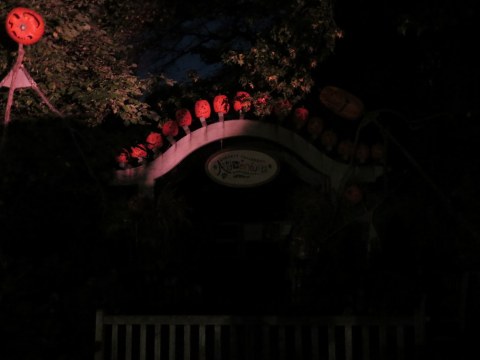
Walking to the Native Plant Garden we encounter spooky pumpkins on the way. NYBG, Chihuly Exhibit, Giant Pumpkin Weekend (Carole Di Tosti)

Spooky pumpkins, NYBG Giant Pumpkin Weekend (Carole Di Tosti)
As we sauntered along the path viewing Chihuly’s muted dark fuschia, red and yellow glass panes pinging off the lengthy water display in the Native Plant Garden, our senses were regaled. The native grasses, wild herbs, shrubs and dying foliage exuded gorgeous aromas released in the humid night air. There was a sense of freedom and exploration I felt. Tell me where else in New York City can one travel safely along landscaped, tree-lined paths in the nighttime breathing clean air with heavenly scents except at a NYBG evening exhibit.
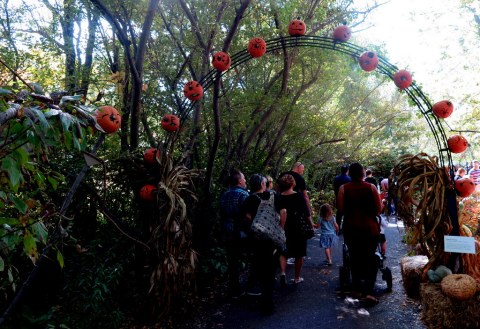
Everett Children’s Adventure Garden, Giant Pumpkin Weekend, NYBG (Carole DI Tosti
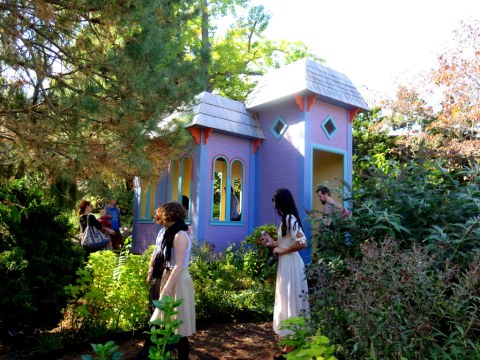
Everett Children’s Adventure Garden, Giant Pumpkin Weekend, NYBG (Carole Di Tosti)

Everett Children’s Adventure Garden, Giant Pumpkin Weekend, NYBG (Carole Di Tosti)

Everett Children’s Adventure Garden, Giant Pumpkin Weekend, NYBG (Carole Di Tosti)

Everett Children’s Adventure Garden, Giant Pumpkin Weekend, NYBG (Carole Di Tosti)
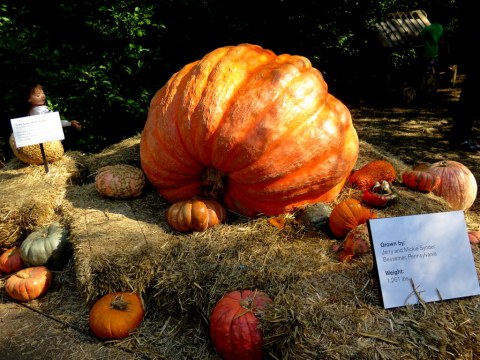
Pumpkin grown by the Synders, from Bessemer, Pennsylvania weighs 1,261 pounds, NYBG Giant Pumpkin Weekend (Carole Di Tosti)
During the daytime I walked amongst the still-green trees which are here and there beginning to prepare for fall and winter. I stepped into the fun-filled Everett Children’s Adventure Garden and watched the kids enjoy themselves everywhere they went. The Children’s Garden was packed. The humongous pumpkins patiently sat as children scrambled on top of them and families posed for pictures. Each of the gigantic specimens were record-breakers. (see below for stats) Families sought and found enormous pumpkins, gourds, and squashes – it was also Giant Pumpkin Weekend, and families came to see these incredible natural wonders.

Conquering a record-breaking pumpkin, (2,269 lbs) from England at NYBG Giant Pumpkin Weekend (Carole Di Tosti)

Conquered! Record-breaking pumpkin, (2,269 lbs) from England at NYBG Giant Pumpkin Weekend (Carole Di Tosti)
Kids and parents took pictures standing on them, climbing them, sitting on them, and standing next to them. Giant Pumpkin Weekend, arranged in collaboration with the Great Pumpkin Commonwealth, showed off the growers’ skills at nurturing the hugest (I know that’s not a word), most fantabulous (or that either) pumpkins. Each of these record-breakers from around the world weighed in at more than a ton.
How these pumpkins’ DNA allows them to expand boggles the mind. Importantly, growers come to share how this happens in the growing process during Q&As.
Recapping the record-breakers and their growers for 2017.
This year’s largest pumpkin traveled from Sumner, Washington, bringing with it the North American all-time record. Nurtured by Joel Holland, the “Great Pumpkin” weighed in at 2,363 pounds.
The second-largest pumpkin ever grown came from the United Kingdom, with that country’s all-time record of 2,269 pounds. Ian Paton and Stuart Paton grew this lovely.
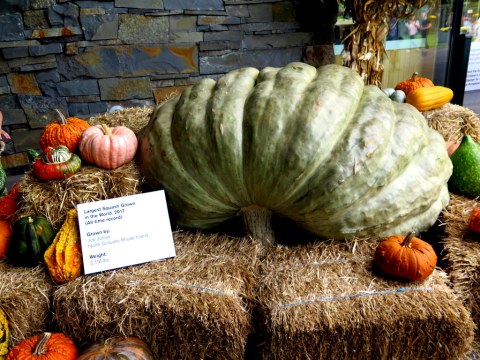
Largest squash grown, 2,118 lbs, NYGB Giant Pumpkin Weekend (Carole Di Tosti)
Finally, at the entrance of the Leon Levy Visitors Center you will find the largest squash grown in the world this year. This all-time record-breaker grown by Joe Jutras hails from North Scituate, Rhode Island. It weighs in at 2,118 pounds.

Pumpkins everywhere in the Everett Children’s Adventure Garden, NYBG, Giant Pumpkin Weekend (Carole Di Tosti)

Pumpkins everywhere in the Everett Children’s Adventure Garden, NYBG, Giant Pumpkin Weekend (Carole Di Tosti)

Pumpkins everywhere in the Everett Children’s Adventure Garden, NYBG, Giant Pumpkin Weekend (Carole Di Tosti)
If you missed this annual fun event the weekend of 21-22 October, don’t worry. The display continues through 31 October. And if you can’t make it this year, next year the Garden will be hosting amazing record-breaking specimens again. You know they will be even larger.
Another fun event at the Everett Children’s Adventure Garden involved costumes and goodies. Children dressed in costumes visited the Whole Foods Market® Trick-or-Treat Trail. Since Whole Foods offered the treats, you know they had to be nutritious and delicious. No candy corn could be found anywhere on those Whole Foods Market tables. Additionally, children could decorate a bag to collect their goodies, which included a “children’s sized” baby spider plant anxious to receive a new home.

Reptile wrangler with Sheldon a beautiful turtle, NYBG, Creepy Creatures of Halloween, Everett Children’s Adventure Garden (Carole Di Tosti)

Petting Skittles the milk snake, Everett Children’s Adventure Garden, NYBG (Carole Di Tosti)
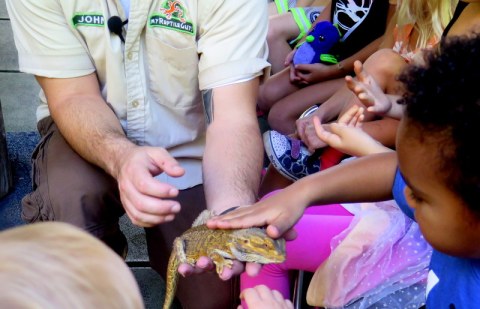
Petting Wilma a very sweet and popular lizard, Everett Children’s Adventure Garden, NYBG (Carole Di Tosti)
One event I particularly enjoyed took place at the Clay Family Picnic Pavilions. Kids and parents came curious to see what creepy, spooky creatures of Halloween might crawl around, fly, or calm down to be petted. The live animal presentation revealed interesting reptiles from everywhere, perhaps even some backyards upstate or in the South.
In the photos are the popular Wilma, a lizard who sustained the children petting her with peace and calm, and Skittles the milk snake who also was petted by the children and remained peaceful throughout. One can see the various creatures Saturdays and Sundays, 1 & 3 p.m. until 29 October.

A Chihuly piece for sale in the NYBG Garden Shop, Chihuly Exhibit, NYBG (Carole Di Tosti)
The New York Botanical Garden contains a fabulous and beautiful world of treasures for everyone. If you can catch the Chihuly Exhibit during the day, you will be thrilled. Unfortunately, tickets to Chihuly Nights have been sold out for the last week. However, if you go during the day over the weekend, make sure to get there early. The parking is limited. And even if it is a bit colder, New Yorkers and out-of-towners want to take a last breathtaking look at the NYBG Chihuly exhibit before it leaves. Thankfully, I took many pictures in remembrance. When winter approaches in earnest in New York City, I will look back at this article and my pictures in fond remembrance.
For events at the NYGB, CLICK HERE.

‘Jazz and Chihuly, Songs of Protest & Reconciliation,’ New York Botanical Garden Summer Concert Series
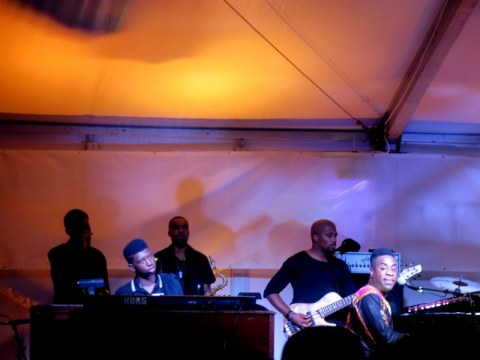
Damien Sneed and musicians in ‘Jazz & Chihuly, Songs of Protest & Reconciliation’ at the New York Botanical Garden (Carole Di Tosti)
Considering the Charlottesville, Virginia August 11th incidents and the tragic loss of one woman’s life, up through the president’s press conference of Tuesday, August 15th, these days of August have been tumultuous and divisive. Indeed, taking a stand to uphold human rights and decry hate groups that seek mainstream political power appears to be more vital than ever as protest marches this past weekend indicate. Symbolic action, whether it is through protest demonstrations or concerts is a reminder to all that Love trumps Hate. A great majority of Americans are committed to upholding the sanctity of every life, regardless of race or religion.

Chihuly sculptures (“Koda Study No. 3”) in the New York Botanical Garden water lily and lotus pond backdropped by the Enid A. Haupt Conservatory, after the summer concert series, ‘Jazz & Chihuly, Songs of Protest & Reconciliation’ with Damien Sneed, and his ensemble and guest Keyon Harrold (Carole Di Tosti)
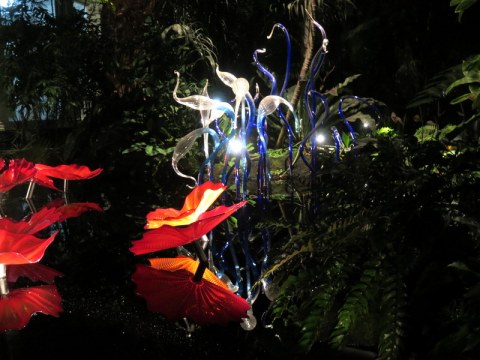
NYBG Palms of the World Gallery, Chihuly’s ‘Persian Pond and Fiori’ (2017), ‘Jazz & Chihuly, Songs of Protest & Reconciliation’ New York Botanical Garden summer concert series (Carole Di Tosti)
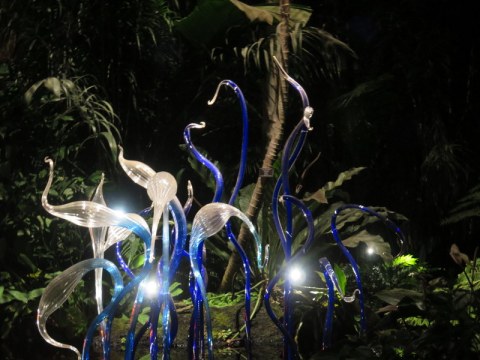
Detail, Chihuly’s ‘Persian Pond and Fiori’ (2017), ‘Jazz & Chihuly, Songs of Protest & Reconciliation,’ New York Botanical Garden summer concert series (Carole Di Tosti)
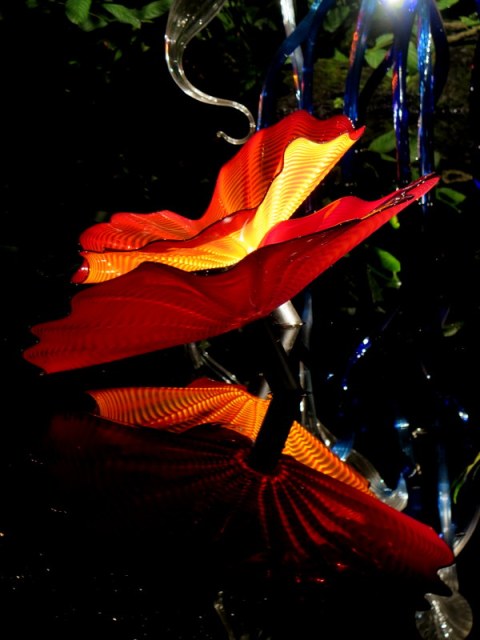
Detail, NYBG Palms of the World Gallery, Chihuly’s ‘Persian Pond and Fiori’ (2017), ‘Jazz & Chihuly, Songs of Protest & Reconciliation,’ New York Botanical Garden summer concert series (Carole Di Tosti)
Serendipitiously, the final summer concert series at the New York Botanical Garden on Friday, 18 August was a majestic reminder of this citizen commitment. Despite the threatening thunderstorm and intermittent periods of rain throughout the day, the turnout to embrace Jazz and Chihuly, “Songs of Protest & Reconciliation” was overwhelming.
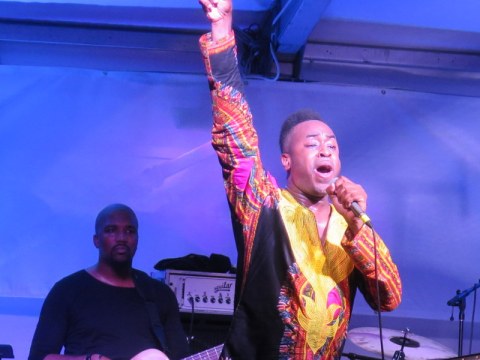
Damien Sneed, ‘Jazz & Chihuly, Songs of Protest & Reconciliation,’ New York Botanical Garden summer concert series (Carole Di Tosti)
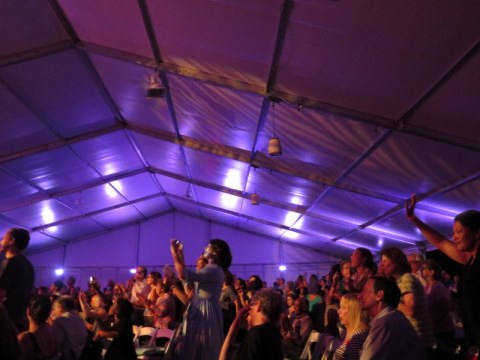
The audience for ‘Jazz & Chihuly, Songs of Protest & Reconciliation’ the concert series at the New York Botanical Garden (Carole Di Tosti)
The tent was packed with a diverse crowd who were there to enjoy the all-star musical group led by award-winning pianist and vocalist, Damien Sneed, guest trumpeter Keyon Harrold and the other prodigiously talented musicians and vocal artists. Together, these individuals presented an evening of entertainment that was poignant and joyful. And after joining with them in celebrating some of the best songs created by greats of jazz, soul, gospel and contemporary music (including two composed by Damien Sneed), the audience was sent out into the night sans rain to appreciate the luminous Chihuly sculptures presented throughout the grounds and in the Enid A. Haupt Conservatory.
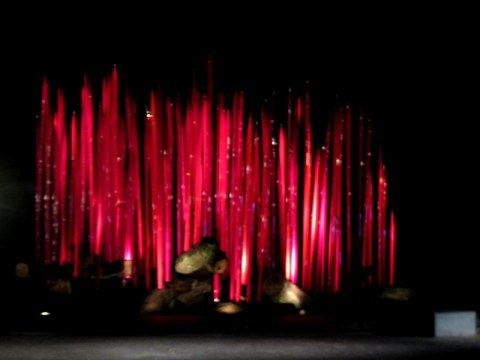
Dale Chihuly’s “Red Reeds on Logs” (2017) part of the special concert series ‘Jazz and Chihuly, Songs of Protest & Reconciliation’ at the New York Botanical Garden (Carole Di Tosti)
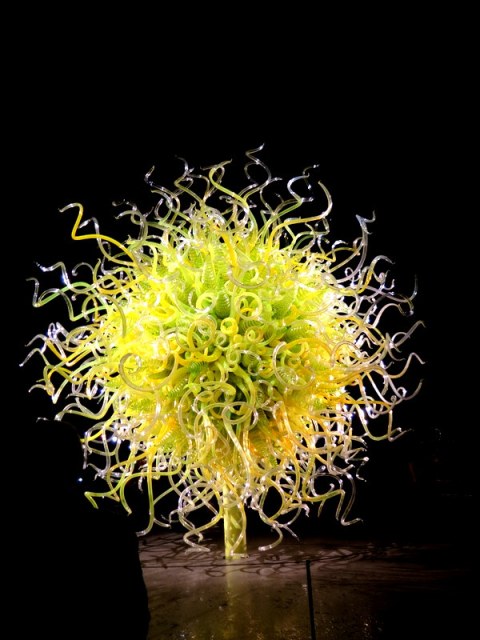
“Sol del Citron” at ‘Jazz & Chihuly, Songs of Protest & Reconciliation’ New York Botanical Garden summer concert series (Carole Di Tosti)
‘Dale Chihuly’s ‘Sapphire Star’ ‘Jazz & Chihuly, Songs of Protest & Reconciliation’ New York Botanical Garden summer concert series (Carole Di Tosti)
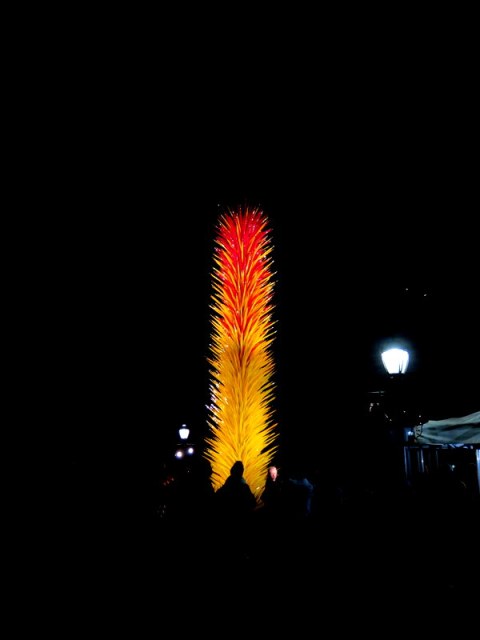
Chihuly’s ‘Scarlet and Yellow Icicle Tower’ (2017), ‘Jazz & Chihuly, Songs of Protest & Reconciliation’ New York Botanical Garden summer concert series (Carole Di Tosti)
This final concert in the summer series was co-produced by the Catskill Jazz Factory and Absolutely Live Entertainment. The Catskill Jazz Factory encompasses a dynamic jazz program whose mission is to aid some of the finest young jazz artists with year-round workshops, concerts, residencies and world-class performances in the Hudson Valley. Absolutely Live Entertainment is a festival, tour and concert production company spearheaded by Danny Melnick. Malnick is the Producer of the Newport Jazz Festival and the Artistic Director of Carnegie Halls’ The Shape of Jazz series.

Damien Sneed rouses the crowd at ‘Jazz & Chihuly, Songs of Protest & Reconciliation’ New York Botanical Garden summer concert series (Carole Di Tosti)
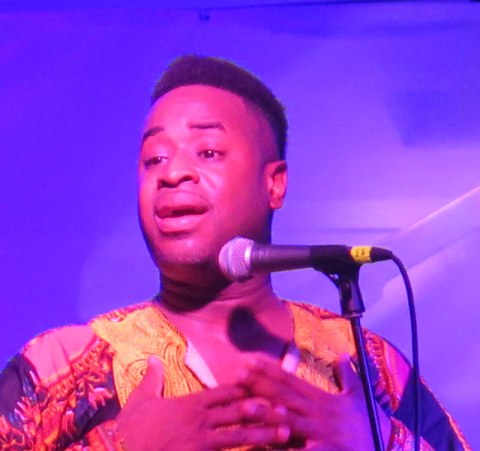
Damien Sneed on piano and vocals at ‘Jazz & Chihuly, Songs of Protest & Reconciliation,’ New York Botanical Garden summer concert series (Carole Di Tosti)
Damien Sneed is a master of practically every musical genre and a 2014 recipient of the Sphinx Medal of Excellence honor which is presented annually to emerging Black and Latino leaders in classical music. His facility with jazz, gospel, pop, R & B, opera and musical theater and his work with Aretha Franklin, Wynton Marsalis, Stevie Wonder and Diana Ross have served him in excellent stead.
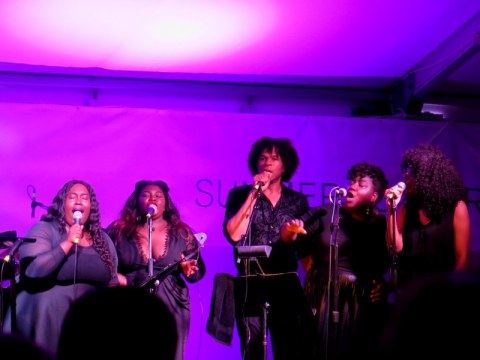
Ensemble vocalists, ‘Jazz & Chihuly, Songs of Protest & Reconciliation’ New York Botanical Garden summer concert series (Carole Di Tosti)
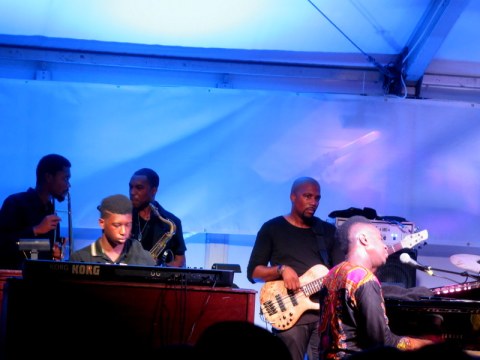
Damien Sneed and ensemble musicians at ‘Jazz & Chihuly, Songs of Protest & Reconciliation’ New York Botanical Garden summer concert series (Carole Di Tosti)
Sneed facilely shepherded the ensemble of vocalists Chenee Campbell, Anitra McKinney, Djore Nance, Tiffany Stevenson, Matia Washington and musicians Stacy Dillard (saxophone) Corey Wilcox (trombone) Julius Rodriguez (Hammond B3 organ) John Matthew Clark (bass guitar), Mark Clark, Jr. (drums). The songs of protest “I Wish I knew How it Would Feel to Be Free” (Nina Simone), “Oh Freedom,” (African-American spiritual), “Follow the Drinking Gourd (Underground Railroad) and “Freedom (excerpt)” (Duke Ellington) for example, emphasized every individual’s yearning for freedom and what freedom means collectively and personally.
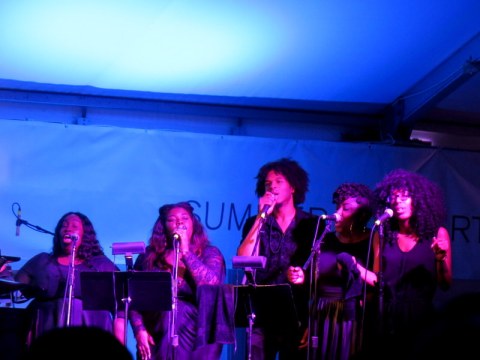
Vocal ensemble, ‘Jazz & Chihuly, Songs of Protest & Reconciliation’ New York Botanical Garden summer concert series (Carole Di Tosti)
During the first half of the evening, an audience member brought up a T-Shirt and draped it on a music stand. The T-Shirt had the logo, “Black Lives Matter.” Her action was spontaneous and unstaged.
Interspersed with these songs of protest were the songs of reconciliation: “Bridge Over Troubled Water” (Simon and Garfunkel), “God Bless the Child, (Billie Holiday & Arthur Herzog, Jr., “Proud Mary,” (John Fogarty), “Is My Living in Vain,” (Twinkie Clark & The Clark Sisters) and more. Each number featured a powerful solo by one of the vocalists. The audience showed their appreciation with standing ovations.
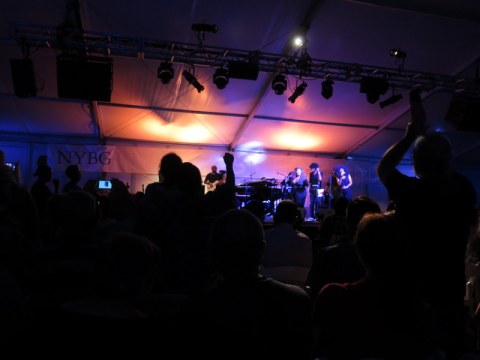
Powerful solo performances by the ensemble garnered standing ovations at ‘Jazz & Chihuly, Songs of Protest & Reconciliation’ New York Botanical Garden summer concert series (Carole Di Tosti)
During the second portion of the evening, Keyon Harrold performed a song he had composed. Harrold presented “When Will The Killing Stop?” as a dedication to Michael Brown and all the young, black men who have been killed for “no good reason.” His playing was at once soulful and poignant, his talent incredible. It is no wonder he has been featured on nearly 100 albums with a wide music range from jazz to R & B, from pop and gospel, to blues and hip-hop.

Keyon Harrold trumpeter at “Jazz & Chihuly, Songs of Protest & Reconciliation’ New York Botanical Garden summer concert series (Carole Di Tosti)

Keyon Harrold, ‘Jazz & Chihuly, Songs of Protest & Reconciliation’ New York Botanical Garden summer concert series (Carole Di Tosti)
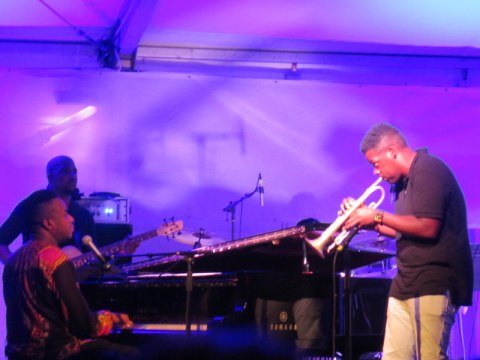
(L to R): Damien Sneed, Keyon Harrold, ‘Jazz & Chihuly, Songs of Protest & Reconciliation,’ New York Botanical Garden summer concert series (Carole Di Tosti)
By the conclusion of the evening, the storm and rain had stopped and the audience had been refreshed and uplifted by the development of the program from seeking soul freedom to the process by which that freedom evolves: forgiveness, reconciliation and love.
Dale Chihuly’s ‘Macchia Forrest’ (2017), ‘Jazz & Chihuly, Songs of Protest & Reconciliation’ NYBG summer concert series (Carole Di Tosti)
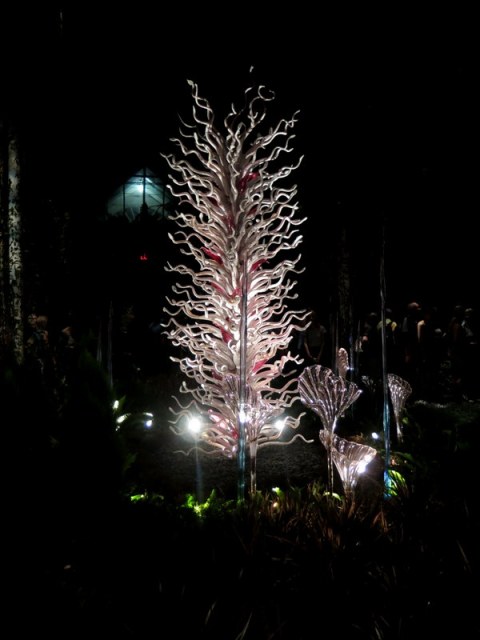
Chihuly’s ‘White Tower with Fiori.’ central showcase, Enid A. Haupt Conservatory, New York Botanical Garden, ‘Jazz & Chihuly, Songs of Protest & Reconciliation’ summer concert series (Carole Di Tosti)
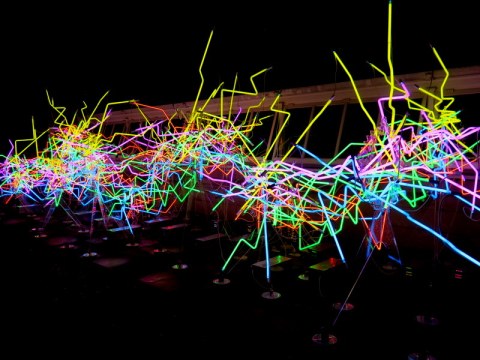
Dale Chihuly’s ‘Neon 206’ ‘Jazz & Chihuly, Songs of Protest & Reconciliation,’ NYBG summer concert series (Carole Di Tosti)
Lillian Goldman Fountain of Life with Chihuly’s Blue Polyvitro Crystals, ‘Jazz & Chihuly, Songs of Protest & Reconciliation’ New York Botanical Garden summer concert series (Carole Di Tosti)
On this night the evolution was inspired through music and exceptional artistry which united and uplifted a community of jazz, botanical and Chihuly enthusiasts. For audience members it was a clarification of the last few weeks and exemplification of all that is best in human hearts, further embodied by our wonderment at the fantastic, illuminated Chihuly sculptures.
New York Botanical Garden Bar Car Nights
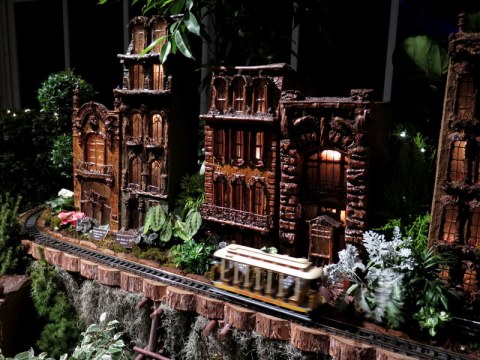
New York Botanical Garden Bar Car Nights: Applied Imagination replicas of 19th century row houses in NYC with a trolley whizzing by (photo Carole Di Tosti)
The New York Botanical Garden is an enjoyable respite and shelter from the storms and stresses of life. Throughout the year their amazing seasonal exhibits which combine spectacular floral shows with art, sculpture, poetry, music, and literary narratives provide a way for one’s soul to rejuvenate and be refreshed to face whatever fate deals next.
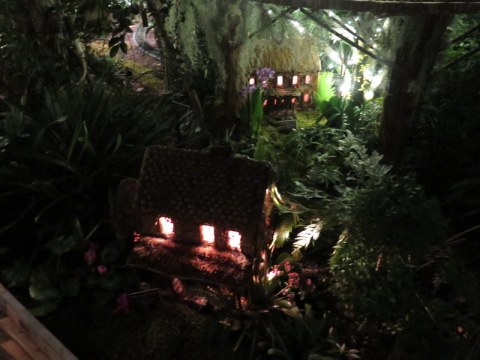
At night the NYBG is a magical fairyland where spirit beings materialize and dissolve among the trees and dark shadows, Holiday Train Show, Bar Car Nights ( photos above and below by Carole Di Tosti)


I especially enjoy the New York Botanical Garden’s exhibits during the evening hours. It is then the shadows dissolve through the dancing, twinkling lights draped along tree trunks and foliage, and darkness blends in chiaroscuro with a spotlight of brilliance strategically placed here and there. The humidity and moisture are ripe; the whirring fans cool the air which feels luscious and exotic. It is a faerie landscape where the extraordinary is one with the natural and I almost expect to glimpse out of the corners of my eyes a glorious supernatural figure flash up, float mysteriously then evanesce as a vibrant fuschia phalaenopsis (moth orchid), emerges from behind the creature’s vaporous wake.


Bar Car Nights, the over 21 adult evenings offered during the Holiday Train Show, are particularly whimsical and romantic. As the trains strum exuberantly along the 1/2 mile of track that circles through the three thousand square feet of extended space (added last year), then snakes through the Enid A. Haupt Conservatory coming to rest in the Palms of the World Gallery, the thrill of the Winter season from one’s childhood is recalled. Couples can saunter through the galleries with liquid refreshments for purchase and completely relax. It is an awakening to a simpler, happier time when morose emotions weren’t joggled by news events and chaos was a scientifically theoretical construct, not haphazard human emotions effected by bellicose, maniacal human beings.
The New York BotanicalGarden is an otherworldly place of peace and beauty. All of the volunteers, the staff of Applied Imagination who have created and constructed the beautiful replicas of present and past New York landmarks from natural plant parts, and the permanent Garden staff, receive great delight from knowing how much enjoyment they give to the thousands of visitors who attend the show.
Each year the exhibit manages to be singular. The more than 150 buildings and structures of New York City and upstate New York: Rockefeller Center. Sachs Fifth Avenue (video above) Empire State Building, Morris-Jumel Mansion, Poe Cottage, Olana, Kykuit, The Jewish Museum, New York Public Library, Park Avenue Armory, Yankee Stadium, Senator William Andrews Clark House (demolished right before the depression as too expensive to maintain), Tammany Hall, the National Arts Club, Macy’s, etc., are situated uniquely throughout the conservatory’s lush greenery. It is fun to identify the re-creations and compare them with their originals, which if you haven’t seen or toured (Kykuit, Edgar Allan Poe Cottage, Olana, the Morris Jumel), you will be motivated to do so as an examination of New York State and US history.
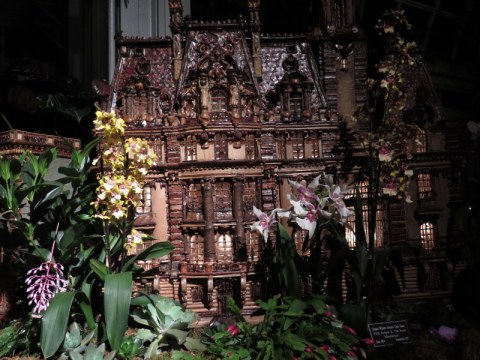
Senator William Clark Andrews House had 80 rooms and was prohibitive to maintain-built 1904, demolished 1927, model completed 2006 (photo Carole Di Tosti)
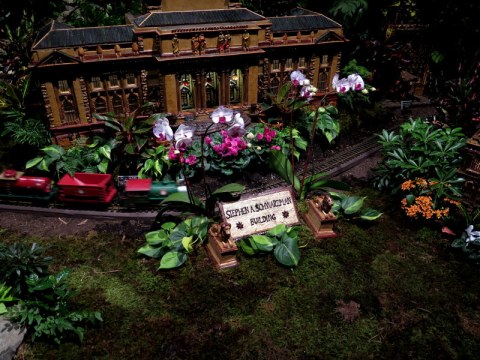
New York Public Library, Stephan A. Schwarzman Building completed 1911, model completed 2015, Holiday Train Show Bar Car Nights (photo Carole Di Tosti)
The likenesses are exceptional considering how the recreations are made with twigs, acorns, rose petals, seeds, gourds, buds, pistachio shells, moss, bark, pine cones, leaves, fruits, etc. In short anything we might throw off on the compost heap, ingenious Applied Imagination botanical artists conceptualize as part of a building edifice or roof and in the case of the cherub sculptures of Kykuit, a prominent body part.
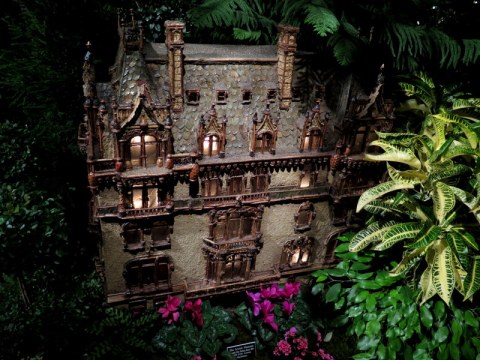
The Jewish Museum 1909 completed, model completed 2004 (photo Carole Di Tosti)
Various years not all of the structures are included; the World’s Fair buildings didn’t appear this year to make way for new additions which are the unique design of Director of Applied Imagination Leslie Salka in collaboration with Founder Paul Busse. The piece de resistance of the Holiday Train Show is the Brooklyn borough’s Coney Island exhibit that shines in the Palms of the World Gallery.
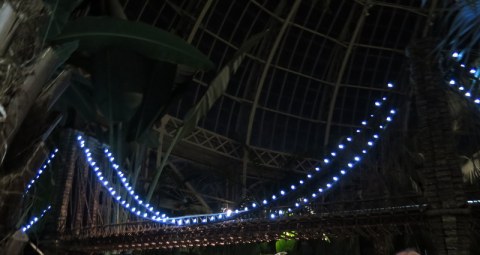
The Brooklyn Bridge leads you into the Coney Island Exhibit, Holiday Train Show, Bar Car Nights, the Palms of the World Gallery (photo by Carole Di Tosti)
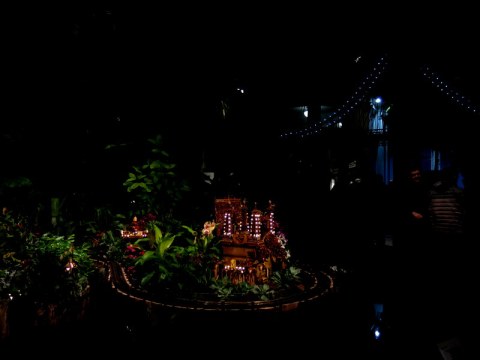
Coney Island Exhibit, NYBG Holiday Train Show, Bar Car Nights (photo Carole Di Tosti)
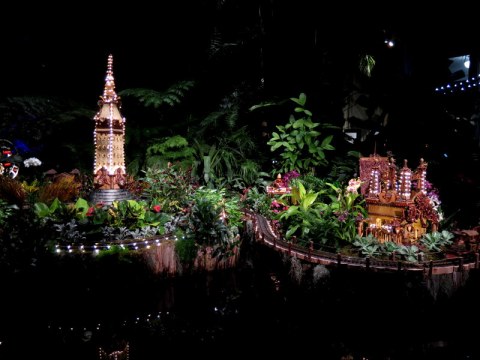
Coney Island replicas Luna Park Arch and Luna Park Tower, behind is the Wonder Wheel from the NYBG Holiday Train Show, Bar Car Nights (photo Carole Di Tosti)
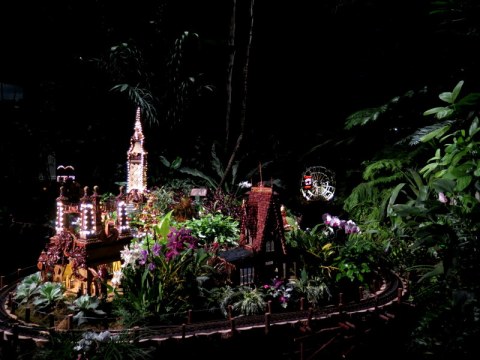
Luna Park Coney Island, behind the Wonder Wheel, to the left in the back is the Elephantine Colossus hotel a memorial to Topsy, NYBG Holiday Train Show, Bar Car Nights (photo Carole Di Tosti)
Several Coney Island structures from previous years (the Galveston Flood Building, the Luna Park Arch, the Luna Park Central Tower, etc.), are included in the exhibit with the new structures and all are situated in the reflecting pool. As you walk under the Brooklyn Bridge, you will see the famous Cyclone, the Coney Island Wonder Wheel and the Elephantine Colossus, the gigantic elephant-shaped hotel from the 1890s that has since burned down.
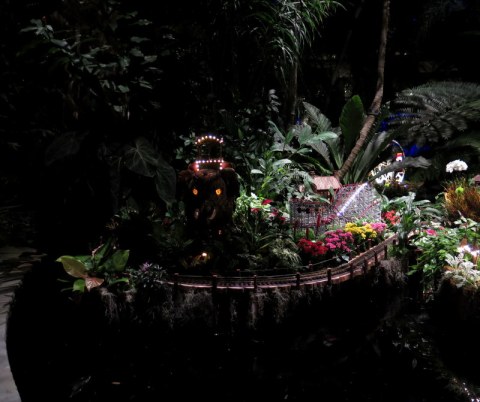
Replica of The Elephantine Colossus Hotel, Leslie Salka, Director of Applied Imagination’s memorial to Topsy, NYBG Holiday Train Show Bar Car Nights (photo Carole Di Tosti)
Director Leslie Salka was determined to include the hotel to memorialize Topsy, a female Asian elephant, who helped build Coney Island. The innocent Topsy was electrocuted to death by Thomas Edison as a huge draw for the 1903 Luna Park Coney Island exposition. Edison luridly filmed her heinous death, a fact that Michael Daly reveals in his book Topsy.
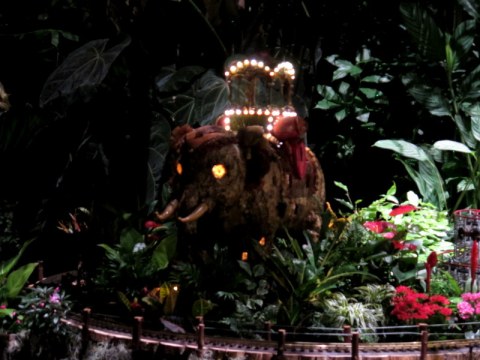
The beautiful memorial to Topsy captured in the replica of the Elephantine Colossus Hotel at Luna Park in Coney Island which is featured at the Holiday Train Show Palms of the World Gallery (photo Carole Di Tosti taken during Bar Car Nights)
Daly’s book chronicles the story of the elephant’s travails as a pawn first in the greedy hands of a circus competitor of P.T. Barnum and then in the irate claws of Edison. In an article in the New York Daily News about his book, Daly says, “The electrocution was for Edison a means to vent his fury and frustration over his defeat” (with Westinghouse in the war of the currents), “as well as an opportunity to film the first death of any kind.”
Thus, Leslie Salka’s and Paul Busse’s addition of the Elephantine Colossus hotel replica, has a much greater significance than one would imagine upon first glancing at its beauty and ingenious creation from gourds and other plant parts. And Nikola Tesla fans will appreciate this final triumph of Topsy memorialized in the Holiday Train Show. It is a reminder that Thomas A. Edison’s reputation in mainstream history books belies the reality of what and who he really was.
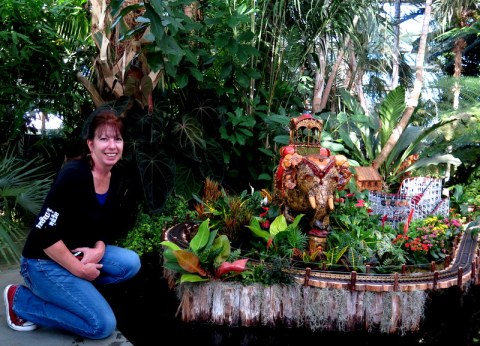
Director Leslie Salka of Applied Imagination who was inspired by Topsy’s story to memorialize the elephant in the replica of The Elephantine Colossus at Luna Park Coney Island, NYBG The Holiday Train Show day time (photo Carole Di Tosti)
The Holiday Train Show plantings always vary as does the placement of the variety of trains which are all G-gauge and include passenger trains, freights, trolleys, novelty cars, streetcars, diesels and locomotives. This year all but one of New York’s bridges reside high above strolling visitors. Trains whiz back and forth over trestles and one imagines what it might be like to be a passenger in miniature looking at the view of the panorama of orchids, cyclamen, hedges, ficus, begonias, palms, sage grass, camelias, and more.
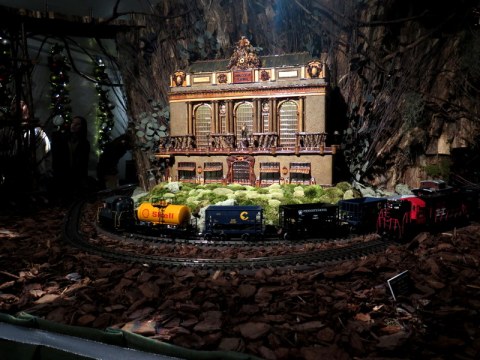
All aboard for the NYBG Holiday Train Show Bar Car Nights at Grand Central Station. Fun Fact: More than 80 million people ride Metro North a year (photo Carole Di Tosti)
For complete New York Botanical Garden Holiday Train Show programming, check their website HERE. Magical Bar Car Nights run the following dates on Fridays and Saturdays: December 2, 3, 16, 17, 23, 30; January 7, 14 from 7 – 10 pm. For family and children’s events (Winter Harmonies Concerts, poetry readings with NYBG poet Laureate Billy Collins and former Vassar College Professor Eamon Grennan, children’s activities-Evergreen Express and “All aboard with Thomas & Friends”) check out the NYBG website or this Blogcritics article for listings.
The Holiday Train Show Bar Car Nights and the entire exhibition are sure to ignite your seasonal spirit and bring joy and vitality to help you usher in the New Year. The show runs until January 16, 2017.
KIKU Exhibit at the New York Botanical Garden

An example of Ogiku at the New York Botanical Garden’s Kiku: The Art of the Japanese Garden until 30 October. Photo by Carole Di Tosti
For those of you who have visited Japan in the fall, you are familiar with kiku and will most probably have fond memories of kiku that you saw in amazing displays wherever you may have walked around Tokyo or other cities in the country. Kiku is the Japanese word for “chrysanthemum.” It is the most venerated of all Japanese fall flowering plants, not only for its beauty, but also for its medicinal qualities and ancient cultural tradition.
What is most amazing is how the Japanese for centuries have maintained what is now becoming the dying art of training and shaping liku into the most incredible designs. It is becoming a dying art because the process of training the growing, fragile Kiku into such lovely shapes requires great skill and is tremendously labor intensive. One false move, one mistake and the entire display may be ruined. Kiku are “no joke.” And it is for that reason they are celebrated in Japan as part of the traditional Japanese custom of enjoying the ephemeral beauty of flowers, known as hanami.

Kiku, the chrysanthemum, is the foundation for all kiku displays. Kiku: The Art of the Japanese Garden at NYBG. Photo by Carole Di Tosti
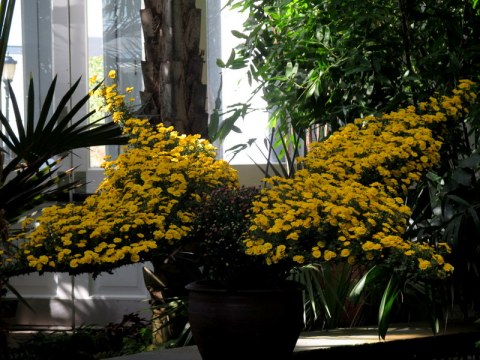
Butterfly kiku, an innovative design at the NYBG exhibit, Kiku: The Art of the Japanese Garden. Photo by Carole Di Tosti
Kiku presentations in conceptualization and philosophy are perhaps one of the most fleeting flower arrangements of all. The displays cannot be preserved beyond a few weeks. They are original. They are easily damaged and during the process of the pruning and training, they are incredibly fragile. Considering that it takes 11 months to grow, train and shape kiku into a cascade design, for example, for 11 months of labor, one receives, if one is careful, two to three weeks of beauty that vanishes as if it never lived at all. It is that impermanence of life that is so captivating a reminder for us to appreciate all that is beautiful for a season, until it withers. The irony is that kiku cannot even regrow their shapes. So, the artistry required to get them to their state of loveliness is truly exceptional
Indeed, one wonders why, in our fast paced digital age, anyone cares about pinching the buds off some flowers to effect beauty. Precisely. When one understands the process and the effort, one appreciates their pageantry. Besides, like all craft and artistry, if it can be preserved, we stay connected with our historical past and the past of other countries and their cultures. In our blink-and-it’s gone current cultural oppression of time, kiku are at once given to us from the ancients and are made modern by having those who care bring the art into the 21st century.
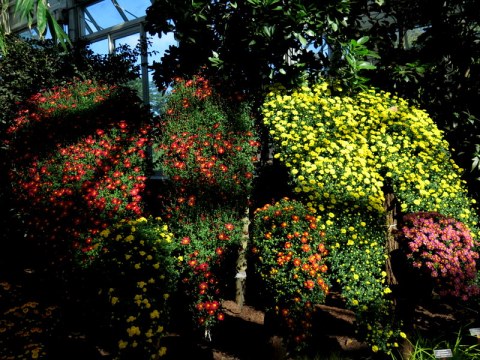
Kengai, cascade kiku at the NYBG exhibit, Kiku: The Art of the Japanese Garden. Photo by Carole Di Tosti
The NYBG has taken on the laborious craft in order to insure that the art will continue to be enjoyed by visitors from Japan as well as those who are familiar with the fall chrysanthemums, but are unfamiliar with the ability of the plants to be trained and designed into magnificent trees, cascades, bridges and more. Each year the NYBG has its kiku exhibit in the fall, pioneered by the chrysanthemum masters at the Shinjuku Gyoen National Garden in Tokyo who educated Yukie Kurashina. Yukie has trained others like James Harkins in the fine art of floral theater. And under the supervision of Marc Hachadourian, Director of the Nolan Greenhouses for Living Collections, James (foreman of gardeners) and kiku expert Yukie with scores of volunteers have made the kiku exhibit at the Enid A. Haupt Conservatory into a place of refuge mirroring the past and merging it with the present.

Ozukuri, thousand bloom display at the NYBG exhibit, Kiku: The Art of the Japanese Garden. Photo by Carole Di Tosti
During the exhibit Kiku: The Art of the Japanese Garden, you will see three traditional kiku styles:
- Ozukuri which means thousand bloom. A single stem of a chrysanthemum plant is trained to produce hundreds of simultaneous blossoms in a massive umbrella-shaped display.
- Kengai which means cascade. Small-flowered chrysanthemums are pruned and pinched to frameworks that flow downward like waterfalls for lengths up to six and one-half feet.
- Ogiku which means double and triple stem. These are enormous individual flowers presented at the end of stems that can reach up to six feet tall.
Kiku: The Art of the Japanese Garden is running from October 8 through October 30. For the full programming schedule that follows this exhibit, click HERE for the NYBG website.
‘Impressionism: American Gardens on Canvas’ at the NYBG
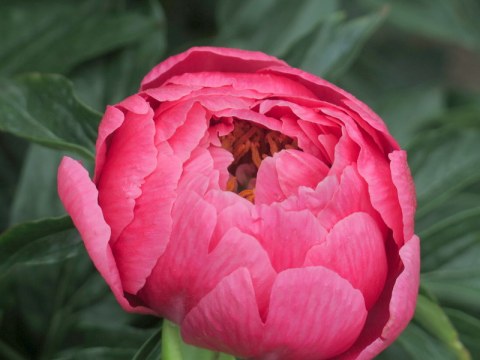
Peony at the NYBG’s ‘Impressionism: American Gardens on Canvas.’ Photo by Carole Di Tosti
If gardens represent a fount of life, revealing some of humankind’s and nature’s finest living creative achievements, artists throughout the centuries have been inspired to recreate on canvas the fanciful delight of blooming plants selected and arranged to display the best of life’s natural pageantry.
As part of the 125th year celebration of the NYBG, the dynamic NYBG team (scores collaborated to mount this exhibition), are paying tribute to the gardens that inspired American Impressionist painters (a brand of impressionism that revolves around subject, not painterly style).
The showpieces of “Impressionism: American Gardens on Canvas” receive an exquisite rendering in a unique floral exhibit at the Enid. A. Haupt Conservatory, and complementary display of more than 20 paintings and sculptures in the LuEsther T. Mertz Library’s Art Gallery.

Roses at the Enid A. Haupt Conservatory, NYBG exhibit, ‘Impressionism: American Gardens on Canvas.’ Photo by Carole Di Tosti
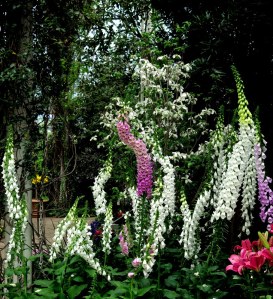
Foxgloves at the Enid A. Haupt Conservatory, NYBG’s ‘Impressionism: American Gardens on Canvas.’ Photo by Carole Di Tosti
Both the art work at the gallery and the show gardens in the conservatory capture American historical trends in painting (in plein air, influenced by French impressionism), around the turn of the 20th century and reflect the renewed interest in Colonial Revival gardens found in private residences and art colonies in the Hamptons and Old Lyme Connecticut.
The vibrant impressionist paintings and the radiant, ebullient floral showcase in the conservatory are mirror images of one another. The paintings reflect the subject American Impressionists were most enthralled by, American gardens.

Counterclockwise from top: Matilda Browne, “In Voorhees’s Garden,’ William Chadwick, ‘Irises,’ Daniel Putnam Brinley, ‘The Peony Garden,’ NYBG exhibit, ‘Impressionism: American Gardens on Canvas.’ Photo, Carole Di Tosti
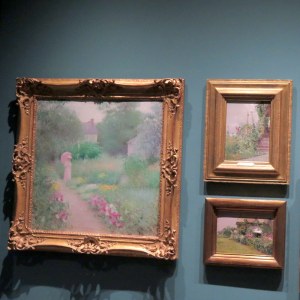
Counterclockwise from top: Edmund William Greacen, ‘In Miss Florence’s Garden,’ John H. Twachtman, ‘Wildflowers,’ Theodore Wores, ‘Thomas Moran’s House (East Hampton, Long Island)’ NYBG’s ‘Impressionism: American Gardens on Canvas.’ Photo by Carole Di Tosti
Artists appreciated that the gardens of the time uniquely characterized the domestic experience on the East Coast. They highlighted how middle and upper middle class Americans turned to their gardens for respite, relaxation, emotional uplift and sanctuary from the confusion of the cities, the unhealthful effects of pollution with heavy industrialization and unsettling urbanization.
The entire exhibition encompassing both venues reveals the marriage between the artists’ impressionism and their veneration of floral homespun, of gardens whose symbolism acknowledged a unique, national character distinct from the formal European gardens of France and the heavy-handed Victorian gardens of the gilded age. Americans seemed to have a desire for such subjects, though every now and then artists honed in on the more formal garden aspect sometimes for utilitarian reasons.

John Singer Sargent, ‘The Fountain of Oceanus,’ (1917), NYBG exhibit, ‘Impressionism: American Gardens on Canvas.’ Photo Carole Di Tosti
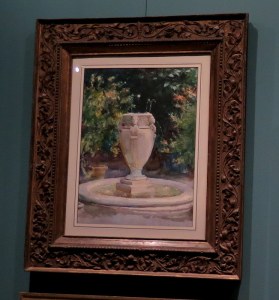
John Singer Sargent, ‘Vase Fountain Pocantico,’ NYBG’s ‘Impressionism: American Gardens on Canvas.’ Photo, Carole Di Tosti
John Singer Sargent painted The Fountain of Oceanus (1917) and Terrace, Vizcaya (1917), when he was visiting two wealthy families to complete portrait commissions. (both paintings are at the LuEsther T. Mertz Library Art Gallery) William de Leftwich Dodge built a studio house on Long Island in an airy classical style and created a series of Impressionist paintings to magnify his design of the terraced formal gardens and intricate pergolas. (His painting The Artist’s Garden [1916] may also be viewed at the Library Art Gallery)
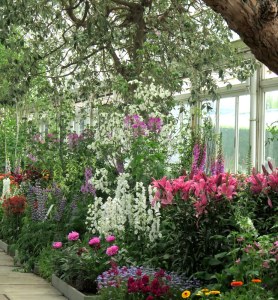
NYBG’s ‘Impressionism: American Gardens on Canvas.’ Photo, Carole Di Tosti
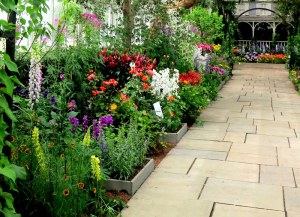
NYBG’s ‘Impressionism: American Gardens on Canvas.’ Photo, Carole Di Tosti
At the time (1890s-up to WW I), there was a burgeoning interest in gardening and horticulture. Avid gardeners from spring to fall embraced planting multiple flowering species, so that when segments of flowers finished their growing seasons, others timed with sowings and plantings would be exploding into an exuberant cornucopia of petals as the earlier plantings waned. Thus, the gardens would always or nearly always be in a rainbow of blooms.
Concurrently, artists influenced by European impressionism were returning to America where they evolved their own cultural impressionism centered around intimate American lifestyle subjects.

NYBG’s ‘Impressionism: American Gardens on Canvas.’ Photo by Carole Di Tosti

NYBG’s ‘Impressionism: American Gardens on Canvas.’ Photo by Carole Di Tosti
They eschewed the panoramic landscapes of the frontier style paintings of the golden west and expansive, mountain stained vistas. They supplanted images of vastness with the discrete, intimate, homely patchwork of every day life in the East. Our impressionists (like the French impressionists), painted urban scenes, old farms, villages with colonial styled homes, picturesque public parks and unpretentious homestyle gardens where the gardeners themselves were nature artists. But these were uniquely American.
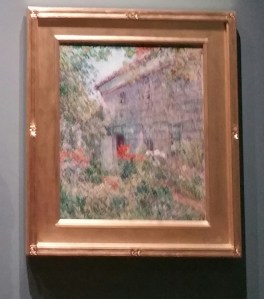
Child Hassam, ‘Old House and Garden, East Hampton, Long Island,’ (1898) at NYBG’s ‘Impressionism: American Gardens on Canvas.’ Photo by Carole Di Tosti

Persian buttercup at the Enid A. Haupt Conservatory, NYBG exhibit, ‘Impressionism: American Gardens on Canvas.’ Photo, Carole Di Tosti
There was a synergy that occurred by happenstance. Following French Impressionist Claude Monet’s example at Giverney, some artists (Hugh Henry Breckenridge, John H. Twachtman, Maria Oakey Dewing, William de Leftwich Dodge), planted their own gardens to evoke inspiration, then applied paint to canvas distilling the picturesque living arrangement they had effected in an intriguing unity of aesthetics. The conceptualization was that the gardens were echoes of their canvas counterparts; they were living paintings. What the artist did was to telescope the natural beauty not with a realistic style of painting, but one that was restive, evocative, with heavier brushstrokes. The thickness of paint teased out amorphous shapes and these hinted at the innate virtuosity of animate flowers. Artists could glorify an expansive color palette which reflected life’s infinite variety and emphasized an explosive riot of colors bursts.
Gardens like Ceilia Thaxter’s (Appledore Island, Maine), provided a wealthy subject for artists like Childe Hassum, who was a regular visitor to Thaxter’s seaside garden.
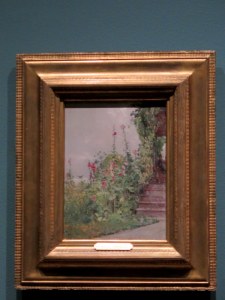
Childe Hassam, ‘Celia Thaxter’s Garden, Appledore, Isles of Shoals’ (1890), NYBG’s ‘Impressionism: American Gardens on Canvas.’ Photo, Carole Di Tosti

Floral show at the NYBG’s ‘Impressionism: American Gardens on Canvas.’ Photo, Carole Di Tosti
He painted in plein air and enjoyed the luminosity of the sunlight bouncing off the alternate churning ocean waves and smooth glassine waters. Thaxter was a poet, writer, gardener and quasi-horticulturalist whose informal summer artist colony was frequented by renowned romantic/abolitionist/regional writers (i.e. Henry Wadsworth Longfellow, Nathaniel Hawthorne, John Greenleaf Whittier, Sarah Orne Jewett), and painters (William Morris Hunt and Childe Hassum), both of whom painted her and her colorful botanical evolutions.
Thaxter’s grounds, like other artist/gardeners of the period made sure her beds were replete with quaint and strikingly picturesque old-fashioned floral favorites of grandma’s “thrown-together” garden.
Through various seasons, these might include spiking blooms of phlox, hollyhock, lupines, piquant snap dragons and pointed delphiniums, the popular, tasty sweet peas, puff-ball hydrangeas, carpeting forget-me-nots, bachelor buttons and sweet-faced violas, that ran like pixies up to the edge of porches and backdoors and nooks and crannies.

Iris at the NYBG’s ‘Impressionism: American Gardens on Canvas.’ Photo by Carole Di Tosti
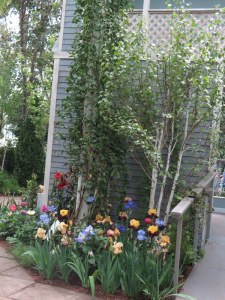
Iris planted by the cottage at the NYBG exhibit, ‘Impressionism: American Gardens on Canvas.’ Photo by Carole Di Tosti
And in corners blue and yellow iris might appear to their finest advantage. From spring to fall, an exquisite luxuriance of flowers blossomed. Examples of these species may currently be seen blooming in the Enid A. Haupt Conservatory floral showcase.
These widely planted varieties along with roses, peonies, cleomes (spider flowers), baby’s breath, cosmos, strawflowers, poppies, and golden tickweed at various times of spring and summer months flourished in wide swaths of varicolored beds planted to imbue a non-formal seemingly random outgrowth. Conscious gardeners intentioned the appearance of helter skelter, profuse arrangements, as if the plants themselves decided which spots suited them best and plopped there unceremoniously to stretch out and take the sun and rain with ease.
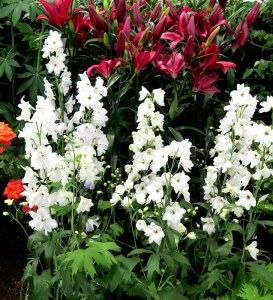
American gardens at the Enid A. Haupt Conservatory, NYBG exhibit, ‘Impressionism: American Gardens on Canvas.’ Photo, Carole Di Tosti

Country cottage at the Enid A. Haupt Conservatory, NYBG’s ‘Impressionism: American Gardens on Canvas.’ Photo, Carole Di Tosti
Attention was given to colonial revivalist styles where gardens were utilitarian, intimate and incorporated the lifestyle arrangements of the family so that the matron of the house, for example, could fling open the backdoor and pick the heavenly scented lavender to create sachets or go to the side of the house to pick peonies for a table arrangement.
Beginning with inspiration from the artists whose adoration of vintage gardens as a throwback to a more gentile and nostalgic time, Guest Curator Linda S. Ferber applied her expertise to investigate seminal works, some known, some from less renowned American impressionists.
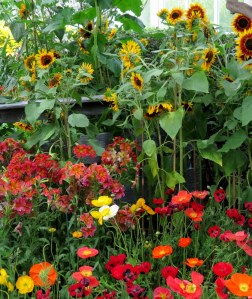
Poppies and sunflowers at the NYBG’s ‘Impressionism: American Gardens on Canvas.’ Photo Carole Di Tosti

Strawflower ‘hot bikini’ at the NYBG’s ‘Impressionism: American Gardens on Canvas.’ Photo, Carole Di Tosti
From the guest curator’s selections which included one formal garden, the predominance of works encompassed the artistic loveliness of dooryard gardens of homes in various locales in the East, some in Pennsylvania and Maine and some in the Hamptons, New York which picture grey shingled houses festooned by splashes of variegated hued plants.
The various works then provided the creative heart for Francisca Coelho and the horticultural staff to gain their inspiration and provide the doorway into recreating a three season garden encapsulating the style, elegant simplicity and peace-filled homey comfort these American gardens exuded.
Their splendid result abides in the Enid A. Haupt Conservatory even to the recreation of the grey clapboard, white shuttered country cottage that one would adore living in to escape the frenetic pace of the city. The cottage has a porch with rocking chairs and if you sit in one and look out on the hollyhocks, foxgloves, delphiniums, sweet peas, beauteous painted tongue and all the flowers previously mentioned here (you need to take an up close and personal view to catch them all), you will exhale a deep breath and allow the fragrances and mystical plenitude of nature to incite your senses and move you to a peaceful sense of well being.
This splendid exhibit at the New York Botanical Gardens runs from May 14th through September 11, 2016. To purchase tickets and check programming for the event and throughout the summer click the website HERE.
A facsimile of this article appears on Blogcritics at this site.
A Million Daffodils, Celebrating NYBG’s 125 Anniversary

Project 1 million daffodils at the NYBG. Photo by Carole Di Tosti
The past week and one-half has been deary, cloudy and rainy as the cold front lingered. However, the week before, Earth Day weekend festivities at the NYBG sported good weather. The sun peeked out and it was warmer from noon on, just in time to appreciate the daffodil blooms at their height as well as the wine tastings and interesting wine and distilled spirit selections from upstate and around the city (The City Winery).

NYBG planters with the colors of spring, daffodils and violets. Photo, Carole Di Tosti
To celebrate the 126th anniversary, the NYBG is planting 1,000,000 daffodils and I had the opportunity of seeing their initial efforts which began with the expansion of the historic Narcissus collection at Daffodil Hill where staff planted 150,000 bulbs in October 2015.
On that Earth Day Daffodil Sunday, walking the by-ways past the Everett Children’s Adventure Garden into the farther reaches where I had never gone before, the daffodils were in heady bloom along with the flowering cherries and other blooming trees.
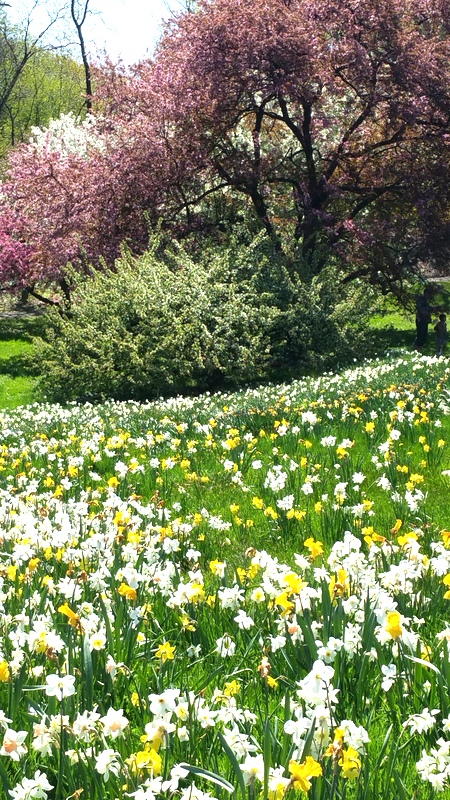
NYBG one million daffodil initiative. Photo by Carole Di Tosti
It was spectacular. I was glad that I arrived earlier in the day because I knew the crowds would be thick as they meandered with drinks and cameras in hand stopping for photos or sitting on the grassy areas in the sun to enjoy the wine and light snacks that were available for purchase.

Daffodils and flowering cherry trees at the NYBG.
The initial planting is now on the increase and over the next six years, staff, volunteers and members will be adding more plantings (in the tens of thousands), each year in October until that magical number is reached. British romantic poet William Wordsworth wrote about the spiritual renewal we feel through nature’s beauty.
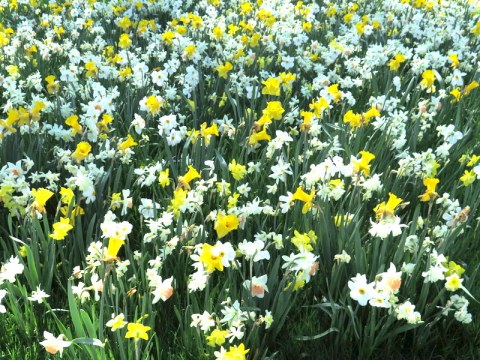
NYBG daffodils part of the ongoing 1 million daffodils project over the next 5 years. Photo Carole Di Tosti
In a famous poem of his, “I Wandered Lonely As A Cloud,” the narrator/Wordsworth discusses his feeling disconsolate and alone as he took long walks seeking to be uplifting in his soul. But it was only when he came across a dazzling array of golden of daffodils that stretched as far as his eyes could see, that his heart and spirits regenerated. And whenever those downcast feelings would arise, he had only to see “in his mind’s eye” that vision of the joyful daffodils “dancing in the breeze” to become restored to a state of balance and contentment.
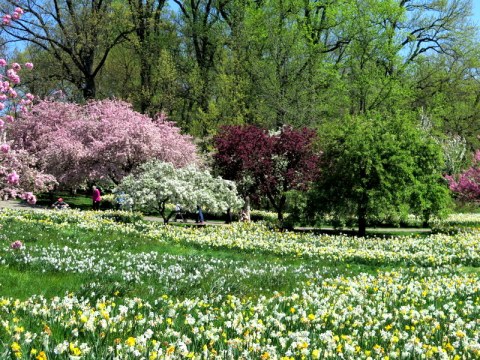
NYBG near Daffodil Hill. Photo by Carole Di Tosti
When this daffodil initiative is completed in the next years our experience will recall Wordsworth’s. It will be breathtaking to see daffodils that span the lawns and Daffodil Hill in a great swath of yellow, gold, tricolor and cream yellow in a multitude of varieties. After the project is completed in a few years, for those who visit Daffodil Hill at the NYBG, as they look in the distance and turn around in every direction, they will see daffodils, thick and lush in the landscape, smiling and dancing in the breeze. Like Wordsworth it will be a picture that one can recall to remembrance in the heft of winter as a heavenly uplift that spring is on its way.
The pictures that follow represent the initial stages of the one million daffodil project. Daffodils which symbolize rebirth and are known elsewhere as the “Lent Lilly” because they grow and burgeon during Lent are a lovely choice to recognize and appreciate the NYBG’s 125th year in the Bronx.

Flowering cherry tree at the NYBG near Daffodil Hill. Photo by Carole Di Tosti
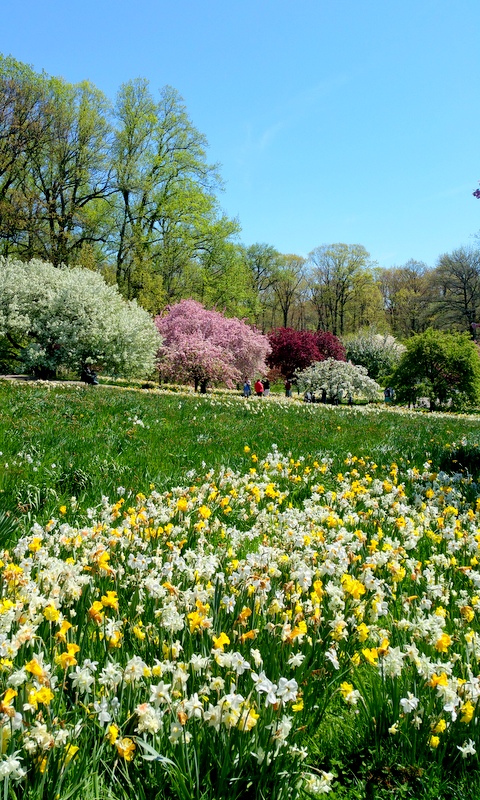
NYBG near Daffodil Hill. Photo by Carole Di Tosti
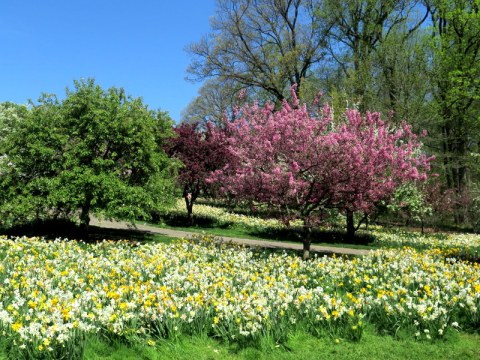
NYBG, Daffodil Hill, one million daffodil initiative. Photo, Carole Di Tosti
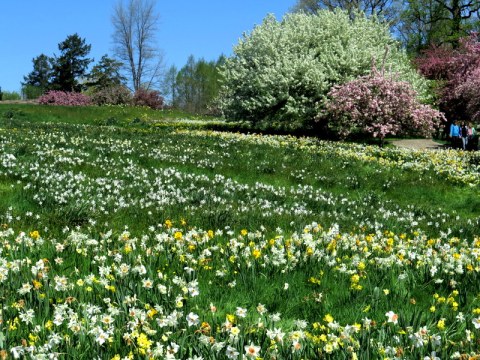
NYBG Daffodil Hill, one million daffodil initiative. Photo by Carole Di Tosti

NYBG, Daffodil Hill, one million daffodil initiative. Photo by Carole Di Tosti
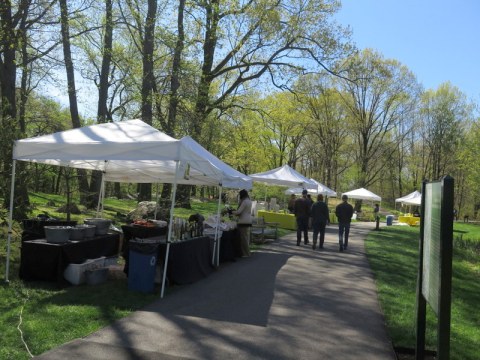
Along the wine tasting trail at the NYBG, 125th Anniversary Celebration and Daffodil weekend. Photo, Carole Di Tosti
The wineries who displayed their selections at the NYBG were from upstate New York. Some are featured below and their websites are listed if you click on the name: PALAIA WINERY.
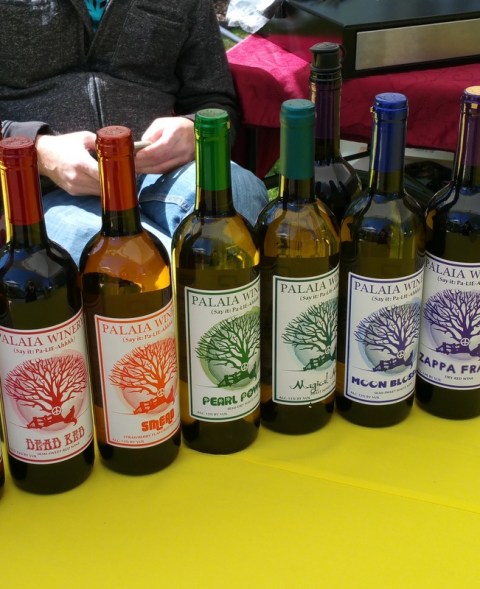
NYBG Wine Tasting at the 125th Anniversary Celebration during Daffodil weekend. Featured are Palaia Winery wines. Photo by Carole Di Tosti
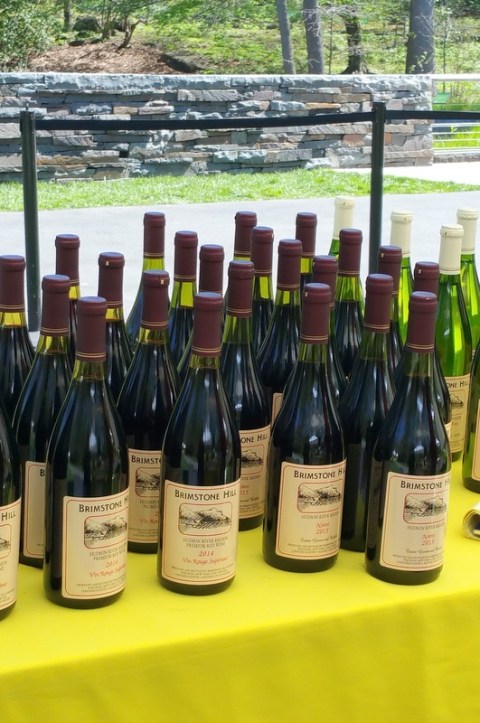
NYBG Wine Tasting at the 125th Anniversary Celebration of the one million daffodil initiative. Featured are wines from Brimstone Hill Winery. Photo by Carole Di Tosti
WARWICK VALLEY WINERY & DISTILLERY
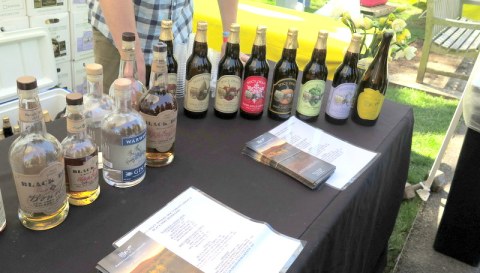
NYBG Wine Tasting and 125th Anniversary Celebration with the one million daffodil initiative. Featured wines by Warwick Valley Winery & Distillery. Photo by Carole Di Tosti.
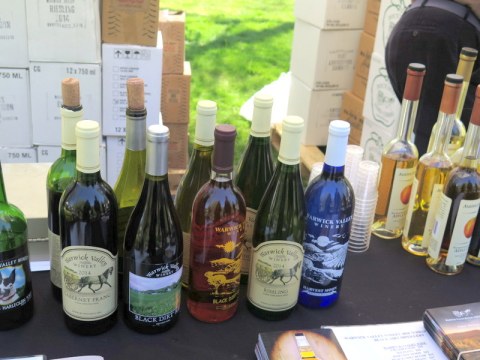
NYBG Wine Tasting, Warwick Valley Winery & Distillery (Black Dirt Distillery). Photo, Carole Di Tosti

More daffodils at the NYBG one million daffodil initiative. Photo by Carole Di Tosti
The NYBG is offering an opportunity to become a part of the legacy. A contribution of $25.00 will support the planting of five daffodil bulbs that will be contribute to the one million daffodil display in the next few years. Gifts can be made in honor or memory of a loved one and the family member or honoree may be notified of your thoughtful gift with a card. To make a gift, be a part of the one million daffodil initiative or learn about other dedication opportunities call Lisa Sifre at 718-817-8545 or e-mail daffodils@nybg.org. Or visit million-daffodils.nybg.org
Earth Day & Weekend Celebrations at the New York Botanical Garden, April 22-24
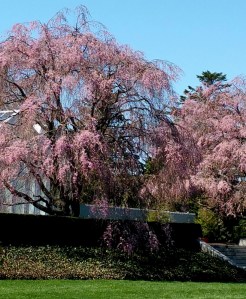
NYBG flowering trees beginning to blossom. Photo Carole Di Tosti
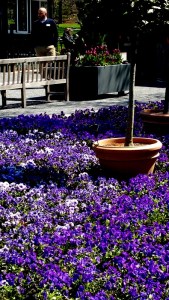
Violets are blooming at the NYBG. Photo by Carole Di Tosti
It is dismal, cold, damp weather and Punxsutawney Phil has committed suicide because of his incorrect prognostications of an early Spring! So went a humorous Facebook post I saw yesterday with a picture of a dead groundhog with a gun lying across his chest. Well, Spring has come despite the rainy, chilly bleakness. But at the New York Botanical Garden nature is thrilled. The Garden is manifesting its beauty, despite the less than sunny conditions.
All through the Spring and summer months, the various sections of the Garden will be radiant in their finest of blooms: the rose garden, the lily ponds and more. Interspersed here and there to match the outdoor beauty, the conservatory exhibits will sport more magnificent floral theater centered around various themes. Throughout the year the Garden is always vibrant with the flavors, sights and sounds of natural horticultural beauty. Some feel the fall retains the most vibrant pageantry of all the seasons.

Tulips at the NYBG. Photo by Carole Di Tosti

Vibrant tulips at NYBG. Photo Carole Di Tosti
A celebration that represents something we all should lift up is recognition of the planet that nurtures us. Earth Day is upon us and the NYBG is commemorating with three days of activities. Perhaps the the finest, most reckoning event is on Earth Day (Friday, April 22nd). Earth Day, a national event with parades and festivals, is the underappreciated and understated day that is relevant to our lives and those of our posterity.
To recognize its importance, on Friday, the Garden will be screening Seeds of Time. Directed by Sandy McLeod, the film is a compelling documentary about global agriculture, the increasing difficulties facing the world’s food supply and the seeds that must be stored for future generations.

Daffodils are blooming at the NYBG. Photo by Carole Di Tosti
Hopefully, these seeds will not be hybrids or Monsanto tweaked seeds, but will be heirloom seeds that can be planted for lifetimes.
If you stay after the screening, you will be able to enjoy a discussion and Q and A by CaryFowler, Senior Advisor of the Global Crop Diversity Trust, and the Academy Award-nominated director of Seeds of Time, Sandy McLeod. Both will be discussing how agriculture, unless it is rethought and redirected will not be able to supply the world with food unless there are sustainable practices. Both will discuss the vital issues the filmmaker raises in the film.
Container plantings at the NYBG. April 22-24, 2016. Photo by Carole Di Tosti
Barring inclement weather, Saturday and Sunday, April 23 & 24, the Botanical Garden is showing off her splendor in a panoply of spectacular spring blooms Along the paths and the beds throughout the Garden, the 150,000 daffodil bulbs planted in November 2015 will be bursting with joyful glory and unmistakable fragrance.
If you are familiar with William Wordsworth’s poem, “I Wandered Lonely As A Cloud” you will remember how Wordsworth, a romantic poet, uplifted nature to stave off the growing industrialization and mechanization of the factories which dehumanized, and brutalized city life. The romantics believed that through the spiritual aspects of nature man could be restored. The opening lines of Wordsworth’s “I Wandered Lonely As A Cloud” begin:

Daffodils, some of the 150,000 bulbs planted last fall at the NYBG. Photo Carole Di Tosti
Daffodils are a joyful harbinger of warmer weather and Wordsworth commented that their wealth of beauty lasted with him long after he left that location. All he had to do was remember in his mind’s eye their lovely happiness and he was spiritually refreshed.
Well, this weekend will offer not only spiritual rest and peace the Garden brings to rejuvenate one’s soul to face Monday, but there will be liquid refreshment, a wine tasting against the amazing backdrop of the Garden’s blooming trees and sprightly flowers. New York State vintners will offer palate-pleasing local wines while experts on winemaking and viticulture will host demonstrations and presentations all weekend long.
For the full media alerts, go to:
Seeds of Time screening (Friday, April 22):
http://www.nybg.org/files/EarthDay2016MEDIAALERT.pdf
Daffodil Celebration & Wine Weekend (Saturday and Sunday, April 23 & 24):
http://www.nybg.org/files/pr/Daffodil_Wine_Weekend_2016_Media_Alert.pdf
The Earth Day weekend promises to be a memorable one. What better way to celebrate Spring, the 125 Anniversary of the NYBG and the sustenance and sustainability of our planet?
 CAROLE DI TOSTI