Category Archives: New York Film Festival
‘Anemone’ @NYFF Brings Daniel Day-Lewis’ Sensational Return
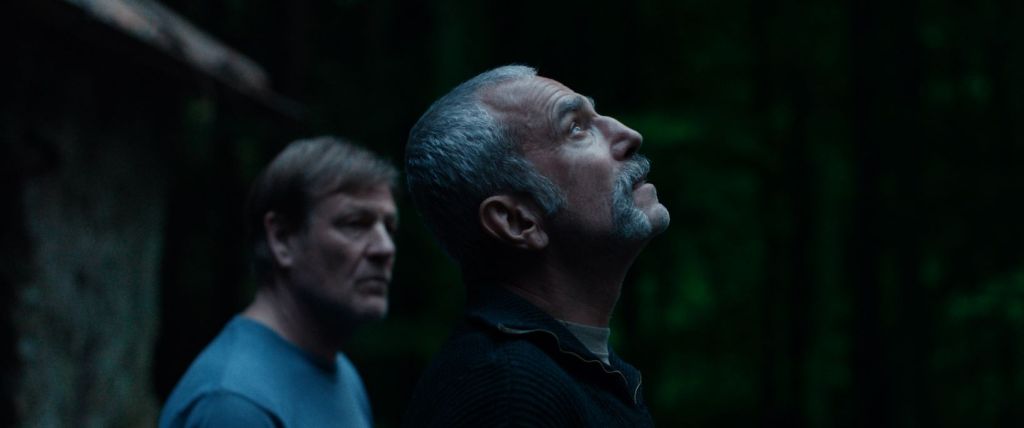
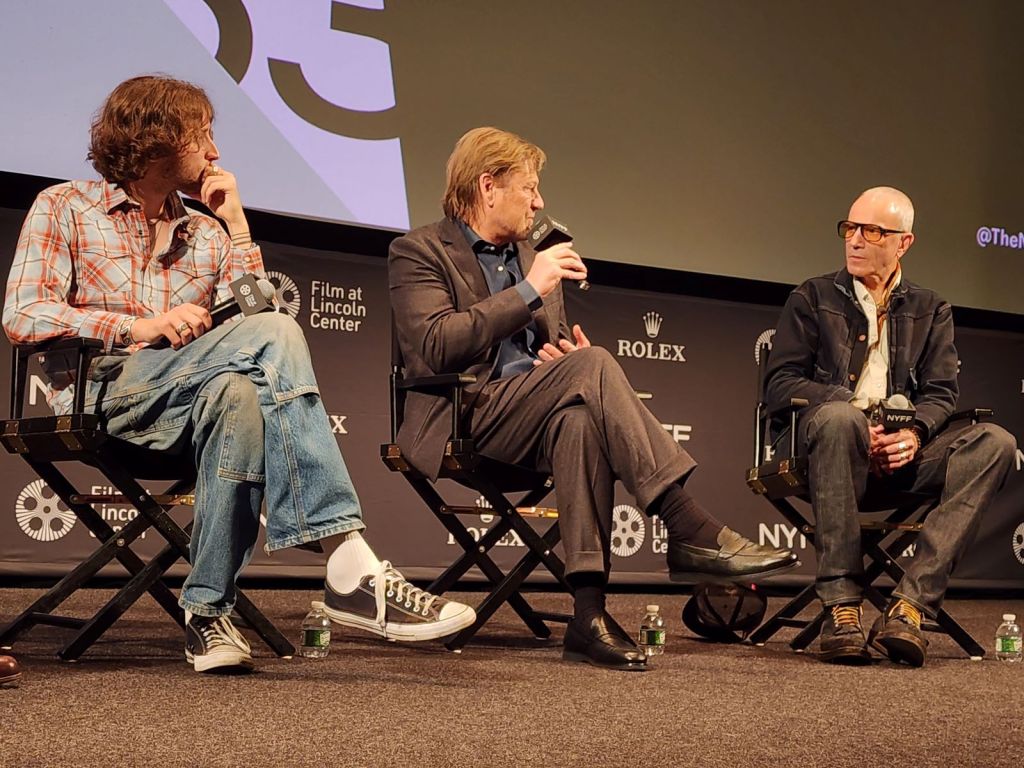
Supporting his son Ronan Day-Lewis’ direction in a collaborative writing effort, Daniel Day-Lewis comes out of his 8-year retirement to present a bravura performance in Anemone. The film, his son’s directing debut, screened as a World Premier in the Spotlight section of the 63rd NYFF.
Ronan Day-Lewis’ feature resonates with power. First, the eye-popping natural landscapes captured by Ben Fordesman’s cinematography stun with their heightened visual imagery. Secondly, the striking, archetypal symbols illuminate redemptive themes. Day-Lewis uses them to suggest sacrifice, faith and love conquer the nihilistic evils visited upon Ray (Daniel Day-Lewis) and ultimately his entire family.
Finally, the emotionally powerful, acute performances, especially by Daniel Day-Lewis’ Ray and Sean Bean’s Jem, help to create riveting and memorable cinema.
The title of the film derives from the anemone flower’s symbolic, varied meanings. For example, one iteration relates to Greek mythology in the story of Aphrodite, whose mourning tears, shed after her lover Adonis’ death and loss, fell on the ground and blossomed into anemones. Also referenced as “windflowers,” anemone petals open in spring and are scattered on the wind. Possibly representing purity, innocence, honesty and new beginnings, the film’s white anemones grow abundantly in the woodland setting where reclusive Ray makes his home in a Northern England forest.
In a rustic, simplistic hermit-like retreat Ray lives in self-isolation, alienated from his family. Then one day, his brother Jem, prompted by his wife Nessa (Samantha Morton), mysteriously arrives. The director focuses on the action of his arrival withholding identities. Gradually through the dialogue and the rough interactions, heavy with paced, long silences, we discover answers to the mysteries of the estranged family. Furthermore, we learn the characters’ tragic underpinnings caused by searing events from the past. Finally we understand their motivations and close bonds despite the estrangement. By the conclusion family restoration and reconciliation begins.
Unspooling the backstory slowly, the director requires the audience’s patience. Selectively, he releases Ray’s emotional outbursts. These reveal his decades long internal conflict with himself, for not standing up to the perpetrators of his victimization. Neither Jem nor Nessa (Samantha Morton), Ray’s former girlfriend who Jem married after Ray abandoned her and their son, know his secrets. However, the slow revelations of abuse spill out of Ray, as Jem lives with him and endures his ill treatment and rage.
Each brief teasing out of pain-laced information that Jay spews impacts Jem. Because Jem receives strength and understanding from his faith, he puts up with Ray. Indeed, the various segments of Jay’s story seem structured as turning points. Each moves us deeper into Jay’s soul and Jem’s acceptance. Cleverly, by listening to his brother and encouraging him to speak, Jem breaks down Ray’s resistance.
Ray and Jem’s emotional releases trigger and manipulate each other. Once set off, the revelations full of anguish and subtext fall in slow motion like dominoes. Then, climactic sequences augment to an explosive series of events. One, a treacherous wind and hail storm, represents the subterranean rage and turmoil which all of the characters must expurgate before they can heal and come together.
Jay particularly suffered and needs healing. Throughout his life the patriarchal institutions he trusted betrayed and abused him. From his home life (his father), to the church (a cleric), and the military (his immediate superiors), emotional blows attack his soul and psyche. Also, the military makes an example of him. Not only was the abuse unjustified and misunderstood, the perpetrators covered it up and forced his silence. The cruel, forced complicity makes his life a misery in a perpetuating cycle of guilt and shame.
As a result, because Jay’s self-loathing pushes him deeper within his pain, he can’t discuss what happened with his family or anyone else. Of course, he refuses to get help in therapy. Instead, he escapes into nature for solace and peace. The society’s corruptions and his family’s still embracing the institutions that abused him stoke his anger and enmity.
Neglecting his brother Jem, Nessa and his son Brian, who is grown and needs him, Jay perpetrates a psychological violence on them. None of them understand Jay’s abandonment. Sadly, Ray’s absence and rejection shape Brian’s life. Embittered and violent, he endangers himself and others.
How Day-Lewis achieves Ray’s epiphany through Jem’s love occurs in an indirect line of storytelling, through Ray’s monologues and the edgy dialogue between Jem and Ray. By alternating scenes of Nessa and Brian in the city with the brothers in the forest, we realize that time is of the essence. Jem must convince Ray to return to their home to make amends with his son Brian as soon as possible because of a looming threat.
Ultimately, the slow movement in the beginning dialogue could have been speeded up with a trimming of the silences. However, Day-Lewis purposes the quiet between the brothers for a reason whether critics or audience members “get it” or not. The silences reveal an other-worldly, telepathic bond between the brothers. Likewise, on another level Ray’s son Brian connects with his father spiritually, though they are miles away. The director underscores this through Nessa who understands both father and son need each other. Nessa encourages Jem to bring Ray home to Brian. Day-Lewis also uses symbolic visual imagery to suggest the spiritual bond between father and son.
In Anemone, the themes run deep, as the filmmakers explore how love covers a multitude of hurts and wrongdoings. Anemone releases in wider expansion on October 10th in select theaters. For its 63rd New York Film Festival announcement go to https://www.filmlinc.org/nyff/films/anemone/
‘After the Hunt’ Featuring Julia Roberts, Andrew Garfield @63rd NYFF
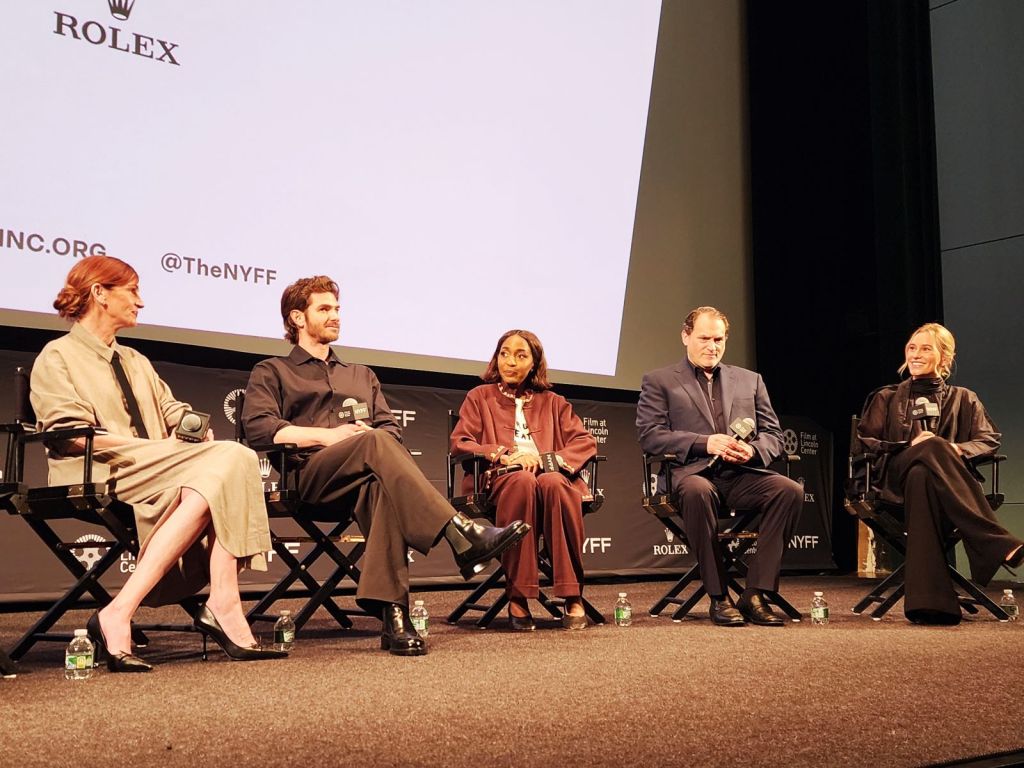
After the Hunt
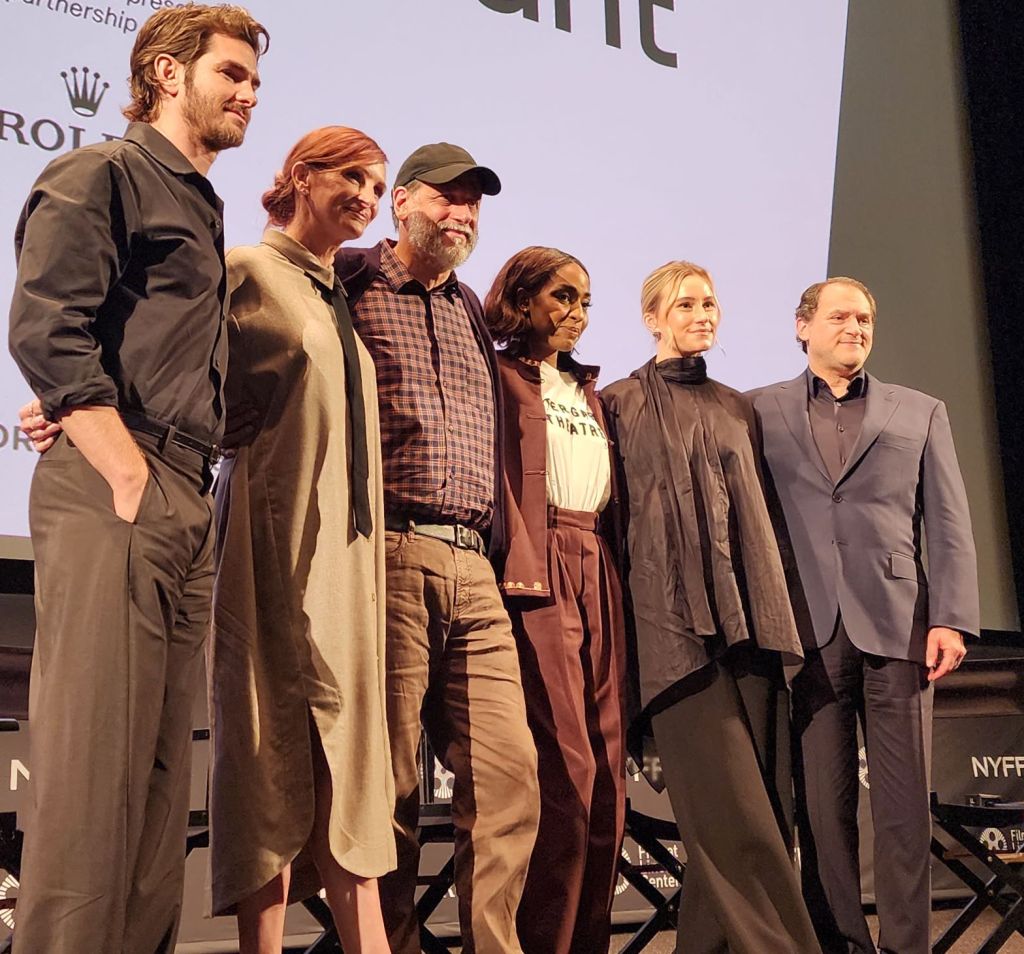
Directed by Luca Guadagnino and written by Nora Garrett, After the Hunt is a complex, psychological, mystery drama with comedic/ironic flourishes that turn culture wars on their heads. Pointedly, its entangling themes never resolve into a satisfying resolution. Reflective about current social issues involving sexual abuse, gender identity, race, power dynamics, ethics and women’s career ascendance against the backdrop of Yale University in New Haven Connecticut, Guadagnino and Garrett tackle some of the themes credibly. Others they leave swinging in the winds of uncertainty.
Thanks to the incisive performances of principals Julia Roberts, Michael Stuhlbarg, Andrew Garfield and Ayo Edebiri, the film’s central mystery whether sexual abuse did or didn’t occur and why it occurred holds our interest.
However, the subtle nuances and motivations each character reveals become convoluted and incoherent at times. Is this in the service of the notion that human beings are layered, self-destructive, self-betrayers driven by their own nihilistic impulses? In a further irony, the philosophy professors Alma (Roberts) and Hank (Garfield), and their Ph.D. student Maggie (Ayo) are adept at weaponizing philosophy as a defense they use to promote their personal agendas. As a perfect foil, the most well-drawn character of rationality, Alma’s husband psychiatrist Frederick (Stuhlbarg), receives the prize for being the authentic adult in the room. Stuhlbarg’s Frederick is a perfect delight to watch and a welcome relief from the others’ Sturm and Drang.
Main Slate Section of the NYFF
Having its world premiere at the 2025 Venice International Film Festival, After the Hunt in its North American premiere opened the New York Film Festival in the Main Slate section. Interestingly, though the film takes place at Yale University in New Haven, Connecticut, Guadagnino filmed it in England. The superb set design provides the ambience for the 2020 setting and final epilogue in 2025.
In the opening scene, Guadagnino shares his first clue with a title message stating that the event happened at Yale. However, many events occur at the party Alma holds at her home for her students, colleagues and friends. First, we learn about Hank, Alma and Maggie, those closest to Alma, who briefly discuss Maggie’s dissertation on why she selected her topic, “the resurgence of virtue ethics.” Additionally, we learn that Alma and Hank compete for a tenured line professorship. Frederick asks both how they would respond if the other wins it? Do we take them at their word or do they lie?
Finally, Maggie goes to the bathroom. In searching for toilet paper, she finds a “hidden” envelope taped to the interior top of a cabinet. When Maggie opens the envelope she sees it contains an article and pictures. Maggie takes the article which we don’t see in close-up. So much for Maggie’s ethics and respect for her beloved professor’s privacy. Immediately, we note an immoral aspect of her character. We also have an indication of Alma’s character in placing an envelope with secret information where it can be found.
Initial incidents we see, a hidden incident occurs we don’t see
These initial incidents that we see, eyes wide open, take place in Alma and Frederick’s house. However, another incident that happens after the party, we don’t see. We hear about it from the victim, Maggie, who returns the next day to Alma’s. Dripping wet, bedraggled and forlorn, a waif to sorrow over, Maggie tells Alma that Hank sexually attacked her. Maggie admits she shouldn’t have allowed Hank to come over after the party where they had been drinking. Of course, he didn’t stop after she kissed him, though she said, “No.”
Somewhere in the emotional grist of this event that Alma doesn’t initially respond to with care and concern, we consider Maggie’s highly leveraging position at Yale, the antithesis of a conservative, “Red State” university. She is a Black, gay student whose wealthy parents donate heavily to Yale. Close to her professors Hank and Alma, who taught Hank, she goes to Alma for support. Maggie suggests Alma’s background will help her understand what Maggie feels. This comment short circuits Alma. Manipulatively, Maggie brings Alma into the situation and makes it personal to her. In other words, whatever Maggie read in the article she uses as leverage to manipulate Alma to help her. Confused, Alma wonders what Maggie knows about her.
Questioning Maggie’s motives
Thus, we question the wisdom of Maggie’s manipulation and wonder what information the hidden article about Alma held. Also, we question the extent to which the article influenced Maggie to invite Hank to her apartment where she kissed him and then tried to back off his advances. Did this event even occur? What underlying motives does Maggie have if It didn’t? By this point we have forgotten the ironic import of Maggie’s dissertation topic (the resurgence of virtue ethics). If virtue ethics gives weight to practical wisdom and the pursuit of a flourishing life through moral excellence, Maggie appears a hypocrite to even deal with such a topic. Taking the article about Alma doesn’t exemplify moral excellence. Neither does manipulating her with it.
Nevertheless, Maggie’s potentially heart-wrenching emotional experience of sexual assault by a close professor becomes occluded by many factors. Perhaps because of Alma’s cool response, we don’t feel sorry for Maggie or believe her. Her moral ambiguity taking the secret article also makes us question her veracity. Indeed, in the discussion of the “rape” by Alma, Hank and others, then in subsequent compelling scenes more information about the three philosophers unfolds. Against Alma’s suggestions, Maggie presses charges against Hank a surefire way to end his career at Yale.

Spiders spinning webs
As Garrett and Guadagnino spool out clues to interconnecting spider webs spun by three clever spiders with conflicting agendas and motivations, we remember Frederick’s unction about Maggie. He implies that Maggie is a mediocre student. This gives credence to Hank’s assertions that Maggie plagiarized parts of her dissertation. Apparently, her abilities falter, she can’t do the research and resorts to plagiarism. In fact Maggie’s plagiarism will disqualify her Ph.D., and possibly get her evicted from Yale, if either Hank or Alma hold her to account. How should Hank handle Maggie’s plagiarism? Does Alma, an expert in her field qualifying for tenure know Maggie plagiarized? Why don’t Alma and Hank report or correct Maggie?
To what extent do repercussions from Maggie’s wealthy donating family shut Hank and Alma’s mouths about the plagiarism? Shouldn’t they take the moral high ground and have her change her dissertation instead of ignoring it? To what extent does Maggie use the race card to her advantage? Doesn’t she understand that her behaviors play into the stereotypes about wealth, class and race? Does she even care?
Clearly, everyone’s careers are at stake, especially after Maggie accuses Hank of sexual assault. By this point morality, ethics and philosophy don’t help these philosophy professors and would-be philosophy professor. Governed by their own impulses of fight, flight, desire, need beyond intellectual thought, they founder in their own moral morass. Indeed, the irony becomes who is preying on whom? And “after the hunt,” who will be left standing and what will the carcasses look like?
Extreme complications
During the course of the film the complications become extreme when we learn that Alma and Hank had an affair which ends, perhaps prompted by Maggie’s accusation. Additionally, we learn that Maggie emulates Alma obsessively and loves her beyond a teacher student relationship. Also, we learn that Frederick knows about Hank and Alma, and understands the affair’s necessity and impermanence. Finally, we learn that Alma has some disease or pain that requires her to take pain killers or medicine that Frederick leaves on her table stand each morning. However, doctor and colleague Dr. Kim Sayers (Chloë Sevigny) also helps her out with medication.
How many more webs can Garrett and Guadagnino have their spiders spin? Well, Alma’s secrets have yet to be exposed. To what extent should truths be uncovered sooner rather than later to free individuals from wounds that govern their lives? Guadagnino and Garrett do have much to suggest about this through Alma’s revelations and Frederick’s wise love and counseling. Truly, as she says, “she doesn’t deserve him” and is fortunate that he loves her.
As an important point, this film could never take place in a part of the country that is governed by “red state” politics. Ironically, Connecticut, a blue state prides itself on listening to anyone coming forth with accusations. Safe to say that such events occur most probably in universities and colleges around the country. That the screenwriter and director set it in an Ivy League School that takes such issues seriously adds to the gravitas of the film.
In the Q and A after the film, Guadagnino admitted he is a provocateur, but more for entertainment purposes in a positive way. Perhaps, as an iconoclastic clown, he attempts to nudge his audiences to think after unsettling them and providing no easy answers. Indeed, the main tenor of After the Hunt appears to be his wish to provoke discussion more than to present a dialectic and conclusion. Considering his cavalier voice over “cut,” then blackout to end the over two hour film, Guadagnino suggests that the characters he set in motion will continue their duplicity and self-betrayal long after it’s “lights out.”
After the Hunt will open October 10th at select theaters. For screening information for the 63rd NYFF, go to https://www.filmlinc.org/nyff/films/after-the-hunt/
‘Late Fame’ Starring Willem Dafoe, 63rd NYFF
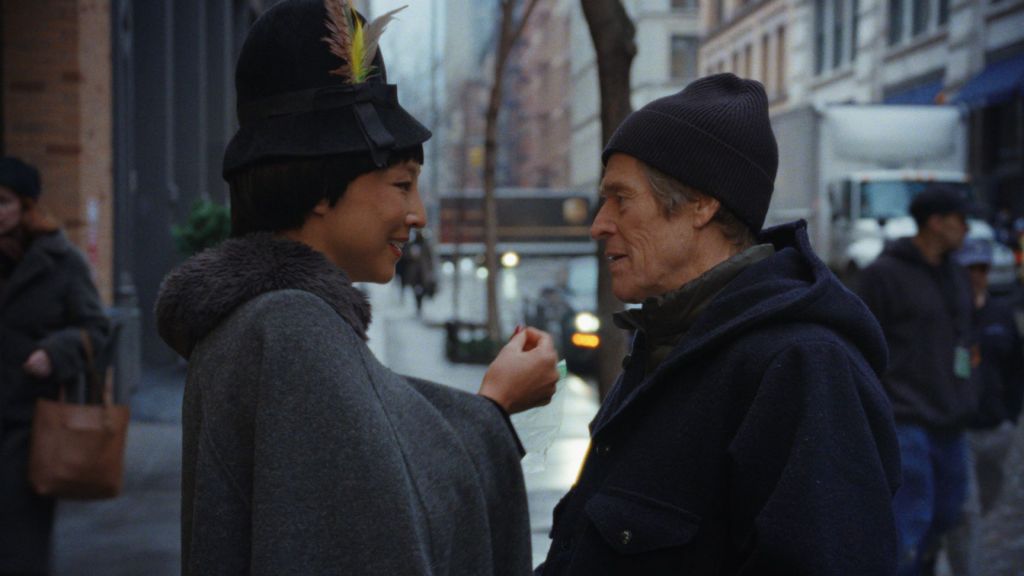
Adapted from the Arthur Schnitzler novella Late Fame, screenwriter Samy Burch (May/December) and director Kent Jones (Diana) shine a light on the West Village and Soho (circa 1970s) and Soho now at the height of its commercialization and development. With the incredible backdrop of factory buildings and West Village apartment buildings turned into fashionista haunts, and cobblestone streets still creating their unique atmosphere, a superb Willem Dafoe portrays the sensitive, once lauded poet Ed Saxburger. The craggy young man who had the world at his feet with the publication of his poetry book Way Past Go eventually gave up his typewriter to earn a modest living with a secure pension as a postal worker.
What happens to the passionate fire required to write poetry that gets published during a time when poetry was the lingua franca of the Village artist milieu, and Soho was the coolest place to be? If old soldiers fade away, does the same happen to promising poets whose work is well regarded but little read, then forgotten?
Late Fame investigates this phenomenon with atmosphere, nuance, irony and heart. It is Jones’ love letter to downtown Manhattan, vastly changed with remnants of its old beauty and undeveloped glory which made a comfortable home to artists of all stripes in the 1970s. Then, Dafoe’s character Ed Saxburger came East, spurred by the thought of fitting in with the artist colonies in Manhattan at that time.
The film which is in the Main Slate section at New York Film Festival is buoyed up by sterling performances from those assisting Dafoe, as he negotiates his empathetic protagonist who is stoic, reserved and charming, and a bit lost as he welcomes yet questions with open eyes his acceptance by a group of well-heeled twenty-somethings, who turn out to be poseur artists. Their mission is to recapture the ethos of Gregory Corso, Allen Ginsberg and others, but they are sorely out of their depth and lack the talent, grist and life wounds to do so.
The film unspools with Saxburger’s rediscovery by this exotic group of young would-be writers and philosophers branding themselves “the Enthusiasm Society.” An effete, wealthy Wilson Meyers (the excellent Edmund Donovan), leads the group of retrograde misogynists and artistes. When Saxburger asks where he found his book, with wide-eyed irony and pride, Meyers tells Saxburger he bought it at “Foyle’s on Charing Cross Road.” Indeed, Meyers uses Saxburger’s book as the equivalent to a museum piece around which Meyer centers his exploitation and cause célèbre.
On further discussion to introduce himself Meyers cavalierly asserts his and the Enthusiasm Society’s purpose to “stand against negativity” and the monetization of everything,” a mission that unravels when Saxburger gets to know him. Key to who they are, is that they distance themselves from lower lights, “the influencer culture, cellphone obsessed and technology maniacs.” These they excoriate, all the while imbibing the same waters because no one is paying attention. However, Saxburger is.
For example Meyers’ stunning, unhip apartment in the village, funded by his parents, is technologically outfitted to the max. The other members are equally flush, supported by their parents, a far cry from the struggling, self-made artists that they emulate. However, their hypocrisy and unawareness of self that Saxburger notes quietly, he puts aside momentarily. He is drawn in by their allurement as they gush over him.
Their earnestness could be worse. At least they aspire to be like legends of the past, so Saxubrger allows himself to be caught up in their artificial world, until the revelations come fast and furious after a poetic recital where various members read at a venue Myers procures. The actors portray these fellows as more of an Oxford-like clique of wannabe creatives who are callow, literary sophisticates. In their aspirations they will never achieve what Saxburger did as he struggled and was celebrated in reviews, even if for a bright moment that he himself extinguished by moving on.
Though these individuals are largely focused on the masculine, they allow the actress and singer Gloria (a fine Greta Lee) to float among them as the girlfriend of one or more of the members. When Ed finally joins the Enthusiasm Society live and they introduce Gloria, her flamboyance and mystery is a treat for Ed. She is more akin to him as an older, wiser, financially strapped actress who, like Ed, knows what it is to struggle for her craft. Unlike Ed, she may hold on longer because she is an opportunist who knows how to play the game. In his authenticity and truth, Saxburger probably said, “It’s enough. I’ve got to eat and support myself.”
Cleverly, Jones features Gloria front and center during a performance of Kurt Weill and Bertolt Brecht’s “Surabaya Johnny.” A chanteuse, Sally Bowles “divine decadence” type, Gloria lures Ed who finds her attractive, opaque and mysterious, unlike the others. During a brief scene they do drugs together and frolic down the streets, a nostalgic nod to the past.
Greta who is supposed to read poetry during the recital appears to be too overwrought to be able to credibly do it. Part of her act, however, she pulls through at the last minute stunning the audience. Finally, Saxburger reads his own work beautifully, though an audience member references his age, albeit tucked into a compliment. The shout out reminds him of where he was and now is with this ersatz glitterati. It’s a desultory in between.
Though Saxburger has a family back home and a brother dying, he stays in New York and doesn’t return to visit. That ground is never covered by Jones or the screenwriter. However, it substantiates that when Saxburger left his family and made a new life for himself in Manhattan.
In the present that life includes a culturally rich apartment with bookcases filled with books that he’s read, a nice touch by the set designer. Also, his group of working class friends that he plays pool with who don’t know his poetic past or his literary interests, have helped distract him from what was. We do see when he can’t write a new poem for the recital that his artistry has been put on indefinite hold. But it’s OK. Beyond these elements, this is a film about brief moments in time where the light shines and then dims only to shine once more before it goes out.
Jones’ work is noteworthy for the stellar performances. Dafoe who inhabits the role perfectly is sensational, and Lee and the others provide the foundation from which Dafoe easily and seamlessly establishes this intriguing and heartfelt character.
Tickets are still available at https://www.filmlinc.org/nyff2025/films/late-fame/
‘Triangle of Sadness,’ NYFF60, Östlund’s Brilliant Satire
The outrageous, mind-bending Ruben Östlund (Force Majeure and The Square) presents an informal treatise on power constructs in his immensely sardonic, over-the-top Triangle of Sadness. Deftly, Östlund presents an interesting sequence, holds our attention, then gyrates away on another tangent. Tension, shock and awkwardness, that comes from uncertainty and being whipped off-balance, characterizes this filmmakers’ modus operandi. Profoundly, our state of unease, uncertainty and laughter keeps us entertained on his playground of Triangle of Sadness.
The film provides an extraordinary and macabre fun house where no rules apply. Indeed, reversals turn on a dime. Also, mythic themes pop up and unravel our complacency. Östlund enjoys having his audience on. Invariably, his situations and characters, profoundly stained, cause us to feast on our own hypocrisy while projecting our foibles onto his characters. As a result we laugh heartily at the wild ride he makes us take. With mischievousness Östlund proves that all human nature has at its core the same rotted substance. Regardless of how elite the class, how gorgeous the outer shell, how “in control” and staid people appear to be, they, and humanity are one crooked mess that drown in their own s**t. (This is a marvelous metaphor that Ostlund slams us with in the middle of the film.)
The title references a physical imperfection-the cosmetic industry term “triangle of sadness.” Alluding to the wrinkles between the eyebrows, these imperfections eventually need Botox for a smoother appearance. Humorously, Östlund strikes us with the phrase during the opening sequence of the film. Relating it to the important theme of physical perfection and the sanctity of beauty, that triangle metaphorically haunts the characters throughout the film. In every sequence wrinkles eventually appear on the surface of the once perfect situation. Afterward, problems, storms, trauma and insidiously terrible events rain down.
As usual Östlund begins his film with energy. Backstage at a casting call, we note a documentary crew. Barking orders and questions, assistants interview gorgeous, camera-beautiful men about their career choices in a profession that pays women models much more. Put through their paces the hunky models alternate their facial expressions. First, assistants tell them to think H & M Ad: boyish grin, fun-loving, happy. Then assistants tell them to change their expression for the upscale brand image like Dolce & Gabbana. The hotties change their facial expressions to a remote and solemn stare. At some point during the models rapidly alternating expressions, the assistant mentions their “triangle of sadness.”
Thus, in this hysterical sequence the filmmaker exposes the elitism built into the culture through subliminal images that promote brands. Rich equals remote and unflappable. And middle class equals accessible, friendly, economical. When we wear the upscale brands, and manifest the serious look, we don wealth. The filmmaker ridicules this canard, the foundation of corporations’ overpricing and profiteering.
Immediately, the filmmaker preps us for a subtle expose of the themes of wealth, privilege, beauty, as he pits them against the middle class struggle to gain the enviable elites’ “heavenly” status and position by any means necessary. Meanwhile, the concepts of worth and value of life, decency, generosity, wholeness, kindness fly out the window. The “Eternal Verities” of ancient times, in other words, the moral and human values brought by insight, meditation and reflection don’t show their expressions when money, power, privilege hold sway. The various players in the cruise portion of the film are pawns of corporate commercialism and conspiring victims of their own demise.
After the humiliating casting call the writer/director highlights his protagonist Carl (Harris Dickinson) who we just watched embarrass himself. Sitting in a luxury restaurant, he looks upscale with his female physical equal, the lovely Yaya (Charlbi Dean). The opening shot of this perfect couple shines with the superiority of great genes and the discipline to maintain and enhance them.
Ironically, Östlund presents that beauty equals wealth and status. And gorgeousness opens the doors to privilege. However, once Carl and Yaya open their mouths, another hysterical truth emerges. If pretty is surface, ungraciousness goes clear to the bone, hinting at soul ugliness.
As the couple nit picks about who should pay the check employing gender stereotypes and power constructs, the clever dialogue hits the mark. Though Yaya earns more than Carl, an ironic reversal, their bickering shows their physical perfection only delivers money to Yaya. As such the filmmaker uses the occasion of Yaya making more than Carl as a gender power dig. Though she offered to pay the day before, she changed her mind because the alpha male should pay.
Thus, the wrinkle appears. Destroying the image of their picture perfect looks and happiness we saw at the top of the scene, they quarrel. With incredibly clever and funny dialogue, Östlund introduces the themes that will abide throughout. Additionally, in the scene and throughout the film, he strips bare cultural male insecurities, fake etiquette, the destructiveness of ancient folkways and much more.
With a striking jump cut, we arrive with the stunning Carl and Yaya on a luxury cruise. Perhaps their looks have served a monetary reward after all. Interestingly, they’ve been invited to enhance the landscape of the cruise to go along with the other elite classy appointments. Also, Yaya an influencer got the cruise as a free perk, a lucky benefit. How this turns out defies one’s imagination beyond definitions of wild and crazy.
As they converse with a senior set of passenger couples, they hang with a Russian fertilizer oligarch, an arms manufacturer an oil baron, etc. Dimitry (Zlatko Burić gives a LOL performance) introduces himself with the phrase, “I sell s$it. After a huge pause, he clarifies, “fertilizer.” Occasionally, we note shots of the crew who makes the ship sparkle and satisfies the passengers every whim. Even Carl’s insecurity takes precedence when he complains a crew member leers at Yaya. Summarily, the captain’s first mate fires him. Indeed, a speedy launch comes a few hours later to remove him. Yes, these rich and beautiful rule the little people, the microcosm of the larger macrocosm of global reality, Östlund, suggests. But remember, the wrinkles.
Passenger requests land from extreme to extreme. In fact Dimitry’s partner suggests the crew take a break in a mawkish attempt at being egalitarian. Of course, they do, for a bit, leaving no one at the helm of the ocean-going yacht. When the Captain (a winningly negligent and drunk Woody Harrelson) refuses to join them for the break, we note another wrinkle. The smooth surface of the ocean can turn on his orders which suffer delays as he puts off his assistants. Finally, one nails him down with a momentous decision. When will they have the meet-up with the passengers at the Captain’s Dinner?
By the time viewers reach the final act of the immersive, volatile and innately entertaining Triangle Of Sadness, which lands them on a desert island with a small group of shipwreck survivors, they will have sworn that its beginning, set in beauty-obsessed corners of the fashion world, happened a few movies ago. This is the heartiest possible compliment I can give Swedish auteur Ruben Östlund’s latest brainy satire, a continually self-renewing yet uncompromisingly coherent opus. It’s reminiscent of a rich and compact trip you might find yourself on in a country you haven’t visited before, with every new experience feeling just as welcome, rewarding and surprising as the last.
To tell more would ruin the Buñuelian twists of this poison-dipped farce on class and economic disparity, which doesn’t skewer contemporary culture so much as dunk it in raw sewage. A NEON release opening in theaters November 29th.
‘The French Dispatch’ a 59th New York Film Festival Review
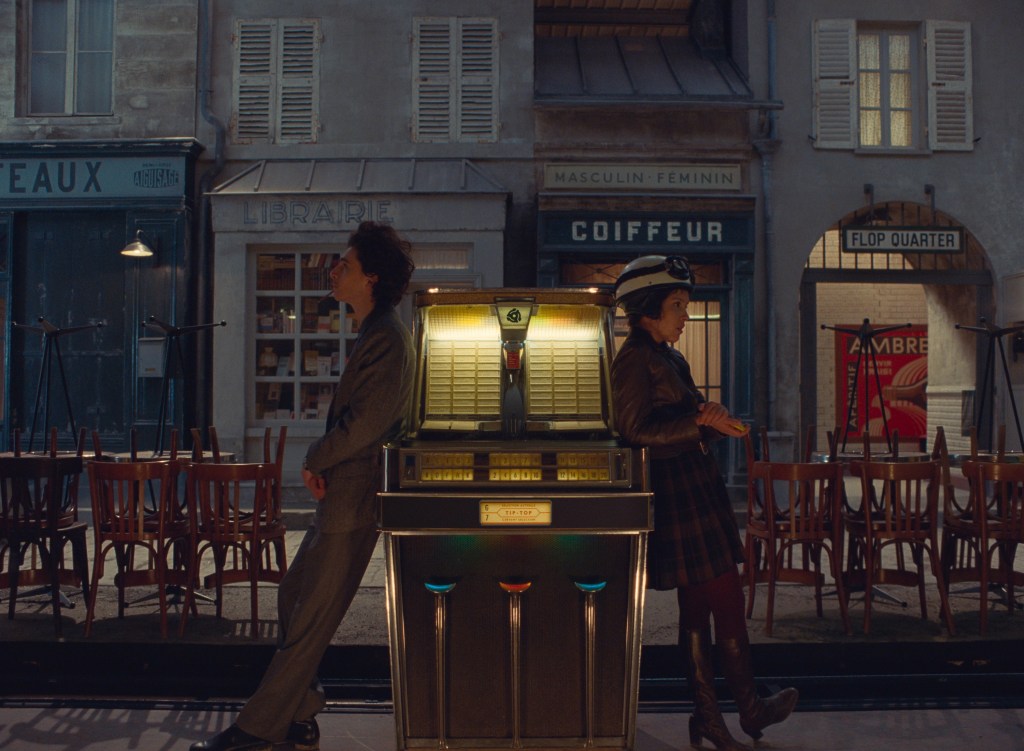
Fans of the inimitable Wes Anderson’s droll wit and pixie capriciousness will enjoy The French Dispatch, though it diverges from his other films. Truly, this amazing work spins off Craven’s usual stylistic nuances into the realm of the cinematic magazine. Anderson directed and wrote the screenplay with story help from Jason Schwartzman and Roman Coppola.
Importantly, The French Dispatch pays homage to the magazine he riffs, The New Yorker and the renowned writers from the past (James Baldwin) receive more than a nod. Chock full of references, Craven employs his choice mediums (animated car chase, cartoons, cut out color sets, dead on camera framing) and adds the magazine format. This extraordinary film which engrosses, ridicules, satirizes, mourns, praises, and twits writers past and present screens at the 2021 NYFF until 10 October.
Wryly narrated by Anjelica Huston, the film opens by defining “The French Dispatch” as an eponymous expatriate journal published on behalf of the Liberty, Kansas Evening Sun. Ironically, Anderson has named the journal’s place of publication as the fictional 20th century French city, Ennui-sur-Blasé. (Ennui=the city, Blasé=the river) Roughly, Ennui-sur-Blasé translates as boredom of the worldly-wise apathetic, a superb irony.
Thus, “The French Dispatch” attempts to make middle-America’s readers acculturated cosmopolitans. By way of explaining the periodical’s cleverness, Anderson’s film brings to life a collection of stories from the final print issue. Indeed, this lively anthology serves as an encomium to the death of its editor-in-chief, the big “gun” Arthur Howitzer, Jr (Bill Murray). Thematically, while highlighting the time in France (1950s-1970s) Craven weaves dark ironies that reference the current times.
Using waggish and epigrammatic descriptions, the narrator presents the quirky, peculiar press corps, writers of the wildly over the top stories activated by Anderson. After the director introduces us to the meticulous Howitzer Jr. and others (look for the writer diagramming sentences on a blackboard) we meet cyclist Herbsaint Sazerac (Owen Wilson). Craven uses opportunities for humor through double entendre, with names that have nuanced meanings. For example, “Sazerac” is a beloved bourbon or rye cocktail of New Orleanians.
As Sazerac cycles us via a travelogue through Ennui-sur-Blasé, with shots from the past (black and white) and future (color) we note its dinginess (terraced rat dwellings) poverty, underworld pimps and prostitutes and other charms. In other words, the city reeks of humanity which remains forever unchanging. Of course, “The French Dispatch” reports on stories that identify the weirdest and most comically contradictory of the denizens of humanity.
First, Huston introduces a story, assisted with a lecture at a symposium given by J.K.L. Berensen (Tilda Swinton) cultural reporter of the “The French Dispatch” arts section. Berensen relates an amazing tale. One of the foremost contributors to modern art remains hitherto for unknown: psychotic criminal artist Moses Rosenthaler (Benicio del Toro). On the brink of suicide, Moses finds his answer to life and love via his sadistic prison guard lover Léa Seydoux
With the unpredictable guard as his muse, Moses immortalizes her in abstracts he paints on the concrete walls of the prison. Like Banksy, Moses prevents his greedy, exploitive art dealer (Adrien Brody) from easily trafficking his art by painting his frescoes on a building making them unremovable. During an investors’ showing in the prison, the prisoners riot to muscle in on Moses’ elite visitors and hold them hostage. Moses’s violent nature, which put him in prison serves him well. With brute force Moses destroys the rioters stopping their attack of the dealer and wealthy purchaser Upshur Clampette (Lois Smith). With his investors saved, Moses receives parole. He has provided his unique contribution to the Clampette Museum, representing abstract fine art at its incredibly ironic, violent best.
Next in the collection, the story of student revolutionaries of 1968 compels its reporter Lucinda Krementz (Frances McDormand) to have an “objective” affair with star revolutionary Zeffirelli (Timothée Chalamet). Helping to straighten out his befuddled theories and justifications to revise his “manifesto,” Krementz as the “older woman,” influences Zeffrielli. Eventually, he succumbs to his nemesis, the beautiful counterrevolutionary Juliette (Lyna Khoudri) and they stay together until tragedy strikes. Nevertheless, the created manifesto lives on as does Krementz’ reportage, though the revolution, the revolutionaries and their Utopian ideals fade from memory into a fever dream of unreality.
Finally, Huston sets up the story of the dinner with a police commissioner (Mathieu Amalric) and his personal chef Lieutenant Nescafier (Steven Park). Gourmand writer Roebuck Wright (Jeffrey Wright) intends to report on the delectable cuisine of the famous Nescafier. However, complications arise when the commissioner, a veritable Jacques Clouseau, has the tables turned on him and criminals kidnap his son. Finally, locating the son, Chef Nescafier prepares a snack which poisons all but the son, the chef and the chauffeur (Ed Norton). The ensuing car chase (a humorous Craven animation) ends with a crash and the son rejoins his father.
At this juncture Howitzer Jr. chides Wright for not describing Nescafier’s cuisine. Wright avers. And thus occurs an incredible moment that alludes to the writing of James Baldwin. Succinctly, Wright describes that he cut out the chef’s words because as an expatriate, the chef, another expatriate made him sad. When Wright repeats Nescafier’s words that he cut, Howitzer Jr. notes with passion that the comment must not be excluded. He insists the Chef’s extraordinary, philosophical observation about the poison in the dish is the only valuable part of the Wright’s work.
Profoundly, in the flash of a moment, we understand why Howitzer Jr. left for this strange outpost in Ennui-sur-Blasé. Fulfilling his goals, he configured a magazine with a global readership that published the profound, the unique, the revelatory. And it included those bits and pieces of life whose revelations edified and informed with a keen, accurate eye. Amazingly, in a brief span of a few moments, Anderson says it all about writing, writers and their editors, finding the elusive and bringing it to our consciousness. Of course, this question Anderson asks silently with The French Dispatch. What happens when censorship, and an absence of prescience, wisdom and freedom runs the presses, as they do currently in the U.S.?
The French Dispatch bears seeing a few times to catch its luxuriant richness. Not only does Anderson employ fanciful images in contradictions journalistically, the resonance of language and word choice is satiric, sardonic and powerful. So is the mosh of well-thought out cinematography and scenic design. For tickets and times at the 2021 New York Film Festival website. https://www.filmlinc.org/nyff2021/films/the-french-dispatch/

