Category Archives: NYC Theater Reviews
Broadway,
‘Loot’ by Joe Orton, Stowing Mummy in the Closet for the Payoff
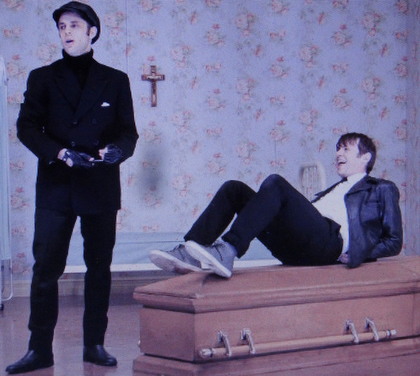
L to R: Ryan Garbayo as Dennis and Nick Westrate as Hal in Joe Orton’s Loot, at the Lucille Lortel Theatre (Red Bull Theater). Photo by Sarah Moore.
Joe Orton, the British playwright whose London hit Entertaining Mr. Sloan proved his brilliance, had his life cut short in 1967 at the age of 34. He was killed by his partner, who committed suicide in recompense for killing Orton. It is the theater world’s great loss, for Orton had experienced the steam of greatness as an exceptional playwright/writer, but not the substance. Whenever a production of his zany, dark comedies is revived, see it to appreciate the frenzy of hyperbolic farce that Orton was marvelous at creating. Impeccable timing and jeweled turn of phrase characterize Orton’s work. He is sardonic, like Wilde; over the top, like Monty Python; an iconic British wit.
Loot, in revival at the Lucille Lortel’s Red Bull Theater until February 9, is one of Orton’s gems. This production, directed by Jesse Berger, conveys Orton’s scorn of entrenched social institutions (religious, judicial, legal, medical). Clearly, the playwright had a rollicking time opening them to ridicule. This is appropriate for us currently; the hypocrisies Orton lays bare, are snatched from the 1960s. Yet, they are immutable now as they were then. In the delivery of the madcap and over-the-top plot extremities, we are able to bear the painful truths expressed underneath. If fraud, official corruption, murder and theft are the stuff of life, at least they can be used as meat to gnaw on for our entertainment sustenance in the hands of a savvy, sharp playwright, able director and acute acting ensemble.
The setting, the McLeavy living room is comfortably furnished with chairs and tables circling the walls, a locked chifferobe and what looks to be a folding screen more befitting a hospital room than a living room. The room is a style cacophony of weird items, the most strange being the coffin with decorative grave flowers at center stage. Thus begins the wackiness which develops into full-blown mayhem.

L to R: Nick Westrate, Rebecca Brooksher and Ryan Garbayo in Loot by Joe Orton, directed by Jesse Berger at the Lucille Lortel Theatre until February 9. Photo by Rahav Segev.
We discover from Fay, Mrs. McLeavy’s live-in nurse (Rebecca Brooksher), in a discussion with barely sentient, grieving Mr. McLeavy (a hysterical Jarlath Conroy), that the funeral service is today. The lovely nurse is a sweet, unassuming golddigger who has been married and widowed seven times.She is looking to be widowed again, after she marries Mr. McLeavy who is overwhelmed with grieving his wife and straightening out his affairs, especially his confused mind and emotions. While Fay encourages him that a month or so is an appropriate time to remarry, son Hal McLeavy (Nick Westrate) bursts onto the scene. His entrance with his beloved (he is gay) buddy Dennis (he is a polyamorous bisexual), fosters a scene switch into a plot convolution that stirs up the cauldron of madness.
Hal is like a young George Washington; he can not tell a lie once confronted with the truth. Dennis (Ryan Garbayo), the undertaker will transport Hal’s mum to the cemetery.The other reason Dennis is with Hal is that both have committed a bank robbery and Dennis has become the chief suspect after his questioning earlier in the day. Better his questioning than Hal’s which would be disastrous for them both, for Hal, a parboiled Catholic with issues, can’t lie. If the moral contradiction of not being able to lie but having no problem with stealing seems patently absurd, you’re right. It is and so is the hypocrisy it represents; this is one of Orton’s tucked away jewels. The play abounds with them.
Dennis fears he will be pinched if he can’t stash the hot “loot” away from the piercing eyes of one particular copper, Truscott, (Rocco Sisto, who is hilarious in his continually indignant state). Truscott, who later appears in a poor disguise as an official from the Water Board, has been snarling and eying Dennis like a canny German shepherd. It is only a matter of time before Truscott finds him, discovers the evidence and throws him in prison, especially if he asks Hal any questions about the theft.
The loot which has been stashed but the locked armoire i is the first place anyone would look; and Fay, who can sniff out money like a dog sniffs out a bone, has intimated to Hal that she knows the loot is there and will expose them in a blackmail scheme. When she leaves, simultaneously, both spy the coffin with Mrs. McLeavy’s body inside. Hide the loot in the body? Gruesome, bloody horror! Hal is a “good” Catholic and that would be untoward. Besides, this is a farce, no matter how black hearted. Hide the body in the armoire and the loot in the coffin and lock both.? Perfect! That way Hal will not be lying if he has to deny the thousands are inside the wardrobe. And if someone gets a crowbar and breaks open the chiffarobe? They’ll be a bloody hell of a surprise. Mrs. McLeavy has been stuffed like a sausage and pickled with embalming fluid. She’s a real stiff.

L to R: Rocco Sisto, Nick Westrate and Ryan Garbayo in Loot, by Joe Orton, directed by Jesse Berger at the Lucille Lortel Theatre (Red Bull Theater) until February 9th. Photo by Rahav Segev.
The official from The Water Board (investigator Truscott inept disguise) interrupts their plans to check the water system. Hal and Dennis quickly send him off to the pipes, then speedily trundle the coffin to the armoire and lob in the corpse. In their frenetic haste they flip poor ole mummy like they’re hefting a log onto a wood pile. Their antics are hysterical especially in light of Hal’s professed Catholicism that has forbade him to see his mum naked but allows him to manhandle her remains. The woman hasn’t been able to RIP since she passed.
After this inglorious treatment, the miscreants lock the chiffarobe and dump their cash booty in the coffin sealing it just in time to escape detection. Truscott figures his inept disguise and circular questioning will eventually trip up the thieves so he can pin them like dead insects with the evidence, pulling out all the stops in his “intelligence” to do so. Orton’s characterization of detective Truscott, is an absurdity of confusion, all in the service of quick humor; Truscott is brilliant-inane, hypocritical-legalistic, corrupt but honest about it, opportunistic and self-serving. He is this and more in the interest of feathering his own nest, but money is his object.
The body-cash swap heightens our belly laughs. We see how these ingrates have dumped Mrs. McLeavy in a “most shameful position.” Added to the romp is Truscott’s indignation and frustration at the suspects “innocence” made all the more hysterical by his ridiculous questions which are as twisted as their answers. The scene is surprising and wonderful.

L to R: Nick Westrate and Rocco Sisto in Loot by Joe Orton, directed by Jesse Berger at the Lucille Lortel Theatre. Photo courtesy Broadway.com.
When Fay and Mr. McLeavy enter the fray, they contribute with flippant repartee. The pace steps up, high jinks fueled by understatement, irony. Orton weaves the scenes so the hilarity builds to climax in an even more preposterous and lunatic second act. Plot complications abound and mysteries are uncovered. The innocent are proven guilty and the guilty are shown to be innocent. Such are the pleasant spoils of ambition in a corrupt universe. For irony, Hal’s good, Catholic conscience has remained spotless. He has not seen his mum naked, and he never lied. He’s good to go. We just don’t know where.
The production does not disappoint. It is a pleasure to see the mostly American actors honor this astounding playwright and make him known to another generation of playgoers who can appreciate brilliant farce and black comedy. That said, it must be acknowledged that Orton is uniquely English. Though there is an opaque line between our countries and cultures differentiating America from England, there is a nuanced sensitivity that comes with presenting English cultural and social humor. It is more felt than studied, intuited than practiced. All humor is generic to place, culture, time, range and social consciousness. Very simply, there are some phrases which can fall flat to some ears if not comprehended in the way that the culture normatively means them to be. In this aspect the production’s humor was flattened by our cultural limitations. However, Orton’s words remain true if one has ears to hear them.
Loot is being performed at the Red Bull Theater by special arrangement with the Lucille Lortel Theatre Foundation. George Forbes is the Executive Director; Jesse Berger is the Founding Artistic Director and Evan O’Brient is the Managing Director.
This review first appeared on Blogcritics, at this link: Click Here.
Breakfast With Mugabe by Fraser Grace Extended by Popular Demand
 When I heard that Breakfast With Mugabe had received an extension Off Broadway and would appear at the Lion Theatre at Theatre Row until March 2nd, I was pleased. It is a terrific show and enjoyed a near sold out run at the Signature Center when I reviewed it in August of last year. Now it is back by popular demand and I understand why. The tension, the undercurrents, the terrifying wild ride brought to you by the soft spoken and imminently dangerous Robert Mugabe (expertly played by Michael Rogers) is a play told in foreshadowing and suggestive of aggression and power unchecked. It should be seen because it is a reminder that all leaders if left to their own devices for too long will be corrupted and will destroy the good that they have set out to do. It is also a warning for the unsuspecting, those who attempt to play by the rules but have the rules turned against them because of expediency. These are a few of the themes. For more this review initially appeared on Blogcritics at this link.
From the moment we meet Grace Mugabe (Rosalyn Coleman) and hear the complaints she shares with psychiatrist Dr. Andrew Peric (Ezera Barnes) about her husband’s obsessive fears, there is an undercurrent of danger and ominous import in Breakfast With Mugabe, directed by David Shookhoff. According to Grace, Robert Mugabe is hallucinating enemy ghosts and malevolent spirits. Each day he sets a place at the table for one haunting devil in particular and conducts his life and his wife and children’s lives around this paranoia.
We hear in Grace Mugabe’s dark notes of alarm her misery as she tells the story of her husband’s increasingly disturbed mental state. In particular, she refers to the traumatic event in the airport when her husband made a loud scene commanding his bodyguards to stop her and the children from escape, when there was no apparent need to do so. Since then the Zimbabwean President’s wife has been kept prisoner in her own home and cannot go shopping or enjoy the fruits of their position with autonomy, a reality she wishes to end. She begs Dr. Peric to convince her husband to let her leave with the children. She also hopes he will be able to help Robert as best he can since the malady is obviously a dire one that may destroy Mugabe’s political leadership and power regime.
From this too-long exposition scene, the playwright develops the issues which progress to their final resolution. We learn that Dr. Peric, who has been entrusted to help Mugabe, is a member of the once elite class of white farmers who still maintain their farms while many of his social peers are losing theirs to Mugabe’s resettlement plans. Unlike the other former white colonials, Peric has embraced Mugabe’s leadership, has an interracial marriage, and has been a tremendous help to patients at the hospital in Harare. There, the doctor has a sterling reputation because he is loving and culturally flexible. He uniquely understands the spiritualism of the people of Zimbabwe. If anyone can help Mugabe, it is Dr. Peric, but as he makes clear to Grace Mugabe, the President will have to forgo all of his airs and his will to power. He will have to submit to Dr. Peric’s will during the treatment. Thus the playwright introduces the conflict between Dr. Peric and Robert Mugabe as psychiatric patient.

Dr. Peric (Ezra Barnes) received by Mugabe aide Gabriel (Che Ayende)
The second problem we assess from Grace Mugabe’s discussion is this: Obviously, Mugabe has lost his hold on reality, though his hallucinations and paranoia are probably grounded in reality. Apparently, Mugabe’s power structure and leadership are beset on all sides by those who want to overthrow his government and replace it with their own factions. In this underlying atmosphere he most likely fears everyone and knows his enemies are seeking revenge for the blood of those he is responsible for having killed. His country has known war in its struggle for independence. His separate power struggle to maintain his despotic rule under the guise of equality and fair elections has also resulted in bloodshed. He can trust only his select group and must suppress any recriminations and guilty feelings about having acted stupidly and without diligence. He must play the role of the brilliant and powerful leader. Mugabe is wrestling with Mugabe for power over his own demons generated by his past actions. Unless he thwarts them, they will overtake his future and the country he intends to rule.

Rosalyn Coleman as Grace Mugabe
Another complication is in the character of Grace Mugabe. She is pompous, manipulative and extremely clever. Either she is Mugabe’s prize or his bête noire. Her pleas to Dr. Peric and her explanation of her husband’s deteriorating mental state give us the impression that she completely trusts that Dr. Peric has the upper hand and will eventually be the catalyst to help her escape. Her situation is tenuous. Mugabe’s mental decline is impacting his ability to lead and maintain his political power over threatening rivals.
Grace Mugabe is looking out for her husband, but especially, she is looking out for number one. Even if she intends to remain on top as the President’s wife and adviser, her husband will drag her into the abyss, as long as he the dinner plate sits on the table for his chief spirit enemy so Robert can have conversations with him. This is not a leader. Grace doesn’t want to be around for the overthrow. She will escape preferably with Dr. Peric’s help and plenty of money to live abroad. Despite her husband’s attempts to hold on to her and reality, the wolves are circling and closing in.
The playwright has thus established the conflicts in the first scene. When he finally introduces Robert Mugabe (Michael Rogers) after the immense build-up, we are surprised to discover that this may not be the man Grace Mugabe has described so acutely. He is humorous and insightful, and has a penetrating mind and confident spirit. Either Mugabe is “fronting” or Grace has misrepresented her husband’s condition for her own ends. We remain intrigued as the ominous undercurrents swirling around the question of truth and the integrity of each of the characters gradually come to light.
Playwright Fraser Grace uses Dr. Peric’s questioning of Mugabe’s past traumas to create dramatic momentum. As we gradually wend our way through the dense thicket of defense mechanisms Mugabe displays to cover up death and loss, we understand how Mugabe’s self-torture over the past blocks him in the present. Theirs is an interesting “tug of war.” The sense of foreboding we felt in the first scene never leaves us, so we feel relieved that Dr. Peric uses tact and truth to scrape away this uncanny, hyper-manipulative and brilliant leader’s tough outer skins until the softer layers are exposed. Lulled by the doctor-patient interplay, we may be misled and not readily recognize how the playwright cleverly diminishes the doctor’s personal presence while brightening Mugabe’s as he becomes unburdened.

Dr. Peric (Ezra Barnes) delivers the question to Robert Mugabe (Michael Rogers) who must face the haunting spirits.
Finally, the doctor arrives at the healing revelation Mugabe seeks. The outcome is counter to what Dr. Peric expects and what Grace Mugabe desires. Ultimately, the doctor has enabled Mugabe to find his own solution to exorcizing the spirits, freeing himself, strengthening his leadership and deepening his power regime. Dr. Peric has been invaluable, but Mugabe feels no compunction to accommodate him while he guides the country’s toward a new horizon. Grace Mugabe, always the survivor, rides her husband’s wave to the shores of success, no longer desiring to flee. And we, like Dr. Peric, are rattled at their ungenerous callousness as the ominous foreboding we’ve felt all along hits us with its harsh realities.
The play is cerebral, intricate, surprising, foreboding, powerful. I loved it. I thought that of all the actors, Rosalyn Coleman’s performance as Grace Mugabe was the most layered and complex. Ezra Barnes’ and Michael Rogers’ interchange of waxing and waning personas and presence was subtle and enlightening. Together with an excellent Che Ayende as the imperious aide Gabriel, the cast brings us carefully to the stark finish. David Shookhoff has aptly directed his ensemble to present an amazing portrait of this determined and cagey leader who, despite all odds, including avenging spirits, has kept himself in power using any means necessary.
This review first appeared on Blogcritics at this link.
The show is currently at the Lion Theatre at Theatre Row until March 2nd.
Sacred Elephant by Heathcote Williams: Stage Adaptation by Geoffrey Hyland and Jeremy Crutchley
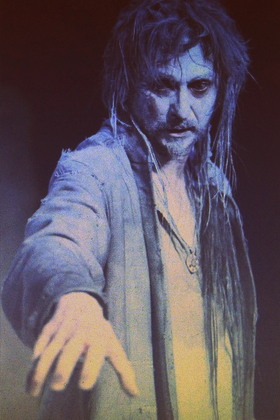
Sacred Elephant, currently Off Broadway adapted for the stage by Geoffrey Hyland and Jeremy Crutchley, is created from Heathcote Williams’ magnificent epic poem about nature’s divine design represented through the elephant. Crutchley gives an ethereal and other-worldly performance as The Other, the being of the elephant. The production is currently at La Mama’s First Floor Theatre until September 22. See the review on Blogcritics and on this site.
Below are the expressive photographs of Crutchley in an embodiment of the elephant’s ethos. I included these to enhance the previous review because of an article that appeared in the Huffington Post about a baby elephant who was rejected by its mother. It cried and cried for hours. Its response is heartbreaking…like our response when we were hurt as children and cried in desolation, or as adults who feel hopeless and cry out to God and the universe for solace and comfort. Click here for the article.
The elephant is us. Can we continue to destroy it and not perish ourselves? Elephants are beings like the other creatures on this planet and must be safeguarded and protected. If we do this, we safeguard our own destiny. Williams’ poem is dedicated to this end as is Crutchley’s performance.
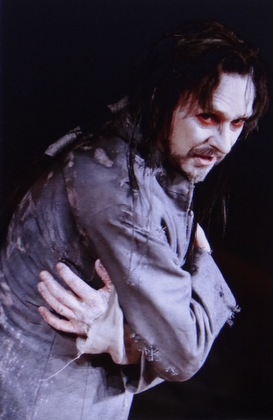
The marvelous Jeremy Crutchly. Photo by Rob Keith
The following is part of the press release by Jonathan Slaff.
Jeremy Crutchley is well known in South Africa and the U.K., having performed a diverse range of award-winning contemporary and classic roles. He has received many Best Actor National Theatre Awards in South Africa and has appeared with the RSC and in the West End. He was nominated Best Actor in the South African Film & TV Awards for his leading role in “Retribution” (2011), a thriller in the style of Cape Fear. He currently appears with John Cleese as The Glock in the feature films “Spud” and “Spud 2.” In January 2014, he wil be featured in the U.S. TV series “Black Sails” (Starz).
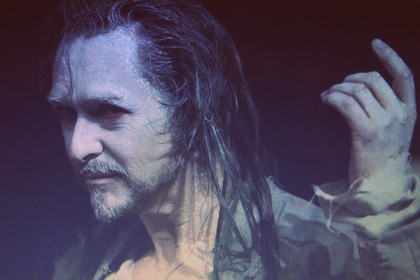
Jeremy Crutchley in Sacred Elephant. Photo by Rob Keith
Crutchley’s varied and enviable career ranges from classics to solo shows to rock shows. He performed Doug Wright’s international hit, “I Am My Own Wife,” in 2009 to kick off the Grahamstown Theatre Festival and in South Africa’s prestigious 2010 Fleur du Cap Theatre Awards, the show was nominated for six awards and received three, including Best Actor and Best Solo Performance. Theater critic Peter Tromp (The Next 48 Hours) named the piece as one of the ten most memorable productions in his decade of reviewing. The previous year, Crutchley won Best Actor as Shylock in “The Merchant of Venice” before going on to play Alonso in “The Tempest” at Stratford-Upon-Avon and in that show’s sold-out national tour with the Royal Shakespeare Company. He was a Fleur du Cap Nominee for his performance as Malvolio in “Twelfth Night”, also directed by Geoff Hyland. In 2002-3 at Edinburgh and in the West End, he created the role of Dr. Drabble in the black comedy, “The Dice House” (based on Luke Rheinhardt’s “The Dice Man”). In the UK in the 90’s, he performed at London’s Theatre Royal Windsor and Orange Tree Theatre and appeared in various TV productions for BBC. In the 80’s, he attracted notice for his performances in Sam Shepard’s “Cowboy Mouth” and “Equus,” among others. Also a rock musician, he has written two Rock Theater works and recorded a blues-rock album. When “The Rocky Horror Show” finally hit South Africa in 1992, he played Dr. Frank ‘n’ Furter in the original cast. His recent TV appearances include: “Miss Marple: A Carribbean Mystery”(BBC), “Kidnap And Ransom”(ITV), Martina Cole’s “The Runaway” (Sky TV) and “Women In Love” (BBC).

Jeremy Crutchley as The Other. Photo by Rob Keith
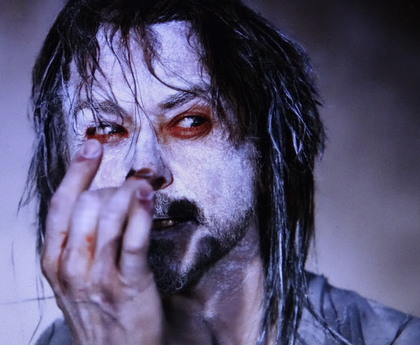
Jeremy Crutchley in Sacred Elephant by Heathcote Williams at La Mama First Floor Theatre. Photo by Rob Keith.
Heathcote Williams (author) is a poet, playwright and actor. He is best known for his extended poems on environmental subjects, “Whale Nation” (1988), “Falling for a Dolphin” (1989) and “Autogeddon” (1991). His plays have also won acclaim, notably “AC/DC,” which was produced at London’s Royal Court, and “Hancock’s Last Hour.” He is also a versatile actor whose memorable roles include Prospero in Derek Jarman’s film of “The Tempest.” “Sacred Elephant” was the first environmental poem by Williams, although it was not commercially published until after his better-known work, “Whale Nation” (1988). “Sacred Elephant” actually dates back to 1967, when Williams spent three months touring in India. While in Rajasthan, he observed local elephants and their trainers at close quarters. He also had a close association with a circus elephant named Rani and was able to watch her daily routine and behavior in captivity. Captive behavior, which is largely unknown to the general public, forms a large portion of “Sacred Elephant.”
The poem first appeared in print in 1987, published by Williams himself but in an unusual form. Three thousand copies were issued on elephant-sized paper and with print “large enough for elephants to read.” These newspapers were given away privately to friends and associates. That year, Williams performed the poem as a radio production, receiving many favorable reviews, including one from Harold Pinter who called it “a marvelous poem.” When Williams’ “Whale Nation” was published in 1988, it set a pattern for Williams’ books to follow, including “Sacred Elephant,” which was published commercially by Jonathan Cape a year later. Following this publication, the book received many more favorable notices.
It was recorded as a Naxos audiobook by Williams himself and given recitations, but it had never been explored for its powerful theatrical potential until Geoffrey Hyland and Jeremy Crutchley conceived this production. Heathcote Williams has granted exclusive dramatic rights to Crutchley to perform the work.
Classic Stage Company’s Caucasian Chalk Circle by Bertolt Brecht
Once again the Classic Stage Company produced a play by Bertolt Brecht. Last season the company presented Galileo starring F. Murray Abraham in an unusual translation by Brecht and the fine British actor Charles Laughton, now deceased. Abraham portrayed Galileo to sold out-crowds. He and the production were superlative. The current version of The Caucasian Chalk Circle stars, as The Singer and Azdak, Christopher Lloyd, the prolific theater actor who is still most noted for his role as “Doc” Brown in the Back to the Future trilogy and Uncle Fester in the Addams Family films.

Jason Babinsky and Christopher Lloyd, courtesy of Joan Marcus, CSC website
The director Brian Kulick (who also helmed Galileo last season) has chosen to set Brecht’s play in the Soviet Union, right about the time of the fall of Communism and the partitioning of its satellite regions into their present independent states. The production’s ironic description of the time and place suggests the metaphors which choppily thread through the play and could have been developed with much greater import to make the conception more powerful: “Ancient Grusinia but also perhaps the fall of the Soviet Union, when the Hammer and Sickle were replaced by the Coca-Cola bottle.”
Because the setting is specific to this time period, the play’s universality, its satire of politics, government corruption and injustice, is unfortunately mitigated. The themes are convoluted and confused. The play’s significance related to our time, when global corporations and shadow global elites deliver a fascist repression of their own, is rendered faint indeed. With a bit more innovation, and connected theatricality of spectacle and costume, the tie-ins symbolized by the Coke bottle (meretricious mercantilism) supplanting the noble beginning of philosophical Marxism (devolving into corrupt, repressive Communism) would have been stupendous. But the conception is to a great extent washed out. Gimmicks (an interruptive blackout, ad hoc audience participation at a makeshift wedding, and the gloss of comedic Russian and Russian-accented English spoken to frame the fable) distract from the interesting conception. The lackluster effects sink the production’s impact and Brecht’s powerful theme that love and human kindness will and should overthrow political class systems whatever their stripe.
The play begins with a Stalinesque/Leninesque statue being toppled by citizens as the current governor and his wife (Mary Testa) flee the violent tumult and retaliation for his repressive rule. It is regime change. The question Brecht poses: Which devils will now come to rule? Testa, true to her comedic talent, lessens the sting of the wife’s cruelty and arrogance as she picks the dresses she will take – but in the chaos leaves her infant son behind.

Christopher Lloyd as The Singer and Elizabeth A. Davis as Grusha. Photo by Joan Marcus.
The child (for expediency and symbolism, perhaps) is represented by a life-like puppet. The fate of the child is debated by a young servant girl who finds him. Grusha (Elizabeth A. Davis in a poignant though uneven performance) deliberates whether to save him. But in a typical Brechtian character tension, her humanity and the lower/middle class tenets of the Golden Rule prompt her to sacrifice her own wellbeing for the child whom she preserves. The main action of the play is the preservation of this puppet-child as she confronts danger and trials to get to her brother’s house for asylum, all the while keeping the child’s identity hidden.
The circumstances achieve a quieter resolution with strange moments of accidental kindness, and power reversal. Azdak (a hapless, loutish peasant portrayed forcefully and playfully by Christopher Lloyd) saves the disguised governor who has become his loutish, peasant equal. Through a series of inane ironies that only political revolutions can foment, Azdak turns himself in for saving the governor, but because the current political crazies have hanged all the former judges, he is in the right place at the right time to be selected as a new judge to decide matters of the law. Why not?

Christopher Lloyd and Tom Riis Farrell, CSC website, Joan Marcus photo

Tom Riis Farrell and Christopher Lloyd. Courtesy of CSC website, Joan Marcus photo.
The justice Azdak metes out is even nuttier (Lloyd shines at these moments), probably, then the decisions the former bribed, corrupt judges handed out, with one random exception. In appears that the true Just Judge (fortune, fate, God) exerts its will through this wild, roguish Azdak. The governor’s wife has returned to reclaim her child from Grusha. Azdak must make the final decision: Who is the appropriate mother? Is it the overweening, materialist, elite, selfish biological mother or the deeply human, loving peasant who exhibits the nobility, kindness and self-sacrificial traits that exemplify the finest qualities of the human spirit that we (the little people) aspire to? In a fit of Solomonic wisdom uncharacteristic of Azdak, this lout has a chalk circle drawn. Whoever is able to take the child out of the circle is the mother. This sets the competition as two women pull each arm of the child as if to tear him in half to prove “ownership.” And you know what happens.
In this translation by James and Tania Tern, with original music by Duncan Sheik and lyrics by the poet W. H. Auden, the production has rare, clarified moments and muddied, miry ones. Coherence throughout is chopped. However, Lloyd should not be missed, and Elizabeth A. Davis manages to hew out a Grusha with whom we want to identify and who vindicates our belief in ethical intention and fine human instinct. And yes, she is rewarded for this when her love interest (Alex Hurt) reaches out to her, despite the complications. (She married a dyingman under false pretenses – his being that he was escaping the draft – then is stuck with him – but not for long.)
Article first published as Theater Review (NYC): ‘The Caucasian Chalk Circle’ by Bertolt Brecht on Blogcritics.
A Family for All Occasions. A Labyrinth Theater Company Production

A LABYrinth Theatre Company production at the Bank Street Theatre
I thought that A Family for All Occasions, at the Bank Street Theatre (It’s run is completed.) was well acted and directed, but missed the mark with regard to a number of areas in the play that were obviously drop dead contrived.
The actors, with the help of the director, Philip Seymour Hoffman, managed to overcome this as best they could, but the dissonance still crept through. Jeffrey DeMunn held the piece, the family and the ensemble together beautifully. He tempered his portrayal of Howard well: always striving for goodness yet receding from it at various junctures, especially at the climax when he takes out the baseball bat and begin a smash riot. DeMunn’s performance was sustained, real and alive. (His character was also the one most fleshed out by the playwright.)
Deirdre O’Connell’s attempt at portraying her character’s neurosis and anxiety was one note. In the second act, when she is finally retiring from her job (The action of massaging her feet works beautifully.) she is somewhat humanized. At that point she was more believable and relaxed, helped by that simple massaging action. Her acting choices were not spot on; she pushed as a termagant, hollowing out the character’s substance instead of making choices that revealed layers to May’s underlying angst (not just about the job) and unhappiness. The actress cannot be expected to perform miracles; this portrayal fell down in the writing and the direction also.
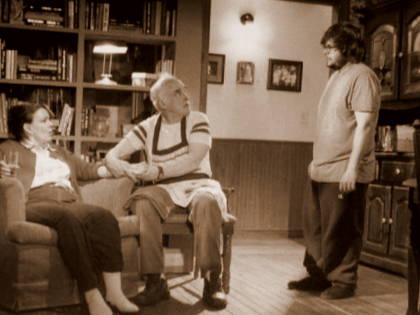
Deirdre O’Connell (May) Jeffrey DeMunn (Howard) Charlie Saxton (Sam)
Due to whatever, there was a problem with her characterization as there was in the relationships between and among the characters. I thought the relationship between Oz and Sue was too convenient; black man willing to do everything for this family. Oz is portrayed as Mr. Wonderful and Sue the convenient foil, a vapid, lost, presumptuous, willful blonde, demonstrating no redeemable inner characteristics (beyond attempting to find herself). The actress, Justine Lupe was remarkable and dealt with the stereotype as best she could; too bad the playwright didn’t give the character depth and substance. The character is so thinly drawn: how convenient she was orphaned by her mother who she might rather believe killed herself. How convenient she connects with no one, not even Oz and demonstrates utter selfishness. Where is her humanity, making us believe she is worthwhile? Sue is miserable before she meets Oz, but the misery is only relayed by her restlessness as a fluttering creature who never lands. Again How convenient is the playwright’s characterization as the contrived: I’m young and I can be rebellious and this baby is tying me down. (Humans have souls, spirits and complexity. This was not even etch-a-sketched in the play.)
This surface portrayal makes her a characterization device to set up the plot as was the characterization of Oz, as the hero. Both are needed to bring in the baby, create some conflict and move the play along. There is no rational explanation given as to why, selfish as Sue is, she does not get an abortion on her own. We do not see the development of Oz’s relationship with her beyond the sex scene which Sue uses to lure him. If she is perpetrating revenge on her own daughter as a sort of Orestia “sins of the fathers,” this is not apparent or reinforced with symbols. Sue is not fleshed out toward this or any end.
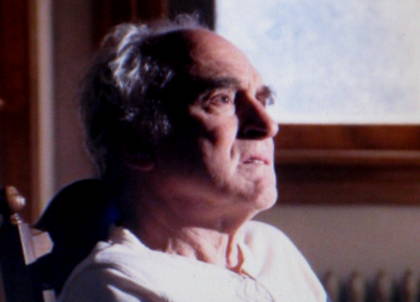
Jeffrey DeMunn
In fact with the exception of the father, the other characters are “types.” Just to exclaim, “Well, humans don’t have reasons why they behave as they do as an answer to the questions the play raises doesn’t cut it, especially when we see how full and deeply Howard is drawn. We know the same depth might have been added to the other characters; this is not beyond the playwright’s talents; the play doesn’t have to be lengthened to do this, either. The problem left the actors doing the best they could to fill in the gaps.
If the work is being revised and funded to go elsewhere, filling out the women characters (from their paper-thin renderings) is an imperative. We don’t need to see another caricature of a “dumb blonde slut” who abandons her baby and runs away; if she has characterized herself as this…how interesting…then this needs to be clarified through symbol, poignant dialogue, hopeless yearning. It wasn’t. What a shame. This is doubly unjust when the demonstrated home life shows no commensurate explanation for her actions except for a few convenient phrases about her past and at best we are told “she is finding herself.” Also, for the characterization of May, we don’t need to see another termagant upset with her job: is she schizophrenic? Well, then, OK. Child of alcoholics? OK. Repudiated by past loves? All right? Challenged in some way besides having no college education? OK. Something? Nothing.
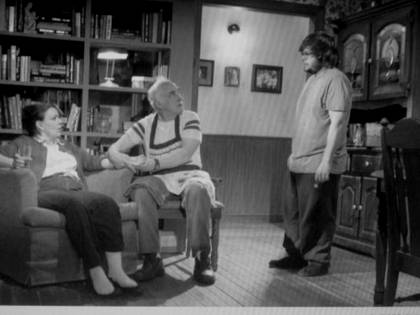
A quiet moment before all hell breaks loose.
Is there a character who makes sense? The character of Sam is the perfect Geek as counterpoint and his begrudging relationship with his father comes through due to Howard’s mea culpa admission he was wrong as he hugs his son before Sam leaves for college. There is something beyond his disgruntled existence and curt, abrupt anger. But what? The Geek stereotype is current and trending (if his phobia of being touched is pushed for effect) so the playwright can get away with it. With Howard’s well drawn characterization and Sam’s stereotype Geek carrying that portrayal, these two fare OK in the play; there is some attempt at connection, only due to Howard reaching out. As for Sam, again a one note stereotype tottering on the edge of human feeling.
My normally perceptive sensibilities ran into confusion upon confusion the play never answered and bring the questions to the playwright’s door. Oz, as intelligent as he is selects Sue when there are so many phenomenal black/white/hispanic sexy women who are alluring and predatory as well. It is suggested Oz is naive with women (All the more reason for the question, why isn’t he snapped up by anyone else as he is engaging and adorable. Here come the cougars!) and is lured by her sexual gifts. Is this not the typical “black man attracted to the white, blonde woman?” obnoxious stereotype? If so it is subliminally racist. Either hone in on this with symbolism, revealing this is Oz’s problem, OR reveal that he is not a free black man who isn’t tied down by his own racial bondages and is there for another reason. The fact that Oz hangs around also because he never had the warm feelings of family? If that is the case, his actions at the end could have been made so poignant…she runs away, he stays because he has found love from Howard and May who accept him. (This is ironic and dubious, by the way.) We see no discussion or hint of any undercurrents he will stay. The end is disjointed at best, but again, that is supposed to be the charm of this free flowing mish mash. Unfortunately, life is much more dirty, specific, real, uncontrived and deep, soulful and complex, unless you tell me that all these people are on meds.
Overall, I think I would have swallowed the incongruities, if this play’s setting was a small, blue collar city in North Carolina, Ohio, Missouri, South Carolina or the Midwest in the 1990s. A Midsize Northeastern City, the present? I don’t think so. This setting was incongruous with the characters’ beings and sensibilities and behaviors. Additionally, the fact that technology was so absent from the play was another failing (Sue has no Android? or Oz? I know folks on the poverty level who sport Smart Phones. I TAUGHT THEM.) And the only one who we see using a cheap mobile is Howard…he also gets an iPod from Oz, not at the suggestion of HIS GEEK SON? I don’t care how much of an isolated recluse he is…it’s technology, computers, smart phones. OMG.)
The setting as “the present” an eastern city is abjectly myopic and discordant with reality. I know 19th century practice in the theater TODAY prevents the use of Social and Mobile to its UTTER STUPID DETRIMENT. (Did you see Roman Tragedies at BAM? They integrated the use of Mobile devices for the audience..brilliantly. We took pictures {OMG, YES…THE TAKING OF PICTURES DURING A PERFORMANCE WAS ALLOWED! We promoted that production with the immediacy of Tweets and FB and Instagram. The audience was employed as the marketing arm of the producers. FOLKS IT WAS FREE PUBLICITY!!!! DUH!} I am glad European theater, once again, is MORE BRILLIANT than restrictive, enslaving, feudalistic old media which must in greed and cupidity HAVE ITS PROFITS. How utterly stupid. Go check out the Oreo brand and see what they’re doing if you want to be profitable.} NYC theater is downright Byzantine and Philistine and the death knell is coming as a result.) But to eliminate mobile devices from the play and say this is the present? Well, it beggars all rationality.
IS ANYONE OUT THERE IN THE LIVE THEATRE LIVING IN THIS CENTURY? Or is there a rife schizophrenia in the theater community and no overlap between onstage works whose settings are supposed to be current and theater people’s own lives where they use Mobile and Social daily? Either change the setting or, change the setting or change the setting, Bob Glaudini. Then flesh out the characters and answer the incongruities you’ve raised beyond contrivance and convenience with specificity. For Oz… What is the unconscious glitch in his being? He knows “malefic”; has he not read the culture’s twistedness in Autobiography of Malcom X to understand his attraction to a clueless, blonde, white woman to forestall it? May? One note- tra, la, la? Sue- this is a very deep woman-where? Sam just isolated by his mother’s loss into geekiness and angry reticence? Again, too many questions and the playwright’s intent doesn’t even adequately hint at the deeper whys. We are left with demonizing Sue, happy Sam escaped…not sure what he escaped, as he’s taking everything with him, feeling sorry for Oz and hopeful for Howard and May’s coming years, especially since May’s chief cause for anxiety is over and she’ retiring. That is not even the beginning of irony for this “family for all occasions.”
I so wanted to really like this play because I appreciate the work of its Director, Philip Seymour Hoffman, the actors, the playwright Bob Glaudini and the usual daring of The LAByrinth Theater Company. I was let down. I hope the play will evolve. It has possibilities if the kinks are ironed out. If no one notices these issues, all the better for them, especially if they receive backing to go farther. Visionary playwrights know this to be so and they seek ways to develop and evolve their work. Will that happen for this play?
Pippin: Glad I Saw It Ahead of the Tony Awards 2013

Program for Pippin
I saw Pippin last night at the Music Box Theatre on 45th Street. The show is beyond spectacular, and I don’t enjoy musicals for the most part. (I am not a great fan of Matilda currently up for a 2013 Tony for Original Musical). I was familiar with Pippin‘s score and book, though I didn’t see the 1970s stage version which made Ben Vereen a household name and which had the medieval template stamped all over it.
Well, this revival is one for the ages. Director Diane Paulus (Artistic Director of the American Rep. Theatre at Harvard, 2012 winner of Tony-revival the Gershwins’ Porgy and Bess) along with Chet Walker (Choreographer) Gypsy Snider (Circus Creation) and others have evolved a breathtaking production. Phenomenal. The circus metaphor is pure genius (Is not the journey of life/career/war/hedonism/finding self a circus of distractions until one arrives at the end of oneself as Pippin eventually does?).
The performers are stunning, beautiful, iconic and truly magical which we have been told they would be by the Leading Player flawlessly performed by Patina Miller. I told her last night (Friday, May 18) she IS beautiful and magnificent, and if she doesn’t win the Tony (Best Performance by a Leading Actress in a Musical) I will have to kill someone. Her performance is eternally memorable. She is almost maniacally God-like in her construction of events, with a tinge of malevolence and sinister allure. She reminded me of the Master of Ceremonies in Cabaret…caught up in the action, but strangely aloof, a player and a puppet master, all the while smiling and drawing us in closer, closer closer to and away from ourselves. While waiting for Playbill autographs, an enthusiastic audience member characterized her as “mesmerizing.” Yep! Was it Peter O’Toole who said, when a performer is onstage, “You should not be able to take your eyes off him/her?Well, that about sums up Patina Miller in the role of Leading Player. You have to see her. You just have to while she is still in the role. Please!!!!!
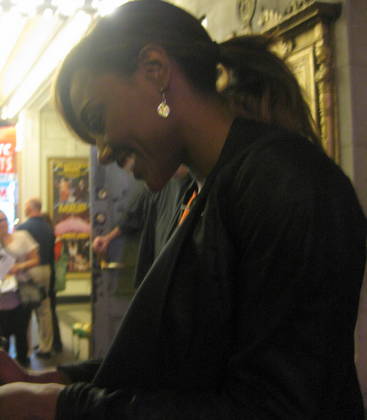
Patina Miller is the Leading Player. She was so gracious and appreciative signing autographs and receiving much audience praise.
The show is two acts. The time flies. The dialogue, possibly through ad libbing morphs by the cast and tweaks by Paulus had moments of genius modernization and cultural reference. For example the Leading Player to justify the “Intermission,” quips a break is needed because the attention span of the audience is “shorter these days,” a reference to social media, computers, etc. and 80 minute plays with no intermissions. Andrea Martin in her superb, jaw dropping (She looks fabulous.) show stopping “No Time At All,” nudges Baby Boomers about looking great while reminding us how important it is to stay young as the time is passing. Martin received applause that did not stop until after a full five minutes. She is sixty-six (My fellow audience member quickly Googled this. It was just as Martin ad libbed in the show.) But folks, she looks like she’s in her 30s with a shape to match. She strips to her Gina Lollobrigida Trapeze outfit right before she is transported high in the air to a trapeze by her acrobatic, lithe partner who is sexy, strong, supple, marvelous. OMG. The two of them together did their act which reaffirmed the vitality of her agelessness, supported by the spinning, whirling, balancing, leaping, somersaulting, catapulting, gyrating Manson Trio (look them up, folks) and singers and dancers. It was a piece of heaven and an inspiration to all of us that we need to get back to the gym and into the Yoga and Pilates immediately and my God, jettison that last 10 pounds. Woo ooooo! And if Andrea Martin doesn’t win the Tony (Best Performance by an Featured Actress in a Musical) I’ll have to kill someone. (That makes two deaths.)

Theo, played by Ashton Woerz and Andrew Cekala. Not sure which one was on Friday night.
Along with the innovation of the circus metaphor, was the change in the conclusion/finale. The Leading Player keeps the actors steady and in focus in the play within a play structure conducting and orchestrating the flow of events and retelling of the story. An innovation comes after Pippin elects to not “Be Extraordinary,” (jumping into fire) but to be human in his desires and loves. The players leave the actors alone on stage and the lights are dimmed. There is no dialogue, only action. The son Theo (played by Andrew Cekala or Ashton Woerz) picks up Pippin’s cane or armor or whatever and you know that the cycle will repeat itself. Theo will take up where his step-father has left off. Every generation must seek and find its own place, must strike out its own path, must become extraordinary. If not the father, then the son. The circle and cycle begins again and the center circus ring opens and an audience will be waiting to watch another time, another place, another magical historical hero or villain like Pippin. The show must go on. As the Brits say, “Brilliant!”
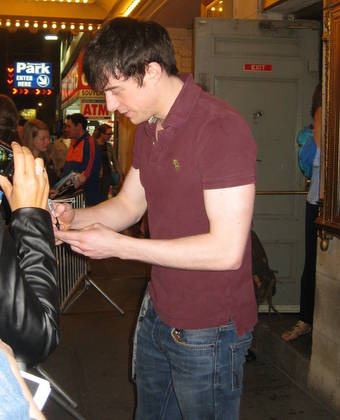
Matthew James Thomas as Pippin. Told him it should win the Tony and he said in a beautiful British accent, “I hope so.”
Pippin is played beautifully by UK actor Matthew James Thomas who looks like he has been mentored by Hugh Jackman, for certainly, he is a young version (gorgeous, adorable, fit, with a voice and appropriate athletic presence). Thomas is so supple in his integration with the sheer physicality of being a part of the acrobatics at times, yet is believable as the rather naive and bumbling, disingenuous Pippin on the journey toward inner light and revelation of love and self awareness. This Pippin is matchless, ready for anything, living in the moment. During the shop stopping number by Martin, Thomas went with the flow, graceful, relaxed, in the moment (a reference by the Leading Player and granny-Martin) smiling at the five minute audience applause, appreciative for Martin. And somehow, Thomas never broke character. Now, in himself he was the character Pippin, played by an actor-performer of the circus troupe, as the actor Thomas. A bit of Pirandello thrown in for free in complete spontaneity and LIVE THEATRE MOMENT that can NEVER BE DUPLICATED. I absolutely loved it and so did the audience. I mean we were DOWN WITH HIM and MARTIN and the cast. A Wow moment. Later, signing programs, Thomas told us that he could tell the audience loved it. He said, “It was a good audience, tonight!” smiling at me. You mean there are BAD AUDIENCES? Ha! You bet…dull, asleep, who’ve eaten too much, overweight and from the burbs. And they come for the matinees and snore as their listening devices go off. HELP!!!

Rachel Bay Jones who is adorable and younger than the woman she played, Catherine. She was wonderful.

Matthew James Thomas listening to more praise and well wishes.
(Side Note about Thomas’ comment) There is an electrical charge and rhythm that flows between a ready audience and the actors. Both feed off each other and both look for that telepathic connection and vibrant, spiritual merging. Audience and actors bask in those connective moments. Both adore it. It’s what makes live theatre so great and so matchlessly eternal. And when it doesn’t happen? Live theatre becomes deadly and vacuous, rather like a computer screen that’s gone black and won’t light up IRRESPECTIVE of how much you press than “ON” butten. FRIGHTENING!!!! Last night, the connections were popping. We saw and heard and felt and transmitted to the actors and they were pumped. I don’t think I’ll ever go on a Wednesday night to a live show again. I cannot be dragged to a Wednesday matinee, ever.
Erik Altemus as Lewis and next to him Charlotte d’Amboise as Fastrada

When I asked this incredible performer how long it took for him to train (balancing act extraordinaire) in a beautiful British accent (he’s from the UK) he said he started at 4 years-old. The act was chosen for him. Marvelous. Really buff, muscled as you would expect one has to be to perform such feats.
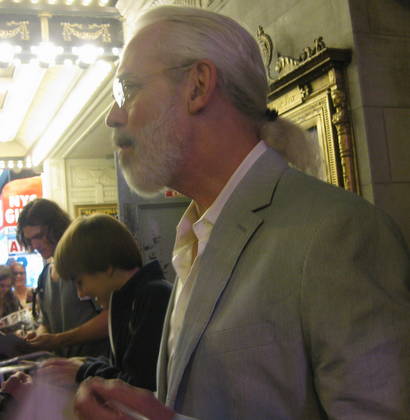 Terence Mann looks like he is enjoying the play. The audience didn’t want it to end, and it’s apparent he’s having fun and felt us loving him. He was wonderful as Pippin’s father, Charlemagne. I don’t know if he will win the Tony for Best Performance for a Featured Actor in a Musical. He should. However, I didn’t see Keith Carradine in Hands on a Hardbody. I did see Gabriel Ebert in Matilda the Musical. Unfortunately, I saw him in the second show on a Wednesday night, not a particularly good time to see a show. He was pushing; his performance was not Mann’s. Probably Keith Carradine will win the Tony for this category. I may have to hurt someone if Mann doesn’t win the Tony. Two deaths and an injury. Hmmm.

Another circus performer. Wow. Dynamite, amazing flips, leaps acrobatics.
If you’re coming to town, get tickets. Don’t wait. This cast will be around for a while, but after the Tony wins, the production is nominated for 10 Tonys, they won’t stay much longer. The validation will bring new opportunities. So please! Do yourself a favor. See a fabulous musical. Then come back and tell me you did yourself good. Pippin. Who knew musical theatre could be that good?

Signed program. Don’t ask me to identify the initials. 😉
The Testament of Mary. Why Protest This Tony Nominated Production?

I saw The Testament of Mary starring Fiona Shaw a few weeks ago. It was the opening night of the previews and as I walked up to the theater, there was a huge commotion on the opposite side of the street. Members of a branch/sect of the Catholic Church were protesting the production. It reminded me of the protests for Martin Scorsese’s film, The Last Temptation of Christ which was in theaters for a brief period and then scuttled away in shame, quickly forgotten.
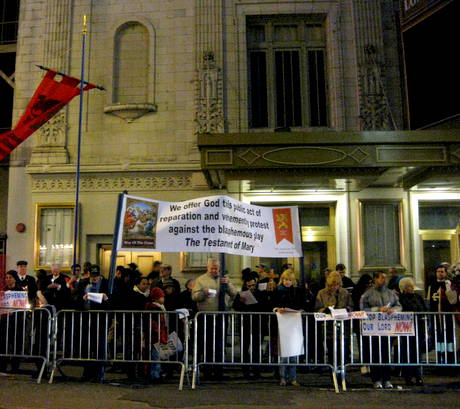
That was a travesty. The Last Temptation of Christ is a brilliant film, stirring and iconic in its imagery, thought provoking and incredibly spiritual. What other film about Christ so aptly deals with the realm of carnality in Jesus Christ’s human side? The fleshly, carnal nature is something the Catholic Church seems to have a huge problem with and as a result, certainly should have encouraged their membership to see the film and learn HOW TO THWART FLESHLY TEMPTATION. They were too afraid what the film might reveal to them, apparently, and like ostrich’s, put their heads in the sands of protest and the studio and distributors backed down, so the church prevailed and didn’t see the film. Ironically, in the years that followed, more of their membership and clergy committed acts of carnality and submitted to fleshly desires. If they had seen the film, it may have been an expurgating and healing experience.

With these thoughts in mind, I took pictures of the protesters and wondered if the same fate would befall The Testament of Mary, as it did Last Temptation, a brief run, sparse audience, excoriation, hell and condemnation.

After seeing the production, I thought the run might be longer. This is 2013. The Catholic Church’s credibility is plummeting into the abyss, self-damned with the exposure of its abusive clergy, nuns, et.al. and the wide swath of deceitful cover-ups of the abuse.

The play doesn’t have a wide release like a film and can’t be widely protested; this is New York City, and the play could draw an amazingly tolerant, urbane, thinking audience, albeit it is not a fluffy, touristd musical. Turns out for whatever reason, most likely money, the production which has been nominated for a number of awards, including a Tony for best play and a few other lesser categories, the play is shuttering on May 5th, in four days. I urge you to see it, especially if you are a person of faith, Catholic, an atheist and/or an agnostic.

A bit of comparison between the Scorsese film and this production, because thematically, they are similar. Both uplift faith and in no way deny the deity of Christ and the spiritual purpose of Mary. What they do reveal is the tremendous humanity and fleshly temptations of Christ and Mary, Jesus’ mother. Both represent the scriptures to a fault. How the Catholic Church could protest such revelation of the humanity of Mary and Jesus is beyond my comprehension. It is with the humanity that we inevitably identify. God? He is far from us. Only through Christ, Mary, Paul and the other very human disciples do we comprehend how to grow into a more loving, compassionate and empathetic nature. If they did it through faith, belief and prayer and forgiveness of self and others, then perhaps we can begin to relate and improve our lives and the lives of those we touch. As they were subject to failure and temptation, even to doubt, then we can relate our very humble existence to theirs. Both the play and the film highlight their humility, above all, very much in keeping with scripture.
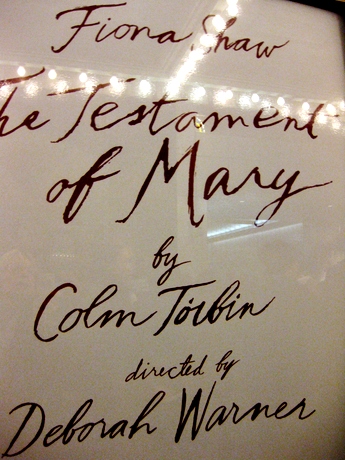
Colim Toibin’s The Testament of Mary at Broadway’s Walter Kerr Theatre stars Fiona Shaw and is directed by Deborah Warner. Based on Toibin’s novella of the same name, The Testament of Mary tells the unheard story of Mary, the mother of Jesus, who is being guarded and protected in the city of Ephesus after her son’s Crucifixion. The one-woman performance will have played 27 previews and 16 performances when it closes May 5th.

Before the play begins, Mary dressed in an iconic blue drape is behind a glass case, the very picture of the mother of God depicted in paintings. Under glass, she is the somber woman deified for all time. Mary under glass recalls tacky lawn ornaments. As the figure of Mary with plastic flowers Shaw poses and prays reverently, an emblem of the religion removed from humanity. While Shaw is behind the glass case, the audience, if they like, can go up on stage and view her and walk around. Also, present on stage is a chained up (so he won’t fly away) turkey buzzard, a predatory bird referred to later in Mary’s testament about the events leading up to the crucifixion. She refers to seeing a bird of prey gouge out the eyes of a rabbit and then eviscerate the animal, killing it in blood and gore. In context, it is what is done to Jesus, her son, which she laments and wishes had not happened.
The play begins after Shaw comes out from under the glass and becomes the human Mary. She takes away the bird of prey and begins her story of what happened to her, to her son and her ultimate lament that she wished it had not, a very contrary view, not to the Bible, necessarily, but certainly to the Catholic portrayal of Mary as the iconic wonder woman who birthed God.
Throughout the testimony, we do not see or hear the exultant Mary happy her son is the savior, an all-knowing Mary who understands flawlessly and effortlessly without a smidgeon of doubt her son’s purpose. This is a human Mary, filled with doubt. As she recounts the story in flashback, she laments as she tells us she had seen the “writing on the wall” when Lazarus was raised from the dead. She knew the envy and jealousy of the religious leaders. She knew they would go after Him because of the miracles He performed. This human Mary is fearful for her son because He is too loving, too kind, to wise, too beautiful, too knowledgeable and too just. And she intuits that He will be killed for it all especially because of His fan club and followers’ love.
The rabbit eviscerated in gore is her son eviscerated and left bloody. She doesn’t hail the blood of Christ as that of the lamb slain for the world that the religions (Christian) rejoice about. She rues his blood shed. He is first and last her beloved human son. All the more poignant is the scripture of Jesus when he looks down upon Mary from the cross, saying, “Mother, behold your son.” For Mary, it is a great sorrow that her innocent son went to His death, for what? Not even Pilot wanted Him dead, and in fact was warned by his wife not to “kill that innocent man.” How much more a mother suffers when her son is destroyed for what she knows is jealousy and envy. She knows the price that her son will have to pay to heal, cleanse, comfort, make water into wine, and especially to raise from the dead. She knows that the religious leaders will punish him and exact a blood penalty. She shares what motivates her son and what motivates the religious leaders who put burdens on the people that they themselves cannot relieve. She knows her son is the “real thing,” and that they, motivated by greed, money and power will destroy him. Her son’s death is not salvation; for her it is torture.
Can Mary the “mother of God” be allowed to speak as a human mother when she is portrayed by some religious leaders (Catholicism) as even greater than Jesus? Is it fair that she be human, that she show fear and run away like Peter who denied Christ? Is this not blasphemous? And yet in the scripture, she mourns and grieves her son as the women and disciples did. The production is not contrary to the scripture, even with regard to the resurrection of Christ.

So what’s the fuss? Fiona Shaw is absolutely brilliant, touching, painful, monumental in her portrayal. The play taken from the scripture is electrifying. Mary was indeed human and she is divine. We are human and have the potential to achieve great goodness, perhaps even divinity counting a few miraculous prayers answered. What the play intentions through the beauty of Shaw’s cry of humanity is that the divine be brought into our reach and that we identify and become ennobled by this understanding. That we too, given the concept of world salvation by a son, would rather have the son with us…forget the world. Let it rot. All the more the sacrifice, was Christ’s to have been paid at such a great cost: the suffering of a mother who, knowing who her son is and understanding what He can accomplish must lose him to brutality, jealously, all the sins of the world? No wonder Mary’s lament; no wonder she disputes God’s purpose. No wonder she questions and wishes a reversal of events. Wouldn’t we? And isn’t that the point?
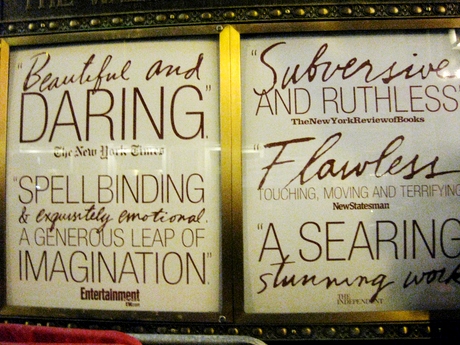
But as in The Last Temptation of Christ, there is no going back. Christ defeated temptation. His work was finished on the cross and He fulfilled God’s purpose. And likewise, Mary may rant, she is human, but her rant too is finished. And though she is an icon, Mary lives and prays in Spirit. Nothing can be taken from her nor is it in this production. The beauty is in the addition of her wonderful humanity in the paradox of divinity. There is hope for us yet.
Alan Cumming’s Macbeth, Not Shakespeare’s, Currently on Broadway!

Alan Cumming as Macbeth and all the other characters with two exceptions.
I wish I could agree that Alan Cumming’s decision to reinvent Macbeth was a bold and brilliant move that succeeded. I cannot, though I thought that Cumming’s performance of certain characters, in part, was interesting and affecting, if I suspended all my powers of logic. But isn’t that what insanity is? A suspension of logic? Mine? The character’s? Or the actor’s?
Cumming’s Macbeth, currently at the Ethel Barrymore Theatre, takes place in an insane asylum and Macbeth is wacked. I do wonder, though. Why use the construct of Shakespeare’s Macbeth to reveal multiple personalities or a tormented, guilt-ridden mind? Why not just create a play about a character who believes himself to be a tyrant, a Macbeth, and provide some logical outer sandwich to house the multiple personalities, i.e. Macbeth, Lady Macbeth,et.al. in an insane actor’s mind? That way as the insane actor reenacts Macbeth, Lady Macbeth, etc., again and again, we can perhaps retain some semblance of logic, especially if it is added that the actor has a deep rooted miasma that has set him off never to return (a bad drug trip?) to coherence again.
In this production of Macbeth, here is the rub. If you wish to see Alan Cumming perform Macbeth, then by all means go and enjoy his performance of the characters in this one man show (with the exception of an attendant and doctor). You won’t mind that this rendition whose conceit blares and pivots one note (insanity) lacks logic, suspense, depth and coherence. It will be OK because you are seeing Alan Cumming fulminate, rage and wither. You will not being seeing a production of Macbeth, the Scottish play.

Cumming’s overarching conceit that Macbeth is insane houses the characters and plot. Explanations beyond to the why, wherefore, place and time before his arrival at this stark, sterile, green hospital room are absent. Because there are two “evidence” bags which are used to put in some clothing, we are left to our assumptions: Macbeth is attempting to expiate his guilt by playing all the characters. However, the point where the action intervenes with the characterizations is a muddle. Our confounded logic is swamped by the conceit. Is our confusion supposed to be wiped clean because Macbeth is insane and none of this is supposed to make any sense?
Cumming portrays all the characters, Lady Macbeth, King Duncan, Malcolm, Macduff, Lady Macduff, Banquo, Fleance and the criminals who kill Banquo. He enacts the play events through the dialogue alone, no physical action except those related to a suicidal, guilt-ridden mental patient: the killings unfold, the witches prophecy. Cumming plays all the parts and this is supposed to be happening in Macbeth’s mind, though there are things in the action Macbeth could not have known. Again, we must provide our own logic and are left to surmise he was told what happened and that’s how he is able to perform the dialogue related to Lady Macduff’s and her children’s deaths, though Macbeth was not present to kill them. Suspension of disbelief is imperative to get through these sections of dialogue in the play. And there are a number of them.
The dialogue has been truncated, silently interrupted by attendants who administer medication when the main character’s (Macbeth?) menagerie of beings plagues him toward horrid, guilt-ridden misery or when they act up to threaten his life causing him to let his own blood. Remember, all of this is happening in Macbeth’s mind as he performs the parts. The extraneous action begins at the beginning of the play, when the insane asylum conceit is set. Macbeth is brought in; he disrobes from his suit which goes in an evidence bag, then he dons patient clothing, all in a frightened, subservient manner. We wonder…is this Macbeth? Or is it someone who poses as Macbeth? Setting the conceit takes around 10 minutes. And when TV screens come on picturing Cumming who speaks the dialogue of the various witches, we know this guy is nuts. But that’s all we know. Who he is and how he got there? No matter. This is Alan Cumming’s Macbeth. That should be enough. Hardly!

The conceit is so ill drawn, the interpretation depends upon the audience’s good will to know the play thoroughly beforehand. I do know it having taught the play for a number of years and having seen it performed a number of times. Would it have been better if I didn’t know what to expect? It would have been much worse, I fear, for I did appreciate Cumming’s speaking with a Scottish accent, resonating Shakespeare’s wonderful imagery and language. I know the characters well; I knew the upcoming lines and happily recognized one of the two logical segments of the play when the doctor tells Macbeth that a cure for what ails Lady Macbeth is beyond him. In Cumming’s rendition, that made sense. Yeah! And yet…
I do think that regardless of my familiarity I would have grappled with providing a logic for the conceit. I assumed that insane Macbeth committed his crimes, was arrested and brought in and his conscience, in a feast of guilt, punishes him into reenacting the characters and events again and again in the asylum. Though this maximizes a few lines in the play, for example Lady Macbeth’s guilt at killing Duncan (All the perfumes of Arabia will not sweeten this little hand.) it does little to reveal the arc of Macbeth’s monstrous evil and his dangerous fascism in creating a security state that wipes out all potential enemies in ripe paranoia and bloodshed, and that drives away all who might have been wooed to his side. In other words, the conceit transforms the play’s immediacy, Shakespeare’s characterizations and weighty themes. It bends all to the will of Alan Cumming. Interesting twist, a fascist actor manipulating us to accept an illogical, muddled rendition of a brilliant play and brainwashing us that his rendition is magnificent and makes sense. Hardly!
Cumming’s Macbeth characterization is that of a feeling, pitiful, miserable creature. His Lady Macbeth is a manipulative plot conveyance. His Duncan is a foppish, foolish, laughable Brit whom we feel little remorse for. His Banquo is whimsically unmemorable, and the witches are creatures who jump to and fro recollecting the past. All the characters and the relationships between them have been reduced to surface shadows lacking meaning beyond their resurrection by a heated brain. The witches have lost their power; they’ve no function. They do not spur Macbeth to ambition. Nor do they mislead and misguide him to the abyss of evil, a belief of the age of King James I. All action in this production bends toward the multiple personalities rearing their heads. And that’s it. We wait for them to show up and see how Cumming will portray them. Little of their human truth comes to the fore, though Cumming is in the moment with whatever being is present. (Wait. I think I might have it. The enactment is Macbeth’s attempt to reveal he is not guilty in all this?) Hardly, because then, why would he attempt to drown himself which he tries in a tub in the last segment of the production? A guilty, tormented soul attempts suicide to stop the pain, does it not? None of this is reminiscent of the paranoid, tyrannical enraged Shakespeare’s Macbeth who would rather kill everyone on the planet and be alone than admit his own guilt.

Sadly, Cumming’s raw emotion is unconnected to anything universal and therefore, unconnected to us. That’s insane, is it not? We don’t know from where the character’s insanity comes; it does not come from the action of the play. There is no action other than that which hinges on Cumming’s performance of these multiple personalities, or beings or people or what you will. Does this production elucidate Shakespeare’s Macbeth? Can the play be elucidated? Of course; there are many who are not familiar with the play, though they know about tyrants, killers and power grabbers spurred by ambition. Ours is a terrible time of many simulacrums of Macbeth. Well, our time and this production were not in the same realm. I found the production to be self-serving and self-aggrandizing. Only in this way was Cumming’s Macbeth a shadow likeness of the character in Shakespeare’s Macbeth.
This is a meta problem of the production. The richness of Shakespeare’s Macbeth is its unraveling of a soul as it becomes engorged and steeped in evil. The temptation to accept evil as Macbeth does and allow it to envelope one’s being is a story for all time and for all leaders. It is the story of tyrants from Hitler to Stalin to Idi Amin. It encompasses apartheid and its aftermath; it encompasses the current global leadership whether it reflects those who are at the heads of banking cabals that drove the mortgage debacle causing massive human suffering, to CEOs of hedge funds who made trillions while impoverishing and destroying global economies. Such tyranny never is one note. It is layered, dark and infinite. It is not insanity. It is evil.
There is such a thing as evil and it must not be confused with insanity. This production melds the two conditions when both are completely disparate. One is a mental condition. The other a soul condition, beyond a doctors’ care and treatment. Evil defies ethics, morality and the common good. You cannot give someone a medication, a shot, to eradicate or abate evil. No doctor can administer any drug for what ails Lady Macbeth and Macbeth. How does one minister to a soul engorged with the power of darkness? Yet the production insists on portraying Macbeth as insane while it removes any ethics of the nature of evil and wickedness. The center of the conceit does not hold and collapses in on itself by not dealing with the play’s main tenet. Soul sickness, spiritual wickedness. But the production did not deal with spiritual evil. All supernatural and paranormal elements are absent (the witches don’t exist…they like most of the other characters are in Macbeth’s mind.) Only the ghost of Banquo shows up as a real person, huge and tall wearing a Hannibal Lecter mask, no explanation inferred for the who and how. This material Banquo-Hannibal Lector is one more pounding of the hammer that Macbeth is insane and this isn’t supposed to make any sense. I wondered during the production, with the absence of any reference to evil, does this heighten the significance of evil and wickedness? It is the one element lacking and through its lack must we infer it is very real? Sigh. I’m still trying to make sense of the production which truly, I wanted to like, but found to be obscure and convoluted.

The legacy of Macbeth’s (Shakespeare’s) augmenting wickedness and paranoia shows a diminishing guilt and remorse until any semblance of goodness in him is wiped out. For Macbeth there is no turning back. That is the greatness of Shakespeare’s characterization. At the end Macbeth is without compunction; there is nothing to stop him from killing off his countrymen and the pitiable Lady Macduff and her children. When Macbeth sees how corrupted Lady Macbeth’s soul has become with the bloodthirsty killing of King Duncan that a reverse stigmata appears on her hands in her imagination, the stench of infinite wickedness, even that does not deter him. Lady Macbeth is beyond the power of redemption; she is beyond the power of second chances; she is beyond the power of forgiveness and self-forgiveness. And so is her soul mate, Macbeth. Macbeth knows this when the doctor tells him her illness is beyond the doctor’s remedies. Yet where she can no longer act, as she is insane, Macbeth very rationally and methodically continues his evil actions to preserve his power and his kingdom. His wife’s abyss of guilt does not give him pause. This wicked tyrant will never seek redemption for he has done no wrong; his actions are not evil; he is not guilty. As Shakespeare’s tragic villains go, he is the darkest and most wicked for he feels no remorse. When the witches prophecies come to pass it enrages Macbeth, it does not stop him. He persists as he completely is given over to the powers of darkness. The witches have indeed won his soul as emissaries of the devil.
Goodness triumphs through Macduff and Malcolm and we are relieved that there is justice in the world as we are saddened to see a potentially goodly soul at the outset so overcome with wickedness through vaulted ambition, acceptance of evil and the relinquishing of any goodness or light within. Macbeth’s tragedy is a human one. He has made a Faustian bargain by leaping to the witches’ seductive prophecies when he knows they could be tempting him to the flood of darkness. How many times have we selected a wrong course knowing it was wrong but thinking we could get by anyway? If we have power, then comes the cover up of wrongdoing and on and on until up is down, black is white, fair is foul and evil is whitewashed to appear good. So with Macbeth, so with all tyrants and evil doers who aver that they have done any wrong.
When leaders create wars and state that they are for the good of the country, when they jail whistleblowers who expose their lies yet call the whistleblowers traitors, when they create economic devastation and then say they are powerless to do anything because the financial systems causing the debacle are “Too Big To Fail,” THEN ” fair is foul and foul is fair,” the incantation the witches state at the play’s beginning. Indeed, what spirits hover in the fog and filthy air? And what rough beast is slouching toward Bethlehem to be born? Certainly not the insane. Mark this beast for what is is. The spirit of evil. And when leaders are possessed with wickedness, then woe to the populace that must suffer them. They long for a Malcolm or a Macduff to bring deliverance.

Are these themes of Macbeth not good enough for our time? Is the play Macbeth not weighty enough to have been enacted so that Shakespeare’s characters and exciting plot could speak to us today? Could we not understand, we who are troubled by ambitious leaders and corporations who feast on augmenting their power and who exploit the populace? Are our lives not diminished by those forces, systems and industrial complexes which are tyrannical, covetous and fascist, like Macbeth? Surely, we thirst to understand the arc of evil begetting evil as it hungers for more power and covers up dark deeds to appear righteous!
Well, in this production, insanity has become the favorite substitute for wickedness. Ironic, for ours is a time when books and films are populated with spiritual powers of darkness represented by the paranormal and supernatural: werewolves, vampires, the living dead, dragons, the witches in the Harry Potter series, ghosts, evil spirits, trolls, et. al.

As for this Lincoln Center production of Macbeth? Not for me. I’ll take the good old fashioned Scottish play that no one dares to call by name.
The Revisionist Starring Vanessa Redgrave and Jesse Eisenberg. A TRUE REVISION
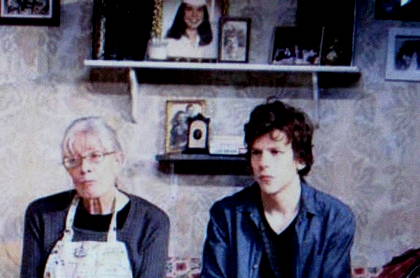
Vanessa Redgrave and Jesse Eisenberg in The Revisionist, which I most likely will never get to see.
FIRST RESPONSE EARLIER TODAY AT 9:00 AM (There is a happy ending. See UPDATES below.)
For me and a friend who went to see the The Revisionist, starring Vanessa Redgrave and Jesse Eisenberg this past Saturday, the occasion was a nightmare. I had seen Redgrave live on Broadway and elsewhere a number of times as had my friend, Emily. Brit theater snobs, we happily anticipated seeing Redgrave’s performance remembering with enthusiasm her Driving Miss Daisy with James Earl Jones on Broadway. How could this be a bum night? Impossible, right? “Ha!” (said with bitterness).
Well, thanks to the production company and the gods of chaos and disorder, not only did our anticipation turn out to be a botched abortion, the occasion left me with the nightmare portent of fascist attitudes and a longing NEVER TO DO BUSINESS WITH THE RATTLESTICK THEATER COMPANY OR ANYONE CONNECTED WITH THE PRODUCTION AGAIN, INCLUDING THE PERFORMERS, DIRECTOR KIP FAGAN, ETC.
I don’t say this lightly. I’m an avid theater goer and supporter, albeit not a huge patron of the arts with thousands or millions of dollars in donations. I am little person, one of the tendrils in the nervous system of the average New York City theater going community. Typically, I spend thousands on live theater each year. And as a little person, I bristle like a porcupine when tossed to the trash heap, an inconsequential serf. Ms Redgrave, for years an avowed communist, should be able to understand and empathize. Maybe not.
The city via the Midtown Tunnel is 20 minutes away from my friend’s house. I picked her up at 6:30 pm and speeded merrily down Woodhaven to L.I.E. with over an hour and 15 minutes to spare. The drive should have taken us 1/2 hour to the theater. Then THE EVIL showed up after the rise in the road, stunning us with a garish display of red brake lights that snaked for miles of incredible delays on the L.I.E. There was nowhere to get off. And it wasn’t an accident which would have been a temporary hold up. No. The tunnel was closed off inbound to one lane. I hadn’t seen such a traffic problem on the L.I.E. since before I moved to NYC permanently 30 years ago.
There we sat with no way out. I was frantic, nearing hysteria, my insides, worms. All I could squeak out was, “This is really bad, really bad.” Emily attempted to reassure me. What good was it to heighten the drama with more histrionics? There was nothing we could do short of press the ejector seat button, plunge through the opening roof and with our jet packs roaring and blazing zoom to the theater.
Of all days, we had to be stuck in traffic, missing all alerts the tunnel was closed! This was the fastest route, according to my Australian cousin who had used his GPS to figure it out two years ago when he and Anna visited….13 minutes from Kew Gardens to 34th street. Not this day. It took us over an hour to get through the Midtown tunnel. The normal passage downtown was blocked and we had to spend another 10 minutes to get to Lexington heading downtown and finally over to 7th Ave. downtown. The theater is the Cherry Lane on Commerce. We arrived nearby at a garage at around 8:00 pm, SHOWTIME.
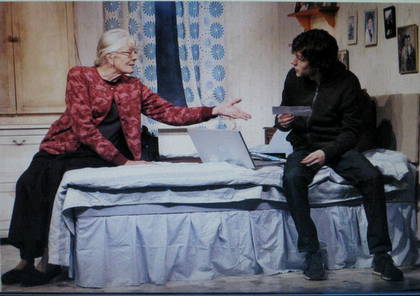
A discussion. Eisenberg wrote the play and they worked on it and discussed pre production at the 92 Street Y.
Then we got lost. What more could go wrong? Emily and I reassured each other, “Well, we have 10 minutes grace period before the show begins,” as per the usual MO of NYC theater. We asked directions; the results were somewhat helpful, and finally using my iPhone, we found the theater. Whew!!!! Emily again was calming and reassuring us, “We’re here!” It was 8:11 PM. We had made it The Revisionist was just beginning.
Then came the blow. KABOOM! “NO LATE SEATING,” said the demonic looking box office agent in a defensive upper register. My jawline crashed to the pavement. ”NO LATE SEATING!” I got it but I didn’t believe this could be happening after the ride in from hell. I was in shock. What did that mean? At Brooklyn Academy of Music, The Harvey Theater, it meant that you had to wait until they were good and ready to seat you. You watched the show on the monitors until they let you in. Same on Broadway and Off Broadway. “NO LATE SEATING,” meant we seat you AT OUR CONVENIENCE.
Not so for The Revisionist. NO LATE SEATING MEANT, “Screw your late ass. You’re closed out, late fool!” NO LATE SEATING MEANT, “Amscray. Get out! Leave! Todaloo!” It meant, “You are locked out from seeing this show…forever.” NO LATE SEATING MEANT, “You lost your money. You might as well have thrown it down the toilet.” NO LATE SEATING MEANT, “It’s your fault you were late and F%#K YOU!” NO LATE SEATING MEANT, “We’re not sorry. If you’re one minute late, it’s your fault and you can’t get in even if you are President Obama, The Queen of England or Edward Albee.” (Somehow, I don’t think this applies for them. I know it applies for the little people who can least afford to throw money into the toilet with or without poop in it.)
Is it on the print out? Yes, this is listed on the print out, but the print isn’t very large and since this phrase is used in other theaters, the given is that you are seated after a time of their convenience. I have been late maybe once in hundreds of performances including Broadway, Off Broadway theater, philharmonic, opera, dance, etc. This was the first time in my decades of life that I had the pleasure of experiencing, NO LATE SEATING when it meant, ” You’re finished!” “Go home, chump!” “We’ve got your money, sucka!” “Don’t even think about a refund!”
To add to the indignity, the monitor showing the performance was not only inaudible and unintelligible, but the lights were so bright, the screen was washed out and a blur. If Emily and I wanted to view the performance in the lobby, we would have had to have dog hearing and overexposure goggles to make out the uber blurry images of a tallish women and scrunching kid to her right and their etherealized movements. And there was no where to sit. There was no attempt to accommodate the faintest possibility that something might have happened beyond a patron’s control to make them late.
This was so counter to NYC theater operations, which do treat you humanely. Here, the fascists were clearly stating the message. You committed the sin of all sins, lateness. There is no second chance and to punish you forever, (The performances are sold out, by the way.) it will not be possible to even see a glimmer of anything on the defunct TV monitor. The message again? TUFF! IT’S YOUR FAULT. THERE’S NO RECOURSE. I and Emily paid $91.50 each to be thwarted at every turn. There is a devil and it is called The Revisionist and Rattlestick Theater.
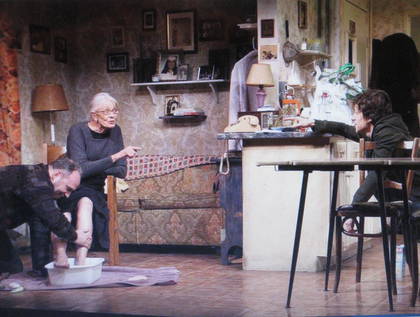
Dan Dreskes, Vanessa Redgrave and Jesse Eisenberg
We went back to the garage. We had parked less than an hour. The cost? It was $26.00. With all the complaints about Broadway being pricey, I’LL TAKE BROADWAY. I get my money’s worth! There aren’t these dictums on high from production company popes. Discount parking is available and there are good restaurants in the theater district.
Never until this experience did I understand how a company through arrogance and ineptitude can be so self-destructive. When money is given for a performance, there is a warrant. Despite the stated terms and conditions, it should be understood that theater and any live performance depends upon the good will of the individuals who come to see it. NO ONE. I DO NOT CARE WHO THEY ARE SHOULD BE ALLOWED THE PRESUMPTION OF THIS PRODUCTION COMPANY. Accommodation should be made when money is paid out by the purchaser and every effort is made to satisfy the company’s requests. Smaller venues than the Cherry Lane with cheaper seats have been more accommodating. Of course, Broadway and Off Broadway are accommodating. This production company? The treatment we received was egregious.
I do not blame the Cherry Lane. The production company rented out the space from them so the Cherry Lane is not the decision maker. I think, but I’m not certain, that the production company is responsible. I paid the money to them; they should at the least have made sure there was a working monitor if extenuating circumstances occurred and people were late. The constipated box office attendant who was not schooled in how to gracefully handle our situation and who kept on blabbing about, “I can’t do anything. I can’t do anything,” was an annoyance. At the very least he could have pretended like he listened, directed us to the monitor (though I can’t imagine why) and said two mollifying words, “I’M SORRY.” Indeed, his guilty response made me feel as if he knew the rote lines he had to tell us were egregious and he found them loathsome to say. In fear of this guilt, he couldn’t even hold the production company line and try to make the situation better. He worsened it.
Everyone involved with this production collectively is responsible for not making a better arrangement. A small print notice on a sheet will not cut it in the arts. It is abjectly beneath artists, creators and intellectuals to be so inflexible, arrogant and punitive. Actually, that is what grieves me the most. Artists, above all the individuals on this planet, should not behave with a dismissive, corporate, lizard mentality. Sometimes, there are extenuating circumstances. Things do happen and people may be late. Accommodate. If the artists are as great as they think they are, focus is a skill and distraction will not throw them off their roles to accommodate a late seating. Are they going to repudiate coughing and sneezing as distractions? I’ve been at performances (Frost/Nixon) when some hacking seal coughs are actually worse than seating late comers. If there is an emergency during a performance (James McAvoy during a recent Macbeth performance helped out an audience member who was sick and then picked up the character of Macbeth seamlessly. Kelsey Grammer did the same when a sound board blew. Countless other actors have done the same, my God, a testament to their brilliance.) what are the cast going to do? Just “Go on with the show,” and let the person die in the audience? Infantile, arrogant, inexperienced, not worthy of the craft.
Kelsey Grammer embraced the beauty of live theater. After the performance of La Cage Aux Folles, when I complimented him for his brilliance entertaining the audience when the sound board blew then picking up the character like there was no break, he said, “That’s what’s great about live performances. Anything can happen.” I reiterated that a brilliant performer like Grammer is ready for anything. Great actors should not be thrown by coughing, sneezing, farting, collapsing audience members, or late seaters, etc. With live theater they should be able to go with the flow.
Late seating should have been NO BIG DEAL for Redgrave and Eisenberg. If individuals have paid big money (for Off Off Broadway) to see a production and they have taken the time and effort to travel to the Village which is far from convenient, then it is a mere courtesy to accommodate them for a seating at a point in the play when there is a pause or lull. And if there isn’t, then the play is not well written or true to life with natural silences and pauses, and the art is a contrivance as is the arrogant assumption that the audience is expected to bow to these “greats,” like Lilliputs. Sorry. Performers, productions and theater companies should behave better than this and those in NYC mostly do. The Revisionist is a rotten exception. I will not support the performers, the production company or this theater group in the future. I’ve had enough of corporate arrogance and lizard brain behavior. Artists are supposed to create art to DRUB THE PHILISTINES. The Revisionist policies exemplified the epitome of commercial and supercilious attitudes. As for a wrecked monitor in this day and age? Pleeeassse. Keep mine and Emily’s money. Use it to buy some new used equipment.
UPDATE: I contacted Theatermania’s Ovation Tix about the matter. They are contacting the theater. So at this point, action will fall directly on the production company, The Revisionist, and the theater if they do not refund our money. The show is sold out. There is no way we will see it. I will not go to another venue if it is produced there unless our money is refunded. Let happen what must. I’ve already blamed myself a million times, to no avail. I do not share in this completely alone. At least Theatermania is trying to mediate so I will use Ovation Tix again.
UPDATE 2: Theatermania made an arrangement with the theater and production company. REPRIEVE!!! There are second chances, thank goodness. We have been allowed to see the show, a matinee, on April 27th AT 2:00 PM. Two seats have been reserved for Emily and me. NOW, I JUST CAN’T BLOW IT A SECOND TIME!!! I WON’T. Thanks, hugs and kisses to everyone involved. My faith in the production company has been restored as has my faith in the performers and artists. Whew!!! Yeah!!! Maybe I’ll spend the night in the city to make sure I’ll get there on time. Never want to go through this again!!!!!
Tom Hanks, Lucky Guy. Not So Lucky Play by the Late, Marvelous Nora Ephron.

Tom Hanks is a phenomenal human being and actor. Many would be proud to have him as a friend. Helping Nora Ephron mount her play, Lucky Guy, is a tribute to her and to him. They are to be credited and although it has not been made crystal clear, most likely they discussed and worked on the play at length before she was struck down by her illness. For the most part, I write reviews that are supportive of the arts. I understand that every attempt made at producing and promoting a production whether on or off Broadway is a labor of love that engenders a very long process over hurdles, obstacles, nay-sayers and grouchy money lenders and enthusiastic investors. I acknowledge and appreciate. the courage, brilliance and perseverance it takes to present an artistic endeavor which could fall or succeed depending upon so many variables that sometimes it is impossible to calculate the why, the if and the how.
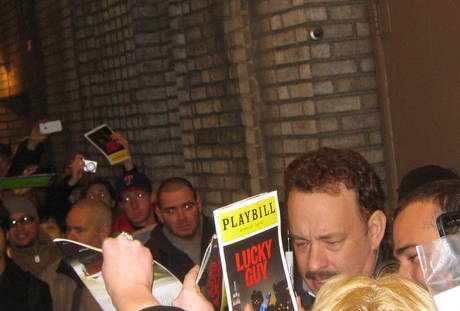

The spectacular Sir Ian McKellan. He was so gracious to speak to me after the performance. See future posts about this.
Blurry picture of Glenn Close, the blonde to the far right. I briefly spoke to her after the play telling her how much I loved her incredible body of work. She, too, was very gracious and smiled. But as Emily Blunt responded to me once a few years ago when I saw her at a performance of Bloody, Bloody Andrew Jackson, and apologized for complimenting her. She responded that actors don’t find praise droll and tiresome. “It’s better than saying, ‘I hated you!” she said with smiling humor. I doubt that Close found the praise droll and tiresome either. So much of the world of acting is filled with cattiness, criticism, negativity and soul angst. A bit of well-deserved praise from viewers is welcome.
Lucky Guy will not fall on its face because Tom Hanks’ presence in New York City in a live performance will draw tony crowds willing to pay $400 for premium seats and Hanks’ buddy celebrities who will come to support him through rain, sleet, snow and desert temperatures, and who may have been comped to be seen in the audience. Others living in New York will purchase the “hot” ticket, though they may never have worked or buddied up with Hanks, just to see this renown and beloved movie actor on Broadway. Certainly, the little people and fans will pay big money for the rafter seats to catch a glimpse of Forest Gump, the Oscar winning actor and the producer who has a fine eye for humorous talent exemplified when he backed little known comedian Nia Vardalos by producing a little film with a big heart, My Big Fat Greek Wedding.

Hanks quips and smiles to an adoring well wisher. Many pictures were taken with smart phones and iPhones. There was a crowd crush line up at the end of this performance.
The promoters know of Hanks’ draw capability by his track record box office. So if the play is less than sterling, if the plot is convoluted, chopped, contrived, unfocused and completely un-Ephronesque, if the sign offs from McAlary’s family were hushed and pressed, will the audience care? No. They are there to see an exhibition, a show, the glitz and the fun. They are not expecting great writing at this point, and since they are coming for all the other reasons and not to see a marvelous story, they will not be disappointed. They might be rather surprised that the play doesn’t cohere and that it shifts after the intermission toward a completely different focus, but that will not cool them from enjoying the evening. Why? Hanks is true to form. He rises to the occasion. He makes the thin, stereotyped, fictionalized characterization of the brilliant and courageous newspaper reporter Mike McAlary believable, likable and intensely human with yeomen’s help from an exceptional supporting cast, beautifully acted by Courtney B. Vance, Richard Masur, Christopher McDonald, Maura Tierney, Peter Gerety and Deirdre Lovejoy and aptly directed by George C. Wolfe.
Mounted police were thrilled to take pictures with Christopher McDonald who has been in over 85 film rolls over the years and still looks like a kid.

Even the horse was tickled to be in a photo op with McDonald. A bit later he head butted McDonald and pushed him forward as if to tease him. McDonald posed a fighting boxer stance in humor. It was a great and spontaneous moment. McDonald upstaged the horse, proving you have to be ready for anything in the moment as an excellent actor which McDonald is.
Lucky Guy is about the arc of success for Mike McAlary: his influences, his exuberance, his integrity, his passion and the conflicting loves of his life, his wife and his reportage and status as a columnist when he worked for New York City Newsday, The Daily News and The New York Post. Yet Lucky Guy also purports to be about the the men, McAlary’s editors, specifically Mike Daly and Hap Hairston with whom he worked closely and who supposedly knew him best. As an iteration of these newspapermen it also shows snippets of New York City and the three New York tabloids during the 1980s and 1990s.

New York City in the misty retrospective of the 1980s and 1990s, the play’s setting.
Ephron took on an ambitious challenge compressing McAlary’s story as a newspaperman, using the narrators-editors and newspaper people and his wife to bridge the enactments of seminal events in McAlary’s life. Whether the abortive conception of McAlary as a man whose star skyrocketed too quickly in bombastic, self-possessed glory that could only result in a plummet, Icarus-like to the earth, or whether the sheer weight of the attempt at compression of the hundreds of moments of a true life story caved in on itself (without using symbolic, representational short cuts of revelation to assist in the telling) the ride became chopped and grinding. At best it was ill conceived and at worst it was a flatliner that catapulted into nowhere land. The dialogue witty and clever at times, reveals Ephron’s turn of phrase and humor. As for the excitement, thrill and edginess of the newspaper business? It was lost in the retelling through the selection of events and perceptions of the editors which decreased the vitality of what were fascinating and complex decades in New York City’s history.
The irony is that the urgency to chronicle the story truncated the spirit of the truth of these individuals, especially McAlary and the editors. This wobbly “truth” webs an obscurity that minimizes their very real conflicts with themselves and each other. This in turn skews the focus and redirects the play in the second act toward hyper-resolution as McAlary wins the Pulitzer Prize for reporting on the Abner Louima case. At this high and low point of his life, Ephron shows his humility in accepting the prize (which strangely appears like a mea culpa speech to his colleagues) and his resignation as his cancer battle overwhelms him. This battle in the play’s unfolding almost appears as a judgment on his life which it shouldn’t. The play lamely concludes with the recognition of the birth and death years of the two editors and McAlary projected on the screen as the men stand before us in a tableau. For a second, I was left feeling like this was a theater of the absurd Pinteresque let down, “That’s all there is folks?” What? Wasn’t this play about McAlary as the focus? Or was it about the editors? Was it about the last choking song of New York’s tabloid newspapers? Clouds swirled around my understanding making me feel that both the playwright and director were unsure about an effective ending and ran out of steam. Incongruency. The play was unable to hold together the line of events that were so urgently chronicled.

As I stared at the dates, I felt a dull thud of “ho hum,” when I should have felt a lightening jolt of recognition that the era of newspaper tabloid reporting had ended with these individuals and would never return again; that greats like McAlary were precious, rare talents, their flaws having enriched their work. The preciousness did not come through in Ephron’s least satisfying endeavor. What did come through was Hanks’ presence and being despite the muddled plot and characterization. Hanks’ acting skills injected every ounce of spiritual strength and humanity into Ephron’s words. Hanks breathed life into a wooden, thinly written Mike McAlary. The cast were true to their best efforts and allowed us to envision what these living individuals might have been like at this time and place. Was the memory of McAlary served by Hanks? Absolutely. But the play was not a vehicle to introduce or remind us of McAlary’s genius. Unfortunately, it muted and veiled the artistry and the power of his legacy, and most likely it did the same for the other individuals who lived and breathed newsprint onstage.

Call it a problem with plot, selection of events and perceptions. Say it was too ambitious a task to try to cover his journalistic career and life during that time. Call it a problem of how the truth of McAlary the man was cobbled together through interviews, newspaper articles and editorials, etc.,and spun. Call it what you will, the play was uneven, misshapen. Hanks has been quoted as saying that the play is a fictionalized account of McAlary. Well, fictionalized would have been vastly more entertaining with great opportunities for extrapolation and flexibility of story telling. The identities and names could have been masked and the story better wrought; it could have been simplified to parable level or made more mythic. Or it could have been made more real, refocused on the relationship between McAlary and his wife which would have been an enhancement. Somehow, their love never resonated as it should have. And this wasn’t the fault of the actors, but rather in the thinly drawn interaction between them.
To accommodate Hanks, McAlary’s age was tweaked. The man died at 41. To say his life was cut short is an understatement. To say that his wife and children were bereft without him is another understatement. To say that he accomplished a tremendous amount in the years he had is another understatement for he wrote novels and screenplays and consulted on films. McAlary was a dynamo, beloved to his wife, relatives and friends, an amazing personality a newspaper man of the old school who adored his work. Indeed he adored life and wanted to live it to the fullest. He did, but his season for living was brief. And this is the tragedy with which all can identify. This is the story, and what a story.
But how do you put this in words and get it all in? You render it as legend; he’s an Odysseus, a hero, a champ, a newspaperman we can love. You create an independent narrator, one not involved as a character, one who has an overarching view who selects the crucial events that brought the man higher on his soul journey. Then you reveal what he has learned and what he has carved for himself out of the roughness of youth into a wisdom borne out of love, loyalty to his passion, trial and suffering. You show the nobility of the time through this narrator’s eyes, revealing the horror that has increased in the decades as a precursor to the new prowling terrorism of war on American soil. Then the focus is clear. Then the years of McAlary’s birth and death make sense in context. Then we understand their value and can say, here was a great newspaperman who captured the era with the dynamism of his reporting and we shall mourn an era that we’ll never see the likes of again.
Lucky Guy is at the Broadhurst Theater.
 CAROLE DI TOSTI
