Category Archives: Tribeca Film Festival
TRIBECA FILM FESTIVAL at the Beacon Theater: The Line-up
|

Tribeca Film Festival NOTIFICATIONS
FILMS AT TRIBECA FF

Sabrina Carpenter,’Short History of the Long Road,’ Tribeca Film Festival (photo courtesy of the film and TFF)
THE SHORT HISTORY OF THE LONG ROAD
*World Premiere Screening at the 2019 Tribeca Film Festival in the U.S. Narrative Competition*
Written & Directed by: Ani Simon-Kennedy
Starring: Sabrina Carpenter, Steven Ogg, Maggie Siff, Danny Trejo
For teenage Nola, home is the open road with her self-reliant father and their trusty van, two nomads against the world. When Nola’s rootless existence is turned upside-down, she realizes that life as an outsider might not be her only choice.
Public Screenings:
Saturday, April 27th at 2:30 PM at Village East Cinema 07 (World Premiere)
Sunday, April 28th at 5:00 PM at Regal Battery Park 06
Wednesday, May 1st at 5:45 PM at Village East Cinema 03
Saturday, May 4th at 9:00 PM at Regal Battery Park
Purchase tickets by going to Tribeca Film Festival website. See the film guide at the top of the website page. TRIBECA WEBSITE: CLICK HERE
FRAMING JOHN DELOREAN
|
|

|
|
|
|
Tribeca Film Festival Opens With ‘THE APOLLO THEATER’ HBO Documentary Film

2019 TRIBECA FILM FESTIVAL® SET TO OPEN WITH WORLD PREMIERE OF
HBO DOCUMENTARY FILM THE APOLLO ON WEDNESDAY, APRIL 24
Academy Award® winning director Roger Ross Williams’ film celebrates the historic New York City cultural landmark where musical legends were discovered
Features interviews with Pharrell Williams, Jamie Foxx, Patti LaBelle, Ta-Nehisi Coates and more
NEW YORK, NY – February 13, 2019 – The Tribeca Film Festival, presented by AT&T, will open its 18th edition with the world premiere of the HBO Documentary Film The Apollo. Helmed by Academy and Emmy Award-winning director Roger Ross Williams, The Apollo chronicles the unique history and contemporary legacy of the New York City landmark, the Apollo Theater. The film will debut at the iconic theater itself on Wednesday, April 24, 2019 and later this year on HBO. The feature-length documentary weaves together archival footage, music, comedy and dance performances, and behind-the-scenes verité with the team that makes the theater run. The Apollo features interviews with artists including Patti LaBelle, Pharrell Williams, Smokey Robinson, and Jamie Foxx. The documentary is produced by Lisa Cortés, Nigel Sinclair’s White Horse Pictures, and Williams. The 2019 Tribeca Film Festival runs April 24-May 5.
The Apollo covers the rich history of the storied performance space over its 85 years and follows a new production of Ta-Nehisi Coates’ Between the World and Me as it comes to the theater’s grand stage. The creation of this vibrant multi-media stage show frames the way in which The Apollo explores the current struggle of black lives in America, the role that art plays in that struggle and the broad range of African American achievement that the Apollo Theater represents.
The Apollo Theater is internationally renowned for having influenced American and pop culture more than any other entertainment venue. The space has created opportunities for new talent to be seen and has served as a launchpad for a myriad of artists including Billie Holiday, Aretha Franklin, Ella Fitzgerald, Diana Ross & The Supremes, Stevie Wonder, The Jackson 5, Luther Vandross, Dave Chappelle, Lauryn Hill, Jimi Hendrix, and more.
“We’re excited to finally be going uptown to play the Apollo,” said Jane Rosenthal, Co-Founder and CEO of the Tribeca Film Festival. “The Apollo gives audiences an inside look at the major role this institution has played for the past 85 years. It’s seen the emergence of everything from Jazz to R&B to Soul and Gospel – all quintessential American music genres, and this is the time to remind people of our nation’s rich history. ”
“The Apollo is about so much more than just music, it’s about how we used music and art to lift ourselves out of oppression,“ commented director Roger Ross Williams. “The story of the Apollo is the story of the evolution of black American identity and how it grew to become the defining cultural movement of our time. I was fortunate to make my first film with HBO and I am thrilled to be coming back home with The Apollo. Premiering at The Tribeca Film Festival, at the Apollo Theater in Harlem is a dream come true.”
“The Apollo Theater is a symbol of the creative spirit of New York and beyond, and I’m very happy that we’re kicking off our 18th Festival celebrating it with this documentary from Roger Ross Williams,” said Tribeca Co-Founder Robert De Niro.
The Apollo, directed by Academy Award-winning and Tribeca alumnus Roger Ross Williams (Music by Prudence; Life, Animated) and is produced by Lisa Cortés (Precious), White Horse’s Nigel Sinclair (George Harrison: Living in the Material World; Undefeated), Jeanne Elfant Festa (Foo Fighters: Back and Forth, Pavarotti) and Cassidy Hartmann (The Beatles: Eight Days A Week, Pavarotti) along with Williams.
The Apollo will have additional screenings during the Festival. Passes and packages to attend the Festival go on sale on February 19, 2019.
The 2019 Tribeca Film Festival will announce its feature film slate on March 5.
Hashtag: #Tribeca2019
Twitter: @Tribeca
Instagram: @tribeca
Facebook: facebook.com/Tribeca
Snapchat: TribecaFilmFest
Tribeca Film Festival 2018 World Premiere: ‘Stockholm,’ Starring Ethan Hawke
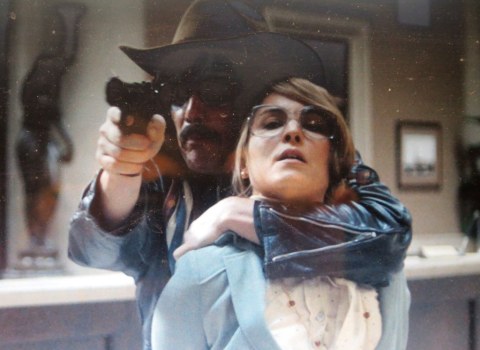
Ethan Hawke and Noomi Rapace in ‘Stockholm,’ A World Premiere at 2018 Tribeca Film Festival Spotlight Narrative Film, (photo courtesy of the film)
Stockholm, written and directed by Robert Budreau and starring Ethan Hawke as the American who intends to swap millions and a friend for the largest Swedish banks’ hostages is a humorous thrill ride which almost has you rooting for the “wild and crazy” poseur Lars Nystrom/Kaj Hansson that Hawke assiduously portrays. The World Premiere slated as a Spotlight Narrative Film at Tribeca Film Festival 2018 is based on the incredible true story of how a charismatic criminal lures his victims to not only allow him to hold them hostage, but also elicits their help as he attempts to escape from the circumstances which irrevocably close in on him.
Ethan Hawke in a long haired wig, cowboy hat and dark sunglasses (for the film’s beginning) is perfect for the role as the maniac “Lars” whose bravado and energy take over the mild-mannered male and female clerks as he predatorizes their emotions, yet entertains them with his singing. Generally, he is an outrageous and likeable character and is more terrorized himself when he has to browbeat them into corners and submission with a gun.

Director Robert Budreau introducing ‘Stockholm,’ Tribeca FF 2018, World Premiere Spotlight Narrative Film screening, (Carole Di Tosti)
When the minutes turn into hours with no resolution in sight, an incredible situation unfolds. Himself cornered by police and bank officials who refuse to give him the money he wants and other items for his escape,, Lars depends upon the support of teller Bianca Lind (the fine Noomi Rapace) and others. Lind becomes enthralled and even swept up and attracted to him. Lars negotiates a key point, in getting law enforcement to bring over Gunnar Sorensson (Mark Strong) a former friend whom Lars intends to free as a condition of releasing the hostages. To create conflict, Budreau portrays Gunnar as more menacing, though in real life, he was released and not charged possibly because he helped law enforcement catch “Lars” who was sentenced to ten years for this escapade.

Jan-erik Olsson responsible for the bank robbery in Stockholm, decades later. Ethan Hawke portrayed a fictional character based on the robbery events in ‘Stockholm.’ Tribeca FF 2018 World Premiere Spotlight Narrative Film screening (from the site)
With changes in name and characterizations, the film is primarily based on the true events which happened in 1973 in Stockholm, Sweden known as the Norrmalmstorg robbery. It was this robbery when Jan-Erik Olsson took hostages and their response to the situation originated the clinical symptoms known as “Stockholm Syndrome.” Specifically, the syndrome occurs when the alleged victims of a criminal predator identify with him, feel sorry for him and actually aid and abet his escape and/or commit criminal acts with him. Whether this is a survival mechanism response to fear is opaque. But the syndrome has been the subject of debate as other hostage crises have gained notoriety, For example in the sensational Patty Hearst case which occurred a year later than the Norrmalmstorg robbery, in 1974, Hearst was kidnapped by the wacked Symbionese Liberation Front who forced her to participate in a bank robbery which was filmed on camera. Hearst’s emotions became compromised to protect herself and mislead her captors. Nevertheless, her identification with criminals is not easily understood.
Budreau’s film gives rise to a number of psychological questions which he raises and attempts to answer. First, why does the attractive Bianca Lind go along with Lars and not resist him? Is it because he is not dangerous or because she is frozen in fear? Lind is the fictional character perhaps most similar to real life Kristin Enmark. Enmark in a conversation with officials said she believed the two hostage takers to be less dangerous than the police who were trigger happy. Likewise, in the film Lind cites the quote which Budreau included about the police being more likely to injure and kill the hostages in a fire fight, because civilian lives are less important than “getting the criminals” or preserving the banks funds.
Why does Lind passively go along with Lars to the point of assisting him? Surely, he is more hot air than serious killer as Hawke superbly portrays him to be. The longer the hostages and he remain together, the more they believe he has their interests at heart, while the bank is more interested in safeguarding their money. Interestingly, the manager and negotiators do not take “Lars” seriously. Only when the hostages help him with a plan and he pretends to injure Bianca is there some movement regarding giving him what he wants.
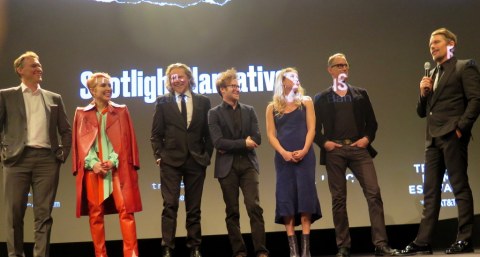
Director Robert Budreau, Noomi Rapace (2nd from left), cast, Ethan Hawke, far right at the 2018 Tribeca FF World Premiere Spotlight Narrative screening of ‘Stockholm, the Q and A (Carole Di Tosti
For her part Rapace’s Lind reveals a character who is more passive female than fiesty rebel. However, when we see her relate to her husband and family, Budreau offers up a tantalizing possibility. In the brief conversation she has with her husband, she appears steady and unemotional. Does she not want to upset him? Couldn’t she emotionally cry and manipulate her husband to more forcefully pressure the bank into settling with the bank robber? Instead, Budreau offers another look into a marriage and home life that may indeed be unsatisfactory and banal. Certainly, this interlude with the exciting and dangerous Lars stimulates another part of her seemingly untouched by her married life with the rather cold husband as portrayed by Thorbjørn Harr.
Budreau’s take on the “Syndrome” in the titular film Stockholm is varied and reveals elements that we may not have considered before because we are unfamiliar with the fascinating events that coined the phrase “stockholm syndrome” based on the symbiotic relationship between predators and their hostages. The film engages primarily due to the pacing, the tight, authentic revamping of the events in a believable way, and the fine performances, especially the high-flying wildness of Hawke and his exchanges and counter-play with Lind.
directed and written by Robert Budreau. Produced by Nicholas Tabarrok, Robert Budreau, Jonathan Bronfman. (Canada, Sweden, USA) – World Premiere. In 1973, an unhinged American outlaw walked into a bank in Sweden demanding millions in cash in exchange for his hostages. The events that followed would capture the attention of the world and ultimately give a name to a new psychological phenomenon: Stockholm syndrome. With Ethan Hawke, Noomi Rapace, Mark Strong, Christopher Heyerdahl, Bea Santos, Thorbjorn Harr.
2018 Tribeca Film Festival Review: Chekhov’s ‘The Seagull’ Starring Annette Bening, Corey Stoll, Saoirse Ronan, Elisabeth Moss, Mare Winningham

Annette Bening, Jon Tenney in ‘The Seagull,’ 2018 Tribeca Film Festival World Premiere, (photo from the film)

Annette Bening, 2018 Tribeca FF World Premiere, Anton Chekhov’s ‘The Seagull,’ directed by Michael Mayer (Carole Di Tosti)
Michael Mayer’s valiant attempt to bring a freshness to The Seagull with a script based on Anton Chekhov’s titular work by Stephen Karam (Tony winner of The Humans-2016) shines for a myriad of reasons. Yes, many critics dunned it or found that it fell short of its monumental task to bring Anton Chekhov’s four act, three hour play to the screen. Indeed, Chekhov is not easy and the script has been paired to emphasize the humor and highlight the salient speeches and actions, leaving the more unwieldy dialogue behind.

Annette Bening in Anton Checkhov’s ‘The Seagull,’ directed by Michael Mayer, adapted by Stephen Karam, 2018 Tribeca FF World Premiere, (photo courtesy of the film.
At its first time out in 1895, The Seagull flopped. The play requires superb acting and directing so that the ponderous tones are submerged and the comedy comes to the fore. I have seen a number of productions that left me with a yawn and a nod. Not so for this film. Forgive me fellow sojourners with a critical eye. My pen is blunted from razor sharp barbs directed to slice into this fine feature which made its World Premiere at the 2018 Tribeca Film Festival.
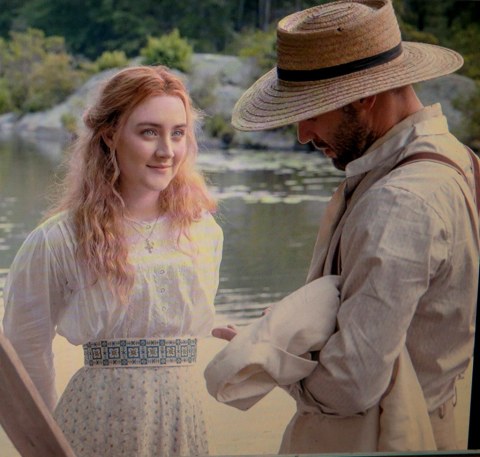
Saoirse Ronan, Corey Stoll, ‘The Seagull, 2018 Tribeca Film Festival World Premiere (photo courtesy of the film)
Mayer brings the action into the breathtaking settings of the lake and environs of the estate. He carries this striking beauty into his grand and lush interiors signifying the wealth and class status of the Pjotr Nikolayevich Sorin estate. Sorin (Brian Dennehy) is Irina’s (Annette Bening) brother. Interior and exterior settings are visually stunning. Against this gorgeousness Mayer unleashes the characters foibles and tragedies. The irony that luxury and the exquisite beauty of things has little power over emotions thematically resonates throughout. The principals’ (Irina-Bening, Trigorin-Corey Stoll, Nina-Saoirse Ronan, Masha-Elisabeth Moss, Konstantin-Billy Howle) interactions form the meat of the drama which ends in tragedy. None of the characters appear to be self-aware (Trigorin excepted with caveats) to the point where they can make decisions which are life-affirming. Chekhov and Mayer’s iteration of his version of The Seagull places the human condition in its humor and sadness front and center. To his credit Mayer’s understanding and perception continually serve his fine cinematic intuitions, skills and efforts.
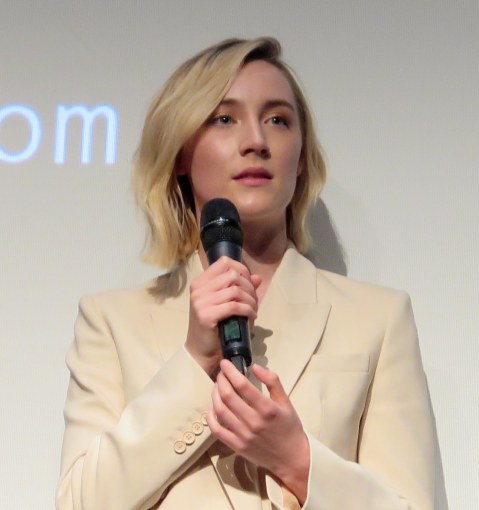
Saoirse Ronan, 2018 Tribeca Film Festival World Premiere Screening and Q & A (Carole Di Tosti)
The vitality of the settings that move back and forth from outdoors to interiors ground us in the landed wealth and social order of the Sorin family who also boasts a celebrity, the actress Irina who visits her brother Sorin and her son Konstantin each summer. The settings, always a subtle reminder of the time and place in Russia before the revolution (twenty years or so later) seem a particular irony. The upper class social elites and celebrities (Irina, Trigorin, etc.) whose physical needs are answered by the serving class, remain surreptitiously unhappy and in a constant state of displacement by the major facts of life: love-loss, aging and death. Their sturm und drang, whimsies, self-absorption and discontents are the luxuries of their class which harbor the seeds of tragedy because their cavernous, selfish desires blind them to the encroaching realities. Unless they self-correct, they will face tragedy and loss after tragedy and destruction, muting their soul’s enrichment until little of worth is left.. Inevitably, this class in the coming decades will lose all they take for granted.

Annette Bening, Billy Howle in Anton Chekhov’s ‘The Seagull’, 2018 Tribeca FF World Premiere and Q & A, (Carole Di Tosti)
Irina (Bening is authentic and stunning as the aging diva racing one step ahead of oblivion, and the end of celebrity and youth) brings the successful novelist Trigorin (Stoll in a superbly realistic performance) into the summer festivities of the family on their estate. Trigorin’s presence is the catalyst that puts the human dominoes in motion and sends them careening off a cliff with humor and irrevocably pathos. Konstantin, a passionate, unconventional writer is devastated after his mother Irina and the others find his play, performed by his unrequited love Nina, to be laughable and esoteric. Too self-absorbed with their own greatness Irina and Trigorin dismiss his yearning for success and recognition. His need for his mother’s love and acceptance has fallen at the shores of his depressive state for years. Almost in a revenge against his plight and in a self-curse of not achieving success, he shoots a delightful, beautiful seagull in a wanton act to release his anger. He gives the seagull to Nina who rejects it. It is a symbolic act, as if as refuses to acknowledge that her unrequited love wounds him. This act reverberates and symbolizes additional themes. One is that human being’s selfish desires and passions loosed upon the natural world and others, if not moderated, harm and destroy.

Elisabeth Moss in Anton Chekhov’s ‘The Seagull,’ written by Stephen Karam, 2018 Tribeca FF World Premiere, directed by Michael Mayer (photo from the film)
For her part Nina (who lives on a neighboring estate) is entranced by Trigorin and dismissive of Konstantin’s love. She seeks fame as an actress and wants Trigorin’s love which he finds flattering for his ego is wounded in his relationship with Irina and the encroaching years of waning masculinity. Nina may be his last, greatest passion, and if not that, a distracting plaything to notch on his belt and then discard. When he notes the dead seagull, he shares that he may use it as a symbol in a work he will write. These poetic notions seduce Nina with the enticement that she may be his seagull. Nina is blind to the danger of what he says, innocently trusting him with her love and being.
Stoll as Trigorin is convincing especially in his self-justification of why he must take Nina’s love, if even for a season, when she offers it quoting from a passage in a work of his. This speech in particular is superbly delivered by Stoll. And even if it is not graceful, we empathize with his fear of aging and the limitations of his mortality with which we all can identify. Neither money, nor success nor celebrity can answer death. However, being pursued by two women a beautiful younger one and a celebrated actress who is a drama queen will suffice in the meantime, though it requires the humility and wisdom to negotiate their war against each other to “get” him. Trigorin’s pride and fear do not allow him to balance the two women so that they don’t care about his concern for the other in competing jealousies. They do care and they compete for him.

Saoirse Ronan, Brian Dennehy, Anton Chekhov’s ‘The Seagull,’ adapted by Stephen Karam, 2018 Tribeca FF World Premiere (photo from the film)
Irinia discovers Nina’s hopeless infatuation and must then approach Trigorin with clever wiles to get him to return with her to Moscow. If they stay at the estate, in front of her he will fulfill his lustful passion for Nina, for Nina is relentless. Irina refuses this humiliation.Though Trigorin and Irina leave together, in the short term she knows she must let him go.
Bening’s and Stoll’s interplay is smashing. In their portrayals, they reveal that neither character loves the other, but the passion for keeping their successful images by using each other’s status is familiar territory. Ultimately that will bind them together, despite any interfering love by encroaching inferiors like Nina or even Irina’s son Konstantin.
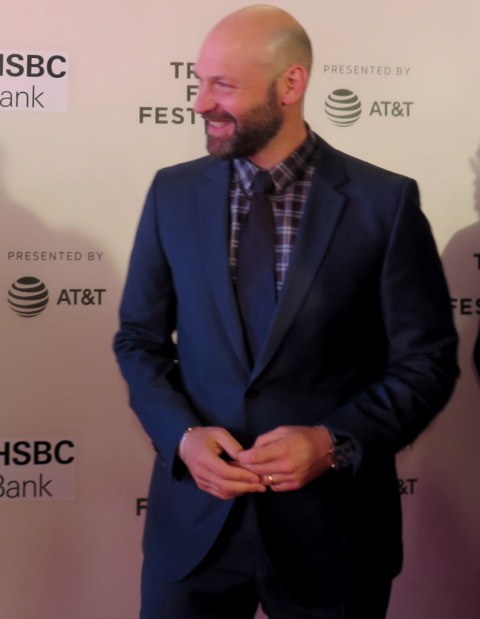
Corey Stoll, Red Carpet, 2018 Tribeca FF World Premiere, Anton Chekhov’s ‘The Seagull,’ directed by Michael Mayer, adapted by Stephen Karam (Carole Di Tosti)
These intricate matters of the heart are further complicated by the unrequited love of Konstantin for Nina whom he adores, and Masha’s (the daughter of Sorin’s baliff) unrequited love of Konstantin. The only stable one appears to be Doctor Dorn (Jon Tenney) who sees the value in Konstantin’s symbolistic, maverick play. However, he is having an affair with Polina behind her husband’s back, not embarrassed to cuckhold an inferior. Thus, with this selfish and wanton weakness, he fits the ethos of the other disturbed, dismantling characters.
What of the irascible and reflexive Sorin (Dennehy) who allows the visitors to descend on the estate each summer with aplomb and takes care of his nephew Konstantin while his sister indulges her passions for the dramatic life? He appears to be the most balanced, but he has two sick feet on a banana peel, and if he moves too suddenly, he appears ready to slip out of life. Only the servants/peasants whose needs we cannot see remain solid even heroic as they attend to their sometimes “infantile” charges and judge their actions accordingly.
The beauty of the film is its muscularity. The director focuses on the performances in the highly charged scenes between Bening’s Irina and Stoll’s Trigorin and between Trigorin and Saoirse Ronan’s Nina and between Nina and Howle’s Konstantin.

Saoirse Ronan in Anton Chekhov’s ‘The Seagull,’ directed by Michael Meyer, adapted by Stephen Karam, 2018 Tribeca FF (photo from film)
The succinct script entices us toward believability. We know these individuals and are fascinated by their rationale for behaving as they do. Though not very admirable or honorable, they are like us as they “hang themselves and each other out to dry.” When Nina returns in her dishevelment and dislocation of self and presents what she “is” to Konstantin, he sees her identity ravished and torn by Trigorin and the vicissitudes of her mediocre acting career. From his love for her and out of his own depths of despair, he willfully kills himself ending his misery and torment.
The ending is particularly poignant. Saoirse Ronan, appears like a ghost to revisit and haunt the scene as if transferring her great wounds to Konstantin who again kills a seagull in his empathy with it. This time it is himself. Representatively, symbolically his act shows that though Nina’s physical life continues, for all intents and purposes, her beauty and innocence are dead. Both have allowed themselves to be consumed by others whose great, dark abyss of self-torment seems limitless in its rapacity to devour all who attempt to love them.
See the film for the performances: all are wonderful, and kudos to Elisabeth Moss who manages always to be funny in her despair and angst. Mare Winningham, Jon Tenney and Brian Dennehy relay solid performances.
Mayer has found an approach to putting difficult classics onscreen. Perhaps he will continue this trend; fine directors should work with the classics to acquaint the current generation with great playwrights and authors. Actors surely will jump at the opportunity, to portray humorous and profound characterizations like the ones Chekhov has delineated in The Seagull.
Tribeca Film Festival Review 2018: ‘Every Act of Life,’ Looking Into the Brilliant Terrence McNally
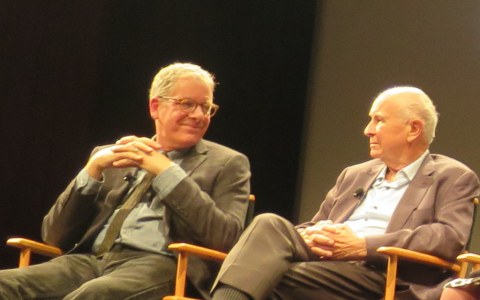
(L to R): Director Jeff Kaufman, Terrence McNally, ‘Every Act of Life,’2018 Tribeca FF World Premiere Special Screening and Q & A, Moderator Frank Rich, unpictured (Carole Di Tosti),
Terrence McNally is a theatrical force of nature, though with his incredible humility in an age of self-promotion, he would be the last to admit it. With a career spanning six decades and major, ground-breaking successes on Broadway and Off, in film and television, and multiple theater awards every decade, the man is a dynamo, beloved by actors whose careers he has vaulted, actors whom he collaborates with in a symbiotic relationship again and again. At 80, he is still working, attending productions (I saw him in the audience of the musical production of the most Tony nominated musical SpongeBob SquarePants this summer.) and launching off into new projects, even as I write this.
The World Premiere Every Act of Life directed and written by Jeff Kaufman was given a special screening at Tribeca Film Festival 2018, with luminaries, actors and McNally himself attending for the Q and A afterward. In this formidable documentary about a formidable American playwright, Kaufman presents McNally’s career and personal life. From start to finish Every Act of Life is an intriguing and well-thought-out chronicle cobbled together with interviews, archived photos, video clips, well-researched facts, details, memorabilia and well-placed commentary by actors, directors, producers and McNally himself. The documentary is especially revealing in its presentation of how one individual’s love and passion for the theater, opera, music and art has impacted our culture and brought us together in a forward momentum of shared communication and understanding.

Tyne Daly (‘Mothers and Sons’ and ‘Master Class’), Nathan Lane (‘Love! Valor! Compassion!’ ‘The Lisbon Traviata,’ ‘ It’s Only a Play’)2018 Tribeca FF World Premiere and Special Screening and Q & A (Carole Di Tosti)
Beginning with his early plays and traveling right up to his most recent work, Kaufman lays out the seminal moments and turning points that have slowly fostered the personality and character of this mild-mannered and charmingly authentic persona that McNally is today. Early influences on his life McNally credits to his English teacher in Corpus Christi who encouraged him to write and attend schools outside of the area. But his love of musicals and Broadway, were initially inspired by his parents, transplanted New Yorkers, who brought him all the way from Texas to New York to see a few smash musicals with towering figures like Gertrude Lawrence in The King and I and Ethel Merman in Annie Get Your Gun.
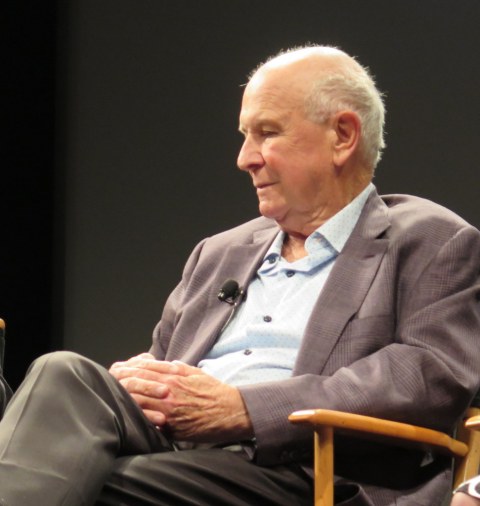
Terrence McNally, ‘Every Act of Life,’ 2018 Tribeca FF World Premiere Special Screening and Q & A (Carole Di Tosti)
The excitement and enchantment of live theater musicals were imprinted on his memory. And this love abides with him to this day as he continues to collaborate on musicals writing the book for numerous hits like The Kiss of the Spider Woman (1992), Ragtime (1996), The Full Monty (2000), The Visit (2001), Catch Me If You Can (2011), Anastasia (2017). He has also sharpened his wits and taken up collaborating on opera, for example in 2015, the production of Great Scott (music by Jake Heggie), premiered at Winspear Opera House in Dallas, Texas. He is a veritable tornado when it comes to writing new plays and collaborating with composers on musicals and operas.

Chita Rivera appeared in McNally’s ‘The Rink,’ (1984) ‘The Kiss of the Spider Woman,’ (1992, 93, 94) ‘The Visit,’ (2004). Tribeca FF 2018, World Premiere Screening and Q & A, ‘Every Act of Life.’Chita Rivera appears in Kaufman’s film about McNally. Here Chita Rivera appears at a 2018 LPTW event (Carole Di Tosti)
Following his English teacher’s advice, McNally attended Columbia University and was further shepherded by professors like Lionel Trilling for literature and Andrew Chiappe who steered him in the basics by having McNally and others read every work by Shakespeare in the order of their composition. After Columbia, McNally through a serendipitous introduction via The Actor’s Studio, cruised with John Steinbeck and family around the world as he tutored Steinbeck’s two young sons. This was another incredible experience which was to shape McNally’s writing career and broaden his horizons as well as establish his relationship with Steinbeck who inspired his writing. From these adventures he later fashioned the first act of And Things That Go Bump in the Night. Additionally, Steinbeck asked him to write a libretto for a musical adaptation of his novel East of Eden. One doesn’t know what one can do until a great American novelist like John Steinbeck asks you to do it.
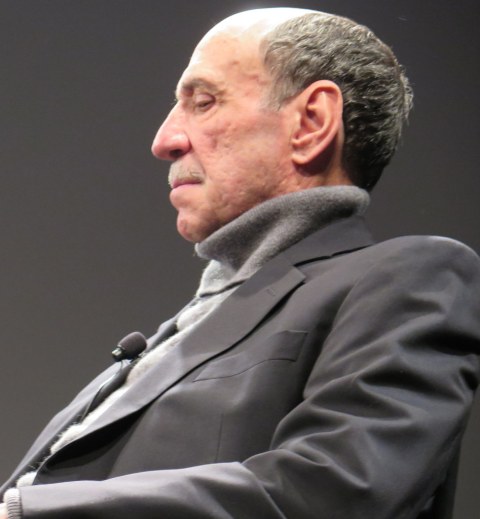
F. Murray Abraham, ‘Every Act of Life,’ 2018 Tribeca FF World Premiere and Special Screening and Q & A (Carole Di Tosti)
Back in New York City, McNally used his connections at the Actor’s Studio to begin to workshop his nascent one-act plays. And it was in New York that he met the brilliant playwright Edward Albee who was just coming into his own. After a four-year tempestuous relationship during which Albee wrote The American Dream and Who’s Afraid of Virginia Woolf, they parted ways and McNally’s career began to take off gradually in theater, television and in film as he wrote screenplays for versions of his works first performed on Broadway and Off Broadway.
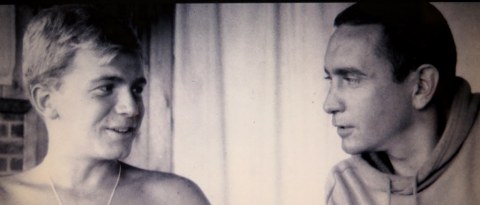
(L to R): Terrence McNally, Edward Albee, ‘Every Act of Life,’ 2018 Tribeca FF World Premiere Screening and Q & A (Carole Di Tosti)
Various tidbits appear in Kaufman’s documentary that fascinate. Some of the impressions are telling. He became addicted to alcohol and at a time when no one could admit to being gay, McNally confronted the oppressions of the culture and created some of the most insightful, poignant and endearing works related to the LGBT community and relatives confronting the AIDS epidemic. These include the TV miniseries Andre’s Mother for which he won an Emmy and later his Mothers and Sons starring Tyne Daly based upon the miniseries. Additionally, Lips Together, Teeth Apart, as well as an inside look at gay relationships for which he won his second Tony Award, Love! Valor! Compassion! also feature topics about confronting gender prejudice.
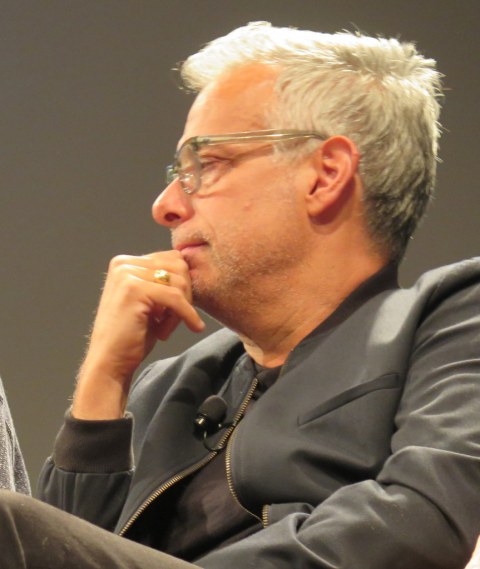
Joe Mantello, ‘Every Act of Life,’ 2018 Tribeca FF World Premiere Screening and Q & A (Carole Di Tosti)
Always concerned about the deep side of the human condition and striving above it, McNally first landed on the map when he was recognized for his portrayal of female-male relationships among the working classes (Frankie and Johnnie in the Claire de Lune) which was adapted into a screenplay starring Al Pacino and Michelle Pfeiffer. McNally’s versatility and humanity encompasses play topics that run the continuum. What is most important to him is human connections and the realization that we are together in this “thing” referred to as life. The beauty of our ability to connect, express love, overcome personal issues and adversity, with an assist from art and theater makes all the difference in discovering our purpose and fulfillment.
McNally’s dogged fight for LGBTQ rights at a time when it was most unfashionable and nearly anathema is an incredible achievement, considering the forces and money behind the attempt to liquify LGBTQ rights in the noxious march toward inhumanity and darkness led by the political conservative right-wing. Kaufman highlights the struggle. He also reveals how McNally overcame his addiction to alcohol and on that subject includes an amazing anecdote. Angela Lansbury’s love and honesty prompted her to speak directly to McNally to the effect that he must stop destroying himself. Indeed, she feared this most talented playwright, librettist and screenwriter would die an early death. Her influence and other factors eventually sent him down the road to wellness, where others were not as willfully fortunate.
What I appreciate in the film is McNally’s candor in discussing his “flops.” Of course, one might say that there are no flops in a playwright’s repertoire, only stepping stones which help them achieve their hard won success.

2018 Tribeca FF World Premiere Screening and Q & A, ‘Every Act of Life,’ (L to R): Jeff Kaufman, Terrence McNally, Tyne Daly, Nathan Lane, Joe Mantello, F. Murray Abraham (Carole Di Tosti)
Kaufman highlights McNally’s award-winning work (the musicals- The Kiss of the Spider Woman-1992 and Ragtime-1997 and his plays, Love! Valor! Compassion!-1994, Master Class-1995 and Dedication or The Stuff of Dreams-2005). The most incredible feature of this segment of the documentary is the commentary by living legends and McNally friends and collaborators, Chita Rivera, Nathan Lane, John Glover, Tyne Daly, John Kander, F. Murray Abraham, Joe Mantello, Angela Lansbury, Christine Baranski, Audra McDonald and many more. Indeed, the film is a who’s who of McNally’s posse, as well as a chronicle of his prodigious work ethic and love of theater, opera, ballet and music. His talents and breadth of knowledge about the Arts are absolutely staggering. And Kaufman gives us a historical perspective that is continually fresh and exciting.

Terrence McNally, ‘Every Act of Life,’ 2018 Tribeca FF World Premiere Screening and Q & A, (photo courtesy of the film)
I loved this film. I am familiar with McNally’s work having seen a number of his musicals and comedies on Broadway and Off. I split my sides enjoying them. However, Kaufman digs deep into the revelation of the anointed genius of this most wonderful of playwrights who connects the heavens to humanity with his words, impressions and inspirations, and joins us together in what can be compared to a holy act of communion in the theater. The film is a must see, and you will especially enjoy hearing how McNally and friends worked together to create some of the finest, most enduring works of American theater which in the future will surely be identified as classics.
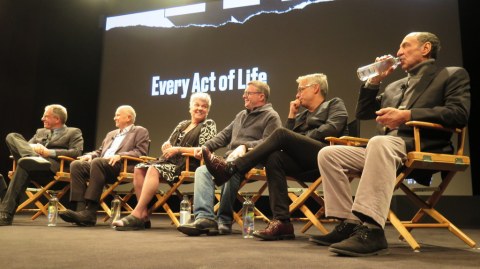
‘Every Act of Life,’ Q and A, Tribeca FF 2018 with (L to R) Jeff Kaufman, Terrence McNally, Tyne Daly, Nathan Lane, Joe Mantello, F. Murray Abraham, moderated by Frank Rich who is not pictured (Carole Di Tosti)
Epilogue
After the World Premiere Screening there was a Q and A moderated by Frank Rich, who was a longtime critic of theater at The New York Times. McNally made an incredible admission during the Q and A. Even though he has a prodigious body of work trailing in his wake, he never really considered himself a playwright or a successful one at that, until a few years ago. I was gobsmacked. Such is the talent and evolving genius of this artist.
That Frank Rich was moderating individuals he has sometimes dunned in his previous job as New York Times Theater critic was a bit of an irony. He long held sway as THE Times CRITIC until 2011. Often he was acerbic and unwieldy in his self-aggrandizement and pretensions to be THE VOICE of theater, backed by the “heft” of The Times. After I accomplished some gentle research for this review, I discovered a note in Wikipedia on Kiss of the Spider Woman (musical) that bears sounding since the main subject of this film is American Theater and Terrence McNally as one of the fountains where we might go for a revitalizing drink..
It seems that in 1990 Kiss of the Spider Woman was being workshopped at “New Musicals” at the Performing Arts Center SUNY at Purchase. New Musicals‘ goal was to create, develop and provide a working home for sixteen new musicals over four years. When New York critics heard that the play was being workshopped in its initial production, they wanted to see it. Unfortunately, they couldn’t be persuaded not to review it despite the fact that producers, etc., were testing the waters to see what needed ironing out. Frank Rich and other critics filed “mostly negative reviews” of this initial workshopping of Kiss of the Spider Woman. Sadly, New Musicals, whose mission was honorable and vital for American theater and especially New York Theater, blew out and folded after the fiasco with Kiss. Don’t get me started on the state of American Theater and why it is that way.
Thankfully, two years later a producer developed Kiss of the Spider Woman. It went on in Toronto and The West End where it won An Evening Standard. It finally came back to the US where it received 7 Tony Awards and 3 Drama Desks and ran 904 performances, despite Rich’s reviews. Ultimately, the American public became the arbiter of the production.
American Theater has lost ground for many reasons and indeed, the gatekeepers, critics and money people have, for all intents and purposes, shot it to hell and drained its lifeblood. With the rise of Social Media, for good or ill, digital platforms and word of mouth continue to lift up productions so that their lasting value might be revealed to give them staying power. But it is enough? Rich went on to feather his own nest. Kiss of the Spider Woman found its audience. New Musicals is no more. And so it goes. In light of these events Every Act of Life is an important documentary about the history of American theater, and a master creator who has thrived in spite of changing times.
 CAROLE DI TOSTI