‘American Pain’ a Tale of Greed and Death at Tribeca 2022

How did the opioid crises take off in the US before the government or even families knew what was going on? Legal pill pushers, given the imprimatur by doctors, distributors like Walgreen and manufacturers like Actavis generated the opioid killing machine. American Pain in its World Premiere at Tribeca Film Festival effectively exposes how lack of regulation fuels the opioid crisis and death by drugs. Additionally, the Spotlight documentary highlights that an in depth understanding of the supply chain from pill manufacturers to doctors who write scripts pays off. This is especially so in states like Florida, whose political good will maintains strong ties to the medical industrial complex.
Directed by Darren Foster, in a comprehensive well-researched study, the film uncovers the chronicle of Jeff and Chris George as kickstarters of the opioid crises we still suffer today. Indeed, law enforcement identified that the George brothers ran the largest street level operation of all the opioid dealers in the U.S. No one put more pills on the streets than they did. The scale was enormous and they did this in broad daylight and with impunity.
Through interviews of the twin brothers, their family, friends and law enforcement who took down their pain clinics, Foster exposes Florida’s opioid empire. Importantly, Foster includes undercover video footage to document the George brothers’ successful pain clinic business up to their capture, clinic closures and jail sentences. In fact Foster’s account of his subjects spools out American Pain as a true crime story. The documentary adds another spin to our understanding of the opioid epidemic and highlights crucial aspects not known before.

Twin brothers and bodybuilders Chris and Jeff George grew up in Florida luxury with a father who generated money in real estate during the housing boom. With a privileged upbringing in upscale Wellington (home to Bill Gates and others) the twins received whatever they wanted. However, when their parents divorced, Jeff and Chris lived with their mother and stepfather, a firefighter. Their lifestyle changed. They embraced body building, steroid use and the red neck lifestyle. Indeed, from privilege and doing well in school, they took up white supremacy in a subsequent attraction to the machismo of guns, strippers and diesel bodies.
Ironically, when a brush fire they set exploded into a forest fire, a slap in the face for their stepdad, the boys only got a slap on the wrist. Their illegal actions continued. and their wrap sheet grew to include battery, vandalism, grand theft auto and criminal mischief. However, they never saw jail because they received suspended sentences or community service. Accountability never knocked at their doors.
Clearly, the director points out in taped interviews that their father, Mr. George, disdained the police and uplifted being rich. Indeed, he told his sons that the cops are stupid to make no money. Foster reveals through interviews that the twins’ father maintains a point of pride with his sons making millions. That they also contributed to causing deaths by addiction and overdosing escapes Mr. George conveniently.
This attitude of blaming the addicts for overdosing and dying Foster indicates as one also held by George and Chris. Indeed Chris states in his last interview that he merely provided a service. If the addicts died, they and their families had to own their deaths. “They’d find another way to die,” remains the attitude also held by their mother who worked in their pain clinics and knew the addictive nature of the drugs. With the exception of maybe one or two opioid dealers who went to jail as they did, most of the pill pushers expressed the same attitude. They felt no remorse for the results of their actions. A aunt of the Kentucky group of pushers, known as the queen opioid dealer in Kentucky, also believed the addicts were responsible for their addictions. Her relatives who drove to Florida weekly to pick up pills and drive back to her, who dealt them out knowing her clients would die, also have the same attitude.
All along the supply chain, starting with manufacturers, no one took responsibility for opioid deaths. And as Foster’s interviews with law enforcement reveal, all knew Roxicodone’s (another name for Oxycodone) addictive power could eventually lead to death. However, money talked and death walked. As long as the money rolled in, accountability didn’t matter.

When the George brothers took steroids, their friendship with suppliers led them to deal steroids in gyms. Enjoying the money because of their former lifestyle and father’s lionizing money, they moved to more lucrative sales after meeting Dr. Overstreet. Interestingly, like anything, the Georges started small with South Florida Pain Clinic. Then they opened another clinic East Florida Pain Clinic because the lines flowed out the door and around the block. By word of mouth folks across the south and from around the country drove or flew down for their pills.
Foster in a clear and precise indictment of Florida’s lax laws regarding pain clinics and doctors, reveal how the twins got away with fraud. When Dr. Overstreet died, they used his lists to engage other doctors to write scripts. A former DEA agent who needed money was hired to make the operation organized and legal according to lax the licensure of Florida pain clinics. Additionally, Florida had no central data base for patients and drugs. So with impunity, the well oiled operation ran smoothly with no interference from law enforcement. Patients could arrive, show where the pain was, get a script in a few minutes and be out the door with a few hundred Roxidodone. When a mobile MRI owner came to work with them on the advice of others, the patients’ pain legitimized by the MRI paperwork, sealed the deals.
As they grew their franchise of pain clinics, manufacturers and distributors made millions. Of course, the doctors made more money than their co-pays which further fed their addiction to money. The George brothers hauled in trash bags full of cash. Humorously, the ridiculous happened with parties in the clinic parking lots and neighbors furious about the noise. And moving to the height of a great business model, busloads of addicts came to the clinics for their “meds.” In one instance Foster shows video clips of “church members” with T-shirts listing the church leaving the bus to go to the clinic and get their pills. All was made to look legitimate when it wasn’t.
As word got around, others wanted in on the money. Foster reveals other pill pushers who opened their clinics, rivaled the George brothers. Like thugs, Chris George to protect his business demanded a percentage. He received it after he threatened to burn down Zach Rose’s pain clinic in Jacksonville, Florida. And when reporters stalked the twins and doggedly questioned their activities, on good advice they changed the name of their business to “American Pain.”
Foster gets to the inside corruption with mastery. As succinctly as possible, he draws down hundreds of hours of wiretap recordings, undercover video and interviews with drug pushers who went to jail with 7-year sentences because they pleaded guilty. Only Jeff George received a 20-year sentence because pills from his clinic could be traced to a user who died.
American Pain covers familiar ground in an unfamiliar way. Unfortunately, manufacturers still make opioids and distributors find ways to deliver their product flying under the radar of law enforcement. Of course the opioid death rate increases and Chris George intends to continue being a businessman. However, in Foster’s last interview with him, he didn’t specify his plans. Clearly, unless state governments make it impossible to push pills at even one-half the scale the George brothers did, folks will still overdose. When they can’t get opioids, they’ll move to heroin or Fen Fen. Foster reveals this will continue because addiction pulls in billions across the supply chain.
See American Pain at Tribeca Film Festival by visiting their website: https://tribecafilm.com/
Jason Schwartzman, Lili Taylor, Avi Nash in ‘There There’ at Tribeca
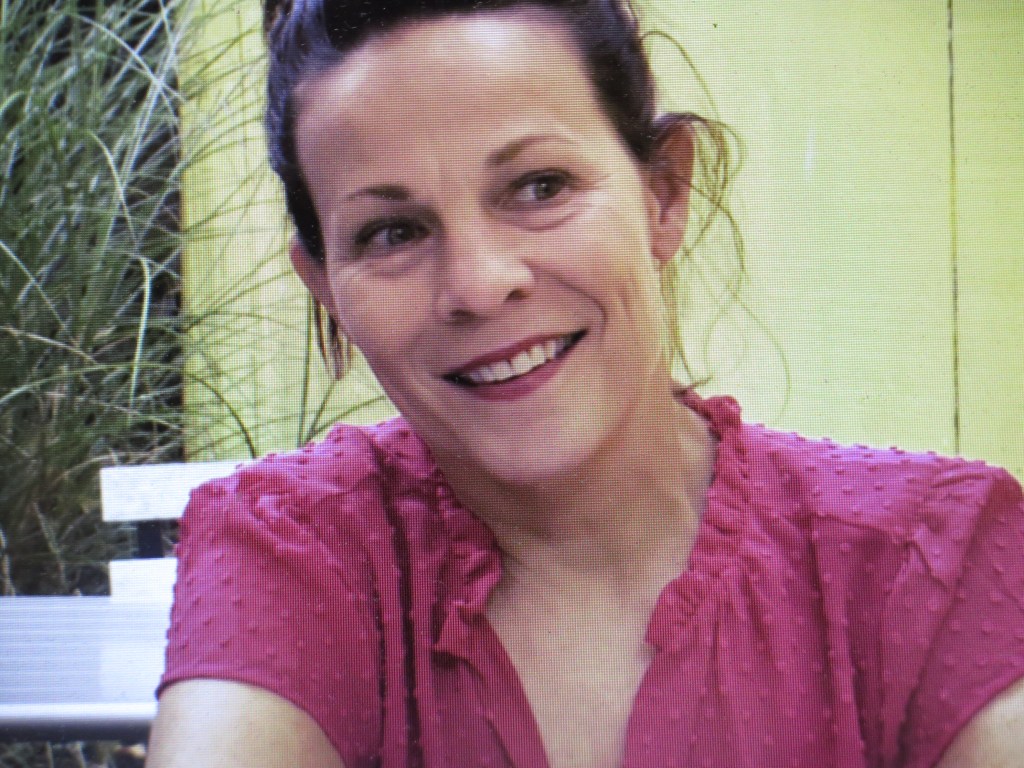
In his Tribeca Spotlight Narrative feature There There, Andrew Bujalski’s quirky, comedic take on love and coupling dynamically shifts through five vignettes. The World Premiere which screened at Tribeca Film Festival with a Q and A afterward is satiric and sharp. The stories thread irregularly from couple to situation. Interestingly, writer director Bujalski’s pointed dialogue twists on a dime to different scenarios and couples. He examines love, nascent relationships and disrupting influences.
We willingly go along for the ride because of the excellent acting and unusual cinematography. In fact much about the feature remains particular because of how Bujalski shot There There. As he stated in the Q and A after the Tribeca screening, the actors were miles away from each other in their homes during COVID-19. Thus, Bujalski and his team worked prodigious sets ups and heavily story boarded to accomplish remote filming.
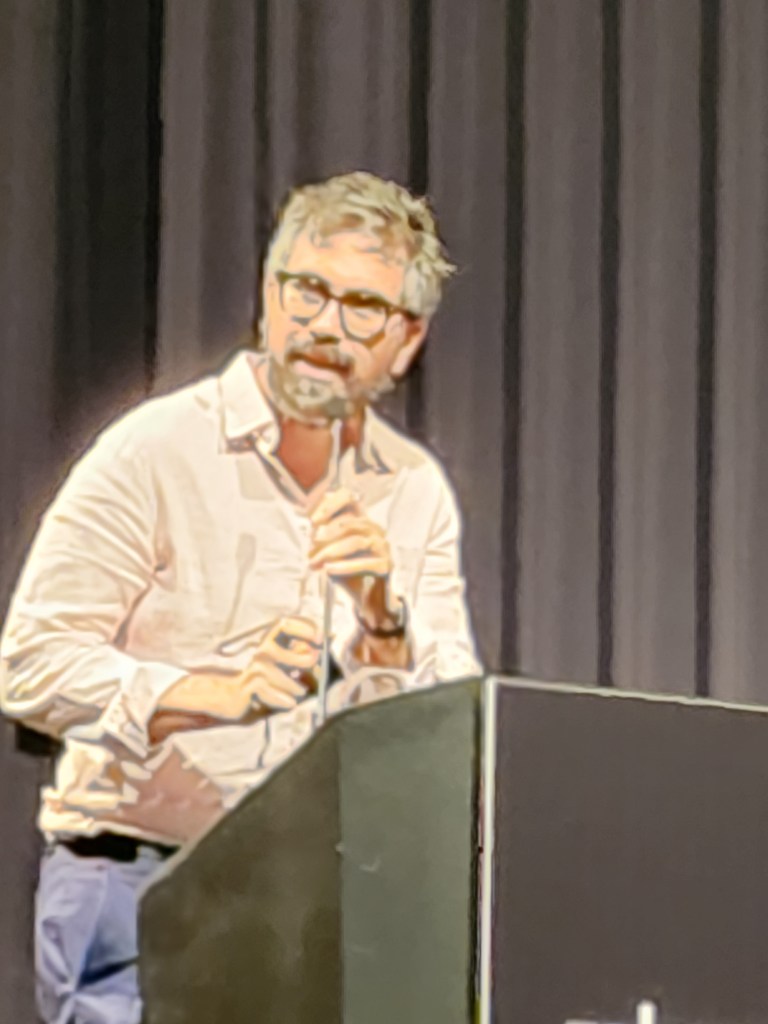
Starring powerhouses known for delivering unique performances, Bujalski selects Jason Schwartzman, Lili Taylor, Lennie James, Molly Gordon and Avi Nash to spin encounters of want and confrontation. Subtly, he focuses on frontal shots of the actors who are in solo framed shots. They dialogue with those offscreen. Thus, when Lili Taylor discusses her previous evening’s intimacy with Lennie James, we never see the couple physically together. Yet, the beauty of Bujalski’s work seamlessly reveals through the dialogue, the amazing night for the “couple.” However, where will these two proceed if Taylor wants to move slowly toward the love dynamic and James wants to race ahead?
Bridged by a musical riff performed by the versatile Jon Natchez in the shadowy light from a window, the next scene shows Taylor and her friend an AA counselor. As the friend and counselor listens and reacts to Taylor’s impressions of the night with James, the mood changes. The scene sparks a different type of intimacy, one of a confidante who listens and one who digs deep to gain enlightenment. Uncertainty ends the encounter and Natchez’s music riff segues into a confrontation between teacher and parent.
The mom, played by Taylor’s counselor in the previous scene becomes abusive to Molly Gordon’s exasperated teacher. Apparently, the counselor’s son has been engaged in porn on his phone in class. How and why he sneaks the phone in without discovery is moot. Instead, the blame game moves forward and both Gordon and the parent verbally upbraid each other. Unsatisfactorily, the encounter ends strangely with nothing resolved. Ironically, two individuals who allegedly “have it together” based on their roles, reveal themselves to be flawed and self-hating. Reflecting the culture’s craziness, both negotiate with each other as adversaries instead of collaborators. They accomplish little to confront and help the son.

Natchez’s musical bridge moves the scene between two friends who violate the dictum that friends shouldn’t go into business together. Schwartzman and Nash tie into the previous scene. In this ironic construct Schwartzman’s lawyer advises Nash to curtail his apparently illegal money-making online activity. As they wrangle about the illegality and Nash’s exposure to liability, the debate flares. The fun parts of the scene involve Schwartzman in his kitchen puttering and Nash impressively doing upside down calisthenics on rings suspended from his ceiling. Again, this couple resolves nothing except to declare their brotherly love for each other. Apparently, their professional relationship and Nash’s exposure take a backseat to their closeness. But Nash’s character doesn’t accept Schwartzman’s legal advice anyway, so why not?
However, for the lawyer Schwartzmans portrays, the guilt becomes overwhelming. Visited by the ghost of his relative, portrayed by Roy Nathanson, Schwartzman has a humorous “come to Jesus” moment. We gather that he can’t bear up against his sleazy and unethical practice and behavior. Finally, resolution comes in this scenario as Schwartzman vows to change. Schwartzman’s ironic mirror image of ourselves in our best and worst moments of guilt, remorse, revelation and desire to change floats away. Sincerity seems key. However, we have no way of knowing whether his heart to heart with the ghost prompts him to correct or worsen. Uncertainty reigns.

In the last vignette after a Natchez, interlude James and Gordon meet up at James’ well appointed restaurant. As he attempts to save her from Nash’s intrusion into Gordon’s space, they chat. Gordon’s “drunk” convinces James to oust her. However, she manipulates him to stay and they settle into edgy repartee which ends in sexual suggestion then like a ghost floats away as Gordon leaves. Like all encounters, the results remain open ended, low-high risk on a tension wire of possibilities unrealized until the next encounter. Unfortunately, the film ended, but our imaginations took up the possibilities.
In the Q and A Bujalski acknowledged his film’s weird strangeness. Certainly episodic the narrative threads linked. However, no follow through chronicled any particular character. Instead, we sense that the individuals might pass each other in the street or meet at any moment. Life’s serendipitous moments, unusual and unique carry enjoyment and risk, as visited in the first, third and fifth vignettes. Compelling in and strikingly different, Bujalski’s There There is all the more fascinating considering its cinematography and great effort necessary to shoot during the pandemic.
For tickets and times go to the Tribeca Film Festival website: https://tribecafilm.com/films/there-there-2022 or check streaming services.
‘The Bedwetter’ a Hysterical and Meaningful Sarah Silverman Romp

Sarah Silverman is a legendary comic and she may have been born with a funny bone. But how did she morph into the talented comedian who has a musical production about her early life, playing eight times a week at the Atlantic Theater Company? We discover the inspirations that planted the seeds of comedic success in the very humorous, irreverent pop music show The Bedwetter. Based on Silverman’s memoir The Bedwetter: Stories of Courage, Redemption, and Pee, the theater adaptation highlights the most important year of Sarah Silverman’s life, a year that intimated the possible future success Silverman would offer in her unique comic grist.

With book by Joshua Harmon and Sarah Silverman, lyrics by Adam Schlesinger and Sarah Silverman, music by Adam Schlesinger, choreographed by Byron Easley with creative consultation by David Yazbek, The Bedwetter is a hoot. Also, it is ironically woven with themes about divorce, mental illness, childhood angst and dysfunctional families. The two act musical briskly unfolds via the comical and exuberant perspective of precocious, potty-mouth Sarah played by the uber talented and sharply focused Zoe Glick.

Glick is a wunderkind. Her pacing, nasal singing voice and edgy delivery reveal she is a natural. She portrays Sarah as a loving, exhausting, “in-your-face, quick-witted love bug who goes through a series of disastrous events at the worst time in her life. The momentous problems occur at the formative age of ten-years-old when she has to go through her parent’s divorce, her mother’s increasing depression, her father’s philandering with most of the moms in town, and a move which forces her to attend a different middle school where she has no friends.

Though she manages to face these cataclysms with the help of her alcoholic Nana played by the inimitable Bebe Neuwirth in a wonderful turn, there is one issue which is insurmountable. She is a bedwetter. The secret remains among family and perhaps former friends, however, it cramps her style with making new acquaintances. Not only is she embarrassed because she is “too old” to wet the bed, her terrible debility infantalizes her. Thus, she feels inferior and demeaned by a condition she can’t control. The opening number (which also closes the show in a beautifully made sandwich) “Betterwetter” encapsulates all of her issues. Glick sings it with zing, verve and joy.
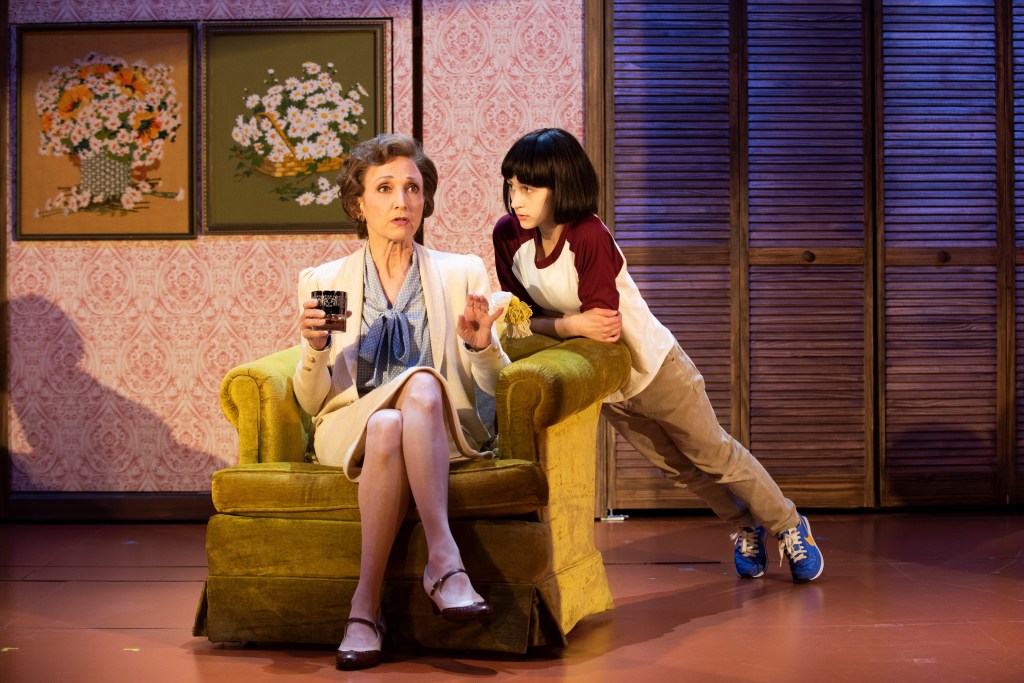
Interestingly, wetting the bed at her age, we note, must be related to her parents’ divorce, the move and inner stress. And then we discover that it is genetic. Her father Donald (the humorous Darren Goldstein who rocks many women’s boats) also wet the bed. However, as he enjoys reminding her, he did grow out of it. Sarah wonders when that wonderful occasion will happen in her life to end the emotionally painful stigma.

As we follow Sarah who introduces us to her family, we meet her sister Laura (Emily Zimmerman) who disowns her in school and puts up with her at home, decrying she doesn’t know who she is and how she is a part of the family. Interestingly, in Act II, Laura’s approach changes after Sarah’s life takes nullifying downturn. And when Nana has to be hospitalized, the Laura softens her attitude toward Sarah. Then the sisters unite and become close again. As Laura, Emily Zimmerman works the transformation from annoyances to hypocrisies to fear and concern for Sarah in a fine and authentic acting and singing performance.
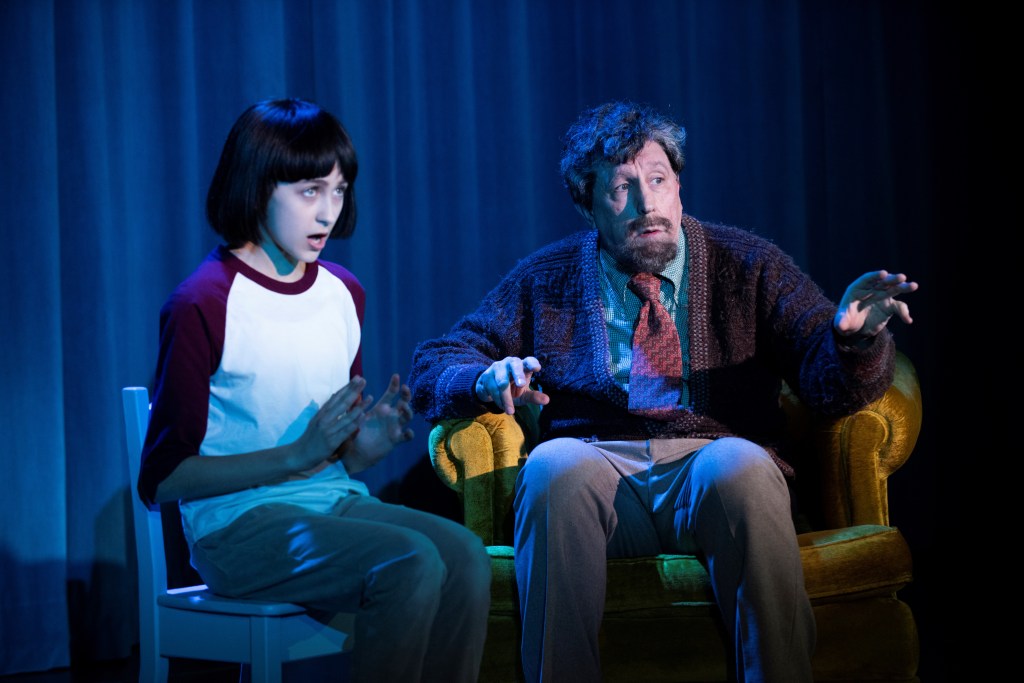
Sarah’s mother Beth Ann, normally portrayed by Caissie Levy covered by Lauren Marcus the night I saw the production is only capable of staying in bed and watching television. We learn why this situation abides in the second act when a fight erupts between Beth Ann and Nana and the truth spills out. It is then we understand Beth Ann’s depression and feel empathy for her. However, Nana ends up becoming sick over the remembrance of what happened. Indeed, her hospital stay reveals self-punishment and feelings of guilt for she feels responsible for events that cause Beth Anns’ depression.

Considering the circumstances of her caved-in life, Beth Ann does the best she can. She is aware of Donald’s philandering, one cause for the divorce. However, he is a good father. He provides enough money to take care of the family and eventually pay for Sarah’s treatments to stop her bedwetting. Also, he is there for his two daughters. Likewise, though Beth Ann’s debilitating depression hinders her for “normal” activities, she stands by her children and when Sarah needs her most, she is present for her.
Initially, Sarah, encouraged by Nana (Bebe Neuwirth comes prepared with an authentic accent and bright, cheerful demeanor) who tells her she can do anything, coasts into school. We are impressed as Sarah’s humor and agreeability eventually lures the girls in her classes to be her friends, rendered in an adorable song with Charlotte Elizabeth Curtis (Ally) Charlotte MacLeod (Abby) and Margot Weintraub (Amy).
Mrs. Dembo their teacher (the very funny Ellyn Marie Marsh) tries to inspire them to hone their talent like Mrs. New Hampshire did (the lovely voiced, effervescent and funny Ashley Blanchet) for their school is presenting a talent show. Sarah and her friends begin to practice songs for the show, inspired by the golden tones of Mrs. New Hampshire. When they practice together, they are crackerjack astounding with their harmonies and seriousness in “getting the number right.” They should form a girl band.
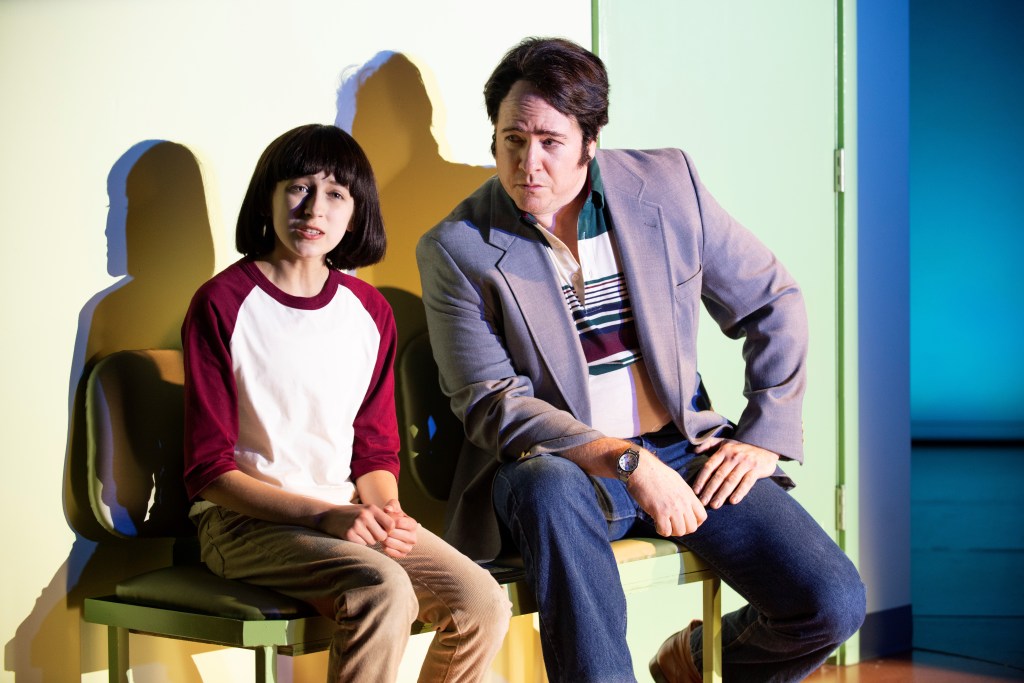
After Sarah invites her new friends to her Dad’s house, they are impressed. Darren Goldstein’s philanderer number as Donald brought the house down when I saw the show. The men loved his machismo, which he manages in the ethos of a hapless idiot far from a hot, “know-it-all” arrogant lothario. His balance in achieving a hysterical, irreverent unpolitically correct and refreshing tone is well shepherded by director Anne Kauffman.
The ease that Donald presents with Sarah and her friends opens a door of hospitality so that Sarah is invited to a sleep over. She almost doesn’t go because she will wet the bed and the girls use the occasion to add to her horrific embarrassment. But her mother unthinkingly tells her she’ll be OK. Meanwhile, Donald tries to find cures for Sarah which result in a very funny bit between the hypnotist portrayed by Rick Crom who is brilliant and whose voice is excellent for the role. Unfortunately, the hypnosis doesn’t work and the hypnotist sings a counterpoint duet with Sarah underscoring that he’s a fraud as she sings that the hypnosis doesn’t work.
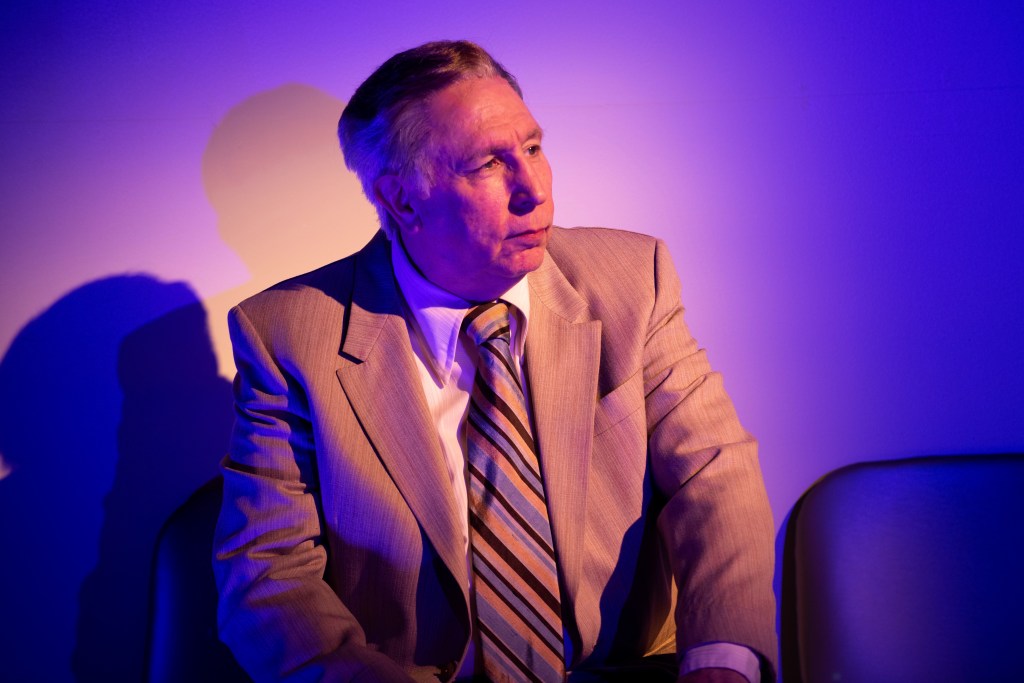
When Sarah goes to the sleepover, she has an accident. What happens after this event reaches into catastrophe. However, Silverman’s horrors come with great humor and irony. The number that takes place in the psychiatrists office is farcical in a great way, for the doctor (Crom) sings the praises of the latest cure for depression, the diagnosis he gives Sarah. As the doctor Crom leads the large dancing yellow Xanaxes that come alive to sing along with him about their wonderous effects. Crom attests to their ebullience as he flutters and skips high as a kite on Xanax. The number is one of the best in the show, as well as the most sardonic. Just great!
As the good doctor and singing dancing Xanaxes move off stage, Sarah desperate to do anything to stop her debility pops her pills for “depression.” We shudder understanding that Sarah is too young to take such powerful drugs, but it is a fact that Big Pharma likes to get folks hooked as young as possible. Instead of stemming her depression, anxiety and sorrow, Sarah joins her mom in bed where together the sing of their troubles and their hopes.
Ironically, the depression that Xanax is supposed to cure throws her into a full-blown depression so she must take more to attempt some relief. Once again, the cure is worse than the condition. The resolution does arrive to reveal the need for redemption for the family and salvation for Sarah who is still wetting the bed.
The deus ex machina (a seemingly unsolvable problem in a story is suddenly and abruptly resolved by an unexpected and unlikely occurrence) arrives when Miss New Hampshire appears in a dream. She tells Sarah about her secret which brings the child confidence in knowing that this lovely, talented woman had the same problem. Maybe there is hope for her after all. By the conclusion of this wacky and warm musical, Sarah takes the stage in the talent show and cracks open her wild and authentic comedy number (which we’ve been watching). The show ends with the rousing song “The Bedwetter” sung by the cast, and our delectable farce sandwich concludes.

The production is excellent, though it is “dirty” and “uncouth” and unpolitically correct and indecent for younger girls (that’s for the NEWSPEAK thought police on “the left” and “the right,” reference to 1984 by George Orwell). Anne Kauffman has rehearsed the cast to a fine rhythmic pace, rapid fire delivery of quips and jokes and acute pauses for timing which add to the overall hilarity and upbeat performances.
Nevertheless, when the show turns to the dark side, all of the issues break wide open and we can empathize with what this family has gone through to make it to the next day. Of course the struggles and strains provide the foundation for Silverman’s comedy and engender her growing up beyond her years, sustained by cracking jokes to forestall the misery. Indeed, misery and humiliation provide the meat upon which Thalia, the muse of comedy feeds. Silverman and Thalia are besties in this production. And Silverman’s and Harmon’s and Schlesinger’s book and lyrics inspired by the immortal acquaint us, the actors and director with her finer points of merriment.
The cast works seamlessly as an ensemble. Their voices are powerfully resonant and spot-on. Each of the leads remains precisely authentic in their own songs, whose lyrics are humorous, sometimes wildly hysterical, but always pealing out the human condition.
Kudos to the set design which was functional, variable and effectively minimalistic (Laura Jellinek). Costumes by Kaye Voyce showed up the Ad dancers and Miss New Hampshire well. Japhy Weideman’s lighting, Kai Harada’s sound, Lucy Mackinnon’s projections, Kate Wilson’s dialects made the production’s themes cohere. The music team is exceptional. These include: Dean Sharenow (music supervisor & coordinator) Henry Aronson (music director) and David Chase (orchestrations).
This is one to see for its exuberance, fun, laughter and poignant moments, too rendered by the fine performances of the ensemble and sensitive, balanced direction, keeping the humor in the pathos. For tickets and times to The Bedwetter that runs about two hours go to their website: https://atlantictheater.org/production/the-bedwetter/
Jennifer Lopez in ‘Halftime’ at Tribeca, Now on Netflix (Review)

Jennifer Lopez in an interesting move joins Beyoncé and Demi Lovado (see my SXSW review) as the celebrated subject of her own documentary in Halftime. Singularly, the film chronicles Lopez’s journey to fame in flashbacks cut with the key present event she aims for, the half-time show at the 2020 Super Bowl. Director Amanda Micheli in present to past to present video segments and clips chronicles how Lopez got to the Super Bowl moment that she always fantasized about. Thus, with thematic breakdowns, Micheli follows Lopez from the day of her 50th birthday celebrations to the Super Bowl half-time show she co-headlined with Shakira in 2020.
Importantly, in this World Premiere which first screened at Tribeca Film Festival, Lopez deals with many problematic issues in her upbringing and career. Centrally focusing on the intersection of both, Lopez comments about the issues in naturalistic interview clips without make-up and in a relaxed gym outfit. Briefly referring to tabloid exploitation of her relationships at various points, we understand a different portrait from what the media reveals.
Director Micheli employs an abundance of video clips that flashback to her numerous films, and trace the trajectory of her career. Also included are family moments, for example around the Thanksgiving dinner table, and a brief interview with her mom. Throughout, Lopez includes her daughter who also performs in the Super Bowl half-time show and rehearses with her to prep for the show.
Lopez highlights how her work morphed from dancing after she reconciled her mother’s thoughts that she couldn’t sing. With every opportunity that presented itself to her, she transformed. Now, she does it all, singing, acting, dancing, producing (Hustlers) and performing a monolithic show at Super Bowl 2020 that makes a statement for a global audience.
The director captures rehearsals for the show and delves into Lopez’s vision to make a political statement. Powerfully standing up to the management who wanted her to mute her vision decrying the kids in cages at the Southern Border, she used her klout. The show’s songs encouraged unity, equity and ended with “Born in the USA.” Her show’s vision uplifted immigrants nationally. Indeed, Lopez’s courage in standing against the fear mongering former president’s cruel immigration policies reveals the same admirable courage and boldness shown throughout her career and life.
In preparation for the show, we note she is an overcomer. Lopez discusses the difficulties in the chauvinistic decision to cast two Latinas to do the job of one performer. Indeed, they cut down their time and forced them to work with prodigious collaboration that created immense pressure for both performers. That they succeeded credits their talent, hard work and effort, something the officials, as Philistine corporates cluelessly benefited from.
Though some will be snarky and whine that criticism of her treatment by the tabloids, media and chauvinists amounts to victimization, that attitude too easily dismisses Lopez. In anticipation of this Micheli emphasizes that Lopez had to battle negativity her entire life as a Latina. Though the media demeaned her, ridiculed her “failed” relationships and underestimated her career, she accepted the challenge. Thus, with effective counterpoint Halftime focuses on her startling achievements.
Also, Micheli spends time on the media’s creation of the fake woman’s perfect Anglo Saxon look and appearance. Throughout her career the media ridiculeed her figure as a woman with curves. Lopez’s discussion of this rocks. All women have to measure up against the media’s prescribed BMI 17 weight. As a result they images doom they to fail. With humor Lopez exposes the way women have been demeaned and objectified to make them vulnerable for further exploitation. Her authenticity allows all women who see this film to identify.
Considering what Lopez overcame to arrive at her current destination, her detractors have not even done one-eighth as much. Importantly, Micheli and Lopez present Lopez’s overcoming perspective. Take it or leave it, the documentary stands on its own as informative, beyond entertaining, authentic and human. Vitally, Halftime inspires women and encourages them to strive, to persist and forge their own paths where none may exist.
Well structured, the film uses flashbacks to reveal her history and rise to fame. Halftime strikes a balance in revealing issues which Lopez takes up about her life, like being a Latina. The self-expose becomes intriguing. For example Lopez discusses how Cartoon TV ridiculed her and featured her as a Bimbo. Clearly, the smear campaigns hurt, as she explains in response to questions. On the other hand she relied on the strength she received from her mother and her heritage as a Puerto Rican. who could “do anything.”
Some of the most mesmerizing video clips feature Lopez during her rehearsals and training. They include clips for the Halftime show rehearsals, and clips from practice sessions to prepare for her Oscar-nominated role in Hustlers. Additionally, we get to experience Lopez discussing the Oscars and selecting outfits for the media campaign to win Best Supporting Actress for Hustlers. She is hopeful about receiving her first Oscar after her nomination for Selena twenty years before. When she doesn’t win, her disappointment and her team’s upset are acute. Her team (who she’s employed for years to do hair, make-up, etc.) ride the highs and lows of her career; this was a lowpoint.
Micheli covers tremendous ground. The portrait reveals Jennifer’s humanity, her expressed vulnerabilities and hurts which have informed her acting and performing. In understanding her genius, her tremendous talents as an actress, dancer, singer, entrepreneur, producer, mom, sister and much more we identify and are inspired. What we don’t understand, Miceli gives a wide birth: her private romantic life. After all, we don’t kiss and tell as tabloid fodder.
Halftime acquaints us with a Jennifer Lopez fans who love her know. It introduces those who underestimate her with a mosaic of myriad reflections of a woman determined to move through the next fifty years of her life (at least) making waves. Lopez indicates she has more to say, do, achieve. Halftime whets our appetites.
The excellent documentary streams on Neflix beginning the 14th of June. To review Tribeca Festival features go to their website: https://tribecafilm.com/ or see Tribeca At Home offerings: https://tribecafilm.com/festival/at-home
Jon Hamm in ‘Corner Office,’ at Tribeca FF

In Corner Office, John Ham shines in his portrayal of Orson, employee of The Authority a monolithic global conglomerate. Director Joachim Back’s opening shots reveal The Authority’s headquarters to be a structural monstrosity so immense it towers into the clouds, rendering its upper floors invisible in obvious symbolism. Screenwriter Ted Kupper adapted Corner Office from Jonas Karlsson’s ironic, existential novel The Room. A Tribeca Film Festival Spotlight Narrative film, Back’s sardonic comedy features Hamm’s deadpan delivery and ironic voice over narration with success.
Importantly, the director creates the atmosphere and surreal tenor of the film using flat lighting and dull color schemes to evoke the austere look and feel of a lifeless office environment. Also, he uses unusual camera angels implying relationships of menace, inferiority or absence. For example, at times he shoots Andrew, their boss in an upward angle as Andrew looks down on his underlings. These he alternates when Hamm’s Orson is in his element of peace, power and personal authority which begins after Back sets up Orson’s nemesis, The Authority and those who promote it. The cubicle desks set off the see-through glass office where, Andrew (Christopher Heyerdahl) sits, observes and manages with eerie calm. The function, mission and purpose of The Authority remain opaque. However, its symbolism becomes apparent as Hamm’s Orson eventually challenges its ethos with his unique particularity.
In keeping with Jonas Karlsson’s concepts and overall thesis, Back takes to task the overweening domination of the anti-creative, drudgery producing Philistines of the corporate world. Indeed, the higher ups of multi-global conglomerate boards oppress their plebeians with mediocrity in a status quo which destroys humanity to increase the bottom line. With the banality of evil, such non inspiring workplaces siphon off creativity, originality, genius, identity and vision. Indeed, Back’s creation of the nullifying atmosphere that reduces Orson and his colleagues to drones, characterizes the loathsome world of corporate and governmental bureaucracies everywhere.
When Orson arrives at his new position with his box of desk supplies, Beck foreshadows his alienation and isolation. Visually, the director includes an aerial shot of Orson getting out of his car in a snowstorm, a lone figure against white in a massive parking lot of hundreds of employees’ cars.
Quickly, Orson adjusts to his open office cubicle. However, he has no divider between himself and his colleague Rakesh, who displeases him like the rest of the uncaring, numbed workers. Throughout, Orson narrates his impressions and thoughts to us, while remaining quiet, non communicative, removed.
Cleverly casting Hamm against his Mad Men type, Beck transposes Karlsson’s Orson into a nebbishy-looking, seemingly wish-washy invisible. Yet, Orson’s astute, inner critic circumspectly analyzes his colleagues’ mediocrity with humorous wit and darkly comedic self-satisfaction. Structuring his routine into 55 minute slots to achieve maximum performance, he even holds off on bathroom breaks. He tells us withholding his pee builds character.

Interestingly, Orson’s analytical inner critic remains defensive. And his arrogant attitude puts off unmotivated desk partner Rakesh (Danny Pudi) whom he chides for piling up his folders that threaten to mess up Orson’s organized, OCD desk. Thus, Back subtly, humorously intimates Orson’s character strives to distinguish himself as superior to the others. He rejects the hive mentality; fit in, shut up, don’t make waves, don’t excel, speak quietly, just get by. Safely, Orson confides in us, as he hypocritically plays the game. However, he determines himself to be a person to be reckoned with in time, in an opaque and funny statement.
As Orson, Hamm’s delivery and attitude remain reserved, understated and ironically humorous. For example he notes his “peers” defer to dominant Carol (Allison Riley). Yet her child’s incorrect perspective in a crayon drawing shows her biased weakness at not correcting the silly drawing. Though Orson channels low-key, his inner perceptions revealed by Hamm’s voice over narration with Back’s visuals of his clueless peers indicate Orson’s maverick brilliance and talent.
When Andrew scolds Orson for not obeying the sign “Think About the Floor,” to cover his snow laden boots with booties, Orson recoils, humiliated. And it is then walking to the men’s room that he discovers a secret room along the corridor nearby. Making sure no one watches him, he goes inside and finds a traditional, warm, wood paneled office with luxurious appointments, seating, soft lighting and pleasant anti-corporate, anti-worker bee, anti-bureaucratic esthetic.
Magically, this lovely warm, traditional office befitting a CEO works wonders for Orson’s soul. The secret room that Back enhances with muted, lyrical music each time Orson enters transforms him physically into the gorgeous, stunning Hamm. He drips with confidence and power. Evolved confidence presents the finest version of himself.
Problematically, when colleagues and Andrew question what he’s doing, Orson refers them to the secret room. They insist upon no corner office . And Back verifies this as colleagues gather to watch Orson stand in front of a wall and stare. Frightening us, we wonder what gives? Back tricks us to want to believe the room exists because of how Orson morphs when he relaxes in its “magic.” Profoundly, the contrast between institutionalization and humanity so pronounced by Back in his sets, atmosphere, cinematography, silences, room music stuns. Ironically, we gladly accept Orson’s reality. Yet, if the others don’t see it, we accept Orson’s crazy. Which truth abides?
We experience cognitive dissonance and a disconnect. Can both be true if we lift our understanding to the metaphoric level that some people see and experience things which help them tap into the best of themselves? Or is Orson just off his rocker and in intentional rebellion against the Philistines? If that is the case, he does have a point, but carries it too far and sets himself up for attack and betrayal.
After he visits the company psychiatrist and she determines his wellness, Andrew presents the condition of his employment. To remain he must not stand by the wall and stare into it. He must agree no room exists. Unquestionably, Orson experiences the “rooms” beauty and becomes his evolved self in it. Why can’t they see the room or its possibilities?
Adhering to Andrew’s rules, Orson works even more furiously arriving earlier and leaving later. He sneaks into the magical office where he creates his finest most precise work. When Andrew discovers Orson created the assignments and not other employees, he lauds him and his colleagues congratulate him. Perhaps, he even saved the division from the threatened restructuring. His valuation by Andrew indeed made him a person of reckoning. Subsequently, this confidence prompts him to attempt a relationship with the company’s beautiful, friendly receptionist (Sarah Gadon), whom he squires to “the corner office” where he kisses her.
After this turning point, the conflict explodes between Orson’s inner knowledge, vision and genius and the corporation’s flalining function and structure, represented by Andrew, his colleagues and the EVP (Executive Vice President) in one of the cloud shrouded floors above. You’ll have to see the film or read Karlsson’s novel to understand whether a resolution breaks open or uncertainty continues.
Back’s symbolism and metaphors of the commercialism which breeds institutionalization and bureaucratic nihilism that destroys smashes through each scene of the film. Superb, ironic performances by Hamm, Pudi, Heyerdahl and the entire office cast elucidate the profound themes. The indictment of the Philistines of corporate empires to cast aside their employee’s opportunities for genius and innovation manifests with power in this surreal tale.
You’ll laugh and you’ll ache, but you must see it. Go to the Tribeca platform to stream it at home: https://tribecafilm.com/films/corner-office-2022
‘Golden Shield’ at MTC, Review of a Must-See Production

Golden Shield by Anchuli Felicia King, directed by May Adrales currently at Manhattan Theatre Club is a thematically rich and profound work that looks into corporate greed, political activism, digital censorship as a means of control, the ethic of understanding a different language through translation without considering cultural variance, and relationship reconciliation redux. Through the lens of a jury trial against corrupt actors who refuse to consider the consequences of their actions when digital efficiency and progress is at stake, King examines ethical responsibility and the fallout when accountability is measured in litigation awards.
The principal theme begins when audience members hear the instructions to keep masks on and turn off cell phones in another language. Mandarin. They think they know what is being discussed because it is the protocol of all theatrical experience in New York City to be reminded before the play begins to be the dutiful audience. However, in reality, unless they have a working knowledge of Mandarin, they don’t know what is being said. The speaker might be cursing out the audience; thus, the setting and context determine the level of trust the audience has for the speaker.
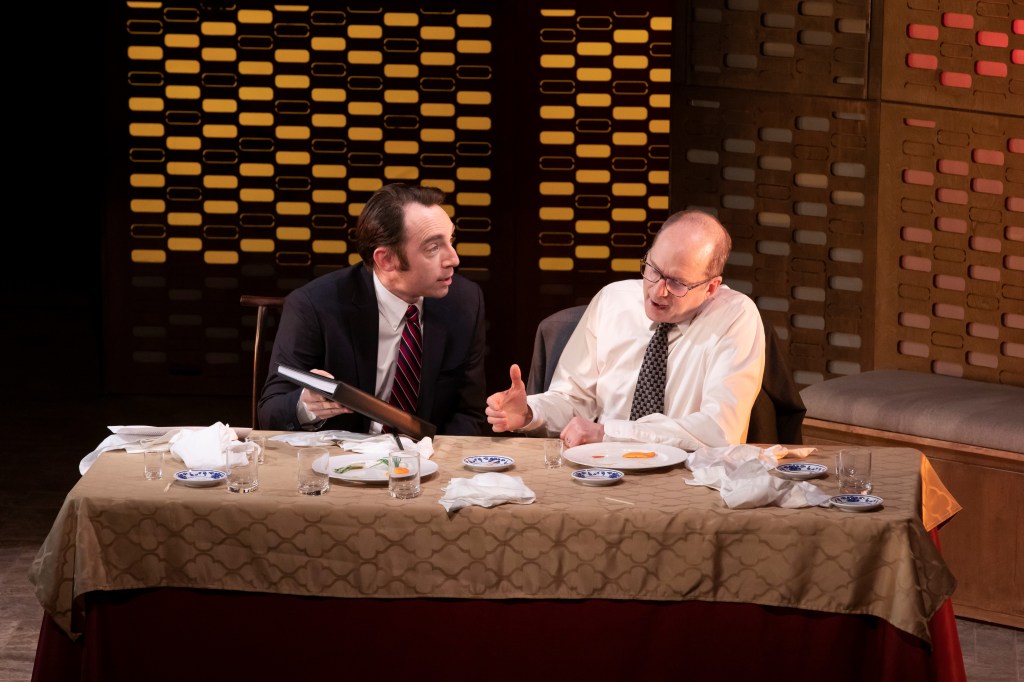
This is the linchpin of Golden Shield, illustrated by Fang Du, the clever and affable Translator who takes our hand during the more opaque sections of the two act drama and guides us with his knowledge of Mandarin and unaccented English. We can only assume that he understands both languages to provide a correct translation of what is happening when the conversation is only in Mandarin. Thus, we trust him. But should we? This is a slippery slope. Indeed, trust between and among human beings, even if they are friends and family, as King proves, is flawed.
It is a fluid theme. By the end of the play, The Translator learns an important lesson. There is no correct translation for what happens during the play between older sister Julie Chen (the excellent Cindy Cheung) and younger sister Eva (the superb Ruibo Qian) who Julie abandoned to live with their tyrannical mother in China when she was a child. Nor is there a correct translation for what happens to Li Dao (Michael C. Liu in a heartfelt powerful portrayal) when Eva gives a one sentence translation that mistakenly encourages Li Dao to take a course of action that impacts him and the case that Julie is trying for her law firm.
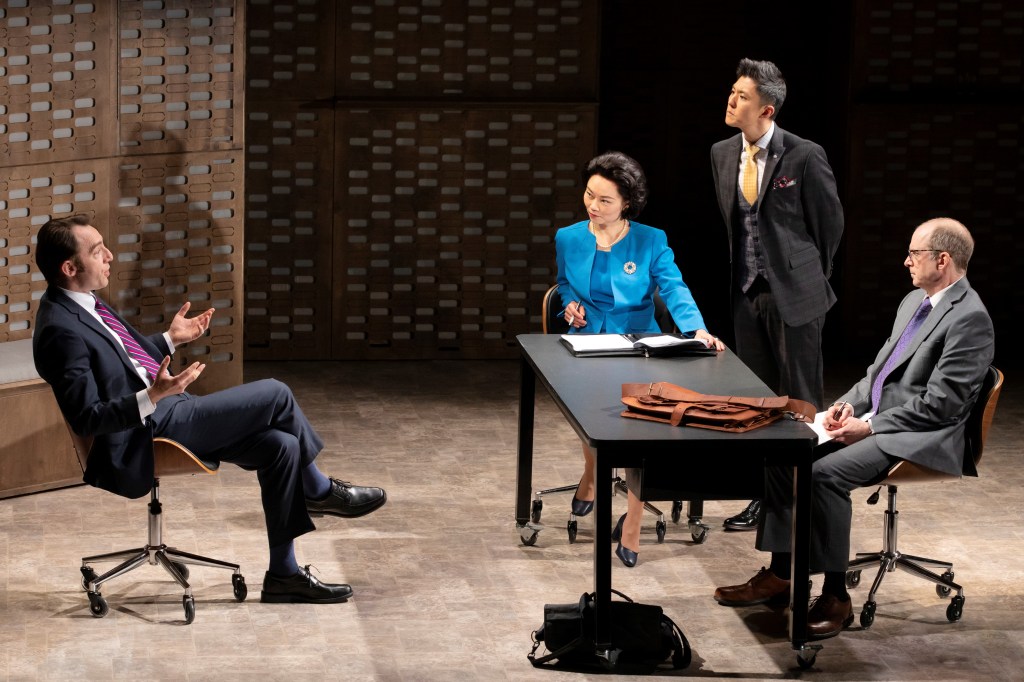
Indeed, The Translator and the Chens realize that translation is a matter of interpretation of cultural values, the proper selection of metaphors and figurative language, subtle inflections and nuances in a contextual medium that must be included to convey what an individual is saying. Finally, there is no translation for why Chen acts as she does at the play’s end, nor is there a translation for the villain ONYS Systems in how they relate to the Chinese government.
Language between native speakers is not easily conveyed if there are geographical and cultural differences within a nation. Words hold loaded meanings and what one thinks one communicates may hold offense or have an entirely different understanding for the listener. How much more is the confusion of communication if a language that conveys meaning in a circular fashion through characters and pictorial thoughts is translated to a listener and speaker of English which is essentially linear and word based, and whose time is chronological? Mandarin, Cantonese, Korean, Japanese are effectively without chronology, and retain a circularity and pictorial, visual thought process seamlessly navigated and understood by those who speak, read and write it.

Interestingly, Fang Du’s Translator warns us about the chronological expansiveness of English compared to the circularity of Mandarin and suggests there is no word for word translation. However, by the end of the play as he lives through and guides us through the events, even he is caught up short. The revelation for him is profound because he has been in the “God” seat. But he becomes enlightened like the Chens and the audience that what results is because of incomplete translation and incorrect “interpretation” and felt understanding. Mistaken understanding roils through every interaction in King’s play; it is fascinating.
This is perhaps the most profound of the themes in King’s work which takes place between 2006-2016 and shifts scenes from Washington, D.C. to Beijing, to Yingcheng, to Dallas, to Palo Alto to Melbourne. Though flashback is used and The Translator keeps us mapped out in the setting and scenes, Act 1 is top heavy. The playwright wants to say so much that she dilutes the force by trying to jam pack it all i>. Truly, the play could be streamlined and the dialogue shaved at the least to arrive at the question what are the most salient, striking themes. How can they be made to bring the audience toward vibrance.

When I saw Golden Shield, members of the audience appeared to be most affected by the relationship which implodes between the Chens. Nevertheless, King’s passion for the topics and themes is noteworthy. How do you streamline even a few words when you are in love with what your characters are saying to you. I get it, but it bears looking at for future productions to make Act I a dynamo and powerhouse leading through Act II in its explosion/implosion and powerful trial scene testimony then the conclusion.
The frame of King’s work fans out into part courtroom drama, part lawyer discussion, part insider talk at the fictional American tech company ONYS Systems. They get the contract to create a process to help them spy on any activity that opposition and adversaries use to smash the firewall of digital censorship that pertains throughout China. ONYS Systems’ pompous Elon Musk-type executive Marshall McLaren (the sardonic and superb Max Gordon Moore) creates an effective firewall by decentralizing it into multiple checkpoints, making it much easier for Chinese monitors to gauge spying and identify hackers who defy China’s digital control.

Thus, ONYS Systems in an extraordinary pro-communist political move is used as a tool of the Communist Chinese government to expose potential American spies in a counter-American action to protect itself. It also is used as the chief deterrent to stop hacking their firewall by identifying the hackers and punishing them severely.
During the course of the play, we understand the culpability of ONYS Systems through Moore’s McLaren. His nonchalance and self-satisfied genius, that he and he alone came up with this plan of decentralization for his company which increased their profitability exponentially as China pays them a huge price is loathsome. Interestingly, Moore makes the character ironic with the help of Adrales fine direction. Thus, the full understanding becomes “lost in translation.” And the full impact of how China has created a puppet in McLaren/ONYS Systems as a compromat or whatever the Mandarin word is for those without ethics or integrity who turn against their own nation, humanity and the “little people” for extraordinary wealth is muted. But hey, what the hell; it’s just business. (Some of this plays out from real life; check out Cisco and Yahoo litigation.)
Meanwhile, McLaren and ONYS Systems have ignored the impact of this “Golden Shield.” Their bottom line is paramount. Enter Chinese-American attorney Julie Chen who leads a class-action lawsuit by eight dissidents against ONYS Systems, chief among them the severely injured Professor Li Dao. Chen has found an obscure law used against pirates a few centuries ago that gives federal courts the jurisdiction to hear litigation filed by non-U.S. citizens for torts committed in violation of international law. She convinces her partner in the firm (Daniel Jenkins who doubles in his ONYS Systems’ role ) that they must take the case of the dissidents. She is passionate, convinced that McClaren and ONYS Systems are culpable for injuring the dissidents via their digital assistance to the oppressive and brutal Communists. Indeed, during various flashbacks we learn of Professor Dao’s five year imprisonment and torture because he showed students how to circumvent the Communist governments’ new “Great Wall of China,” The Golden Shield.
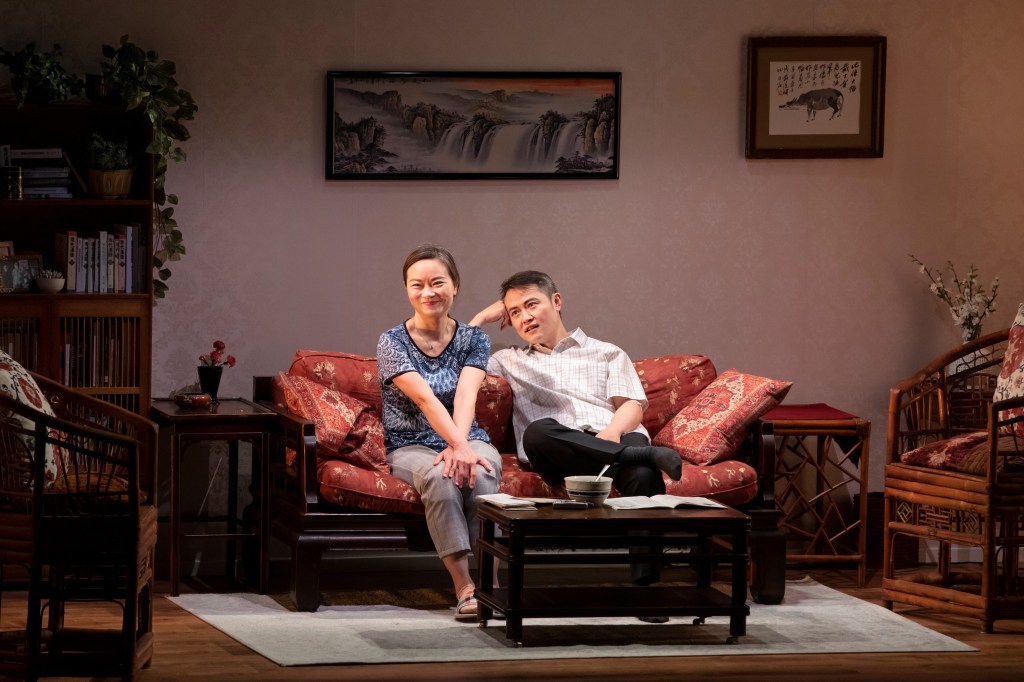
Enter the side plot and conflict between the siblings which also is lost in translation, misunderstanding and flawed communication because of emotional trauma, cultural differences and denial. Julie hires her sister Eva to visit China with her and speak to Professor Liu who can only testify and reveal so much of the brutality visited upon him under the Communists because he has been traumatized. The most vital scenes of the play occur with Li Dao and his wife Hang Mei (the fine Kristen Hung). Liu represents Li Dao with such empathy throughout that his portrayal ironically, though we don’t understand his speech, conveys superb understanding of his feelings and his expressions. Thus, the theme of translation being an incomplete and flawed means of communication hits the hardest with their performances because the words don’t matter. The emotions, tone, timbre wrought with great feeling immediately convey truth.
In Act II the courtroom scene where Professor Dao testifies is sensationally done with all the actors firing on all syllables. However, Chen as a result of her own trauma with her mother and leaving her sister in China has a confluence of emotions which end up forcing her to take a path which is devastating. For her part Eva, who we find out has been a sex worker and has compromised her sister’s relationship with her law firm partner, ends up bereft and lost. By the conclusion all the characters reveal that the events have traumatized them in one way or another. It doesn’t become a matter of winning or losing the lawsuit, it becomes whether or not one respects oneself for one’s choices.

Only Eva in her relationship with her Aussie lover (Gillian Saker who also does double duty as lawyer for ONYS Systems) seems to be seeking some sort of resolution with herself, especially after she throws over her sister Julie. But all of the characters are flawed, not very appealing, ethically challenged with the exception of the Professor Dao who has paid a terrible price for challenging China’s autocracy and repression. And indeed, by the play’s conclusion the future appears even more bleak as McLaren provides himself an off-ramp from changing his ways reflecting on the Dark Web, Block Chain and other tech “innovations” which provide myriad ways toward profitability by any means necessary.
I particularly enjoyed dots’ scenic design which coupled with Jeanette Oi-Suk Yew’s lighting design was used to smashing effect during the scenes relating to the Professor’s prison term and punishment. The set of Li Dao’s and Huang Mei’s living raised on a platform and framed by the lattacework partitions/screens on either side intimated the cultural setting, though the living room appeared Western. Its functionality was pointed and well thought out. Kudos to the rest of the creative team for applying King’s themes and Adrales’ vision. These include Sara Ryung Clement (costume design) Charles Coes and Nathan A. Roberts (original music & sound design) Tom Watson (hair & wig design).
The show closes on Sunday 12 June. I have highly recommended to to friends. It is a must-see and will be performed again. Look for it regionally. For tickets go to their website: https://www.manhattantheatreclub.com/shows/2021-22-season/golden-shield/
‘Mr. Saturday Night,’ Billy Crystal, David Paymer, Dazzle With Comedic Genius and Heart
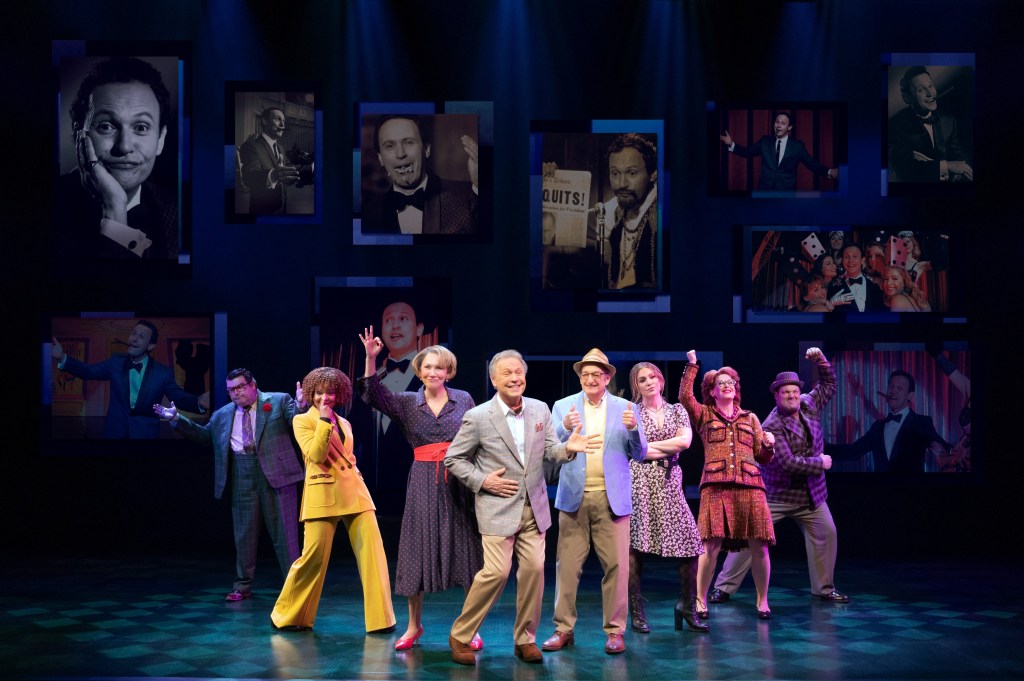
Billy Crystal’s reshaped Mr. Saturday Night at the Nederlander Theatre, directed with acute sensitivity by John Rando is based on Crystal’s 1991 Oscar nominated titular film. This production “hurts!” (in today’s parlance “kills:). Crystal embodies “Mr. Saturday Night” from head to toe. In the two act musical Buddy Young, Jr. (Crystal) luckily faces the opportunity of a second chance in his waning comedian years. With this do over, he gets to reexamine how he sabotaged his career with the hope of regenerating it. Most importantly, he faces the opportunity to revitalize his estranged relationship with his brother Stan (David Paymer reprises his Oscar nominated film role) and his non existent relationship with daughter Susan (the golden voiced and superb Shoshana Bean).
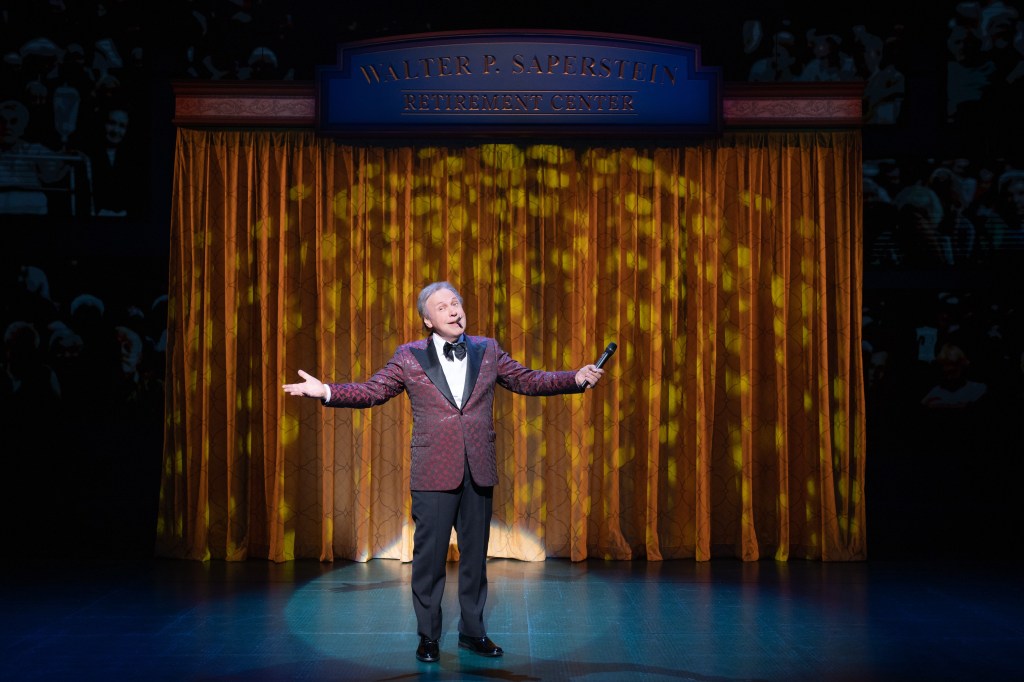
We all love second chances because we need so many of them. Buddy is no exception as the writers fashion his character to bump up against chance after chance. Indeed, in flashbacks from present to past to present, we note that as Buddy’s ego explodes with his successes, he eventually blows every chance that comes his way. When it is announced that he has died on TV (a symbolic reaffirmation of hope for a resurrection) Buddy plunges into the opportunity with the help of agent Annie Wells (Chasten Harmon covered by Tatiana Weschsler the night I saw the musical). The dramatic problem arises. Perhaps Buddy has gained the wisdom to retrieve the lost golden ring of success and once more establish himself. But what if he hasn’t?
This caveat is the crux of the conflict and arc of development. Can Buddy get out of his own way long enough to be the best human being he can be, absolving himself of past regrets with humility and aplomb? You’ll just have to see this reconfigured Mr. Saturday Night to find out
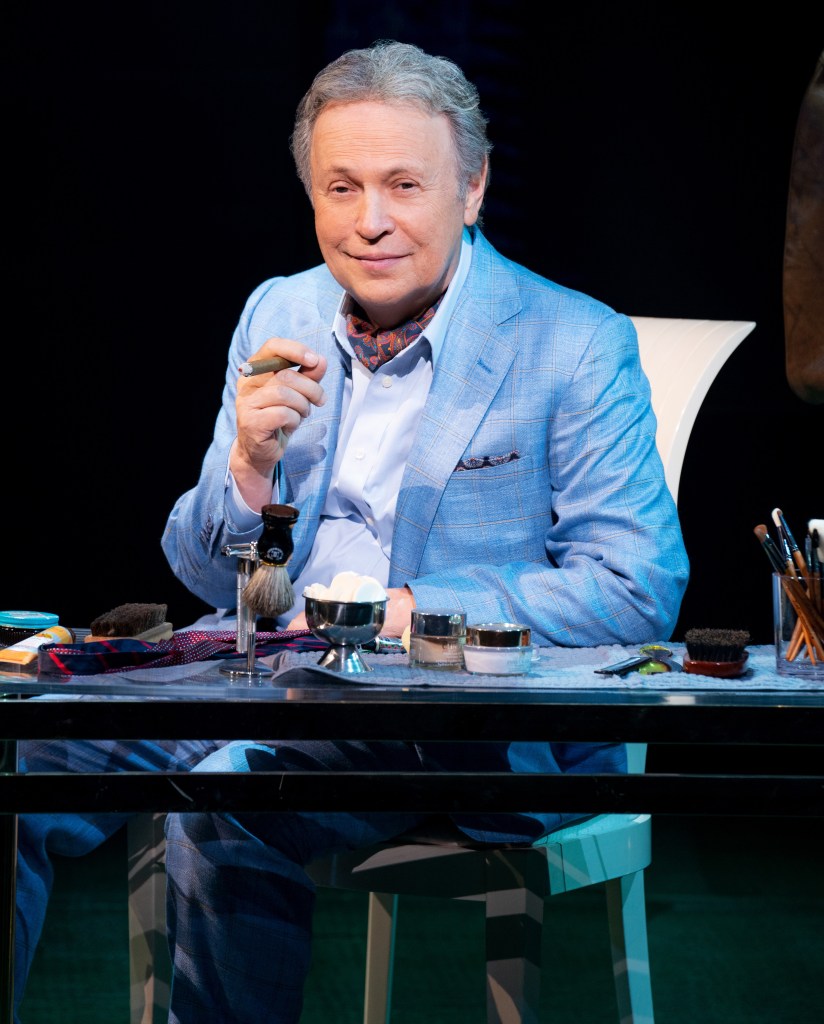
Crystal, himself is receiving a new thrust of fame in this upward moving transition in his career as a Broadway star going for his second Tony Award. He won a special Tony for 700 Sundays) doing what he enjoys, performing in front of a live audience every night. The production, despite a few twitches, is an absolute joy to see, and Crystal is the ebullient muse of hilarity, pattering jokes with lightening speed and seamless grace.

Reprising his role with Paymer, Crystal is the former Borscht Belt comedian, who once had a successful TV show until he didn’t. Paymer is his long suffering brother/manager/agent who was generous with his own salary during their heyday, but barely has enough to treat his girlfriend to a pricey dinner. Randy Graff does a fine job as wife Elaine, encouraging Bean’s Susan to “give her father a break.” “Putting up with her father is something Susan finally shutters with maturity and firmness, prompting Buddy to reassess, reevaluate and recalibrate or lose her love. The scene between Bean and Crystal against the warm background of the projections of the NYC brownstones and the doorway to Susan’s apartment and new relationship with her Dad is beautifully done.
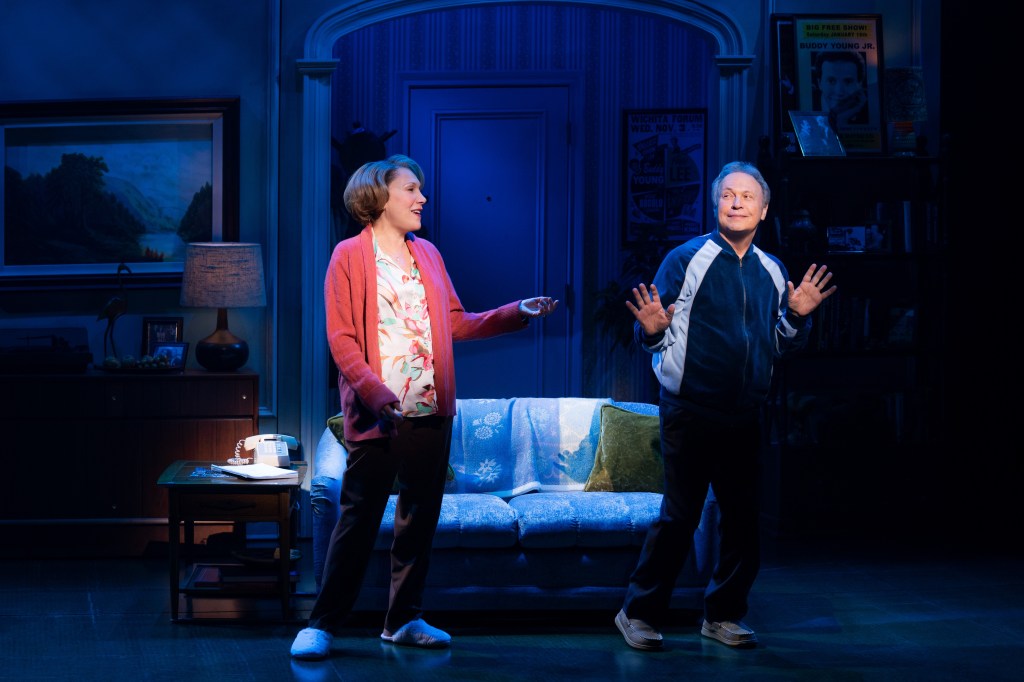
The production combines an endearing and poignant update with LOL vibrance. It soars with Crystal’s outstanding performance where he sings and dances, as one would expect seventy-something Buddy Young, Jr. to crow out a tune and jubilantly hop and skip some mildly energetic dance steps, sans flips, strenuous tap or break dancing. Indeed, Paymer and Crystal deliver their enjoyment “I Still Got It,” and companionship together and also dig deep when their characters hit the abyss: Paymer in the exceptional “Broken,” and Crystal in the profound “Any Man But Me.” Surprising, endearing, adorable, belly-laughing, fun, thoughtful and appealing, the principals are a team and appear to have fun making the audience laugh in a time when we desperately need to apolitically chortle and “fall out” in a life-affirming way.
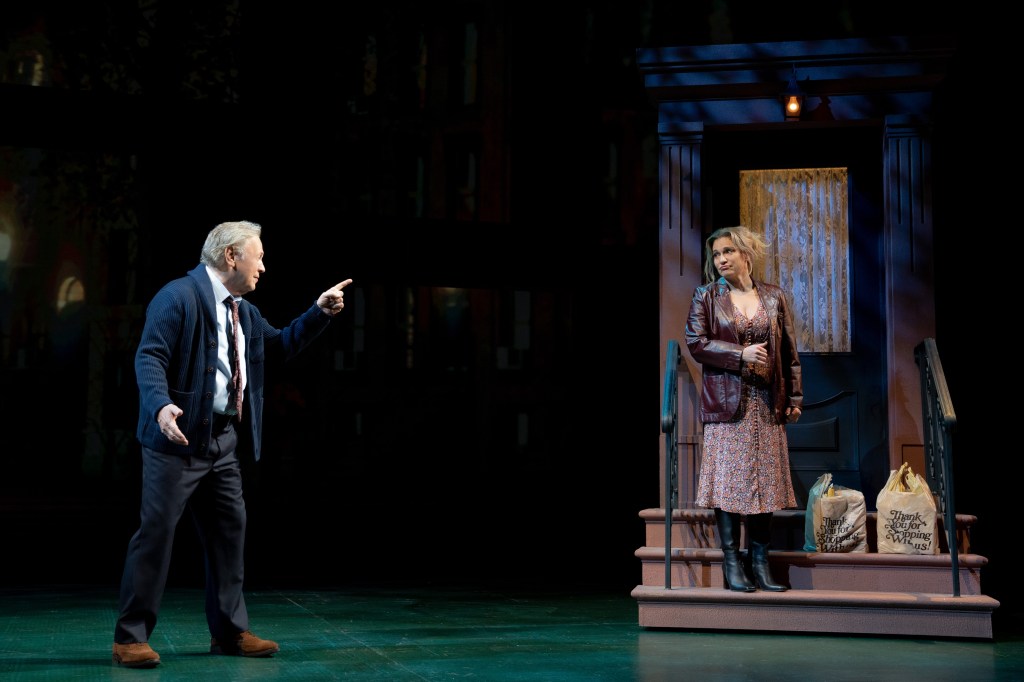
With Book by Billy Crystal, Lowell Ganz and Babaloo Mandel, Music by Jason Robert Brown and Lyrics by Amanda Green, the production has been nominated for five 2022 Tonys, including Best Musical, Book, Score (Brown and Green), Leading Actor in a Musical (Crystal), and Featured Actress in a Musical (Bean). What is marvelously stranger than fiction is that the film, if one reads the “critics” was not “the bomb,” it did not “kill” and it did not, in Buddy’s words “hurt them.” It flopped. Crystal and his creative team are to be credited for courage and gumption to try again, this time as a Broadway musical, one of the most difficult of creations and during an ongoing pandemic that no one likes to acknowledge.
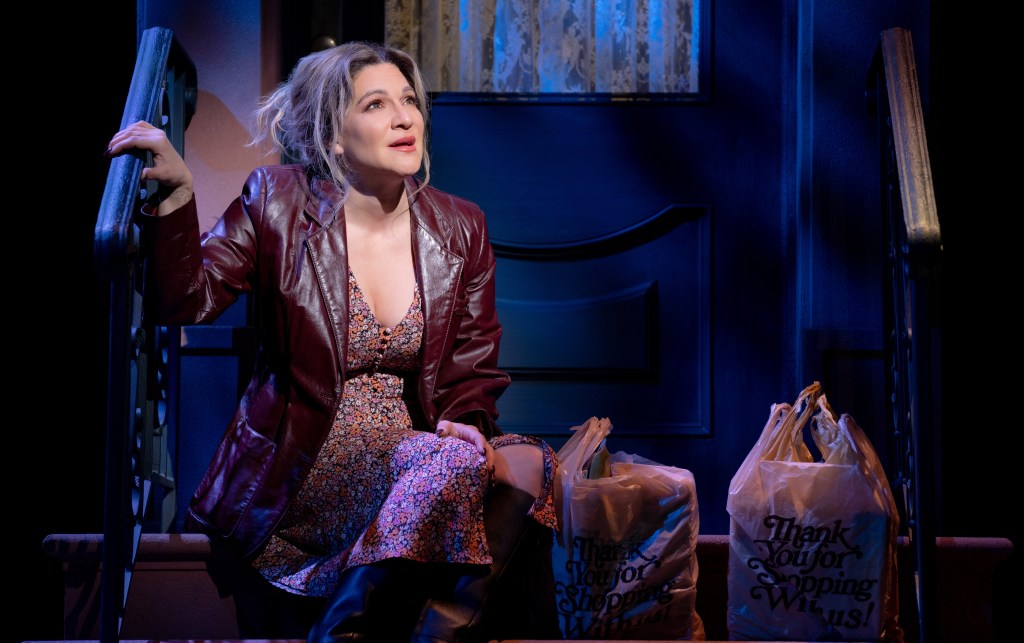
However, this is Mr. Saturday Night’s persevering second chance. With the added lift of the music and dance, and overall nostalgic silliness of 50s TV bits, where actors dress in hot dog costumes, cigarette boxes, etc., (Jordan Gelber, Brian Gonzales, Mylinda Hull) Mr. Saturday Night offers a retrospective on a history younger audiences don’t know. Also, it is an encomium to comedians who were huge greats in their time, some of whose stars still shine in films on Turner Classic Movies and black and white TV reruns.
The musical also highlights the importance of the Borscht Belt circuit in the Catskills, where comedians and entertainers could credibly try out their material and look for opportunities like Buddy did when he “covered” for Milton Berle at Farber’s. As the musical flashes back to Buddy, Stan and Elaine as twenty-somethings, we discover it is at Farber’s that he lands the gig that launches his successful career and Stan’s as agent and manager. The flashback also reveals how he met Elaine (Graff manages to be a convincing younger version of Elaine) whom he unwittingly “stole” from Stan in a a sour note between the brothers. Thus, the characterization and arc of development eventually reveal head on undercurrents of the strife between Crystal’s Buddy and Paymer’s Stan as a loop of pain which the actors convincingly inhabit and play battling each other.
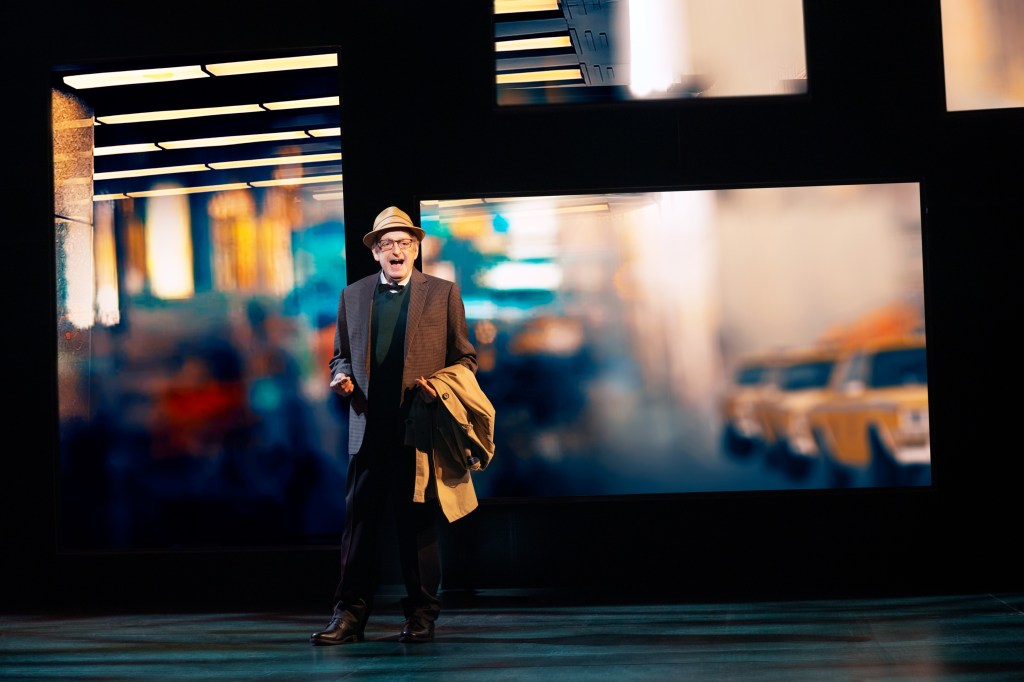
All these events with his brother, long suffering wife and broken-hearted but defiant daughter reveal the depth of the characters. They also illuminate reasons for Buddy’s self-torment, ambition and feelings of inferiority all of which are the fountain of his comedy which is part insult comedy, part ironic defense, and the type of ridicule which makes angels laugh. But when it’s directed at the individual in question, it hurts for real as dismissive one upmanship. Buddy has a tough time differentiating Shakespeare’s, “All the world’s a stage,” and is continually making his entrance and never pausing long enough to realize he needs to exit.
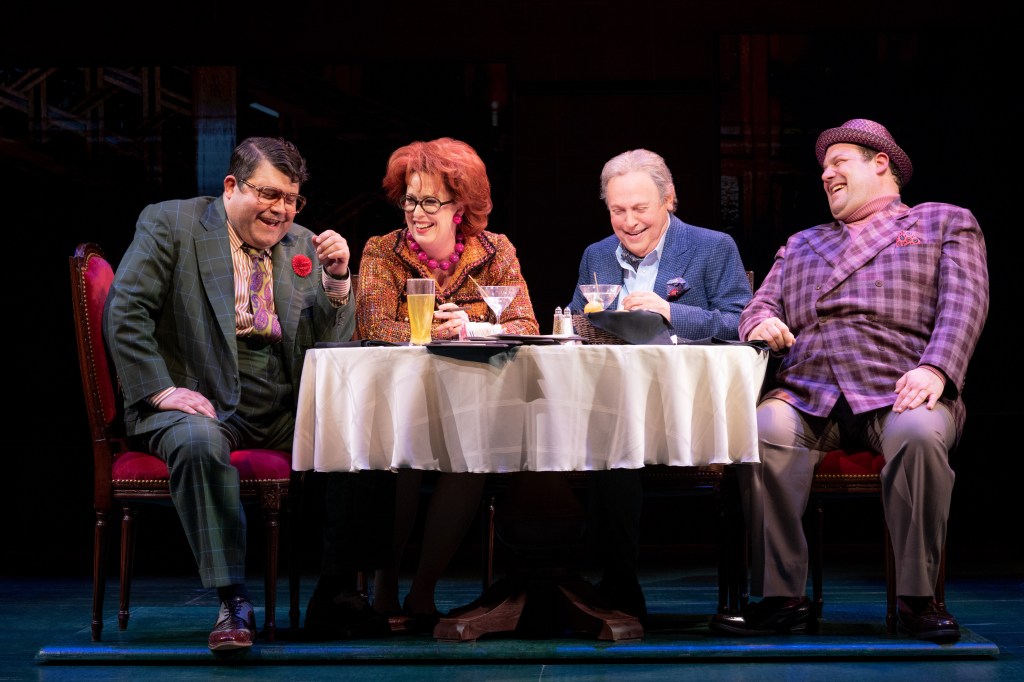
In an important scene with agent neophyte Annie (the fine Wechsler), Crystal’s Buddy gets to praise his comedy mentors. We note on the walls of the Friar’s Club and in projections a wide expanse of brilliant funny men and a few women of high humor. Buddy’s rant implies Annie should know the greats and this inspires her to do her research, then work like the devil to help Buddy get something which turns out to finally land as a part in a film. The role is funny and incredibly poignant and it requires Buddy audition, which he does. But after all the angst rehearsing and auditioning and blowing a chance at closeness with his daughter, his “big opportunity” is destroyed when the role is given to Walter Matthau. Bummer. Crystal handles this earth shattering moment with an ethos that’s believable Buddy. What he’s lost isn’t recoverable, for the loss isn’t just this part, its his mountainous history of regrets.
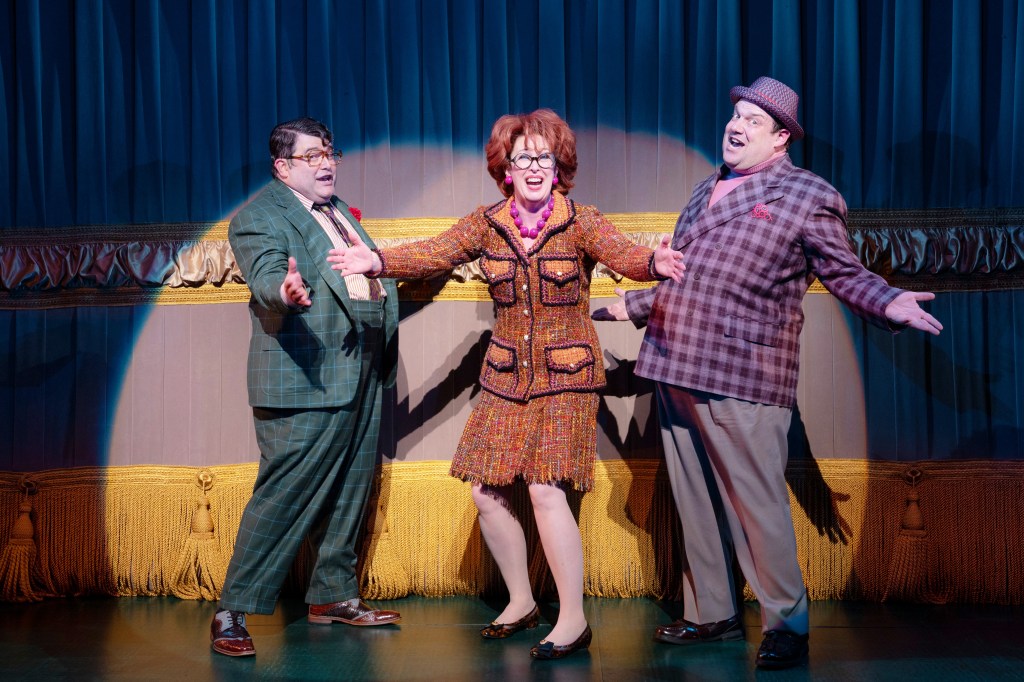
Unlike the film which referenced the comedian’s waning years from a younger man’s perspective (Crystal was in his forties, ironically “old” at that time), this Mr. Saturday Night shines in the age appropriate sequences. Interestingly, it is their younger portrayals by Paymer and Crystal as the twenty-somethings, that seem a stretch with wigs (Charles G. Lapointe) and make-up that don’t quite cohere.
However, when the flashback to Farber’s arrives, we’ve been prepped with jokes by the opening number “We’re Live” (Jordan Gelber, Brian Gonzales, Mylinda Hull). Then Buddy does his act at a retirement home (“A Little Joy”), which is a laugh riot. And by then, we’ve become acquainted with the premise, the announcement of Buddy’s death on TV, and his “new lease on his career” as agent Susan-Tatiana Wechsler sings “There’s a Chance, ” and excited Buddy and Stan sing and move to “I still Got It.” So, what’s a bad hair day for the two men returning to their younger days measured against the overall success of the well paced Act I that moves even more briskly through Act II and the conclusion after which Crystal takes a few audience questions? Well…(said with an upward lilt of a Jewish accent).
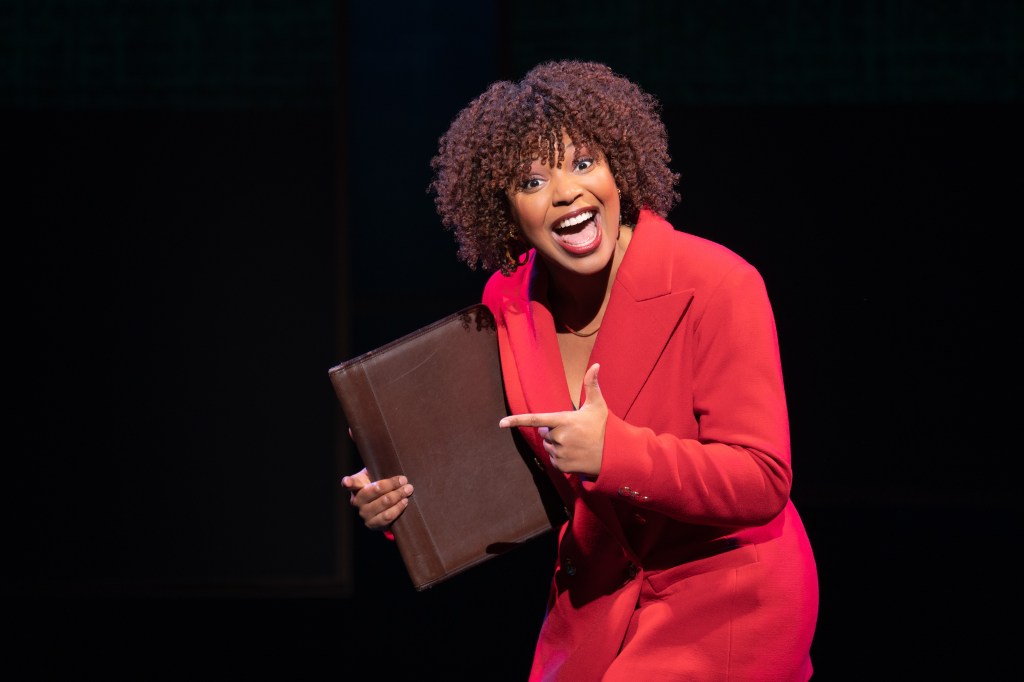
The themes of aging and regrets not answered, second, third and fourth chances, familial reconciliation, and redemption even for the incorrigible, spin in and out with a bow and a wink, superbly subtle. The sets of Buddy and Elaine’s home, Faber’s, the paneled Friar’s Club and the old time TV Studio designed by Scott Pask are spot-on, as is the costume design by Paul Tazewell & Sky Switser enhanced by Kenneth Posner’s lighting design and Kai Harada’s superb sound design. The Video & Projection Design is smashing, reminiscent of divided screens from the period, creating various effects pegged to the emotion of the scene.
The choreography by Ellenore Scott is just enough for this type of show and the actors are at ease and comfortable with their steps and movement. As silly as Elaine’s wishful thinking about leaving for “Tahiti” is, Graff pulls it off looking debonair and adorable. Thanks to Jason Robert Brown’s Arrangements and Orchestrations, David O’s Music Direction and Kristy Norter’s Music Coordination, the tone and tenor of the music fits with the book by Crystal, Ganz and Mandel, with Green’s lyrics. The time, effort and love shows, as all is held together by John Rando’s direction. Wow!
Get your tickets to this must-see show. You are not going to see this production with this cast again. For tickets and times go to their website: https://mrsaturdaynightonbroadway.com/
‘Around the Table: Stories of the Foods We Love’ New York Botanical Garden’s Major Exhibition Through September 11, 2022

When we think back to our grandparents’ and parents’ cuisine, what comes to mind? Whatever generation we are, the foods we were served as children on holidays or perhaps daily indicate the family heritage. And once we discuss heritage foods, inevitably there are similarities and differences among cultures, though they might be as wide-ranging as Europe to India.

The New York Botanical Garden’s latest exhibition Around the Table” Stories of the Foods We Love, is all about our culture heritage and the heritage of others by examining the cuisine. And no matter how one views the cuisine, at its most basic foundation we find plants.
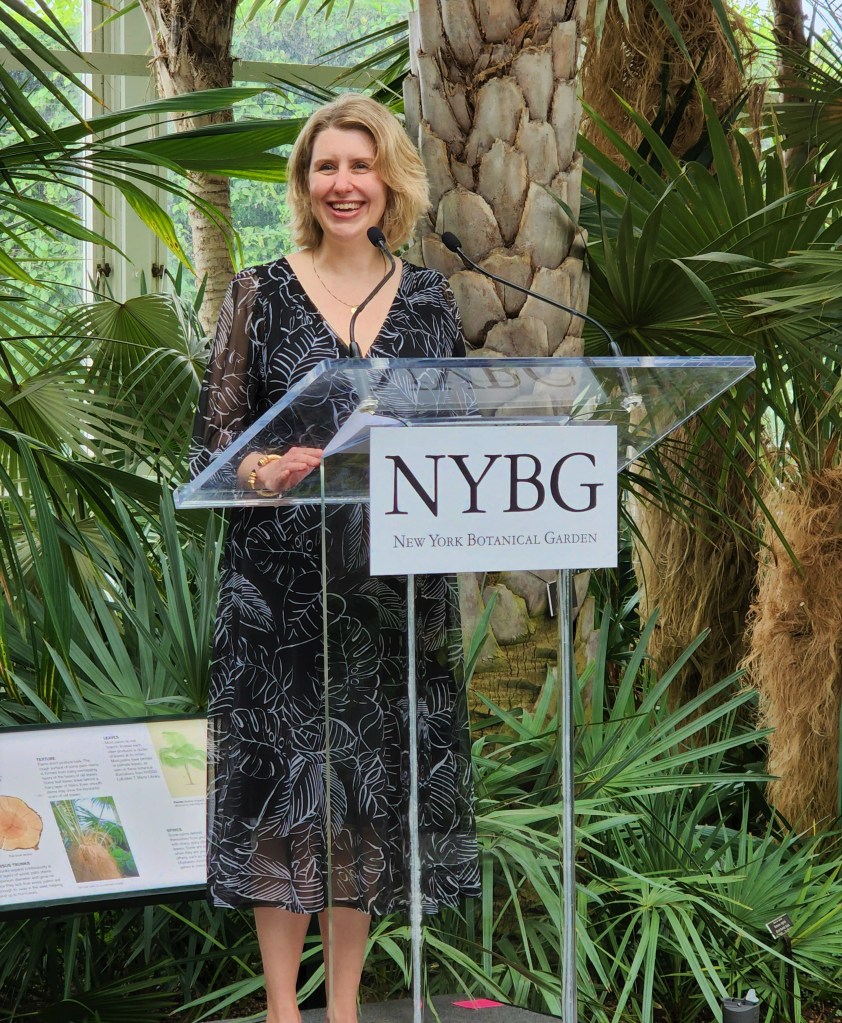

For those unfamiliar with farms and growing seasons, seeds and techniques to produce the most healthful, successful gardens of fresh fruits and vegetables, this exhibition is for you. Also, for those who come from a background whose cultural heritage was steeped in orchards and vegetable gardens as mine was, the exhibit is a chance to reconnect with and add to knowledge already in one’s mental and emotional bank account.

The plantings found throughout the 250 acres reveal the art and science of food traditions, many dating back to millennia and the beginning of the growth of civilizations throughout the world. Though the plants have been developed through experience by people culturally and historically, many of the plants from ancient cultures have also been modified scientifically to what they are today. Much of the history of cuisine relates to migration and travel. As people moved throughout the world, they brought their cultural understanding of plants with them to retain and perfect their food traditions.

Importantly, the NYBG exhibit acknowledges the cultural heritages of food cuisine and highlights the aspect of travel and migration that brought plant species to the Americas and species that were in the Americas to European in cross cultural migration.

Found in various plantings in the Enid A. Haupt Conservatory which separate into three installations, we note the diverse and wide variety of living edible plants that are used in cuisines from Asia to South America, from Africa to Europe.

When one looks carefully, one finds the plants that are the basis of staples we cannot do without, like coffee, chocolate, sugar, flour and plants that nourish the animals that provide the meat we eat, for example the plants that produce the grains and corn fed to cattle, pigs, chickens and sheep.



The displays of edible plants include hundreds of varieties including peppers, squash, cabbage, beans, grains, corn, banana, sugarcane, taro, breadfruit, fruit (tomatoes) and more.



In the Conservatory’s Seasonal Exhibition Galleries is the assortment of edible herbaceous plants and fruit-bearing trees growing in containers, entwined in overhead trellises and creating green walls for compact urban spaces.

The Conservatory Courtyards present fig, citrus, olive and apple trees and reveal plants suited to tropical regions like rice, taro, mango, banana, manioc and breadfruit.


Look for the pearl millet, the nightshade section (tomatoes, peppers, and the herbs associated with them like basil). There is also a spirit garden indicating many of the plants used to create beer, wine, rum, liquors and the cork associated with the preservation of spirits and wines.

One of the more interesting installations is on The Conservatory Lawn. It has been transformed into a field of dwarf sorghum and barley. These traditional grains align with our climate and allow us to view the sowing, nurturing, harvesting and replanting over mini seasons. If you visit in early June and stop back at the end, you will be amazed at the growth of the height of the plants.

Interspersed among these plantings you will find picnic tables beautifully decorated by local artists that add a colorful effect amidst the field of green.

The Garden selected 30 artists living or working in the Bronx and they designed the tables that highlighted food themes from “Around the Table.”

These artistic works can be found outside and inside the LuEsther T. Mertz Library Building as well as throughout the grounds.


If you examine the table tops you will note edible plants that embody their own cultural heritage and significance and inspire the sharing of personal stories of foods traditionally served at holidays and celebrations.

It is through foods, most especially we are more open to understanding cultures different from our own.

In another section of the extensive exhibition, make sure to visit the African American Garden at the Edible Academy. The installation is entitled African American Garden: Remembrance & Resilience. It is curated by Dr. Jessica B. Harris, America’s leading scholar on the foods of the African Diaspora.

When you move along the walkways to look at the beds planted, you will be fascinated to connect with the plants that highlight African American culture and foods, gardening histories and tidbits about early Americana. The African American Garden features the contribution of essential plants to our collective history.



Dr. Harris worked with historians, heritage seed collectors, and NYBG’s Edible Academy staff to lay out a sequence of eight garden beds arranged in a semi-circle. These represent a celebration of African American food, plantings, and ongoing contributions to our country’s plant and food culture.




The experience includes an orientation center, shaded seating and a Hibiscus Drink Station. Stop by the drink station to cool yourself off with a taste of Roselle, sweetened or unsweetened.

With it saunter along the Poetry Walk curated by Cave Canem Foundation.

The Cave Canem Foundation is the premier home for Black poetry that is committed to cultivating the artistic and professional growth of African American poets.

Finally, visit the LuEsther T. Mertz Library Building Art Gallery to see the works of contemporary Colombian-American artist Lina Puerta in her exhibit on the first floor. It is entitled Lina Puerta: Accumulated Wisdom.

The artist highlights and gives voice to the invisible farm workers who labor in the fields for low pay and long hours. Throughout the country they are the voiceless abused by corporate owners who have exploited their labor. Without their labor where would populations be? Read Tomatoland by Barry Estabrook, an expose of agribusiness in Florida and how slave labor keeps the tasteless tomatoes coming to market.


Puerta’s mixed-media sculptures, installations, collages, handmade paper paintings, and wall hangings are strikingly beautiful. They speak of farm workers and reveal the relationship between nature, the human-made and ancestral knowledge related to plants.

The materials she uses range from textiles and handmade paper to found, personal, and recycled objects.

This exhibit has an abundance of activities for adults, family and children alike. There are artist-designed table tours, food demonstrations, themed weekend celebrations to name a few.
Look out for A Seat at the Table on Saturday, June 18, 10 a.m. – 12 p.m. Two thrilling sessions will explore how Black farming informs American history and culture in New York City and across the country. Natalie Baszile, author of We Are Each Other’s Harvest, joins Dr. Jessica B. Harris, food historian and scholar, for the discussion at Ross Hall, “Celebrating the African American Farmer.” In “Stories from the Farm,” moderated by NYBG Trustee Karen Washington (farmer, urban gardener, food advocate, activist) will lead a multigenerational panel discussion devoted to stories of Black farmers from many perspectives urban and rural, North and South.
For complete programming on this incredible exhibition, Around the Table: Stories of the Foods We Love, to to the NYBG website by clicking HERE.
‘Funny Girl’ the Broadway Revival Starring Beanie Feldstein, Ramin Karimloo, Jane Lynch, Jared Grimes

Funny Girl has been successfully presented in the UK’s West End in revival (2016, book by Harvey Fierstein), in Paris, and in regional theater. However, producers have been loathe to consider a full-on Broadway revival until now. This is so for numerous reasons, not the least of which Barbra Streisand, who originated the role as a relatively unknown 21-year-old in 1964, inevitably draws acute comparison with anyone daring to try the part on for size.
Streisand was Fanny Brice in a confluence of personality, genius talent, comedic flair and pure drive. Though she didn’t win the Tony for Best Lead Actress in a Musical (1964 when Funny Girl opened), she won the best actress Oscar for the 1968 film adaptation. It was a satisfying recognition after her tremendous work in making Fanny Brice and Funny Girl legendary. Her connections to the role, and association with the show’s signature songs became inviolate. So it is a good thing that Funny Girl is in play in this revival; perhaps more revivals will come in the near future.
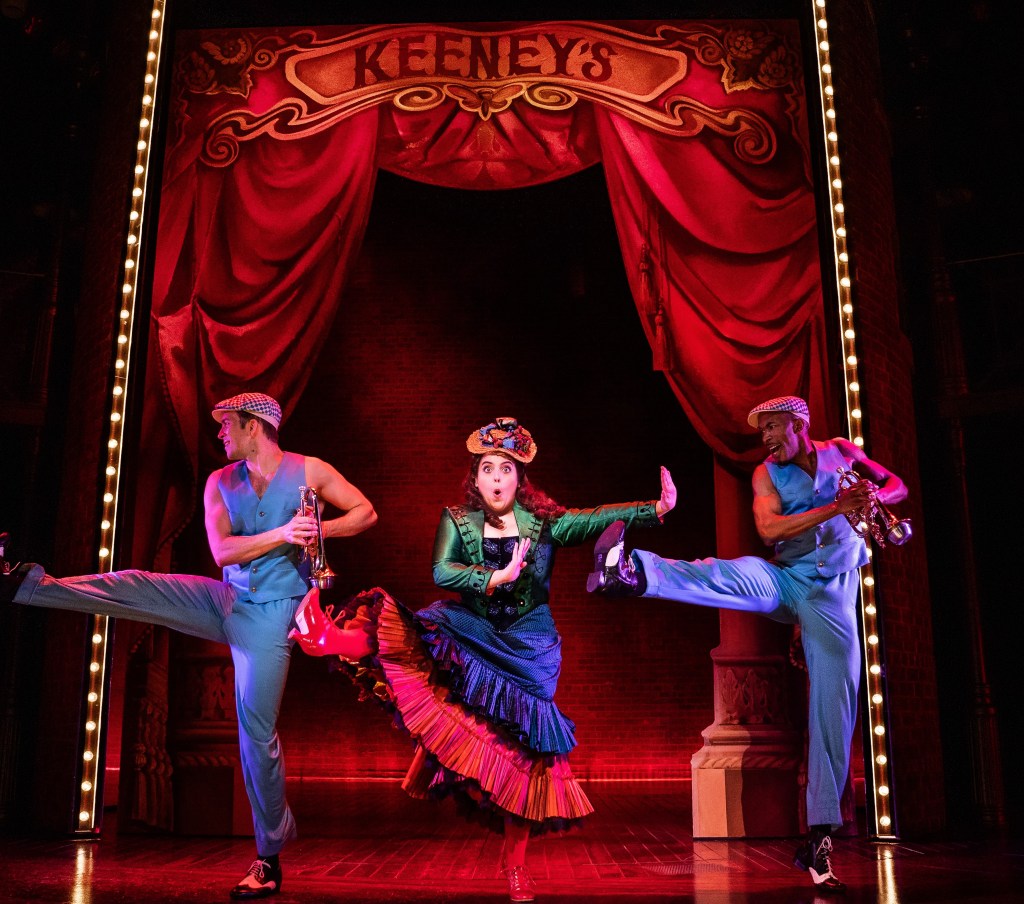
That said it takes a courageous sensibility to attempt to transmogrify the role of the Fanny Brice Ziegfield Follies star away from Streisand’s iconic work, in this first Broadway revival. Kudos go to Beanie Feldstein who stars with Ramin Karimloo, Jared Grimes and Jane Lynch in the Jule Styne (music), Bob Merrill (lyrics), Isobel Lennart (book), Harvey Fierstein (revised book), Funny Girl revival directed by Michael Mayer. Currently, the production runs at the August Wilson Theatre.
Beanie Feldstein has the appropriate determination to portray “the greatest star.” Nevertheless, during specific moments, she appears to be overwhelmed by the complex and profounder transitions the role requires as Fierstein’s book travels in flashback from the opening scene where Fanny gets ready to go onstage. The flashback of her memories follow how she moved from childhood to teen rising star to successful Follies celebrity who becomes an icon in her time. Uncloaked is her first anointing from gambler Nick Arnstein who compliments her on her talent. And as her star rises she becomes worthy of their budding relationship and blossoms, as his star dims and his wealth diminishes. By that time they’ve married.
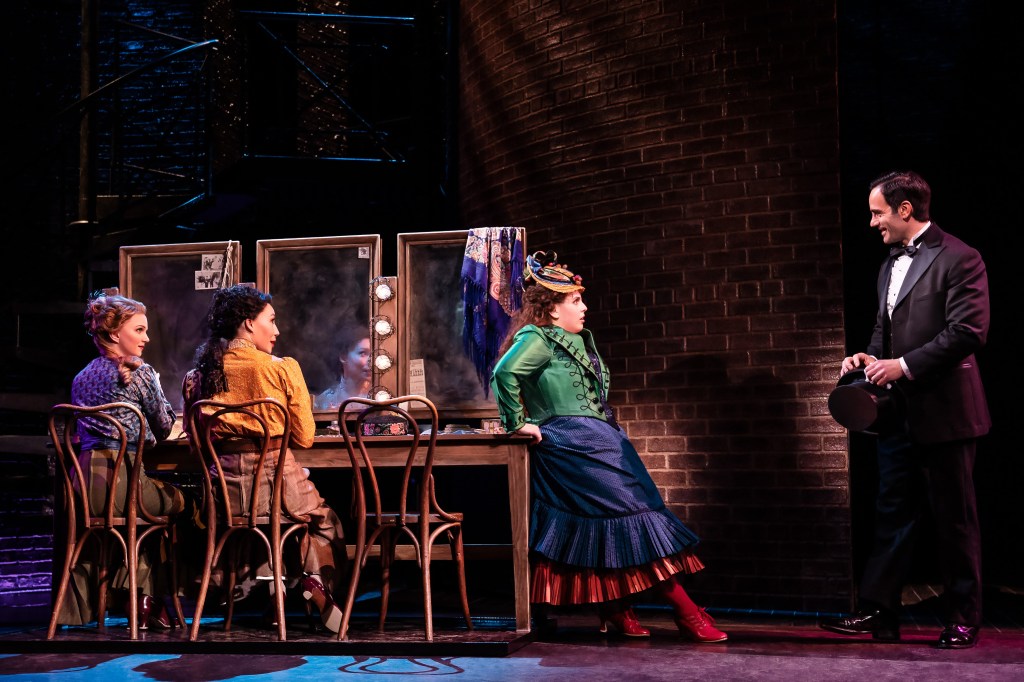
Feldstein is not new to challenges. She debuted on Broadway as Minnie Fay in Hello Dolly (2017). And she has been appreciated and noted for the humorous Booksmart and Lady Bird, and in her role as Monica Lewinsky in Impeachment: American Crime Story.
In the role of Fanny Brice she is uneven at best, at worst out of her kin, vocal acumen, acting talent, comfort/confidence zone. When she teams up with others (“I’m the Greatest Star” (“Reprise), “His Love Makes Me Beautiful,” “You Are Woman, I Am Man,” “Sadie, Sadie,” “Rat-Tat-Tat-Tat”), she shines with capability and confidence. When she carries the song on her own (“Who Are You Now?” “I’m the Greatest Star,” “People,” “The Music That Makes Me Dance”), she skates on thin ice.
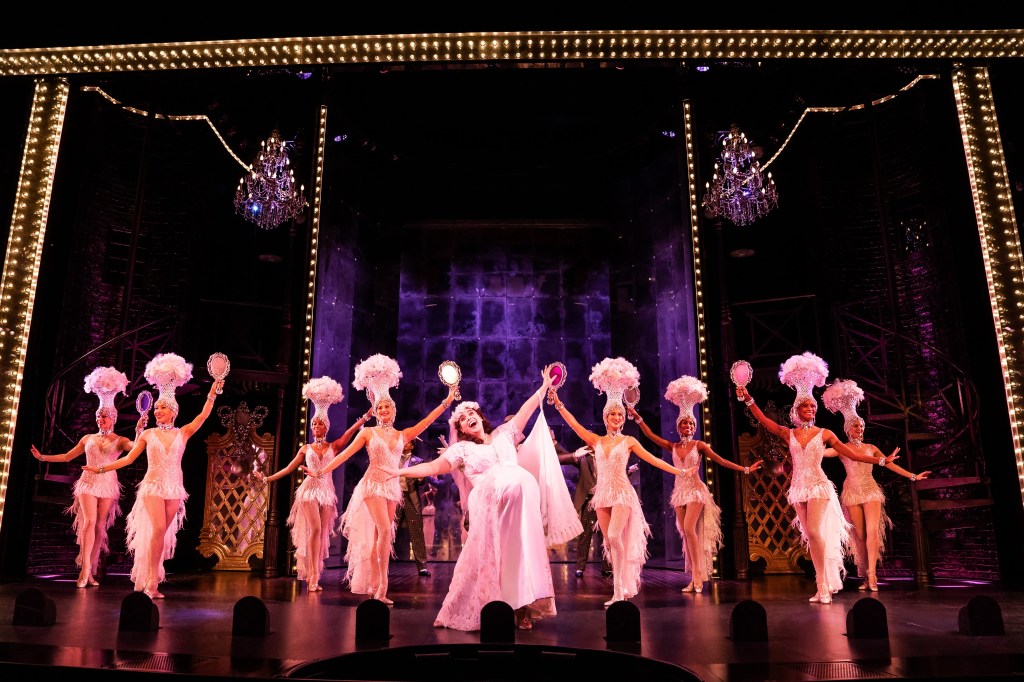
Not fervent with authenticity and the intensity that the role requires with songs like “People” which Fanny sings to convince herself to let go and love Nick Arnstein, who her mother has suggested is a criminal, she isn’t quite believable. However, with the ensemble, Jared Grimes’ wonderful Eddie Ryan and Ramin Karimloo’s suave, alluring Nick Arnstein, Feldstein relaxes and has more fun. Also, with the exuberant Jane Lynch (not necessarily believable as a pushy, Jewish mother), she overcomes herself and more comfortably inhabits the role.
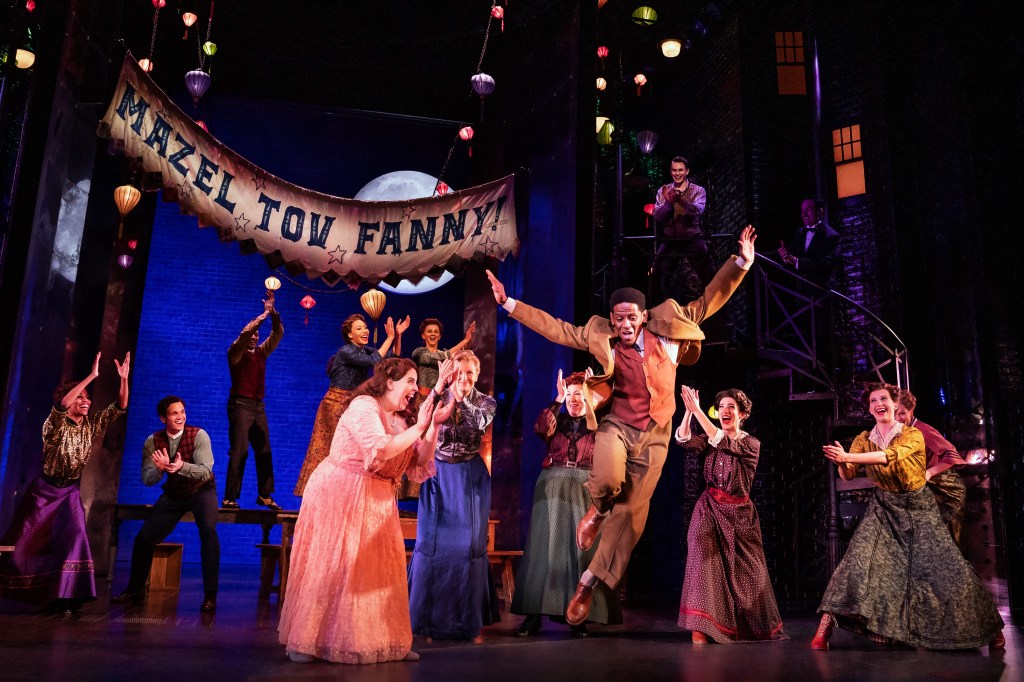
Sometimes Feldstein’s sweet singing went a tad flat momentarily in the first act and became a distraction to the events undergirded in the song. In her attempt to make Fanny Brice her own, certain schtick works if it glimmers, strikes, then vanishes. When it becomes repetitive, the humor loses its “funny.” As such, the youthful Fanny, the bumbling Fanny and the fake pregnant Fanny are clever. She is appropriately, broadly a ham (“His Love Makes Me Beautiful”). As Feldstein takes off on the visual, risque joke, the audience adores it and their adoration sets Fanny off into Fanny Brice stardom, all Beanie believable.
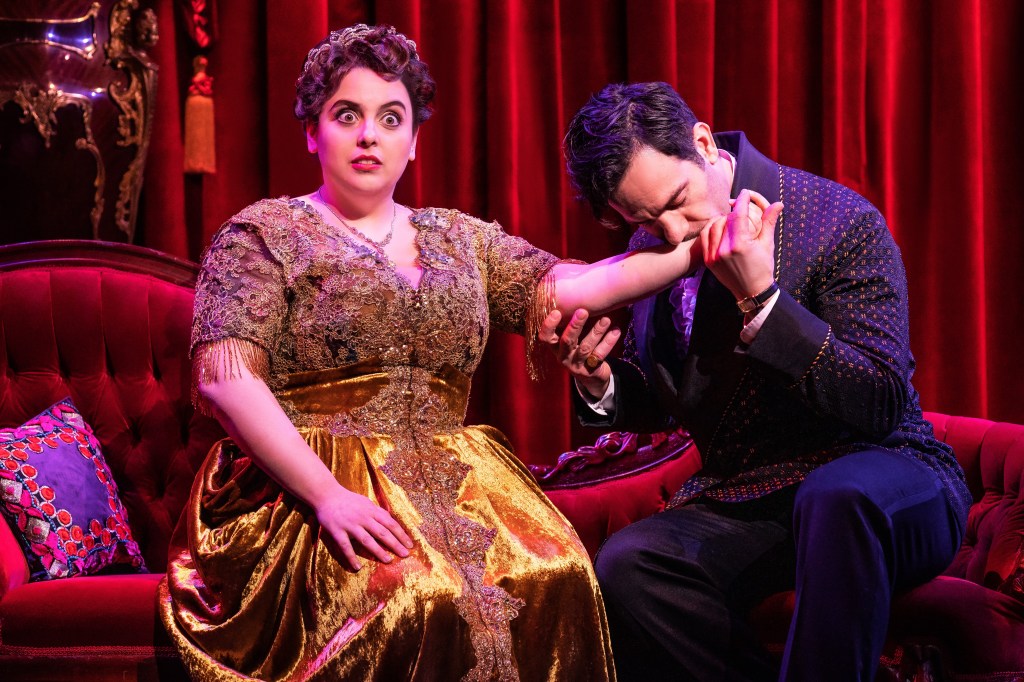
The flashback of the cute, adorable, wide-eyed innocent Fanny, the gutsy star-driven dreamer with heart (“I’m The Greatest Star”), works for a season. When she meets Nick and is with him for a while,, she doesn’t quite transition to charming, sensual, intriguing funny, the lure which entices Nick. Thus, their relationship never moves beyond the girlish Fanny who transforms into the Fanny who is a star that is beyond Nick in success, talent and charm. At some point the “Star is Born” meme should come alive when she exceeds Nick in grace and beauty as a Follies “Great.” Feldstein never quite pulls that off. Nor does she manifest the pain Fanny experiences when Ramin’s Nick and she part ways which leads into the overcomer Fanny who transcends, heartbroken but triumphant.
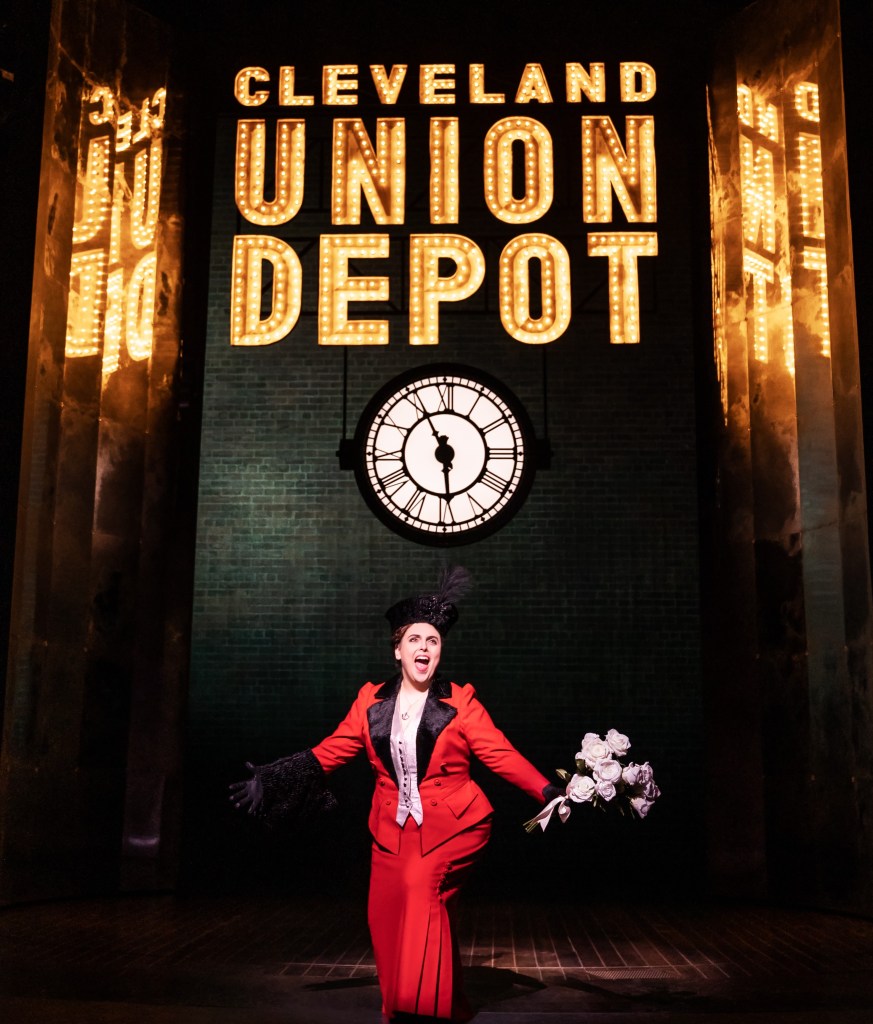
Karimloo’s Nick is gorgeous, fit, debonair and experienced. This superficial ethos lures Fanny like bread does to fresh water fish. In their scenes and songs (“I Want To Be Seen With You,” “You Are Woman, I Am Man,” “Who Are You Now,” and You’re a Funny Girl” that Nick sings alone), both actor’s make sense of these scenes because Karimloo plays the seducer, the lover, the partner who acts upon her as the receiver. Feldstein doesn’t have to do much but “fall” into his arms and be under his spell. And that is easy to do. The women in the audience are standing in her shoes enamored of Karimloo’s aura and sterling voice.
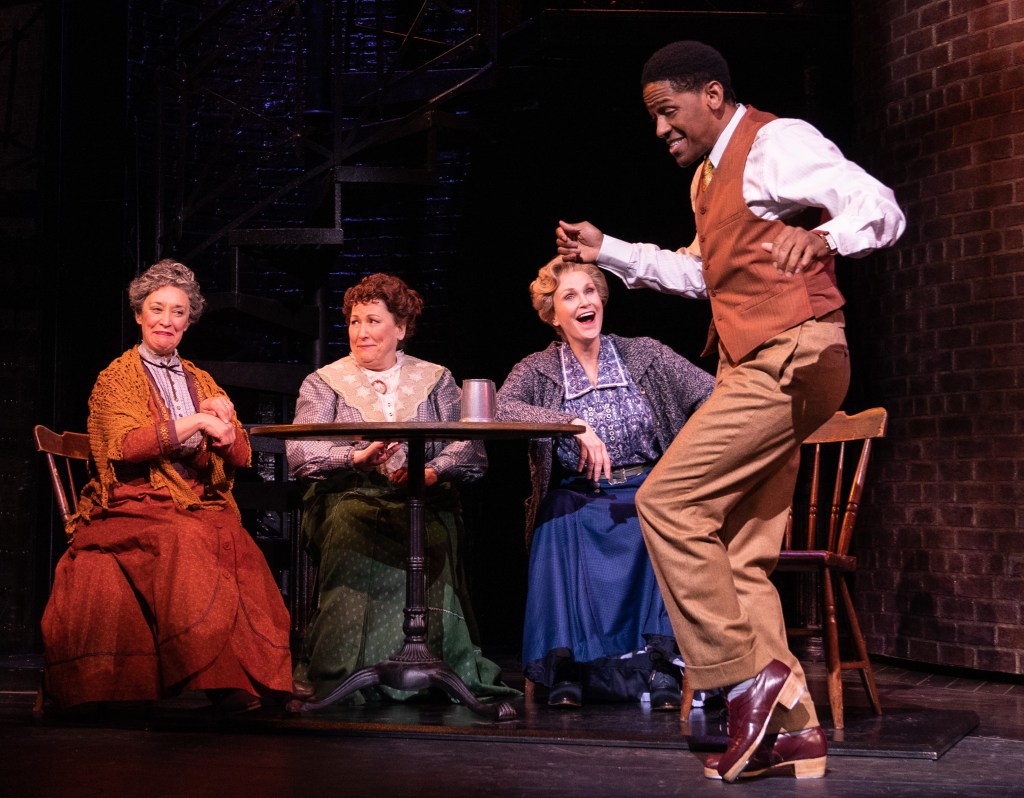
However, the complications of their marriage, seem static and should be predictable but are not emotional as Feldstein’s Fanny doesn’t register that her relationship is dissipating with Nick after she becomes a “Sadie.” Despite all the lovely set appointments by David Zinn’s scenic design for their Long Island home, the irony is manifest. It is not a home because it lacks warmth as Nick’s concern about money takes over.
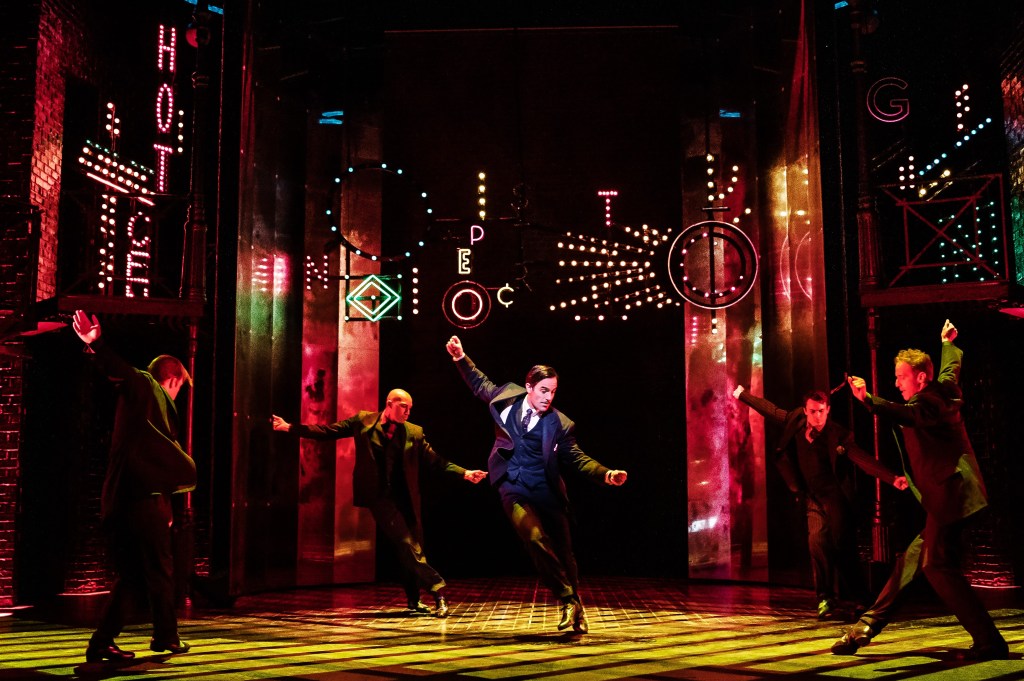
Eventually, even Karimloo (who beautifully sings throughout and does a bang-up job in “Temporary Arrangement”), when Nick sings about his going off by himself to make money…has difficulty with latter scenes between himself and Feldstein. When Feldstein’s Fanny attempts to save their marriage by outtricking a trickster, his response to Fanny’s gambit is interesting, if not lackluster. Nick’s reckless gambling has placed him out of Fanny’s status and wealth. Feeling emasculated when his project goes bankrupt, he is driven back to his criminal ways to recoup, which he never can because he lands himself in jail. The urgency between them in the parting scenes right before his prison sentence and after fall flat. We don’t care all that much about her heartbreak because Feldstein’s Fanny doesn’t seem to either by the “Finale.”
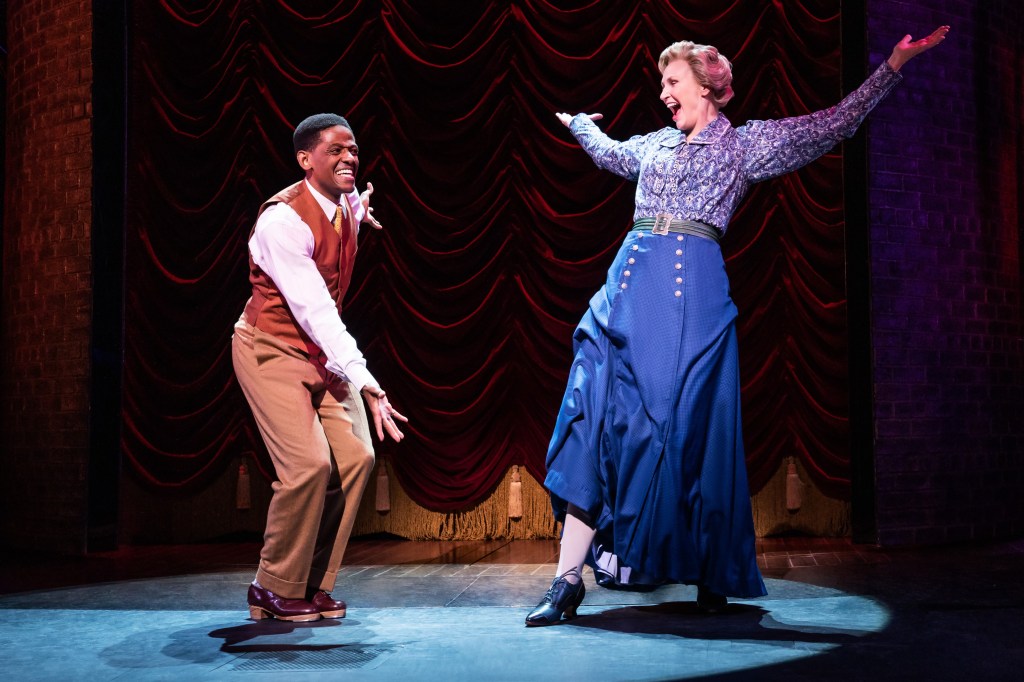
The book has been revised by Harvey Fierstein to streamline Act II which is a fine change-up. Fierstein transfers “Who Taught Her Everything She Knows?” sung by Mrs. Brice (Jayne Lynch) and Eddie Ryan (Jared Grimes) to the second act. Both are super conveyors of good will and have a blast together during the number. Indeed, Lynch’s and Grimes’ numbers are noteworthy as they possess the stage with grace, aplomb and enjoyment that the audience appreciates.
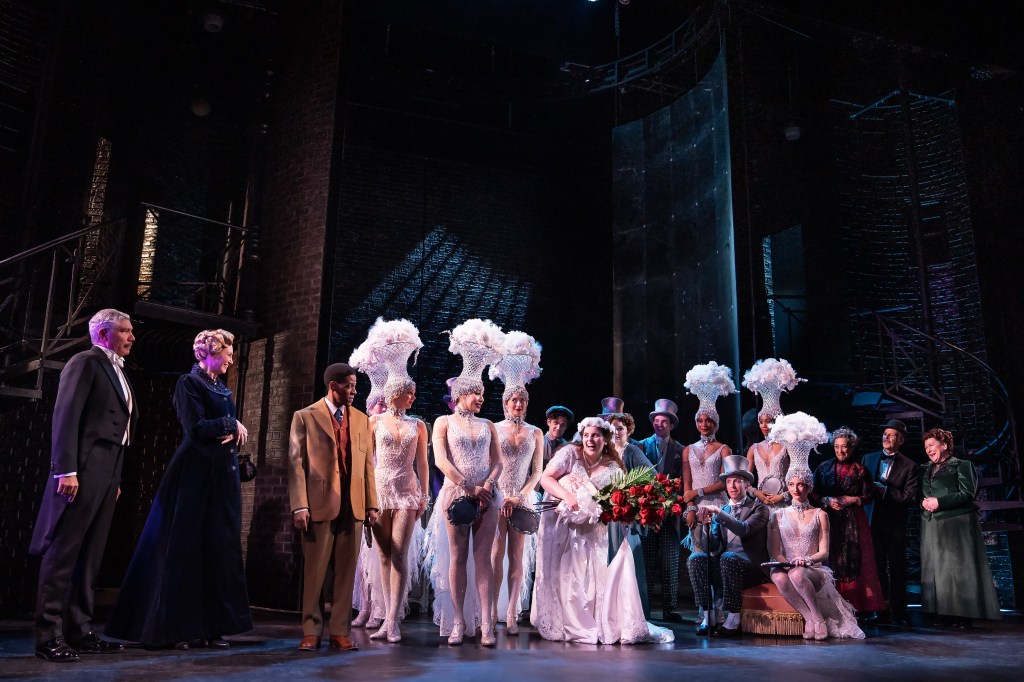
Jared Grimes’ tap is non pareil and brings down the house. Grimes is helped by tap choreographer, Ayodele Casel, who also succeeds in creating a number in which Feldstein shines with the ensemble (“Rat-Tat-Tat-Tat”). Overall the choreography by Ellenore Scott is strongest and most fun in the Ziegfeld numbers supported by the extraordinary costumes by Susan Hilferty with her expansively winged butterflies, shimmering chorus (“Rat-Tat-Tat-Tat”), bridal outfit in “His Love Makes Me Beautiful,” and in Fanny Brice’s outfits nearing the end of the production, reflecting the progressing years after the flashback ends. All are enhanced by the lighting design by Kevin Adams and Brian Ronan’s sound design.
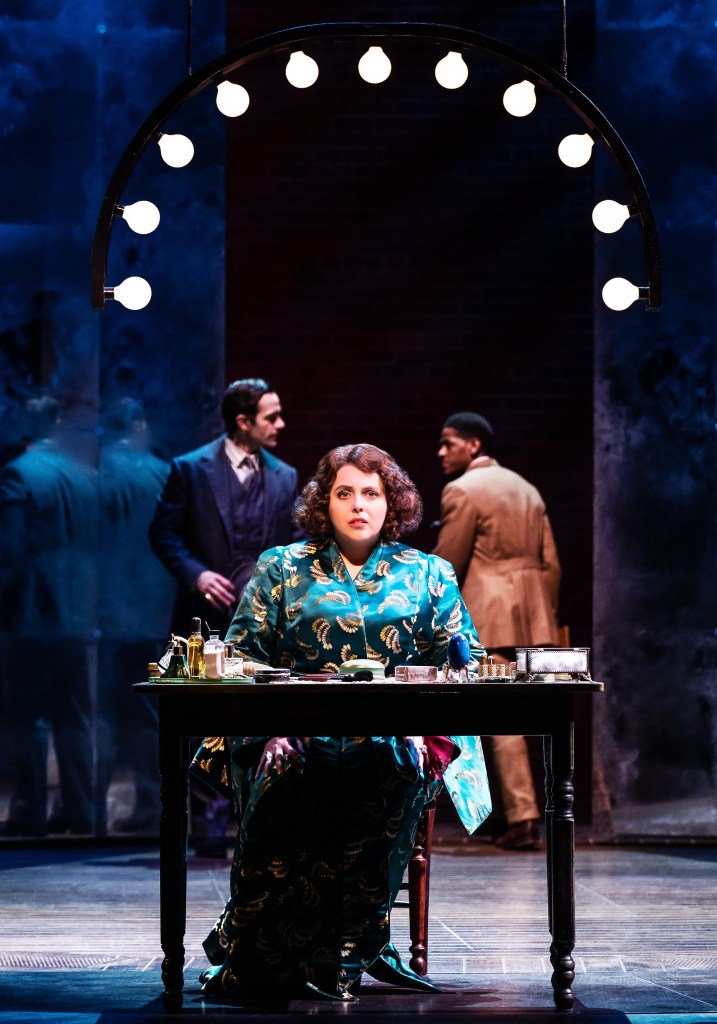
If you have not seen the West End revival of Funny Girl in the UK or at a regional theater, this production bears seeing for a number of reasons. Fierstein’s revised book is excellent and gives a lot of play to the characterization of Nick Arnstein. The entire company and the leads’ team work shines. The music is wonderful and the historic figure of Fanny Brice, a woman who made her career at a time when women had power in theater is something to be reminded of. Brice went on to more success in the entertainment industry in later years. Her life is one to remember.
Final mention must be made about the superb musical team. They include Michael Rafter’s music supervision and direction, Chris Walker’s orchestrations, Alan Williams’ dance, vocal and incidental music arrangements, Carmel Dean’s and David Dabbon’s additional arrangements, and Seymour Red Press’s and Kimberlee Wertz’s music coordination.
The show runs with one intermission. For tickets and times go to their website: https://funnygirlonbroadway.com/
‘Belfast Girls,’ a Powerful, Shining Work at the Irish Repertory Theatre
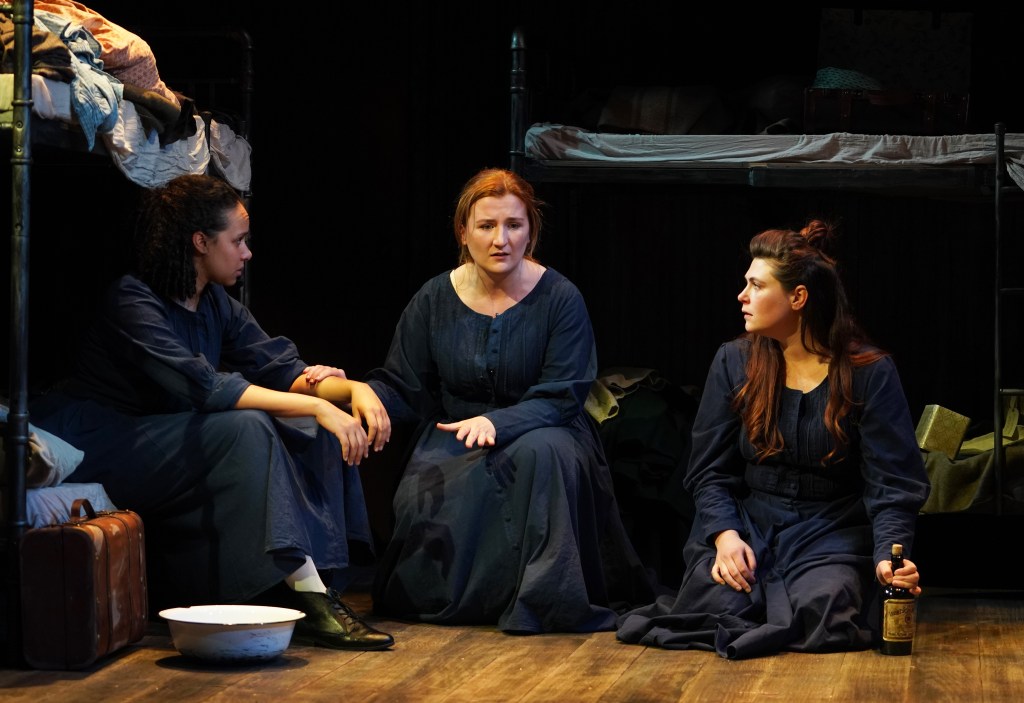
The phenomenal Belfast Girls in its New York Premiere at Irish Repertory Theatre takes place in 1850 during Ireland’s “An Gorta Mor” (The Great Starvation) on the ship the Inchinnan. Five women who have struggled through the Great Famine are chosen to leave Ireland. The trip will take them to the colony of Australia to embark on a better life. With dreams and hopes, the women undergo a three month voyage and mentally prepare themselves for the desires of their heart. What they discover on their journey is a personal and historical truth that they must confront the moment they disembark.
With Nicola Murphy’s incisive direction, the effective and keenly crafted, functional design of women’s quarters below deck (Chika Shimizu) creates a sense of the confined space they endure. The superb cast transports the audience into the minds and hearts of the Belfast Girls, the most raucous, riotous and infamous of the women accepted into the Orphan Emigration Scheme. The Scheme established by Earl Henry Grey in the 1840s sent 4000 orphaned women from Ireland to Australia to relieve Ireland’s overcrowded workhouses and poorhouses from the ravages of the Great Famine.

Under the largesse of Grey’s Scheme we watch as five women from disparate Irish backgrounds bunk together on the Inchinnan and travel for three months down the coast of Africa and around Cape Horn to become “rich” farmers’ wives, servants and workers in Australia.
Jaki McCarrick’s exceptional play profoundly delves into the lives of these five women. All relate the horrors, and organized terrorism of British landlord evictions and burning of homes they’ve seen or experienced. Later in Act II as the truth is gradually revealed to be more terrible, it is mentioned that merchants made money from shipments of grain for export instead of feeding those starving when the crop failed in what has been identified as the Irish genocide. Each of the women at the outset are grateful to be fleeing “An Gorta Mor” raging in Belfast. However, a few regret leaving what has been their home for more than two decades. They are anxious to face the unknown.
The play opens as the women settle into their bunks and unpack their meager belongings. We watch as they change their street clothes to the blue uniform “orphan” dresses the matron and officials have given them to wear on their journey. Immediately, from their behavior and accents we understand these women are from different backgrounds, ages and environs.

Judith Noone (Caroline Strange), a Jamaican mixed-race woman drips worldly experience. She exposes the fact that Ellen Clarke (Labhaoise Magee) and Hannah Gibney (the golden voiced Mary Mallen) are public women/prostitutes, despite their pretensions that they have lived otherwise. Importantly, with a sense of autonomy as sex workers, these three have staved off death and starvation where others, bound up by religion with no way out, died and were buried in mass graves. Of all of the five “orphans,” Caroline Strange’s Judith, is the most grounded, authentic and realistic. Blunt and directed, she is a natural leader who chides and commands the rest of the women, reminding them of their purpose to rise up from the lower classes to respectability and success, so they might forge a new identity with this incredible opportunity.
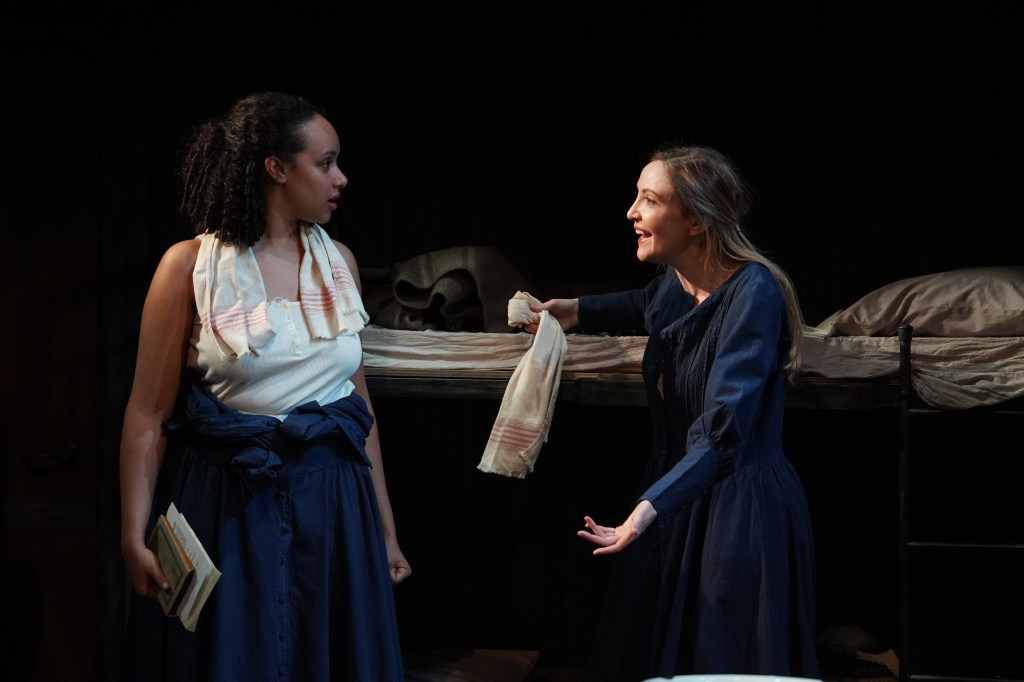
Gradually, as we watch their interactions and the dynamic of the group as they squabble, insult and demean each other with words and sometimes with blows, McCarrick reveals that each woman, save Judith, is unable to confront the dark hell of guilt and self-loathing within. It is obvious that they’ve had to compromise their autonomy, integrity, goodness and self-respect living a life of extreme self-loathing as men’s footstools. Clarke and Gibney are familiar with each other as they throw epithets and verbally attack each other’s vulnerability. Judith is no less insulting in reminding them that they must control themselves and not be physically easy with the deckhands and men on the ship because an unwanted pregnancy will destroy their chances to meet accessible men and marry. Clearly, Clarke, Gibney and Judith have shared understanding and experiences that have been traumatic and soul-crushing.
On the other hand Sarah Jane Wylie (Sarah Street, and the day I saw the production, Owen Laheen) is quiet and mild-mannered. She stays to herself, sews a bonnet and doesn’t interact or insult the others, initially. She shares that her brother has been in Australia for almost two years and has encouraged her with stories of success and the promise of a land of prosperity and goodness.

Into their midst comes another girl whom they must make room for in their small living space before they sail. Molly Durcan (Aida Leventaki) is from Sligo. The others attempt to make her as comfortable as possible, though she is not in a bunk bed. They give her a piece of bread which she devours immediately; her frail and extremely thin body indicate the troubles she’s experienced. As they rearrange their living quarters, the ship is leaving port and a few go up to say goodbye to Ireland for the last time.
Judith forthrightly declaims she will never miss Belfast and plans to bury all of the memories in her new life and identity in Australia. She suggests the other women do the same. Hannah Gibney forgets her misery and is sentimental, putting “a false tint” on her life in Belfast. Judith confronts Hannah with the truth. She tells the others that her father sold her into prostitution for alcohol and must forget the terrors of a culture which provokes such behaviors. This revelation strips away Hannah’s pretense and denial. Judith encourages her and the others to redirect and focus on her new goals and new life in Australia. During the three month voyage, they must mentally prepare themselves with plans and goals for their future.
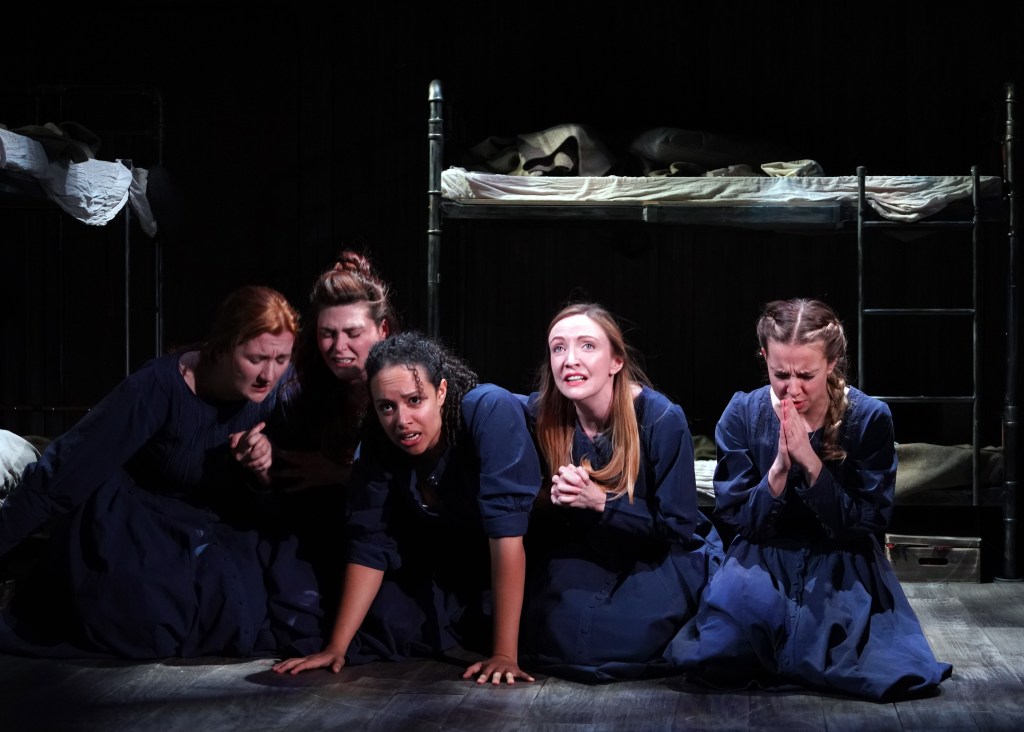
Mallen’s and Strange’s performance of this scene make this into an important moment. Not only do we understand their mixed emotions, though the life they leave behind is full of misery. Nevertheless, it is the only life they have known. Now, they face uncertainty. They haven’t read any travelogs to understand what they will be up against because there are none. And indeed, Hannah can’t read. When the ship leaves port, there is no turning back.
McCarrick identifies the dangers of the emigrant experience which still pertains today (exploitation, uncertainty, loss of identity). She highlights two important conditions for these women. They have been prostitutes plying their trade and skills as the only skills they know. Secondly, they are third class citizens. Though Hannah speaks of the Englishman that she will marry, rejecting her own nationality, this fantasy is an extreme that the other women point out to her.
We realize these women are naive; they are not prepared for what is going to happen to them, floating on a “wing and a prayer.” That it will be anything but a bed of roses is inferred by the irony of Hannah’s hopes, the vacancy of the other women’s responses and the hidden clues in McCarrick’s writing.

What is clear is that each of them has already “jumped off the cliff into the unknown.” Hoping for something better is the tremendous risk they take, born out of courage to seek freedom from the enslavement of poverty, paternalism and oppression by the British in Ireland. However, will they be able to continue with the courage of their convictions in Australia?
When Molly sees a rat by her sleeping space in the middle of the night, other arrangements are made. Judith softens her persona and allows her to join her in her bunk away from the rat. Thus, begins a relationship between the two women which the others may or may not be aware of that blossoms into love and affection. The intimate scene between them is beautifully, tastefully directed by Murphy and the fight and intimacy director Leana Gardella.
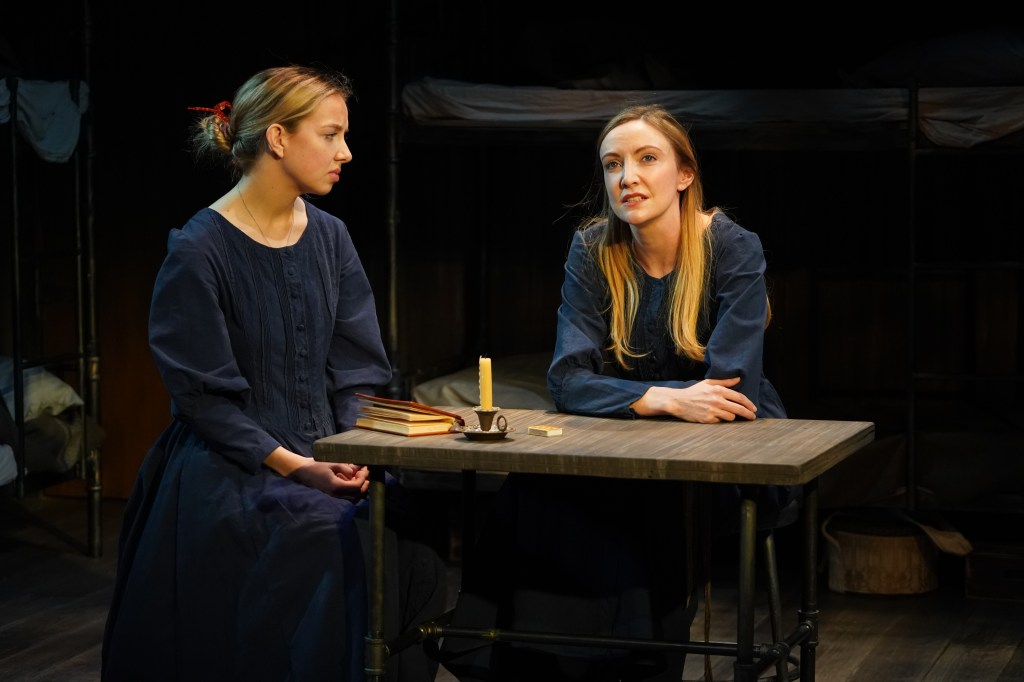
However, there is the danger that the Catholic judgments of the other women will censure and condemn the lovers. As it turns out Judith becomes Molly’s protector and Molly gives Judith her books, one of which includes the writings of Marx and Engels. Reading these, Judith begins to understand what Molly mentioned to them when she first arrived.
Women deserve their own rights and autonomy. In fact as Molly discusses her bold yearning to become an actress and play Puck, she also reveals that in other areas of Europe and the United States, women are gathering in groups and organizing for the right to vote. And women are speaking out against male chauvinism, paternalism, colonial oppression and exclusion which keeps women powerless. Judith’s knowledge grows and we understand that she and Molly have formed a close bond. At the least, the others begin a period of enlightened freedom they were never aware of before they boarded the Inchinnan.
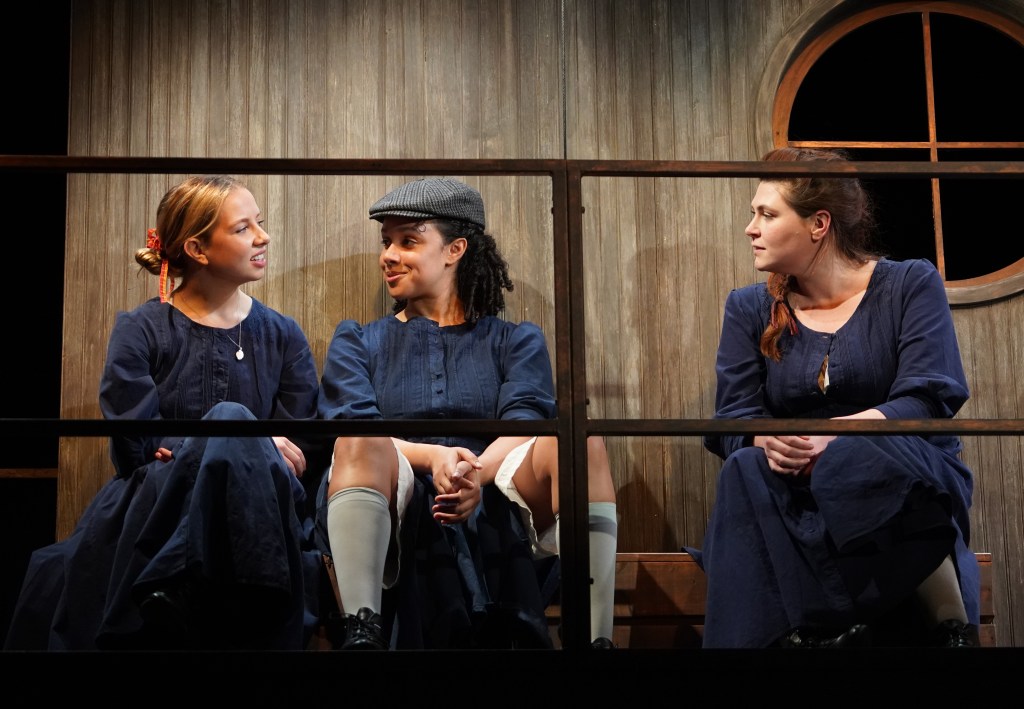
However, in Act II all of what has been a hopeful blessing on the voyage as the women begin to grow their new, free identities, is upended during a roaring storm at sea. The storm’s effects are stylistically staged and shepherded by Murphy with the help of the movement director Erin O’Leary. As the women pray together for support during the frightening hurricane that threatens to swamp the ship and kill them, another storm breaks out among them. Tensions and tempers rage. An unimaginable lie is exposed. The revelation destroys and exposes all of their lies. Judith who has become her own person and lies for no one, attempts to ameliorate the emotional explosions of the women against each other to no avail.
This is no spoiler alert. Act II brings a magnificent resolution to the mysterious threads that have been left undone in Act I. The violence that occurs is shocking and believable. The sound and lighting designers (Caroline Eng, Michael O’Conner) do a wonderful job of striking our imaginations with the storm’s effects. They help to create the terror in the scene and the resulting aftermath.
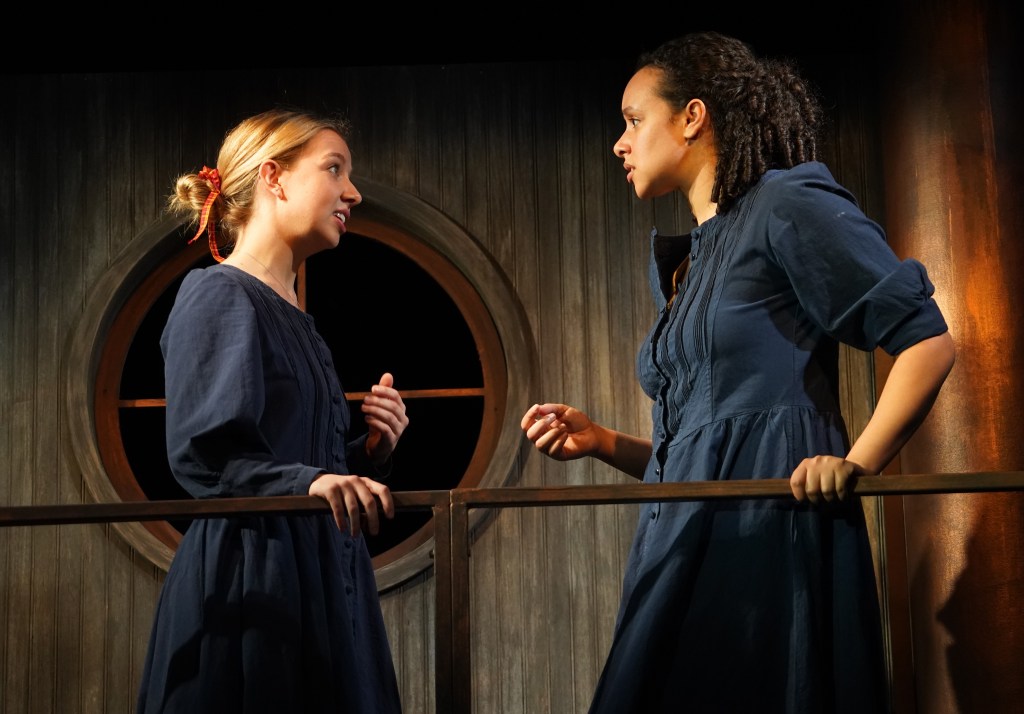
By the conclusion Judith puts the mysterious pieces together of why Earl Henry Grey has created the Emigration Orphan Scheme with the clerics. The final blow of reality is made manifest which Judith and perhaps Sarah and Ellen understand, but Hannah is too broken to receive. Nevertheless, Judith affirms she will never give up on her hopes and new found self-empowerment on the Inchinnan. She is resolute and will continue to take care of Molly Durcan and nurture her with her love. Confronting her own lies and devastation, Sarah becomes more accepting and forgiving. However, it is Ellen who leaves us with the most vital of thoughts. “Who knows what dreams were born on the Inchinnan. If it’s not us who will have those freedoms you talked of…then maybe our daughters will…”
Belfast Girls is rich with history and incisive with characterizations that keep us engaged in this real drama of passion, anger at injustice and powerlessness and hope. The characters are portrayed with spot-on authenticity, by the wonderful ensemble. Kudos to Gregory Grene the music consultant who drew on the songs “Sliabb Gallion Brae,” “A Lark in the Clear Air,” “Mo Ghile Mear” and “Rare Willie,” all traditional Irish folksongs. Kudos to all the creative team and to China Lee, responsible for costume design and Rachael Geier for hair & wig design.
This is one to see, especially if you have Irish ancestors. If you don’t, but have ancestors who emigrated on ships that crossed the oceans to bring their progeny a better life in a more prosperous setting, the experience depicted in this production is directive and should draw you to learn more. For tickets and times to see Belfast Girls at the Irish Repertory Theatre go to their website: https://irishrep.org/
 CAROLE DI TOSTI