Blog Archives
‘Tammy Faye,’ Starring Olivier-winner Katie Brayben in a Thematically Charged Musical

Tammy Faye
Tammy Faye, with music by Elton John, lyrics by Jake Shears and book by James Graham stars theater heavyweights Katie Brayben, Christian Borle and Michael Cerveris. All of them are letter perfect in the roles of Tammy Faye Bakker, Jim Bakker and Jerry Falwell. Considering that the show is about the rise and fall of the hugely successful PTL Christian network headed up by televangelists Tammy Faye Bakker and Jim Bakker, the production’s chronicle of a complex period in America’s sociopolitical and religious history is ambitious. Currently at the newly renovated Palace Theatre, Tammy Faye runs until December 8th.
For some, the production is hard to swallow. This is unfortunate because its themes are vitally connected to our country. Also, it is a satiric, entertaining new musical whose theatricality coheres in director Rupert Goold’s vision shepherding a fine ensemble and creative technical team. Because I have a familiarity with the Christian evangelical church and, in fact, went to the same church that Jessica Hahn went to during the PTL scandal, and knew and spoke to her, I have a different perspective. Arguably, I may be biased in favor of the musical. That must be considered when reading this review.
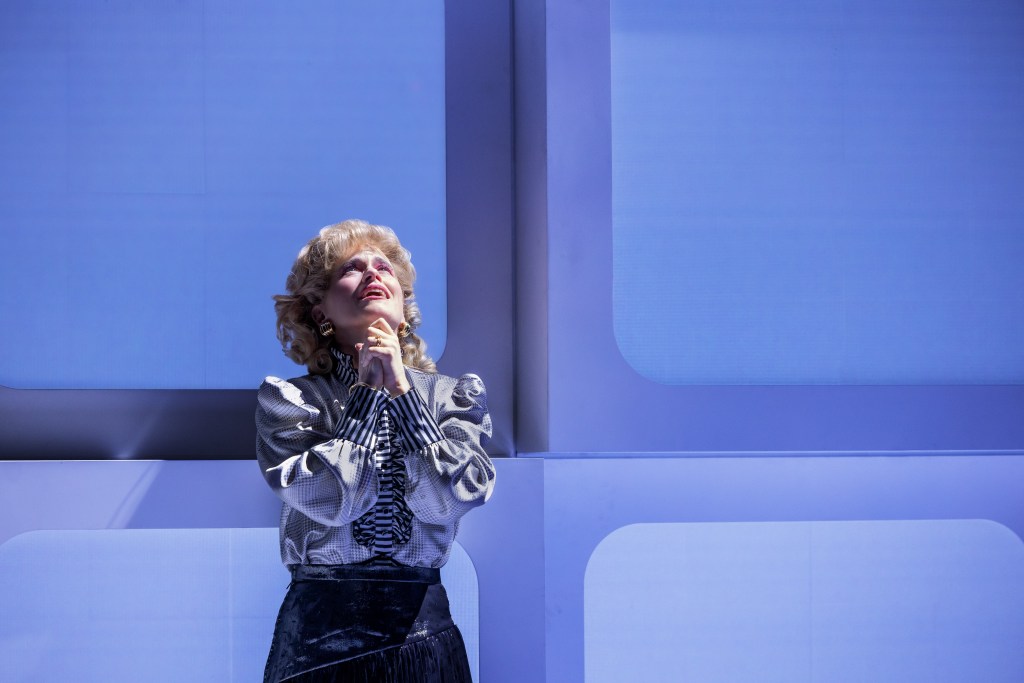
With choreography by Lynne Page and Tom Deering’s music supervision, arrangements and additional music, Tammy Faye presents a fascinating picture of individuals who currently are not held in high esteem. Only one comes out on top as James Graham’s book characterizes her and as the phenomenal voice and acting chops of Katie Brayben performs her. Singing from a core of emotion and heart, illustrating Tammy Faye’s trials of faith, Brayben belts out numbers that overshadow the real Tammy Faye’s voice. These high-points in Tammy Faye’s emotional journey include “Empty Hands,” “In My Prime Time,” and “If You Came to See Me Cry.”

Katie Brayben gives a bravura performance
During these dynamic and compelling songs, Brayben’s Tammy Faye reveals the depth and impact of her betrayal by husband Jim Bakker, as she attempts to find a way forward for and by herself. Not to be underestimated, Tammy Faye is a maverick among the Christian women of the church, a portrayal that we see time and again as she speaks out, despite Christian pastors trying to shut her up. Sharing her opinion at a conference with Billy Graham (Mark Evans), in a beginning flashback of “how it all began,” we note her courage at a time when women took a back seat to any form of leadership. Billy Graham encourages her as the new generation of spiritual warriors in front of a patriarchal, oppressive, conservative group of pastors.
From then on we see her emerge despite being dismissed by the pastors who become the hypocritical villains of Tammy Faye and who sadly lead the way for the massive hypocrisy present in the white supremacist leaning evangelical church today. The Falwell types and white supremacist pastors turn a blind eye to the bullying hatreds and criminality of the MAGA movement they undergird in supporting Donald Trump. Trump’s controversial presidency is in his violating the tenets of Christianity and patriotism. Indeed, he is an alleged pedophile consorting with friend Jeffrey Epstein. He is Putin’s asset who has undermined our election processes twice, and most probably cheated and defrauded the American voter to elicit a “win,” in 2024 (see the Mark Thompson Show on YouTube). He adheres to Putin’s guidance regarding NATO, and on a personal note to emphasize his “godliness,” he’s a lying adulterer and admitted sexual predator (the Hollywood access tape), many times over, in cover ups much worse than Jim Bakker ever committed.

Tammy Faye reveals how we got to the current politics of evangelism
Importantly, for those who would understand how the US “got here” with the rise of evangelism and a brand of political Christianity that belies the true tenets of Jesus Christ’s sermon on the mount, and “Love thy neighbor as thyself,” Tammy Faye gives a crash course in hypocritical Christianity that is right out of St. Paul’s letters to the hypocritical church in Corinthians I and II. It’s interesting to note that over two thousand years later, nothing changes much. Judgment, criticism and condemnation are alive in the human heart and in venues that are supposed to be uplifting the opposite and preaching Christ’s message of love.
Goold stages the production with scenic designer Bunny Christie’s “Hollywood Square” back screen and other projections (video design by Finn Ross), to emphasize the importance of TV to the rise of global evangelism in the 1970s to the present. When the PTL live program is not being taped with dancers and singers, other scenes reflect the importance of satellite TV in the square/screen motif in which appear the various players. Always present as a backdrop are the TV screens reflected in the grid of boxes strikingly lit by Neil Austin that represent what obsesses the actions of the preachers, the Bakkers and their employees (“Satellite of God”). The electric church was televised globally via satellite and its reach was and is expansive, though the screens became smaller on phones after streaming WiFi.
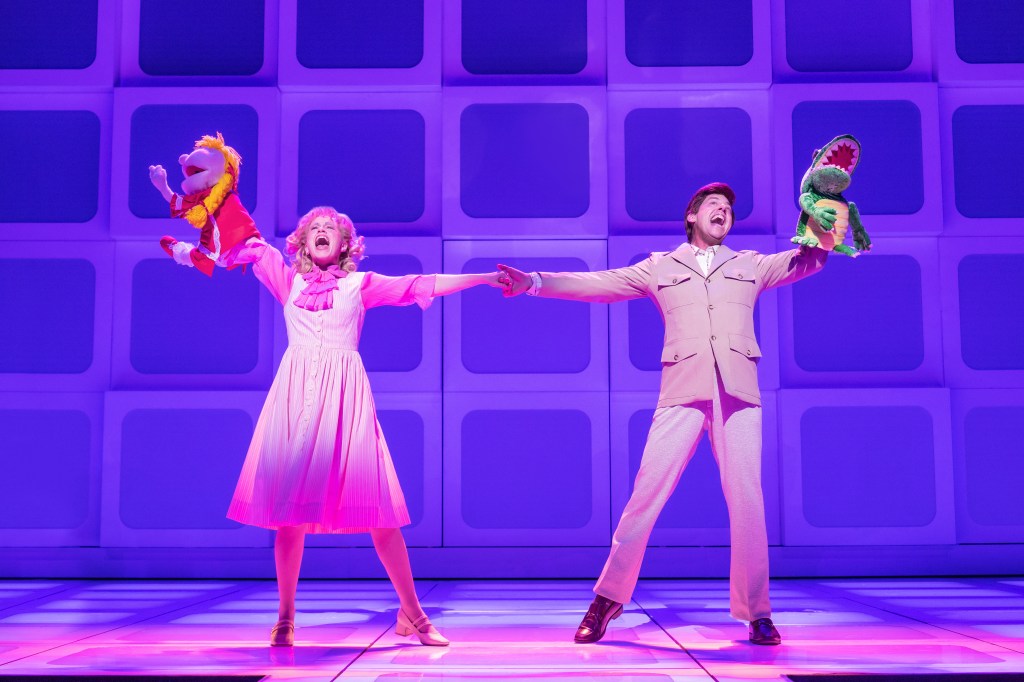
In its symbolism and its wayward themes of church leaders and politicians making damaging and unconstitutional bedfellows, Tammy Faye does its job perfectly, thanks to its creatives. And for that it has received its due misplaced disgust at a time in our nation when Americans have no more patience for hypocrites, scammers and thieves, especially those who profess “Christianity” and lie, cheat, steal, condemn, oppress, restrict, torment and insult as their brand of fun and sanctimony. Hello, Speaker Mike Johnson, Jim Jordan and JD Vance. Nevertheless, Tammy Faye is a vital musical of the time and should be seen for Elton John’s striking music, its irony in how the hypocrites dance around their own lies, and its themes which are more current than ever.
Graham’s book elucidates a version of PTL worthy of note
Book writer James Graham elucidates a version of what happened with PTL that is worthy of note. Laying the blame on the inability of the Christian Church to be united under the first two commandments that Christ preached (love God, love your neighbor as yourself), Graham reveals how Tammy Faye tried to bring disparate groups together with love, but failed. Additionally, to that point, if Tammy Faye had been part of the back room financial arrangements, the fraudulent situation with Heritage Village might not have gotten completely out of hand (“God’s House/Heritage USA”). Indeed, Heritage Village was Jim Bakker’s idea, and clearly, its idea development was mishandled and mismanaged.
Finally, we note that Jim Bakker, whose feckless leadership causes their collapse when he relinquishes PTL and the TV network to Jerry Falwell. With smiling duplicity and treachery, Falwell promises to help the Bakkers get on their feet again and pay their expenses. Tammy Faye warns Jim not to listen to Falwell whom she has always distrusted and deemed a self-serving, condemnatory, hypocritical preacher of hate. Tammy Faye’s unheeded warning proves correct. With his lies, misinformation and mischaracterizations, Falwell upends any goodness the Bakkers accomplish, defames them publicly, and kicks them out of the Christian fellowship for the “good” of the conservative church and himself.

The difference between preachers and preachers
The book underscores the difference between Tammy Faye and Jim, and the other preachers from conservative churches. Falwell (a dynamic Cerveris), Jimmy Swaggart (Ian Lassiter), Pat Robertson (Andy Taylor) and Marvin Gorman (Max Gordon Moore), demean Tammy Faye and Jim Bakker’s way of bringing people to the Gospel. They tolerate them, believing they will fail and are surprised and shocked at their success. Falwell’s massive ego can’t bear to see another preacher in his sphere of influence doing better than he. Not only does Falwell compete for viewership, he goes on their program and insults them attempting to send a message to church goers that they are not of God.
The turning point comes at the prodding of Ted Turner (Andy Taylor), who is concerned about PTL’s finances plummeting because of overspending. Part of the reason Turner suggests the program needs an uplift is because the love and charisma in Tammy and Jim’s relationship has cooled and viewers sense something is wrong. Even friends Paul Crouch (Nick Bailey) and Jan Crouch (Allison Guinn) warn them. At this point in time Tammy has learned of Jim’s infidelity with Jessica Hahn (Alana Pollard), and though he repeatedly asks for forgiveness, Tammy finds it difficult. Increasingly, she relies on prescription pain medicine to anesthetize herself which staff preacher, John Fletcher (Raymond J. Lee), sometimes gives her.
When Tammy strikes out on her own without Jim to carry a show, she draws greater audience viewership which Ted Turner praises. In a heartfelt satellite interview, she speaks with gay pastor Steve Pieters (Charl Brown), about having AIDS. Her public action is courageous. She hugs Steve and accepts him with love into Christ’s fellowship, an anathema to conservative Christianity which condemns gays and believes AIDS is God’s punishment for their sinful homosexuality.
A meeting sealing the fate of PTL
Falwell and the other ministers have a confidential meeting and Falwell even phones President Ronald Reagan (Ian Lassiter), who never acknowledged or worked to stem the AIDS crisis, despite having a gay son and working with gays when he was an actor. Of course, Reagan’s hypocrisy and need for the evangelical church to endorse him is why he speaks to Falwell. In another inflection point, we see the division between church and state morph into an unholy matrimony of religious politicos washing each other’s hands despite the historically traditional separation between church and state.
Thus, Reagan’s public uplifting of the evangelical community via Falwell and others provokes a sea change in the sociopolitical and cultural direction of the nation. The growing intrusion of religion into politics becomes the foundation of constitutional human rights’ reversals seen today, which are particularly uplifted in MAGA states.
Reagan and conservative evangelism, for the voting block-merging church and state
With Reagan in their corner, conservative religious leadership agrees that PTL is moving in an unGodly direction. Falwell and the other preachers see the Bakkers are headed for disaster and they give them a push when the opportunity arises. For example, they get prominent PTL member John Fletcher to turn on Bakker. He sets up Bakker with Hahn, then leaks information when Falwell threatens to expose him of his “infidelities” with gay men if he doesn’t play ball. Falwell also tips off the Charlotte Observer whose reporter Charles Shepard (Mark Evans), investigates the financial arrangements of PTL and finds them to be indebted and insolvent. The situation boils over in “Don’t Let There Be Light.” Tammy, Jim and Jerry recognize their shameful actions and pray that they will not be exposed.
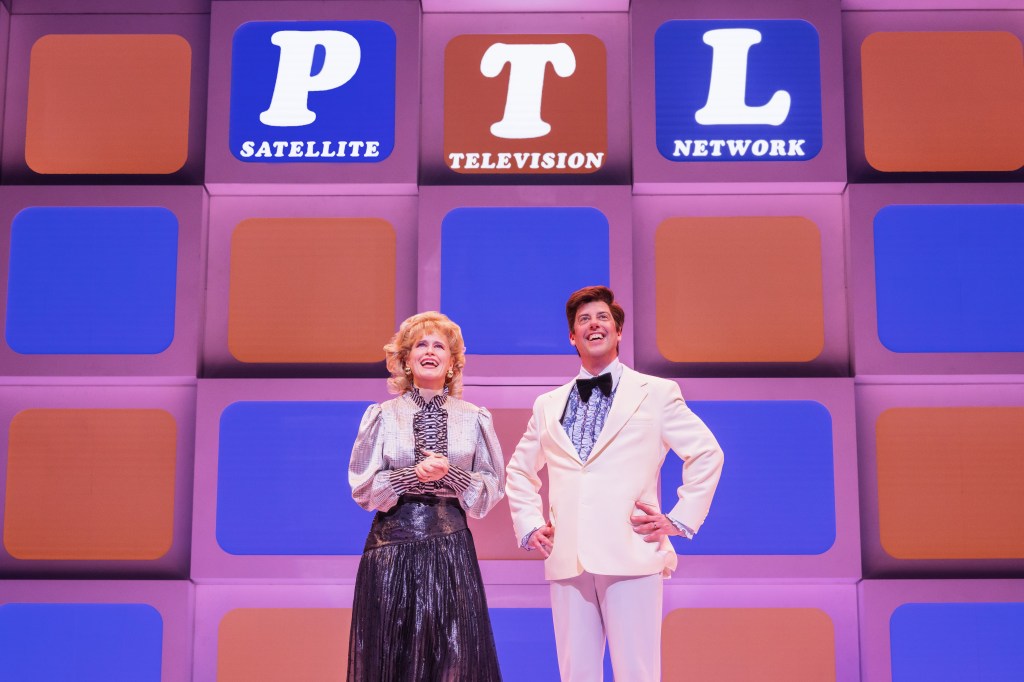
Of course, they are all exposed and vilified by the press and other church leaders. One humorous scene involves Pope John Paul II (Andy Taylor), Mormon leader (Thomas S. Monson), and Archbishop of Canterbury (Ian Lassiter), staged in window squares raised to a higher level above the stage ironically. From their lofty positions, they comment on the troubles of the “electric church” and the Bakkers. Meanwhile, elements of the same unloving hypocrisy are present in their congregations. The pederasty, pedophilia and horrific abuse of the Catholic church is yet to be revealed by the Boston Globe and is still being revealed in the Irish Madeline Laundries and Mother and Baby Homes. Certainly, the church memberships fall off in the Mormon Church and the Church of England. Congregants loathe the leaderships’ hypocrisy.
Acting hate not love
Falwell, Robertson, et. al., end up backbiting each other with hate and jealously. A desperate Bakker, beyond Tammy’s counsel, gives the PTL reigns to Falwell after Tammy learns Jim paid hush money to Jessica Hahn. The scandal widens the more the Bakkers give interviews to defend their positions. In Falwell’s hands, PTL goes bankrupt and is closed down. Tammy divorces Jim and other pastors’ infidelities are exposed as Bakker ends up in jail (“Look How Far We’ve Fallen”). The biased judge ridiculously throws the book at Bakker when murderers are even given lighter sentences.
Eventually, the conservative hypocritical Falwell and Pat Robertson follow in Reagan’s footsteps and run for the presidency. Indeed, their great piety is a sham as they attempt to vault their notoriety to the White House and reap untold rewards, but fail. Unlike Donald Trump who has defrauded his way there again with the treasonous help of various conservative think tanks, True the Vote’s voter challenges in Georgia, voter suppression in swing states, Elon Musk and Putin, Falwell and Robertson’s reputations preceded them and they were rejected as candidates.
Nevertheless, the evangelical Christian movement had an established foothold in politics. The country then wasn’t ready for a conservative, religious president. Now, the MAGAS, building on white supremacists and overturning Reagan’s legacy, have evolved to the point that with Putin’s foreign interference paying influencers to promote misinformation, Trump has become their acceptable, religious MAGA god/autocrat. Despite what Trump/MAGAS/Putin and a complicit press would have voters and the world believe that Trump received “great” voting support, over half the voting public of both parties doesn’t agree with MAGA/Trump’s religious, conservative, oppressive and autocratically unconstitutional mandates. Most probably, if there had been a recount, the results would have revealed otherwise. Better to let sleeping MAGAS, Trump, Putin and others lie.

Favorable reviews in London, bad timing in Manhattan
The show, which originated two years ago at the Almeida Theater in London, received favorable reviews. Opening here at the time it did proved unfortunate because of its subject, a conservative evangelical church, now associated with Donald Trump: a twice impeached, three times indicted, one time convicted criminal, who attempted to overthrow the 2020 election with some of their help via militias and the support of Clarence Thomas’ wife Ginni Thomas.
From Reagan and Falwell and PTL televangelism to the racist, xenophobic, misogynist, MAGA Christianity of today, the conservative brand of evangelicalism has blossomed into “acceptable” white supremacy, oppression, hellfire condemnation and tyranny toward other religions and people of color. Is there any wonder that Tammy Faye, opening around the 2024 election, is a brutal and noisome reminder of what lies, misinformation and money do for those in power, who stir up hate, work unconstitutionally and divide even their own believers from patriotism and the love of God?
Important takeaways
Positive takeaways are the show’s performances which are sterling, especially the leads. The technical team under Goold’s guidance manifests his vision for the production. The book glosses over a complicated series of events (one of which never shows the other side of Jessica Hahn’s professed “virginal innocence,” nor the role her Long Island pastor played in strong-arming the PTL board to pay her hush money).
However, the production does manage to portray one individual, regardless of her psychic flaws, who preached love instead of messages of hate and condemnation (“See you in Heaven”). Tammy Faye did this at a time when standing up for individuals with AIDS was anathema to the general public, let alone Christians. Hers was a courageous, heartfelt stance as an independent Christian church woman. who, alone, went out on a limb to mirror God’s love and show how Christians were supposed to support and help one another.
I heartily recommend this production, especially for those who are interested to understand how evangelism became involved with our politics, despite the supposed separation of church and state. Tammy Faye runs at the Palace Theatre with one intermission until December 8th. https://tammyfayebway.com/?gad_source=1 It’s a shame it is closing so soon.
‘Support for Artists: The Bret Adams and Paul Reisch Foundation Grants’

Bret Adams and Paul Reisch Foundation (courtesy of their website)
Each day the COVID 19 pandemic takes another swipe at the New York theater community as notifications of deaths (playwright Terrance McNally, actor Mark Blum, former Drama Desk President William Wolf) darkly bloom. Theaters will remain closed for the end of the month and most probably into the summer, if state and federal projections are to be believed. Thus, we wait and create and pray supporting each other with phone calls, emails, social media posts virtual presentations, meetings and parties on Zoom.
Show business folks have always helped one another. Currently, Brad Paisley, John Bon Jovi, Dolly Parton and other celebrities have stepped up donations. And beautiful financial flowers are burgeoning from GoFundMe campaigns springing up to support artists. Along with smaller operations, tried and true foundations like the Actor’s Fund and Broadway Cares/ Equity Fights AIDS, Dramatists Guild, League of Professional Theatre Women and New York Women in Film and Television to name a few are available with support for their members and freelance artists.
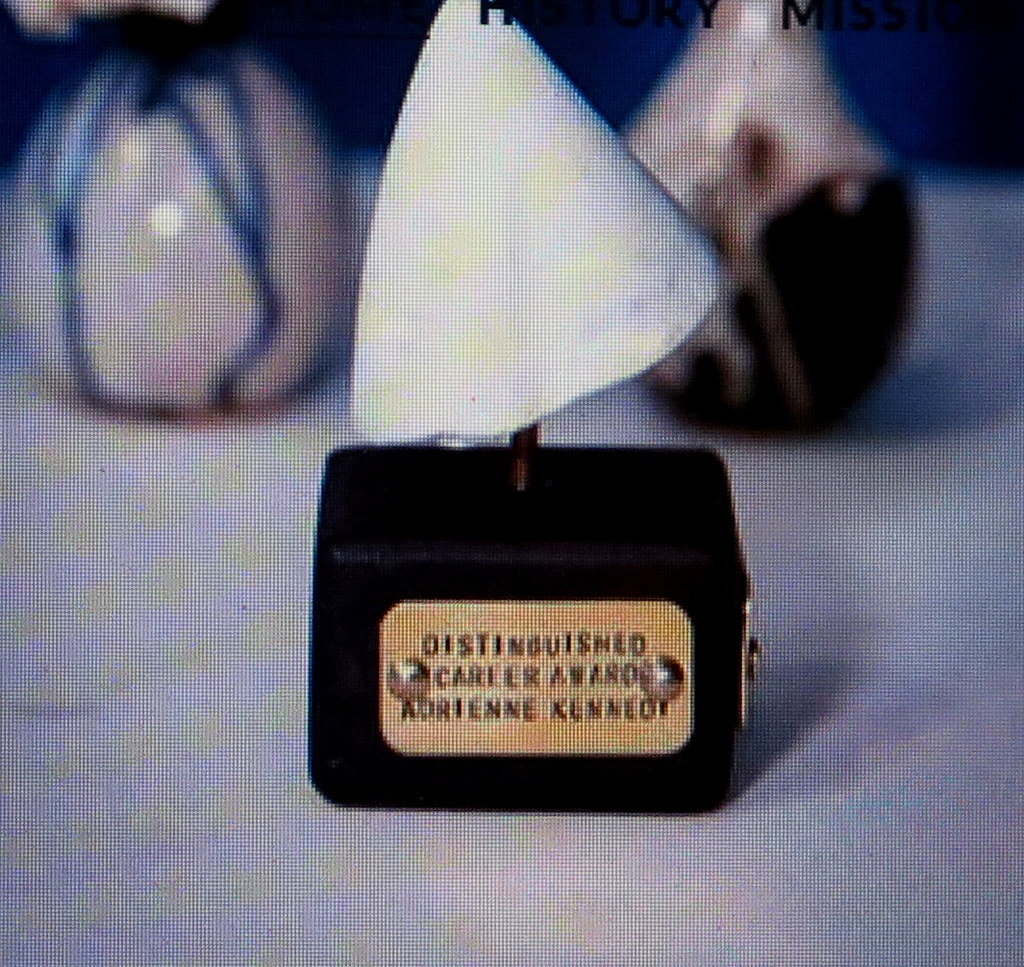
Tooth of Time Award: Honoring accomplished playwrights who have created significant, idea-driven works throughout their career, Bret Adams and Paul Reisch Foundation (courtesy of their website)
Freelancers are especially hard hit. They do not number amongst the 6.5 million who have filed for unemployment insurance (the number was posted on the news this morning). Not having a regular paycheck but living gig to gig, they are the invisible casualties of this war against a deadly molecule that strikes through those who are asymptomatic and “healthy,” but who are carriers of the spread. Clearly, more needs to be done by those of means who love theater and are devastated that COVID 19 has slammed into New York.
On that note The Bret Adams and Paul Reisch Foundation has decided to create an uplifting way to distribute the funds for their 2020 Idea Award for Theatre. This spring, the foundation will offer up to 40 emergency grants of $2,500 each to playwrights, composers, lyricists and librettists who have had a full professional production cancelled, closed, or indefinitely postponed due to the COVID-19 closures. A total of $100,000 will be distributed to theater writers.
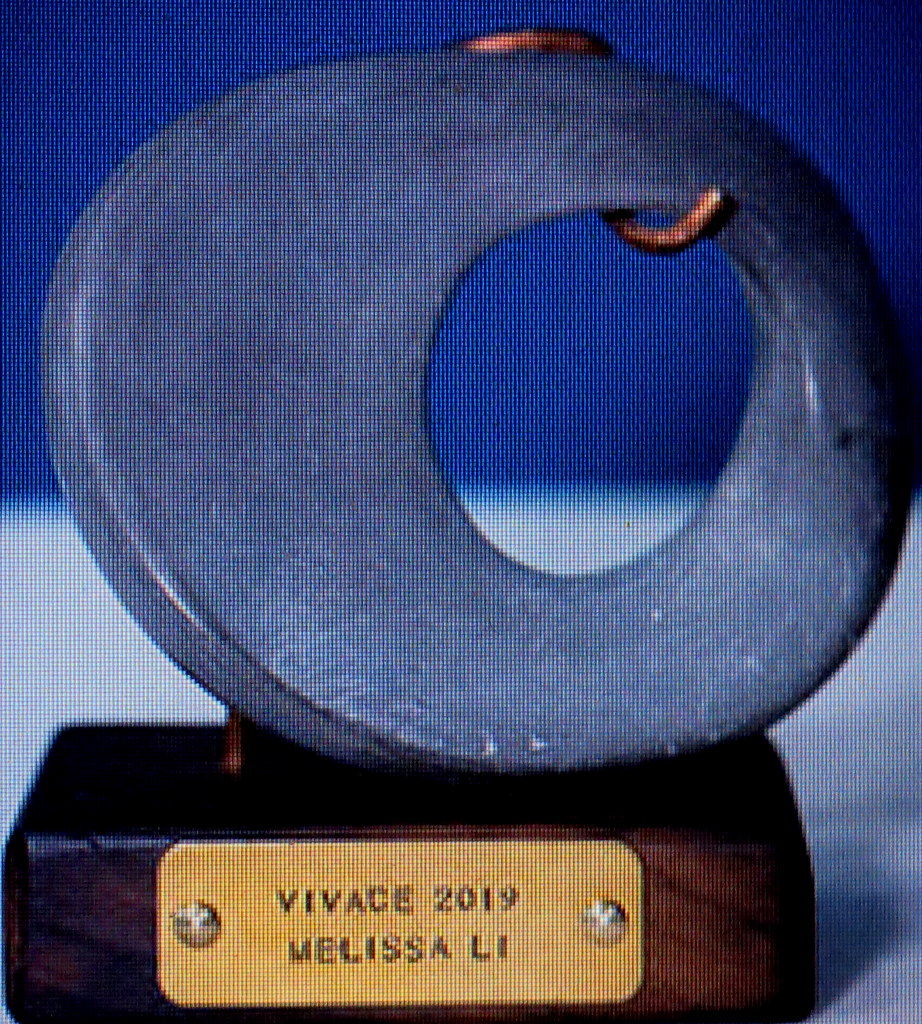
Bret Adams and Paul Reisch Foundation, The Vivace Award: Recognizing musical theatre artists with emerging talent and original work with ambitious ideas (courtesy of the Bret Adams and Paul Reisch Foundation)
Eligible playwrights, composers, lyricists, or librettists should apply at this link. Writers who have had a professional production canceled may submit their name and proof of a professional show’s closure. (“Professional,” in this case, is defined as LORT, Off Broadway, or Broadway). Each artist can submit only once. If there are more than 40 applicants, the Foundation will award grants by lottery, allowing them to give out the greatest amount of money directly into the pockets of the artists who have been most affected.
The submission deadline is April 14. The Foundation hopes to make funds available to artists as quickly as possible to forge a path to provide a bit of hope and relief and especially to guide others to do the same for artists in this unprecedented time.
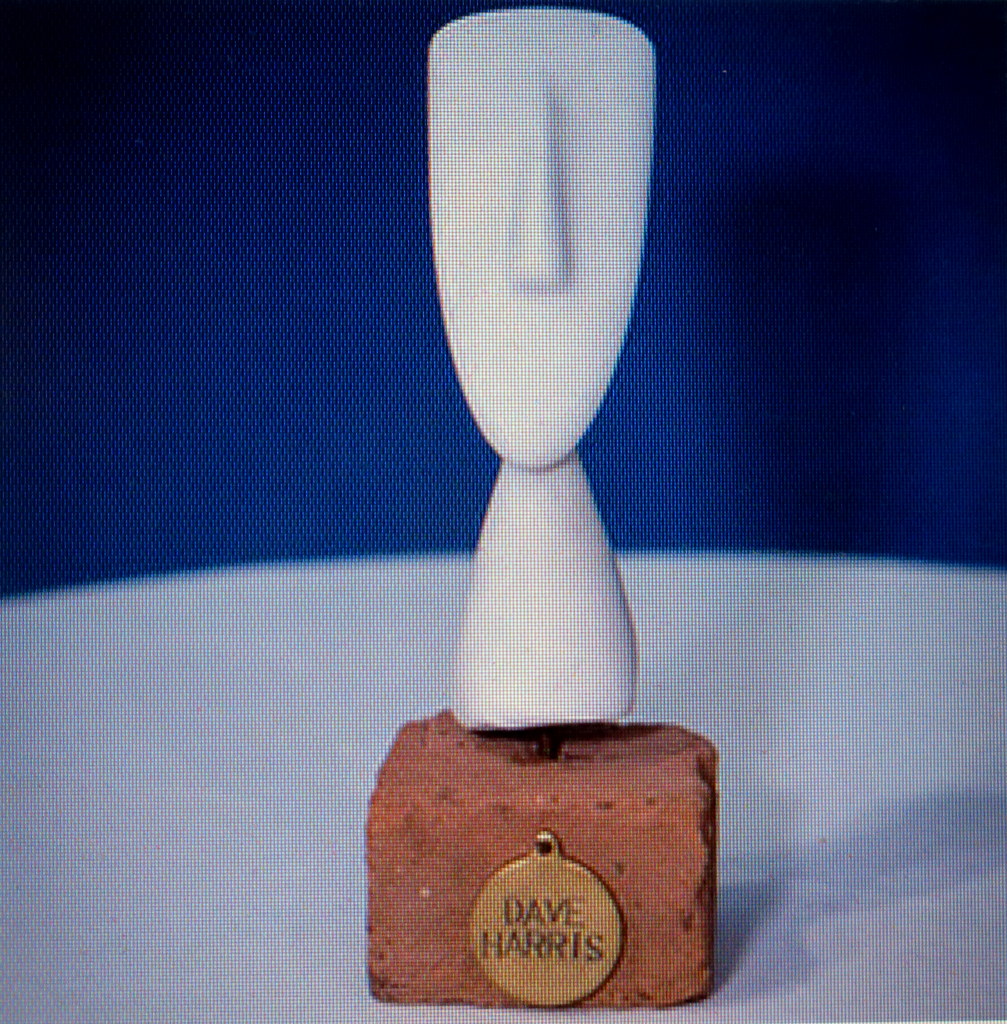
The Ollie Award: Recognizing playwrights with emerging talent and original work with ambitious theatrical ideas, The Bret Adams and Paul Reish Foundation (courtesy of the website)
The Bret Adams & Paul Reisch Foundation is a charitable foundation. Its mission is to give money to writers to write plays with ‘big ideas.’ This year, their ‘big idea’ is to help those “who have had productions cancelled,” said Bruce Ostler, V.P. and Board Member of The Bret Adams and Paul Reisch Foundation.
Ostler’s point is well taken and unfortunately, true when he affirms, “The economic model of theatre in the 21st century works much like it did in the 16th century, in that a playwright receives a percentage of the box office sales; without an audience, the box office receipts and royalty to playwrights dry up. In no uncertain terms, the business of theatre today has ground to a shocking halt due to the pandemic. Playwrights are not salaried workers and therefore are NOT eligible for unemployment for a cancelled production. That is the harsh reality of theatre today.”
Theatrical Agent Bret Adams and his partner Dr. Paul Reisch loved the theatre with great passion. As an agent, Bret shepherded the careers of many actors, writers and directors and designers, including Phylicia Rashad, Judy Kaye, Ruby Dee, Ossie Davis, Sherman Helmsley, Anna Maria Alberghetti, Eve Arden, Christine Ebersole, Kathleen Marshall, Jayne Wyman, Andre DeShields, Kathy Bates, and more.
After Bret and Paul’s passing, in 2006 and 2015, their foundation was created at their bequest. The Bret Adams and Paul Reisch Foundation champions visionary playwrights and embraces diversity in all its forms. It especially encourages fresh perspectives – particularly those from underrepresented backgrounds – to create idea-driven new plays and musicals. These may include a variety of themes, i.e. science, history, politics and sexual orientation. For more information, visit www.BretnPaulFoundation.org.
‘Grand Horizons,’ a Ferociously Funny Vision of Senior Redefinition, Starring Jane Alexander and James Cromwell

(L to R): Ashley Park, Michael Urie, Jane Alexander, James Cromwell in ‘Grand Horizons,’ by Bess Wohl, directed by Leigh Silverman (Joan Marcus)
At last! There’s a new and improved perspective of “seniorhood” that doesn’t include steps up the ladder of infirmity and dementia: from independent living to the “Rose Court,” from memory care to the palliative slip-away into Hospice. Indeed, as we appreciate and glory over the vibrant humor and comedic power of situation and characters in Bess Wohl’s Grand Horizons, we learn a thing or two about “old folks” and “the younger generation” in this rollicking yet profound play.
First, age is attitude. Second, the older one becomes, the more one must think outside of the box, especially out of the type found in replicated, independent living housing. Third, the closer one gets to the “end,” the more one should “rage against the dying of the light.” Fourth, one can experience in one’s later years a vision of life that is freeing, one that destroys the cages we created our entire lives: for they are a mere facsimile of living. Indeed, contrary to seniors who settle for the cardboard, cookie-cutter artificiality of existence in vegetative, pre-fabricated places like Grand Horizons, Wohl reveals that it is possible to make life-affirming changes even at the age of 80 years-old as does her protagonist, Nancy, the amazing Jane Alexander.

Michael Urie, Maulik Pancholy in ‘Grand Horizons,’ by Bess Wohl, directed by Leigh Silverman (Joan Marcus)
The playwright’s brilliant script is cleverly paced by Leigh Silverman’s precise direction of the superb ensemble. Masters of the comedy of real, of humor springing from grounded, soulful authenticity, the actors led by Jane Alexander and James Crowmwell pop the quips, jokes, one-liners, twists and turns of phrase and mood to keep the audience laughter rolling in waves of joy. Wohl’s well-crafted writing absolutely sings with comedic grace and profound themes, sharply channeled by Silverman. These include the importance of breaking through the stereotypical concepts of aging, family, parenting, marriage, love, intimacy, individuality and autonomy.
The play’s situation is common enough. Nancy and Bill, a “typical,” retired, fifty-year married couple have taken the next steps toward their journey’s end by moving into an independent senior living community. Is it the replication of row after row of modestly, flimsily built homes in a vast similitude (Bryce Cutler’s projection design) that sets off Nancy? Or perhaps what triggers her is the whitewashed, pleasant kitchen/dining nook/living room interior of “peaceful” uniformity (Clint Ramos’ set design) though it is festooned by artificial greenery.
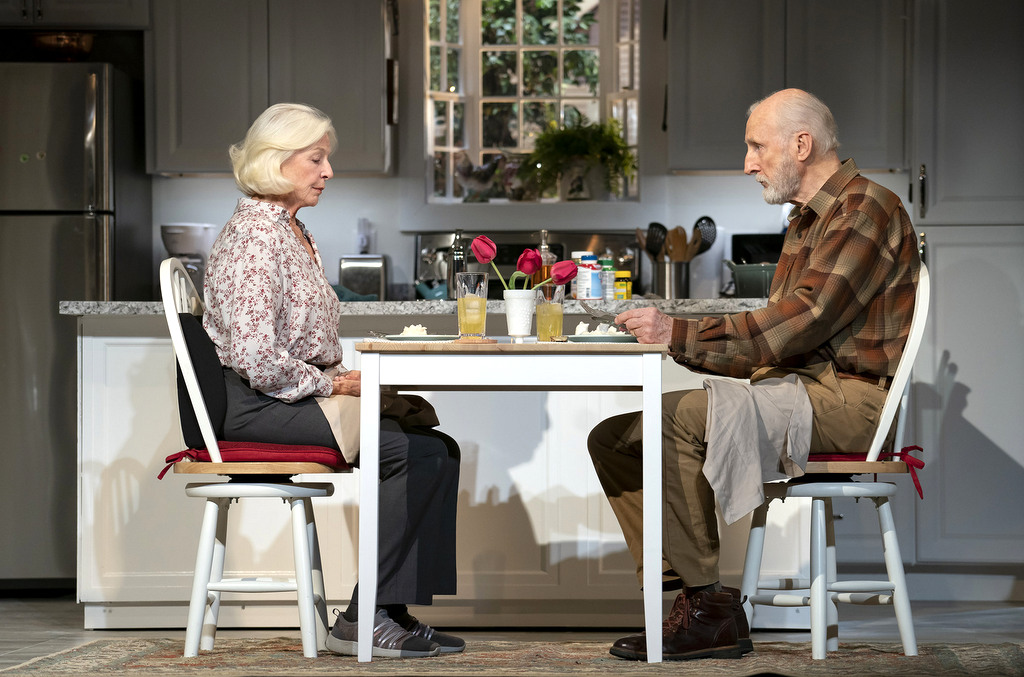
Jane Alexander, James Cromwell in ‘Grand Horizons,’ by Bess Wohl, directed by Leigh Silverman (Joan Marcus)
We learn later in a profound and symbolic irony, that the lovely plants don’t even have the opportunity to die bio-dynamically as a result of Nancy’s over or under watering. They just go on and on and on in lifeless “eternity.” Nancy’s eyes open to their fake permanence later in the play, after she has confronted herself, her children and Bill with the truth. Her ironic comment about their artificiality has to do with the realizations of her own growth.
The vast sterility of this community is only heightened by the play’s opening of Nancy’s and Bill’s dinner that is choreographed to reveal a mutually synchronized preparation that they execute silently with near robotic precision. Well, enough is enough in this perfect haven of deadness. I could hear Nancy’s thoughts as she looked at Bill as they, with synced movements in unison, took out their napkins, then began to drink and eat. What more could anyone their age wish want? They appear to have it all. But is this the exuberance of life we wish for?
At this point Alexander’s Nancy lets the desires of her heart explode from her lips and the train moves onto the express track and doesn’t stop until she achieves what she wants, sort of, by the play’s end. Jane Alexander’s delivery of the opening lines of conflict are spot-on humorous and ominous: “I think I want a divorce.”

Ashley Park, Ben McKenzie in ‘Grand Horizons,’ by Bess Wohl, directed by Leigh Silverman (Joan Marcus)
The excitement of what Nancy envisions to be on her grand horizon for the future is in imagining its open-ended possibilities, even if it is merely sitting in a restaurant and enjoying a meal by herself. Clearly, she wants no more imprisonment by the chains of coupling. She wants to know her own power, strength and autonomy apart from defining herself as Bill’s wife. As the play progresses, we discover she has already established her autonomy away from her family, though she has kept it secret. Interestingly, perhaps as a long awaited response, Bill is striking out on his own in this senior community by taking stand up comedy classes and enjoying a relationship with Carla (Priscilla Lopez). We learn later that this may be his response to what he has known all along of Nancy’s secrets.
As these details are gradually revealed we enjoy watching the incredulous sons, Brian (the wonderfully funny Michael Urie) and Ben (Ben McKenzie is the harried lawyer control freak who can’t relax). Both are shattered by the announcement of the divorce. Ironically, they don’t want their parents to leave their comfortable “mom” and “dad” roles to be individuals, redefining who they want to be. They want stasis, not for their parents’ happiness but for their own comfort and assurance. Brian’s and Ben’s perceptions of their parents living apart from each other are at odds with their parents’ expectations. For Nancy and Bill divorce will be a positive experience. The sons cannot wrap their heads around this, especially that Nancy is planning to live in an Air Bnb. Their mom in an Air BnB: a horror!
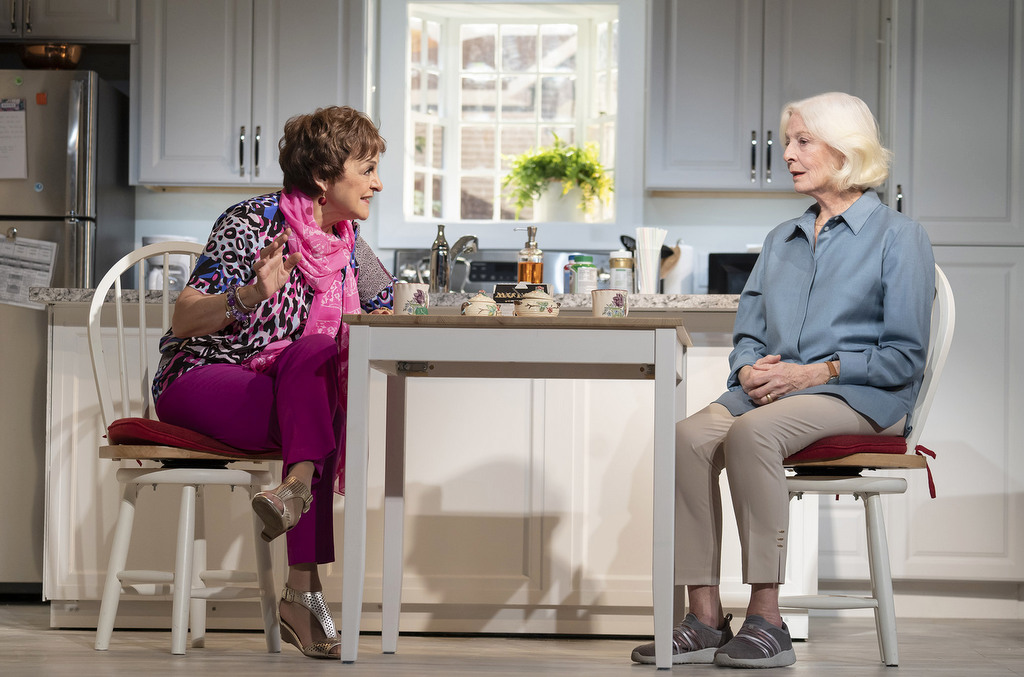
(L to R): Priscella Lopez, Jane Alexander in ‘Grand Horizons,’ by Bess Wohl, directed by Leigh Silverman (Joan Marcus)
Wohl takes advantage of this set-up in a refreshing way. In an ironic reversal, with the help of Jess (Ashley Park) Ben’s wife, Brian and Ben don the parental roles. They attempt to gauge what has recently happened, as they try to square away what mom and dad must do to resurrect the bloom on their long-dead marriage. Their failed attempts are humorous. Adroitly, the actors bounce off each of their characters’ stress-filled emotions with peppery dynamism and wit.
Brian’s neediness is easily identifiable throughout and is integral to his character as a theater teacher who creates 200 characters in The Crucible so “no kid will be left behind to feel left out.” It is Brian who is so dislocated by his parents’ future divorce, he worries about where he will spend Thanksgiving which is six months away. His sensitivity exceeds his parents’ emotionalism. The dichotomy is hysterical, yet heartfelt.
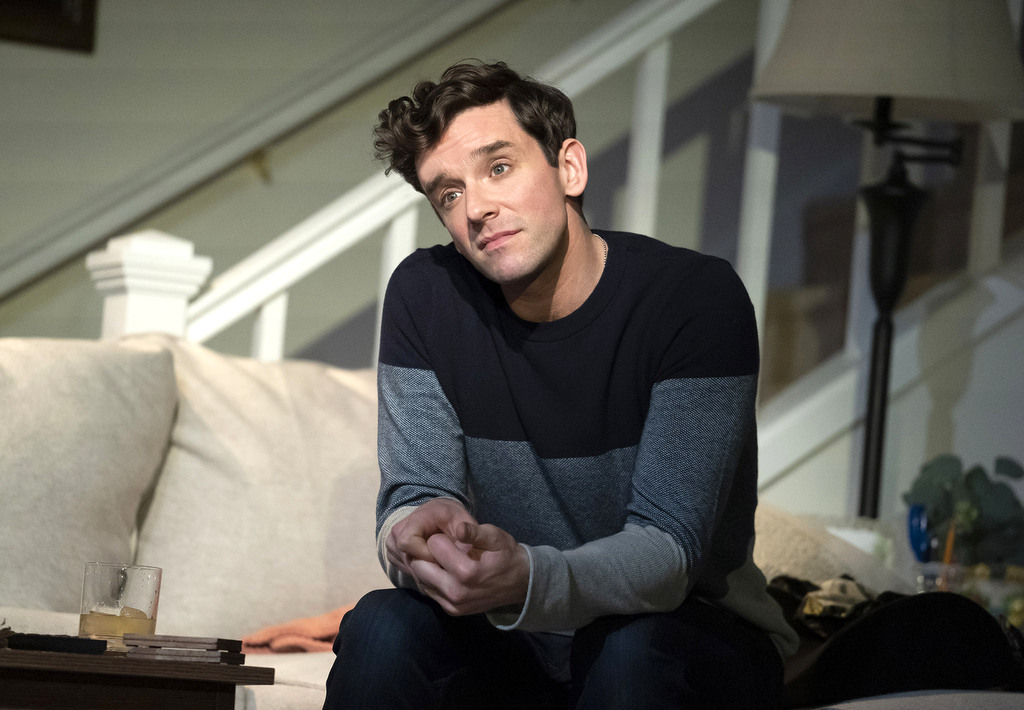
Michael Urie in ‘Grand Horizons,’ by Bess Wohl, directed by Leigh Silverman (Joan Marcus)
Ben’s eczema flares as he attempts to take control of where each of his parents will live. And then there is Jess providing the counseling so Nancy and Bill can return to their once affectionate times with each other. With Ben and Brian looking on with hope at Jess’ powers, the results that follow are riotous. As their visit with Bill and Nancy to persuade them not to divorce lengthens, Jess begins to look at her relationship with Ben differently as he reverts to Bill and Nancy’s son. Where has her husband gone or is this just hormones because she is pregnant?
The resistance of the younger generation to the divorce is a powerful obstacle which the parents find impossible to answer to their children’s’ satisfaction. It provides conflicts among the characters from which Wohl tweaks and teases thematic tropes. What are the phases and stages of our lives? How do we define them apart from cultural stereotypes and familiar roles that appear to offer comfort, but are actually binding and nullifying? What price do we pay to create our families and sacrifice for children with expectations that are unreasonable, or worse, false? From parenting to aging, no one can provide a guideline for what to do that will resonate completely with our individual lives. Every family, every person in that family is different. We fail, but perhaps it is worth it because we learn and if we are open to it, we heal.
Nancy’s desire for a divorce sets the entire family roiling except for Bill, who appears to remain calm. Of course Wohl is always pushing the envelope to get the maximum surprise and intrigue from her characters, who remain interesting and intensely human.
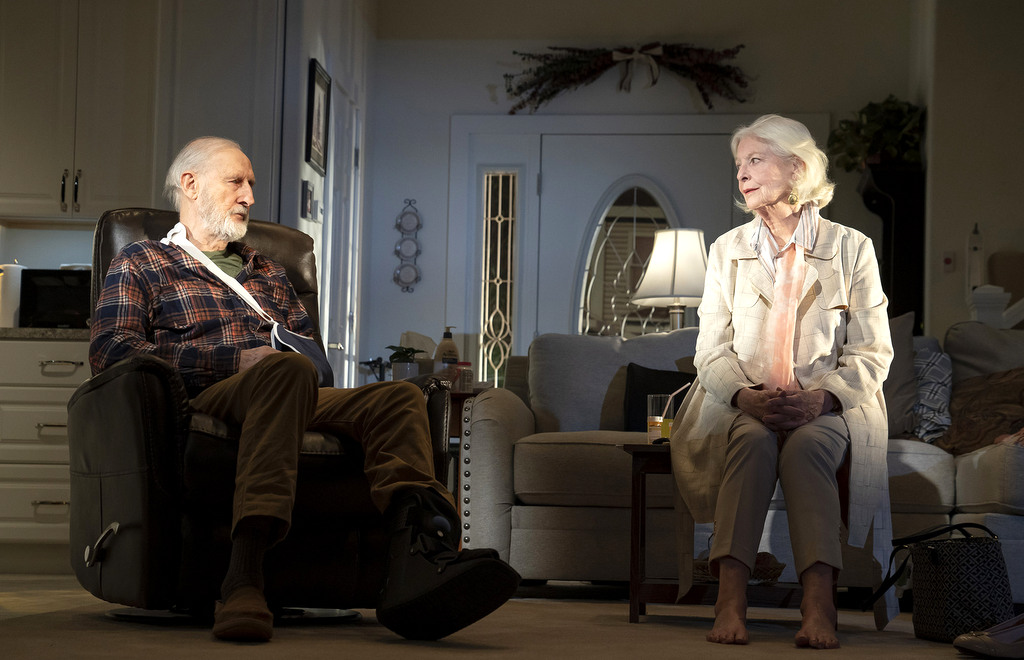
James Cromwell, Jane Alexander in ‘Grand Horizons,’ by Bess Wohl, directed by Leigh Silverman (Joan Marcus)
The audience’s gales of laughter organically spring from Nancy’s revelations that she has pursued her desires and dreams despite the intrusions of raising her two sons and making a home for her husband Bill. Indeed, the mother they believed she was, is not who she presented herself to be. She had another love. And when she expresses the importance of her closeness and intimacy with this lover to Brian (Urie brings down the house with his responses to her sexual descriptions) in the hope of explaining why she is leaving Bill, he cannot cope with understanding that his mother is perhaps a woman first.
This is something many children have difficulty with unless the parents, with good will and flexibility, help them to understand love, sexuality and intimacy. Bill and Nancy never considered going into these discussions with Brian and Ben because they never went there with each other. It is a telling irony that catches up with all of them at this juncture.
Clearly, Nancy runs deep as does Bill, who is a cypher that Wohl reveals by the conclusion, when we learn that both Bill and Nancy have kept intimacies and secrets to themselves. Yet, they do love one another. The humor and pathos come when we note how difficult it is for Ben and Brian to understand their parent’s particularities when they believed the packaged family meme that “togetherness is happiness.” That meme when they admit it, satisfied none of them, least of all their parents.
All of this eventually tumbles out after Brian, Ben and Jess visit, stay and don’t leave until Bill and Nancy politely tell them to go and reassure them that they are going to be all right. By the end of the play, Wohl opens the door to hope. Even if they live apart, maybe Bill and Nancy can begin to see each other outside of the roles that threatened to box them in “til death did them part.”
Grand Horizons is a mixture of uproarious fun and thoughtful poignance. Shepherded by Leigh Silverman’s vision the actors deliver, with sterling performances by Alexander and Cromwell and with high marks for McKenzie, Urie, Park and in secondary roles as Tommy (Maulik Pancholy) and Carla (Priscilla Lopez). Additional kudos to the creative team: Clint Ramos (scenic design) Linda Cho (costume design) Jen Schriever (lighting design) Palmer Hefferan (sound design) Bryce Cutler (production design).
Grand Horizons runs with one intermission at Second Stage Theater, The Helen Hayes Theater on 44th Street between 7th and 8th until March 1. For tickets and times to this LOL production CLICK HERE.

