Blog Archives
‘School Girls; or, the African Mean Girls Play,’ What it Means to be Young, Gifted and a Black Girl in Ghana
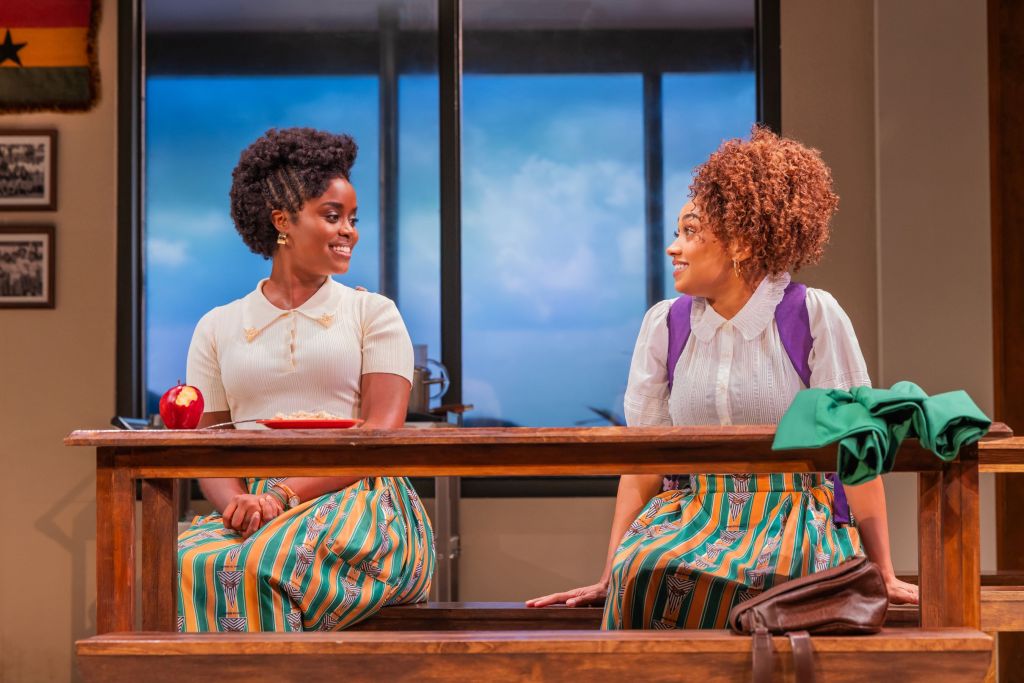
It’s 1986 in Ghana, an exciting time of proms and beauty pageants in the lives of five teens attending Aburi (Eh-Bree), a Girls Boarding School in the Aburi Mountains. Jocelyn Bioh has created another superb, funny and profound work in School Girls; or, the African Mean Girls Play. Directed by Whitney White in a perfect collaboration with Bioh-it won them a Tony-nomination for Jaja’s African Hair Brading-once more they hit it out of the park with a jewel of a production. School Girls; or, the African Mean Girls Play has been extended through November15th, 2026 at the Samuel J. Friedman Theatre. The extension reveals the audience’s love and appreciation for the themes and sensational, LOL ensemble. The production is a stepped up Broadway debut from its premiere Off Broadway.
Not only do we get to appreciate the cast led by award-nominees Denée Benton and Jordan Rice, we see the versatile Jasmine Amy Rogers, Tony-award nominated for the titular role in Boop! The Musical. White has selected a multi-talented cast to create a fan favorite. With authenticity, humor and heartbreak they reveal the key theme that meanness knows no boundaries in every culture, regardless of color or nation. Unfortunately, the noxious, warped values of appearance fascism, colonialism, and Black-on-Black appearance racism infect the beauty, innocence and unity of young girls everywhere. This seems especially so as they prepare to “earn” their place in a values twisted global society run by an oppressive patriarchy.
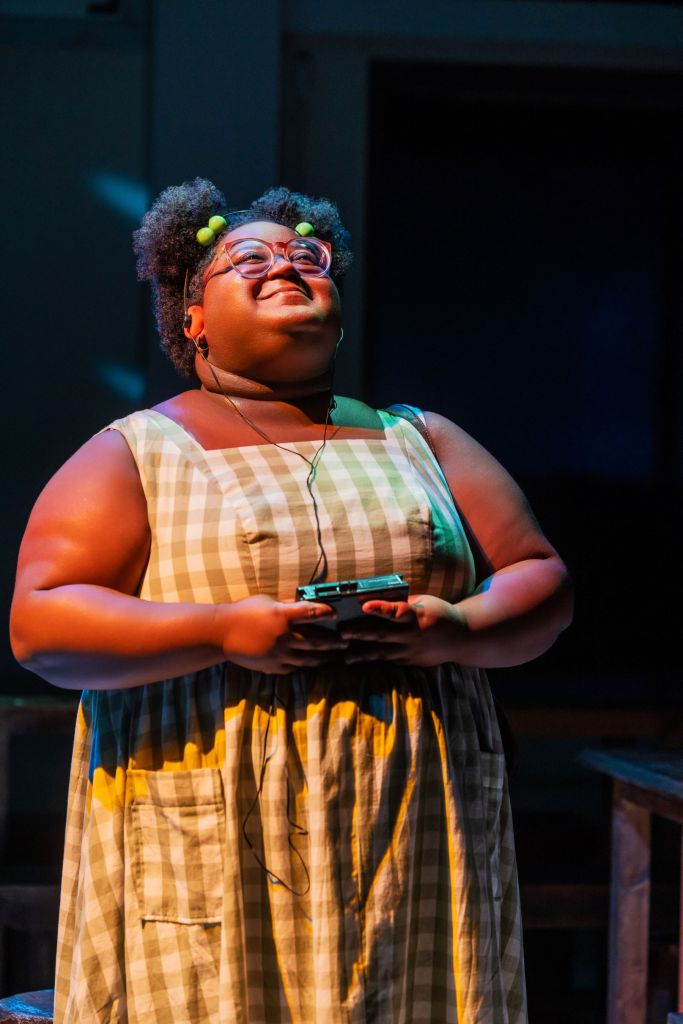
Bobby Brown’s “It’s My Prerogative” umspools in the background, signaling the time period, a patriarchic theme the girls and woman ascribe to unsuccessfully, and the African girls’ adoration of Brown. After a few bars of the song, the cast sits center stage dressed in the colorful uniforms of the school (Qween Jean’s costumes) in a spacious lunch room designed by Teresa L Williams. However, all hope for an uplifting experience chokes off when Benton’s Paulina fat shames Nana (Erin Morton) about eating carb-packed porridge instead of an apple. Paulina cues in her subjects, Mercy (Jordan Rice) and Gifty (Nia Otchere-Sarfo), to parrot one of her mantras to stay in this popular group which she commands with a velveteen iron rod. Nana must deprive herself “to stay fit,” “looking fine-fine.” The implied threat of what will happen if she stays fat like a cow conveyed by Benton’s thin cheering squad stays unspoken at this time. Clearly, Nana’s days are numbered unless she gets on Ozempic (not invented yet).
Benton’s Paulina rules with cruelty using a “value” perpetrated by the patriarchic, US entertainment industry to psychically oppress all females young and old with the fascist body type image: blonde, beautiful, “fit,” aka thin. One can’t be “too rich or too thin.” The mantra which augmented from the1960s well into the 1980s disappeared with a “Women Have Curves” backlash, then vengefully returned with the side-effects ridden Glp-1 drugs in the 2020s. Fat shaming weaponized by men and women alike to create a sacrosanct pecking order of beauty and excellence keep the weight loss industry humming in the multi-billions. Bioh gives a nod to this anathema of women trying to “be” something, and places it at the top of her play with an undemocratic Paulina.
Not only does Paulina control the others by making Nana feel inferior, she uses that weapon to keep Mercy, Gifty and Ama (Lucia Aremu), loyal and “worthy.” Additionally, Paulina later uses her own making others feel like worms “empowerment” to force Nana to wrongdoing for her own advantage. Clearly, Paulina has learned how to dominate from the inherent system of hierarchy run by men, who lure adult women to set inequitable standards precisely to maintain control over the entire system. When Paulina leaves the lunch room momentarily, Mercy and Grifty apologize to Nana telling her they have to be nasty or Paulina will pick on them. Thus, continues the uproarious and painful ego belittling exercises these teens go through with each other, fostered by corrupt global mores that Headmistress Francis (Heather Alicia Simms), buys into educationally spreading the rot.
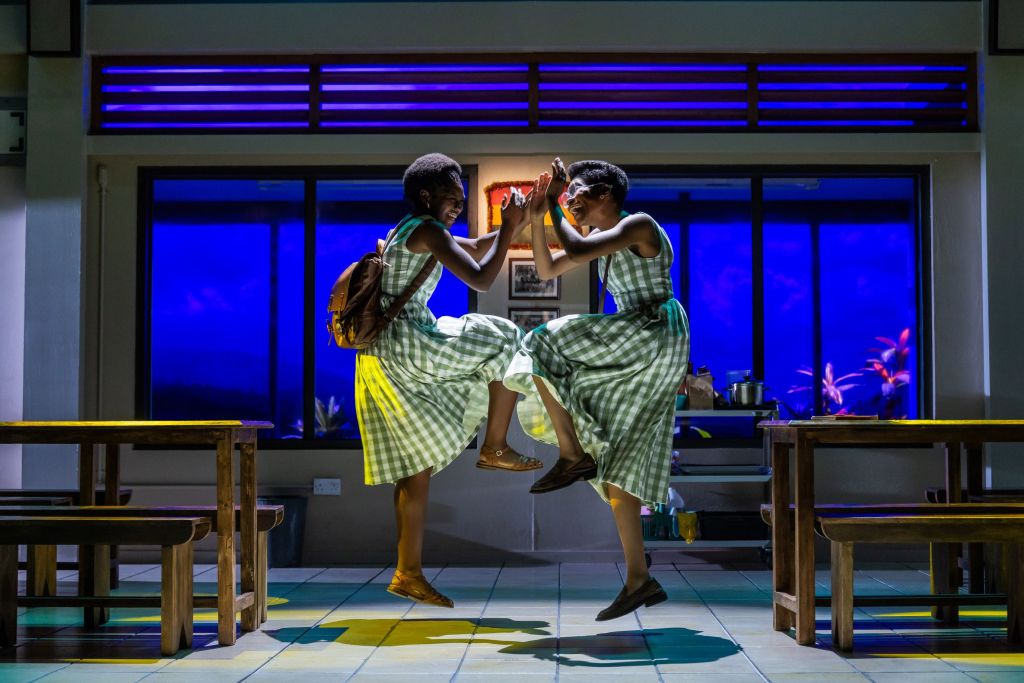
Two turning points occur which advance the levels of complexity and outrageousness for Paulina and her crew and bring karma back on Paulina with an interesting reversal. First, her crew and most everyone in the school believes Paulina will win the audition for the Miss Ghana beauty pageant, especially Paulina. However, the “queen” throws a silent fit when Headmistress Francis introduces the group to a transfer student from the US who will also audition for the beauty pageant. Not only does the beautiful bi-racial, talented Ericka (Jasmine Amy Rogers) whose father’s ancestry is Ghanaian, have much lighter skin, her vocal talents rival Whitney Houston’s. White’s superb staging of the audition scene where each girl competes to be selected for the Miss Ghana candidate brings maximum, riotous, audience laughter
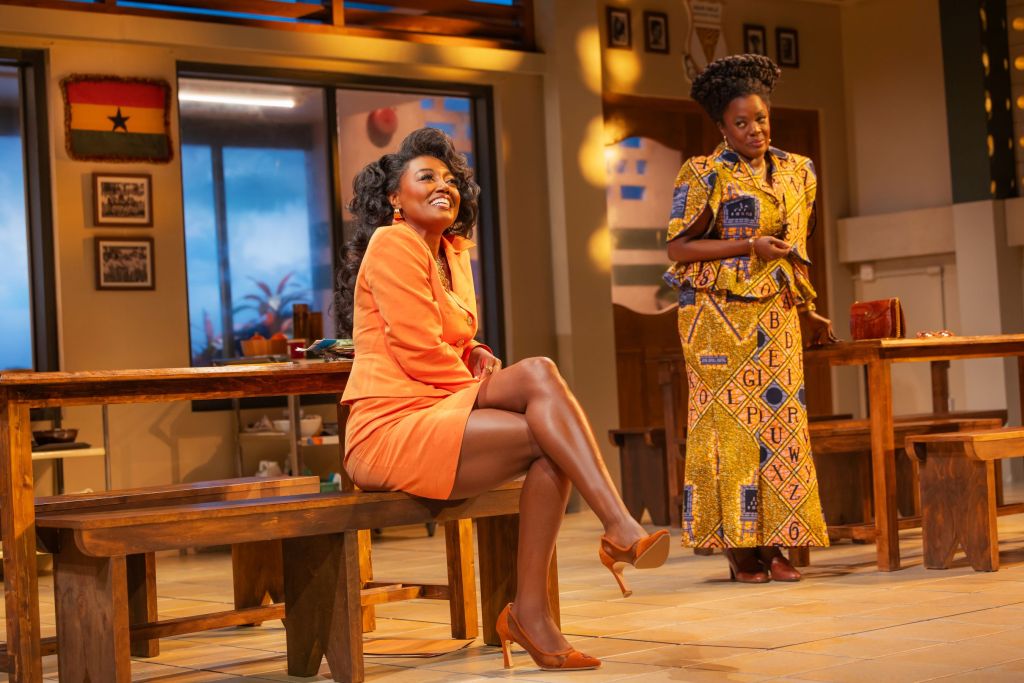
In the second turning point Eloise Amponsah (Patina Miller), Miss Ghana 1966, intends to lift the country and the Miss Ghana winner by entering her into the Miss Universe pageant. By recruiting a girl who can compete commercially because her skin tones compare with those from Argentina, Brazil and Sweden, she tells Headmistress Francis, only one candidate can win, Ericka. Then she speaks her rationale why. Everyone benefits: Eloise receives a promotion, the school fallen on hard times will receive a generous donation, and Ghana will place in the Miss Universe Pageant and maybe win. However, two obstacles stand in the way; a ferociously competitive Paulina and Ericka’s questionable Ghanaian heritage.
Though Headmistress Francis has invested time and money with Paulina, even paying for hospitalization because Paulina wounds herself with skin bleaching creme to whiten herself to no avail, Eloise Amponsah’s ferocious competitiveness comes into play to champion Ericka. Paulina who tries to expose the sweet Ericka’s questionable heritage creates chaos, provokes fisticuffs with Ericka, and harm to Nana and the other girls.
Whose personal power will dominate, Headmistress and Paulina, or Eloise Amponnsah and Ericka? Bioh reveals the inherent corruption, bigotry and debilitating messaging such a competition presents. Indeed, the pageant symbolizes how global nations see African nations like Ghana as inferiors to exploit. The choice between Paulina or Ericka has repercussions that extend far beyond lifting national pride. Cui bono and at what cost?
Sensational actors whose moment-to-moment portrayals make the stakes comical, yet heartfelt, complex and real. Boih suggests sub rosa that twisted values continue because corporations benefit. They increase their profits from damaging skin bleaching creams to diet and medical industry weight loss devices, etc. Global countries lift up commercial enterprises like the Miss Universe Beauty Pageant and promote cultural images of beauty to benefit related industries. Bioh’s African Mean Girls asks what is the cost to Black girls in Ghana who intend to succeed by any means necessary because that is how the patriarchy has set up the life or death game. The play brilliantly highlights these multi-layered concepts along with the overarching theme of the velvet, terrorism of group relationship dynamics. Indeed, these themes reveal a dangerous soul-killing matrix that compels its subjects to to get to “a top” that someone else created for them not to reach.
School Girls; or The African Mean Girls Play which runs 1 hour 25 minutes with no intermission, enjoys an extension through November 15, 2026 at the Samuel J. Friedman Theater; manhattantheatreclub.com.

