Category Archives: NYC Download
NYC Events
Sensational Umbria! Steve McCurry and Umbria Make a Good Team
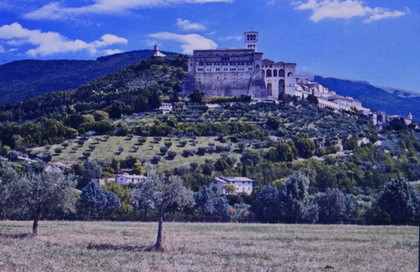
Sensational Umbria, photograph by Steve McCurry
Last year I was introduced to Italy’s region of Umbria at La Scuola Grande, Eataly’s events restaurant. It was then I savored my first Sagrantino wine made only in the Montefalco region of Umbria and tasted the regional foods, legumes, mushrooms, pork that were and are often the traditional mainstay of Umbrian cuisine. This year Umbria is being featured once again at Eataly, NYC and to highlight the region, Steve McCurry, world-renowned photographer has created an exhibit of his photos. These will familiarize viewers with the lifestyle of the region, its towns, marketplaces, textile trades, terrain, the wineries, cuisine, artisan crafts, in short, all that is wonderful in this region, known as “the green heart of Italy.”

L’Umbria Secondo, photograph by Steve McCurry
What impresses me about Umbria is the passion of those who are the leaders of the region who want to make sure that past connects with present-future. In other words, there is a great respect for ancient wine-making traditions, cuisines and crafts and the fervency to keep these traditions alive so they are transmitted abroad and actually sealed into perpetuity (that’s branding, folks). Part of keeping a record of what was and what will be is the “what is.” That’s where Steve McCurry comes in with his photographs. According to the President of Umbria, Catiuscia Marini, “The passion people have for the region of Umbria was captured perfectly by McCurry’s remarkable storytelling power.”

Sensational Umbria, Event Coverage. Photograph by Steve McCurry
An iconic voice in contemporary photography for more than 30 years, McCurry is a good choice to pick out mythic images of the Umbrian landscape, its people, its appeal of every day life activities. McCurry has been recognized with some of the most prestigious awards in the industry and he has published a number of photography books, for example The Path to Buddha: A Tibetan Pilgrimage (2003), In the Shadow of Mountains (2007), and The Iconic Photographs (2011) to name a few examples.

Olive Oil product from Umbria, sold at Eataly.
McCurry selected various photographs that were used in the exhibit and can be seen at the Italian Trade Commission until Saturday, November 16th. McCurry’s photographs will also be on display at Eataly, during their month long celebration of the region of Umbria in the month of November. Eataly is holding classes focused on wines and traditional regional cuisine and is featuring Umbrian products, including wines and the Sagrantino only produced in Montefalco, Umbria.
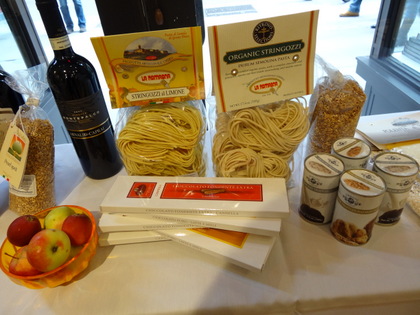
Products from Umbria sold at Eataly
Sensational Umbria is the title Steve McCurry has given to his project of 100 photographs. If you haven’t visited Umbria and don’t think you will have a chance in the next months, go to Eataly, NYC and take a peak at the exceptional photographs. Have a glass of Caprai wine with your pork or short ribs dish at Manzo Ristorante or Birreria. Peruse some of the Umbrian products seen here. You’ll be happy you got a chance to embrace Umbria in NYC and it will be an encouragement for you to eventually to visit that magnificent, less traveled and poetic region of Italy.
One Night by Charles Fuller at the Cherry Lane Theatre
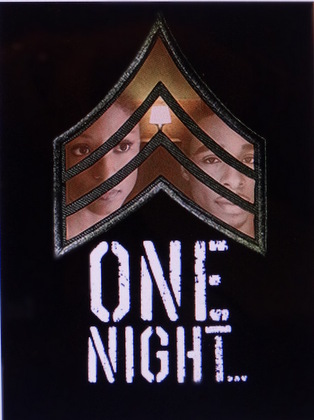
Rutina Wesley and Grantham Coleman in One Night at the Cherry Lane Theatre
The U.S. has been at war for more than a decade. In that time period lives have been lost for a cause that many question and that more feel was trumped up to justify the monetary benefit of an elite few, oil barons, as well as the lords of war and those supporting and fueling the military industrial complex. The casualties who have died for a cause that St. Thomas Aquinas would not have labeled just for its length of continuance, mismanagement and malfeasance are at peace. Those casualties who have remained alive and are scarred physically and emotionally are legion.
Many who have returned with Post Traumatic Stress Disorder now number in the hundreds of thousands. Statistics suggest that only half of them have sought treatment. There are many wounded warriors and returning vets who do not go for help because they feel therapies offered are ineffective. They remain hopeless and feel victimized by a government that is uncaring and callous and a culture that is indifferent, fatuous and ignorant. Oftentimes, their emotional state and symptoms of anger, drinking, drugging, hyper aggression, depression, anxiety, jumpiness, sleeplessness, restiveness spill out on their family, spouses and children. If coaxed to seek help, the suggestion is ignored or provokes an angry response. The tragedy is that PTSD is never eliminated. However, there is hope if a wounded warrior seeks help. Chances are with the right type of sustained assistance from a network of individuals using a variety of therapies, PTSD will be mitigated. One only has to reach out.

Cast of One Night at the Cherry Lane
This is easier said then done. The problem, then, is not being at war, it is coming home from the war, forever. Such is the subject of Charles Fuller’s play, One Night which opens to a World Premiere in NYC on November 6th. The Cherry Lane Theatre commissioned the play and the Pulitzer Prize winning playwright of A Soldier’s Play answered the call. The play delivers a powerful and important message that we must be alerted to. For our men and women veterans are returning home but what are they returning to? A life of meaning and purpose, or one of emptiness and continual anxiety, stress, dislocation and fury?
Certainly, if they have seen combat, have seen their buddies sharded or incinerated by mines and explosive, have seen themselves or others losing limbs, if they have suffered Traumatic Brain Injury or worse, have walked away unscathed physically, only to labor under delusive aftershocks of heightened oppression, guilt, flashbacks, suicidal/violent thoughts and more, they are experiencing PTSD.

Non profit, IAVA, the play is supporting with a percentage of its ticket proceeds.
How do they cope? Will they seek help or slip into the convenient or overlooked statistic? One Night covers all of this and shadows how a woman responds in recompense to an unjust act effected by soldiers, themselves suffering from an inability to deal with their own trauma to act humanely. The sufferers unload onto the perceived weaker sex and the woman like many women who serve in the U.S. military ends up battling an additional enemy ones wearing the same uniform. War turns men and women against each other eliciting the worst in times of stress. It can happen in many times during a decade, it can happen “one night,” but if it happens woe to all it happens to.
The World Premiere of One Night is being presented by the Cherry Lane Theatre and the Rattlestick Playwrights Theater.
One Night directed by Clinton Turner Davis will be at the Cherry Lane Theatre from November 6 to December 15.
Mon and Tues at 7 pm., Thurs and Fri. at 8 pm, Sat. at 2 pm and 8 pm, Sun. at 3 pm.
Featuring
Grantham Coleman, K.K. Moggie, Matthew Montelongo, Cortez Nance Jr., Rutina Wesley
Set John McDermott, Costumes Jessica Jahn, Lighting Nicole Pearce, Sound Sean O’Halloran, Video Gil Sperling, Fights UnkleDave’s Fight-House, Props Starlet Jacobs, Stage Manager C. Renee Alexander, Assistant Stage Manager Kristin Pfeifer
Running time is 2 hours with one 10 minute intermission.
FOR TICKETS CLICK HERE.
5% of ticket proceeds benefit IAVA, the first and largest nonprofit, nonpartisan organization for Iraq and Afghanistan veterans. Learn more and support the Next Greatest Generation at IAVA.org.
David Henry Hwang, Nick Flynn, Rosary O’Neill: Writers Giving Back to Writers

Writing I worked on during a workshop at Omega Institute.
The Paradigm Shift
The long needed paradigm shift for authors is here. Like never before, successful writers of all genres are available to their fans and others as many discard traditional publishing routes that were profitable to everyone but the writer. Self-publishing and direct to the source return the profits back to authors. As social media, blogs and e-zines trump traditional media, and streaming (House of Cards) Youtube (plays and shows) and Google Hangouts (live music shows) become widespread, TV venues that formerly preyed upon the division between the creator and the passive audience are dying. It’s about interactivity. As a result writers are relying on interactions with followers on Twitter, Youtube, Facebook, etc., to promote and sell their work, engage their readers and update them on their latest triumphs. To remain current, they must stir the pot and trouble the waters of innovation and artistry. How else can they benefit from the currents of cultural resplendence? If they don’t connect, they will eventually be choked off as is happening to old line venues for the cultural arts.
Authors Stay Juiced Through Workshops and Master Classes

Nick Flynn at work during the workshop at Omega Institute.
Another way noted writers are connecting is by giving back in workshops, conferences and master classes. It is particularly rewarding when brilliant authors are sure footed guides who can shepherd their fellow writers up the mountain of difficulties regarding word-craft to unlock inspiration. Fluid workshops are settings which inspire writers to share their work without fear. They encourage spontaneous, authentic writing. They help authors learn new techniques and allow them to bathe in the creative flow of juiced writing.
Three noted writers and authors whose workshops and classes I took in the last months were particularly helpful and each was extremely generous. David Henry Hwang, successful Pulitzer Prize nominated playwright, Nick Flynn, poet and memoirist, and Rosary O’Neill, playwright, screenwriter and diverse author reached into their bounty of spirit and shared liberally. Reflecting back on the process with these exceptional writers, I now see that the exchanges and connections offered unique experiences that are helping me hone my craft and provide direction for my writing projects.
MASTER CLASS WITH DAVID HENRY HWANG at the Cherry Lane Theatre in NYC

David Henry Hwang graciously speaking with us and staying for pictures after the class at the Cherry Lane Theatre.
I absolutely adore this man, this stunning screenwriter, librettist and multiple award-winning playwright best known for M Butterfly, Yellow Face and Chinglish. I have seen much of his work on Broadway and Off Broadway. The first time I saw M Butterfly (I saw it twice.) starring John Lithgow and B.D. Wong, I remember telling my cousins after the performance that it was a happening. Thrilling and alive, it was like seeing Venice for the first time or tasting my first sip of vintage wine from a bottle that cost more than $150. Poor similes, I grant you, but I was gobsmacked. Taking this class with him I was anxious to understand his technique. I had seen his development and knew early works like Dance in the Railroad. I and was looking forward to seeing his Kung Fu at the Signature Theatre in March of 2014. What would he share?
The writers/students in the master class with David Henry Hwang were at various stages in their writing careers; their backgrounds were motley. Wang enjoys people and he interacted with us after getting a general feel for this large group who was there to breathe the same air as this multiple award winner and Pulitzer Prize nominee. He of course, is unassuming, disarming and a sponge of humility you could just hug and squeeze. Despite the large numbers in the group, David Henry Hwang put us at ease and somehow created an intensity and intimacy during the session, a talent in itself.

David Henry Hwang and Carole Di Tosti.
Move toward the unconscious.
The master playwright encouraged us to continually transcend the conscious mind and write frequently, overriding our conscious censor. For example, when thinking “I’m not good enough,” or “Why should anyone care about what I’m writing,” that is the nihilistic self-critic. Inspire yourself and unblock using various techniques; some suggestions are below.
- Silence the censor by writing as fast as you can. You can always go back and edit.
- Cut out phrases from a magazine article and shuffle them into various sequences. Copy a phrase or two priming the pump until it’s flowing. Don’t stop until there is a natural pause.
- Write out words in free association. Put them in a hat and choose various ones that continue the associations. Write continually and automatically. Follow where the writing leads you; don’t lead it.
- Of course, David Henry Want suggested to always write what inspires and keeps your interest. The more you have fallen in love with what you are writing about the better.
- Allow yourself to give your characters free reign. They will lead you to amazing places that you never new were possible on the journey.
NICK FLYNN’S MEMOIR AS BEWILDERMENT at Omega Institute in Rhinebeck, NY

Nick Flynn chatting with writers before the workshop begins at the Omega Institute.
Nick Flynn is a poet and best-selling memoirist. He wrote The Reenactments, The Ticking Is the Bomb, and the haunting and beautiful best seller, Another Bullshit Night in Suck City which was published as Being Flynn, the title of the independent film based on the book. The film stars Robert DiNero and Paul Dano. Flynn’s three books of poetry are The Captain Asks For a Show of Hands, Some Ether, and Blind Huber. I was familiar with his memoir Another Bullshit Night... and liked his style of writing. During the two day workshop, Nick Flynn was generous answering questions about the making of the film (it took seven years) and his writing life. He challenged us, attempting to jar our sensibilities into the unusual because only then could the chaffing break us into the realm of the unexpected to authenticity. As we wrote and shared our writings, elements he uses in his own writing resonated deeply. His wonderful humor carried us through any nervousness.
Use image and object chains from various sources.
- Flynn encouraged us toward selecting images and objects threading them in our work. Images carry emotional power and weight. These are tied to associations from our unconscious that have meaning beyond what we may not recognize consciously.
- Write down dreams and the images will more naturally appear to us. Incorporate images or objects in automatic writing which should be spontaneous and unedited.
- The writing muscle should be exercised each day, a minimum of seven minutes. Write ceaselessly allowing the flow and trusting it to take you wherever. Dare to risk the journey, the more bewildered the better. Eventually rationality through the concrete image emerges.
- Create moments of surprise and use them in writing. Look for a science article (NY Times, perhaps) that is filled with images or objects and write about one that has energy and interest. Look through old pictures. List three questions about the people or objects in the photos. Write on each for 7 minutes. Incorporate the results in your work then edit later what doesn’t sing. You’re practicing powerful description and your technique will be enhanced overall with your writing projects.
ROSARY O’NEILL’s SCRIPTWRITING WORKSHOP at Omega Institute in Rhinebeck, NY
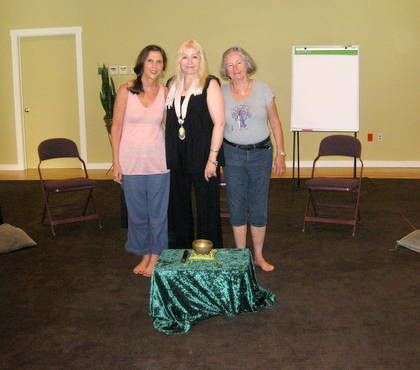
Deborah Temple, Dr. Rosary O’Neill, and Mary Anderson at the Omega Institute.
Rosary O’Neill, Ph.D. is a playwright, director, screenwriter, writer of narrative nonfiction and a scholar who hails from New Orleans. She was the founding artistic director at Southern Rep Theatre where her plays about family with Southern Gothic themes were produced for many years. A prolific writer and virtual dynamo who has received 7 Fullbrights, and fellowships to the Norman Mailer House, Tyrone Guthrie Centre and other venues, she has studied abroad where she has completed research for a play about John Singer Sargent and a book and play about Degas, to name a few works. With extensive experience in acting and theatre production, she has written The Actor’s Checklist, is currently working on a soon to be published book with new information never before revealed about the Mardi Gras in New Orleans. Rosary O’Neill has written 22 plays. Most have been published by Samuel French. Many of them have been performed at the Southern Rep and many have garnered readings at the National Arts Club, the Rattlestick Theatre, The Players Club and in regional theaters like The Westchester Collaborative Theatre and Bard College. Her latest work, an uplifting musical entitled Broadway or Bust with lyrics/music by David Temple, directed by Deborah Temple will be performed at Bard College Black Box Theatre, November 13th and 15th. She has written a TV series entitled Heirs that that is currently being shop optioned. An experienced college professor, Rosary’s class was a joy and steered folks in a different direction, toward writing characters that live and are breathing and vital. This is playwriting/screenwriting at its best.
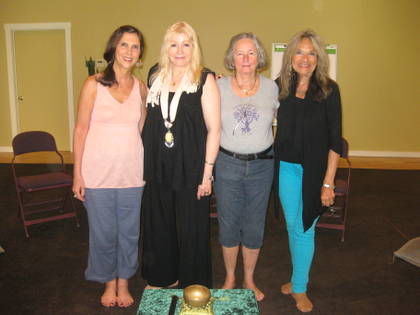
Deborah Temple, Dr. Rosary O’Neill, Mary Anderson, Carole Di Tosti at the Omega Institute.
Sound character when creating dialogue.
- When writing characters, think of individuals you know, their high points and dramatic episodes. Ask yourself why you remember them; what strikes you about them? Give yourself a prompt that you think might help you distill who they are in an image, then write about them. Eventually, this can be worked into creating character.
- Read all dialogue aloud. Make sure it sings. If you are bored and don’t wish to read it, have someone else read it aloud. If it doesn’t resonate to you or the other individual, then drop it and move your inspiration elsewhere.
- Select a scene where there have been family get-togethers. Dialogue should reveal differences in character, cadences, phrases, accents, content. How are you revealing tonal messages through speech? Act out the lines. What doesn’t fit, jettison.
- Remain upbeat at all times. Shun negative thoughts. Do you have anything better to do with your life than to create life, through characters, dialogue and plays/films? All dialogue has run through you at one point or another. You are recalling it to your remembrance and shifting it around for greater use. Above all, enjoy the experience.
PARTING SHOTS: David Henry Hwang, Nick Flynn, Rosary O’Neill
DHH- Find a way to have your plays read aloud, even if you are getting actors in your living room. It’s the only way to find out if the characters cohere, if the whole thing works.
NF-Only submit your finest work, your best, work, the stuff you’ve edited and crafted and you still find vibrant after reading it 100 or more times. If you don’t want to read what you’ve written, then put a red line through it and circle it. Cut it out. You’re bored with it, others will be too.
RO-Spend a lot of time editing and revising. The work must pop, the dialogue must sing. If it doesn’t, you’ve overwritten. It’s too long. Cut, cut, cut, but still be logical and make sense. You can always add. The editing is hard, but vital to great writing.
All of them: Keep on writing!
Tony Awards. No Surprises as Tony’s Mirror Drama Desk Award Wins.
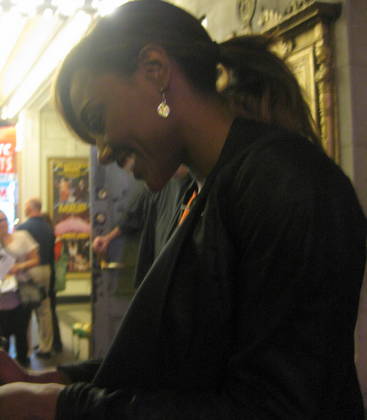
Patina Miller won the Tony for Best Performance of a Leading Actress in a Musical Revival. When she signed my program, I told her I believed she would win the Tony. Turns out I was right. She is probably still shocked and sooo happy over her win.
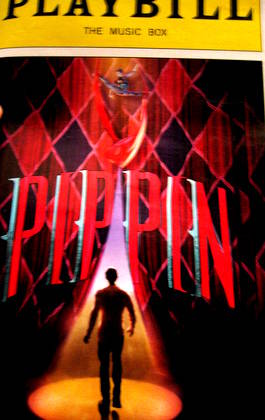
Pippin won the Tony for Best Musical Revival
The Tony Awards at Radio City Music Hall hosted by Neil Patrick Harris held no surprises if you saw the Drama Desk Awards. The award wins echoed each other this year, as the winners of the Drama Desks and Tonys mirrored each other last year. It’s as if the separate award committees sat down with each other and agreed on the wins.
Just the highligts are repeated here, of the Best Musical, Best Musical Revival, Best Play, Best Play Revival and the Actor awards. I’m thrilled for the Kinky Boots win for Best Original Musical and Cindi Lauper’s score win for Kinky Boots. I’m glad it won over Mathilda which I didn’t think was as great as it was touted to be when I saw it. I have yet to see the production of Kinky Boots, but will get tickets as soon as possible. Billy Porter now has a Tony to add to his Drama Desk Award for Best Performance by a Leading Actor in a Musical. The trailer posted online with him dressed in drag is a show stopping number and looks like a deserved win. He, as many of the performers did, thanked his family and God for sustaining him throughout to bring him to the stage and the wins.
Pippin won for Best Musical Revival. I’m thrilled. See my review of Pippin here! I predicted wins for Andrea Martin (Best Performance by a Featured Actress in a Musical Revival) Diane Paulus (Best Director for Musical Revival) and Patina Miller (Best Performance by an Actress in a Musical Revival). I am so thrilled because I had the opportunity to tell Andrea Martin and Patina Miller that I hope they won because they were fabulous. Their wins bring viability and credibility to their careers and will most probably sky-rocket them to other roles in film or Broadway. I’m absolutely joyous for them. They and Diane Paulus so deserve it for their efforts.
Cicely Tyson (Best Performance by an Actress in a Leading Role in a Play ) received the Tony to go with her Drama Desk for her incredible, moving performance in A Trip to Bountiful. She was absolutely stunning and heart-wrenching. Judith Light received a Tony to go with her Drama Desk for her humorous character portrayal in The Assembled Parties. Likewise, Tracey Letts (Best Performance by an Actor in a Leading Role in a Play) won the Tony, adding to his award shelf that already holds a Drama Desk and other awards for his performance of George in Who’s Afraid of Virginia Woolf? The play’s director, Pam MacKinnon, also won the Tony as she did the Drama Desk.
Courtney B. Vance from Lucky Guy by Nora Ephron brought home the Tony for Best Performance by an Actor in a Featured Role in a Play. He was excellent, though I did want Tony Shalhoub to win in that category for Golden Boy. Shalhoub’s portrayal of the father (too bad it was so early in the season) was exceptional; he was dynamic and powerful in his soft-spoken, loving, nuanced portrayal. His was a pivotal character, the conscience and the theme of Odets’ play. He brought together the elements brilliantly in a living, vital performance. It was a shame he didn’t win; he was breathtaking. Vance, though fine, didn’t do it for me, where Hanks, actually, was touching and wonderful…enhancing Ephron’s somewhat lackluster characterization of McAlary. (See my review.) If not for Hanks, the play would have been a yawn. But Letts was the favorite and I unfortunately missed this supposedly iconic Virginia Woolf. After all the nominations, Matilda did receive a win for Best Performance by an Actor in a Featured Role in a Musical (Gabriel Ebert). For me, it was a toss up between Terrance Mann (Pippin) and Ebert, but I didn’t see the other performances, so I can’t say. I did think that Ebert was pushing for laughs as was Mann…both comedic roles. Comedy is very, very hard to do well.
The finest remarks in the evening were delivered by Tracey Letts as he thanked the ATW. He said something to the effect that the others in the category were not his competitors, they were his peers. He was absolutely correct: Tom Hanks (Lucky Guy) David Hyde Pierce (Vanya and Sonia and Masha and Spike) Nathan Lane (The Nance) and Tom Sturridge (Orphans)? I saw each production and there is absolutely no way I would have been able to select from these. Of course, I did not see Letts. And the Best Play? Christopher Durang’s Vanya and Sonia and Masha and Spike. What can I say? I loved it and of the four nominees, it was my favorite.
As a show, The Tony Awards was better than the Oscars which lasts forever in its own self-indulgent mode. But then I only watched two hours of The Tonys while I was online doing other things. It is how I watch TV, if I watch it at all, which is extremely seldom. I prefer streaming or the interactivity of social or mobile. The more alive, the better. That is why I love theater, but am annoyed that they have not entered the Social Media age of living, breathing interactivity during performances. They (the theater police) don’t trust the rabble to not throw things, I guess.
Don’t they understand about Macros flash settings and texting and silent mode on mobile? Don’t they get it that interactivity from fans IS THE BEST PROMOTION AND ADVERTISING OUT THERE FOR A BROADWAY SHOW? Maybe not. NASA gets it. They have Tweet teams. A play is a potential TWEET TEAM LAUNCH ON SOCIAL Yawn. I’m waiting for them to “get it.” It may take years.
Drama Desks Sunday, May 19th. Will Winners Overlap With Lucille Lortel Winners?
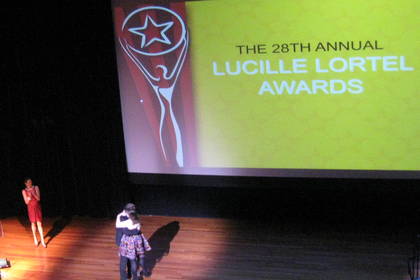
Jake Gyllenhaal hugs Annie Funke for her win as Outstanding Featured Actress in the production where Gyllenhaal also starred: If There is I Haven’t Found it Yet.
The Drama Desk Awards like the Lucille Lortel awards are given annually. Unlike the Lortels which honor Off Broadway productions (over 100 this year, musicals, dramas, solo performances) The Drama Desks are the only major New York theater honors for which productions on Broadway, Off-Broadway and Off-Off Broadway compete against each other in the same category. Because of the fierce competition, the Drama Desks are to be coveted because they are voted on by media people only and without any vested interests in the results. Though the Tonys are seen globally, they represent highly commercial theatre, which in effect is controlled by the entertainment industrial complex, fueled by corporates. That is why the commercial spots during the Tonys are pricey and the event is all showmanship, glitz and bling for a home audience as they trail in the shadow of the Oscars. For recognition of innovative, experimental, original theatre, the Lucille Lortels and the Obie’s represent Off and Off Off Broadway, but the Drama Desks represent the best of all of NYC theatre.
A few of my predictions for the Lucille Lortels came about. Below are photos from the event.
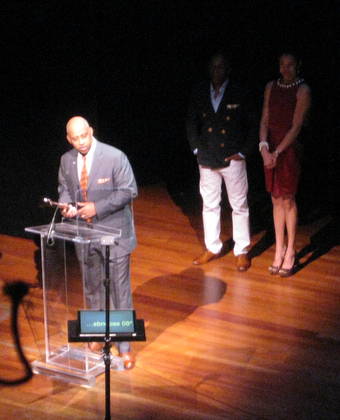
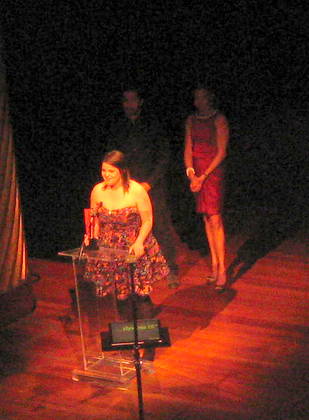
Ruben Santiago-Hudson (photo left thanking the cast) deservedly won for his phenomenal direction of The Piano Lesson. Annie Funke (pictured right with Gyllenhaal in the background) was marvelous in If There Is I Haven’t Found It Yet and I was thrilled she was honored for her outstanding work. I had predicted both of these. I was surprised that the voting committee didn’t select Jake Gyllenhaal. I thought his performance was excellent and Off Broadway would give him a win in encouragement for the risk he took and because his presence and stature creates a vitality and interest for the smaller venue. Interestingly, the committee went with the fabulous performance of Chuck Cooper in The Piano Lesson, a well deserved win. I thought he didn’t have a chance, but in this instance, the committee members were just. His performance was moving and indeed incredible, and yes, I can agree that of the two performances, his was absolutely memorable.
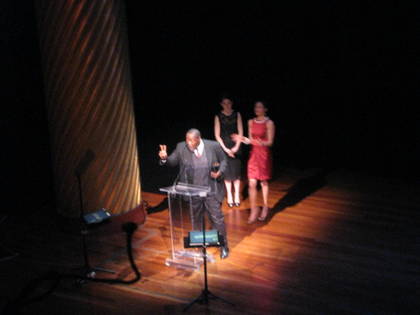
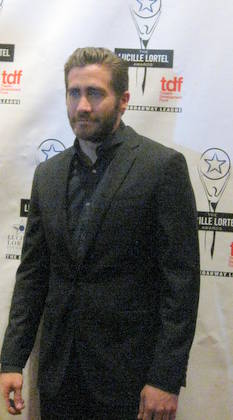
Chuck Cooper (photo left above acceptance speech. Gyllenhaal photo right, at the pre-show photo session) was so ecstatic that he won for Outstanding Featured Actor for The Piano Lesson he basked in the applause and chuckled that, “He might be there a while, because there was no clock.” The show was not televised at NYU’s Skirball Center nor was it streamed, so advertisements and time factor didn’t really intrude. He thanked director “Ruben, a force of nature,” and August Wilson, the Bard of Pittsburgh and the 10 plays that he left (The Piano Lesson won the 1990 Pulitzer for Drama). Aasif Mandi, Master of Ceremonies along with Maura Tierney, (Aasif was nominated for his performance as Outstanding Lead Actor in Disgraced) joked after Chuck Cooper left that Cooper was still thanking people and carrying on backstage about how grateful he was.
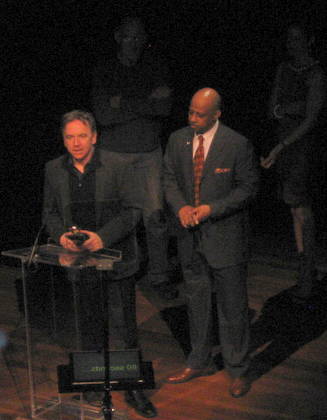
Signature Theatre’s Founding Artistic Director, James Houghton and Director, Ruben Santiago-Hudson receiving the award for Outstanding Revival The Piano Lesson by August Wilson.
I had predicted that The Piano Lesson would win the Lortel for Outstanding Revival and I was gratified to see the committee and I agreed about its being the best of the revivals. Though Vanessa Redgrave didn’t win for Outstanding Lead Actress for The Revisionist (I thought she was wonderful.) I wasn’t disappointed because the brilliant Roslyn Ruff won for The Piano Lesson.
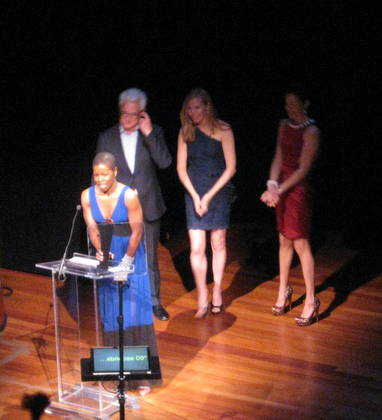
Roslyn Ruff accepting for Outstanding Lead Actress in The Piano Lesson.
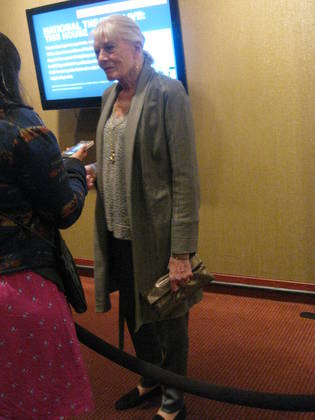
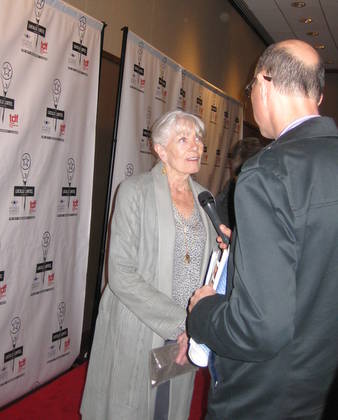
Vanessa Redgrave graciously answered questions right before taking her seat for the award ceremony. She arrived right on time, quickly moving through the pre-show photo shoot. She did stop to chat with nominees’ family and friends.
 The only actor from The Piano Lesson who was nominated but who didn’t win for Outstanding Lead Actor was Brandon J. Dirden. I thought he would, but the committee gave the award to Shuler Hensley for playing the morbidly obese, gay, geeky (online tutor) recluse in The Whale. How could that role not be empathetic and soulfully written? Having not seen his performance, I cannot weigh in (sorry for the pun) but I thought Dirden was unparalleled and I imagine he had a greater challenge because he created an empathy for his character that was NOT built in and padded as it was with Hensley’s character which seems to have every underdog trait piled into it to elicit the sympathy one would have for a run over pet. If that part were a female, lesbian, morbidly obese, geeky (online tutor) recluse, I doubt that the character would have been as empathetic to audiences. A morbidly obese, lesbian, geeky (online tutor) female recluse not hidden from the view of the male/female audience? Hardly. Self-righteous, judgmental females would have found her disgusting. A male can get away with so much (gay, morbid obesity) that a female in our culture simply cannot. Do I sound biased? I am. See why HERE. Dirden carried the play with magnificence; his role was the most complex, the richest and most nuanced. Hensley’s role was in the stereotype, a cake walk for an excellent actor. I am not taking anything away from Hensley by suggesting this…just highlighting the impossibility of equating two highly varied roles for the same award; an absurdity.
Off Broadway musicals were a varied range. My friends enjoyed Murder Ballad, but Dogfight beat it out in the competition. 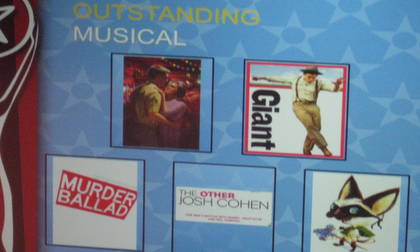 Audience supporters were thrilled and the clips for the show did look awesome. I am sorry I missed both, and neither are nominated for Drama Desk Awards which include Lucille Lortel nominees The Other Josh Cohn and Giant one of which may take the Drama Desk. Though the field for the Drama Desk includes Broadway and totals two more musicals, a win for the Public Theatre’s Giant or Here Lies Love, touted by critics and friends alike is good. Those productions are up against Matilda which is a commercial audience favorite, but whose music might not be as lyrical, innovative or clever. Hands on a Hardbody which was unable to produce enough ticket sales to sustain the show which will probably be a total loss to investors never got up the steam to chug it through initial box office doldrums. A Drama Desk win would vindicate the production, though it isn’t likely.
Drama Desks Mirroring Lucille Lortels?
The offerings and categories are different among the Drama Desks and Lucille Lortels. My favorite for Outstanding Revival is still The Piano Lesson, though I loved the Broadway revivals of Golden Boy and Trip to Bountiful. I did not see Albee’s Whose Afraid of Virginia Woolf; actor friends loved it. Shuler Hensley for The Whale is up against Tom Hanks for Lucky Guy, Nathan Lane for The Nance and other Outstanding Actor nominees (highly praised Tracey Letts for Albee’s Whose Afraid of Virginia Wolf). CLICK HERE FOR COMPLETE LIST OF DRAMA DESK NOMINEES. I did see Tom Hanks and Nathan Lane’s performances. I didn’t like Lucky Guy, CLICK HERE FOR REVIEW, but Hanks was amazing in a role that goes counter to his usual roles; I liked The Nance, but Nathan Lane is a natural and the role is typical for him, yet he is nuanced and marvelous. It’s a crap shoot, folks. I loved them both. Hanks and Lane. Someone put them in a play together!
I would love to see either an Outstanding Actress win for Cicely Tyson, A Trip to Bountiful (She is a tour de force.) or Vanessa Redgrave for The Revisionist. And for Outstanding Featured Actor my favorite is Tony Shalhoub (Golden Boy) who was so beautiful, loving, sweet and poignant as the father (He reminded me of my own). Chuck Cooper (Piano Lesson) was wonderful and a favorite over two other actors I did see, The Big Knife’s Richard Kind and Brian F. O’Byrne for If There is I Haven’t Found it Yet. The fact that they’ve been nominated is a win, surely, though the Drama Desk is lovely on a mantle piece and an affirmation to continue or retire.
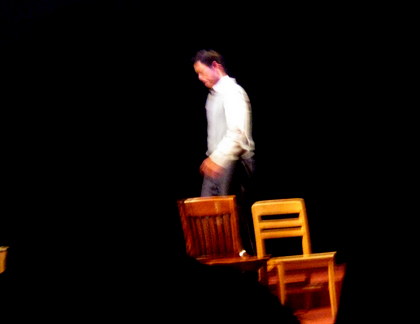
Joel de la Fuente nominated for Best Solo Performance for Hold These Truths
A few words about the Drama Desk’s Outstanding Solo Performance. I reviewed Hold These Truths in the fall. I have been honored to see the evolution of this brilliant play written by Jeanne Sakata and the incredible performance by Joel de la Fuente (CLICK HERE FOR REVIEW) who portrays the journey of Gordon Hirabayashi, civil rights hero. Hirabayashi was one of three American citizens who defied the order for Japanese internment to the desolate camps in the American west during World War II. It was an infamous time when first generation American-Japanese citizens were swept up with naturalized Japanese – American citizens, and forced into the American version of racist concentration camps after they hurriedly gave up or sold their possessions and lost their homes. Joel de la Fuente’s performance does not only portray the young and old Gordon, it includes the portrayal of individuals along the pathways of Gordon’s life: his parents, his girlfriend/wife, friends, officers, judges, et. al. It is a veritable one man show of many characters and in the retelling you are uplifted to understanding the greatness of perseverance and the beauty and the loneliness of the struggle for human freedom and dignity.
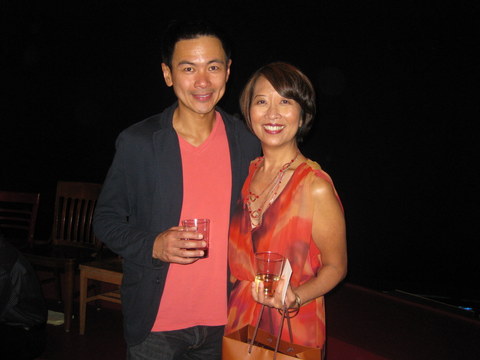
Joel de la Fuente and playwright of Hold These Truths, Jeanne Sakata.
Joel de la Fuente’s is an intensely American performance. Hold These Truths is an intensely American play about a time of infamy in our recent history. He deserves the Drama Desk. I hope he wins it because, though Bette Midler was exciting and LOL funny as Sue Mengers in I’ll Eat You Last, and Taylor Holland was marvelous in Ann, a role she wrote and originated, Joel’s work is genius in recreating not one individual, but many. The necessity of capturing the unique individuals to tell Gordon’s story would be a tremendous challenge for any actor. de la Fuente honors Gordon Hirabayashi’s courage (He passed in January of 2012. Obama granted him The Presidential Medal of Freedom posthumously on May 29, 2012.) and makes the period and the people live in our hearts and minds. The performance is unforgettable. As much as I appreciated Taylor Holland’s seminal work about the former Texas governor, Ann Richards, so much more was the vitality of Joel de la Fuente’s delineation of people, history and events from the 1930s to the 1980s in Jeanne Sakata’s amazing play, Hold These Truths.
Lucille Lortel Awards: My Predictions for Some of Off Broadway’s Best
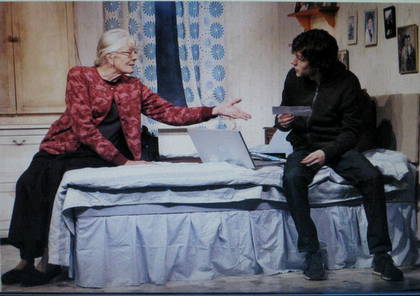
Vanessa Redgrave and Jesse Eisenberg. Redgrave is up for a Lortel Award.
Tonight Off Broadway receives its day in the sun. Some of the finest theater resides Off Broadway in smaller houses whose productions are less costly to mount. If a big name is attached to an Off Broadway production, all the better. This year, Vanessa Redgrave, Jesse Eisenberg, Jack Gyllenhaal and America Ferrera, renown for nominations and/or wins for sterling performances in other entertainment mediums acted in productions in the Village or in theaters away from Broadway central. We are blessed that they have given their support to these smaller venues, their name recognition helping to draw investors to risk their money on productions we might never have seen performed anywhere.
Though I was not able to see many of the productions, amongst the ones I did see, I do have my favorites. Will they win a Lortel Award? Well, they do have my vote. For Outstanding Play, amongst the picks three women playwrights offered their brilliance to the five nominated plays which you can find online: HERE. My vote was between Bethany, produced by the Women’s Project Theater and written by Laura Marks and Detroit produced by Playwrights Horizons and written by Lisa D’Amour. If either play receives the Lortel Award, I’ll be thrilled.
I did not see any of the musical productions, though I was tempted to and may still see Murder Ballad, which I heard friends rave about. I just couldn’t fit the production in my schedule. As for Outstanding Revival, I have two favorites, Signature Theatre productions: My Children My Africa written by Athol Fugard and The Piano Lesson written by August Wilson. Both were directed by Ruben Santiago-Hudson and I had the opportunity to go to the talk backs for both shows with Santiago-Hudson and the cast which were fascinating. However, I particularly thought The Piano Lesson was one of the finest, most alive, thrilling productions of August Wilson’s plays that I have seen in the last few years, even more phenomenal than Fences with Denzel Washington which I loved. So for me, The Piano Lesson blows away the rest of the competition and should win the Lortel for Outstanding Revival and Direction. Ruben Santiago-Hudson worked wonders in marshaling and inspiring his actors, Brandon J. Dirden (up for Outstanding Lead Actor) and Chuck Cooper (Outstanding Featured Actor) and Roslyn Ruff (Outstanding Lead Actress) to come alive onstage. I was drained and uplifted by their performances and the unforgettable production. Marvelous.
For Outstanding Lead Actress, I did see four of the performanes. Nominated are Quincy Tyler Bernstine for Neva, America Ferrera for Bethany, Vanessa Redgrave for The Revisionist, Roslyn Ruff for The Piano Lesson and Sharon Washington for Wild With Happy. I must say that it is very difficult to make any basis of comparison and all the actresses were exceptional. I thought Quincy Tyler Bernstine’s portrayal as Chekov’s wife was ironic, tempestuous, feeling and humorous. Roslyn Ruff was anointed in her portrayal; her exorcism of the demons which plague the family electrifying, acute, spiritual. Hers was the pivotal role around which all the other characters weave and she commanded turning with grace and subtly.
However, my favorite performance was Vanessa Redgrave’s for the old Polish woman harboring a secret which she attempts to keep even from herself, in The Revisionist. Given my proclivity for annoyance with Rattlestick Theater Company who mounted the production, I was not easily persuaded into enjoying the play’s brilliance, depth, and austere themes. Redgrave and Eisenberg were wonderful together, a great union there. I was particularly touched by Redgrave at the end as she so completely conveyed the gravitational pull of her character away from human love and connection: her necessity to remain alive and paradoxically remain numb and emotionally dead danced in a somber interplay, something only a truly accomplished and talented actress could execute without undermining the truth of her being onstage. Redgrave’s sensitivity was amazing and she conveyed this great pain-filled void of her character with great beauty. The result was Greek Drama: catharsis and empathy. An “Ahhhh.” moment.
A few words about If There is I Haven’t Found it Yet. I was happy that Jake Gyllenhaal performed in live theatre taking a tremendous risk to stretch his acting gifts. His presence and the lower cost of the venue brought many younger audience members to see the production and though it is a debatable concept, in this instance, many of these twenty-somethings probably would not have come to see the production otherwise. It is unfortunate and fortunate that he is competing with Chuck Cooper in The Piano Lesson. Both were so creative and so unique and alive and felt. They are both favorites of mine. I do think that Gyllenhaal will receive the award because his stature coming from film might be considered a vital and necessary promotional spur to bring publicity and celebrity to Off Broadway.
It is a time when the artists, actors, directors in the NYC theatre community long for repertory companies, long for sure venues to mount experimental, innovative productions, long for alternatives to the grind of finding investors and being told, “No it can’t be done!” Over the last decades the Philistines have forced belt tightening in the extreme. Only love and obsession for live theater drives this artistic community to commit to creating the unique theatrical experiences. Their hunger for money does not, not that the lure of riches ever drove brilliant artists and art. Yet, it is an exciting time. It is a time when shifting paradigms and mega social media and the internet threaten the way things have been done for decades. Thus, the Philistines are being attacked on all sides, and I do think if the young are able to capitalize on this, theatre WILL OUT because those from the old paradigm are confused and disconcerted at the loss of market share. They will be forced to listen to innovators and youthful-minded integrators to compromise and use the new medium to massage theatre into a new era.
Will the arbiters of old entertainment media learn how to embrace new trends in the new paradigm? (For example, using social media during performances to promote and create interest about the productions. No folks. It isn’t distracting if you are not in the first three rows. That is a myth perpetuated supposedly to keep control of revenue, when it actually prevents revenue. And where are productions’ Twitter/Tweet and FB teams?) I don’t know. I do know that this concept rules investors: celebrity names give credibility to live theatre and bring revenue (the costs also drive the younger crowd away and hamper revenue) by drawing a larger audience. (This is debatable. The greatness of a production is what draws. Well placed and thought out social media strategy can help, but it hasn’t been used to any well meaning extent.) We will probably see more of this (currently Tom Hanks is in Lucky Guy) until traditional, old paradigm threads into new paradigm and the shift is made.
The Signature Theatre has received the funding to take a modicum of risk in its selection of performers by highlighting established and upcoming playwrights. They select playwrights (some living) in residence (Hwang, Albee, Katori Hall, Fugard) and directors like Ruben Santiago-Hudson have followed through with their verve and creative energy to put on interesting and brilliant productions. That is what we need more of. We also need to see more renown film actors taking risks Off Broadway, like Gyllenhaal, though of course, for them, the work is tantamount to doing pro bono. For that reason, I think Gyllenhaal will win, though I do think that Cooper was astounding. However, this is Off Broadway. You never know.
Finally, I do know that Annie Funke will win for Outstanding Featured Actress in If There is I haven’t Found it Yet. She played the obese teenage family member set adrift in familial landscape of oblivion and negligence, where all except her uncle (Gyllenhaal) are drowning. (see my review) Her performance was without parallel. If she doesn’t get the Lortel, I’ll be pissed. Will keep you posted as to whether my favorites and those of the voting members of the Off Broadway League jive.
B.B. King’s Signature Wines Launched. A Bottle of Red, A Bottle of White, the Legend Continues.

B.B. King toasts to fans and wine lovers with a glass of the B.B. King Signature Red.
The legendary blues musician and 15 time Grammy winner B.B. King is a dynamo at 87. If you are a B.B. King fan and have caught his blues act in concert or play his music at home, you know why this beloved Rock and Roll and Blues Hall of Famer has achieved global renown. His blues is easy listening. His musicianship is kinetic. His youthful verve is catching. His bubbling vitality has stirred B.B. King to keep a busy schedule. He tours globally averaging 250 concerts a year and promotes or plays at his B.B. King’s Blues Clubs occasionally in Orlando, Memphis, Nashville, West Palm Beach and Las Vegas (currently closed). All of his moves and his clubs encourage the iconic blues to flow. Visiting artists and musicians play music at B.B. King’s, whether funky and fast or soulful and smooth, LIVE, every night of the week.
In another contribution to stimulating our enjoyment of life, B.B. King’s energy has spilled over into creating his own signature wines. Whether you are a wine lover or B.B. King fan you can savor his wines at his clubs and in select retail stores, wine bars and music clubs nationwide as well as online. You and friends can share a bottle of red paired with the Bourbon Glazed Ribeye at B.B. King’s Orlando or share a bottle of white with the Southern Fried Catfish if you’re visiting family in Memphis and decide to drop in to B.B. King’s for a great evening of music, food and wine. When you enjoy his wines you are embracing this amazing talent who has brought so much to global fans and has given back with joy to artists and musicians.

B.B. King’s Signature white and red wines at Vinport.com/bbking
How did the B.B. King Signature Collection come about? Since B.B. King has performed in 88 countries throughout the world with hundreds of performances given in Europe, he has become acquainted with the relaxing, leisurely and healthful style of meal enjoyment there. One of the most memorable visits was to Spain in 1991 when Seville hosted the original all-star “Guitar Legends” concert series. This series celebrated 27 of the world’s finest guitarists, including B.B. King, over a five day period of completely sold out shows. It is not a coincidence that his signature wine is sourced in the up-and-coming D.O. wine region of Almansa, Spain from the award winning Bodega Santa Cruz winery which has been producing wine for over 60 years.With the efforts of Bodega Santa Cruz winery and the assistance of Votto Vines Importing headquartered in Connecticut, B.B. King’s Signature Collection was established and is being launched nationwide.

This Crianza will pair well with stews, red meats, and some richer pasta dishes. It will also compliment sausage, but nothing too spicy
The B.B. King Signature Collection is the misty elegance of the blues; it manifests the sine qua non of B.B. King, the legend, the personality, the sustained career excellence. The B.B. King Signature Collection Red 2010 is a Crianza blend made from Garnacha, Syrah, and Cabernet Sauvignon. The B.B. King Signature Collection White 2011 is made only from 100% Verdefo grapes. The wines pair well with various dishes and can be drunk with appetizers to one’s taste as they are food friendly. They are moderately priced and won’t destroy your wine budget for the month and as in European style can be enjoyed as every day drinking wines. The suggested retail price is $13.99 which is perfect for casual enjoyment with friends, larger parties, as well as other dining occasions. You can purchase B.B. King’s Signature Red and Signature White at Vinport.com/bbking.

This Verdejo pairs beautifully with seafood, light sauces, and marinated olives. It This Verdejo is light and refreshing on its own as an aperitif, and matches well with a wide variety of dishes including Mediterranean pizzas, sushi, and especially mussels or clams in broth.
Just a few details about B.B. King that you should know.When you think of blues, the iconic King of Blues, the man with the golden fingers easily comes to mind. B.B. King has defined blues globally for the last 50 years. His tireless efforts have set the standards for blues. His work ethic and force of will are marvelous to experience given his age and effervescent spirit.

B.B. King in concert.

The riff.
B.B. King began recording in the 1940s and since then has released over 50 albums. His guitar style is memorable, identifiable and amongst the finest in the world. It earned him a #3 spot on the list of Rolling Stone’s “Top Guitarists of All Time.” B.B. King was inducted into the Blues Foundation Hall of Fame in 1980 and into the Rock and Roll Hall of Fame in 1987. In addition to receiving the Grammys, he was awarded with NARAS’ Lifetime Achievement Grammy Award in 1987. Was he ready to throw in the hat and retire? Saay what? He was just beginning. He opened his clubs and continued to tour increasing his fan base to a new generation of fans who enjoy his music and dig his club scene. He has established his iconic presence with clubs in key cities and now has expanded our enjoyment with the B.B. King Signature Wine Collection. Now, is this man the blues or what?

King of Blues
EATALY CELEBRATES SAGRANTINO MONTH IN NYC 2nd Annual Event
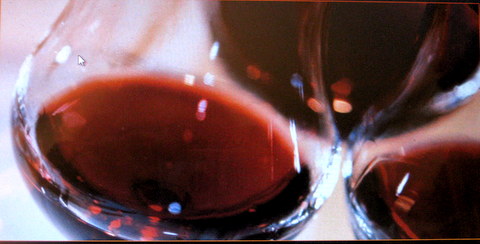
My cousin who is a doctor in Perugia, Umbria is so fortunate. She has the opportunity to enjoy the vino locale whenever she wants. It has been a few years since I have been to visit and I miss everything I enjoyed about the region, the sounds, sights, tastes, smells, all of which combined to take my breath away and create an indelible experience of freshness and beauty.
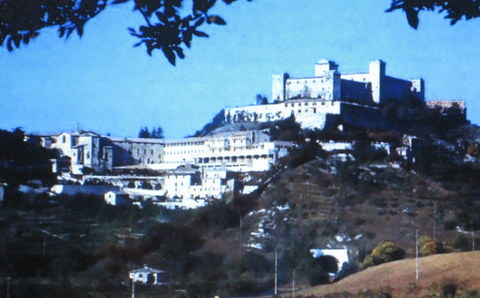
Spoleto, home of the arts and music festival in east central Umbria.
In the region you will find Montefalco and its indigenous wine, the Sagrantino. Umbria, belovedly referred to as “The Green Heart of Italy,” was celebrated in NYC in the fall. It was then I happily took advantage of imbibing Umbrian wines and feasting on the delicious cuisine native to the region. I even purchased some Umbrian products at venues (i.e. Eataly, De Paolo’s Fine Foods) around the city as New York highlighted the month long events that Mayor Bloomberg proclaimed for the celebration of “I Love Umbria Month.”
Growing Popularity of Montefalco’s Signature Wine in the U.S.
By now familiar with the region and its cuisine, I was glad to learn that The Montefalco Consortium announced a 2nd annual ‘Sagrantino Month’ to be held at New York City’s Eataly in March. I have come to love Sagrantino wines, becoming acquainted with various Montefalco wineries which grow the finicky and spare grape vines. Producing these wines is a feat which requires concentrated effort, knowledge and determination to tease out a wonderful harvest that through experience and honed skill rewards us with the sumptuous, full bodied and rich tasting Montefalco Sagrantino.
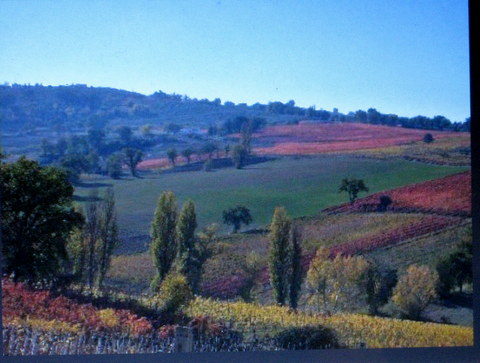
Montefalco Wine Region
This year’s Sagrantino Month celebration is part of a year-long, national Sagrantino campaign that includes events and promotions capitalizing on the momentum created by an increased American interest for the signature wine of Montefalco. Amilcare Pambuffetti, president of the Montefalco Consortium explains this thrust into the U.S. market. “Last year we introduced many Americans, both trade and consumer, to Sagrantino and the response was enthusiastic. This year we plan to build on the foundation we’ve established.”
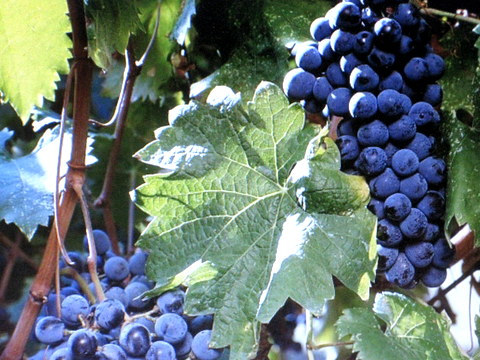
Sagrantino grapes
Sagrantino Month Celebration at Eataly
The Sagrantino Month promotion at Eataly will include a trade seminar, consumer classes, tastings in the Eataly Wine Store, wine by the glass at all of Eataly’s restaurants and tastings in Eataly’s ‘La Piazza.’ The year-long promotion will continue with virtual tastings with US press, trade tastings, dedicated meetings for unrepresented producers, a consumer awareness and education program. From its quiet beginnings as a regional Umbrian wine, Sagrantino has become a favorite in Italy and producers are assured that as the American consumer becomes knowledgeable about Sagrantino it will become equally popular in the U.S.
There consumer classes at Eataly will be held on March 12 and March 28. Starting from March 1 to March 30, there will be free wine tastings at Eataly Vino every Friday, from 6 to 8pm, each time with a different producer.
Every Saturday a wine by the glass will be poured at the Le Eccellenze Corner inside the store, for just $10. Select wines of Montefalco will be available by the glass at each Eataly restaurant throughout the month and on sale at the wine store.
There are five participating wineries in the Sagrantino Month promotion: Antonelli San Marco, Arnaldo Caprai, Perticaia, Scacciadiavoli and Tenuta Castelbuono. Five more wineries will be involved in the other activities throughout the year, these are Colle Ciocco, Colle del Saraceno, Le Cimate, Romanelli and Tenuta Bellafonte.
If you are planning to indulge your love of Sagrantino or would like to have an introductory taste at Eataly and would like more information on the month long activities, visit www.consorziomontefalco.it.
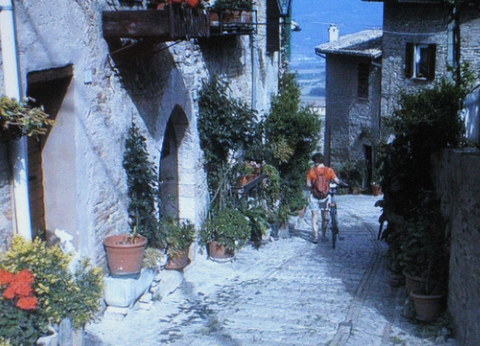
Looking into the valley of wine producers below. (Spello)
About the Wines of Montefalco
Sagrantino grapes are indigenous to the region of Montefalco, Umbria and have a long history there. dating back to the 1700s, where the growing of grapes and wine making was suited to Umbria, the “green heart of Italy” and Montefalco, where documents of the time noted that “fine and delicate wines were produced there in ‘beautiful and good’ vineyards.” So much was this the case that municipal sanctions were strengthened to maintain and sustain the culture of thriving, glorious vineyards and sumptuous wines. If you hampered a winery in its noble and sacred endeavors, you were in big trouble. In 1622 Cardinal Boncompagni, the Pontifical delegate in Perugia, threatened “capital punishment for anyone found cutting down grape vines.” Cutting down a plant was worthy of death? Such was the symbolism, of grape vines and the vitality of wine to the culture and the church.
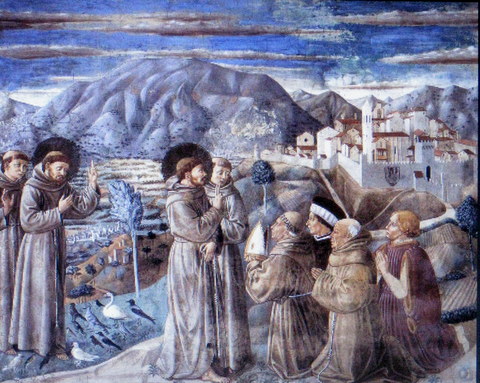
Franciscan monks nurtured the Sagrantino grapes in vineyards like St. Leonard’s in Montefalco to produce their sacramental wines. (Painting: Blessing the birds and the beasts.)
Sagrantino vines were cultivated in monasteries like St. Leonard and St. Claire where monks that made the wine used it for sacramental purposes and local farmers enjoyed the wine during festivals and religious holidays, including Christmas and Easter. The wine had a hearty following during the 20th century until after WWII when the vines and wine fell off and nearly disappeared in the 1960s. Thanks to the dedication of local producers with a romantic imagination and assiduous determination to bring back the Sagrantino grape and its luscious, full bodied wines, the Sagrantino DOC was granted in 1979 and the DOCG in 1992. Producers like Marco Caprai also elicited the help of the University of Milano to ensure that the Sagrantino vines burgeoned to yielding productive harvests. (The grapes are not prodigious and abundant in output and must be carefully nurtured.) As a result Sagrantino wines have become a favorite of Italy and are becoming globally known.
Sagrantino Montefalco DOCG
Wonderful points about Sagrantino is that it is suitable for long aging. It pairs well with many cuisines and is delicious with roasted meats like beef short ribs, pork loins, game and other meats that are juicy with bit of tasty fat. Other friends have told me that Sagrantino is delicious with spicy foods and of course, with cheeses like Granna Padano, Petite Basque, Robiola, or other sharp raw sheep’s or cow’s milk cheeses. I have found that Montefalco wines offer excellent quality without destroying one’s weekly wine budget. Two examples of high quality but affordable wines are the versatile Montefalco Rosso, a blend of principally Sangiovese, and Sagrantino, and the refreshing white blend known as Montefalco Bianco, made of the indigenous Grechetto, combined with Trebbiano and other grapes. The Montefalco Bianco pairs beautifully with fish dishes or light pasta dishes which sparingly use milk or cream.
Participating Wineries of Montefalco Celebrating at Eataly
IL Buco Alimentari & Vineria. A Great Place to Host the “European Winery of the Year 2012.”

I had been to other restaurants on Great Jones Street in that well trafficked section of NoHo, namely Five Points, a restaurant my friend invested in. IL Buco Alimentari & Vineria was just up the block. I had read Pete Wells’ New York Times three star review of Il Buco. Pretty impressive as reviews go, one star away from the four stars which only six other NYC restaurants achieved over the years.
Wells had raved about the bread, “Remarkable stuff, with the gradually unfolding nuances of taste that are achieved only through a slow and patient fermentation of dough with wild yeast.” (Yes, wild yeast! I liked the place already.) He was pumped about the salumi board, “…satiny pink and white folds of lonza and capocollo…melting into a lasting impression…” These were “cured and aged in the basement of IL Buco Alimentari e Vineria,” and “among the finest salumi in the country.” I do enjoy a great salumi board. My taste buds have been cured over the years by exceptional sopressatas, lonzas and capocollo, “home mades” served by Nonna Gabriele (maternal grandmother) and cuigini on both sides of my family. I tucked Wells’ February 2012 review in the back of my mind for later use.
It came when I received an invitation. Roberto Paris and Il Buco were toasting Marco Caprai winemaker and proprietor of Arnaldo-Capri Winery on his “Best European Winery” Wine Star Award from Wine Enthusiast Magazine. My schedule was swamped. Could I squeeze in some time to stop by? I was intrigued about going to a cocktail hour in the “simple and convivial spot” that the food critic claimed, “tastes just like Italy.”

What edged me to RSVP “accept” was my experience of NYC’s “I Love Umbria Month.” During the month’s activities celebrating Umbria in various venues around Manhattan, I attended a kick-off press event at Eataly. I was introduced to Caprai wines and a few native Umbrian dishes prepared by Eataly’s Alex Pilas. The Arnaldo-Caprai Winery is from Umbria, the region known as “the green heart of Italy.” In Umbria classic regional fare includes pork, mushrooms and lentils or legumes. From my Eataly experience, I knew the Sagrantino wines from Arnaldo-Caprai, paired beautifully with these items; I had sampled dishes made with pork, lentils and mushrooms at the press luncheon. The Sagrantino di Montefalco, I remembered Caprai’s signature wine had a rich and powerful mouth feel which heightened the earthiness of mushrooms and lentils. It complimented and lightly cut through the moist and fattiness of the pork. Though the luncheon was before Wine Enthusiast awarded Arnaldo-Caprai with its Wine Star award, I really liked the wines I had tasted.
Truly, the award is well deserved. Arnaldo-Caprai Winery is an “acknowledged leader in the production of top quality Sagrantino di Montefalco,” a wine produced exclusively from Montefalco’s indigenous Sagrantino grape. Arnaldo-Caprai wines have been globally recognized for their quality and production excellence. Caprai’s diligence in helping to restore the Sagrantino grape to a glorious plateau is applauded in the wine trade, and the winery has won many awards. The Wine Enthusiast Magazine’s award was no anomaly. Caprai’s exceptional wines were really taking off and wine lovers were appreciating just how good these wines were. A neophyte wine connoisseur, I was rapidly becoming a fan of Caprai’s wines.

Another venue might hold a slap dash ho hum affair I could easily avoid. This was all too enticing. The range of Caprai wines, its white and reds, would be accompanied by SAVEUR Top 100 Chef Salvatore Denaro’s “Umbrian light bites”and IL Buco chef, Justin Smillie’s delicious appetizers. These chefs? Caprai’s wines? Even the little time I would be able to spend there promised to be an absolutely exceptional rendering. I couldn’t afford to miss it.
I climbed the stairs to IL Buco’s private room with happy anticipation.The crowd kept coming. I mingled in to where Roberto Paris was pouring. He suggested I start with the white, the 2011 Colli Martani Grechetto DOC Grecante. The wine is made from 100% Grechetto grapes. At my first sip there was the pop of crispness and vibrancy on my tongue, refreshing to the palette. A lovely aperitif (one may also have it with fish, veal and poultry) I enjoyed it with Chef Salvatore Denaro’s incredible Grilled Spring Onions Wrapped in Fresh Pancetta, then I moved on to the Umbrian lentil soup the chef was proudly stirring. It was perfectly seasoned to show off the earthy taste of the legumes with just enough cooking time for a savory, luscious texture. Servers were coming around with trays conceived/prepared by Justin Smillie, Crocchette di Baccala, crispy house salted cod, aioli, and there were skewers of Mushroom & Artichoke.Wine and these bites were in the fold.

Back to Roberto Paris for the first of the reds, the 2010 Montefalco Rosso DOC a combination of Sangiovese, Sagrantino and Merlot grapes, followed by the more powerful and full bodied Montefalco Sagrantino Collepiano DOCG with 100 % Sagrantino grapes. I enjoyed the Rosso with a taste of the Salumi della Casa, definitely home made and yum yum lovely. Though I was becoming full and didn’t sample them, it was apparent the Rosso was great with the imported cheeses, spreads, compotes, Taralli, olives and fabulous house made whole grain breads (to die for) from Chef Justin Smillie’s Alimentary Table. The plates came in chock full of salumi and treats, and left swept clean by guests; again and again the servers came and went. Our appetites expanded, the conversation grew louder and I would soon have to leave, but not before tasting the best of the best and assessing what I had experienced thus far.

I thought the Rosso good, but I prefered the 100% Sagrantino grape wines. The Collepiano DOCG was perfect with the Panini sandwiches made on that fabulous and earth shattering Il Buco bread. (I love rustic, chewy bread.) One panini was with tender and juicy Slow-Roasted Short Ribs, gorgonzola, onion and agrodolce. The other was Roast Porchetta, arugula, salsa verde. The Collepiano DOCG is recommended for a roasted meat with juice and fat and after tasting the short rib panini, I knew why: explosive ruby red piquant flavor that cut through any heaviness of the meat and melded with the gorgonzola, onion and agrodolce. I tried the porchetta with the Sagrantino Di Montefalco 25 Anni. Striking, strong but smooth and soft velvet with a nice finish. Was that a hint of blackberries for the nose? I understand better how the tannins in the Sagrantino compliment and slice their flavors through succulent roasted meats. But I could even see myself enjoying a glass with a really great imported cheese as well.
I looked around. Time to leave. Was it possible the invited devoured the pork faster than the short ribs paninis? These chefs knew the Caprai wines and had done their homework with the menu which was exceptional. As I waited for my coat, I glanced around. Rats! Guests were eating pasta and I was missing it. I asked a woman and her partner who were chatting and smiling as they plopped what looked to be rigatoni shaped wedges with a light cream colored coating in their mouths. “Delicious, pasta…with pumpkin,” the woman said pinging some lovely light orange-yellow veggie on her fork for me to view. An obvious innovation. I would call Il Buco tomorrow and ask for the specifics, since I was already running late. (I found out it was Chef Denaro’s own take on Amatriciana* the traditional Roman dish usually served with Bucatinni.)
I finished the last of my Sagrantino Di Montefalco and savored its multiplicity of flavors on my tongue, the last a distilled earthiness. I envisioned the Franciscan monks that had kept those sacred vines growing in their monastery of St. Leonard in Montefalco in 1700. I guess I was a bit addled, and could have used some pasta to help with the wine’s power.

I said my goodbyes and slipped away from the fading din of conversation and exclamations about the full body of the Sagrantino De Montefalco. I left as I came in, happy with anticipation. I looked forward to returning to IL Buco with friends and ordering their roasted pork with a glass of Sagrantino De Montefalco 25 Anni. But before I came back, I’d have to lose the 2 pounds I gained eating this fabulous food and enjoying the equally wonderful wines.
*The traditional preparation has tomatoes, guanciale and garlic BUT rather than tomatoes Chef Denaro used Hokaido pumpkin (a very delicate, perfumed pumpkin.)
What is Slow Wine? Come to the Slow Wine Tasting in NYC on January 28th to Find Out!
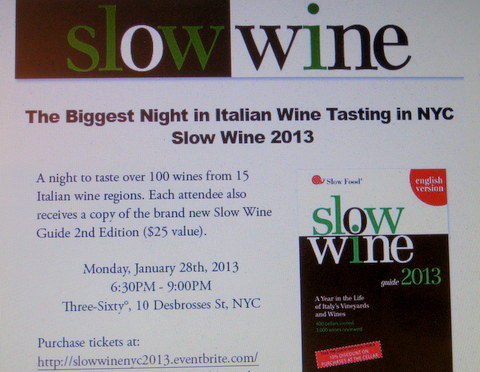
Slow Food NYC website
SLOW FOOD, SLOW WINE, WELLNESS
If you are living in the 21st century, you know the importance of wellness and healthy lifestyle as it integrates with the wellness of our planet. You also know that ecology is tied with food production, that increased carbon dioxide in our atmosphere is threatening all of our ecosystems, that ultimately every country is interrelated regardless of whether it is a failed state with a tiny carbon footprint or a prospering one responsible for chemical mega poisoning. Whether you are connected to enhancing the current paradigm shift, changing the negative impact of corporations, fighting against GMO salmon and wheat and corn and adulterated processed foods like pink slime, or whether you are a part of the problem, turning a blind eye to all of it, the quality of what you eat and drink over the next ten years will determine whether you stay well, or build up toxins that will eventually wreck your immune system shortening your life span.
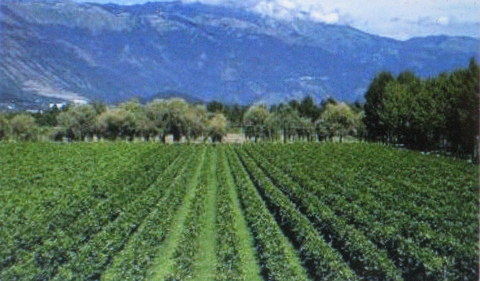
Conte Brandolini Winery is located in Vistorta, a small “borgo” within an agricultural estate in the heart of Western Fruili. The winery embraces Slow Wine concepts.

Nino Negri Winery’s “5 stelle’ Sfursat di Valtellina DOCG.” The winery embraces Slow Wine concepts.
BIRTH OF SLOW FOOD AND SLOW WINE
Did you know that this idea of countering toxic food intake and supporting healthy eco-agronomy actually began to boil over in the 1980s in Italy? As the economy of Italy improved in the 1970s-1980s and tourism burgeoned, Italian chic gave way to the lure of American globalism. Italy’s once fabulous cuisine was being thwarted by pandering to fast food franchises. Its ancient culinary traditions centering around home made and locally farmed deliciousness were being overrun by processed, chemicalized, adulterated convenience foods. If this continued, the land of sumptuous eating and wine-making would be no more. A vital aspect of Italy’s historical culture was at stake.

The Slow Food and Slow Wine website
Many understood the country was under a cultural siege and one of these was a culinary writer and journalist. Fast food was anathema to Carlo Petrini, who first came to prominence when he campaigned against the fast food chain McDonald’s opening near the Spanish Steps in Rome. Petrini’s successful activism prompted him to found a “slow food” and eventually “slow wine” movement initiating and establishing the importance of “eco-gastronomy.” In 1989 Petrini’s Slow Food nonprofit determined to influence producers and consumers in a paradigm shift away from processed, bland, unhealthful, chemical-ridden foods that Petrini recognized were destroying the gastronomy of the world. He spearheaded global advocacy starting in Italy to redirect food production back to Italy’s glorious agricultural past.
In two decades, his dream of protecting the biodiversity of the land and the cultural food traditions of Italy caught the imagination of many who saw the common sense of his platform. The movement has spread to more than 130 countries. The U.S. has the second largest chapter behind Italy which is the leader in the Slow Food and Slow Wine Movement. Just how does the movement make its impact guiding consumers’ food selections? Represented by the symbol of a snail (see the example given in the New York City Slow Food blog) restaurants or products approved by the Slow Food movement display the organization’s snail logo in their window or on their packages. Slow Food has also burgeoned into Slow Wines and wineries in Italy and elsewhere have employed the principles initiated by Carlo Petrini over two decades ago..

Assiduous grape selection after the harvest at the Nino Negri Winery…embracing the Slow Wine concepts.
The Slow Food precepts have encompassed the area of wines and wineries. Wineries in Italy and elsewhere have employed the vital factors initiated by Carlo Petrini over two decades ago. You will be able to taste Slow Wines from the wineries pictured here and many others at a grand tasting event in NYC. This year the Slow Wine Guide 2013 is presenting its latest edition on January 28th in New York City, January 30th in Miami and February 4th in San Francisco. To celebrate, Slow Wine and Vinitaly International are hosting this grand wine tasting.
SLOW WINE AND VINITALY INTERNATIONAL WINE TASTING EVENT (NYC)
For this wine tasting evening, Slow Wine’s collaboration with Vinitaly International offers an exceptional opportunity. Vinitaly holds the largest annual wine event in the world in Verona, Italy. Vinitaly’s expertise and presence assures that January 28th will be an unforgettable night in Italian wine tasting and education for New York City oenophiles and Slow Food and Slow Wine NYC members.

Slow Wine Guide, 2013 Attendees of the grand wine tasting event in NYC will receive a free copy of the Slow Wine Guide 2013 ($25 value)

Sagrantino grapes from the multiple award winning Arnaldo-Caprai Winery, which embraces Slow Wine concepts.
The Slow Wine Guide highlights the extent to which wineries follow the slow food, slow wine concepts. What’s a slow wine? Thirst Wine Merchants in Fort Greene Brooklyn describe it perfectly. It’s wine made from vineyards without pesticides or herbicides, and without chemical additives or flavors. Slow wines are made sustainably, organically, biodynamically. They are made on a small scale, from grapes grown in low-yielding, dry-farmed vineyards. Slow winemakers make their careful selection of grapes and harvest them by hand. No laboratory yeasts are used. Ambient yeasts allow the fermented grapes to naturally unfold revealing their distinct terroir (place of origin). New oak barrels (if necessary) are used with circumspection. The winemakers who follow these methods do it as has been done for centuries. There is no necessary certification, because winemakers believe this is in the best interest of preserving a tradition and making a great wine. In fact, this is the way my family members make wine, cherry liquor and lemoncello in my ancestors’ home town, Bagnoli del Trigno, Italy.
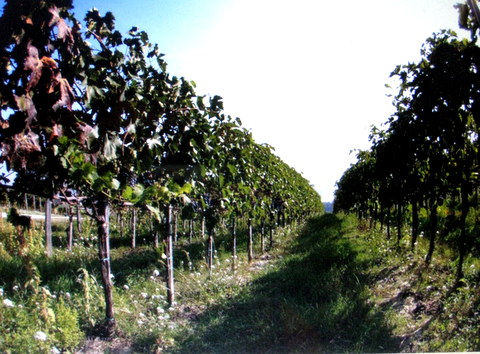
The vineyards of the Arnaldo-Caprai Winery, Wine Enthusiast Magazine’s 2012 European Winery of the year.
If you attend this Slow Wine tasting event, you will receive the added benefit of trying approved Slow Wines using the complimentary Slow Wine Guide 2013 to make your selections for future purchase. You will be tasting graciousness and supporting a movement which has taken hold and which will continue to grow exponentially as it gains critical mass against mechanized, adulterated, industrialized food and wine.
ABOUT THE SLOW WINE GUIDE
Like the 2012 guide, this year’s Slow Wine guide does not use a point system to evaluate wines. Instead, according to the Slow Wine US Tour article, wineries are judged “in their entirety, taking into consideration the wine quality, typicity and adherence to terroir, value, environmental sensitivity and ecologically sustainable viticultural practices.” wine connoisseurs, US industry producers, Italian wine aficionados and just your average oenophiles. Last year, The Slow Wine Guide 2012 debuted its first ever English-language edition in what was a compilation of expert reviews of Italian wineries, examining their production as it related to region and a myriad of other factors. This year’s Slow Wine Guide 2013 presenting its latest edition on January 28th in New York City, promises to offer interesting revelations and additions to last year’s guide.
SLOW WINE GUIDE SYMBOLS
Because Slow Wine was conceived to indicate the reality of the present Italian wine “landscape,” the guide presents reviews of 400 different wineries. Each of these wineries in Italy has been visited by Slow Food experts and their evaluations employ these symbols:
- The Snail (Slow Food symbol) indicates a cellar that has distinguished itself through its interpretation of sensorial, territorial, environmental and personal values in harmony with the Slow Food philosophy.
- The Bottle is attributed to cellars which reveal a consistently high quality throughout their range of wines.
- The Coin indicates great value.
A wine from the Nino Negri Winery, embracing Slow Wine precepts.

The Conte Brandolini Winery has been in the Brandolini family since 1780. The Brandolini estate is beautiful and boasts a lovely villa and gardens.
The Slow Wine guide is published by Slow Food Editore (the publishing arm of Slow Food Italy) and distributed in the U.S. by Chelsea Green. Following the events, the book will be available for purchase nationally on Amazon.com and select retail stores throughout US.
 CAROLE DI TOSTI