Sensational Umbria! Steve McCurry and Umbria Make a Good Team
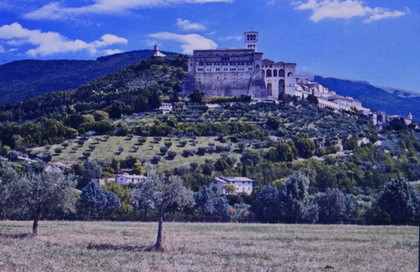
Sensational Umbria, photograph by Steve McCurry
Last year I was introduced to Italy’s region of Umbria at La Scuola Grande, Eataly’s events restaurant. It was then I savored my first Sagrantino wine made only in the Montefalco region of Umbria and tasted the regional foods, legumes, mushrooms, pork that were and are often the traditional mainstay of Umbrian cuisine. This year Umbria is being featured once again at Eataly, NYC and to highlight the region, Steve McCurry, world-renowned photographer has created an exhibit of his photos. These will familiarize viewers with the lifestyle of the region, its towns, marketplaces, textile trades, terrain, the wineries, cuisine, artisan crafts, in short, all that is wonderful in this region, known as “the green heart of Italy.”

L’Umbria Secondo, photograph by Steve McCurry
What impresses me about Umbria is the passion of those who are the leaders of the region who want to make sure that past connects with present-future. In other words, there is a great respect for ancient wine-making traditions, cuisines and crafts and the fervency to keep these traditions alive so they are transmitted abroad and actually sealed into perpetuity (that’s branding, folks). Part of keeping a record of what was and what will be is the “what is.” That’s where Steve McCurry comes in with his photographs. According to the President of Umbria, Catiuscia Marini, “The passion people have for the region of Umbria was captured perfectly by McCurry’s remarkable storytelling power.”

Sensational Umbria, Event Coverage. Photograph by Steve McCurry
An iconic voice in contemporary photography for more than 30 years, McCurry is a good choice to pick out mythic images of the Umbrian landscape, its people, its appeal of every day life activities. McCurry has been recognized with some of the most prestigious awards in the industry and he has published a number of photography books, for example The Path to Buddha: A Tibetan Pilgrimage (2003), In the Shadow of Mountains (2007), and The Iconic Photographs (2011) to name a few examples.

Olive Oil product from Umbria, sold at Eataly.
McCurry selected various photographs that were used in the exhibit and can be seen at the Italian Trade Commission until Saturday, November 16th. McCurry’s photographs will also be on display at Eataly, during their month long celebration of the region of Umbria in the month of November. Eataly is holding classes focused on wines and traditional regional cuisine and is featuring Umbrian products, including wines and the Sagrantino only produced in Montefalco, Umbria.
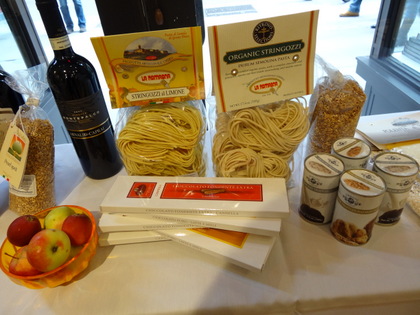
Products from Umbria sold at Eataly
Sensational Umbria is the title Steve McCurry has given to his project of 100 photographs. If you haven’t visited Umbria and don’t think you will have a chance in the next months, go to Eataly, NYC and take a peak at the exceptional photographs. Have a glass of Caprai wine with your pork or short ribs dish at Manzo Ristorante or Birreria. Peruse some of the Umbrian products seen here. You’ll be happy you got a chance to embrace Umbria in NYC and it will be an encouragement for you to eventually to visit that magnificent, less traveled and poetic region of Italy.
One Night by Charles Fuller at the Cherry Lane Theatre
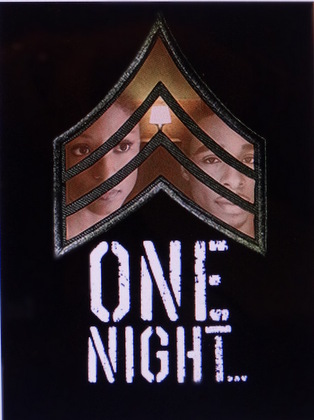
Rutina Wesley and Grantham Coleman in One Night at the Cherry Lane Theatre
The U.S. has been at war for more than a decade. In that time period lives have been lost for a cause that many question and that more feel was trumped up to justify the monetary benefit of an elite few, oil barons, as well as the lords of war and those supporting and fueling the military industrial complex. The casualties who have died for a cause that St. Thomas Aquinas would not have labeled just for its length of continuance, mismanagement and malfeasance are at peace. Those casualties who have remained alive and are scarred physically and emotionally are legion.
Many who have returned with Post Traumatic Stress Disorder now number in the hundreds of thousands. Statistics suggest that only half of them have sought treatment. There are many wounded warriors and returning vets who do not go for help because they feel therapies offered are ineffective. They remain hopeless and feel victimized by a government that is uncaring and callous and a culture that is indifferent, fatuous and ignorant. Oftentimes, their emotional state and symptoms of anger, drinking, drugging, hyper aggression, depression, anxiety, jumpiness, sleeplessness, restiveness spill out on their family, spouses and children. If coaxed to seek help, the suggestion is ignored or provokes an angry response. The tragedy is that PTSD is never eliminated. However, there is hope if a wounded warrior seeks help. Chances are with the right type of sustained assistance from a network of individuals using a variety of therapies, PTSD will be mitigated. One only has to reach out.

Cast of One Night at the Cherry Lane
This is easier said then done. The problem, then, is not being at war, it is coming home from the war, forever. Such is the subject of Charles Fuller’s play, One Night which opens to a World Premiere in NYC on November 6th. The Cherry Lane Theatre commissioned the play and the Pulitzer Prize winning playwright of A Soldier’s Play answered the call. The play delivers a powerful and important message that we must be alerted to. For our men and women veterans are returning home but what are they returning to? A life of meaning and purpose, or one of emptiness and continual anxiety, stress, dislocation and fury?
Certainly, if they have seen combat, have seen their buddies sharded or incinerated by mines and explosive, have seen themselves or others losing limbs, if they have suffered Traumatic Brain Injury or worse, have walked away unscathed physically, only to labor under delusive aftershocks of heightened oppression, guilt, flashbacks, suicidal/violent thoughts and more, they are experiencing PTSD.

Non profit, IAVA, the play is supporting with a percentage of its ticket proceeds.
How do they cope? Will they seek help or slip into the convenient or overlooked statistic? One Night covers all of this and shadows how a woman responds in recompense to an unjust act effected by soldiers, themselves suffering from an inability to deal with their own trauma to act humanely. The sufferers unload onto the perceived weaker sex and the woman like many women who serve in the U.S. military ends up battling an additional enemy ones wearing the same uniform. War turns men and women against each other eliciting the worst in times of stress. It can happen in many times during a decade, it can happen “one night,” but if it happens woe to all it happens to.
The World Premiere of One Night is being presented by the Cherry Lane Theatre and the Rattlestick Playwrights Theater.
One Night directed by Clinton Turner Davis will be at the Cherry Lane Theatre from November 6 to December 15.
Mon and Tues at 7 pm., Thurs and Fri. at 8 pm, Sat. at 2 pm and 8 pm, Sun. at 3 pm.
Featuring
Grantham Coleman, K.K. Moggie, Matthew Montelongo, Cortez Nance Jr., Rutina Wesley
Set John McDermott, Costumes Jessica Jahn, Lighting Nicole Pearce, Sound Sean O’Halloran, Video Gil Sperling, Fights UnkleDave’s Fight-House, Props Starlet Jacobs, Stage Manager C. Renee Alexander, Assistant Stage Manager Kristin Pfeifer
Running time is 2 hours with one 10 minute intermission.
FOR TICKETS CLICK HERE.
5% of ticket proceeds benefit IAVA, the first and largest nonprofit, nonpartisan organization for Iraq and Afghanistan veterans. Learn more and support the Next Greatest Generation at IAVA.org.
Cinderella’s Magical Wheelchair by Jewel Kats, Illustrations by Richa Kinra
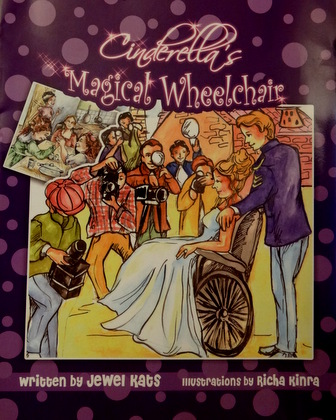
Cinderella’s Magical Wheelchair by Jewel Kats, Illustrations by Richa Kinra
In a land far, far away there was magic and there was brutal reality. If that sounds like a bit of a fairy tale, so it is. But when you think about the long haul of eternity, life is a bit of a fairy-tale in its beauty and pain. There are magical times and then there is the brutal reality of sorrow and loss, But with faith and effort, there is overcoming. Such are the themes of the modern fairy-tale Cinderella’s Magical Wheelchair told by Jewel Kats (illustrations by Richa Kinra) with the caveat that we can have a wonderful things, but there might be some things we will never have.
Most of us are familiar with the iconic Disney animated film with Cinderella’s fairy godmother, the pumpkin coach and the mice attendants who outfit our heroine for the ball. If you visited NYC, you might have taken your daughters to Rodgers and Hammerstein’s Cinderella on Broadway. There are film versions and adaptations, for example Ever After: A Cinderella Story starring Drew Barrymore and Kenneth Branagh has directed a live action Cinderella which is slated to come out in March 2015.
The Cinderella story is mythic, digging into the heart of every girl’s and every woman’s unconscious needs. The handsome, wealthy prince takes kind, sweet Cinderella away from the horror of her wretched, abusive Stepmother and wicked, ugly, demeaning Stepsisters. For the rest of her life as Mrs. Prince, Cinderella “lives happily ever after,” while the Prince with his inherited family wealth supports her in comfort and style, wiping out all the sad memories of her hurtful treatment by the “Steps.” The irony is a man, Charles Perralt, wrote the story in 1697, not a woman. Indeed, the story supports a paternalistic, oppressive culture which inspires women to endure the drudgery of life with the hope that “one day, their prince will come” and if she is proposed to, her man is her prince and “king of his castle.” Such is the stuff that inspires Golddiggers and naive brides alike. Unfortunately, the reality of marriage and “happily ever after” is very different.
That is why I like Jewel Kats’ retelling of Cinderella. In Cinderella’s Magical Wheelchair. Kats’ Cinderella is disabled. However, her spirit and attitude are not broken. When the fairy godmother comes to transport her to the ball, she doesn’t touch her wand to Cinderella’s feet or legs creating mobility. Some things do not change; at 12:00 AM, all returns to what it was before. But something magical does happen to Cinderella’s wheelchair. At the ball, the prince is intrigued by this woman and forgets about her disability. What he understands about her touches his heart.
At 12:00 AM they part and reality sets in once more, but the ball has opened Cinderella’s eyes. She leaves the miserable life she led with her Steps, packs up and sets out on her own. This is a self-reliant woman who knows how to take her skills and use them to live and support herself. She is not “waiting for her prince to come.” She will make it on her own.
What happened at the ball? Does she eventually meet up with the prince again? Well, you’ll have to find out for yourself. I’m not telling. I do think that Kats’ version is the most modern and prescient of all. What I love about it is that to a great extent, it explodes the dangerous myth that there is “happily ever after” in marriage. Not that there isn’t, but that you have to work at it and some things, some realities, you cannot change. You must adjust to them.
This is a very important message to bring to young girls. Life can hold magic and pain, and the most disabled are those who are wicked, jealous and cruel.
PS…
Some fairy tales are not told by paternalists, but are retold by resilient, smart women.
A very special thank you to Chris Miller who introduced me to the work of Jewel Kats.
The timeless story of “Cinderella” dates back to 1697 when first created by Charles Perrault,
Ditzabled Princess by Jewel Kats with Katarina Andriopoulos

Ditzabled Princess: A Comical Diary Inspired by Real Life. Author Jewel Kats
Artist, Katarina Andriopoulos
Have you ever heard, “It’s all in your attitude?” Well, Ditzabled Princess by Jewel Kats and artist Katarina Andriopoulos is an adorable mid-level children’s “comical” book that teaches a wonderful lesson about it. With a positive, uplifted attitude one will draw friends, family and others toward love and a spirit of living life to the fullest.
We are not talking Pollyanna, here, either. We are discussing a strong realistic and affirming way to view circumstances with an approach that uses humor and humanity to get over what a negative individual might carp, complain and stress themselves into a hellish place over. Thank goodness, Jewel Kats is the opposite, for she has given us a Jewel of a book that even adults would appreciate. And I can think of a few adults who need to “get over themselves” that I will probably buy this book for when they need a laugh.
Ditzabled Princess is a diary of a 33 year old disabled princess. Please underscore princess. There is nothing disabled about this women. In fact she is so capable, it’s like she is living the life of three able bodied individuals rolled into the body of one beautifully spirited and outwardly lovely person. Jewel tells us who she is in a nutshell: “a demanding Diva who loves to shop as much as she loves to write.” Jewel is assisted by a lovely “hot pink elbow crutch.” What’s not to love?
Jewel Kats is much, much more, of course. Add to that creative, talented and very clever, and she is aided and abetted by her “Dad,” her “Mom,” her beloved “Hubby,” “Baby Sis,” “Middle Sis,” and B.F.F. (best friend forever). And each of them in their own right “handles” this diva with love, humor and at times, utter frustration. Did I mention that this princess is also a bit of a messy house keeper and not a very good cook? I don’t know about you, but I’m down with that.
By the end of reading the comical exploits of Jewel Kats (I had a smile on my face the entire time.) I understood what I should do. Any time that inner critic (You know the one who criticizes you at the most rotten times.) opens her mouth to say something really dark about where I am along my own journey, I would get out Ditzabled Princess and read it again for the humor, the wisdom and the CLEVERNESS which will snuff out that nasty feeling. And I will especially go to pages 50-51 and read them over a few times, then read them to my niece who will really appreciate them. (She’s around 11 going on 18 and is a princess-in-training.)
Now, don’t expect me to tell you what’s on those pages. You will just have to buy the book on Amazon yourself.
Thanks to Chris Miller for introducing me to the Ditzabled Princess Jewel Kats. Wish I had known of her sooner…I could have honed my princess skills with her tips.
21st Annual Hamptons International Film Festival Audience Awards
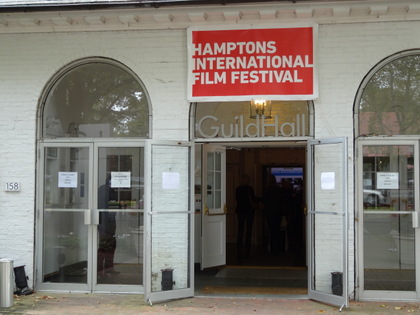
Guild Hall, one of the screening and red carpet venues.
The 21st year of the Hamptons International Film Festival has seen its share of great feature films, documentaries, shorts, world cinema offerings, and UK favorites. This year’s festival was highlighted by visits from celebrities like Ralph Fiennes, Bruce Dern, Will Forte, David Duchovny, Hope Davis, Timothy Hutton, Ralph Macchio, Helena Bonham Carter, Bryan Greenberg, and actors to watch like Dane Dehaan. These individuals graciously offered their time with the audience in Q & As and helped to support their films some of which were either World Premiers or East Coast Premiers.
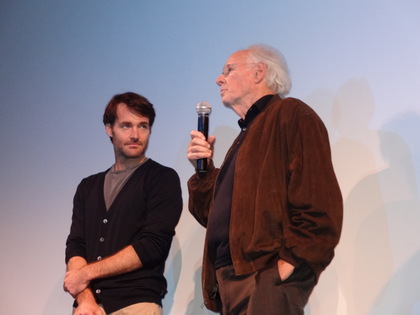
Will Forte and Bruce Dern in the Q & A for Nebraska. Both were very generous with their time.
By Monday, the last day of the festival which ran from Thursday October 10th through October 14th, audience ballots were calculated, the choices finalized. The Hamptons International Film Festival audience win fofor Narrative went to the UK and the US brought in the Documentary wins, both the full-length and the short which both had their premiers at the festival.
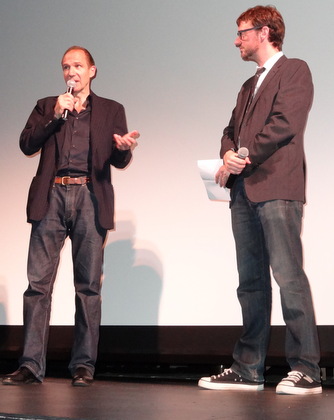
Ralph Fiennes answering a question about close-ups in his film The Invisible Woman. With Artistic Director of the HIFF David Nugent.

Judi Dench in Philomena
Philomena won the Audience Narrative Award. Tickets were difficult to come by because of the star, the beloved Judi Dench, and its haunting subject (unwed mothers in Catholic Ireland) which has been touched upon in films like the Magdalene Sisters. In the 1950s Ireland’s Catholic Church held sway in maintaining paternalism, placing the worst of the double standards of male chauvinism at the forefront of the cultural ethos. Philomena Lee (portrayed with poignant, touching humor by Dame Judi Dench) was a victim of repression when Church officials forced her to put up her child for adoption because the man bed her but didn’t wed her. Stigmatized by the community of good men and women and trapped by societal norms, Philomena gave up her son for adoption despite her best intentions to keep him. Years later, Philomena attempts to right her wrong. She goes on a journey to find her son with the help of a BBC reporter and their travels are endearing and fun. Stephen Frears directed the film whose screenplay is adapted from the book The Lost Child of Philomena Lee by Martin Sixsmith.

Desert Runners directed by Jennifer Steinman
Desert Runners, having its East Coast Premiere at the festival won the Audience Award for Documentary. The film chronicles individuals who sign up for and run the entire Desert Ultramarathon series which must be done in one year. This is a series where challengers run 150-mile ultra-marathons through four of the world’s most brutal and dangerous deserts: the Atacama Desert in Chile, the Gobi Desert in China, the Sahara in Egypt, and after all that heat, the desert of ice in Antarctica. How do these individuals deal with hurdles, success and failure as they run the extremes of life’s call to their souls? How do they canvass and balance their internal peaks and valleys in the beautiful and deadly environments that force their physical, mental and emotional range to their limit? It is a well told tale which shows individuals who have a need to go up against nature’s extremes for the honor of a race well run.
One Last Hug (…and a few smooches) Three Days at Grief Camp directed by Oscar nominee Irene Taylor Brodsky won the Audience Award for Short Documentary. How does one grieve the loss of a loved one? Internalize it, shut down, and move on? Cry? How does a child grieve the loss of a mother, a father, a brother, a sister? This documentary shows how. With an objective and non maudlin, overly sentimental approach, which is even more touching and powerful, the viewer immediately connects with the children’s stories as they tell who died in their families. The documentary short moves in real time with the guides who help the kids through activities designed to safely allow them to express the multiple emotions that come when confronting a loved one’s material absence and final abandonment. As the kids express their feelings, they are comforted and learn to comfort one another to relieve their pain. It is a powerful reminder that with loss there is also the comfort of others and another type of love found.
For more on the 21st Annual Hamptons International Film Festival please go to this link: Hamptons International Film Festival 2013
THIS ARTICLE FIRST APPEARED ON BLOGCRITICS AT THE LINK BELOW
http://blogcritics.org/21st-hamptons-international-film-festival-audience-award-winners/
An Amazing Conference at Omega Institute: Press Release
Picture from the Omega Institute catalogue for 2013
Omega Institute in Rhinebeck, NY. Beginning tomorrow there will be an amazing conference on Sustainability. President Bill Clinton is giving the Keynote address. It can be live streamed for free. (details are below) I will be attending on Saturday and perhaps a bit of Sunday. I do love it at Omega. The reason is because of their ethics, principles and mission. The individuals from the top down care about the planet and embrace this care in every aspect of Omega Institute: people, practices, lifestyle. When I say care, Omega’s mission is a sacred one; it is obvious the moment one steps onto the campus. I pray that more places will follow their example. One step…who was it that said great things have little beginnings? Omega may appear to be at a turning point, but they are striving to make a difference which they have done for years. They are a global model for sustainability. This conference is more than a beginning.
This press release is courtesy of Chrissa Pullicino
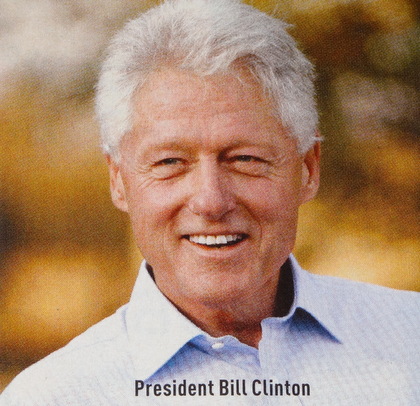
This photograph of President is from the Omega catalogue for 2013…courtesy of Omega Institute in Rhinebeck, NY
FOR IMMEDIATE RELEASE Contact: Chrissa Pullicino
September 25, 2013 Office: 845.266.4444, ext. 404
President Bill Clinton to Deliver Keynote Address at Omega Conference
Where We Go From Here Conference Will Examine Sustainability as a Question of Values & a Challenge of Systems Design—Now Including Conference Live Stream
RHINEBECK, NY—Nearly a year after Hurricane Sandy demonstrated just how real the threat of climate change is, the Omega Center for Sustainable Living (OCSL) is hosting Where We Go From Here: Opportunities & Solutions for an Interdependent World, a conference that addresses the imperative for examining sustainability issues from a holistic perspective based on the interconnection between human behavior, economic and social systems, and the environment. The conference will be held October 4–6, 2013, and will feature keynote speaker President Bill Clinton, 2005 MacArthur Fellow Majora Carter, environmentalist Paul Hawken, economist Jeremy Rifkin, and other major leaders in sustainability. The conference also will be available free to the public via live stream on Saturday, October 5, and Sunday, October 6.
As the problems of climate change and dwindling resources manifest themselves more clearly and urgently, the conference will assess the shortcomings of current sustainability efforts—and create a road map for going forward that places whole-systems thinking front and center.
“With ever more frequency and intensity, we are seeing the effects of being out of balance with the earth and each other. We cannot solve this problem without considering the whole—understanding the big picture and finding our place within it,” said Robert “Skip” Backus, chief executive officer at Omega and the visionary behind the Omega Center for Sustainable Living (OCSL). “We are thrilled that President Clinton will deliver the keynote speech. Omega is proud to initiate the discussion about where we go from here, and to serve as a model for a whole-systems approach to sustainability.”
Founded four years ago, the OCSL includes the first green building in America to receive both LEED® Platinum and Living Building Challenge™ certifications, and has evolved into an emerging environmental leader, offering programs that teach the regenerative environmental practices modeled by the building. Omega Institute is integrating similar designs into other facilities on its Rhinebeck, New York campus. A recent addition to the Omega Women’s Leadership Center is the first commercial project in the United States to meet Passive House certification standards—the building uses very little energy and the space is designed to reduce heating costs by 75%.
“Recognizing our interdependence—to each other and to the planet—is key to finding solutions to our pressing environmental challenges,” said Backus.
Where We Go From Here will include keynote talks, panel discussions, stories from the field, and a tour of the award-winning Omega Center for Sustainable Living.
Leading economists, environmentalists, philanthropists, designers, architects, and activists round out the list of speakers, including:
· President Bill Clinton, Founder of the Clinton Foundation and 42nd President of the United States, was the first Democratic president in six decades to be elected twice, and led the U.S. to the longest economic expansion in American history, including the creation of more than 22 million jobs. After the leading the White House, President Clinton established the Clinton Foundation with the mission to improve global health, strengthen economies, promote healthier childhoods, and protect the environment by fostering partnerships among governments, businesses, nongovernmental organizations (NGOs), and private citizens to turn good intentions into measurable results. clintonfoundation.org
· Jeremy Rifkin, president of the Foundation on Economic Trends, is an authority on economic sustainability. His books include The Third Industrial Revolution and The Empathic Civilization. foet.org
· Janine Benyus, a biologist, consultant, and author of six books, including the classic Biomimicry, is cofounder of the Biomimicry Institute, a nonprofit organization that promotes the study and imitation of nature’s remarkably efficient designs. biomimicry.net
· David W. Orr is a professor, founder of the Oberlin Project, and author of Ecological Literacy. oberlinproject.org
· Majora Carter, recipient of a MacArthur “genius” Fellowship, founded Sustainable South Bronx in 2001 when few were talking about sustainability, and even fewer, in places like the South Bronx. Since 2008, her consulting company, Majora Carter Group, has exported climate adaptation, urban micro-agribusiness, and leadership development strategies for business, government, foundations, universities, and economically underperforming communities. majoracartergroup.com
· Paul Hawken is an environmentalist, author, and entrepreneur who founded some of the first natural food companies in America to rely solely on sustainable agriculture. paulhawken.com
· Bob Berkebile is an influential sustainable design architect and community planner, a founding principal of BNIM Architects, and a board member of the U.S. Green Building Council, the Nature Conservancy, and the Center for Global Community. bnim.com
· Michael E. Reynolds is an architect and founder of EarthshipBiotecture. earthship.com
· Robert “Skip” Backus is chief executive officer of Omega and the visionary behind the Omega Center for Sustainable Living (OCSL). He helped lay the foundation for Omega’s environmental and conservation initiatives, including campus recycling and composting, sustainable purchasing and support of local agriculture, water conservation, and 100% sourcing of campus electricity from wind and solar technology.
· Carla Goldstein, JD, is Omega Institute’s chief external affairs officer and cofounder of the Omega Women’s Leadership Center. An attorney with 25 years of experience in public interest advocacy, she has contributed to more than 100 city, state, and federal laws, and has worked extensively on issues related to women’s rights, poverty, public health, and social justice.
· Peter Buffett is an Emmy Award-winning musician, composer, philanthropist, and author of the New York Times best-seller Life Is What You Make It. peterbuffett.com
· Maya Azucena is an award-winning singer, activist, and cultural ambassador. At the 2010 United Nations Summit, she was selected by the Office of Secretary General Ban Ki Moon as the exclusive performer at the Every Woman, Every Child event. She is also a cofounder of the multimedia website MDGFive.com, which raises awareness for maternal health. mayaazucena.com
· Rob Hopkins, author of The Power of Just Doing Stuff and The Transition Handbook, is cofounder of the International Transition Network, a charitable environmental organization. The Independent lists him as one of the top environmentalists in the United Kingdom. The Observer calls him “one of Britain’s 50 New Radicals.”
Speakers are subject to change.
People can join the conversation about where we go from here on Twitter @Omega_Institute (conference hashtag #OCSL2013), and on Facebook.com/Omega.OCSL.
For complete details or to register, visit eOmega.org/ocsl2013 or call 800.944.1001.
About Omega Institute for Holistic Studies
Founded in 1977, Omega Institute for Holistic Studies is the nation’s most trusted source for wellness and personal growth. As a nonprofit organization, Omega offers diverse and innovative educational experiences that inspire an integrated approach to personal and social change. Located on 200 acres in the beautiful Hudson Valley, Omega welcomes more than 23,000 people to its workshops, conferences, and retreats in Rhinebeck, New York, and at exceptional locations
David Henry Hwang, Nick Flynn, Rosary O’Neill: Writers Giving Back to Writers

Writing I worked on during a workshop at Omega Institute.
The Paradigm Shift
The long needed paradigm shift for authors is here. Like never before, successful writers of all genres are available to their fans and others as many discard traditional publishing routes that were profitable to everyone but the writer. Self-publishing and direct to the source return the profits back to authors. As social media, blogs and e-zines trump traditional media, and streaming (House of Cards) Youtube (plays and shows) and Google Hangouts (live music shows) become widespread, TV venues that formerly preyed upon the division between the creator and the passive audience are dying. It’s about interactivity. As a result writers are relying on interactions with followers on Twitter, Youtube, Facebook, etc., to promote and sell their work, engage their readers and update them on their latest triumphs. To remain current, they must stir the pot and trouble the waters of innovation and artistry. How else can they benefit from the currents of cultural resplendence? If they don’t connect, they will eventually be choked off as is happening to old line venues for the cultural arts.
Authors Stay Juiced Through Workshops and Master Classes

Nick Flynn at work during the workshop at Omega Institute.
Another way noted writers are connecting is by giving back in workshops, conferences and master classes. It is particularly rewarding when brilliant authors are sure footed guides who can shepherd their fellow writers up the mountain of difficulties regarding word-craft to unlock inspiration. Fluid workshops are settings which inspire writers to share their work without fear. They encourage spontaneous, authentic writing. They help authors learn new techniques and allow them to bathe in the creative flow of juiced writing.
Three noted writers and authors whose workshops and classes I took in the last months were particularly helpful and each was extremely generous. David Henry Hwang, successful Pulitzer Prize nominated playwright, Nick Flynn, poet and memoirist, and Rosary O’Neill, playwright, screenwriter and diverse author reached into their bounty of spirit and shared liberally. Reflecting back on the process with these exceptional writers, I now see that the exchanges and connections offered unique experiences that are helping me hone my craft and provide direction for my writing projects.
MASTER CLASS WITH DAVID HENRY HWANG at the Cherry Lane Theatre in NYC

David Henry Hwang graciously speaking with us and staying for pictures after the class at the Cherry Lane Theatre.
I absolutely adore this man, this stunning screenwriter, librettist and multiple award-winning playwright best known for M Butterfly, Yellow Face and Chinglish. I have seen much of his work on Broadway and Off Broadway. The first time I saw M Butterfly (I saw it twice.) starring John Lithgow and B.D. Wong, I remember telling my cousins after the performance that it was a happening. Thrilling and alive, it was like seeing Venice for the first time or tasting my first sip of vintage wine from a bottle that cost more than $150. Poor similes, I grant you, but I was gobsmacked. Taking this class with him I was anxious to understand his technique. I had seen his development and knew early works like Dance in the Railroad. I and was looking forward to seeing his Kung Fu at the Signature Theatre in March of 2014. What would he share?
The writers/students in the master class with David Henry Hwang were at various stages in their writing careers; their backgrounds were motley. Wang enjoys people and he interacted with us after getting a general feel for this large group who was there to breathe the same air as this multiple award winner and Pulitzer Prize nominee. He of course, is unassuming, disarming and a sponge of humility you could just hug and squeeze. Despite the large numbers in the group, David Henry Hwang put us at ease and somehow created an intensity and intimacy during the session, a talent in itself.

David Henry Hwang and Carole Di Tosti.
Move toward the unconscious.
The master playwright encouraged us to continually transcend the conscious mind and write frequently, overriding our conscious censor. For example, when thinking “I’m not good enough,” or “Why should anyone care about what I’m writing,” that is the nihilistic self-critic. Inspire yourself and unblock using various techniques; some suggestions are below.
- Silence the censor by writing as fast as you can. You can always go back and edit.
- Cut out phrases from a magazine article and shuffle them into various sequences. Copy a phrase or two priming the pump until it’s flowing. Don’t stop until there is a natural pause.
- Write out words in free association. Put them in a hat and choose various ones that continue the associations. Write continually and automatically. Follow where the writing leads you; don’t lead it.
- Of course, David Henry Want suggested to always write what inspires and keeps your interest. The more you have fallen in love with what you are writing about the better.
- Allow yourself to give your characters free reign. They will lead you to amazing places that you never new were possible on the journey.
NICK FLYNN’S MEMOIR AS BEWILDERMENT at Omega Institute in Rhinebeck, NY

Nick Flynn chatting with writers before the workshop begins at the Omega Institute.
Nick Flynn is a poet and best-selling memoirist. He wrote The Reenactments, The Ticking Is the Bomb, and the haunting and beautiful best seller, Another Bullshit Night in Suck City which was published as Being Flynn, the title of the independent film based on the book. The film stars Robert DiNero and Paul Dano. Flynn’s three books of poetry are The Captain Asks For a Show of Hands, Some Ether, and Blind Huber. I was familiar with his memoir Another Bullshit Night... and liked his style of writing. During the two day workshop, Nick Flynn was generous answering questions about the making of the film (it took seven years) and his writing life. He challenged us, attempting to jar our sensibilities into the unusual because only then could the chaffing break us into the realm of the unexpected to authenticity. As we wrote and shared our writings, elements he uses in his own writing resonated deeply. His wonderful humor carried us through any nervousness.
Use image and object chains from various sources.
- Flynn encouraged us toward selecting images and objects threading them in our work. Images carry emotional power and weight. These are tied to associations from our unconscious that have meaning beyond what we may not recognize consciously.
- Write down dreams and the images will more naturally appear to us. Incorporate images or objects in automatic writing which should be spontaneous and unedited.
- The writing muscle should be exercised each day, a minimum of seven minutes. Write ceaselessly allowing the flow and trusting it to take you wherever. Dare to risk the journey, the more bewildered the better. Eventually rationality through the concrete image emerges.
- Create moments of surprise and use them in writing. Look for a science article (NY Times, perhaps) that is filled with images or objects and write about one that has energy and interest. Look through old pictures. List three questions about the people or objects in the photos. Write on each for 7 minutes. Incorporate the results in your work then edit later what doesn’t sing. You’re practicing powerful description and your technique will be enhanced overall with your writing projects.
ROSARY O’NEILL’s SCRIPTWRITING WORKSHOP at Omega Institute in Rhinebeck, NY
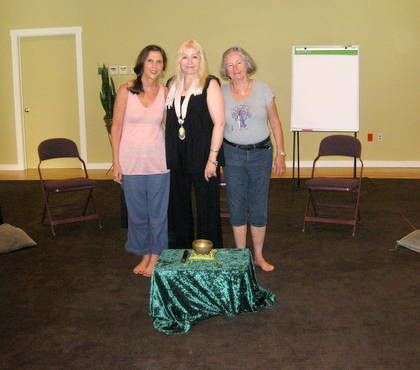
Deborah Temple, Dr. Rosary O’Neill, and Mary Anderson at the Omega Institute.
Rosary O’Neill, Ph.D. is a playwright, director, screenwriter, writer of narrative nonfiction and a scholar who hails from New Orleans. She was the founding artistic director at Southern Rep Theatre where her plays about family with Southern Gothic themes were produced for many years. A prolific writer and virtual dynamo who has received 7 Fullbrights, and fellowships to the Norman Mailer House, Tyrone Guthrie Centre and other venues, she has studied abroad where she has completed research for a play about John Singer Sargent and a book and play about Degas, to name a few works. With extensive experience in acting and theatre production, she has written The Actor’s Checklist, is currently working on a soon to be published book with new information never before revealed about the Mardi Gras in New Orleans. Rosary O’Neill has written 22 plays. Most have been published by Samuel French. Many of them have been performed at the Southern Rep and many have garnered readings at the National Arts Club, the Rattlestick Theatre, The Players Club and in regional theaters like The Westchester Collaborative Theatre and Bard College. Her latest work, an uplifting musical entitled Broadway or Bust with lyrics/music by David Temple, directed by Deborah Temple will be performed at Bard College Black Box Theatre, November 13th and 15th. She has written a TV series entitled Heirs that that is currently being shop optioned. An experienced college professor, Rosary’s class was a joy and steered folks in a different direction, toward writing characters that live and are breathing and vital. This is playwriting/screenwriting at its best.
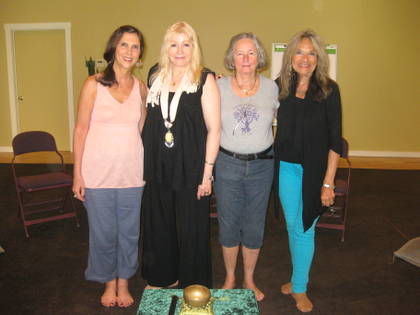
Deborah Temple, Dr. Rosary O’Neill, Mary Anderson, Carole Di Tosti at the Omega Institute.
Sound character when creating dialogue.
- When writing characters, think of individuals you know, their high points and dramatic episodes. Ask yourself why you remember them; what strikes you about them? Give yourself a prompt that you think might help you distill who they are in an image, then write about them. Eventually, this can be worked into creating character.
- Read all dialogue aloud. Make sure it sings. If you are bored and don’t wish to read it, have someone else read it aloud. If it doesn’t resonate to you or the other individual, then drop it and move your inspiration elsewhere.
- Select a scene where there have been family get-togethers. Dialogue should reveal differences in character, cadences, phrases, accents, content. How are you revealing tonal messages through speech? Act out the lines. What doesn’t fit, jettison.
- Remain upbeat at all times. Shun negative thoughts. Do you have anything better to do with your life than to create life, through characters, dialogue and plays/films? All dialogue has run through you at one point or another. You are recalling it to your remembrance and shifting it around for greater use. Above all, enjoy the experience.
PARTING SHOTS: David Henry Hwang, Nick Flynn, Rosary O’Neill
DHH- Find a way to have your plays read aloud, even if you are getting actors in your living room. It’s the only way to find out if the characters cohere, if the whole thing works.
NF-Only submit your finest work, your best, work, the stuff you’ve edited and crafted and you still find vibrant after reading it 100 or more times. If you don’t want to read what you’ve written, then put a red line through it and circle it. Cut it out. You’re bored with it, others will be too.
RO-Spend a lot of time editing and revising. The work must pop, the dialogue must sing. If it doesn’t, you’ve overwritten. It’s too long. Cut, cut, cut, but still be logical and make sense. You can always add. The editing is hard, but vital to great writing.
All of them: Keep on writing!
Sacred Elephant by Heathcote Williams: Stage Adaptation by Geoffrey Hyland and Jeremy Crutchley
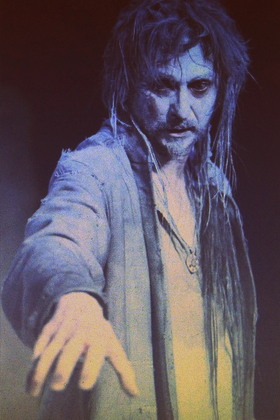
Sacred Elephant, currently Off Broadway adapted for the stage by Geoffrey Hyland and Jeremy Crutchley, is created from Heathcote Williams’ magnificent epic poem about nature’s divine design represented through the elephant. Crutchley gives an ethereal and other-worldly performance as The Other, the being of the elephant. The production is currently at La Mama’s First Floor Theatre until September 22. See the review on Blogcritics and on this site.
Below are the expressive photographs of Crutchley in an embodiment of the elephant’s ethos. I included these to enhance the previous review because of an article that appeared in the Huffington Post about a baby elephant who was rejected by its mother. It cried and cried for hours. Its response is heartbreaking…like our response when we were hurt as children and cried in desolation, or as adults who feel hopeless and cry out to God and the universe for solace and comfort. Click here for the article.
The elephant is us. Can we continue to destroy it and not perish ourselves? Elephants are beings like the other creatures on this planet and must be safeguarded and protected. If we do this, we safeguard our own destiny. Williams’ poem is dedicated to this end as is Crutchley’s performance.
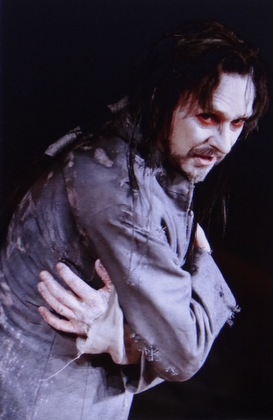
The marvelous Jeremy Crutchly. Photo by Rob Keith
The following is part of the press release by Jonathan Slaff.
Jeremy Crutchley is well known in South Africa and the U.K., having performed a diverse range of award-winning contemporary and classic roles. He has received many Best Actor National Theatre Awards in South Africa and has appeared with the RSC and in the West End. He was nominated Best Actor in the South African Film & TV Awards for his leading role in “Retribution” (2011), a thriller in the style of Cape Fear. He currently appears with John Cleese as The Glock in the feature films “Spud” and “Spud 2.” In January 2014, he wil be featured in the U.S. TV series “Black Sails” (Starz).
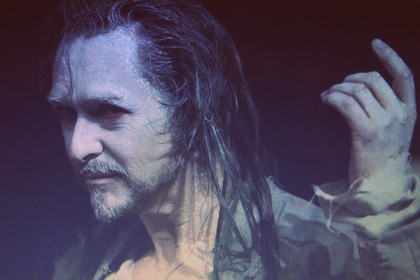
Jeremy Crutchley in Sacred Elephant. Photo by Rob Keith
Crutchley’s varied and enviable career ranges from classics to solo shows to rock shows. He performed Doug Wright’s international hit, “I Am My Own Wife,” in 2009 to kick off the Grahamstown Theatre Festival and in South Africa’s prestigious 2010 Fleur du Cap Theatre Awards, the show was nominated for six awards and received three, including Best Actor and Best Solo Performance. Theater critic Peter Tromp (The Next 48 Hours) named the piece as one of the ten most memorable productions in his decade of reviewing. The previous year, Crutchley won Best Actor as Shylock in “The Merchant of Venice” before going on to play Alonso in “The Tempest” at Stratford-Upon-Avon and in that show’s sold-out national tour with the Royal Shakespeare Company. He was a Fleur du Cap Nominee for his performance as Malvolio in “Twelfth Night”, also directed by Geoff Hyland. In 2002-3 at Edinburgh and in the West End, he created the role of Dr. Drabble in the black comedy, “The Dice House” (based on Luke Rheinhardt’s “The Dice Man”). In the UK in the 90’s, he performed at London’s Theatre Royal Windsor and Orange Tree Theatre and appeared in various TV productions for BBC. In the 80’s, he attracted notice for his performances in Sam Shepard’s “Cowboy Mouth” and “Equus,” among others. Also a rock musician, he has written two Rock Theater works and recorded a blues-rock album. When “The Rocky Horror Show” finally hit South Africa in 1992, he played Dr. Frank ‘n’ Furter in the original cast. His recent TV appearances include: “Miss Marple: A Carribbean Mystery”(BBC), “Kidnap And Ransom”(ITV), Martina Cole’s “The Runaway” (Sky TV) and “Women In Love” (BBC).

Jeremy Crutchley as The Other. Photo by Rob Keith
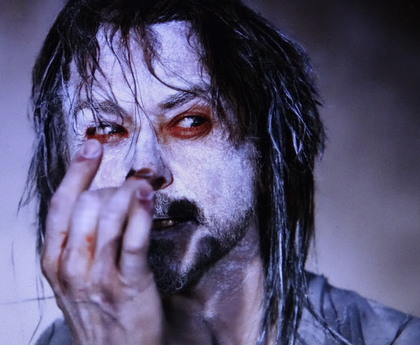
Jeremy Crutchley in Sacred Elephant by Heathcote Williams at La Mama First Floor Theatre. Photo by Rob Keith.
Heathcote Williams (author) is a poet, playwright and actor. He is best known for his extended poems on environmental subjects, “Whale Nation” (1988), “Falling for a Dolphin” (1989) and “Autogeddon” (1991). His plays have also won acclaim, notably “AC/DC,” which was produced at London’s Royal Court, and “Hancock’s Last Hour.” He is also a versatile actor whose memorable roles include Prospero in Derek Jarman’s film of “The Tempest.” “Sacred Elephant” was the first environmental poem by Williams, although it was not commercially published until after his better-known work, “Whale Nation” (1988). “Sacred Elephant” actually dates back to 1967, when Williams spent three months touring in India. While in Rajasthan, he observed local elephants and their trainers at close quarters. He also had a close association with a circus elephant named Rani and was able to watch her daily routine and behavior in captivity. Captive behavior, which is largely unknown to the general public, forms a large portion of “Sacred Elephant.”
The poem first appeared in print in 1987, published by Williams himself but in an unusual form. Three thousand copies were issued on elephant-sized paper and with print “large enough for elephants to read.” These newspapers were given away privately to friends and associates. That year, Williams performed the poem as a radio production, receiving many favorable reviews, including one from Harold Pinter who called it “a marvelous poem.” When Williams’ “Whale Nation” was published in 1988, it set a pattern for Williams’ books to follow, including “Sacred Elephant,” which was published commercially by Jonathan Cape a year later. Following this publication, the book received many more favorable notices.
It was recorded as a Naxos audiobook by Williams himself and given recitations, but it had never been explored for its powerful theatrical potential until Geoffrey Hyland and Jeremy Crutchley conceived this production. Heathcote Williams has granted exclusive dramatic rights to Crutchley to perform the work.
‘Sacred Elephant’ by Heathcote Williams. Adapted for the stage by Geoffrey Hyland and Jeremy Crutchley

Jeremy Crutchley in Sacred Elephant
Sacred Elephant, based on a poem by Heathcote Williams, has been brilliantly adapted for the stage by director Geoffrey Hyland and Jeremy Crutchley. Crutchley also acts the role of The Other, the spiritual ethos of the elephant of the title. The production is currently at La Mama’s First Floor Theatre until September 22. This U.S. premier and all that Crutchley embodies in the role must be seen and witnessed to be believed. It is magnificent.
This is not an easy entertainment, though. In fact it is devastating in the import of the message and experience it offers. However, that is one element of what the poet and artistic creators intend. One cannot walk away untouched by Crutchley’s performance, which awakens our empathy and opens our minds and hearts to the torment of these wonderful creatures.

Jeremy Crutchley as The Other. “The shape of an African elephant’s ear is the shape of Africa.” Photo by Jingxi Zhang
Through graceful movements and meaningful and magnetic voices and renderings, Crutchley enacts the poem, becoming The Other and invoking its spiritual dimensions. By this very embodiment of the elephant and all it represents throughout history to the current time, he engages our sensibilities, reaching for our spirits to force us to hear, see and feel the beauty of who The Other is as we acknowledge our kinship with him/her/it.
We also experience the soul-sickening malady of our own degradation. We’ve allowed The Other to be maltreated and destroyed for our pleasure, almost like a whimsical afterthought. And no one dares stop us. We do it because we can, harming ourselves in the process. Though we know better, we effect The Other’s and our destruction anyway.

Jeremy Crutchley embodies the ethos of the elephant. “To the early Christians, the elephant was the Bearer of All Infirmities.” Photo by Rob Keith
The revelation penetrates like a bullet between the eyes and the question “Why?” hovers in the air as the poet and artistic executioners Hyland and Crutchley tether us to the long chain of abuses society has inflicted upon the elephant in its irrational lust for the “fun of it.” The puzzle of our humanity or lack of humanity deepens. What glory to repeatedly sacrifice, maim and imprison these creatures for the fleeting mood elevations of children and families? Where is the intelligence? Who indeed are the dumb beasts?
Even better, how does their torture relate to those activists at the tail end of consumer culture who would never traffic in ivory or advocate the abuse and poaching of these marvelous creatures? And yet, here we are, watching a stage play of Sacred Elephant for our pleasure, a play showing the misery of The Other. The irony is a cruel one, and I can’t really smile at its darkness, nor forget easily. And that is another thematic point this production makes.
The lighting (Luke Ellenbogen), music, set, sound design and staging (Hyland) are effective assists to Crutchely as is the costuming (Ilka Louw). The frames of light and shadow, the three boxes Crutchley lifts and rearranges and sits upon, the sway of his grey and white dusted flow of costume, all masterfully work with the music of Heathcote’s phrases and word jewels. The spectacle enhances the message of the power of life and the misery of the dissolution we’ve wreaked on The Other.

Jeremy Crutchley: “When elephants are allowed to die in their own time and space, they will sometimes hold up a fallen body as if forming a funeral cortege.” Photo by Rob Keith.
From historical veneration by ancient cultures to the elephant’s current decline exacted by global “progress,” this production of Sacred Elephant reminds us of how “far” we’ve come and what we’ve sacrificed to get here. It’s a banal evil, all the more rotten for what we’ve allowed, whether directly or unwittingly. Hyland’s and Crutchley’s adaptation shows that we’ve been separated from what is divine, majestic, awe-inspiring and magical in ourselves and The Other. We’ve been alienated from the spirituality of our past and have destroyed our inheritance to face an isolated, loveless future, unknown to ourselves and the creatures that are our kin.
The message is potent. The production delivers. See it to see The Other. It runs until September 22.

And from a shared aquatic past,
The elephant inherits the one quality
That Homo sapiens has always arrogantly assumed
Distinguishes him from the brute beast –
An elephant in distress
Will weep salt tears.
Westchester Collaborative Theater! 2013 Summerfest Success

WCT 2013 Summerfest cast and Artistic Director, Alan Lutwin (far right)
The Westchester Collaborative Theater‘s innovative work never fails to amaze me. A collaborative of mostly professional artists, directors, actors and writers who gather each month to share, develop, promote and exchange ideas about their work, they are a vibrant regional theater laboratory. Instead of trying to “reinvent” shows that have been done before, often with lackluster results (I’ve seen more than my share of regional theater revivals and few are worth the trip and the time.) this group has persisted in what it does best: experiments, creates, dares to risk.
WCT premiers works, mostly one act plays, some longer. Many of these are developed through the lab which is the petri dish through which all the collaborators can hone their skills and perfect their craft. Oftentimes, the works continue being developed after premiers at their performance base in Ossining, with the thought of entering them in festivals in NYC and/or in other areas of the country or developing them further perhaps into full length works.
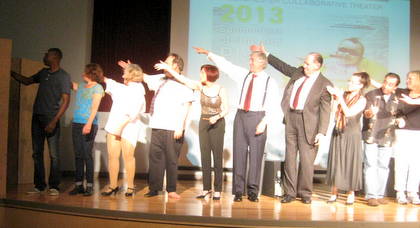
2013 Summerfest cast of the Westchester Collaborative Theater
The WCT holds two major performances of plays, one in the summer and the other in the winter. This 2013 Summerfest of 5 one-act plays which was produced in late June reveals how far this collaborative has extended its reach, creativity and will. Each of the one-act productions showed the collaborators’ manifest effort and enjoyment with expressing their talent and artistry. It was obvious they were having fun and the crowd which was the largest I have seen to date at the WCT, demonstrated their enthusiasm and pleasure with the offerings.

Artistic Director of the WCT, Alan Lutwin. Here he is making the introductory remarks for the evening.
I brought along three of my friends who are Broadway goers and who enjoy live theater. They are not dilettantes and each has a discerning nature and circumspect opinions. In other words they do not suffer through mediocre theater eagerly and two of them are “walk-outs.” They would rather sit in the lobby or go home than sustain performances that are slap-dash with little deliberation and effort or those that are misguided and whose logic is so skewed, the production just doesn’t work to uplift, entertain or enlighten.
They agreed that the night they spent at WCT was so much better than paid performances they’ve attended in Queens and even some on Broadway. (One walked out of Mary Stuart, and the other fell asleep during Beyond Miss Julie, to name a few.) Two of them especially expressed surprise at the energy, camaraderie and esprit de corps of the company which is a testament that not only is regional theater not a bust, it is thriving in the New York City area. They agreed with me that a collaborative is the right way to go, offering a continuum of progression that is free and integrated away from the constraints of ego machinations, financials and politics that unfortunately stifle NYC theater’s creative, innovative, risk-taking. In NYC though celebrity names are king, they do not provide insurance against ill-conceived or misdirected productions circled by fans and tourists out for a night of forgettable entertainment that is more for “show” and tourist talk-back to friends at home. Off Broadway presents more innovation, still with the caveat of expenses.
Here was WCT’s 2013 Summerfest roundup, all varying degrees of delightful, insightful, humorous, telling and clever.
 Facebook Friends by Marshall Fine, directed by Karina Ramsey revisits for all school graduates the possibility of reunions with former lovers and friends awakened by the Facebook revolution. Facebook has brought us “face-to-face” online with those we thought we might never see again, and if we take it further, like characters Simon (Sherman Alpert) and Arlene (Tracey McAllister) do, we’ll dare to meet them in person with funny, poignant and awkward moments and final or not so final resolutions to part ways or see each other again.
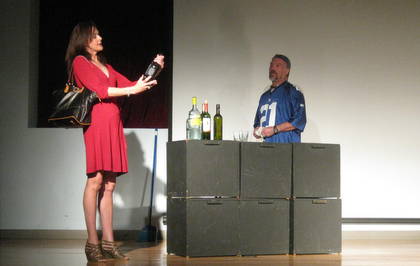
Sandra Lucas and Deacon Hoy
Wander Inn by Virginia Reynolds, directed by Elaine Hartel is every woman’s dream of vindication come true. Charlotte (Sandra Lucas) returns to visit a former partner Tim (Deacon Hoy) at his financially down-and-out Wander Inn. She continually surprises him with a series of truths which peel back the onion on their past. Charlotte’s revelations are gleefully, ironically delivered and she relishes her triumphs over her past and him. Each reveal jolts him like a prod leading him to the final realization that he has made a complete mess of his life. It is a reversal of fortune with Charlotte on the top ladder rung and Tim on the bottom. When she proclaims that her final order will be to torch the place (She became the owner unbeknownst to him.) where their past was staged and he’s been in a cage ever since (at the Wander Inn) we are shocked and somehow relieved. Things can only get better for both of them, unless Tim devolves further. Based upon the clues, the play leaves it for us to decide the probabilities.
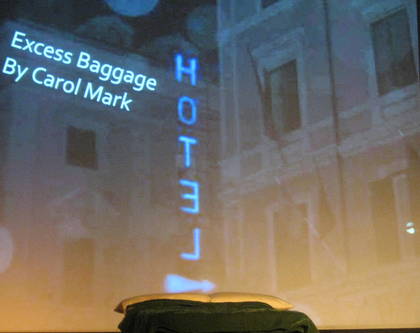
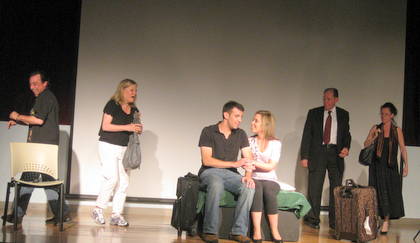
Matt Silver and Sara Colton (as the newly weds, with invasive parents, from left to right, Nick Pascarella, Nancy Intrator Jim Coakley and Janice Kirkel)
Excess Baggage by Carol Mark and directed by Joe Lima is a joyful, humorous play with which all can identify, especially if they come from a larger family which is the clinging type whether in one’s mind or in actuality. Steve (Matt Silver) and Pam (Sara Colten) are on their honeymoon but their parents, Francine-Janice Kirkel, Edward-Jim Coakley, Margaret-Nancy Intrator, Chuck-Nick Pascarella, show up at the newlyweds’ hotel room to watch, supervise and help launch the marriage. The couple, ready for this “big night,” have to contend with their folks who interject, proclaim and interfere until they’re over themselves, and are ejected so Steve and Pam can finally be alone together. However, the question remains, will Steve and Pam ever be able to shed the carcass of childhood and parental intrusion? We are reminded, as the title suggests, that when we are united with our significant others, we also bring along the generations that have gone before us and this baggage, for good or ill, remains in ourselves and our relationships, unless we “jettison” it. The underlying message affirms that when it gets to be “crazy” with all the competing voices in our heads and our interactions and self become befuddled, then we need to take charge as Steve and Pam humorously and finally do. Do the couple continue this path during their marriage? The answer leaves us smiling and shaking our heads.

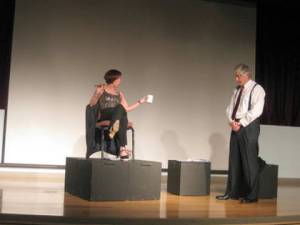
Howard Weintraub in control and on high as the boss. Enid Breis as the demur secretary
With roles reversed: Enid Breis and Howard Weintraub
Hedge Fund by Csaba Teglas, directed by Richard Manichello is a humorous look at the Venus/Mars relationship between men and women against the backdrop of the not so recent financial debacle and fiduciary mismanagement prevalent during the Lehman, Bear Sterns, Washington Mutual, Countrywide Financial mess which is most likely still occurring today in varying degrees. Miss Prune (Enid Breis) is the demur secretary of James (Howard Weintraub) the preeminent, arrogant, know-it-all boss. Miss Prune acts the subservient, dutiful, coffee-making assistant until the tables are turned and we discover she has been surreptitiously brilliant while James and others have been twiddling their thumbs while the Roman market has been burning. Only Miss Prune was prescient and common sensical enough to take clever positions, short and long the market, and walk away with millions while the blindly incompetent “professionals, didn’t see looming disaster on the horizon.By degrees, Miss Prune sheds her demur, “button-down” collar to reveal the hottie she is, single-handedly saving the firm and her boss with the ultimate final position, taking over fiduciary responsibility and setting herself up to be his rich girlfriend (a mild tweak on sexual harassment). By the end of the play, she is in the catbird seat and James is getting her coffee. All the women in the audience applauded loudly. One of my friends thought the play might go the distance adding another act and developing the premise.
 You Were Awesome by Bob Zaslow and directed by Michael Muldoon explores the hangover theme. Steven (Jeff Virgo) had a fabulous party but can’t remember any of it, in a stoned blackout of alcohol reeling brain bombing. Ruthie (Suzanne Ochs) was there and has a memory for explicit details, though she didn’t party as insanely as Steven. Anyway, someone has to chronicle the events, “spill the beans,” and get her man. Ruthie is joined by partiers Leesa (Shelley Lerea) and Dirk (Femi Alao) and their expose grows as Steven hangovers his head in shame. Ruthie in a partial state of disrobement (tying in what probably happened between them.) gives Steven each “blow by blow” description of his humiliatingly funny antics on this wild, drunken spree.

Jeff Virgo, Suzanne Ochs encouraging Femi Alao sitting in front, Shelley Lerea
Ruthie underwrites each mounting event description with, “You were awesome!” By the play’s end after we have laughed at the excesses we put ourselves through, knowing that, like Steve, we’ll regret it in the morning, we come to this realization. Yeah, maybe it was awesome. During a spree we might be able to shed restrictive, up-tightness and be ourselves. In vino veritas! Too bad we need the alcohol or whatever to “Be Awesome!”
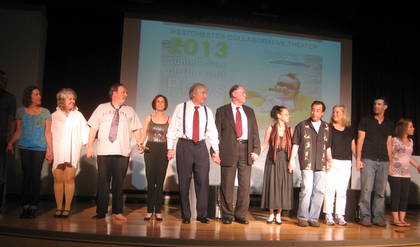
2013 Summerfest cast
WCT has scheduled events in addition to their bi-monthly labs, development of new work and guest speakers. In July guests Ossining Mayor William Hanauer (July 11th) and renown theater director Mara Mills (July 18th) spoke. Make sure to mark your calendar and try to attend the fun events and meet the WCT directors, playwrights and actors. This regional theater group enjoys schmoozing with the public and discovering those who appreciate the arts and innovative theater. Their annual fundraiser is scheduled for Saturday September 28 at 7:30PM at the OAC Steamer Firehouse, 117 Main St. in Ossining. Entertainment for the event will be cabaret inspired.
For the month of October, the WCT will present a Living Art Exhibit in conjunction with the Ossining Arts Council. The Exhibit is being held on Saturday October 19. Playwrights have selected artworks to inspire their imagination in creating new plays. They have been busily completing their submissions for an August 1 deadline.
Regional theater on the move, WCT will continue with its winter programs and labs. If you are in the area and are interested, first check out their Facebook page. You will always be welcome as a visitor to their performances and you may always donate as the WCT is a non profit and is carried along solely by public donations. And if you are a director, actor or playwright, you may apply to join the talented innovators of this collaborative.
I like to think of the WCT as riding over the top of the Philistines who have done much to suppress wonderful artists, writers, actors, playwrights by insisting on curtailing funding programs to the arts. Live theater inspires our humanity and keeps us involved, enlightened and purposeful in our culture. Whether you are an audience member, actor, playwright or director, the feeling communication is electric during a live performance. Here is a theater group which can be supported for their daring and enthusiasm in putting on quality shows, and doing it on the good graces of their supporters. Bravo WCT!
 CAROLE DI TOSTI