‘Chita Rivera and Richard Ridge in Conversation’

‘Chita Rivera in Conversation With Richard Ridge,’ NYPL for the Performing Arts, presented in collaboration with the League of Professional Theatre Women (Carole Di Tosti)
Chita Rivera is a Broadway legend and one of the most gracious and prodigious theatrical talents one would want to meet. Richard Ridge is the lead correspondent for Broadway World the go-to place online to find everything you want to know about Broadway, its stars, its happenings. For those who were there on Monday evening, 7 May they received a great treat. The New York Public Library for the Performing Arts at Lincoln Center in collaboration with the League of Professional Theatre Women presented Chita Rivera in conversation with Richard Ridge. After the interview, members discussed with Co-Chairs Pat Addiss and Sophia Romma who produced the event how they appreciated Chita Rivera’s authenticity and great good will, and Richard Ridge’s superbly guided questions.
Much of the evening which was too good to miss is captured here with some edits. I chose to sum up the beginning and conclude on a positive affirmation that strikes me as suffusing all that Chita Rivera has accomplished in her amazing life with her last comment in this piece. It is why she is who she is, after all is said and done!
The interview began with Richard Ridge asking Chita Rivera the “sixty-four thousand dollar question,” how she became a dancer. Chita Rivera’s answer is one for the ages. She said that she was a tomboy. And one day jumping from the chair to the coffee table, she missed her mark. Exasperated her mother said, “That’s it. You’re out of here. You’re going to Doris Jones.” From a time perspective and having raised children, Chita Rivera surmises, “I had no idea my mother was so smart. She wanted to save the house.”
Apparently, her mom who had exquisite legs and the most beautiful turnout, wanted to be a dancer, but chose to raise five children. However, she championed her daughter Chita to do that which she thought might work out to keep her daughter entertained and “the house saved.” What follows is Richard Ridge’s wonderfully knowledgeable and finely researched informal interview with the inimitable Chita Rivera.

Chita Rivera, ‘Chita Rivera in Conversation With Richard Ridge,’ presented in collaboration with the League of Professional Theatre Women and NYPL for the Performing Arts at Lincoln Center (Carole Di Tosti)
So it was Doris Jones who took you to New York for your audition for George Balanchine? What was that like?
Well, we were very obedient in those days to adults and when you have someone wonderful like Miss Jones, it’s easy. Louis Johnson was really the first male, black dancer in the New York City ballet. He was my partner in Ms. Jones’ school. So the two of us won a scholarship to audition that day. I got out of the elevator and saw this gorgeous girl with legs up to my shoulders and so skinny and so beautiful and so calm. I looked at Ms. Jones and said, I’m scared. And Ms. Jones said, “Just stay in your lane.” And I’ve been staying in my lane ever since. You find out who you are by being who you are.
So you accompany a friend to the touring audition to Call Me Madam. What happened when you got there.
Well, Helen (I can’t remember her last name)…approached me in class and said, “Chita, I’m not on scholarship. I have no money. Will you go with me? I’m scared to death.” I said, “Absolutely.” I wasn’t frightened because it didn’t mean anything to me except it was an experience. I got the job but Helen didn’t! I haven’t heard from her since. So if anyone hears from her, let me know. (laughter) So I went home and told my mother, “They’ve offered me $250 dollars a week to go on the road with a woman by the name of Elaine Stritch!” I don’t think at the time I had even seen a Broadway show. But I loved it. It was an exciting time to be doing the choreography. The choreographer’s name was Jerome Robbins. And I got one of the four principal dancers. So I just continued to do what I was told and it was an amazing experience. It was the beginning of everything.
Doris Jones had performances when we were in her school. So I had the opportunity to dance during concerts and on point. But I never got the chance to dance with the New York City Ballet. I’ve thought about that. And I’m just fine about it. (laughter) And Ms. Jones, God love her, she had gorgeous schools. I invited her to see my shows and she never came. And one day, when I was doing Kiss of the Spider Woman, I was in a restaurant and there was Ms. Jones. I said why haven’t you come to see me? Are you ashamed of me? She said, “I’m busy making little Chita Riveras (laughter). I just let you out into the world.” So I give Ms. Jones all the credit. (applause)

‘Chita Rivera in Conversation With Richard Ridge,’ presented in collaboration with the League of Professional Theatre Women and NYPL for the Performing Arts at Lincoln Center (Carole Di Tosti)
You did Guys and Dolls and then Can Can when you started your life-long friendship with Gwen Verdon. What did you learn from her. And that day you were called into her dressing room what did she say to you?
I’ve always said that if I am reincarnated, I’d like to come back as the carriage instead of the horse. I think most dancers would like to be the carriage because the horse pulls and pulls and does the hard work…the carriage gets to carry the amazing people…what was the question? (laughter)
The dressing room when Gwen Verdon called you.
Michael Kidd choreographed the show. She was extraordinary. I lived in the wings of every show I ever did and learned so much that way. She called me into her room. At that time you didn’t cross a star’s threshold, not unless someone asked you to. You didn’t just presume. And so I went in. I remember her clearly saying to me, “Chita, you should be brave enough to go out and look for parts you can create for yourself.” I realized she was giving me courage and making me go out and find out who I am. And shortly after that, I did get a part. The fabulous Gwen Verdon! And the next time I saw her we were behind the amazing Tony Walton set and there we were in top hat and canes and I looked at the back of her head and thought, “Oh my God.” I’m standing next to Gwen Verdon. It was amazing. You don’t realize it until you’re in it and then you go, “Yeah!” And you don’t want to be anywhere else. You want to be there. She was a phenomenal artist and great friend.
Well the role that catapulted you to stardom was Anita in the groundbreaking musical West Side Story. (applause) We just celebrated Jerome Robbins’ 100th Anniversary.
Right and this is the 61st Anniversary of West Side Story. I always say, I’ve been running around living the life of a 35 year-old all these years and I never realized how old I was. So for age? Don’t count it, unless it’s 5, 6, 7, 8 (laughter/applause). We worked hard at the auditions and we didn’t realize we were working hard. We just were because that’s what you do. There were several auditions. It was Kenny Leroy as Bernardo. We had to be matched up with our guys. We didn’t realize we didn’t know how to sing. We were taught on the spot. And of course dancing is acting. And suddenly we had words. It was extraordinary. It was tough but it was good because we learned.
At what point during that process did you realize that the show was a such a phenomenon.
I don’t know if I realized it. I was so busy living it. You don’t have much time to realize it unless you’re looking at a fellow actor and you get those responses. We got to Washington, DC and “America” stopped the show dead. We didn’t know what to do with that. We said to Jerry, “What do we do?” Jerry said go downstairs, change your clothes and get ready for the next scene. That was the first time we got any kind of feeling about the response. But all along it was being built, the value of the words, the excitement. “Cool” was better than “America” but “Cool” came after “America.” “Cool was an extraordinarily choreographed piece. I watched from the wings when I wasn’t onstage.
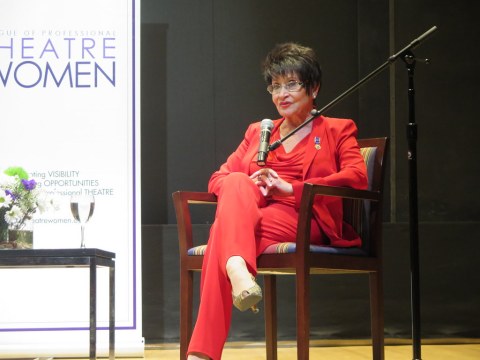
‘Chita Rivera in Conversation With Richard Ridge,’ presented by the NYPL for the Performing Arts at Lincoln Center and the LPTW (Carole Di Tosti)
You went to Leonard Bernstein’s apartment and learned a song at his piano?
I sure did. It’s kind of fun to say, “Lenny” and think that I knew him and that this amazing genius is a kind, giving soul. Well, I rang the buzzer. He escorted me to his music room, and I sat next to him on the piano and was nervous. And I carry little angels with me on my shoulders. One tells me what to do, the other tells me, “Don’t do that.” I remember one of them said to me, “You know you’re sitting next to Leonard Bernstein.” And the other one said, “Do exactly what he says.” So I listened to him and it was then I heard my own voice. He pulled it out. He just had a way of making you find yourself. And making you feel comfortable in your own shoes. He had the excitement for himself and the show. He was directing the quintet and we were all on the set. He was in the pit standing on a chair and he got so enthusiastic that he went straight through the chair. But dancers love to laugh anyhow, so we had a good laugh.
Could you sum up the best part of working with Jerome Robbins, what it was for you?
I don’t know because there are so many things. I used to call him “Big Daddy.” He had all the answers as far as I was concerned. I remember one time I was standing downstage. He was giving us a five minute break which I rarely took. Mickey Calin was gorgeous and several girls were hovering. I saw Jerry looking at Mickey and I got very nervous and I walked past him and said, “Don’t do it.” He was about to kill him, slaughter him. And we had a laugh and he said, “You’re a witch. You’re just a witch.” We had that kind of relationship because we all had respect for each other. And we were working so hard. And there’s nothing better than working hard and finding out that you can do it. What a creator he was. He introduced us to words and music and worlds we never knew. And feelings we never knew we had. That’s how you build your canvas, your life.
You created the role of Rose in the Broadway smash, Bye, Bye Birdie. (applause) You almost turned that show down, didn’t you?
Well, I read the script. Really! Who’s going to sit up there as a parent and let all these kids talk on the telephone? I wouldn’t let my daughter talk on the phone that long. I also learned that we don’t know what we’re talking about. Shut up and do your job. (laughter) Let them do theirs, you do yours. Gower Champion! He brought technicolor, he brought humor, he brought class, he brought Hollywood. And of course, then there was that funny person Dick Van Dyke. I just watched him. I am a great thief and I will steal. I have been around extraordinary people, so I just watched and learned a lot from them. And Dick is one of the funniest, kindest, most giving people in the theater. He’s 92 and he still going strong. He’s still funny. Don’t lose your sense of humor.
You’ve received many great phone calls during your career. Tell us about the phone call you received from Cy Coleman, Gwen Verdon and Bob Fosse.
It was from Cy. It is amazing that I know these people. It is wonderful to know them. They asked if I would take the original of Sweet Charity on the road. There was Ben Vereen, Thelma Oliver and the greatest chorus of dancers. So we did it. That was a great phone call.
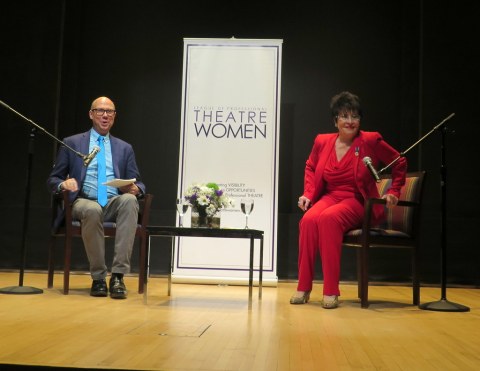
Chita Rivera in Conversation With Richard Ridge, presented by NYPL for the Performing Arts at Lincoln Center and LPTW (Carole Di Tosti)
Then you got to do the film version.
The cherry on the top was that it was a wonderful experience to do the entire show for almost a year and another cherry to be with my buddy Shirley MacLaine. She always had a great sense of humor and we always made fun of her right to her face. Once when we were filming, we were supposed to head up to the rooftops, turn on a dime, run down a ramp. The lineup was Shirley was in the front, less to travel, then I was next, then Paula Kelly who was extraordinary. She had the furthest to travel. I loved to dance with the boys. They had the power, but I couldn’t travel like that. But Paula could. She was amazing. We were pulled aside and told, do exactly what they said for the shoot. So we hit it the first couple of times and on the third time, that was the final take. I said, “Damn.” I knew I wanted to travel further. It would fulfill my faith in myself. (laughter) I knew Paula was flying. I saw her out of the corner of my eye. That’s what the chorus does to you. You can see 360 degrees. Shirley said, “What’s wrong, kid?” I said it just didn’t feel right. She asked the director, “Can we do another take?” So we did it again. That was just great!
You received your second Tony nomination the original for Velma Kelly in Chicago, John Kander and Fred Ebb and Bob Fosse. (applause) What happened the first time you heard the vamp to your number?
Well, I knew John Kander wrote great vamps. No one writes great vamps like John Kander. When you hear Liza’s vamp in Cabaret, it’s John Kander’s. When you hear Joel Grey’s vamp, you know John Kander wrote it. I said in my head, “Oh, I want a vamp.” John comes in and says, “Come on I want to play your opening number for you.” We go down to the theater and he started with Dum, dum…and I was so excited. And he said, “Wait Chita, that’s just the vamp. Wait for the song.” (laughter) It was just an amazing song. And when the curtain opens up on Tony Walton’s fabulous set? The theater is just greatest place in the world. (applause) You can go to so many different worlds, see so many different things, tell so many wonderful stories. I remember when my mother passed away. I was in Merlin. It got terrible reviews, but it was a magical show. When she passed, I don’t know what I would have done. But I went to the theater and I was placed in another world and it saved me. It saved me. So I’m very, very grateful.

Richard Ridge, Pat Addiss, Chita Rivera, ‘Chita Rivera in Conversation With Richard Ridge,’ presented by NYPL for the Performing Arts at Lincoln Center and LPTW (Carole Di Tosti)
You were in another world when you played Anna at a roller skating rink in John Kander and Fred Ebb’s The Rink.
They called and said, “We have another show, Chita, and want to know if you’d like to be a part of it?” I said, Well, let me think about it…Yes. They said, “You’ll have a co-star. How would you feel about Liza Minelli?” I said, well, I really have to think about that…(laughter) Of course! We’ve always wanted to play girlfriends. There was silence. They said, “Well, gee. It’s not girlfriends.” I asked what? They said, “It’s mother and daughter.” I asked who plays the mother? (laughter) Keep your sense of humor! But it was great. Every once in a while I found myself standing in front of Liza who was a joy to work with. I had met her mother. Make sure you’re there! Don’t miss the knowledge of those moments.
Your leg was broken during a car accident. It was broken in twelve places which required 18 screws. You were told you’d never dance again. You know many stars have life-threatening things happen to them. What got you through that experience?
I think my mom and my family. And I think of the example of Ms Jones, the way she taught us. I clearly remember going into the Emergency Room in shock. The X ray technician said, “Oh how nice to meet you.” (laughter) She takes the picture and comes out and says, “Oh, you did a good job on yourself.” I clearly remember shifting gears. I remember saying, “Oh shit.” And the climate of my mind totally changed. Then I thought, “What’s next.” Then Gary Chris who is a friend of mine and beautiful dancer talked to me. I realized it’s one of life’s lessons. Every single day, things change. You accept things for what they are and you just keep going. And I don’t think I could have kept going without learning from my teachers. It’s incredible to be recuperating in bed and feeling the healing happening gradually.
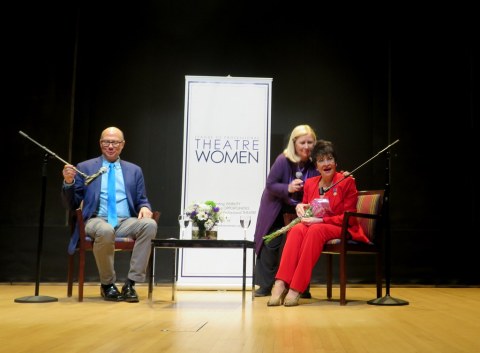
Richard Ridge, Pat Addiss, Chita Rivera, NYPL for the Performing Arts at Lincoln Center and LPTW presenting ‘Chita Rivera in Conversation With Richard Ridge’ (Carole Di Tosti)
You accepted another Tony Award for Aurora in Kander and Ebb’s Kiss of the Spider Woman. (applause) Aurora was difficult to find because she is made up of fragments.
Yes. Fragments. When I finally realized not to become too desperate to find out who she was, to just be patient, one day, I realized that I was in his mind, his imagination. Then I found the character. It was his imagination because he envisioned her. I had the support of the amazing actors and Rob Marshall’s choreography and Hal Prince’s direction. It was so beautiful. The story was extraordinary. It was a story I wanted to make sure was heard. It was beautiful to look at. I wondered how was I going to be in the web? They said, you’ll see. It was a projection and I was standing in the center of the stage and I looked as though I was hanging on this web. I did do a lot of climbing. But my name is Chita. (applause) I’m lucky, really lucky to be around at the time these great shows were created and to work with such amazing people.
You played opposite Antonio Banderas in the stunning revival Nine. Everyone in the audience wants to know what was it like sharing the stage with Antonio Banderas.
I had several people say, you did that tango with Antonio and you did that high kick split. How did you do that? I said, you would be able to do that too if you were with Antonio Banderas. (laughter) Antonio Banderas was so extraordinary in that show and so was Raul Julia in the original. Extraordinary. I loved what Tommy Tune created. Raul? I could have done that split with Raoul. Antonio is the lover we have seen on screen. He was so perfect, so beautiful. So for my audiences, I tell them everything you’ve dreamed about Antonio is true. He was great to work with, sang, never missed a show. You know he’s a wonderful actor.
You received your ninth nomination on Broadway for Chita Rivera: The Dancer’s Life (book by Terrance McNally) What gave you the great pleasure of performing the show across the country for people who couldn’t get to New York.
First of all there are so many sensational theaters across the country. Those people are theater hungry. So it’s a joy to bring a show that you’re proud of to them. And they really appreciated it. So when someone asked about doing it? I thought, initially, what do I have to offer? You’re so busy, you don’t step back and look at your body of work and yourself because it’s you and you live it. The story is the adventure of my life. It’s God’s way of letting me realize what I have. Four brothers and sisters, music everywhere, my father’s a musician in a white suit, I’m telling it and hearing it at the same time. I think damn! This is interesting. It’s a lot of music when music means so much. We had a great time. Dancing on the kitchen table with a lot of hungry kids and Graciella Danielle’s imagination? Wonderful.

Chita Rivera, ‘Chita Rivera in Conversation With Richard Ridge,’ presented by NYPL for the Performing Arts at Lincoln Center and LPTW (Carole Di Tosti)
You recived your 10th Tony nomination for your emotionally moving and mesmerizing performance in John Kander, Fred Ebb and Terence McNally’s The Visit.
You know I say, I don’t need any more friends. I have enough friends. It’s a responsibility to return those calls. But Roger Rees who left us is a friend I got to know only a little bit, but I did have some time with him. He was a wonderful man and a wonderful actor. The piece was so dark that people thought the show was about revenge. No. It was about love. Yes, some people died, but it doesn’t mean it wasn’t about love. And the truth comes out that they have made mistakes themselves in the “Yellow Shoe” song. My character buys the town up. But she arrives with the casket empty and leaves with him in the casket. But she makes the entire town realize that he did love her. I just loved it. I thought John Doyle did an extraordinary job. And the score that John Kander wrote was wild and wonderful. The production and the characters are really what theater is all about.
What do those three men, John Kander, Fred Ebb and Terrance McNally mean to you?
Well, they knew things about myself that I didn’t know. They allowed me to get to know me. They put words in my mouth I might not have said, but I certainly grew to understand. Freddy knew my sense of humor. John writes the most beautiful music you could ever hope to sing. Terrance, I don’t remember meeting him 60 years ago. I learned so much from him. They made me feel good about myself. They cared and they became like partners in life. Fred is not with us anymore. But in a way he still is.
In 2009 Barack Obama awarded you with the Presidential Medal of Freedom. (applause) What was it like to be in the room?
Oh please! Barack and Michelle Obama? I remember watching him when he and Michelle were dancing…he had a little bop. A tiny bop. I said to Michelle, is that a bop? I know that bop! I think it’s just great. And Michelle said, “Yeah. That’s his bop. It’s the only step he’s got.” (laughter) But to be in the same room? I think after a while, you just have to say, “Thank you God!”
Tribeca Film Festival Review: ‘Netizens’

(L to R): Carrie Goldberg, Anita Sarkeesian, Tina Reine, Cynthia Lowen, premiere screening ‘Netizens,’ Tribeca FF Q & A, moderated by Lauren Duca (Carole Di Tosti)
Women’s place in the culture as second class citizens viewed as sex objects and predatorized has never been more apparent with the #MeToo movement. Of course Hollywood tradition, the film industry, television and corporate business are notorious for predation of women which appears under the guise of adoration of women. Men just can’t keep their hands away from nor keep their sexual organs outside of beautiful women. They can’t control themselves. What a canard! Nothing could be further from the truth. Any form of sexual predation, rape, abuse, harassment, violence, molestation is misogyny, not adoration. There are no sexual components that apply, though men almost universally characterize such behavior as sexual and not violence. The documentary film Netizens which premiered at Tribeca Film Festival, directed by Cynthia Lowen, identifies this canard, as it focuses on three women who have had to confront such abuse and its attendant misogyny online.
The battles of these women to gain justice with legal representation coincide with the #Me Too movement. Theirs has been a lonely and humiliating walk until justice arrived on their doorsteps. Various online Social Media habitats provide a way for Incells and others to band together in a cultish, vituperative fan club of twisted men, who, with anonymity and impunity, stalk, harass and insult women they deem noxious and vulnerable. Such mentally disturbed guys with an axe to grind against females lurk behind a cyber avatar. Social media is largely un-policed by law enforcement. Nor do Social Media companies accept responsibility for such abuses which they dismiss. Law enforcement and Social Media companies are proportionately empowered by men. Conveniently due to gender bias, most do not perceive sexual harassment as a cyber crime. With regard to law enforcement, unless there is bodily harm and a name, cyber cretins easily remain beyond the justice system.

Carrie Goldberg in ‘Netizens,,’ premiere screening Tribeca FF and Q & A (Carole Di Tosti)
Cynthia Lowen’s insightful documentary follows lawyer Carrie Goldberg’s frustrations and revelations about our justice system’s (during Obama, now it’s conceivably worse), ineffectuality when dealing with cyber harassment. In this era of Russian interference on Social Media and Facebook’s “unwitting” participation with Cambridge Analytica’s handing over of user information, the potential for abuse has skyrocketed even more. Though Lowen’s film does not delve into the 2016 election aftermath and the Russian hacking, the online abuse of individuals supporting Hillary/Obama against Trump has been legion. Thus, the Social Media landscape is ripe with rotten fruits from corrupted trees that need to be cut down or burned.
Lowen’s work intimates such cyber attacks and propaganda by focusing on the elements which allow individuals to abuse and stalk. The key is anonymity and/or the ease with which poseurs may create a fictitious identity and use it as a means to insult and character assassinate.
Netizens deals with the female/male dynamic. Through the testimony and comments of Carrie Goldberg, Tina Reine and Anita Sarkeesian, their video interviews reveal an intense personal struggle with online bullies and predators. Through her interviews primarily with these women and others of similar experience, Lowen’s documentary creates a discussion forum for activism. These three represent what happens to thousands of women daily who are attacked and bullied publicly without adequate judicial recourse in the face of Social Media companies who dismiss their complaints or tell them to “log off.” Sadly, such harassment often spills into life, especially if the warped anonymous abuser projects all of their rage and mental illness onto their hapless targets.
Not only does Lowen include interviews with advocates, experts both male and female, she incisively indicates all the forms digital harassment and cyber violence take during her interviews. Her intake of comments by teenagers and the key subjects provide vital mentoring information for women young and old. Some cyber violence tactics include non-consensual pornography, revenge porn, duress rape, and privacy invasion. The documentary’s revelations coincide with countless stories of tween abuse where male teenagers for merriment put rape videos of alcohol comatose young girls online. One such case is documented in Roll Red Roll.

Anita Sarkeesian in ‘Netizens,’ Tribeca FF premiere and Q & A (Carole Di Tosti)
The consequences are often horrendous. In the instance of those who intend to maintain their business careers, stalkers and harassers often spend hours conniving to destroy the individual and her career via Social Media using online character assassination. In the case of teens violated through bullying their character destroyed on Social Media via pictures and demeaning, denigrating insults, (though Lowen doesn’t deal with suicide per se), such cyber assaults may end up in teen suicide. Only because the women Lowen highlights sought out Goldberg’s legal representation, and in the case of Sarkeesian only because of her powerfully voiced feminist activism does the film have a more satisfying conclusion. Indeed, Reine, Goldberg, Sarkessian and others rely on their inner power to thrive and step above victimization.
However, others have not been as successful. And one reason this film is vital is to educate and inspire young women to empower themselves, speak up and express their voice refusing to back down when cyber attacked, bullied, or sexually cyber predatorized online.
Lowen shadows Lawyer Carrie Goldberg and the others via cinema vérité with superb edits to effect a fascinating and at times disturbing picture of the underbelly of cyber violence. Through interviews with Goldberg and others she dissects a justice system that largely refuses to acknowledge digital abuse as a prosecutable crime. Indeed, New York State is remiss and Goldberg points this out at a speaking engagement that Lowen captures in video clips. Lowen also follows Goldberg in discussion with various clients (a young women who remains anonymous) who seek relief from being terrorized online via their photos being used to strip them of dignity and sanctity as insult upon insult violates their privacy and peace.
Cynthia Lowen speaks at Tribeca FF Q & A after the screening of Netizens. L to R: Lauren Duca (un pictured moderator) Tina Reine, Carrie Goldberg, Cynthia Lowen
Lowen’s interviews and shadowing of celebrity Anita Sarkeesian, a media critic, feminist, blogger and activist are particularly enlightening. Sarkessian, an outspoken feminist has taken down the gaming culture and has been threatened, excoriated and vilified for it. Sarkessian reveals the typical day of threats she receives, including bomb threats and death threats. Sarkeesian, a Canadian American is the founder of Feminist Frequency, a website that hosts videos and commentary analyzing portrayals of women in in popular culture. She hit the mark and received some of the most vile cyber harassment with her video series Tropes vs. Women in Video Games, which examines tropes in the depiction of female video game characters.
Anita Sarkeesian, Tribeca FF premiere screening ‘Netizens,’ Q & A
Sarkeesian’s impact may be gauged in that she needs an armed escort when she fulfills public speaking engagements. Interestingly, Lowen reveals the power of her message when she is surrounded by young women who recognize her as an influencer and want her autograph because they’ve been enlightened about the superficial and denigrating objectification of women in Video Games. In her speaking engagements, she has acknowledged the challenge of attempting to improve gender inclusivity in gaming culture and the media.
Sarkeesian has taken on the ambivalent response of Silicon Valley companies to the threatening behavior they enable. But in their predominately male mind, money talks and BS walks. And they prefer for Sarkessian to walk out of their spaces and let “boys and men be boys and men.” Personal evolution, growth apart from infantile sexual fantasy, and obsession with video games is what drives their profits. Only until someone comes along to mine the finer angels of human nature will this subtle and accepted gender oblivion of women’s power and distinction end.

Tina Reine in ‘Netizens,’ Tribeca FF premiere and Q & A (Carole Di Tosti)
Lowen also focuses on Tina, a successful businesswoman. After a fateful relationship which the male refused to let go of, Tina was cyber harassed in the most debilitating way. The individual used revenge porn and lies to discredit her career record. Using his own money to effect a psychological, emotional campaign of hate against her, he attacked her ability to make a living. Each time Tina would go to interviews, the few that she was invited to, the false background and lies would then appear. How she finally achieves a realm of peace, confronts the individual with legal means and regains control of her emotions and career is inspiring.
Cynthia Lowen’s Netizens was produced before the Brett Kavanaugh hearings, a faux attempt moderated by President Trump/Republicans to appear to examine Kavanaugh’s sexual abuse of Christine Blaise Ford in response to the clamor of the public to do so. In April 2018 however, the screening at Tribeca Film Festival and the Q and A afterward gave great occasion for the audience to feel uplifted about these women who were succeeding against online abuse and bringing their character assassins to task. After the Kavanaugh hearings, the entire culture resumed its status quo and the concept was that once again, women “doth protest too much” and should just “shut up,” or “log off.”
Also, the watershed moments of the #MeToo Movement appear to have stalled after the onrush of women came out in force against their rapists, abusers, molesters and harassers and the men, in many instances celebrities, had their careers upended from the revelations. However, after Kavanaugh there appears to be a swing of the pendulum. Indeed, power and money talk as do the Republican conservative think tanks and societies, like the Federalists.
Another set back occurred when Jeffrey Epstein’s (accused of running teenage orgy parties that touched the lives of male officials and celebrities like Donald Trump and Bill Clinton) charges were shuttered and the testimony that should have been made public of the women he sexually abused when they were teenagers, never saw the light of day. Cover-ups of predation continue, sex-trafficking continues, bullying online via Social Media continues. Each case must be fought and won on its own merit and broadcast to the world.
Kavanaugh and Epstein push backs reveal that it is not enough for women to speak out and seek justice. Cultural mores and folkways must change; this includes for men, women and LGBTQ individuals. And for that to happen, mothers and fathers in parenting their sons and daughters must change. Women and men in their approach and relationships with each other must change. And the culture’s attitudes toward sex and love must become more fluid and tolerant. Sexuality and profitability, fueled by the infantile idea that sex is “forbidden” must die a death. Amsterdam, The Netherlands may have a healthier attitude in that they legalize prostitution and cut off the idea of predation for profit at the knees. Paying for Sex is legal. Enough is enough.
In any case, change is process. Whether face-to-face or online, sexual predation of women and men is a daily war that must be fought in homes, businesses, frat parties, dorms and online to change the culture. The change must go beyond the artificiality of political correctness down into the loins and hearts of young men and boys and the minds and understanding of young women and girls. Regardless, it will happen. It’s only a matter of time and critical mass leveled by the public.
2018 Tribeca Film Festival Review: ‘Disobedience,’Starring Rachel Weisz, Rachel McAdams, Alessandro Nivola

(L to R): Rachel Weisz, Rachel McAdams in ‘Disobedience,’ 2018 Tribeca FF US Premiere Screening (photos from the film)
Disobedience directed by Sebastian Lelio, written by Sebastián Lelio and Rebecca Lenkiewicz received its US Premiere at Tribeca Film Festival 2018. Based on the titular novel by Naomi Alderman, the film is striking for its dynamic and profoundly rendered performances by Rachel Weisz, Rachel McAdams and Alessandro Nivolo who are caught in an unwitting love triangle. Within a matter of three or four days, as long as it takes to say goodbye to a beloved rabbi, the three must reconcile the truth and establish the deepest kind of love for each other in the form of forgiveness and self-love that brings healing and acceptance.
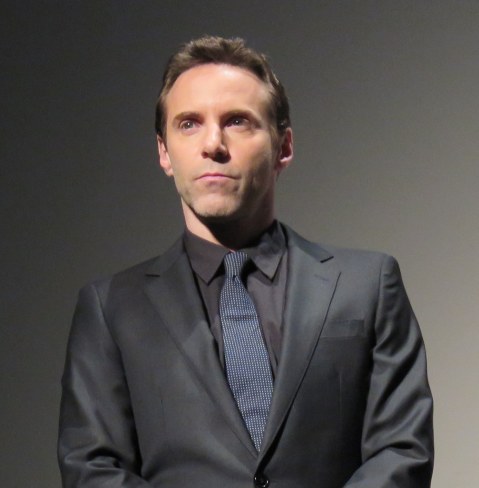
Alessandro Nivola, 2018 Tribeca Film Festival US Premiere Screening and Q & A (Carole Di Tosti)
The title is an extreme irony for on the one hand no one in the film outside of the culture of the community where the action takes place commits any wrongdoing. However, based upon the perspective of the strict, religious Orthodox community of Jews in North London where the characters play out their drama, love between two women is forbidden. And it is here that the film launches into one of the most poignant and uplifting of LGBTQ films that has been filmed to date.

(L to R): Rachel Weisz, Rachel McAdams, Alessandro Nivola in ‘Disobedience,’ 2018 Tribeca Film Festival US Premiere Screening (photo from the film)
Ronit, a New York photographer who has been estranged from her rabbi father returns home for his funeral to pay respect and gain closure, if possible. She discovers that the Orthodox Jewish congregation holds little interest for her nor demonstrates conviviality. Even her relatives are cold. Indeed, her lifestyle and freedom living as an independent free-wheeling woman in the US has transformed her since she has shed the strict upbringing under which she was raised, though she is still Jewish. As she attempts to negotiate the services for her father, she meets old friends with whom she grew up and is shocked to discover that Esti (Rachel McAdams) has married Dovid (Alessandro Nivolo). When she discusses their relationship with them, she discovers that Esti is miserable with Dovid who has worked closely with Ronit’s father in the synagogue and most probably will take over the congregation now that the rabbi has died.

Alessandro Nivola, Rachel McAdams in ‘Disobedience,’ 2018 Tribeca Film Festival US Premiere (photo from the film)
The film progresses slowly, profoundly and painstakingly and this is where the three actors shine in their almost second to second precision as they react to one another in measured, careful beats. We note the underpinnings and feelings that the women suppress in public. The air between them is heavy with meaning, and Dovid is sensitive enough to divine that the two have feelings for each other that transcend the ordinary relationship of childhood friends.
Eventually, the filmmaker reveals that Ronit (Rachel Weisz in a dogged and measured performance) and Esti (Rachel McAdams is the perfect foil playing off Weisz’s inner peace with a yearning grace of her own) had an affair and were intimate in complete contravention of the mores of the Orthodox community.
Ronit’s father, a rabbi, expects strict adherence to Jewish folkways for his children, and when he was apprised of Ronit’s behavior, they argued. The film is fascinating in that the father’s presence makes itself felt, though we never see him. The estrangement reveals that her father adheres more to the role of rabbi and fears the disapproval of his congregation than demonstrating the perfect law of love and grace which as a rabbi he is supposed to exemplify. Hypocritically, the rabbi wants nothing to do with his daughter. Their estrangement and his unforgiveness carry through to the disposition of his possessions and his house. He has disinherited Ronit and has given everything to charity.

(L to R): Rachel Weisz, Rachel McAdams, Alessandro Nivola in ‘Disobedience,’ 2018 Tribeca Film Festival US Premiere and Q & A (Carole Di Tosti)
Ronit left her father, the Orthodox Jewish folkways and culture, and sought the freedom of the US. However, it is apparent she has not left her love of God though she is free from Orthodoxy. Ronit is a sterling individual. Courageously, she carves out her own life confronting her sexual orientation as second nature for she is intimate with both men and women.

Rachel McAdams, Alessandro Nivola in ‘Disobedience,’ 2018 Tribeca Film Festival US Premiere and Q & A (Carole Di Tosti)
On the other hand, Esti has had to live under the strictures that Ronit discarded. And as a married woman and a lesbian which the community considers anathema and “unclean,” she despises herself and her hypocrisy that she has chosen a life of shame, though on the surface she is a pious, good wife to her husband. Nevertheless, like the Rabbi who has a daughter whom he cannot forgive, Esti stays in a marriage which is false and the intimacy between her and Dovid is false and truly unfair to him.

Rachel McAdams in ‘Disobedience,’ 2018 Tribeca FF US Premiere (photo courtesy of the film)
Though the film concentrates on the relationships of Dovid, Ronit and Esti, in the shadows, we understand that the Orthodox Jewish culture nullifies and pushes individuals further from God rather than closer to him in love and forgiveness. Out of all of the characters in the film, Ronit best exemplifies God’s love and it is through her loving example with Dovid and Esti that the married couple are made free to leave one another and in the case of Dovid allow himself to be free of the position of rabbi. For as a result of Ronit’s visit and the revelations that occur, he realizes he must not take up the mantle of hypocrisy that Ronit’s father has worn in front of his congregation, looking like the martyred saint, while being unforgiving to his daughter.
One of the most important themes in Disobedience cannot be overstated enough.The strict mores and unforgiving Orthodox Jewish community like any orthodox religious community creates misery and torment. The religious mores work in the reverse. They do not free. Instead, they chain the congregation to an obedience which is not loving of God who forgives. It chains them to behavior which is unforgiving its acceptance of a false obedience to the orthodoxy which discourages love and forgiveness. Thus, when Ronit first visits, we see how the congregants respond to her. Indeed, Ronit’s example is frightening to the community who rejects her rather than attempts to understand who she is.

(L to R): Rachel Weisz, Rachel McAdams, ‘Disobedience,’ 2018 Tribeca Film Festival US Premiere and Q & A (Carole Di Tosti)
The conundrum Esti’s character faces becomes clear to us and to Ronit when she tells Ronit that she wanted to see her and though Ronit didn’t know who sent word, Esti admits that it was she who sent word her father died. Indeed. The complexity of their relationship, one being free and the other living in bondage and lies reveals the secret intimacy between them is a freeing one for Esti. However, before Ronit visits, Esti is incapable of seeing a way out because Dovid is a lovely, kind individual and there is external security in being with the community, though the security is a prison.
Only when Ronit and she are intimate in a hotel room and she is able to express her passion as a gay woman to one she loved in the past, does she set herself free. For her part, Ronit is settled in who she is and her own freedom kindles the love in Esti to set her at ease with her decision to leave Dovid.
By the end of the film, Ronit is a beacon to Esti and Dovid. Esti wants to be free of her shame, her hypocrisy and her unhappiness with Dovid whom she loves, but not in the fullness of expression as she loves Ronit. Ronit helps her achieve freedom to forgive herself and move on away from Dovid and the congregation.
The most poignant one in this threesome is Dovid. But he, too, overcomes the shackles of the congregation’s stultifying mores. He forgives both of the women and understands that to command Esti to stay with him or love him is unloving and hateful of her true nature. His character beautifully portrayed by Nivola is the one who evolves and accepts the challenges of discovering what love and forgiveness should be for one in a position to lead others in God’s laws of love.
The film’s pacing is particularly interesting in the beginning. All is subtext and it keeps one considering what is happening between and among the three friends. It is a must-see for the superb acting, the excellent adaptation of the script and the measured cinematography which serves characterization and theme. Kudos to all involved, especially the actors and the director who elicited their performances.
Tribeca Film Festival 2018 World Premiere: ‘Stockholm,’ Starring Ethan Hawke
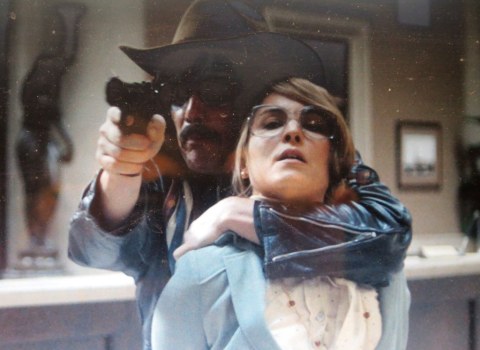
Ethan Hawke and Noomi Rapace in ‘Stockholm,’ A World Premiere at 2018 Tribeca Film Festival Spotlight Narrative Film, (photo courtesy of the film)
Stockholm, written and directed by Robert Budreau and starring Ethan Hawke as the American who intends to swap millions and a friend for the largest Swedish banks’ hostages is a humorous thrill ride which almost has you rooting for the “wild and crazy” poseur Lars Nystrom/Kaj Hansson that Hawke assiduously portrays. The World Premiere slated as a Spotlight Narrative Film at Tribeca Film Festival 2018 is based on the incredible true story of how a charismatic criminal lures his victims to not only allow him to hold them hostage, but also elicits their help as he attempts to escape from the circumstances which irrevocably close in on him.
Ethan Hawke in a long haired wig, cowboy hat and dark sunglasses (for the film’s beginning) is perfect for the role as the maniac “Lars” whose bravado and energy take over the mild-mannered male and female clerks as he predatorizes their emotions, yet entertains them with his singing. Generally, he is an outrageous and likeable character and is more terrorized himself when he has to browbeat them into corners and submission with a gun.

Director Robert Budreau introducing ‘Stockholm,’ Tribeca FF 2018, World Premiere Spotlight Narrative Film screening, (Carole Di Tosti)
When the minutes turn into hours with no resolution in sight, an incredible situation unfolds. Himself cornered by police and bank officials who refuse to give him the money he wants and other items for his escape,, Lars depends upon the support of teller Bianca Lind (the fine Noomi Rapace) and others. Lind becomes enthralled and even swept up and attracted to him. Lars negotiates a key point, in getting law enforcement to bring over Gunnar Sorensson (Mark Strong) a former friend whom Lars intends to free as a condition of releasing the hostages. To create conflict, Budreau portrays Gunnar as more menacing, though in real life, he was released and not charged possibly because he helped law enforcement catch “Lars” who was sentenced to ten years for this escapade.

Jan-erik Olsson responsible for the bank robbery in Stockholm, decades later. Ethan Hawke portrayed a fictional character based on the robbery events in ‘Stockholm.’ Tribeca FF 2018 World Premiere Spotlight Narrative Film screening (from the site)
With changes in name and characterizations, the film is primarily based on the true events which happened in 1973 in Stockholm, Sweden known as the Norrmalmstorg robbery. It was this robbery when Jan-Erik Olsson took hostages and their response to the situation originated the clinical symptoms known as “Stockholm Syndrome.” Specifically, the syndrome occurs when the alleged victims of a criminal predator identify with him, feel sorry for him and actually aid and abet his escape and/or commit criminal acts with him. Whether this is a survival mechanism response to fear is opaque. But the syndrome has been the subject of debate as other hostage crises have gained notoriety, For example in the sensational Patty Hearst case which occurred a year later than the Norrmalmstorg robbery, in 1974, Hearst was kidnapped by the wacked Symbionese Liberation Front who forced her to participate in a bank robbery which was filmed on camera. Hearst’s emotions became compromised to protect herself and mislead her captors. Nevertheless, her identification with criminals is not easily understood.
Budreau’s film gives rise to a number of psychological questions which he raises and attempts to answer. First, why does the attractive Bianca Lind go along with Lars and not resist him? Is it because he is not dangerous or because she is frozen in fear? Lind is the fictional character perhaps most similar to real life Kristin Enmark. Enmark in a conversation with officials said she believed the two hostage takers to be less dangerous than the police who were trigger happy. Likewise, in the film Lind cites the quote which Budreau included about the police being more likely to injure and kill the hostages in a fire fight, because civilian lives are less important than “getting the criminals” or preserving the banks funds.
Why does Lind passively go along with Lars to the point of assisting him? Surely, he is more hot air than serious killer as Hawke superbly portrays him to be. The longer the hostages and he remain together, the more they believe he has their interests at heart, while the bank is more interested in safeguarding their money. Interestingly, the manager and negotiators do not take “Lars” seriously. Only when the hostages help him with a plan and he pretends to injure Bianca is there some movement regarding giving him what he wants.
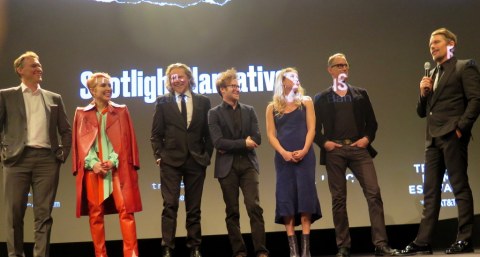
Director Robert Budreau, Noomi Rapace (2nd from left), cast, Ethan Hawke, far right at the 2018 Tribeca FF World Premiere Spotlight Narrative screening of ‘Stockholm, the Q and A (Carole Di Tosti
For her part Rapace’s Lind reveals a character who is more passive female than fiesty rebel. However, when we see her relate to her husband and family, Budreau offers up a tantalizing possibility. In the brief conversation she has with her husband, she appears steady and unemotional. Does she not want to upset him? Couldn’t she emotionally cry and manipulate her husband to more forcefully pressure the bank into settling with the bank robber? Instead, Budreau offers another look into a marriage and home life that may indeed be unsatisfactory and banal. Certainly, this interlude with the exciting and dangerous Lars stimulates another part of her seemingly untouched by her married life with the rather cold husband as portrayed by Thorbjørn Harr.
Budreau’s take on the “Syndrome” in the titular film Stockholm is varied and reveals elements that we may not have considered before because we are unfamiliar with the fascinating events that coined the phrase “stockholm syndrome” based on the symbiotic relationship between predators and their hostages. The film engages primarily due to the pacing, the tight, authentic revamping of the events in a believable way, and the fine performances, especially the high-flying wildness of Hawke and his exchanges and counter-play with Lind.
directed and written by Robert Budreau. Produced by Nicholas Tabarrok, Robert Budreau, Jonathan Bronfman. (Canada, Sweden, USA) – World Premiere. In 1973, an unhinged American outlaw walked into a bank in Sweden demanding millions in cash in exchange for his hostages. The events that followed would capture the attention of the world and ultimately give a name to a new psychological phenomenon: Stockholm syndrome. With Ethan Hawke, Noomi Rapace, Mark Strong, Christopher Heyerdahl, Bea Santos, Thorbjorn Harr.
2018 Tribeca Film Festival Review: Chekhov’s ‘The Seagull’ Starring Annette Bening, Corey Stoll, Saoirse Ronan, Elisabeth Moss, Mare Winningham

Annette Bening, Jon Tenney in ‘The Seagull,’ 2018 Tribeca Film Festival World Premiere, (photo from the film)

Annette Bening, 2018 Tribeca FF World Premiere, Anton Chekhov’s ‘The Seagull,’ directed by Michael Mayer (Carole Di Tosti)
Michael Mayer’s valiant attempt to bring a freshness to The Seagull with a script based on Anton Chekhov’s titular work by Stephen Karam (Tony winner of The Humans-2016) shines for a myriad of reasons. Yes, many critics dunned it or found that it fell short of its monumental task to bring Anton Chekhov’s four act, three hour play to the screen. Indeed, Chekhov is not easy and the script has been paired to emphasize the humor and highlight the salient speeches and actions, leaving the more unwieldy dialogue behind.

Annette Bening in Anton Checkhov’s ‘The Seagull,’ directed by Michael Mayer, adapted by Stephen Karam, 2018 Tribeca FF World Premiere, (photo courtesy of the film.
At its first time out in 1895, The Seagull flopped. The play requires superb acting and directing so that the ponderous tones are submerged and the comedy comes to the fore. I have seen a number of productions that left me with a yawn and a nod. Not so for this film. Forgive me fellow sojourners with a critical eye. My pen is blunted from razor sharp barbs directed to slice into this fine feature which made its World Premiere at the 2018 Tribeca Film Festival.
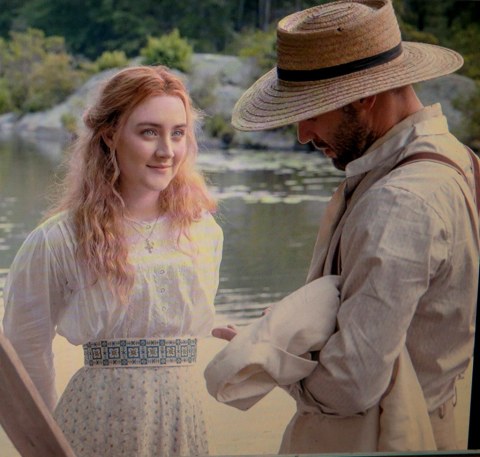
Saoirse Ronan, Corey Stoll, ‘The Seagull, 2018 Tribeca Film Festival World Premiere (photo courtesy of the film)
Mayer brings the action into the breathtaking settings of the lake and environs of the estate. He carries this striking beauty into his grand and lush interiors signifying the wealth and class status of the Pjotr Nikolayevich Sorin estate. Sorin (Brian Dennehy) is Irina’s (Annette Bening) brother. Interior and exterior settings are visually stunning. Against this gorgeousness Mayer unleashes the characters foibles and tragedies. The irony that luxury and the exquisite beauty of things has little power over emotions thematically resonates throughout. The principals’ (Irina-Bening, Trigorin-Corey Stoll, Nina-Saoirse Ronan, Masha-Elisabeth Moss, Konstantin-Billy Howle) interactions form the meat of the drama which ends in tragedy. None of the characters appear to be self-aware (Trigorin excepted with caveats) to the point where they can make decisions which are life-affirming. Chekhov and Mayer’s iteration of his version of The Seagull places the human condition in its humor and sadness front and center. To his credit Mayer’s understanding and perception continually serve his fine cinematic intuitions, skills and efforts.

Saoirse Ronan, 2018 Tribeca Film Festival World Premiere Screening and Q & A (Carole Di Tosti)
The vitality of the settings that move back and forth from outdoors to interiors ground us in the landed wealth and social order of the Sorin family who also boasts a celebrity, the actress Irina who visits her brother Sorin and her son Konstantin each summer. The settings, always a subtle reminder of the time and place in Russia before the revolution (twenty years or so later) seem a particular irony. The upper class social elites and celebrities (Irina, Trigorin, etc.) whose physical needs are answered by the serving class, remain surreptitiously unhappy and in a constant state of displacement by the major facts of life: love-loss, aging and death. Their sturm und drang, whimsies, self-absorption and discontents are the luxuries of their class which harbor the seeds of tragedy because their cavernous, selfish desires blind them to the encroaching realities. Unless they self-correct, they will face tragedy and loss after tragedy and destruction, muting their soul’s enrichment until little of worth is left.. Inevitably, this class in the coming decades will lose all they take for granted.

Annette Bening, Billy Howle in Anton Chekhov’s ‘The Seagull’, 2018 Tribeca FF World Premiere and Q & A, (Carole Di Tosti)
Irina (Bening is authentic and stunning as the aging diva racing one step ahead of oblivion, and the end of celebrity and youth) brings the successful novelist Trigorin (Stoll in a superbly realistic performance) into the summer festivities of the family on their estate. Trigorin’s presence is the catalyst that puts the human dominoes in motion and sends them careening off a cliff with humor and irrevocably pathos. Konstantin, a passionate, unconventional writer is devastated after his mother Irina and the others find his play, performed by his unrequited love Nina, to be laughable and esoteric. Too self-absorbed with their own greatness Irina and Trigorin dismiss his yearning for success and recognition. His need for his mother’s love and acceptance has fallen at the shores of his depressive state for years. Almost in a revenge against his plight and in a self-curse of not achieving success, he shoots a delightful, beautiful seagull in a wanton act to release his anger. He gives the seagull to Nina who rejects it. It is a symbolic act, as if as refuses to acknowledge that her unrequited love wounds him. This act reverberates and symbolizes additional themes. One is that human being’s selfish desires and passions loosed upon the natural world and others, if not moderated, harm and destroy.

Elisabeth Moss in Anton Chekhov’s ‘The Seagull,’ written by Stephen Karam, 2018 Tribeca FF World Premiere, directed by Michael Mayer (photo from the film)
For her part Nina (who lives on a neighboring estate) is entranced by Trigorin and dismissive of Konstantin’s love. She seeks fame as an actress and wants Trigorin’s love which he finds flattering for his ego is wounded in his relationship with Irina and the encroaching years of waning masculinity. Nina may be his last, greatest passion, and if not that, a distracting plaything to notch on his belt and then discard. When he notes the dead seagull, he shares that he may use it as a symbol in a work he will write. These poetic notions seduce Nina with the enticement that she may be his seagull. Nina is blind to the danger of what he says, innocently trusting him with her love and being.
Stoll as Trigorin is convincing especially in his self-justification of why he must take Nina’s love, if even for a season, when she offers it quoting from a passage in a work of his. This speech in particular is superbly delivered by Stoll. And even if it is not graceful, we empathize with his fear of aging and the limitations of his mortality with which we all can identify. Neither money, nor success nor celebrity can answer death. However, being pursued by two women a beautiful younger one and a celebrated actress who is a drama queen will suffice in the meantime, though it requires the humility and wisdom to negotiate their war against each other to “get” him. Trigorin’s pride and fear do not allow him to balance the two women so that they don’t care about his concern for the other in competing jealousies. They do care and they compete for him.

Saoirse Ronan, Brian Dennehy, Anton Chekhov’s ‘The Seagull,’ adapted by Stephen Karam, 2018 Tribeca FF World Premiere (photo from the film)
Irinia discovers Nina’s hopeless infatuation and must then approach Trigorin with clever wiles to get him to return with her to Moscow. If they stay at the estate, in front of her he will fulfill his lustful passion for Nina, for Nina is relentless. Irina refuses this humiliation.Though Trigorin and Irina leave together, in the short term she knows she must let him go.
Bening’s and Stoll’s interplay is smashing. In their portrayals, they reveal that neither character loves the other, but the passion for keeping their successful images by using each other’s status is familiar territory. Ultimately that will bind them together, despite any interfering love by encroaching inferiors like Nina or even Irina’s son Konstantin.
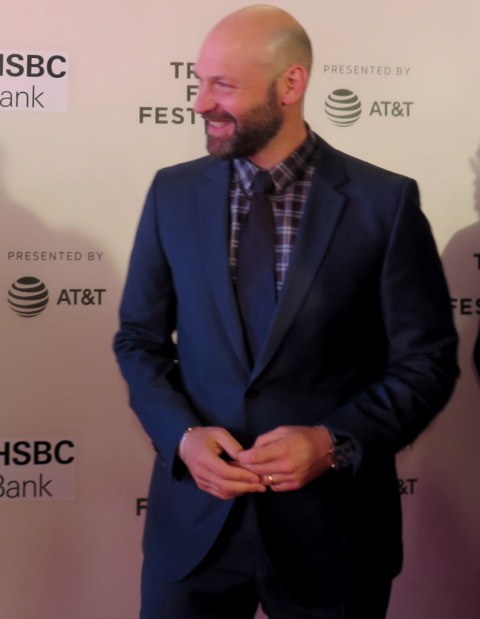
Corey Stoll, Red Carpet, 2018 Tribeca FF World Premiere, Anton Chekhov’s ‘The Seagull,’ directed by Michael Mayer, adapted by Stephen Karam (Carole Di Tosti)
These intricate matters of the heart are further complicated by the unrequited love of Konstantin for Nina whom he adores, and Masha’s (the daughter of Sorin’s baliff) unrequited love of Konstantin. The only stable one appears to be Doctor Dorn (Jon Tenney) who sees the value in Konstantin’s symbolistic, maverick play. However, he is having an affair with Polina behind her husband’s back, not embarrassed to cuckhold an inferior. Thus, with this selfish and wanton weakness, he fits the ethos of the other disturbed, dismantling characters.
What of the irascible and reflexive Sorin (Dennehy) who allows the visitors to descend on the estate each summer with aplomb and takes care of his nephew Konstantin while his sister indulges her passions for the dramatic life? He appears to be the most balanced, but he has two sick feet on a banana peel, and if he moves too suddenly, he appears ready to slip out of life. Only the servants/peasants whose needs we cannot see remain solid even heroic as they attend to their sometimes “infantile” charges and judge their actions accordingly.
The beauty of the film is its muscularity. The director focuses on the performances in the highly charged scenes between Bening’s Irina and Stoll’s Trigorin and between Trigorin and Saoirse Ronan’s Nina and between Nina and Howle’s Konstantin.

Saoirse Ronan in Anton Chekhov’s ‘The Seagull,’ directed by Michael Meyer, adapted by Stephen Karam, 2018 Tribeca FF (photo from film)
The succinct script entices us toward believability. We know these individuals and are fascinated by their rationale for behaving as they do. Though not very admirable or honorable, they are like us as they “hang themselves and each other out to dry.” When Nina returns in her dishevelment and dislocation of self and presents what she “is” to Konstantin, he sees her identity ravished and torn by Trigorin and the vicissitudes of her mediocre acting career. From his love for her and out of his own depths of despair, he willfully kills himself ending his misery and torment.
The ending is particularly poignant. Saoirse Ronan, appears like a ghost to revisit and haunt the scene as if transferring her great wounds to Konstantin who again kills a seagull in his empathy with it. This time it is himself. Representatively, symbolically his act shows that though Nina’s physical life continues, for all intents and purposes, her beauty and innocence are dead. Both have allowed themselves to be consumed by others whose great, dark abyss of self-torment seems limitless in its rapacity to devour all who attempt to love them.
See the film for the performances: all are wonderful, and kudos to Elisabeth Moss who manages always to be funny in her despair and angst. Mare Winningham, Jon Tenney and Brian Dennehy relay solid performances.
Mayer has found an approach to putting difficult classics onscreen. Perhaps he will continue this trend; fine directors should work with the classics to acquaint the current generation with great playwrights and authors. Actors surely will jump at the opportunity, to portray humorous and profound characterizations like the ones Chekhov has delineated in The Seagull.
Tribeca Film Festival Review 2018: ‘Every Act of Life,’ Looking Into the Brilliant Terrence McNally
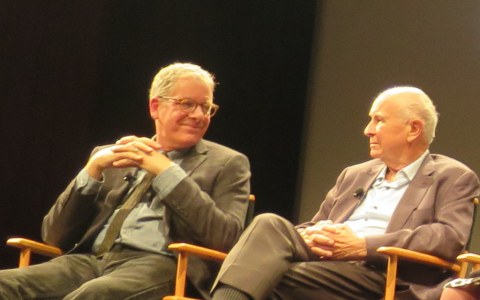
(L to R): Director Jeff Kaufman, Terrence McNally, ‘Every Act of Life,’2018 Tribeca FF World Premiere Special Screening and Q & A, Moderator Frank Rich, unpictured (Carole Di Tosti),
Terrence McNally is a theatrical force of nature, though with his incredible humility in an age of self-promotion, he would be the last to admit it. With a career spanning six decades and major, ground-breaking successes on Broadway and Off, in film and television, and multiple theater awards every decade, the man is a dynamo, beloved by actors whose careers he has vaulted, actors whom he collaborates with in a symbiotic relationship again and again. At 80, he is still working, attending productions (I saw him in the audience of the musical production of the most Tony nominated musical SpongeBob SquarePants this summer.) and launching off into new projects, even as I write this.
The World Premiere Every Act of Life directed and written by Jeff Kaufman was given a special screening at Tribeca Film Festival 2018, with luminaries, actors and McNally himself attending for the Q and A afterward. In this formidable documentary about a formidable American playwright, Kaufman presents McNally’s career and personal life. From start to finish Every Act of Life is an intriguing and well-thought-out chronicle cobbled together with interviews, archived photos, video clips, well-researched facts, details, memorabilia and well-placed commentary by actors, directors, producers and McNally himself. The documentary is especially revealing in its presentation of how one individual’s love and passion for the theater, opera, music and art has impacted our culture and brought us together in a forward momentum of shared communication and understanding.

Tyne Daly (‘Mothers and Sons’ and ‘Master Class’), Nathan Lane (‘Love! Valor! Compassion!’ ‘The Lisbon Traviata,’ ‘ It’s Only a Play’)2018 Tribeca FF World Premiere and Special Screening and Q & A (Carole Di Tosti)
Beginning with his early plays and traveling right up to his most recent work, Kaufman lays out the seminal moments and turning points that have slowly fostered the personality and character of this mild-mannered and charmingly authentic persona that McNally is today. Early influences on his life McNally credits to his English teacher in Corpus Christi who encouraged him to write and attend schools outside of the area. But his love of musicals and Broadway, were initially inspired by his parents, transplanted New Yorkers, who brought him all the way from Texas to New York to see a few smash musicals with towering figures like Gertrude Lawrence in The King and I and Ethel Merman in Annie Get Your Gun.
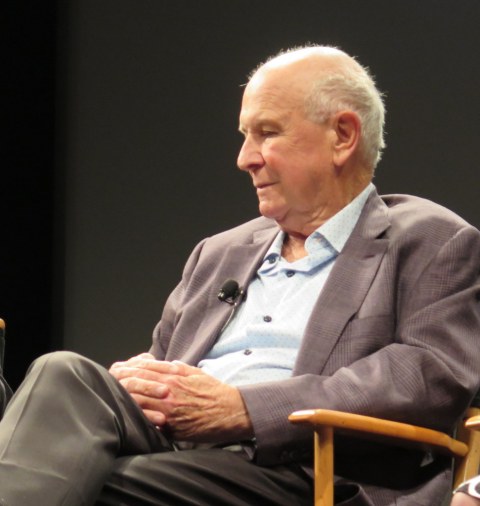
Terrence McNally, ‘Every Act of Life,’ 2018 Tribeca FF World Premiere Special Screening and Q & A (Carole Di Tosti)
The excitement and enchantment of live theater musicals were imprinted on his memory. And this love abides with him to this day as he continues to collaborate on musicals writing the book for numerous hits like The Kiss of the Spider Woman (1992), Ragtime (1996), The Full Monty (2000), The Visit (2001), Catch Me If You Can (2011), Anastasia (2017). He has also sharpened his wits and taken up collaborating on opera, for example in 2015, the production of Great Scott (music by Jake Heggie), premiered at Winspear Opera House in Dallas, Texas. He is a veritable tornado when it comes to writing new plays and collaborating with composers on musicals and operas.

Chita Rivera appeared in McNally’s ‘The Rink,’ (1984) ‘The Kiss of the Spider Woman,’ (1992, 93, 94) ‘The Visit,’ (2004). Tribeca FF 2018, World Premiere Screening and Q & A, ‘Every Act of Life.’Chita Rivera appears in Kaufman’s film about McNally. Here Chita Rivera appears at a 2018 LPTW event (Carole Di Tosti)
Following his English teacher’s advice, McNally attended Columbia University and was further shepherded by professors like Lionel Trilling for literature and Andrew Chiappe who steered him in the basics by having McNally and others read every work by Shakespeare in the order of their composition. After Columbia, McNally through a serendipitous introduction via The Actor’s Studio, cruised with John Steinbeck and family around the world as he tutored Steinbeck’s two young sons. This was another incredible experience which was to shape McNally’s writing career and broaden his horizons as well as establish his relationship with Steinbeck who inspired his writing. From these adventures he later fashioned the first act of And Things That Go Bump in the Night. Additionally, Steinbeck asked him to write a libretto for a musical adaptation of his novel East of Eden. One doesn’t know what one can do until a great American novelist like John Steinbeck asks you to do it.
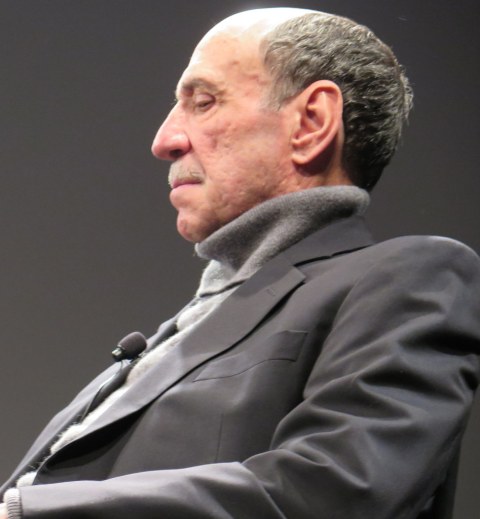
F. Murray Abraham, ‘Every Act of Life,’ 2018 Tribeca FF World Premiere and Special Screening and Q & A (Carole Di Tosti)
Back in New York City, McNally used his connections at the Actor’s Studio to begin to workshop his nascent one-act plays. And it was in New York that he met the brilliant playwright Edward Albee who was just coming into his own. After a four-year tempestuous relationship during which Albee wrote The American Dream and Who’s Afraid of Virginia Woolf, they parted ways and McNally’s career began to take off gradually in theater, television and in film as he wrote screenplays for versions of his works first performed on Broadway and Off Broadway.
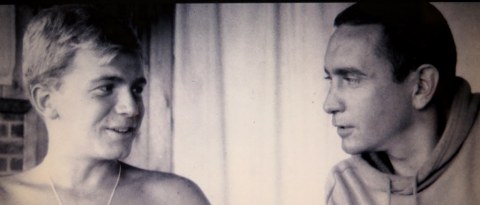
(L to R): Terrence McNally, Edward Albee, ‘Every Act of Life,’ 2018 Tribeca FF World Premiere Screening and Q & A (Carole Di Tosti)
Various tidbits appear in Kaufman’s documentary that fascinate. Some of the impressions are telling. He became addicted to alcohol and at a time when no one could admit to being gay, McNally confronted the oppressions of the culture and created some of the most insightful, poignant and endearing works related to the LGBT community and relatives confronting the AIDS epidemic. These include the TV miniseries Andre’s Mother for which he won an Emmy and later his Mothers and Sons starring Tyne Daly based upon the miniseries. Additionally, Lips Together, Teeth Apart, as well as an inside look at gay relationships for which he won his second Tony Award, Love! Valor! Compassion! also feature topics about confronting gender prejudice.
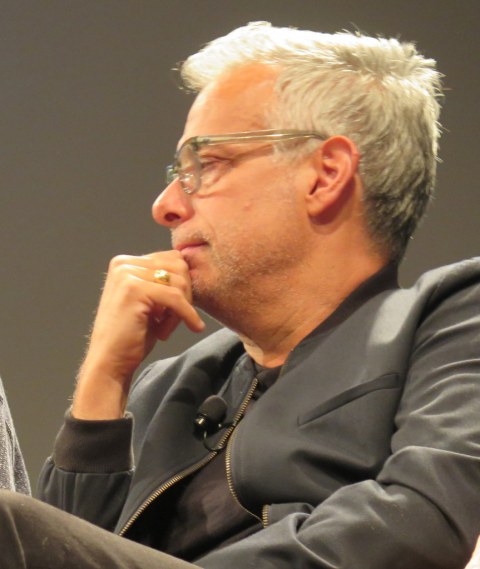
Joe Mantello, ‘Every Act of Life,’ 2018 Tribeca FF World Premiere Screening and Q & A (Carole Di Tosti)
Always concerned about the deep side of the human condition and striving above it, McNally first landed on the map when he was recognized for his portrayal of female-male relationships among the working classes (Frankie and Johnnie in the Claire de Lune) which was adapted into a screenplay starring Al Pacino and Michelle Pfeiffer. McNally’s versatility and humanity encompasses play topics that run the continuum. What is most important to him is human connections and the realization that we are together in this “thing” referred to as life. The beauty of our ability to connect, express love, overcome personal issues and adversity, with an assist from art and theater makes all the difference in discovering our purpose and fulfillment.
McNally’s dogged fight for LGBTQ rights at a time when it was most unfashionable and nearly anathema is an incredible achievement, considering the forces and money behind the attempt to liquify LGBTQ rights in the noxious march toward inhumanity and darkness led by the political conservative right-wing. Kaufman highlights the struggle. He also reveals how McNally overcame his addiction to alcohol and on that subject includes an amazing anecdote. Angela Lansbury’s love and honesty prompted her to speak directly to McNally to the effect that he must stop destroying himself. Indeed, she feared this most talented playwright, librettist and screenwriter would die an early death. Her influence and other factors eventually sent him down the road to wellness, where others were not as willfully fortunate.
What I appreciate in the film is McNally’s candor in discussing his “flops.” Of course, one might say that there are no flops in a playwright’s repertoire, only stepping stones which help them achieve their hard won success.

2018 Tribeca FF World Premiere Screening and Q & A, ‘Every Act of Life,’ (L to R): Jeff Kaufman, Terrence McNally, Tyne Daly, Nathan Lane, Joe Mantello, F. Murray Abraham (Carole Di Tosti)
Kaufman highlights McNally’s award-winning work (the musicals- The Kiss of the Spider Woman-1992 and Ragtime-1997 and his plays, Love! Valor! Compassion!-1994, Master Class-1995 and Dedication or The Stuff of Dreams-2005). The most incredible feature of this segment of the documentary is the commentary by living legends and McNally friends and collaborators, Chita Rivera, Nathan Lane, John Glover, Tyne Daly, John Kander, F. Murray Abraham, Joe Mantello, Angela Lansbury, Christine Baranski, Audra McDonald and many more. Indeed, the film is a who’s who of McNally’s posse, as well as a chronicle of his prodigious work ethic and love of theater, opera, ballet and music. His talents and breadth of knowledge about the Arts are absolutely staggering. And Kaufman gives us a historical perspective that is continually fresh and exciting.

Terrence McNally, ‘Every Act of Life,’ 2018 Tribeca FF World Premiere Screening and Q & A, (photo courtesy of the film)
I loved this film. I am familiar with McNally’s work having seen a number of his musicals and comedies on Broadway and Off. I split my sides enjoying them. However, Kaufman digs deep into the revelation of the anointed genius of this most wonderful of playwrights who connects the heavens to humanity with his words, impressions and inspirations, and joins us together in what can be compared to a holy act of communion in the theater. The film is a must see, and you will especially enjoy hearing how McNally and friends worked together to create some of the finest, most enduring works of American theater which in the future will surely be identified as classics.
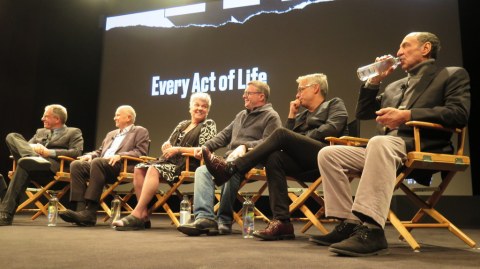
‘Every Act of Life,’ Q and A, Tribeca FF 2018 with (L to R) Jeff Kaufman, Terrence McNally, Tyne Daly, Nathan Lane, Joe Mantello, F. Murray Abraham, moderated by Frank Rich who is not pictured (Carole Di Tosti)
Epilogue
After the World Premiere Screening there was a Q and A moderated by Frank Rich, who was a longtime critic of theater at The New York Times. McNally made an incredible admission during the Q and A. Even though he has a prodigious body of work trailing in his wake, he never really considered himself a playwright or a successful one at that, until a few years ago. I was gobsmacked. Such is the talent and evolving genius of this artist.
That Frank Rich was moderating individuals he has sometimes dunned in his previous job as New York Times Theater critic was a bit of an irony. He long held sway as THE Times CRITIC until 2011. Often he was acerbic and unwieldy in his self-aggrandizement and pretensions to be THE VOICE of theater, backed by the “heft” of The Times. After I accomplished some gentle research for this review, I discovered a note in Wikipedia on Kiss of the Spider Woman (musical) that bears sounding since the main subject of this film is American Theater and Terrence McNally as one of the fountains where we might go for a revitalizing drink..
It seems that in 1990 Kiss of the Spider Woman was being workshopped at “New Musicals” at the Performing Arts Center SUNY at Purchase. New Musicals‘ goal was to create, develop and provide a working home for sixteen new musicals over four years. When New York critics heard that the play was being workshopped in its initial production, they wanted to see it. Unfortunately, they couldn’t be persuaded not to review it despite the fact that producers, etc., were testing the waters to see what needed ironing out. Frank Rich and other critics filed “mostly negative reviews” of this initial workshopping of Kiss of the Spider Woman. Sadly, New Musicals, whose mission was honorable and vital for American theater and especially New York Theater, blew out and folded after the fiasco with Kiss. Don’t get me started on the state of American Theater and why it is that way.
Thankfully, two years later a producer developed Kiss of the Spider Woman. It went on in Toronto and The West End where it won An Evening Standard. It finally came back to the US where it received 7 Tony Awards and 3 Drama Desks and ran 904 performances, despite Rich’s reviews. Ultimately, the American public became the arbiter of the production.
American Theater has lost ground for many reasons and indeed, the gatekeepers, critics and money people have, for all intents and purposes, shot it to hell and drained its lifeblood. With the rise of Social Media, for good or ill, digital platforms and word of mouth continue to lift up productions so that their lasting value might be revealed to give them staying power. But it is enough? Rich went on to feather his own nest. Kiss of the Spider Woman found its audience. New Musicals is no more. And so it goes. In light of these events Every Act of Life is an important documentary about the history of American theater, and a master creator who has thrived in spite of changing times.
‘Daniël Ost’s Triumph at The NYBG Orchid Show’

Palms of the World Gallery, 2018 NYBG Orchid Show, Daytime, designed by Belgian floral artist, Daniël Ost (Carole Di Tosti)
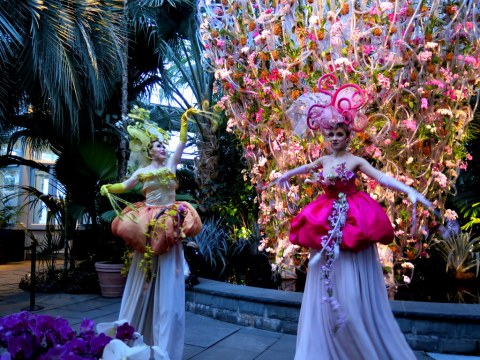
Orchid Dancers, 2018 NYBG Orchid Show, ‘Orchid Evenings,’ Daniël Ost, Belgian floral artist (Carole Di Tosti)

Palms of the World Gallery, anterior view, 2018 NYBG Orchid Show, ‘Orchid Evenings,’ Daniël Ost, floral artist (Carole Di Tosti)

2018 NYBG Orchid Show (daytime) Daniël Ost, Palms of the World Gallery (Carole Di Tosti)

Orchid Dancer, 2018 NYBG Orchid Show, ‘Orchid Evenings,’ Daniël Ost, Belgian floral artist (Carole Di Tosti)

Detail, Palms of the World Gallery, 2018 NYBG Orchid Show (daytime) Daniël Ost (Carole Di Tosti)

Palms of the World Gallery (daytime, detail) 2018 NYBG Orchid Show, Daniël Ost (Carole Di Tosti)
Dutch floral artist Daniël Ost is world renowned. No stranger to Europe or Japan, Ost’s large-scale sculptures have been likened to Anish Kapoor, Claes Oldenburg and Andy Goldsworhy. If you google any of these individuals and Ost and check out their websites, you will be astounded at their botanical artistry of beauty, light and grace. Indeed, in Belgium where Ost grew up and initially trained, he has been referred to as “the Picasso of flower arranging.” And France hails him as “the international star of floral decoration.”

2018 NYBG Orchid Show, ‘Orchid Evenings,’ Daniël Ost, Belgian floral artist (Carole Di Tosti)

Detail, 2018 NYBG Orchid Show, ‘Orchid Evenings,’ Daniël Ost, Belgian floral artist (Carole Di Tosti)

Detail, 2018 NYBG Orchid Show, ‘Orchid Evenings,’ Daniël Ost, Belgian floral artist (Carole Di Tosti)

2018 Orchid Show, ‘Orchid Evenings,’ Belgian floral artist, Daniël Ost (Carole Di Tosti)

2018 Orchid Show, ‘Orchid Evenings,’ Daniël Ost (Carole Di Tosti)
While those in the United States may not be familiar with Ost’s brilliance others might because of their network of friends and their extensive travel. However, those in the multi-million dollar flower industry and those staff, botanists, horticulturalists who make their work homes in global botanical gardens know of Ost’s reputation. The New York area is fortunate to witness Ost’s magnificent living floral designs at the New York Botanical Garden Orchid Show until 22 April.. His installations are one-of-a-kind spectaculars that take your breath away.

2018 NYBG Orchid Show, ‘Orchid Evenings,’ Daniël Ost, Belgian floral artist (Carole Di Tosti)
It is a rare opportunity to see Ost in “living color.” And unfortunately, his botanical showcase at the New York Botanical Garden will only remain until next week. As for Orchid Evenings? There are only three evenings left after tonight.

2018 NYBG Orchid Show, ‘Orchid Evenings,’ Daniël Ost (Carole Di Tosti)
Whether you see them in the main galleries of the Enid A. Haupt Conservatory in the daytime or in the evening, you will note how the changing light impacts the elements used to encapsulate the exotic delicacy of the thousands of orchids Ost and his team selected for the annual Orchid Show displays.

2018 NYBG Orchid Show, ‘Orchid Evenings,’ Daniël Ost (Carole Di Tosti)
Unlike other designers commissioned for various NYBG shows, Ost took a hands-on approach to his installations. He traveled back and forth to the Nolen Greenhouses to specifically select a multitude of orchids and companion plants based upon their color, size, form, texture, delicacy, hardiness and more. His vision for each of his installations he effected with the assistance of his team Marco and Damien (both from Belgium) and the NYBG staff and Marc Hachadourian.

Cymbidium, 2018 NYBG Orchid Show, ‘Orchid Evenings,’ Daniël Ost (Carole Di Tosti)

2018 NYBG Orchid Show (daytime detail) Daniël Ost (Carole Di Tosti)
Marc is the Director of The New York Botanical Garden’s Nolen Greenhouses for Living Collections. He is the main orchid curator who assiduously watches over the plants under his care. For Marc to give Ost free reign in the greenhouses indicates the level of respect both men have for each other in their passion and dedication to plants and flowers. During the weeks that Ost and his team spent in the Bronx working labor intensive lengthy days to scale up the thousands of orchids of myriad varieties with their lively companion counterparts (crotons, draceana, ferns, palms, ficus, etc.) they closely bonded with the staff.

2018 NYBG Orchid Show, Daniël Ost (Carole Di Tosti)
On the Press Day I visited, I spoke with Daniel and Damien. And both mentioned that despite the amazing pressure of their schedule, they loved the Garden and were thrilled with the array of plants they were able to employ in their unique installations.

Vandas, detail, 2018 NYBG Orchid Show (daytime) Daniël Ost (Carole Di Tosti)
Damien assured me the clear plastic tubing, a trending element of floral design that reflected the light and cohered with the glass of the Enid A. Haupt, was a medium that best suited individualizing each orchid variety and color Daniel selected. One only has to view the monumental and glorious sculpture in the Palms of the World Gallery to understand how. Trained by Noboru Kurisaki, a prominent grand master of Ikebana, Ost learned from him that a single flower used the right way can have more impact than thousands of flowers bound together en masse.

2018 NYBG Orchid Show (daytime) Daniël Ost (Carole Di Tosti)
You will not find walls of the same colors or types of orchids clumped together in a wall. Instead, every orchid variety is surrounded by a distinct and particular other orchid variety. What does thread together in minute details is a similitude and harmony of color. And then when you think you have picked out the harmonious hues, you discover that there are multitudes of contrasts.

2018 NYBG Orchid Show, Daniël Ost (Carole Di Tosti)
The orchid selection brought the teams to configure the largest orchid display ever used for any of the NYBG Orchid Shows. That alone is amazing when you understand that Ost and the teams made sure to individualize each orchid from its brothers. What do remain in greater combinations of the same plants are the companion plants. But these have been selected to highlight and emphasize the vast varieties of color, shape and orchid forms.

2018 NYBG Orchid Show, Daniël Ost (Carole Di Tosti)
Phalaenopsis (moth orchid), Vandas, Miltonia, Cymbidium, Cattleya, Dendrobium, Paphiopedilum, Oncidium (dancing-lady), Brassia, Odontoglossum are some of the varieties. The orchids in the show span from those that are rare which you will see in the glass case, the Garden’s permanent collection. Whether shipped in from tropical climes, or raised in the Nolen greenhouses, whether popular pinks and fuschias, or the multi-faceted, multi-hued hybrids, the diversity of plants is amazing.

2018 NYBG Orchid Show, Daniël Ost (Carole Di Tosti)

2018 NYBG Orchid Show, Daniël Ost (Carole Di Tosti)

2018 NYBG Orchid Show, Daniël Ost (daytime detail) (Carole Di Tosti)

2018 NYBG Orchid Show, Daniël Ost (Carole Di Tosti)
Thus each orchid in the show has its own defined space, its roots either allowed to hang down or placed within a moss medium so they might thrive as their variety would in the wild. This is especially manifest and clearly seen in the Palms of the World Gallery and in the walkway of the seasonal gallery as one saunters up to the 360 degree showpiece gallery of the conservatory whose permanent plants spiral upward 100 feet or more to the domed ceiling.

2018 NYBG Orchid Show, ‘Orchid Evenings,’ Daniël Ost (Carole Di Tosti)

2018 NYBG Orchid Show, ‘Orchid Evenings,’ Daniël Ost (Carole Di Tosti)

2018 NYBG Orchid Show, ‘Orchid Evenings,’ Daniël Ost (Carole Di Tosti)
In this particular gallery, Ost and his team used green bamboo in a circular round which mirrors the lattice work of the Enid A. Haupt. The bamboo and the tubing are at meet and are employed together in the passageway leading to either domed space.

2018 NYBG Orchid Show, ‘Orchid Evenings,’ Daniël Ost (Carole Di Tosti)
Thus, at either end the larger galleries of the Enid A. Haupt manifest their own design akin to their structure. Thus, Ost’s vision in employing these implements for the installations represent a celebration of the architecture of the conservatory. Indeed, function and design whimsically become one. And the elements used to reflect Ost’s vision serve as the platforms upon which the orchids shimmer with vibrancy, magnificence, singularity and loveliness.

Orchid Dancer, 2018 NYBG Orchid Show, ‘Orchid Evenings,’ Daniël Ost (Carole Di Tosti)
Words and photos cannot do justice to viewing the theatrical horticultural spectacular in all its vivacity. You must see it for yourself. However, here are more photos which will reveal the amazing installations in the daytime and evening “light” motifs.
There is programming surrounding the 2018 Orchid Show. Saturday, April 14 is an Orchid Evening which begins at 6:30 pm and lasts until 9:30 pm. The Garden is mysterious and exotic in the evenings. The Enid A. Haupt is transformed to an ethereal, romantic tropical setting where anything seems possible.
The show ends on 22nd of April. Next weekend is the last Orchid Evening of the season. Best to get tickets for the weekend immediately. With the nicer weather, the crowds show up and the tickets sell out. You will be glad you didn’t miss Daniël Ost’s splendid vision for orchids at this year’s show. For all programming CLICK HERE.
‘Phylicia Rashad Receives Lifetime Achievement Award at 2018 LPTW Theatre Awards’

Phylicia Rashad during her standing ovation upon receiving The Lifetime Achievement Award at the 2018 LPTW Theatre Women Awards, TimesCenter (Carole Di Tosti)
On Friday 16 March The League of Professional Theatre Women held their awards for outstanding accomplishments of women in the theater. With the #metoo movement in full swing and the entertainment industry highlighting the paltry showing of sterling women who have yet to be represented in parity and equity with men, the LPTW shines a special light on the tremendous capabilities of women in the industry. They have been doing this for years beginning with their pioneering efforts championing women in the theatre since their inception in 1984.
(L to R): LPTW Co-President Kelli Lynn Harrison and VP of Programming Ludovica Villar-Hauser, Artistic Director of Parity Productions. Opening remarks, 2018 LPTW Theatre Women Awards, TimesCenter (Ashley Garrett)
The importance of this organization at this time is not to be underestimated. The pernicious nature of male chauvinism, paternalism and the preeminence of patriarchy is deeply entrenched in the folkways of our culture and has risen its ugly head politically, indicating that only lip service had been given to women’s inclusion in the power game. Indeed, men have been dragged along with the arc of progress and justice continues to be flogged by men in power under cover of darkness. Meanwhile, all is smiles and compliments by men for women when the spotlight is on.

2018 League of Professional Women Theatre Awards pictures in the poster (L-R bottom row): Rohina Malik, Emily Joy Weiner, Cricket S. Myers (L-R top row): Linda Winer, Phylicia Rashad, Adrienne Campbell-Holt. On stage (L to R): Emily Joy Weiner, Jocelyn Bioh, Phylicia Rashad, Shelley Butler, Cricket S. Myers, Adrienne Campbell-Holt, Celia Keenan-Bolger, Roma Torre (Carole Di Tosti)
Well, women are bending the arc of progress toward their inclusion. It is enough that they are more than half the population, yet have been relegated to the back of the line when the golden rings of power are bestowed by other men. Indeed it is enough!
For years LPTW members identified the under-representation of women in positions of power and importance in the entertainment/theatre industry. And this ironically was not because women demonstrated a lack of creative talent, leadership abilities or phenomenal skill sets. It was because of surreptitious discrimination and a network of mores supported by men AND women wittingly and unwittingly. The concept that “boys will be boys” and women were less than “all that” reigned supreme in the competition for employment. Outstanding women had to push diligently, subtly and prodigiously to get a “place at the table” where men ultimately dominated. Women compromised their behaviors, attitudes, intelligence and creativity to meld into a preeminent male world of directors, playwrights, and design directors and assistants. Because of these pioneers, progress has been moving forward. But we have a long way to go before reaching parity and equity. Thankfully, “the whole world is watching.”
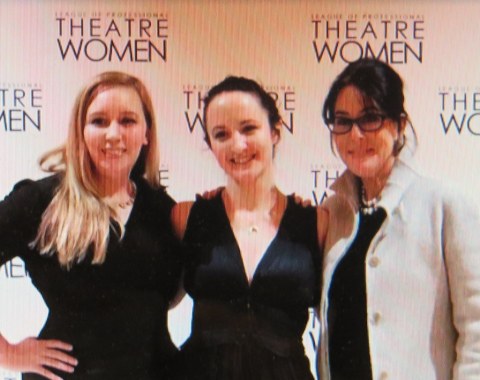
LPTW VP of Communications Kimberly Loren Eaton, Playwright Kate Hamill, Broadway Producer Catherine Adler on 2018 LPTW Theatre Women Awards Red Carpet (Ashley Garrett)
Thus, The League of Professional Theatre Women cannot be praised or recognized enough because they have been at the forefront of supporting women in the theatre world in the US and globally before there was creditable appreciation for womens’ indelible contributions. Over the years their numbers have grown. Their mission has thrived and gained critical mass especially in the current noxious political atmosphere. Now, more than ever their work, their efforts are a beacon to the international theatre community and entertainment industry because their values indicate there are no inconsequential roles, no “little” players. All are integral and vital if live theatre which makes a difference in the minds and hearts of citizens is to continue in its goal to uplift, instruct, unify and promote understanding between and among global communities.
Producer Brian Moreland with ‘Eclipsed’ Producer Danai Gueirira, Red Carpet at 2018 LPTW Theatre Women Awards, TimesCenter (Ashley Garrett)
The theatre community receives strength in its diversity of gender, ethnicity, religious beliefs and international participation. As a maverick organization their force and presence are unmistakable. It should be shouted from the rooftops. Thus, it is with gratitude to this organization for what they have accomplished in solidarity over the years that I enumerate the women and the awards the LPTW bestowed last Friday at The TimesCenter.
Florencia Lozano, Host

Florencia Lozano, 2018 LPTW Awards Host, TimesCenter, (Carole Di Tosti)
Florencia Lozano (@ilovelorca) actor, writer and performance artist with a multitude of TV, theatre and film credits is one of the original members of the LAByrinth Theater company and currently serves as LAB’s literary manager. Host of the LPTW Theatre Awards, Florencia Lozano introduced the presenters who then bestowed the awards.
The Lee Reynolds Award, Co-presented by Marshall Jones III & Wayne Maugans to Rohina Malik
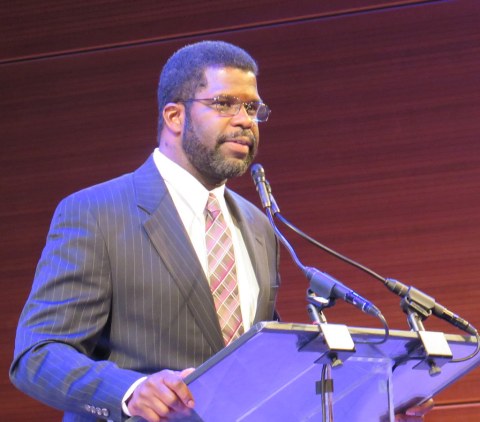
Marshall Jones III, Co-presenter of The Lee Reynolds Award to Rohina Malik at the 2018 LPTW Theatre Women Awards, TimesCenter (Carole Di Tosti)

Wayne Maugans Co-presented The Lee Reynolds Award to Rohina Malik, 2018 LPTW Theatre Women Awards, TimesCenter (Carole Di Tosti)

Rohina Malik, recipient of The Lee Reynolds Award at the 2018 LPTW Theatre Women Awards, TimesCenter (Carole Di Tosti)
The Lee Reynolds Award is given annually to a woman or women active in any aspect of theatre whose work has helped to illuminate the possibilities for social, cultural or political change. Producing Artistic Director of the Crossroads Theatre Company and theatre professor at Rutgers University Marshall Jones III (#MarshallKJonesIII) and Wayne Maugans (@WayneMaugans) the Founding Artistic Director of Voyage Theater Company presented the Lee Reynolds Award to Rohina Malik (@rohina_malik). Her plays have been produced all over the country at various venues, and globally at two South African Theater festivals. She worked with Marshall Jones III and Wayne Maugans with their companies and has formed vital ongoing connections with them continually spurring on new works.
The Ruth Morely Design Award, Presented to Cricket S. Meyers by Shelley Butler

Shelley Butler presented the Ruth Morley Design Award to Cricket S. Myers at the 2018 LPTW Theatre Women Awards at the TimesCenter (Carole Di Tosti)
Cricket S. Myers, recipient of The Ruth Morley Design Award for Sound Design, 2018 LPTW Theatre Women Awards, TimesCenter (Carole Di Tosti)
The Ruth Morley Design Award, established in 1998 to honor leading film and theatre costume designer Ruth Morley, is given to an outstanding female theatre designer of costumes, scenery, lighting, sound or special effects. This year’s winner presented by director Shelley Butler (#ShelleyButler) was given to Cricket S. Myers (@sound_myers) for her award winning efforts in Sound Design.
The LPTW Special Award, Presented by Roma Torre to Linda Winer

Roma Torre, presented the LPTW Special Award to Linda Winer at the 2018 LPTW Theatre Women Awards, TimesCenter (Carole Di Tosti)
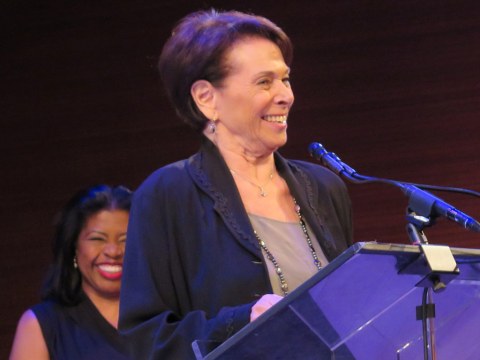
Linda Winer, recipient of The LPTW Special Award, 2018 LPTW Theatre Women Awards, TimesCenter (Carole Di Tosti)
A LPTW Special Award, presented to a remarkable theatre woman for her service to the League and to her field was given to award winning Linda Winer (#LindaWiner) by NY 1 theater critic, the award winning Roma Torre (@NY1 #RomaTorreNYC). Linda Winer was Chief Theatre Critic for Newsday from 1987-2017 and she has taught critical writing at Columbia University’s School of the Arts since 1992. Both women quipped about the idea that a theater critic might receive an award when in the past, “critics” were looked upon with skepticism and sometimes fear. Certainly, both of these women have provided a wealth of information about productions and have placed them in the historical record revealing the development of theater in this nation.
The Josephine Abady Award, Presented by Karen Kandel to Emily Joy Weiner
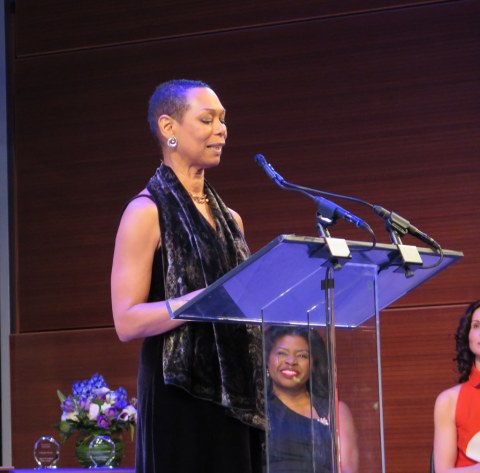
Karen Kandel presented the Josephine Abady Award to Emily Joy Weiner at the 2018 LPTW Theatre Women Awards, TimesCenter (Carole Di Tosti)

Emily Joy Weiner recipient of The Josephine Abady Award at the 2018 LPTW Theatre Women Awards, TimesCenter (Carole Di Tosti)
The Josephine Abady Award honors the memory of LPTW member Josephine Abady. The award goes to an emerging director, producer or creative director of a work of cultural diversity who has worked in the profession for at least five years. Emily Joy Weiner, Co-Founder and Artistic Director of Houses on the Moon Theater Company received the award presented by award winning Karen Kandel, Co-Artistic Director of NYC based theatre company, Mabou Mines. The Houses on the Moon Theater Company was founded in 2001 with the mission of telling untold stories in the interest of social justice. Emily Joy Weiner has been creating developing, performing, producing and directing new works with the Houses on the Moon Theater Company that address the sensitive issues of our time with community organizations and the talented company of artists.
The LPTW Lucille Lortel Award, Presented by Celia Keenan-Bolger to Adrienne Campbell-Holt

Celia Keenan Bolger presented the LPTW Lucille Lortel Award to Adrienne Campbell-Holt, 2018 LPTW Theatre Women Awards, TimesCenter (Carole Di Tosti)

Adrienne Campbell-Holt, recipient of The LPTW Lucille Lortel Award at the 2018 LPTW Theatre Women Awards, TimesCenter (Carole Di Tosti)
The LPTW Lucille Lortel Award is an award from the Lucille Lortel estate endowment to fund an award and grant. The award is given to “an aspiring woman in any discipline of theatre who exemplifies great creative promise and deserves recognition and encouragement.” This year’s award was presented to director Adrienne Campbell-Holt (@adriennecolt, @Colt_Coeur) by award winning actor Celia Keenan-Bolger (@celiakb). The grant was awarded to Ms. Campbell-Holt’s company, Colt Coeur. Adrienne Campbell-Holt inspired the women in the room with her remarks and encouragement to women playwrights to tell women’s stories. Women, above all are storytellers and she suggested that we must continue to push each other and the culture forward into a new day of acceptance and unity.
The Lifetime Achievement Award, Presented by Jocelyn Bioh to Phylicia Rashad

Phylicia Rashad receives a standing ovation for her well-deserved Lifetime Achievement Award at the 2018 LPTW Theatre Women Awards, TimesCenter (Carole Di Tosti)

Jocelyn Bioh presented the Lifetime Achievement Award to Phylicia Rashad at the 2018 LPTW Theatre Women Awards, TimesCenter (Carole Di Tosti)
The Lifetime Achievement Award presented to Phylicia Rashad (#PhyliciaRashad) needs no explanation and the honoree needs no introduction. The award was presented by Jocelyn Bioh (a Ghanaian-American writer/performer from NYC). Jocelyn Bioh (@Jjbioh) has carved a path for herself as an actor on Broadway and Off Broadway. She has appeared in film and TV. Jocelyn Bioh is also a playwright and is working as a staff writer on Spike Lee’s She’s Gotta Have it.
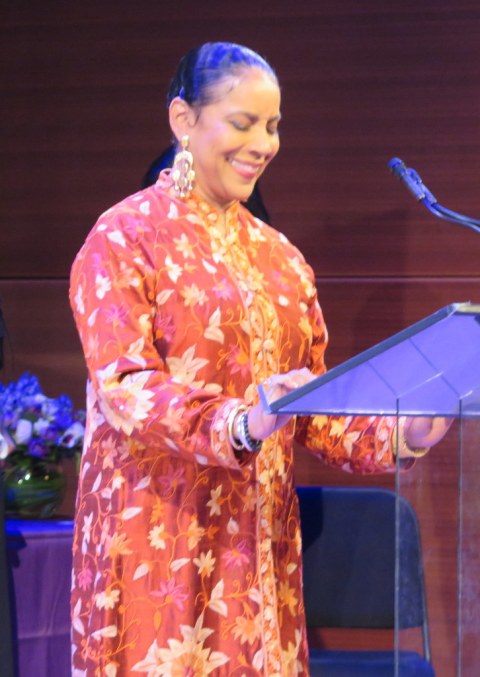
Phylicia Rashad, recipient of the Lifetime Achievement Award at the 2018 LPTW Theatre Women Awards, TimesCenter (Carole Di Tosti)
Phylicia Rashad has appeared in all entertainment venues, TV, Broadway and film. She has made lasting contributions throughout her career with her prodigious body of work. An example of this includes performances on Broadway in August Osage County, Cat on a Hot Tin Roof, Cymbeline (Lincoln Center Theater), August Wilson’s Gem of the Ocean for which she received a Tony Award nomination, A Raisin in the Sun (Tony and Drama Desk Awards), Into the Woods, Dreamgirls, The Wiz.
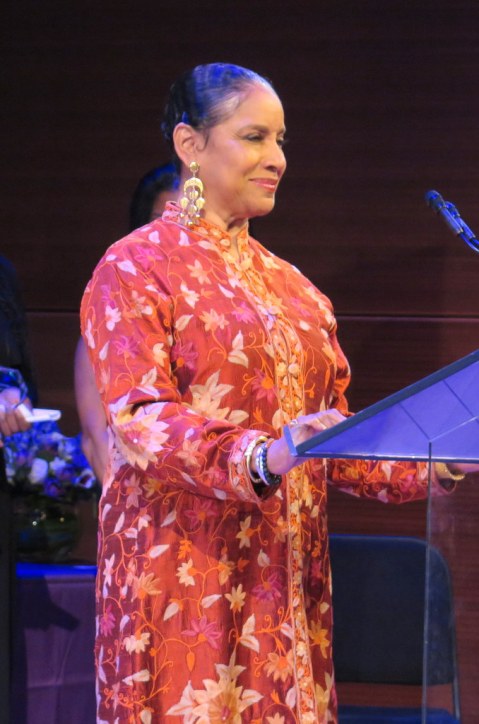
Phylicia Rashad recipient of the Lifetime Achievement Award, 2018 LPTW Theatre Women Awards, TimesCenter (Carole Di Tosti)
Off-Broadway she has appeared in A Midsummer Night’s Dream, Sunday in the Park with George, Head of Passes for which she won a Lucille Lortel Award, The Story, Helen, Everybody’s Ruby, Blue, The House of Bernarda Alba to name a few. She has performed in Regional Theater and has also directed Ma Rainey’s Black Bottom and Joe Turner’s Come and Gone at the Mark Taper Forum to mention two directorial achievements. She has directed many other productions at numerous venues for example, the Goodman Theatre, the Long Wharf Theatre, the McCarter Theatre, Ebony Repertory Theatre, Kirk Douglas Theatre, Westport Country Playhouse, Seattle Repertory Theatre. And she directed Four Little Girls at the Kennedy Center. She is simply sensational, and as Jocelyn Bioh affirmed, she is “regal,” she is “legendary.”

Phylicia Rashad received the Lifetime Achievement Award at LPTW Theatre Women Awards at the TimesCenter (Carole Di Tosti)
At the end of the evening a champagne toast heralded to celebrate the award winners and their presenters. Until another year! We’re looking forward to our members’ and exploits in 2018-2019. If you are currently a woman working in the theater globally as an actor, playwright, director, designer, consider viewing the LPTW website to check out their online community. This organization will help you network, meet individuals to spur on your career. Above all it encourages inclusion of women before we even were aware to ask for an “inclusion rider” in our contracts in the entertainment and theater industry. JUST DO IT!!! CLICK HERE FOR THE WEBSITE. Tweet @LPTWomen.
4th Annual Shubert Foundation HS Theatre Festival

The Shubert Foundation, Inc. poster for the High School Theatre Festival, NYC Public Schools (courtesy of the Shubert Foundation, Inc.)
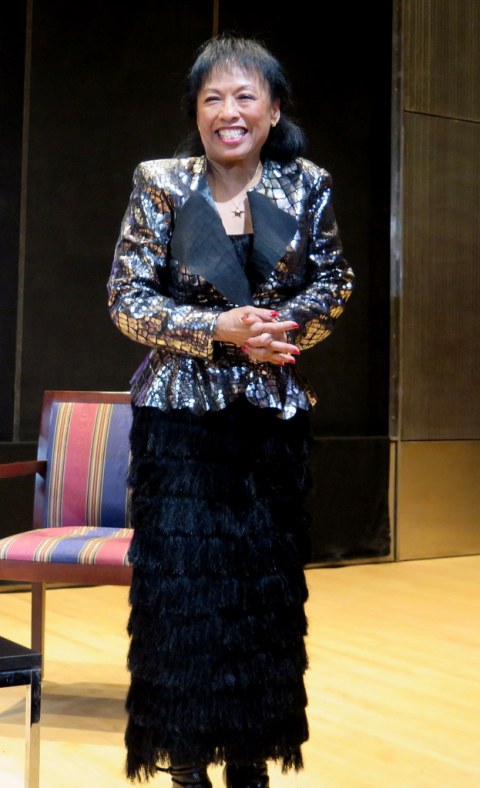
Baayork Lee in conversation with Robert Viagas, presented by NYPL for the Performing Arts at Lincoln Center and the League of Professional Theatre Women (Carole Di Tosti)
Additional celebrities and guests to be announced.
The Festival, a celebration featuring five outstanding high school student productions from the 2017-2018 school year, were selected from over 25 schools across the city by a panel of professional theatre artists and theatre educators. Over the course of the festival’s four-year history, school productions from all 5 boroughs have performed at the event. This year, student presentations from the following schools will present excerpted scenes and musical numbers as follows:

The Shubert Foundation, Inc., NYC Theatre Festival (courtesy of The Shubert Foundation, Inc.)

Timothée Chalamet graduated from LaGuardia HS which he referenced on the Red Carpet at the Oscars. Here he is at SXSW 2017 on the Red Carpet for ‘Hot Summer Nights.’ (Carole Di Tosti)
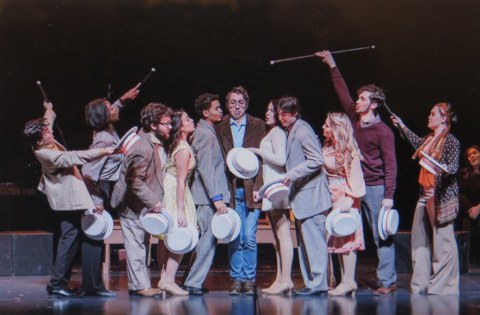
The Shubert Foundation, 4th Annual NYC HS Theatre Festival (courtesy of The Shubert Foundation)
“Theatre instruction teaches students the importance of rehearsing, while building self-confidence and strengthening public speaking skills,” said New York City Schools Chancellor Carmen Fariña. “These are critical skills that prepare students for college, careers and beyond. That’s why I’m so pleased that we continue to expand access to theatre programs and arts education across the City. In particular, we are committed to leveraging the incredible connections we have to New York City’s rich cultural resources and developing meaningful arts partnerships with organizations like Shubert.”
“We are so proud to have supported this Festival since its inception,” said Philip J. Smith, Chairman of The Shubert Organization. “The extraordinary talents of the students continue to astound year after year upon our Broadway stages.”
Sponsored by The Shubert Foundation, the festival is presented in partnership with the New York City Department of Education (NYCDOE). Funding for the Festival and for a range of existing Shubert Foundation programs in New York City public schools comes from a grant of $570,000.
Since 2005, The Shubert Foundation has provided more than $4.9 million to the New York City Department of Education for Theatre/Arts programs.
“How inspiring to have Broadway and the broader theatre community embrace our public school student performers. These impressive teen artists, representing varied NYC neighborhoods, points of view and cultural backgrounds, all worked together to produce inspired plays and musicals for their communities. Through their focus on excellence and collaboration, these student ensembles serve as a wonderful reminder for the power of inclusivity on stage and off,” said Peter Avery, the Festival’s producer and the Director of Theatre for the NYC Department of Education.

Timothée Chalamet graduated from LaGuardia HS in NYC and credits the theatre program and the arts funding received as a vital stepping stone to his celebrated work. SXSW 2017, Q and A after the screening for ‘Hot Summer Nights’ (Carole Di Tosti)
The Shubert Foundation, Inc. is the largest institutional funder of theatre education programs throughout NYC public schools and the nation’s largest private foundation dedicated to unrestricted funding of not-for-profit theatres, with a secondary focus on dance. In 2017, the Foundation provided more than $26.8 million to 533 not-for-profit performing arts organizations across the United States. The Shubert Foundation, Inc. was established in 1945 by the legendary team of brothers, Lee and J.J. Shubert, producers of more than 520 plays, musicals and revues, as well as owners and operators of a nationwide network of legitimate theatres. For more information, visit www.shubertfoundation.orgThe New York City Department of Education is the largest system of public schools in the United States, serving about 1.1 million students in more than 1,750 schools. The Department of Education supports universal access to arts education through the ArtsCount initiative, which tracks and reports student participation in arts education and holds schools accountable for meeting New York State Instructional Requirements for the Arts.

Baayork Lee and Robert Viagas in Conversation, a League of Professional Theatre Women Event
On Monday, 12 February the New York Public Library for the Performing Arts at Lincoln Center presented Baayork Lee in conversation with Robert Viagas. The show was produced in collaboration with the League of Professional Theatre Women’s Betty Corwin, with Pat Addiss and Sophia Romma. It was part of the League of Professional Theatre Women’s Oral History Program.
Baayork Lee is most noted for working with Michael Bennett as his assistant choreographer on A Chorus Line where she created the role of Connie. Throughout her career, she directed and choreographed The King and I, Bombay Dreams, Barnum, Carmen Jones, Porgy and Bess and Jesus Christ Superstar and other shows for many national and international companies. The exhaustive list reveals her impressive energy and exceptional talent.
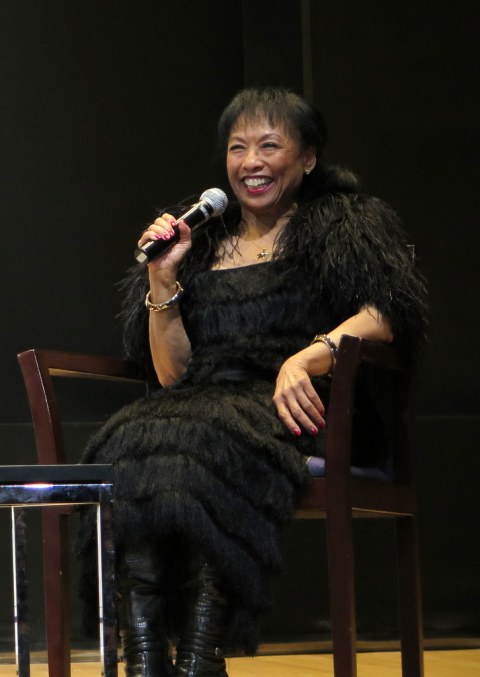
Baayork Lee in conversation with Robert Viagas presented by NYPL for the Performing Arts at Lincoln Center and League of Professional Theatre Women (Carole Di Tosti)
And that is not all. She is a generous soul. Her intention to give back to the community, her verve and vibrant enthusiasm moved her to create a nonprofit organization, National Asian Artists Project. Through her prodigious efforts the N.A.A.P. has established programs educating, cultivating and stimulating audiences and artists of Asian descent. They have produced classical musical theatre ranging from Oklahoma! to OLIVER! with all Asian-American casts. Baayork Lee, the recipient of the 2017 Isabelle Stevenson Award was honored for her commitment to future generations of artists through her work with the N.A.A.P. and theater education programs around the world.

Robert Viagas, Baayork Lee in Conversation, presented by NYPL for the Performing Arts at Lincoln Center and League of Professional Theatre Women at the Bruno Walter Auditorium (Carole Di Tosti)
Interviewed by Robert Viagas, journalist and author with thirty-five years’ experience on Playbill Inc., the Tony Awards and author/editor of 19 books on the performing arts, Robert Viagas has proved his mettle. For The Alchemy of Theatre (Applause Books) he worked with Edward Albee, Wendy Wasserstein, Hal Prince, Chita Rivera and others. His 2009 book, I’m the Greatest Star! (Applause) includes biographies of his A-list genius artists, forty musical stars from George M. Cohan and Fanny Brice to Nathan Lane and Sutton Foster.
Here are excerpts of the enjoyable and lively conversation between Baayork Lee and Robert Viagas
When you were five-years-old you were hired for the original Rogers and Hammerstein’s King and I. Tell us how that happened.
Well, agents came down to Chinatown where I grew up. They went to a school there and my father’s restaurant. And they were looking for kids. We all went uptown and I got the job. (applause)
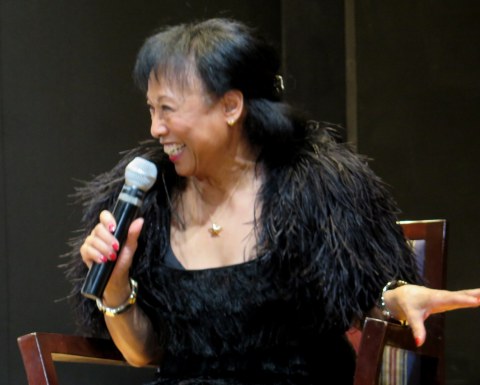
Baayork Lee in Conversation with Robert Viagas, presented by NYPL for the Performing Arts at Lincoln Center and League of Professional Theatre Women at the Bruno Walter Auditorium (Carole Di Tosti)
What was it like working on that show with Yul Brenner and Rogers and Hammerstein?
I learned to sing and dance on the job. I always tell the story of going uptown and getting on the stage at the St. James Theatre. And seeing the chandelier and the red velvet seats. And being on stage for the first time? I just knew that this was where I wanted to be. And I saw the girls warming up backstage. What are they doing? I want to do that. So I knew everybody’s lines and all the songs. I knew the songs for the King and the other parts. I wanted to be in the business.
Even though you were five and even though you didn’t have years of training, you had lines in the show. You were one of the little princesses Ying Yawolak, and they wrote you a speech. Can you tell the story of the speech?
Mrs. Anna is going away and I have a letter I read to her. But I couldn’t read at the time, so my mother helped me and I memorized the lines. “Dear teacher. My goodness gracious. Do not go away…” (audience laughs)
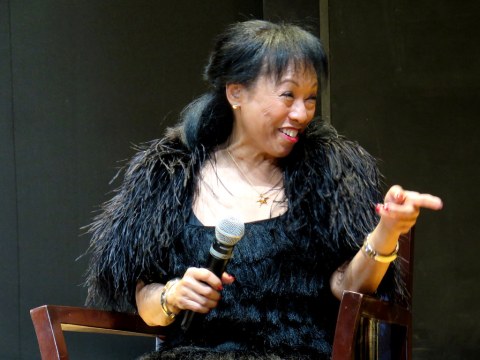
Baayork Lee in conversation with Robert Viagas, presented by NYPL for the Performing Arts at Lincoln Center and League of Professional Theatre Women (Carole Di Tosti)
You must have done a great job with that because you were hired for a subsequent musical Flower Drum Song. Tell us the part you played. I’m particularly interested in hearing the story of how you went on in the lead role and you were twelve-years-old.
Well, I was fired at eight-years-old from The King and I because I outgrew my costume. And Rogers and Hammerstein gave us something as a consolation. There were three of us. One girl wanted acting lessons. Another girl wanted piano lessons. And I wanted dance lessons. I got to go to The School of American Ballet and Jerome Robbins helped me get in. I started studying dancing and wanted to be a ballerina. And here comes along Flower Drum Song and Mr. Rogers remembered me and by then a double pirouette was nothing for me now. I was singing and dancing. I got into the show. I was one of the kids in the show. I sang “The Other Generation.” And I don’t know how I got the part. But Anita Ellis was the Fan Tan Fannie girl. She was understudied. And her understudy went on to somebody else and her understudy went on to somebody else. And all of a sudden there wasn’t anyone else but me. And I got to sing F”an Tan Fannie.”
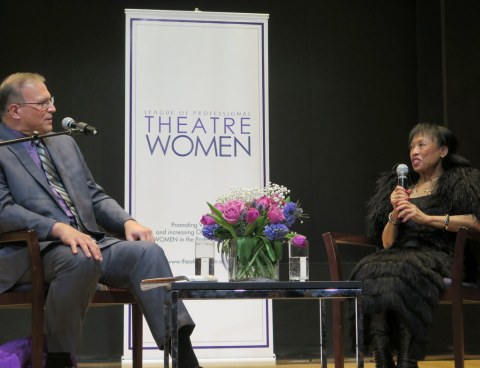
Robert Viagas, Baayork Lee in conversation at Bruno Walter Auditorium, presented by the NYPL for the Performing Arts at Lincoln Center and League of Professional Theatre Women (Carole Di Tosti)
And how did that feel?
At twelve you have no fear, Robert. You have no fear at twelve. You can sing all the songs, do all the lines. You can do everything.
And thanks to N.A.A.P. you’re trying to expand opportunities for Asian-American actors. There was nothing like that in the 1950s, 1960s. Yet you were able to maintain a career through those years. You worked pretty steadily. You got to know certain people and they obviously respected your talent. How were you able to survive and work and succeed as an Asian-American woman in the early 1960s?
First of all I was a kid. So every show is was in I worked as a kid. From Flower Drum Song I went to the Performing Arts High School. And I graduated and I got a phone call from Carol Haney who was a choreographer of Flower Drum Song. She remembered me and said, “I am going to do a show and it’s called Bravo Giovanni.” And we’re going to Broadway. I said I’m going to Julliard. I’m going to become a dancer. And she said “Why don’t you just come and do the show for the summer and then decide.” So that’s what happened. It was a flop. Bravo Giovanni starred Cesare Siepi and it was Michelle Lee’s first show.
But it did win the Tony for Best Score over a Funny Thing Happened…
Oh. You know all the facts, don’t you. So I was sitting on the firescape of the Broadhurst Theatre and I looked and they were putting up a sign for the next musical, Mr. President. So I said, “Hum that looks interesting.” So I auditioned and I got the show. And I played with Nanette Fabray, as Deborah Chakronin and I was a kid in the show. And then there was a knock on my dressing room door. They said, “There’s a man upstairs who wants to see you.” I went upstairs and he gave me his card. He said, “I’m doing a new show. It’s called Here’s Love. I really think you’d be good in the show. Please come and audition.” I said, “Yes, Yes, Yes.” I went downstairs and said this man upstairs? It was Norman Jewison. And so I went over and I auditioned. And I was one of the kids in the show.
Baayork Lee in conversation with Robert Viagas, presented by NYPL for the Performing Arts at Lincoln Center and the League of Professional Theatre Women (Carole Di Tosti)
That’s a musical based on The Miracle on 34th Street, music with a score by Music Man’s Meredith Wilson. Not as successful.
And so I was a kid. And Michael Bennett was in the show.
You knew him before. What was he like as a kid?
I don’t know. All I can tell you is when I got Flower Drum Song, Michael told me I was so jealous that day at dancing school that you got Flower Drum Song, your second Broadway show and I hadn’t even had one. (audience laughs). But what was he like? I don’t know. Except at that time he said, “I don’t want to dance any more. I want to be a choreographer.” And we all said, “Oh, yeah, yeah. Sure, sure.” But he was very, very serious. I got the call. The musical director was Elliot Lawrence. And he said I’m doing a new show Golden Boy with Sammy Davis Jr. And there’s a part for a shoe shine boy. Would you come and audition? And so I did. And I danced with Sammy Davis.
Michael did manage to choreograph a couple of shows and he did not forget his classmate.
No. So I danced with Sammy in Golden Boy. And Sammy took us to London. My first trip to London. And I got a call from Michael saying he was doing another show. It was A Joyful Noise. And Tommy Tune was in it and Donna McKechnie. And so I came back and I did that show. We came to Broadway. And I got a call for another show when I was in London for Promises Promises and I had to get out of my contract for that. And he helped me get out of my contract and he brought me to do Promises, Promises.
And you were the featured dancer in” Turkey Lurky Time.” I saw you in that show, one of the first shows I saw early on. That is an incredible number. Did you have to wear a neck brace?
We were at the chiropractor at least once a week. All of us. I’d seen the show for three years. I loved being in the chorus. I loved being in the back. I was having a great time. I loved signing in and getting into the theater early. And Michael said you are going to be my dance captain. I said, “Oh, oh.” There were rehearsals and all that, I thought. But he treated me well, so I became his dance captain in Promises Promises.
If you go online and see clips of these songs, you see they are time capsules. You see Joyful Noise, you see Promises, Promises. When you look at all of them you see one Asian-American. What was that like?
I was very lucky. Very happy. My cousin Chester said, “B? You better represent! All Chinatown looking at you!”

Robert Viagas holding shoes and hat from ‘A Chorus Line,’ and Baayork Lee on stage at the Bruno Walter Auditorium. Presented by the NYPL for the Performing Arts at Lincoln Center and League of Professional Theatre Women (Carole Di Tosti)
Was that a challenge for you? What was it like? Being the One! The One Singular Sensation?
Special. I felt very, very special. I always appreciated being there and representing. Absolutely.
Another special show you did was Seesaw. You were in the chorus of Seesaw, but you did have a featured number in that show. And when they feature that show, they always use the same picture. Tommy Tune who is 6’6’ and they chose you to do a duet with him. And you were attired in masses of balloons and were on point the entire time. I saw you and thought. “Who is this girl?”
I think “Turkey Lurky” may have been bigger. By the time I was in this show I was known and to dance with Tommy Tune was really quite an honor.
I don’t know. With “Turkey Lurky” you were one of three with Donna. But with this number you were next to Tune.
Ah, OK. Michae Bennett was very ahead of his time. We were not the standard kind of, the blonde, 5’5’ you know. But you have Tommy Tune, Baayork Lee and those in the show were all shapes, sizes and colors. And he was very ahead of his time.
Do you remember the conversation or phone call where he mentioned this show he was doing about chorus dancers? Do you remember him discussing the show that became A Chorus Line?
No. But I do remember all through my time working with Michael, he always said, “I want to do a show about dancers.” He’d been saying he wanted to do a show about dancers. Because dancers unlike actors never asked him why. They just did what he told them. (laughter)
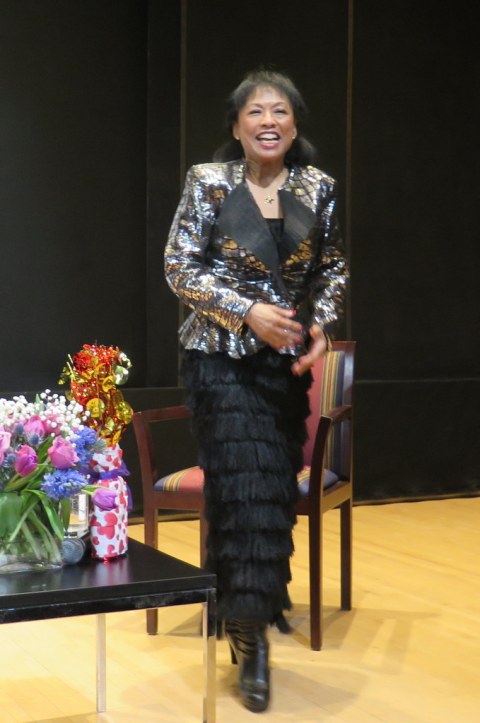
Baayork Lee, Bruno Walter Auditorium in conversation with Robert Viagas, presented by NYPL for the Performing Arts at Lincoln Center and League of Professional Theatre Women (Carole Di Tosti)
He wanted you to be the dance captain on that.
First, he wanted me to be his assistant. At that time in the olden days, you had to have a choreographer or a director or you didn’t work. Jerome Robbins had his dancers. Bob Fosse had his dancers.
Special people that he worked with all the time.
Yes. Because they developed their own style. And they invested in their dancers and their actors. And so Michael Bennett had to get his klan together. And this was very important for me that I finally found a home. Because I danced with Michael Kidd and Peter Gennaro, I had gone from show to show, but I didn’t have an anchor where I would do every commercial, every Broadway show. Anything that that choreographer did, I was part of the plan.
Industrial?
Industrial. Millken Show.
They used to do commercials. Well, Milliken was a fabric manufacturer and the commercials were like shows, lavishly staged.
Yes. They brought in all the choreographers. And you had to be in a Broadway Show. And we got the clothes and at the end of a Broadway run we got a bonus. And when they gave us the checks they used to say, “And here’s one for little Baayork Lee, and one for so and so”…and it was ohhh. money, money, money!
You are not the height of a typical Broadway dancer. That is even written into a Pulitzer Prize winning show. Your height. How did you manage that height issue? Was that a struggle?
Absolutely. I wanted to be Maria Tallchief (renowned ballerina). I wanted to be in the New York City Ballet. I had to throw away my point shoes when I found out I couldn’t be in the company. I was too short. I was competing with Tanaquil Le Clerq (renowned ballerina) and all of his (Balanchine’s) X- wives. (explosive laughter)
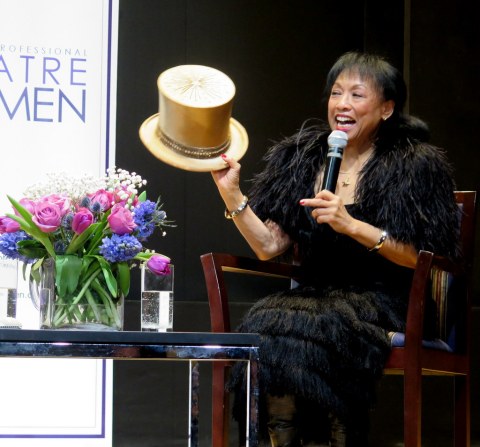
Baayork Lee with Thommie Walsh’s hat from ‘A Chorus Line,’ that Robert Viagas brought for his conversation with Baayork Lee. Presented by NYPL for the Performing Arts at Lincoln Center and League of Professional Theatre Women (Carole Di Tosti)
On A Chorus Line, initially, I was the assistant. And I would handle the tapes. And then we would go into the workshop with Joseph Papp and I was the assistant. And I would say, “He wants you to line up.” And everybody would line up. And I would say, “He wants you to put your resumes…” Then Michael realized that this wouldn’t work. So he became “The Voice.” So that was the first workshop. And then the second workshop, Michael called me and said, “I would like you to put your life in the show.” And I said “Who wants to know about a short, Asian girl who wanted to be a ballerina?” (someone from the audience answers) That’s exactly what Michael said. And from then on, I was no longer his assistant. I had a role in the show.

Robert Viagas in conversation with Baayork Lee presented by NYPL for the Performing Arts at Lincoln Center and League of Professional Theatre Women (Carole Di Tosti)
Didn’t you have a song that was cut from the show?
Yes. It was called “Confidence.” Back in the old days, Equity wanted to have at least one ethnic person in the show, maybe the orchestra also. So my competition in A Chorus Line was Richie because they could take one ethnic person. And he was African American. So Marvin Hamlisch wrote us a song called “Confidence.” I talked about Flower Drum Song and King and I and he talked about being in Hello Dolly with Pearl Bailey and we had to have confidence because we might not get the part. Only one ethnic person could. And then the song was cut. The show was 5 hours long. And we said, “Michael, we can’t cut the song because people need to know about these issues.” He said “I have bigger fish to fry. I need to put a Paul monologue in the show.”
Robert takes out one of the hats from the finale of A Chorus Line. And the original shoes.
It’s Thommie Walsh’s hat.
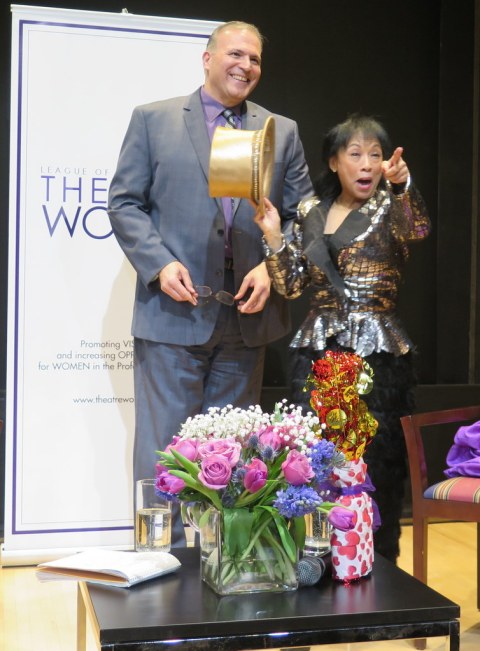
Robert Viagas, Baayork Lee in conversation at Bruno Walter Auditorium (Carole Di Tosti)

Baayork Lee, Robert Viagas, Pat Addiss, Bruno Walter Auditorium after the presentation by NYPL for the Performing Arts at Lincoln Center and League of Professional Theatre Women (Carole Di Tosti)
Baayork, I and Tommie wrote a book about A Chorus Line called On the Line, about the making of A Chorus Line. It’s on Amazon. When they first brought out that hat what did you think?
Well, we had our dance clothes on. And so that wasn’t special. And they said you’re going to wear the same thing, but in blue. And we were very uncomfortable. And the finale was going to be us working on the show, just us, then blackout working together. That’s the ending that Joseph Papp wanted. Michael Bennett had very different ideas. He wanted pizzazz, he wanted costumes, he wanted everything.

(L to R): Pat Addiss, Baayork Lee after presentation of Baayork Lee in conversation with Robert Viagas (Carole Di Tosti)
That’s the one moment you see the number of the show they’ve been auditioning for.
So when we saw the costumes we thought wow. I was in high heels, fishnets and the outfit was cut up to there.
Very sadly we lost Michael. And the person who’s been in charge and who’s carried the torch has been Baayork Lee who has directed the production in his place all these years. Is there a difference between Baayork Lee’s Chorus Line and Michael Bennett’s?
It’s always Michael Bennett’s Chorus Line. Opening Night downtown he came backstage and said, “It’s your show. You’re going to direct and choreograph this all over the world. But we were Off Broadway. And we didn’t know what this was. And he’s telling me all these things. Like you’re going around the world and you’ll do this and that. And we’re going, “Oh, yes, Michael. Oh yes.” And now forty-three years later I’m saying, Oh, yes, Michael. (applause) It’s Michael Bennett’s show. But A Chorus Line is about the people in the show. And every actor brings himself into the show. And that’s why we’ve evolved the show over the years because obviously we’ve gone to Chile and to Stockholm and Japan and Korea and the actors bring themselves to the rolls. And that’s what’s exciting about it.
Is it hard to direct the role of Connie Wong?
I just tell them me to watch me for five weeks. (laughter) She has to be feisty and high spirited and all those things.

Baayork Lee and friend after presentation of Baayork Lee in conversation with Robert Viagas, presented by NYPL for the Performing Arts at Lincoln Center and League of Professional Theatre Women (Carole Di Tosti)
I wanted to ask you about the Tony Award you won.
The National Asian Artist’s Project. I was thinking about forming a company for Asian artists for years and years. I was talking about it. Every time I did a show, we were doing King and I. And I asked Nina Zoie Lam, “Where are all these talented people going to go?” She said, They take their odds and ends jobs and wait for the next King and I or Miss Saigon.” And we did King and I again. Again, the questions came up. Where will all these people go? Steven, God Bless him he’s teaching tonight and couldn’t be here, said, “Let’s do it.” So finally Steven Eng, and Nina Zoie Lam and I founded the N.A.A.P. to give the talented Asian artists and Asians a platform to show their talents. And also to educate the young kids back in Chinatown where I grew up to go to their schools and give them the opportunity and give them a choice. They don’t have to go to Harvard. They can go to Broadway. (laughter, applause)
I’ve seen some of the shows. They don’t try to do Asian themed shows. They did Hello Dolly. They did Oklahoma. They did Carousel. And the amazing thing about it is that the nearly all Asian actors in it? Well, you’re not seeing Asian actors. You’re seeing Hello Dolly and Carousel.
They are talented, talented actors. And that’s the most important thing. (applause)
Of all the work Baayork has done, that is what she won her Tony for.
The evening closed with audience questions and photographs that Baayork took with friends. Indeed, no one was leaving the Bruno Walter Auditorium before they snatched the opportunity to congratulate and thank Baayork for her entertaining responses, love, enthusiasm and grace. It was a most memorable, uplifting evening. Below is a clip that Robert Viagas referred to as being a time capsule. It’s the rollicking number from Promises, Promises, “Turkey Lurky Time.”
 CAROLE DI TOSTI