Blog Archives
‘A Statement’ With the Excellent Paul Rudd, Amy Ryan, Paul Giamatti, John Turturro at NYFF 2026
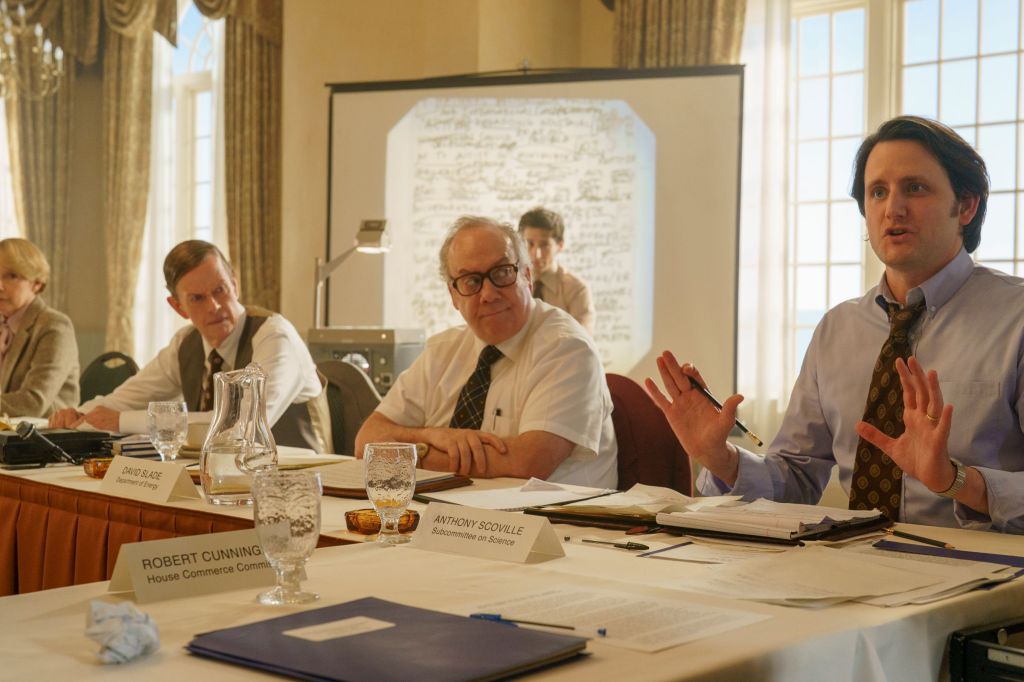
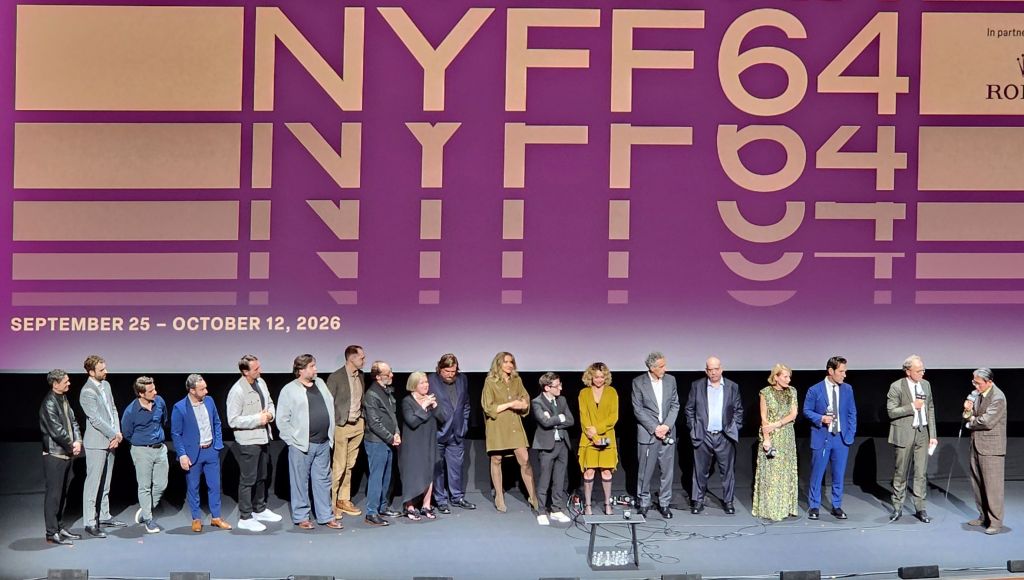
With a superb ensemble who keep the potentially dry content popping, A Statement director, Tom McCarthy, crafts a drama with comedic elements. This important film by McCarthy, who also crafted the superb Spotlight in 2015, examines the historic weekend-long meeting congress commissioned about global warming. At this conference congress tasked participants to respond to a dire report on the environmental impact of fossil fuels. McCarthy’s A Statement made its world premiere in the Spotlight section of New York Film Festival 2026,
The director and fellow screenwriters Noé Debré and Thomas Bidegain use original verbatim transcripts of the 36-hour meeting recorded by a stenographer into an archived document over five hundred pages long. Additionally, they adapt Nathaniel Rich’s book Losing Earth:A Recent History for information and basics about the weekend conference that took place in late October 1980, days before the presidential election. However, for almost half of the film, the writers use the transcripts to chronicle the word for word interactions, arguments, agreements, disputes and stalemates among twenty scientists, activists and policymakers portrayed by a celebrated cast.
Paul Rudd as Clean Air Act advisor and moderator Tom Jorling opens the film with Evan Peters as Friends of the Earth activist Rafe Pomrance who helps him set up the layout of tables into a large square. Between the battles and discussions Jorling counsels Peters not to “come off” like a ton of bricks, but listen and wait until he confronts the arguments that will arise.
As the others arrive, we note key experts with clout and empowerment. These include Paul Giamatti as Energy Department director David Slade and John Turturro as M.I.T. nuclear engineer and environmentalist Dr. David Rose.
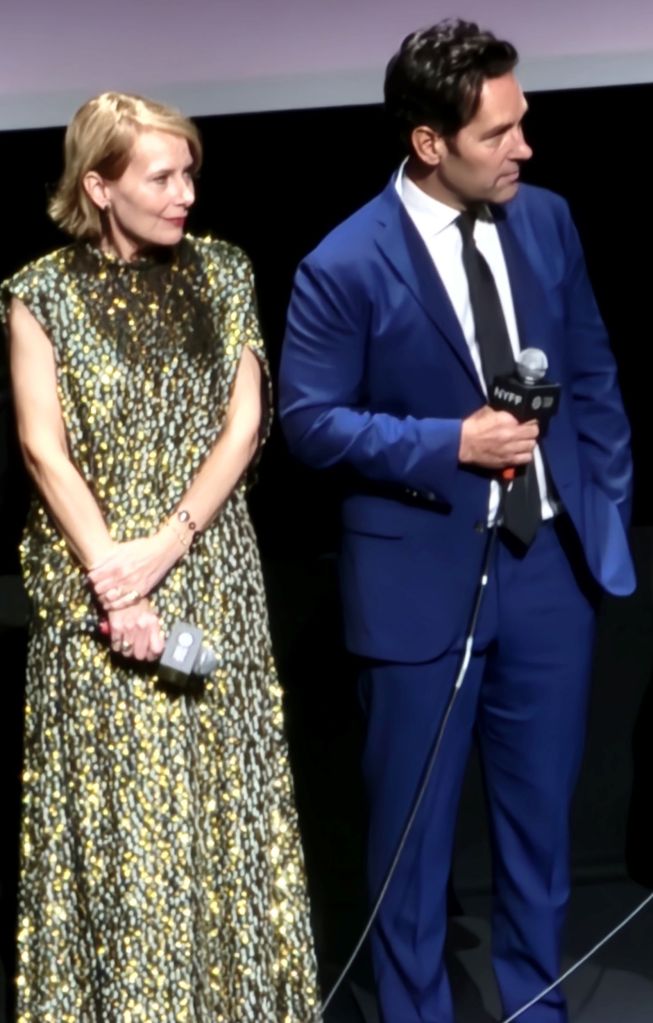
Playing lesser but dynamic roles, key women include two experts and the stenographer Bernadette (Nina Arianda). Amy Ryan portrays Annemarie Crocetti, the public-health scholar who sat on the National Commission on Air Quality. Tatiana Maslany, portrays law professor Edith Brown Weiss. Both women interject comments periodically. Oftentimes, the men patronize and dismiss them into silence. Meanwhile, Rose and Slade hold center stage with directed, if cynical remarks about players who might be obstacles to the conference members proposed actions. Nevertheless, Crocetti and Brown-Weiss convey impassioned arguments toward the conclusion of the film.
Interestingly, throughout the individuals present suggestions and counter with rational cogent arguments as they discuss the effects of carbon emissions from fossil fuels. As the actors portray real individuals in their own words, we note this historic moment in time, more forward thinking than the present bogged down in misinformation and corporate greed of Big Oil. All in this group acknowledge fossil fuels’ carbon emissions catastrophic impact on the environment. Viewing this historic bi-partisan acceptance scientific facts, one wonders how the propaganda and misinformation discounting climate change ever took hold to ignore science?
Thus, in late October with Jimmy Carter still president, the group collaborates. Under the limited time constraint, the experts from various backgrounds attempt to achieve consensus in wording their policy statement to congress. Because they agree about the dire report, their mission of how to address the dangers of carbon dioxide emissions seems facile enough. However, achieving consensus about the wording of the statement draws rancor and fractiousness among the participants. Oftentimes, the back and forth annoyances and ironic responses, thanks to the actors, provoke laughter. Their frustrations at spinning their wheels and going nowhere produces even more humor.
As the clock ticks and the hours count down, the tension increases. When experts like activist Pomerance come up with suggestions about how best to deal with limiting carbon emissions, Turturro’s Rose and Giamatti’s Slade reveal the complexities Pomerance has not anticipated. Indeed, his activism though passionate and noble reveals a lack of knowledge. Rose and Slade provide the hard truths, yet acknowledge Pomerance’s moral conscience. Clearly, the participants respect one another and learn from each other, but they are far from their goal.
McCarthy knows how to take the transcripts word for word and convert them into dialogue that integrates with the narrative. Also, he expertly shepherds the actors’ performances and employs an acute cinematography of close ups to capture the right pacing for edits of eye rolls or body language.
Additionally, he frees the characters from the conference room in the hotel and stages them in side meetings. For example, characters walk on the hotel beach and discuss various points. In a humorous segment Dr. Rose breaks with his erudite professorial persona and crashes a wedding bringing other conference members with him during a fun break. Thus, McCarthy maintains audience interest and we become invested in the characters and hope that they can write a definitive statement that congress can work with to save the planet.
The film’s focus on this historical conference with the reasoned comments of the participants fascinates and appalls as a horrific reminder of our country’s retrograde position since then. How quickly did partisan disagreement about global warming spark a reversal of regulations spiking the use of fossil fuels and avoiding effective mitigation of carbon emissions? The liberal progressivism heard in the participants’ comments acknowledging climate dangers contrasts with the Trump administration’s vitiating climate change as a hoax. Clearly, the administration uses the hoax argument to justify corruptly bowing to the oil lobby and exiting the Paris Climate Agreement. Then in October, 1980, the truth mattered even if the experts couldn’t agree what to do about it. Now, the truth is a lie.
Perhaps the fact that the participants failed to gain consensus in the wording of the “statement” speaks to the human tragedy of the current administration’s expedient inaction. Meanwhile, the clock keeps ticking.
A Statement will be released in theaters later in the year or in 2027. For a look at the film’s write-up on the NYFF 2026 site go to https://www.filmlinc.org/nyff2026/films/a-statement/
‘Ernest and Celestine’ at The New York International Children’s Film Festival

Ernest & Celestine with Forest Whitaker, Mckenzie Foy, William H. Macy, Lauren Bacall, Jeffrey Wright, and Paul Giamatti
The New York International Children’s Film Festival is offering screenings of top films for kids and adults. Many are popular and the tickets to official screenings and after party events have been sold out. However, tickets are being offered at venues throughout the city, so it is not too late to see beautiful, groundbreaking, thought-provoking films from around the world for ages 3-18. In the case of Ernest and Celestine directed by Stephane Aubier, Benjamin Renner and Vincent Patar which still has tickets available, even adults will enjoy the deeper issues and technical expertise which made this an award winning animated feature from France.
Daniel Pennac based his screenplay for this ethereally artistic and dreamy animation on the characters of Ernest and Celestine by Belgian author and illustrator Gabrielle Vincent. Vincent (1928 -2000) added to her initial concept of Ernest and Celestine by creating an entire Ernest & Celestine collection. She wrote and illustrated a total of thirty-eight books which encompass the pairs’ various adventures. Each has subtle lessons for children to assimilate as they enjoy the mouse-bear struggles and find solutions in the bonds of friendship. Adapting to themes of their unlikely companionship, Pennac has written a tale of how these two delicious and beautifully rendered characters met, bonded, and began their very first adventure together. In effect the feature serves as a prerequisite to the classic series of Ernest and Celestine books that readers around the world delight in.
The Ernest & Celestine animated feature has all of the elements of an adorable yet meaningful romp through a fantasy land of two disparate animal social cultures. The mice live below ground and control their terrain and society using a hierarchical pecking order fueled by mythologies and mores which promulgate an intense fear of alternate animal societies. Every child is indoctrinated with a horror of the ursine society which lives above ground. Profit motives and survival motives exploit this fear which trends throughout the mice generations. One reason for the antipathy between the two cultures is suggested. The mice/rats depend upon bear teeth when theirs fall out or they will become unproductive and perish. The bears don’t willingly give up old teeth; the mice must surreptitiously steal them. Thus, the mice employ corrupt means to exploit the “alien” culture.

Ernest & Celestine at the New York International Children’s Film Festival
For their part the bears abhor the creatures below ground. Theirs is a community of quaint, charming storybook houses out of Bruges, Belgium, minus the canals. The seemingly sweet dwellings are paintbrush animated in light, watercolors, simplistically drawn. The pastels tend toward pinkish, cream, fade-washed shades. However, all is not fairy tale “nice” in the ursine society. The profit motive also drives the bear population, and we see one example with the candy store entrepreneur. He sells delicious sweets of all stripes and colors to lure the bear children and adults into overindulgence. To gain his profits on the back end, his wife sells bear teeth for the children and adults who will lose theirs eating his sweets. He is without compunction or morals supported by an oblivious social structure equally as corrupt as the mice society.
Both cultures above and below ground are Philistine in nature and represent some of the worst human social characteristics; they are greedy, selfish, exploitative, without empathy, fear-mongering and manipulative. Our two friend heroes do not fit in; they are artists: Ernest is a musician and Celestine loves to draw. Both are not appreciated for their talents and Ernest lives alone in his ramshackle house while Celestine, an orphan, must steal bear teeth to survive. Through a “random” series of events in which Ernest nearly eats Celestine, the two strike a spark of empathy, love, and understanding. This lifts both beyond the fear and death-embracing, indoctrinating cultures that attempted to brainwash them in the name of sustaining an unfortunate paradigm of existence. With their artistic sensibilities they appreciate each other’s gifts and find a peaceful and pleasant “way of being.” These experiences allow them to tap into a reservoir of hope, love, and loyalty so that they might overcome the horrors of what threatens to destroy them when each is caught and imprisoned by the “enemy” side.

Ernest & Celestine, directed by Stephane Aubier, Vincent Patar and Benjamin Renner.
Forest Whitaker (Ernest), Mackenzie Foy (Celestine), Lauren Bacall (The Grey One-mouse), Paul Giamatti (Rat Judge), William H. Macy (Mouse Dentist), Jeffrey Wright (Grizzly Judge) do a fine job with their characterizations. Whitaker is grumpy, yawny, sleepy, kind with humorous grunts and groans. Foy is delicate, sweet, and serenely heroic as one would hope Celestine would be. The animations pair beautifully with the selected actors’ portrayals. Lauren Bacall is practically unrecognizable and scary as are Wright and Giamatti. I did love Macy’s removed and “matter-of-fact” explanation of why the bear teeth are of paramount importance to mice survival, and his transformation into bully as he threatens Celestine not to come back until she achieves her bear teeth quota.
If you have not seen the film yet, take your kids or grandchildren who will appreciate it. Do not pass up the opportunity to see it. You will appreciate the underlying themes and animation, music, and screenplay artistry that blend to form a perfect and satisfying whole.
This review first appeared on Blogcritics.

