Blog Archives
‘Artificial’ Luca Guadagnino’s Humorous, Scary Take on the Tech Bros With Andrew Garfield
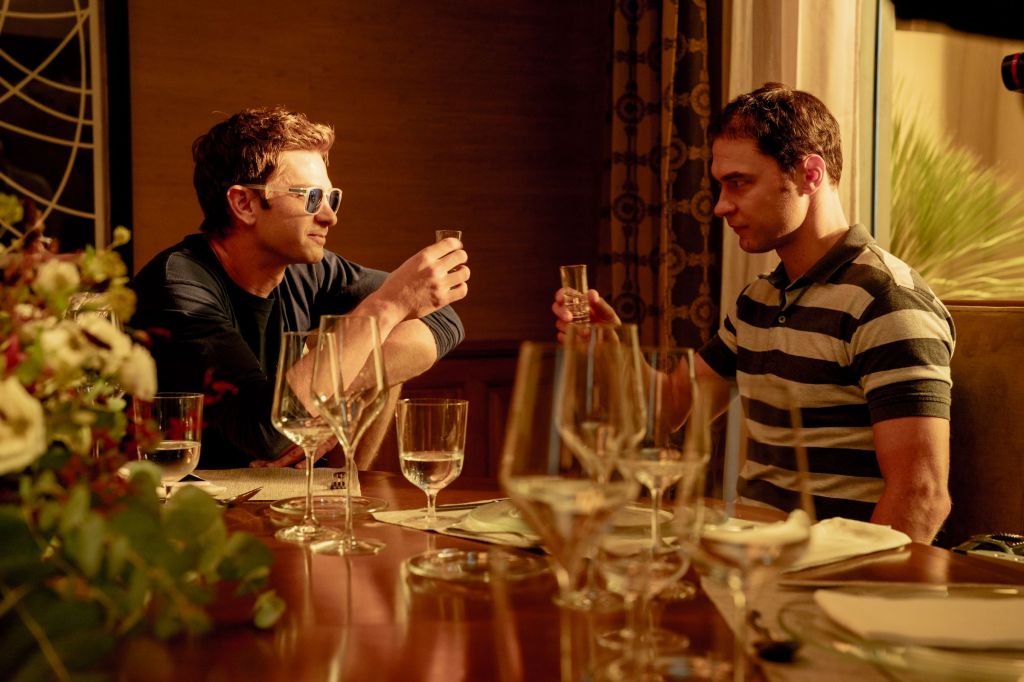
In Luca Guadagnino’s Artificial, we see one part drama, two parts humor, three parts awe, four parts horror blended in a compelling narrative that mesmerizes. Indeed, the director’s believable, stylized realism makes the two hour film speed by. With an exceptional score by Damon Albarn, Artificial‘s music captivates as much as it beautifully synchronizes the driving force of the film’s human/machine events. In fact synchronicity is the theme and watchword of this magnificently acted and directed film about the meld of human/machine consciousness. Artificial made its World Premiere in the Main Slate section of the NYFF 2026.
Artificial‘s chronicle moves the audience though two decades of machine learning research to arrive at the “believe it, see it” end of the rainbow of thinking machines and digital consciousness. Clearly, the powerful dramatization of real people and the milestones accomplished places AI front and center. Thus, Guadagnino’s subtle cinematic metric forces us to deal with AI’s possible doomsday reckoning. However, that may happen if the potential villains in Artificial nefariously exploit their evolving discoveries recklessly and if the potential heroes stop them.
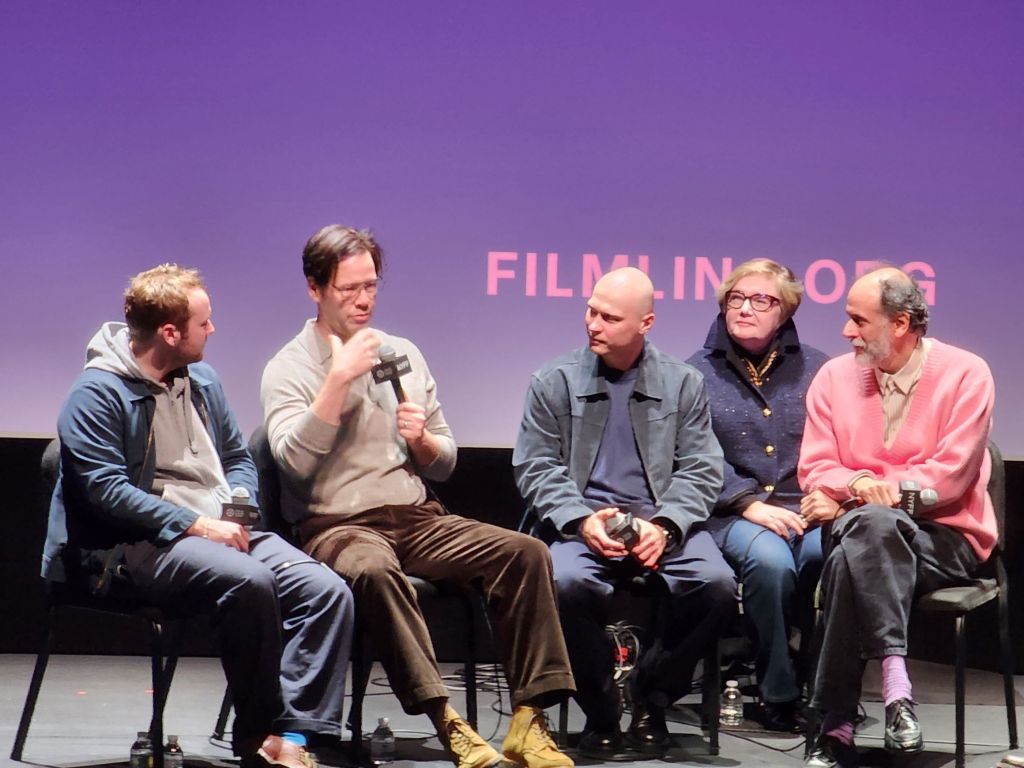
The finely honed, lucid script by Simon Rich pierces the veil into the realms where mere mortals with 130 + IQs cannot go. To say that the content matter flies over the heads of a large percentage of the audience matters little. The actors authenticate the complexity of the information via Rich’s profound, well-thought out dialogue.Through it, they manifest the personalities and personas of the individuals responsible for perhaps too impatiently hacking the infinitely possible.
Guadagnino via Rich and the superb ensemble led by Andrew Garfield portraying Open AI’s Sam Altman, Yura Borisov as Ilya Sutskever and Mark Rylance as Geoffrey Hinton (the “Godfather of AI”) acquaint us with AI’s beginnings. Plunging us as gently as possible with brief stints translating the opaque into a layperson’s language, script and actors let us follow on the edges of theoretical mathematics and computer science fundamentals that underpin artificial neural networks and Deep Learning.
Most importantly, we catch fire with the relationships between Soviet-born computer scientist Ilya Sutskever and University of Toronto professor Geoffrey Hinton. Rylance, known for his amazing versatility from playing Shakespeare onstage to the character Sully in Guadagnino’s Bones and All, believably portrays the soft-spoken, reasoned Hinton. Additionally, the relationships between and among the OpenAI co-founders Sutskever, Altman and the tech bros like Musk and others fascinate.
Initially, when Borisov’s Ilya pushes himself into Hinton’s office in 2003, a three minute conversation reveals Ilya’s genius, making history. Hinton takes him on, mentors him and they progress together, but only move so far until their paths diverge. Interestingly, as they pursue their evolutionary discoveries, Hinton filters each through his moral center and thinks through its consequence before every development and manifestation. Ilya allows his impatient genius to get ahead of him and searches for others who feel as he does. Though they both work at Google, when Sutskever meets Sam Altman who recruits him as a chief scientist and part of the co-founding team creating OpenAI, Ilya finds a kindred soul. Joining with Altman others come onboard alongside figures like Elon Musk and Greg Brockman. Eventually, they become co-founders of OpenAI.
When Guadagnino presents the scenes of the bonding of the bros as they imagine they achieve and receive their next adventures into merging human consciousness with evolving machine consciousness, we join the ride. Swept up with their exuberance to reach beyond where others cannot and dare not go, the consequences evade them. Climbing upward they experience the high of their own genius. Will someone be able to reign them in if not one of their own steps up?
Guadagnino expertly shepherds the actors as he mines the relationship between Altman and Sutskever, all the more incredible when Sutskever and the board fire Altman for dishonesty. In a come to Jesus moment, Suskever seeks out his mentor Hinton and runs by his issues with Altman through Hinton’s righteous filters. After consideration, Sutskever speaks with others and gets Altman fired. He sees Altman as he sees Musk (Ike Barinholtze in a LOL portrayal) as a liar and a danger to everyone. Yet, Altman’s personality, charm and ability to manifest his beliefs and maintain his cool allows him to wriggle back into the good graces of the Board.
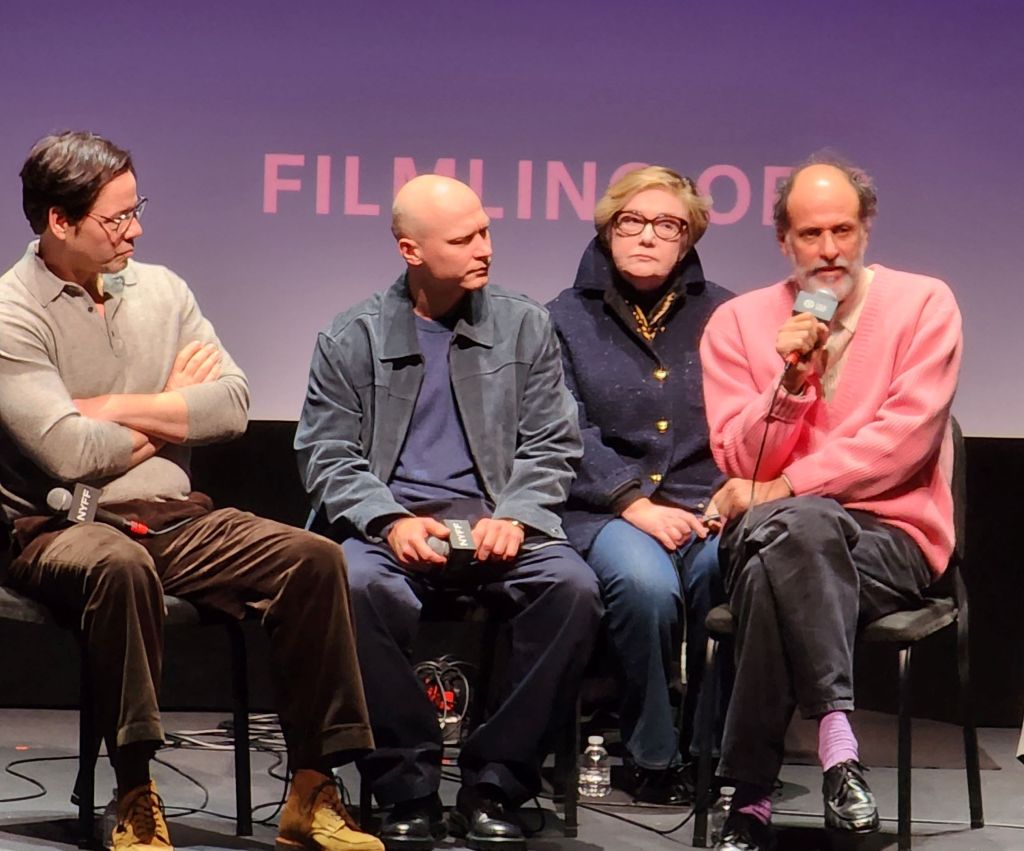
Guadagnino leaves us at the conclusion noting where the potential heroes and villains end up. Co-founder and CEO of Safe Superintelligence Inc.Suskever continues investigating and understanding the consequences of where AI can lead in order to provide a fail-safe mechanism to prevent it through safe use. Altman continues making advances with OpenAI. Coincidentally, around the World Premiere of Artificial, he announced the potential doomsday scenarios of AI. Finally, Hinton resigned from his position as a Vice President and Engineering Fellow at Google in May 2023 after working there for a decade. He resigned so he could freely speak out about the existential risks and dangers of artificial intelligence.
Then there’s Musk. He has proven himself by allowing the DOGE team to close down USAID causing the deaths of hundreds of children and families who depended upon the medicine and food worldwide. And then there’s his help with the computers, the beautiful computers and Republican elections.
Guadagnino has outdone himself with Artificial, a must see. For the NYFF 2026 write-up go to https://www.filmlinc.org/nyff2026/films/artificial/ Artificial opens in a US theatrical release on December 25, 2026. It’s wide release begins in January, 2027.
‘A Statement’ With the Excellent Paul Rudd, Amy Ryan, Paul Giamatti, John Turturro at NYFF 2026
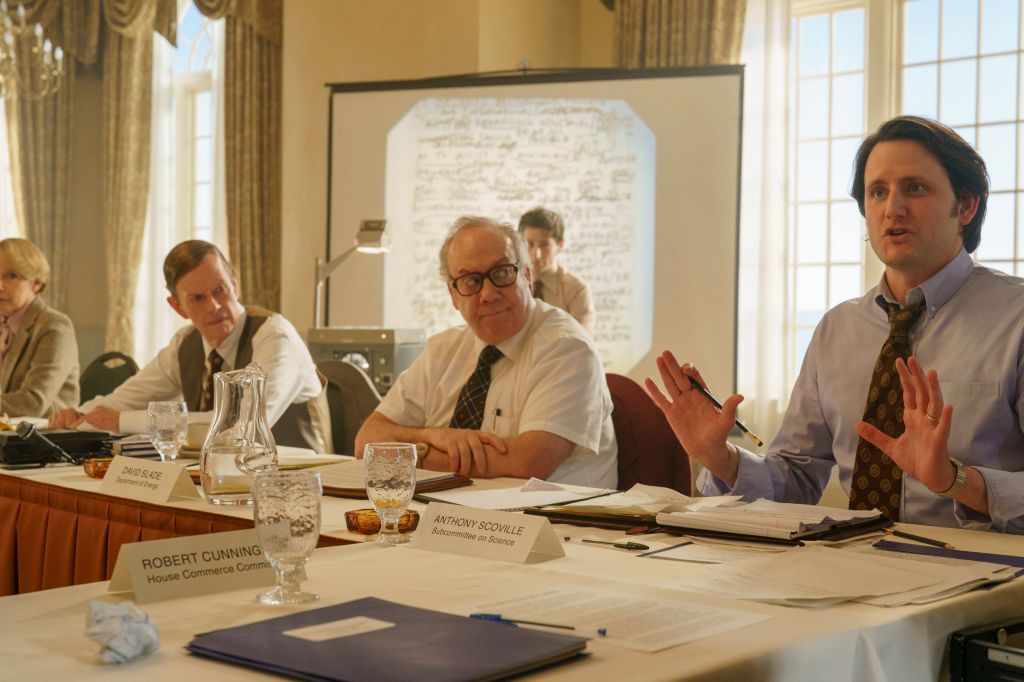
With a superb ensemble who keep the potentially dry content popping, A Statement director, Tom McCarthy, crafts a drama with comedic elements. This important film by McCarthy, who also crafted the superb Spotlight in 2015, examines the historic weekend-long meeting congress commissioned about global warming. At this conference congress tasked participants to respond to a dire report on the environmental impact of fossil fuels. McCarthy’s A Statement made its world premiere in the Spotlight section of New York Film Festival 2026,
The director and fellow screenwriters Noé Debré and Thomas Bidegain use original verbatim transcripts of the 36-hour meeting recorded by a stenographer into an archived document over five hundred pages long. Additionally, they adapt Nathaniel Rich’s book Losing Earth:A Recent History for information and basics about the weekend conference that took place in late October 1980, days before the presidential election. However, for almost half of the film, the writers use the transcripts to chronicle the word for word interactions, arguments, agreements, disputes and stalemates among twenty scientists, activists and policymakers portrayed by a celebrated cast.
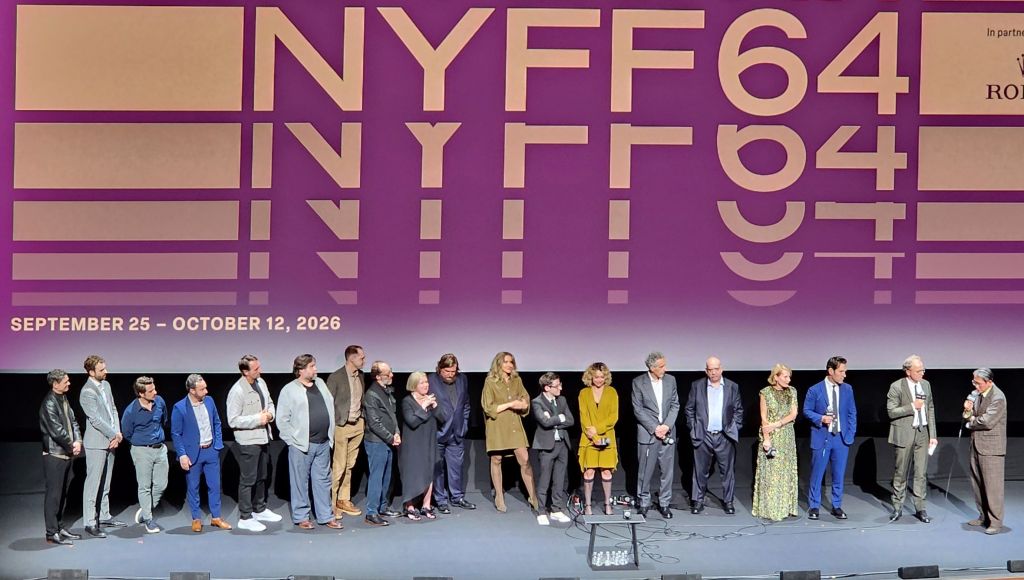
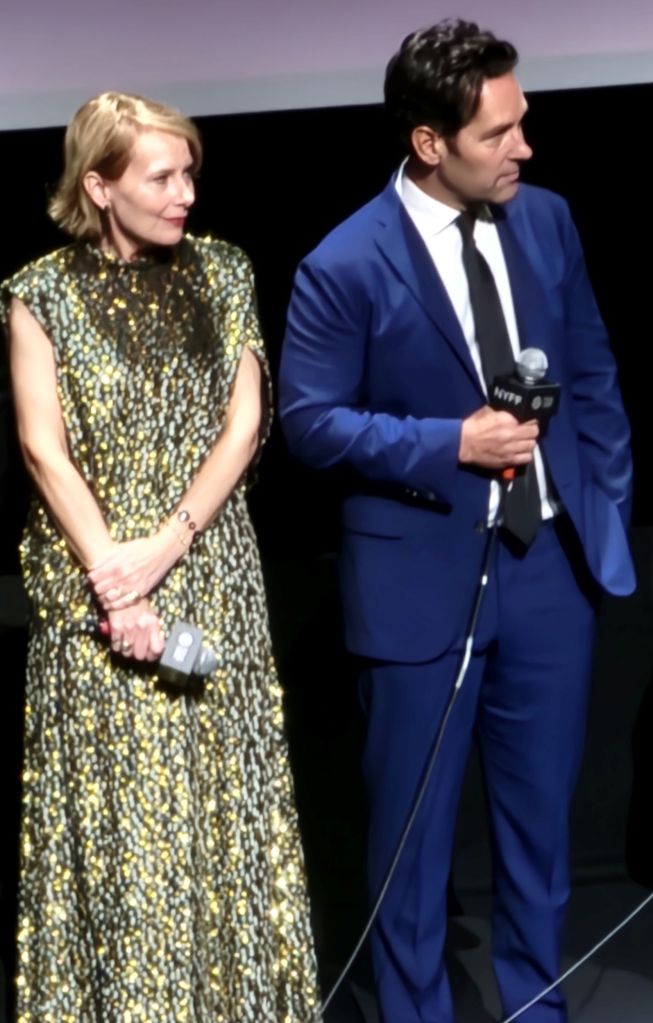
Paul Rudd as Clean Air Act advisor and moderator Tom Jorling opens the film with Evan Pet,ers as Friends of the Earth activist Rafe Pomrance who helps him set up the layout of tables into a large square. Between the battles and discussions Jorling counsels Peters not to “come off” like a ton of bricks, but listen and wait until he confronts the arguments that will arise.
As the others arrive, we note key experts with clout and empowerment. These include Paul Giamatti as Energy Department director David Slade and John Turturro as M.I.T. nuclear engineer and environmentalist, Dr. David Rose.
Playing lesser but dynamic roles, key women include two experts and the stenographer Bernadette (Nina Arianda). Amy Ryan portrays Annemarie Crocetti, the public-health scholar who sat on the National Commission on Air Quality. Tatiana Maslany, portrays law professor Edith Brown Weiss. Both women interject comments periodically. Oftentimes, the men patronize and dismiss them into silence. Meanwhile, Rose and Slade hold center stage with directed, if cynical remarks about players who might be obstacles to the conference members proposed actions. Nevertheless, Crocetti and Brown-Weiss convey impassioned arguments toward the conclusion of the film.
Throughout the individuals present suggestions and counter with rational cogent arguments as they discuss the effects of carbon emissions from fossil fuels. As the actors portray real individuals in their own words, we note this historic moment in time, more forward thinking than the present bogged down in misinformation and corporate greed of Big Oil. All in this group acknowledge fossil fuels’ carbon emissions’ catastrophic impact on the environment. Viewing this historic bi-partisan acceptance of scientific facts, one wonders how the propaganda and misinformation discounting climate change ever took hold to ignore science.
Thus, in late October with Jimmy Carter still president, the group collaborates. Under the limited time constraint, the experts from various backgrounds attempt to achieve consensus in wording their policy statement to congress. Because they agree about the dire report, their mission of how to address the dangers of carbon dioxide emissions seems facile enough. However, achieving consensus about the wording of the statement draws rancor and fractiousness among the participants. Oftentimes, the back and forth annoyances and ironic responses, thanks to the actors, provoke laughter. Their frustrations at spinning their wheels and going nowhere produces even more humor.
As the clock ticks and the hours count down, the tension increases. When experts like activist Pomerance come up with suggestions about how best to deal with limiting carbon emissions, Turturro’s Rose and Giamatti’s Slade reveal the complexities Pomerance has not anticipated. Indeed, his activism though passionate and noble reveals a lack of knowledge. Rose and Slade provide the hard truths, yet acknowledge Pomerance’s moral conscience. Clearly, the participants respect one another and learn from each other, but they are far from their goal.
McCarthy knows how to take the transcripts word for word and convert them into dialogue that integrates with the narrative. Also, he expertly shepherds the actors’ performances and employs an acute cinematography of close ups to capture the right pacing for edits of eye rolls or body language.
Additionally, he frees the characters from the conference room in the hotel and stages them in side meetings. For example, characters walk on the hotel beach and discuss various points. In a humorous segment Dr. Rose breaks with his erudite, professorial persona and crashes a wedding bringing other conference members with him during a fun break. Thus, McCarthy maintains audience interest and we become invested in the characters and hope that they can write a definitive statement that congress can work with to save the planet.
The film’s focus on this historical conference with the reasoned comments of the participants fascinates and appalls as a horrific reminder of our country’s retrograde position since then. How quickly did partisan disagreement about global warming spark a reversal of regulations spiking the use of fossil fuels and avoiding effective mitigation of carbon emissions? The liberal progressivism heard in the participants’ comments acknowledging climate dangers contrasts with the Trump administration’s vitiating climate change as a hoax. Clearly, the administration uses the hoax argument to justify corruptly bowing to the oil lobby and exiting the Paris Climate Agreement. Then, in October, 1980, the truth mattered even if the experts couldn’t agree what to do about it. Now, the truth is a lie.
Perhaps the fact that the participants failed to gain consensus in the wording of the “statement” speaks to the human tragedy of the current administration’s expedient inaction. Meanwhile, the clock keeps ticking.
A Statement will be released in theaters later in the year or in 2027. For a look at the film’s write-up on the NYFF 2026 site go to https://www.filmlinc.org/nyff2026/films/a-statement/
Johanna Hamilton, An Interview With The ‘1971’ Director

‘1971’ directed by Johanna Hamilton. Photo taken from the film website.
The documentary ‘1971’ screened in a World Premiere at the 2014 Tribeca Film Festival. I screened the film and later reviewed it giving it 5 stars. The amazing documentary chronicles a time in our history that has tremendous currency and importance for us today. In fact, Laura Poitras (she directed CitizenFour which is about Edward Snowden’s revelation of the US massive surveillance program), is one of the co-executive producers of the film. As Snowden’s revelations were coming out, Hamilton (who also produced), her co-writer and editor, Gabriel Rhodes, producers Katy Chevigny, Marilyn Ness and others were stunned to see that the events of 1971 were being played out but this time on a global stage with Snowden. The chilling question was, since technology had gained huge strides that few comprehended, was it even possible to know how long and to what extent the government’s security programs were covertly vitiating American citizens’ constitutional rights? Snowden’s revelations and the events in 1971 (revealed for the first time in the film), are most likely the “tip of the iceberg.”
Hamilton’s documentary is a superb and thrilling true account of how 8 very ordinary and very brave American citizens, calling themselves The Citizen’s Commission to Investigate the FBI, risked their lives, their family’s well being, and their freedom to expose the unconstitutional, covert surveillance program COINTELLPRO. In the film Hamilton explores how and why The Citizen’s Commission felt there was a moral imperative at stake: they esteemed the principles of freedom in the Bill of Rights. Their beliefs and our American principles were held in the balance when they went to the Washington Post with FBI files that they had taken, files that were “secret,” and revealed surveillance of average Americans who did not adhere to the politics and philosophy supporting the Viet Nam War. Would the Washington Post prevent publication, in effect censoring the files? Or would they publish the damning documents? Hamilton reveals the fascinating account of what happened in its entirety and includes the identities of the 8 heroic and unassuming Americans who wanted to uphold the constitutional foundations of the country they believed in.

Johanna Hamilton, director of ‘1971.’ Photo taken from the website.
I had the opportunity to interview Johanna Hamilton via email and ask her about the film which is opening on February 6th in Cinema Village in New York City and on March 13th in Los Angeles.
The film tells a fascinating story of individuals who broke the law. It is revelatory about our segments of the government which in effect exceeded their powers to push forth a political agenda that was damaging to our country. Why/how is this story especially relevant for us today?
Sometimes people have to do things that are courageous and even controversial in order to stimulate conversations about checks and balances that are the lifeblood of democracy. I think this film is relevant today because a number of people acknowledge that post-9/11 we have lost a lot of those check and balances. And that was perhaps understandable in that moment but, perhaps, in hindsight we lost too many and maybe it’s time for a fresh look. That was true even before the Snowden revelations; and then he gave us empirical proof just as the Citizens’ Commission to Investigate the FBI did back then.
Is the country in better or worse shape than it was in 1971, politically, ethically? Today, do you think that citizens might be less likely to take a stand as these individuals did as a collective group remaining quiet about their actions? Why or why not?
There is so much to say and this subject has filled many books; I feel like you’d need a dissertation to encapsulate the first part of the question! Without doubt, the country is very different than it was in 1971; that was pre-Watergate. Today it is probably more politically polarized than it was then. The Citizens’ Commission to Investigate the FBI is unusual in that it was a relatively large group who all had to work together and then keep a secret for a very long time. Back then this type of collective political action was less unusual. Most often people who are leaking information work alone, precisely to minimize the risk to others. I’m not sure a group of people would do it today. Then it was very easy to feel very directly affected by the Vietnam War, for example, because of the draft. You wondered whether the person next to you was an informant. Today, there’s no draft and although in this Digital Age the surveillance capabilities are much more vast they are also more ephemeral. It’s much more difficult for the general public to feel directly affected by surveillance. It’s more personally invasive today, but you don’t necessarily feel it.

Johanna Hamilton director/producer/writer of ‘1971.’ Photo courtesy of Tribeca Film Festival.
How did this film evolve? Where did you receive the impulse to dig deep to find the people and recreate the events?
I consider myself very fortunate to have known Betty Medsger, the journalist at the Washington Post, to whom they leaked the documents in 1971 and who wrote the first stories. She and I have been friends for a long time, long before this professional collaboration. She was writing and researching her book that is now The Burglary: the Discovery of J. Edgar Hoover’s FBI.
(In her Director’s Statement, Hamilton says, “…we agreed to share all our primary research materials. I benefited enormously from her many years of research, including access to the 34,000 pages of the FBI investigation.)
I implored her to let me know when she was ready to make the film! Several years went by and one day she asked me if I was serious, whereupon she helped arrange a meeting with several of the members of the Citizens’ Commission and their lawyer David Kairys. We met and a couple of days later they let me know that were ready to go on camera. In terms of the recreations, I immediately thought to recreate the events of that night. Cinema is an immersive experience and I wanted people to be able to put themselves in their shoes. Plus, they left nothing from that night, no notes, no photos, nothing, just memories. I loved the sense of being able to create a nonfiction heist movie or film noir. Without them, it might have been a short film.
In what way did making this film impact you? What did you learn?
I learned a lot about civic courage. And I learned an enormous amount of the inner workings of both the protest movement in the late 60s and early 70s as well as the FBI under J. Edgar Hoover.

Friends, Johanna Hamilton director/producer of ‘1971,’ and Laura Poitras, Co-Executive Producer. Photo courtesy of Tribeca Film Festival 2014.
Laura Poitras is a co-producer of the film. In what way did the making of this film have an impact on her making CitizenFour? The two films have similar concepts. In what way are they very different? What would you like audiences to see and understand about that time (1971) and our time now?
Laura is a Co-Executive Producer on the film. She and I have been friends and colleagues for a long time. She was one of the very first advisers on the film. She was already making a film about contemporary surveillance when I started working on 1971. So my film did not influence her, but she did know the story. Then in March 2013, she sent me an email asking me how I was doing on the film and reiterated her willingness to help. I found out about Edward Snowden with the rest of the world in June of that year. She was already in touch with Ed when she sent me that email in March; clearly she was drawing the analogy between the two stories and the two eras. Our films are similar in that they deal with people who have taken a stand at great risk to themselves by leaking information (in analogue and digital ways), but that ended up benefiting democracy. They both have a thriller element. But they could not be more different in that CitizenFour unfolds in real time; much of it is cinema verite. 1971, a story in the past, had to be reenacted in order to bring it to life.
In her director’s statement, Hamilton solidifies the wide ranging nature of what The Citizen’s Commission to Investigate the FBI accomplished for the country.
“The break-in is a little-known but seminal event in contemporary American history. The decision by the Washington Post to publish the documents was a defining moment for investigative journalism. We know about COINTELPRO, and the FBI’s dirty tricks targeting Martin Luther King, the Black Panthers, and many others, but we only know about them because of the stolen documents and the actions of The Citizens’ Commission to Investigate the FBI, as the burglars called themselves. They didn’t look for the spotlight. Their mission a success, they returned to their normal lives.”
It also may have indirectly eased the way for the Washington Post to adopt a prominent investigative role during the Watergate scandal which too, began with a break-in, and ended with the resignation of a President.
This interview first appeared on Blogcritics.

