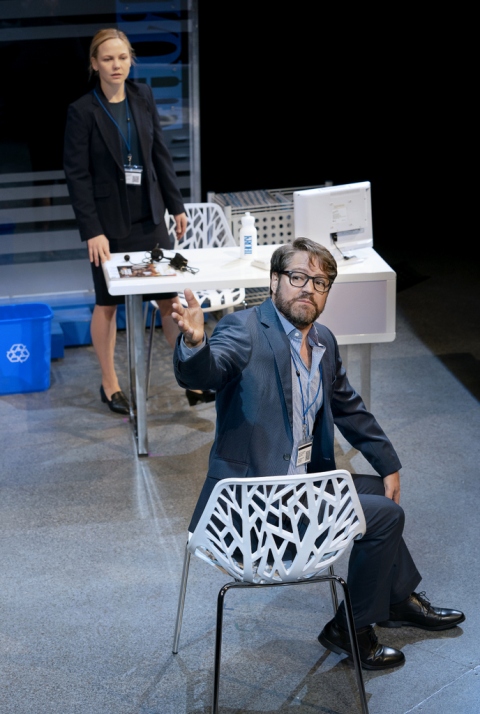
‘King Kong,’ A Must-See Production of Power and Scope

King Kong, Drew McOnie, Jack Thorne, Marius de Vries, Eddie Perfect

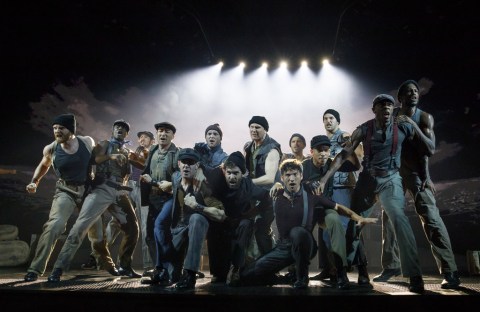
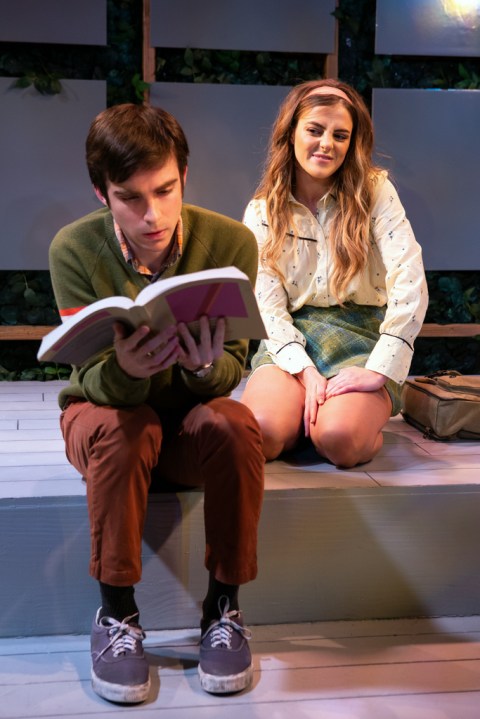
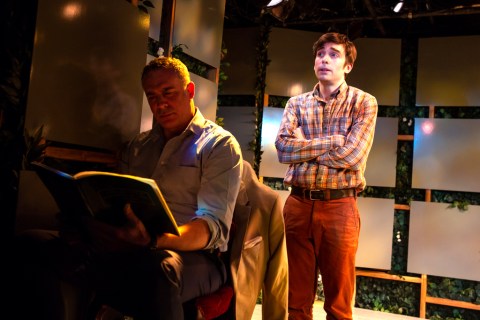
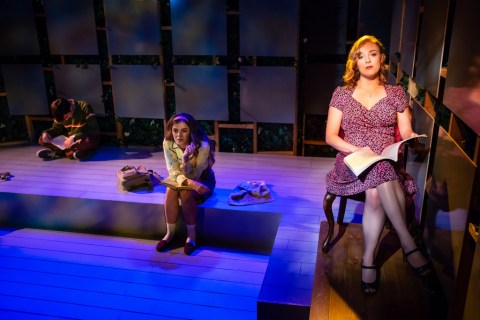
‘King Kong,’ directed by Drew McOnie, written by Jack Thorne, score Marius de Vries, songs Eddie Perfect (Joan Marcus)

According to the most “prestigious” of NYC critics, King Kong (at the Broadway Theatre) is a Duh, Duh, Duh Dud. Well, esteemed theater geniuses, not so fast. Your glib, “humorous,” self-serving, Kong pulverizations reflect more arrogant, Trumpian insult than notable explanation employing your professional expertise. How about delving into the profound themes and the superb integration of the book/lyrics and music?

Nah!!! Indeed, it seems some critics had more fun shredding the production than examining its excellence. Ah well…sucks for King Kong on Broadway? Hardly!

Call me naive, my taste insipid. But it doesn’t surprise that these folks glossed over the deeper elements of the production directed by Drew McOnie. This powerful, heartfelt and extraordinarily effected musical is written by Jack Thorne (of Harry Potter Broadway fame). And the songs by Eddie Perfect, score composed and produced by Marius de Vries beautifully, powerfully present archetypal themes and rhythms that engage us on a deeply personal level. Indeed, the symbolism and overarching messages in the script, song lyrics and characterizations serve as representations of a mythic story that resonates for us not only for today, but for all time and against colonialists everywhere. Prevalent throughout the production are mythic themes and symbolic archetypes that Jack Thorne the writer and Eddie Perfect and Marius de Vries (songs and score composer) uphold from other Kong versions.

Importantly, the creators uplift the extraordinary, immutable wonder of our lives and the natural world that we tragically mischaracterize and mishandle at our own peril. Anne Darrow (the superlatively voiced Christiani Pitts) discovers this sanctity during her interchanges with the magnificent and mythic Kong. (To interject, the work done to make Kong a living, sentient, feeling, being is just extraordinary.) And though her realization happens too late to influence outer circumstances, on an inner level, Pitts’ Anne evolves. Gradually, she understands the magnitude of what has been lost and destroyed when they remove Kong from his habitat.

Jack Thorne, King Kong,Drew McOnie, Marius de Vries, Eddie Perfect

The Company of ‘King Kong,’ written by Jack Thorne, directed by Drew McOnie, score composed and produced by Marius de Vries, songs by Eddie Perfect (Matthew Murphy)

Pitts’ emotional and vocal range and the strong beauty of her voice amazes and stirs. Her revelations begin at the midpoint of the production after she meets Kong. And her veil-lifting, truth-realizing sequences contrast with the invidious view that empiricism brings the only “truths” worth knowing. Carl Denham, the antagonist (the fine Eric William Morris) represents this materialistic view after he first sees Kong at the turning point of the production. The conflict between these individuals and their perspectives can lead to only one conclusion.

Surely, one theme of this version of King Kong slyly reveals that such empiricism/materialism is a meretricious social value. Specifically, empiricism promotes scientific cruelty (the attitude that animals have no feelings) and commercialism which puts profits before people and other sentient beings. Glorifying materialism, the culture indoctrinates us to internalize its nullifying success norms. And this internalization dissolves goodness, spirituality and the understanding of how all things in the natural world are connected on deeper levels that are unseen and cannot be typically measured.

Both Carl Denham and Anne have been “educated” to cultural success norms as we have all. They define themselves accordingly and are excessively ambitious. Thus, they struggle like the other New Yorkers desperately hustling to make it to “the top” (“Prologue,” “Dance My Way to the Light,” “Queen of New York”). Sadly, they allow this cultural folkway of the “success identity” to undermine  their spirituality, goodness, and empathy.

Christiani Pitts, Eric William Morris, King Kong, Drew McOnie, Eddie Perfect, King Kong, Jack Thorne

Christiani Pitts, Eric William Morris in ‘King Kong,’ directed by Drew McOnie (Matthew Murphy)

Initially, Denham intends to use his artistic abilities to make a film of an incredible adventure that embraces the “wonder” of life. (He appears as a “knight in shining armor” willing to defend Anne against a sex predator lout who runs a bar.) Then in pursuit of the artistic dream, he devolves to the empiricist’s attitude of “seeing is believing,” and embraces commercialism whole hog. Superbly portrayed by Eric William Morris, Denham’s powerfully voiced, confident entrepreneur gone to rot is the perfect foil for Anne and Kong.

When Denham offers her a job, the desperate, starving Anne, who cannot compete for acting jobs in the rapacious city, accepts his intriguing offer of adventure. Denham appears to be a sincere artist willing to sacrifice and connive for his artistic dreams. He remains one step ahead of creditors and insurance companies. But we admire his pluck in risking everything for this shot at success.

Concurrently, we admire that Anne intends to “make it” without prostituting herself, literally and figuratively, by being beholden to a man to support her. A maverick woman whose independence and will dominate, she will attain her goal to be famous by “doing it her way.”

These initial characterizations and the plot pay homage to the original 1933 film and to the Peter Jackson version of King Kong of 2005. But variations in her characterization abound. Indeed, Thorne, Perfect, and de Vries have removed Anne’s love interest. Doing so shifts and modernizes the themes. The focus becomes Anne’s development and self-discovery as an individual.

Her journey also emphasizes her recognition of an important truth beyond the culture’s material, profit-motive values that promote self-destruction and the destruction of the natural world. Through Anne and Kong we live and empathize.

The stirring and engaging themes and the moral imperative of such ideas resonate with the audience throughout. Enlivened by thrilling music and athletic action and dance sequences, one stays on the edge of one’s seat. Indeed, the company had us from the first sounds of the overture and visual projections of the iron beams of the Empire State Building.

As Thorne develops the plot and characters, we see into their souls. A twist occurs when they sail to Skull Island (“Building the Boat/”Setting Sail”) and the extent of Denham’s tragic ambition manifests. Confronted by Captain Englehorn, who values his life and those of his crew, Denham no longer can obfuscate about  their dangerous destination. The captain refuses to continue and the mutinous crew backs him. However, Anne bluffs them. With acting guile and an ambition equal to Denham’s, she threatens to blow up the ship if they turn back.

King Kong, Jack Thorne, Marius de Bries,Eddie Perfect, Drew MOnie

The Company, ‘King Kong’ written by Jack Thorne, score Marius de Vries, songs by Eddie Perfect, directed by Drew McOnie (Joan Marcus)

Notably, this plot twist of a strong female confronting a herd of males works. Not only do Pitts, Morris, and the ensemble act with spot-on immediacy, Thorne has threaded the character development precisely. For in this scene we discover Anne’s rapacity is greater than Denham’s. This setup becomes all the more ironic and meaningful after she interacts with the divine-like Kong, and transforms (“Full Moon Lullaby”/”Shine”).

But Thorne carefully designs another note to her character: sensitivity. This trait abides in her relationship with Denham’s assistant Len (the excellent Erik Lochtefeld). She and Len form a bond which foreshadows the heartfelt communication she has with Kong. A character whom the world deems a “loser,” Len reveals kindness, sympathy, and humanity. Refreshingly, Len provides the counterbalance to Denham’s self-serving cupidity. And he puts Anne in touch with a part of herself that remains human and authentically kind.

After arriving on Skull Island, a mysterious land of otherworldly presences, Anne and Denham begin their filming. Anne screams. Intrigued, Kong emerges, terrifying with his roars. But as the sailors shoot at him,  he grabs Anne and runs. Their escape through the jungle is an amazing light show with projections. It dazzles and thrills. This artistry (animatronics, puppetry, stagecraft) realizes Kong’s panic and frenzy, and Anne’s horror. With the added commanding music, the exciting sequence is unforgettable. For the first time King Kong has emerged. And he takes our breath away. For Denham, Len, Anne, and the others, Kong’s presence blinds. What direction the characters will move in after this moment (toward vision or darkness) will be revealed by the conclusion.

The projections used when the crew lands on Skull Island become the appropriate lead-in to the presentation of Kong. The majestic creature in all his ferocious sentience truly is a work of genius and love. Kong’s reality is what the audience comes to see. With the story spiraling from the past into present-day issues and themes, this most empathetic, intelligent being is readily identifiable. For that alone, the production wins. Indeed, Kong’s iconic presence symbolizes all that remains beautiful, ineffable, incredible and surreal about the natural world. That humankind’s craven lust to own and capitalize what can never be possessed is human nature’s tragic flaw.

Each mind-blowing projection works beautifully to create atmosphere and tension. The artwork and lighting also underscore the themes. For example, in the opening scenes the projections, along with the superbly choreographed dance numbers, help to create the energetic hyper drive of the city and the frenetic vitality of desperate New Yorkers. All the artistic elements cohere to simulate emotional fervor and the rapacity that has influenced Anne. The boat building and sailing sequence astounds. Artisans have simulated the rhythm of the undulating waves. Kong’s run through the forest clutching the terrorized Anne excites. Particularly memorable, the artistic designers’ evocation of Skull Island’s spiritual mystique through projections, glowing vines, costumes, dance movement, and light beams proves to be a visual stunner. The projections foreshadow and intimate the fabulousness of Kong, himself.  They also symbolize the magical and ethereal quality of our world which we do not see because we have lost our way in a meretricious culture.

The great irony of the visible/invisible, sight/blindness conflicts manifest when Kong, who is the last of his kind “appears,” and the humans do not understand nor appreciate what they are “seeing.” Humankind’s flawed, corrupted relationship to other animals (including themselves) and their habitats is a theme the reators suggest after Kong explodes of of the jungle. The creators also highlight the discriminatory and oppressive attitudes abuot indigenous peoples’ otherworldly perspectives and veneration for the “natural” world. The colonialistic/fascist attitudes are wantonly dismissive precisely because responsibility to understand and acknowledge sentience and intelligence inherent in the natural world would disqualify commercialism and exploitation.

The fascism of rendering invisible what is glorious, makes it ready game to enslave, exploit and commoditize. Thus, Denham’s and the others’ sight of Kong leads to devastation. The colonizers lack the inner vision to understand/value the mystical sanctity of what they see. To Denham Kong represents an entrepreneur’s dream come true, an answer which will move him from rags to riches. Taken in by the “ape’s” awe-inspiring presence, Denham’s ambition moves beyond film to live theater, prompted by his assistant Len.

Len’s empirical comment, “seeing is believing” provokes Denham’s wrong-headed, soul-crushing exploitation. His plan to benignly film then leave the extraordinary creature unmolested implodes when the film he did shoot becomes unusable. As the weak often do when they intend to use others for their own agendas, the rationalize.  Morris’s portrayal of Denham rings with authenticity as he justifies his noxious behavior in the songs “The World” and “It’s Man.” With Kong he will “change the world.” His pride is tragic. His dismissal of the truth of Kong is a willful turning away into soul darkness.

Christiani Pitts, King Kong, Drew McOnie, Jack Thorne, Eddie Perfect, Marius de Bries, The Broadway Theatre

Christiani Pitts in ‘King Kong,’ directed by Drew McOnie, written by Jack Thorne, lyrics by Eddie Perfect, score by Marius de Vries (Matthew Murphy)

Thus, Denham shifts focus. He dismisses his artistic fervor and demeans his once expressed wonder of life. Instead, he will exhibit Kong in a freak show with the “ape” as the star. The characterizations of Denham and Anne are pulled in opposite directions by the conclusion. For as Denham makes plans to kidnap and commercialize Kong, Anne forms a bond of communication with him, which she denotes as a miracle that changes her. The two humans’ divergent choices inform the conflicts that explode between them and carry into the last song.

With the brilliantly suggestive portrayal of Kong’s sentience, Anne and the puppeteers mesmerize us and break our hearts. This is especially so in the scenes they have together and especially toward the end. Because Kong’s intelligence sparks a life-changing revelation, Anne discovers her own core. But can she maintain this understanding to help free herself and Kong from Denham’s clutches in New York City?

For his part Denham devolves from mistakenly thinking he can own, control commoditize the ineffable. His humanity caves as cupidity and arrogance overthrow his better nature. By the time he bullies and extorts Anne to trick Kong with an alluring scream as she did on the island, he has already harmed himself. When he shatters his life-giving vision of capturing wonder through art, his ending ignites, and throughout the second act we watch his deterioration into misery and a state worse than when he began the adventure.

Christiani Pitts, Eric William Morris, Erik Lochtfeld, King Kong,Drew McOnie, Jack Thorne

(L to R): Christiani Pitts, Eric William Morris, Erik Lochtfeld in ‘King Kong’ directed by Drew McOnie (Matthew Murphy)

By the conclusion, Anne understands her own corrupted, profane nature. And she seeks to be free of it by embracing Kong as sacred. Ironically, Kong has inspired her to seek soul freedom, but it is too late for both of them (“The Wonder”). He has sanctified Anne’s vision but tragically she cannot offer him anything in return but death. At least his freedom will result in a death he is worthy of – he dies unchained and on his own terms. As for Anne, she will have to live with the memories of what she has done, what she has learned, who she has lost.

And thus, it remains. Kong’s story is of the loss of a world he once inhabited as he and it become extinct. Anne’s ultimate revelation is that her unworthy profane dreams led to the destruction of Kong’s sacredness.

The spectacle-filled ending leaves us with questions. Where do we stand? In acknowledging life’s beauties, do we accept that the natural world’s magical thrumming must be honored and safeguarded? Can we escape the genocidal impulse to colonize and wantonly eradicate what we don’t really understand, which includes ourselves and our habitats?

Thorne, Perfect, de Vries, and McOnie spin out the production’s siren call from the past into a theatrical iteration of today’s currency. I enjoyed the script enhancements and how the profound themes echoed through Perfect’s lyrics and de Vries’ exhilarating and commanding music. The creative team effects the mythology of King Kong as an evocative, representational phantasmagoria. Their approach parallels the original film’s setting with our time but doesn’t authenticate it.

Specifically, the creators elevate the production so that one may appreciate it on many levels. As the wise cautionary tale Perfect’s lyrics, Jack Thorne’s script and Marius de Vries’ music warn what poet William Wordsworth indicts humanity for in his sonnet, “The world is too much with us.”  At the conclusion of the sonnet, Wordsworth mourns the culture’s “being so out of tune” it cannot revel in the supernatural, mythic, magic of Nature. “Getting and spending, they lay waste their powers” and are blinded by their own acquisitiveness for things. Indeed, as a symbol of the sacred, Wordsworth would have appreciated the mythology of King Kong and understood the terrible and profound meaning of his destruction at the hands of people worshiping the Golden Calf and Mammon.

This theme especially reverberates against the backdrop of the self-dealing, self-serving White House administration, whose every whim seems to be how to enrich themselves and their businesses at the expense of our nation while making inconsequential the natural world and those whose ancestry most clearly appreciated their connection to the ineffability of Nature’s wonders (Indigenous peoples).

Finally, another word about de Vries’ musical score. It does not mimic the music of the thirties which would limit and distract from the production’s larger focus. Instead, the music hails from various genres (pop, rock, blues and more). Above all it transmutes the themes in its lyricism and dynamism and it aptly conveys the different moods in the scenes from being sonorous to thrilling. Perfect and de Vries cleverly meld the songs and dance numbers to the arc of the updated story development. Coupled with the magnificent puppetry/animatronics, the production hits it out of the park and the ball is still flying into the heavens.

Indeed, for good or ill many will see this show, not only tourists but New Yorkers. And for those stuffed shirts with turned up noses, just move past prejudice and pre-conceived notions about a gigantic ape musical. That, it is not, nor will it ever be, regardless of who attempts to demean it as such.

This brings me to the last points of this very long, praiseworthy review of King Kong. The savvy acerbity and self-congratulatory, pompous snark of some King Kong critics make a “blow-the-belt” reference to the producers’ exploitation of King Kong in the merchandising, as all Broadway shows are wont to do. Fine! But the critics who panned the show reveal their flaccid contempt to dun what may have more depth than what they dare acknowledge. This, is a key theme of the production which laughably they miss. Would they make King Kong an inane monstrosity of Broadway? Indeed, then they underestimate its sentience, intelligence, courage and heart.

Thus, if I find some slippery reviews of this show and “artistic” finger-pointing laughable in the reverse, then let that be my problem. For I enjoyed the production of King Kong. It is an intrepid undertaking for those making their business on the great White Way. I credit the producers for their audacity of hope and painstaking labors to get King Kong before a public who will appreciate their efforts.

I cannot say enough about the incredible artistry it took to bring all these elements together. Much praise goes to everyone involved. King Kong is at the Broadway Theatre (1681 Broadway, NYC). Tickets are available online.


Save

Save

Save

Save

Save

‘Two By Friel’ at the Irish Repertory Theatre, Two Plays of Love and Fate

Irish Repertory Theatre, Conor Bagley, Two by Friel (Lovers: Winners, Aoife Kelly, Phil Gillen

Aoife Kelly, Phil Gillen in ‘Two by Friel,’ (Lovers: Winners), directed by Conor Bagley, Irish Repertory Theatre,
(Photo: Jeremy Daniel)

A prolific writer renowned as a master playwright, Brian Friel created over 30 works for the stage, many of which appeared on Broadway. Among them are Aristocrats (1979), Faith Healer (1979), Translations (1980), and Dancing at Lughnasa (1990). Last year the Irish Repertory Theatre premiered Friel’s The Home Place (2005) with triumphant success.

In the Irish Rep’s current presentation of Two by Friel directed by Conor Bagley, we experience Friel’s deft plot development, incisive dialogue, profound treatment of themes. We witness his comprehension of the human condition and his adroit skill in weaving it into memorable dramas. Friel wrote Lovers: Winners (1967) and The Yalta Game (2001) decades apart. But in texture, artistry, poignance, structure, and theme, each echoes with heartbreak and hope. Both stir our own remembrance of things past and draw us close to the immutable and ineffable in human nature.

Phil Gillen, Aiofe Kelly, Two by Friel, (Lovers: Winners), Irish Repertory Theatre,Conor Bagley

Phil Gillen, Aiofe Kelly in ‘Two by Friel,’ (Lovers: Winners), directed by Conor Bagley (Jeremy Daniel)

The two plays reflect disparate times, places, and considerations. One takes place in Ireland, the other in Yalta and Russia. The protagonists of Lovers: Winners are teenagers. In The Yalta Game, Dmitry and Anna have been around and know the score, each married with obligations and responsibilities. However, the excellent Bagley has made the plays cohere with a clever bridge, lightly securing them with a narrative device. Their similarity of themes, symbols and overarching concepts thus becomes evident. Reflecting ideas about love, imagination, longing, and fulfillment, the protagonists in both seek a soulful unity, with poignant conclusions both profound and elusive.

In this 50th anniversary production of  Lovers: Winners, two omniscient narrators (Aiden Redmond, Jenny Leona) identify the protagonists, Joe (the effervescent Phil Gillen) and Mag (his worthy counterpart in Aoife Kelly). The interactions between the teenagers occur on a hillock overlooking their village. There they study for O-level examinations, after which they will possibly attend University. From their exchanges we note their carefree youthfulness, playfulness, verve, and keen hopes for the future. They will be married in a few weeks to sanctify Mag’s pregnancy. Through their conversation Friel relays key information about their backgrounds, which each uses as a hammer to clobber or manipulate the other in a weird combination of self-defense and allurement.

Phil Gillen, Aidan Redmond, Irish Repertory Theatre, Two by Friel (Lovers: Winners), Conor Bagley

Aidan Redmond (foreground) Phil Gillen, ‘Two by Friel’ (Lovers: Winners), directed by Conor Bagley, Irish Repertory Theatre (Jeremy Daniel)
Photo: Jeremy Daniel

That theirs is an immature, tempestuous, passionate relationship is clear from their games and teasing, which also clarify their respective ambitions. Joe intends to surmount his father’s gambling addiction and inability to hold down a job. Not only has he managed to get rooms for them, eschewing Mag’s more well-off parents’ help. He also expresses his hope to go to London to college.

For her part, Mag’s only concern is Joe, whom she adores. We understand that Joe means more to her than her own life. So when she bombards him with frivolous chatter while he studies, we get that she desperately wants his attention. However, we empathize with Joe. He wants her to “shut up” so he can achieve good grades for college and their future.

The ensuing arguments and pushback indicate their marriage will probably have more than its share of strife and trouble. Though Mag teases him by implying that she doesn’t want to become like a certain woman, who every time she had a baby, deteriorated into blindness, deafness, etc., her fears about children aging her make sense. From their wrangling we appreciate that this pair is just out of childhood, with all of the unfulfilled aspirations of youthful love.

As the scene plays out on the hilltop, Friel momentarily shifts to the narrators a few times, establishing their overall knowledge of the protagonists. They view the soon-to-be-wed teenagers objectively as case studies. At first we do not realize their purpose because Friel ingeniously flashes forward in time – the scenes between Joe and Mag take place in the past. In an unusual twist the narrators make predictions about the couple, but because the key action occurs with the teenagers, we do not heed the narrators’ brief commentary. Ever-present throughout, they sit in silence downstage left and right and let the teens’ togetherness unfold in the past. The couple’s energy, vitality, and affection induce us to forget the narrators are there.

Phil Gillen, Aoife Kelly, Jenny Leona, Irish Reps 'Two by Friel (Lovers: Winners), directed by Conor Bagley

(L to R): Phil Gillen, Aoife Kelly, Jenny Leona in ‘Two by Friel,’ (Lovers: Winners) directed by Conor Bagley at the Irish Repertory Theatre (Jeremy Daniel)

The flashback progresses. Joe attempts to study. Mag twits him, and they argue, slinging insults in self-defense. Joe accuses Mag of coercing him to marry her because of the baby. But he did agree because he cares for her. Meanwhile, Mag twits him about his mother’s employment as a charwoman, the near sole support of the family.

As Friel discloses the deeper aspects of their characters with adroit skill, we become engrossed in Joe and Mag’s profane behaviors. The deeper Friel digs, the more we question the sustained happiness of their future marriage. Their dynamic of pushback appears to be a bittersweet game of passive-aggression, insult, then reconciliation. When Mag admits her parents no longer sleep together, implying they do not make love, her observation carries personal meaning. Will their own marriage be loving throughout? Or will it be fraught with troubles like their parents’ marriage? Will their dreams crash and burn? Did ours?

Despite the narrators’ presence and commentary, we continue to be caught up in the intrigue of Joe and Mag. As in life and human nature, we prefer dramatic realities that characters we identify with create for themselves and each other, oblivious to future happenstance. That happenstance remains opaque, distant, immaterial, until…

Phil Gillen Aoife Kelly, Jenny Leona, Irish Repertory Theatre, Two by Friel (Lovers: Winners) Conor Bagley

(L to R): Phil Gillen, Aoife Kelly, Jenny Leona in ‘Two by Friel,’ (Lovers: Winners) directed by Conor Bagley (Jeremy Daniel)

The inevitable happens. Friel lulls us so we are not quite ready when the narrators suggest the two have gone missing. Friel staggers the time elements. The scene shifts from the narrators’ flashforward to the flashback of the couple still on the hill. When we see them (two or three hours beforehand), enjoying themselves in the hot sun, we become conflicted. And the full realization hits us. Joe and Mag’s ignorance of their future may destroy them. Indeed, all human nature reeks of the same ignorance.

Though we remain caught up in Joe and Mag’s interactions, the narrators apprise us of the mystery about them. We wonder why and what has happened. Yet we enjoy watching the two on the hillside cavorting happily. Ironically, gradually, we know the end from the beginning, for the omniscient narrators unemotionally tell us. However, like Mag and Joe before the narrators’ concluding talk, we somehow remain lost between flashforward and flashback. We become like ghosts looking for comfort and a way out of the finality.

Aidan Redmond, Jenny Leona, Irish Repertory theatre, Two by Friel (The Yalta Game) Conor Bagley

Aidan Redmond, Jenny Leona in ‘Two by Friel,’ (The Yalta Game), directed by Conor Bagley, at The Irish Repertory Theatre (Jeremy Daniel)

In the New York Premiere of The Yalta Game, the superb Aiden Redmond’s Dmitry immediately elicits our affection. With his good will and confessional, intimate tone Redmond inhabits Dmitry with gusto and understanding. Redmond exquisitely transitions from the indifferent narrator in Lovers: Winners into the affable Dmitry who flashes back to reveal a pivotal story in his life. As he moves from his post on stage right in Lovers: Winners, he dons the mantle of the urbane, warm, humorous, quick-witted Dmitry. Antithetical to the previous narrator, charming Dmitry hooks the audience like fish on a longline with the bait of his grace, ingenious imagination, and charm.

He confides that he enjoys playing The Yalta Game, an intellectual pastime of all the Europeans who sit drinking coffees in the square. The gist of the game is to make up witty stories about the travelers on holiday dressed pointedly as their identities suggest. But one must keep the stories to oneself. That Dmitry shares them indicates he views himself, rather as his own case study but with an ironic tone. During the course of his humorous revelations about others, we note his stories define a lot about him. Also, we discover the stories are fairly accurate for his astute comprehension of human nature and intuitive pluck scans people like an electronic device.

Jenny Leona, Aidan Redmond, Irish Repertory Theatre, Two by Friel (The Yalta Game), Conor Bagley

Aidan Redmond, Jenny Leona in ‘Two by Friel,’ (The Yalta Game), directed by Conor Bagley (Jeremy Daniel)

When his scanner alights upon the beautiful, younger and unaffected Anna (Jenny Leona inhabits Anna with grace and inner beauty), he accurately identifies her marriage and other details. Dissolving the line between friendliness and a stranger’s welcome aloofness, he engages Anna in a harmless, playful conversation. We enjoy watching how the apparently innocent-minded Anna slowly becomes enthralled with Dmitry, who disarms her with his prowess at making conquests. Slowly, by minute calculations, jokes, and his own brand of sophisticated particularity, he manipulates her with savvy adorableness into a consensual affair. Apparently, this comes as naturally to him as his ingenious charm at winning over the audience in his opening remarks.

Aidan Redmond, Jenny Leona, Two by Friel (The Yalta Game), Conor Bagley, Irish Repertory Theatre

Aidan Redmond, Jenny Leona in ‘Two by Friel,’ (The Yalta Game), directed by Conor Bagley (Jeremy Daniel)

However, in empathy with Anna we become circumspect about his intentions. He spends money on her and takes her to the area’s beauties. Finally, we pin his type to the wall of definition. He must be a cad. We intuit the ending from the beginning. But when Anna endearingly berates herself as the fallen woman who has lost his respect, her ingenuousness overcomes his artfulness. All masks are off.

It is Friel’s wonderful irony that Dmitry, expert at the Yalta game, has miscalculated his target’s vulnerability. She has flipped the game, reversed the tables without design, and quite simply enraptured him. Surprisingly, for him and us, he and Anna find themselves desperately in love. From charming, debonair, lascivious married rake, he becomes the smitten, monogamous lover-philosopher. Friel’s witty dialogue between the couple married to others crackles with irony and sage humor.

Overcoming our imagination and even his own, Dmitry’s charm becomes immeasurable in his grace-filled moments with Anna. And we become drawn in by his philosophical revelations, which indicate how this experience of deeper love is changing him. Indeed, his authentic life at work and with family becomes illusory, meaningless. The only living, vital reality becomes Anna, especially after she returns to minister to her husband who is ill.

Jenny Leona, Aidan Redmond, Irish Repertory Theatre, Two by Friel (The Yalta Game), Conor Bagley

Jenny Leona, Aidan Redmond in ‘Two by Friel,’ (The Yalta Game), directed by Conor Bagley (Jeremy Daniel)

The separation and remembrance of love burns their memories and disintegrates their lives with their spouses. Though Anna has said a forever goodbye to Dmitry and he to her, compelled by longing for their own truth together they reunite. But how long can their impossible love continue? Both know it must end.

How Begley fashions and melds the two plays together just takes one’s breath away. The acting ensemble is extraordinary. Shepherded by Bagley, his economically staged direction enhances their creation of life and ineffable soulfulness. Indeed, Bagley does his hero Friel justice in these superlative renderings.

Kudos go to the economic set design by Daniel Prosky, the functionality of China Lee’s costumes, the lighting design by Michael O’Connor, and the sound design and music by Ryan Rumery. Two by Friel runs at the Irish Repertory Theatre with one intermission until 23 December. Bagley’s meld of Friel’s superb Lovers: Winners and The Yalta Game is a must-see. Tickets are available at the Irish Repertory Theatre website.


Save

‘Downstairs,’ a Sanguine Thriller Starring Tyne Daly and Tim Daly

Tim Daly, Tyne Daly, Primary Stages, Theresa Rebeck, Downstairs, Adrienne Campbell-Hold, Cherry Lane Theatre

Tim Daly, Tyne Daly in Primary Stages’ production of Theresa Rebeck’s ‘Downstairs,’ directed by Adrienne Campbell-Holt (James Leynse)

Theresa Rebeck’s Downstairs is a hybrid drama-mystery, a thriller with sly, humorous overtones. As usual the playwright’s particular and complex characterizations startle with their humanity and angst. And the myriad themes that Rebeck tackles in Downstairs reverberate with currency.

Directed with acute precision and depth by Adrienne Campbell-Holt, and starring siblings Tyne Daly and Tim Daly as well as John Procaccino, Downstairs is a tour-de-force about relationships, wickedness masking as truth, second chances, hope, and the interior and unseen ebb and flow that happens in all evolving souls.

Written especially for the Daly siblings, the play exudes cleverness and wry import. She opens the intriguing story on the trash-heap of an unfinished basement, a workshop cellar with a couch and a few tables. Teddy (Tim Daly’s strikingly alive portrayal uplifts with power) emerges from the bathroom. As he carries on with the morning ritual of waking up, making coffee, and brushing his teeth, we understand that he has slept in the basement and is perhaps living there. Then Irene (the exquisitely versatile Tyne Daly, who is just extraordinary in this portrayal of the mousey, oppressed wife) comes down the basement steps and confronts him. She attempts to understand why he needs to be staying in their cellar.

From their conversation Rebeck reveals their prior estrangement and background circumstances since their mother died some years before. Notably, the forthright Teddy reveals his upset that their mother left Irene with the inheritance, which he deems unfair. They fill their discussion with questions that neither quite answers. Irene refuses to discuss how Teddy became disinherited. This exchange unsettles us. Their tense interplay appears shows us siblings who at this juncture cannot be described as showing good will toward each other.

Tim Daly, Tyne Daly, Downstairs, Theresa Rebeck, Adrienne Campbell-Holt

Tyne Daly, Tim Daly in ‘Downstairs’ presented by Primary Stages at the Cherry Lane Theater in New York. The play, by Theresa Rebeck is directed by Adrienne Campbell-Holt and also features John Procaccino (not pictured) (photo by James Leynse)

Nevertheless, as they continue Teddy discloses that he has been poisoned by malevolent people at work. His truthful admission, though bizarre, opens Irene’s heart. She shifts from being defensive to accepting her brother’s plight and wanting to help him.

Throughout these initial exchanges, we make assumptions about Teddy’s mental and emotional condition and life’s circumstances. Evasive and scattered, he appears to have suffered a breakdown. Surely, he faces a crossroads in his life, especially if his sanity remains in question. But the brilliance of Downstairs is that nothing is what it appears to be. Neither the situation, the characters, nor the development of the conflicts play out the way we anticipate. Rebeck takes us for a dangerous ride fraught with suspense which remains far from the mundane family story we thought we had signed up for.

For example, the reconciliation between Irene and Teddy after their mother died is anything but mundane. Irene’s marriage and financial situation, which initially appear comfortable, normal, and steady, are a deception for numerous reasons that Rebeck reveals with adroit, painstaking details of characterization. We become enlightened about Teddy’s erratic “craziness” and quirky genius. And the estranged relationship between the siblings has little to do with each of them. Indeed, as the present veneers slip away and they connect with their deeper emotions, we discover the real culprit of their alienation.

Their inner emotions drive the energy and action. The actors craft their portrayals so carefully and sensitively, we identify and hope for Irene and Teddy. As they confess their truths to each other, Teddy listens and supports Irene’s confrontation of the lies within herself so she may heal. In her evolution, enlightenment, self-deception, and growth, Tyne Daly’s Irene soars. Her gradual empowerment with Teddy’s help thrills and engages us. Tim Daly’s Teddy displays individuality, bravery, and truth that can call down deception, corruption, and evil, uplifting us. Together, they beautifully manifest their eventual understanding that the ties that once bound them can be reconstituted. And this is so even though the world and the wicked have worked overtime to break their spirits and wreck their souls.

Tim Daly, Tyne Daly, Theresa Rebeck, Adrienne Campbell-Holt, Primary Stages, Cherry Lane Theatre

Siblings Tim Daly, Tyne Daly in ‘Downstairs,’ written by Theresa Rebeck, directed by Adrienne Campbell-Holt, presented by Primary Stages, Cherry Lane Theatre (James Leynse)

John Procaccino’s amazing portrayal of Gerry, Irene’s husband, creates the perfect foil for Irene and Teddy. He inhabits Gerry with sensitivity, finding the character’s motivation without going for result. Procaccino’s mastery of Gerry’s sinister presence is authentic and believable. This is not a spoiler. You will just have to see Downstairs to marvel at how these superlative actors work together to breathe life into Irene, Teddy, and Gerry.

In this wonderful production, the unexpected peeks around the corner of every scene. By degrees the story goes through many turns and twists. The more the truth of Irene’s marriage is revealed to her by Teddy, the more open she becomes with her brother and he with her. Rebeck gradually unfolds the mysteries. In the last scenes we finally understand what has separated them from the love they once held for each other.

Throughout this tautly suspenseful work, the playwright captures seminal themes. These include women’s empowerment, familial love, the vitality of childhood bonds, and the saving grace of compassion and goodness. There are numerous messages that echo for us today in the cultural morass between reality and fabrication, truth and lies, visibility and invisibility. I especially enjoyed the moment-to-moment, slow reveal of the struggle between good and evil, enlightenment and cover-up, and the extent to which we betray ourselves with self-deception. The title symbolizes and brings together many of these rich them

Downstairs is a must-see for the sterling performances and for Adrienne Campbell-Holt’s directorial craft. Each of these sends you to the edge of your seat and equally touches your heart. Look for the profundities that will wash over you long after you have left the Cherry Lane Theatre. Kudos also go to Narelle Sissons (Set Design), Sarah Laux (Costume Design), Michael Giannitti (Lighting Design), M.L. Dogg (Sound Design), and Leah Loukas (Wig Design).

Downstairs, a Primary Stages presentation, runs through 22 December at the Cherry Lane Theatre. Tickets are available online


New York Botanical Garden Holiday Train Show 2018

27th NYBG Holiday Train Show, NYBG, Applied Imagination

27th NYBG Holiday Train Show, Applied Imagination, Historic Pennsylvania Station (building demolished 1964), (Carole Di Tosti)

Regardless of how busy I am, I always attend the Holiday Train Show at the New York Botanical Garden in the Bronx, NY. One of the most well attended of their shows along with their Orchid Show and special summer exhibits, The Holiday Train Show holds lustrous wonders. And whenever possible before the start of the show, I enjoy speaking with Applied Imagination personnel. For they have conceptualized, designed and created the innovations for the NYBG Holiday Train Show since its inception.

Thomas the Tank Engine, 27th Holiday Train Show, NYBG, Applied Imagination

Thomas the Tank Engine steaming around the Queens County Farm replica (1772) at the NYBG 27th Holiday Train Show, Applied Imagination (Carole Di Tosti)

NYBG, Applied Imagination, 27th Holiday Train Show, NYBG

3000 foot display at NYBG 27th Holiday Train Show, Applied Imagination (Carole Di Tosti)

Now in its 27th year the show’s expansion continues. Indeed, more trains have been added. Also, the materials used to perk up the displays appear fresh and more vibrantly colorful than ever.

Applied Imagination, NYBG 27th Holiday Train Show

Applied Imagination Studios are in Alexandria, Kentucky, NYBG Holiday Train Show 2018, (Carole Di Tosti courtesy of the NYBG introductory film)

Applied Imagination, NYBG Holiday Train Show 2018

Crafting a replica from organic plant parts and other organic or biodegradable materials, Applied Imagination Studio, 27th Holiday Train Show at NYBG (Carole Di Tosti courtesy of the NYBG introductory film)

The introductory film, referencing Applied Imagination Studio workshops in Alexandra, Kentucky, discloses a behind the scenes look. From Alexandria, the miniature botanical sculptures rise from their humble plant-part beginnings.
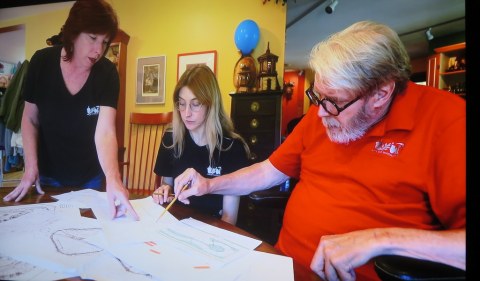
 

Leslie Salka, Laura Busse Dolan, Paul Busse, Applied Imagination Studios, 27th Holiday Train Show, NYBG

(L to R): Leslie Salka, Laura Busse Dolan, Paul Busse, Applied Imagination Studio in Alexandria, Kentucky, NYBG Holiday Train Show 2018 (photo by Carole Di Tosti-courtesy of the NYBG introductory film for the Train Show 2018)

In addition to showing the workshops at Applied Imagination Studio, staff and the team of the NYBG (for example Karen Daubmann, Todd Forrest) and for Applied Imagination (Leslie Salka and Laura Busse Dolan) explain which replicas are their favorites. Indeed, each year Applied Imagination adds excitement and grandeur to their New York collection. This year the newest replicas shine in the reflecting pool of the Palms of the World Gallery.

Palms of the World Gallery and Reflecting Pool, NYBG, 27th Holiday Train Show, Applied Imagination

Replicas of the ferry and buildings in lower Manhattan, Palms of the World Gallery and Reflecting Pool, NYBG Holiday Train Show 2018, (Carole Di Tosti)

Lower Manhattan, Applied Imagination, ferry detail, NYBG Holiday Train Show 2018

Palms of the World Gallery and Reflecting Pool, Manhattan ferry replica detail, NYBG Holiday Train Show 2018, Applied Imagination (Carole Di Tosti)

The best way to see The Holiday Train Show is to visit a few times. One time, visit with family. Especially bring children who will adore the variety of trains from trolleys, to passenger liners, to freights, locomotives and diesels. And come on Member Day. Then you will receive a 20% discount in the Garden Shop to spend on gifts.

Elephantine Colossus, Luna Park Gate, Coney Island, 27 Holiday Train Show, Applied Imagination

Replicas: Elephantine Colossus, Luna Park Gate, Coney Island, 27th NYBG Holiday Train Show, Applied Imagination (Carole Di Tosti)

Elephantine Colossus, Applied Imagination, NYBG Holiday Train Show 2018

Replica detail, Elephantine Colossus, Coney Island, banana gourd tusks, seed decorations, citric eyes, NYBG Holiday Train Show 2018, Applied Imagination (Carole Di Tosti)

Also, meander through the conservatory taking your time, if there aren’t crowds. Appreciate the intricate detail of each replica. Compare the plant parts to architectural structures, like roofs, cornices, columns, bricks, slate, stone and more. Try to identify what plants are used. Look for the moss, the leaves, the shelf fungus and the gourds. Look for the seed pods and acorns.

27th Holiday Train Show, NYBG, Stephan A. Schwarzman Building, NY Public Library, Applied Imagination

Stephan A. Schwarzman Building replica, NY Public Library, NYBG Holiday Train Show 2018, Applied Imagination (Carole Di Tosti)

NY Public Library replica, NYBG Holiday Train Show 2018, Applied Imagination

Detail, shelf fungus used on the steps of the Stephen A. Schwarzman Building replica, NY Public Library, 27th Holiday Train Show, NYBG, Applied Imagination (Carole Di Tosti)

27th Holiday Train Show, NYBG, Stephan A. Schwarzman Building, NY Public Library, Applied Imagination

Lion statue detail carved from a seed pod, Stephan A. Schwarzman Building , NY Public Library, 27th Holiday Train Show, Applied Imagination (Carole Di Tosti)

On the New York Public Library, the lions faces are carved from pods. Look for the berries used for color on Poe Cottage. You will perhaps take in only 1/100 of the detail present. And then you will probably forget it by the time you visit the show next year. Why? The various replicas will be arranged in completely different displays. And there will be new innovations and new replicas with their maverick conceptualizations. If there is one thing about the Museum quality spectacles with the NYBG exhibits, they are always unique with tremendous variety. It is almost impossible to keep track unless you have photos or maps of the display changes each year.

Applied Imagination craftspersons design the replicas to miniature scale and they, like engineers attempt to get the proportions correct. That takes consummate drafting skills. Constructing with precision, they follow archived historic photographs. What most amazes me is their assiduous attention to biological forms, for example how a banana shaped gourd might follow the shape of an elephant tusk. Or how the breadth of shelf fungus would simulated a roof. Truly, through years of experience, they have mastered the art of replica-making and have brought us to the edge of heaven by using plants which you would never imagine could entertain and delight in the way they use them.

Poe Cottage replica, NYBG 27th Holiday Train Show, Applied Imagination

Poe Cottage replica, NYBG 27th Holiday Train Show, Applied Imagination (Carole Di Tosti)

Poe Cottage, Applied Imagination, 27th Holiday Train Show, NYBG

Detail Poe Cottage replica, berries, floral petals, herbs, sticks, NYBG 27th Holiday Train Show, Applied Imagination (Carole Di Tosti)

NYBG Holiday Train Show 2018, Solomon R. Guggenheim Museum,

NYBG Holiday Train Show 2018, Solomon R. Guggenheim Museum, Building completed 1956-1959, Model completed, 2001), the roof is made of shelf fungus (Carole Di Tosti)


Only when I move slowly do I appreciate the botanical replicas of buildings that once sat in high esteem during New York’s Gilded Age. These buildings so expensive to maintain, owners demolished (Senator William Andrews Clark House). This made way for modern apartment buildings to house the growing uban population.

Museum Mile replicas, NYBG Holiday Train Show 2018, Applied Imagination

Museum Mile replicas, NYBG Holiday Train Show 2018, Applied Imagination (Carole Di Tosti)

The Jewish Museum replica, The Felix Warburg House, Applied Imagination, NYBG 27th Holiday Train Show NYBG

The Jewish Museum replica (The Felix M. Warburg House),, NYBG Holiday Train Show 2018 (Carole Di Tosti)

Applied Imagination, 27th Holiday Train Show,

Manhattan Bridge in the background, various mansion replicas, NYBG 27th Holiday Train Show, Applied Imagination (Carole Di Tosti)

In the case of The Samuel J. Tilden House (The National Arts Club), The Morris-Jumel Mansion and The Felix M. Warburg House (The Jewish Museum), un-affordable grand mansions became museums, funded by non profit organizations. By profoundly, carefully viewing the structures in the Holiday Train Show, you take a stroll back into the history of New York. And what an amazing and precious stroll this is, for it inspires your imagination to reflect about the past. And this reflection grounds you front and center in the present.

Rockefeller Center replica Channel Gardens, NYBG Holiday Train Show 2018, Applied Imagination

Rockefeller Center replica, Channel Gardens, NYBG Holiday Train Show 2018 (Carole Di Tosti)

Rockefeller Center angels replia, NYBG Holiday Train Show 2018, Applied Imagination

Detail Rockefeller Center, Channel Gardens, NYBG Holiday Train Show 2018

NYBG Holiday Train Show 2018, Applied Imagination

Angel detail of plant parts, Rockefeller Center, NYBG Holiday Train Show 2018 (Carole Di Tosti)

Applied Imagination and the NYBG team collaborate for months beforehand. After they agree on the innovations and drawings and their placement in the conservatory, then begins the next phase. They construct the replicas from botanicals (sticks, fungus, moss, leaves, gourds, bark, acorns, nut shells, pepper flakes, etc.). Some of these plant parts come from around the fields of Alexandria, Kentucky. Other bits and pieces (various gourd parts, etc.), come from suppliers.

Museum Mile Manhattan, Applied Imagination, NYBG Holiday Train Show 2018

NYBG Holiday Train Show, Museum Mile Manhattan, Applied Imagination (Carole Di Tosti)

Park Avenue Armory replica, NYBG Holiday Train Show 2018, Applied Imagination

Park Avenue Armory (Building completed 1881, Model completed, 2008), NYBG Holiday Train

Holdiay Train Show 2018, Applied Imagination, Museum Mile Manhattan replicas

Detail, NYBG Holiday Train Show 2018, Applied Imagination (Carole Di Tosti)

Applied Imagination, NYBG Holiday Train Show 2018, NYBG

NYBG Holiday Train Show, 2018 detail, Applied Imagination (Carole Di Tosti)

After the construction Applied Imagination ships the replicas to the NYBG. Then additional fun begins. Within the span of two weeks, volunteers and staff  set the stored and new models in beautiful plantings. Indeed, the arrangements accommodate permanent conservatory trees, etc. And a variety of completely new floral plantings (orchids, violets, bromeliads, cyclamen, Christmas Cactus, lilies, etc.), and various ferns, bamboo, ivy, pothos, dracena, Norfolk Island Pines and other shrubs and greenery volunteers and staff position to complement the 25 gauge model trains sweeping down 1/2 miles of railroad track.

NYBG Holiday Train Show 2018, Terminal Warehouse replia, Manhattan, Applied Imagination

Replica of the Terminal Warehouse 27th and 12th Manhattan, 1891, NYBG Holiday Train Show 2018 (Carole Di Tosti)

2018 Holiday Train Show, NYBG, Applied Imagination

Bedford Hills Station, Hudson and Harlem Line, NYBG Holiday Train Show 2018, applied Imagination (Carole Di Tosti)

Bedford Hills Station replica, 2018 Holiday Train Show, NYBG, Applied Imagination

Bedford Hills Station replica, Hudson and Harlem Line, NYBG Holiday Train Show 2018, Applied Imagination (Carole Di Tosti)

Quaintly, the trains peek out from low hanging branches and water displays. Then they emerge and whip around the tracks like racers. In the 3000 foot expansion a myriad number and type of trains fly above on trestles and bridges.

2018 Holiday Train Show, NYBG, Applied Imagination

360 degree display, NYBG Holiday Train Show 2018, Applied Imagination (Carole Di Tosti)

NYBG Holiday Train Show 2018, Applied Imagination, Grand Central Station replica

Grand Central Station replica, 2018 Holiday Train Show, Applied Imagination (Carole Di Tosti)

Locomotives, freights, trolleys and passenger liners whoosh around The Enid A. Haupt Conservatory replica. And they bustle through replicas that include Grand Central Station and historic Pennsylvania Station (demolished 1964). What a fantasy wonderland! It is an unparalleled treasure for New Yorkers, Manhattanites and tourists who come to the city for the holidays.

NYBG Holiday Train Show 2018, Applied Imagination

A vista of NYC bridge replias (Hell’s Gate, GW Bridge, Brooklyn, 5 in all), NYBG Holiday Train Show 2018, Applied Imagination (Carole Di Tosti)

As the piece de resistance this year, the Holiday Train Show presents the birthplace of New York City, Lower Manhattan as its star attraction. Of course the central feature is One World Trade Center. Branches form the sides of the building and the emphasis is on freedom and a resurrection from the destruction in 2001. Also in the Palms of the World Gallery and Reflecting Pool, you will find the replica of the Beaux-Arts Battery Maritime Building. Gliding in stasis on the pool surface are two vintage ferry boat replicas (Bronx and Manhattan).

NYBG Holiday Train Show 2018, One World Trade Center, Palms of the World Gallery and Refleting Pool, Applied Imagination

Palms of the World Gallery and Reflecting Pool, replicas of the Woolworth Building, One World Trade Center and Maritime buildings NYBG Holiday Train Show 2018 (Carole Di Tosti)

One World Trade replica, 2018 NYBG Holiday Train Show, Woolworth Building, Lower Manhattan scene, ferry replicas

Another view, lower Manhattan scene, ferry replicas, maritime buildings, Woolworth Building, One World Trade, 2018 NYBG Holiday Train Show, Applied Imagination (Carole Di Tosti)

2018 Holiday Train Show, Palms of the World Gallery and Reflecting Pool

Upside down reflection, One World Trade replica, Palms of the World Gallery and Reflecting Pool, NYBG Holiday Train Show 2018 (Carole Di Tosti)

One World Trade Center, Palms of the World Gallery and Reflecting Pool, NYBG Holiday Train Show 2018, Applied Imagination

Detail of the Oculus replica, One World Trade Center, Palms of the World Gallery and Reflecting Pool, NYBG Holiday Train Show 2018, Applied Imagination (Carole Di Tosti)

Palms of the World Gallery and Reflecting Pool, Holiday Train Show 2018, Applied Imagination, The Oculus

Detail, the Oculus replica at the foot of One World Trade Center, Palms of the World Gallery and Reflecting Pool, NYBG Holiday Train Show 2018 (Carole Di Tosti)

Other buildings include the Battery Park Control House, the 60-story Woolworth Building, the Terminal Warehouse (1890), and the crown jewel replica, One World Trade Center. One World Trade remains the tallest building in the Western Hemisphere and the sixth-tallest building in the world. Additionally, the unique Oculus replica is placed at the foot of One World Trade Center. The Oculus that opened in 2016 connects 11 lines of NYC’s subways, New Jersey’s PATH rail system and the Battery Park City Ferry Terminal.

Palms of the World Gallery and Reflecting Pool, NYBG Holiday Train Show 2018, Lower Manhattan display

Lower Manhattan Display, Bronx ferry and buildings, Palms of the World Gallery and Reflecting Pool, NYBG Holiday Train Show 2018 (Carole Di Tosti)

Lower Manhattan, ferry replica, 2018 NYBG Holiday Train Show, Applied Imagination

Replicas of ferry and buildings lower Manhattan, NYBG Holiday Train Show 2018 (Carole Di Tosti)

For specific programming, go to the New York Botanical Garden website. To sum up look for Bar Car Nights on select Fridays and Saturdays (December 15, 21, 22, 28, 29; January 5, 12). Warm up around the fire pits in the Leon Levy Visitor Center. Indeed, for the artist in you, watch live ice-sculpting demonstrations. Or sing along with dueling pianos in the Pine Tree Cafe and listen to roving a cappella groups.

Finally, enjoy former U.S. Poet Laureate Billy Collins for a special poetry reading. Collins will select 12 winning poems by students submitted to the Kid’s Poetry Contest. The poems will be displayed at NYBG during the Holiday Train Show. And the student authors will share their work during this special reading on Sunday, December 16, at 2 p.m. For more information about how to enter the Kids’ Poetry Contest visit http://www.nybg.org/poets

The New York Botanical Garden Holiday Train Show 2018 ends on 21 January.

Save

Save

Save

Save

Save

Save

Save

Save

‘Gloria: A Life,’ Starring Christine Lahti, directed by Diane Paulus, Off Broadway

Joanna Glushak, Christine Lahti, Fedna Jacquet, Francesca Fernandez McKenzie, Gloria A Life, Emily Mann, Diane Paulus, Daryl Roth Theatre

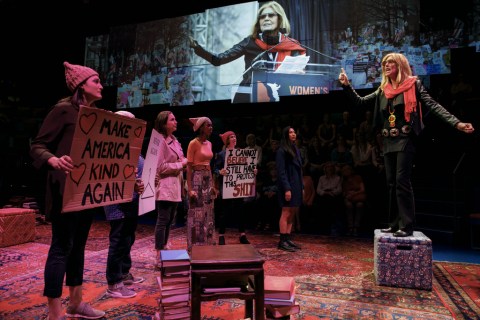
(L to R): Joanna Glushak, Christine Lahti, Fedna Jacquet and Francesca Fernandez McKenzie in ‘Gloria: A Life,’ by Emily Mann, directed by Diane Paulus at the Daryl Roth Theatre (Joan Marcus)

An older Irish white woman cabbie driving Gloria Steinem and Flo Kennedy to an event in Boston after overhearing their discussion about abortion said, “Honey, if men could get pregnant, abortion would be a sacrament!” Since then you may have seen that quote on cups, t-shirts, and other memorabilia. That priceless comment/story and countless others, plus witticisms, jokes, truths, and historical facts spill out in Gloria: A Life, written by Emily Mann and directed by Diane Paulus, currently at the Daryl Roth Theatre.

This exceptional production about the life and times of Gloria Steinem moved me to laughter and tears. Writing with extraordinarily seamless beauty, Mann trenchantly underscores how and why Gloria Steinem moved from bondage to freedom in her own life. And this account of how her transformation helped/helps countless women and men move toward freedom from destructive gender folkways resounds with power and reveals why Steinem has become a living legend

Steinem’s development and experiences, and her own influences from so many other women, serve as the backbone of this superb production. With archived photos, videos, voiceovers, and more, the director and writer form a mosaic of the unique perspectives of men and women who have taken part in and still embrace the women’s movement. We discover a key point: that Gloria’s continuing evolution has strode in tandem with the movement’s multiple stages.

Joanna Glushak, Christine Lahti, Gloria Steinem,Gloria A Life, Emly Mann, Diane Paulus, Daryl Roth Theatre,

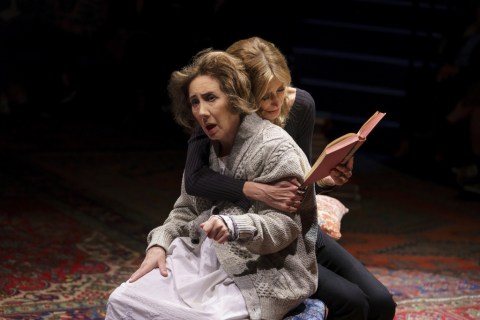
(L to R): Joanna Glushak as Gloria’s mom, Christine Lahti as Gloria in ‘Gloria: A Life,’ by Emily Mann, directed by Diane Paulus (Joan Marcus)

Adroitly, director Diane Paulus employs an ingenious, comfortable, interactive approach. She intersperses details, facts, stories, and themes about how women transformed the culture, through Christine Lahti’s portrayal of Gloria. Steinem’s development spins out from the stereotyping oppression and laws against women of her youth, to the legal revolution in support of women, in her 30s, to the current legal assault on women’s rights, in her later years. (As a reminder, our country has yet to pass an Equal Rights Amendment.) The actors take on multiple roles to reveal examples of the nullifying attitudes Gloria encountered early on. Lahti’s humorous portrayal sprinkled with good will reveals how Gloria eventually dealt with such attitudes as her eyes opened and she evolved.

As Lahti’s Steinem sanguinely points out, anti-feminist groups (represented by Phyllis Schlafly in the past) ultimately have the bottom line as their motive. Profits, not people’s concerns, fuel the hate rhetoric against feminists. Attempting to understand the logical truths behind what women are saying puts a downer on money making. Better for companies to stir people’s emotions with propaganda that makes them avid consumers. As such they buy products they don’t need to momentarily salve their soul sickness, stimulated by advertisements that browbeat them for not being perfect. The convenient, vacuous, catchy, divisive memes and gender-perfect advertisements perennially harm.

As she references such truths, Christine Lahti inhabits Gloria Steinem with joie de vivre and humility. Joanna Glushak, Fedna Jacquet, Francesa Fernandez McKenzie, Patrena Murray DeLanna Studi, and Liz Wisan portray the towering women who impacted Gloria. These include major influencers like her mom (a journalist who left her work to join her husband), Dorothy Pitman Hughes (who created the first nonsexist, multi-racial childcare centers), the feisty, no-nonsense Flo Kennedy, and lawyer, activist, and U.S. Representative Bella Abzug.

Christine Lahti, Gloria Steinem, Gloria A Life, Emily Mann, Diane Paulus

Christine Lahti as Gloria Steinem in ‘Gloria: A Life,’ by Emily Mann, directed by Diane Paulus (Joan Marcus)

Mann took from Gloria’s 2015 autobiography My Life on the Road the feminist icon’s early experiences and her trials as a journalist. Ironically, when she wrote the book, Steinem most probably didn’t imagine she would be speaking at the greatest global Women’s March ever in 2016. The production includes photographs and video clips of Steinem speaking in Washington, D.C. Though the women’s movement, like Gloria, has evolved, so much more work must be done in the Trump era. The inspiration to get us to move and participate in this work activates the

Particularly startling, Paulus includes video clips of the demeaning, acid attitudes of interviewers like Harry Reasoner, who later apologized when Ms Magazine sold out in eight days. For those too young to realize how far women have come, we see archived photos of memes showing with women whose only functions are as housewives and sex objects. Photos of such advertisements in the 1950s and 1960s prompts Lahti’s Gloria to quip, “Is this what some Americans are nostalgic for?”

I particularly appreciated the historical facts about the movement revealed in archived material. The production cleverly projects video and photographs over two back walls on opposite sides. The entire production seats with benches and colorful pillows for the audience in the round. On the stage in the squarish round, red Persian rugs and pillows suggest discussion circles.

Indeed the discussion circle is an important part of the production. In Act II a special guest each night opens the circle. Audience members may remain or leave. This theme also abides throughout: The discussion and integration of ideas happen in a circle where everyone sits equally. For the hierarchy (the pyramid) to diminish, we must hear, see, listen to, and interact with each other as comfortably as our Native American forebears chose to do. Steinem points out that Native American democracy included such discussion circles and caucuses. Women were integral parts of these, a fact that stunned (and inspired) Benjamin Franklin when he learned about culture of the Iroquois Confederation

Christine Lahti, Gloria Steinem, Fedna Jaquet, Dorothy Pitman Hughes, Gloria A Life, Emily Mann, Diane Paulus

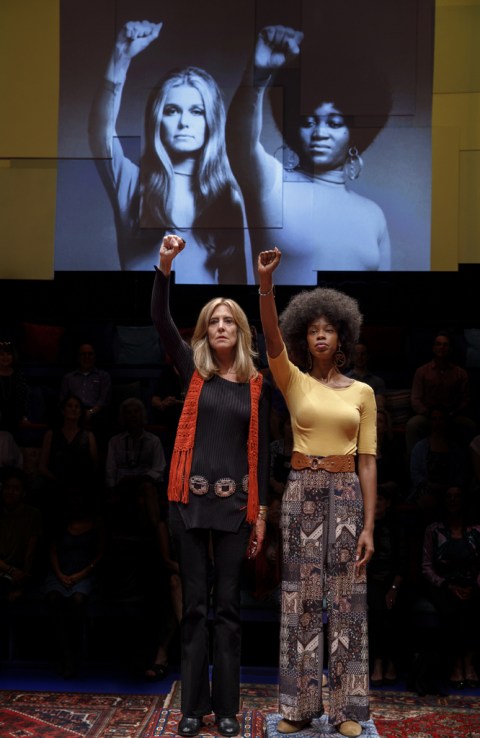
(L to R): Christine Lahti as Gloria Steinem, Fedna Jaquet as Dorothy Pitman Hughes in ‘Gloria: A Life’ (Joan Marcus)

Gloria credits her ideas and actions to the mighty courage and determination of black women, Hispanic women, and Native American women. In underscoring who remained instrumental in spearheading second-wave feminism, she presents a list with photographs of black women who were crucial to the movement. Paulus projects their pictures with inspirational quotes on two screens. The list includes Dorothy Pitman Hughes, Flo Kennedy, Pauli Murray, Aileen Hernandez, Fannie Lou Hamer, Shirley Chisholm, Margaret Sloan, and Alice Walker. Wikipedia doesn’t recognize some of these women, but Gloria credits them for their prodigious efforts.

Finally, wonderful milestones are noted. For example we see acutely how our culture changed. Yet more change is needed with regard to the artificial gender images fostered by corporate agendas. As Lahti inhabits Steinem, Mann’s brilliant encapsulation of Gloria’s words through Paulus’ sterling direction opens our eyes. What we may have thought we knew bears hearing and seeing again and again. Indeed, this all-female production stirs us as an amazing, uplifting experience. Most importantly, it has the earthiness, historical universality, and erudition to appeal to all genders, races, and religions.

Would even evangelicals appreciate this production? Of course. Don’t women make up more than half of their numbers? Indeed, sharing stories about men’s personal habits always resonates. For example the actors include humorous stories about non-partnership minded men who leave their underwear on the floor, expecting their wives to pick it up. Such stories of personal lives are integrated beautifully to illustrate the importance of discussion among women. The more women talk to each other, the more healing comes, the more solutions to problems may be found.

At the heart of what is called the women’s movement, Gloria’s life’s work promotes freedom for men. Indeed, women and men both need freedom from the nullifying, dis-empowering macho and female roles of domination and passivity. These roles deny personality, growth, evolution, partnership, friendship, companionship, and the integration of the family unit beyond commands and orders.

Christine Lahti, Gloria Steinem, Joanna Glushak, Bella Abzug, Gloria: A Life, Emily Mann, Diane Paulus

(L to R): Christine Lahti as Gloria Steinem, Joanna Glushak as Bella Abzug in ‘Gloria: A Life,’ directed by Diane Paulus, written by Emily Mann (Joan Marcus)

Gloria: A Life suggests that women and men should have equal opportunities for medical care, financial wellbeing, family care, and prosperity. That the privileged wealthy minority will use gender division to cloud our eyes and misdirect our pursuit for human rights for all is a given. Noted, and stopped, say Gloria and millions of others. We must work to bridge the divide and jettison such roles, which crucify all genders and destroy the social good.

By looking at the past, though we may not have been alive at the time, we understand the value of what women globally endured then and now. Also, by understanding the past, we appreciate and value the hard-won freedoms (Roe v Wade, LBGTQ marriage equality, a woman’s right to use her own name, etc.) that women in democracies enjoy. Still, throughout these moments of progress highlighted by the actors and visuals in the production, concerns about the present political climate whisper.

Christine Lahti, Gloria Steinem, ensemble, Gloria: A Life, Emily Mann, Diane Paulus, Daryl Roth Theatre

Christine Lahti (center) as Gloria Steinem with cast of ‘Gloria: A Life,’ by Emily Mann, directed by Diane Paulus at the Daryl Roth Theatre (Joan Marcus)

Understanding becomes crucial to our growth. The production fosters understanding. And from this understanding we realize that the current political partisanship has pushed us to a precipice. All the more noxious are the agendas right-wing organizations like the Federalist Society and conservative think tanks use to consolidate power on the right. For these uber-conservative organizations, women’s rights must be overthrown and diminished as a political initiative. The prize to be gained includes corporate hegemony. The power and money behind these groups are used to maintain supremacy over puppet leaders. And they intend to employ “unbeatable” partisan, conservative voting blocks of nativists, anti-feminist groups (Neo-Nazis, white supremacists), and evangelicals (anti-abortionists, etc.) to maintain or usurp power by any means necessary.

For what it encourages – to understand ourselves today through viewing the past – Gloria: A Life is a must-see. Additionally, you will enjoy its humanity, good will, and uplifting remembrance of history, as well as Christine Lahti as Gloria, the sterling ensemble performances, the active staging, and Mann’s integrated writing of Gloria’s perspectives. All of this enthralls and contributes to making the production soar.

Gloria: A Life runs until 31 March 2019 at the Daryl Roth Theatre in NYC. Stay for the discussion circle in Act II and raise questions with the cast, audience, and special guest. Or just listen. Tickets are available online

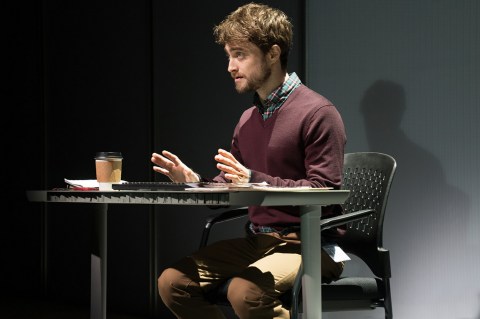
‘The Lifespan of a Fact,’ Starring Daniel Radcliffe, Cherry Jones, Bobby Cannavale

Daniel Radcliffe, Cherry Jones, Bobby Cannavale, The Lifespan of a Fact, Leigh Silverman

(L to R): Daniel Radcliffe, Cherry Jones, Bobby Cannavale in ‘The Lifespan of a Fact,’ directed by Leigh Silverman (Peter Cunningham)

What are facts? What is truth? Can you state truth without a factual basis? These questions debated for centuries have been redefined in every age. Playwrights Jeremy Kareken, David Murrell and Gordon Farrell refine the debate in an intriguing and humorous go-around between a fact-checker and his essayist in The Lifespan of a Fact. The play incisively directed by Leigh Silverman is comically paced for its light side. And its darker side leads to questions about how information, “facts” may be misused in the wrong hands. The production suits in our time of “alternative facts,” and truths skewed to make a larger point about the human condition.

Based on the titular book/essay written by John D’Agata and Jim Fingal, the “true” story tells what happened when Jim Fingal fact-checked John D’Agata’s poignant essay about a teen’s suicide at a Las Vegas resort. The play explores their individual perspectives about the importance of writing for impact despite the inaccuracy of ancillary background details. But more importantly, it explores personality types and the very funny heightened alerts that sound when an obsessive compulsive, detail-driven nerdy researcher clashes with a loosey-goosey, poetic, symbolic, “going meta” writer with panache.

The conflict generates when Emily Penrose accomplished, saavy editor of a magazine chooses John D’Agata’s piece because of its social import. In hoping to get the article turned around for publication in less than five days, Emily appoints Jim Fingal. As the fact-checker he will ground the details of D’Agata’s piece for consonance and coherence to reality.

Bobby Cannavale, Cherry Jones, The Lifespan of a Fact, Leigh Silverman

Bobby Cannavale, Cherry Jones, ‘The Lifespan of a Fact,’ directed by Leigh Silverman (Peter Cunningham)

Cherry Jones portrays editor Emily Penrose with humor, good will, yet stern determination. Strong-willed and no nonsense, yet measured, she selects her new hire, Jim, quickly assessing him and asking all the right questions. Happy with his reasonable answers, she sets him spinning off on his journey. Indeed, her expectation rides on Jim’s assurances that he will make the deadline. Ironically, the opposite occurs. Not because the fact-checker is incompetent. But because his magnificent competence strains the credulity of time and patience.

As Jim, Daniel Radliffe reveals his gifts for timing. He employs the right amount of deadpan edginess. And his ironic delivery isn’t quite over the top, but appears organic with his researcher ethos. Though he exasperates Emily, he does so out of ego pride of meticulousness. Indeed, she does not fault him for doing a fine job. And despite Radcliffe’s history with owls and wands, we appreciate  his portrayal of Jim’s excellence, however a tad outrageous. When you see this too good to miss production, consider the traffic map which Jim uses to prove John’s inaccuracy on the day of the teen’s suicide.

Bobby Cannavale stands on the opposite continuum of Radcliffe’s Jim and pushes back with parries, jibes and wordy counter punches. Cannavale’s portrayal has John D’Agata’s indignation finely tuned. And we respond with riotous laughter. His initial attitude toward the fact-checking assaulter of his exquisite prose reveals a huge ego. Despite all the word talk, these male egos can barely be in the room together. What a pleasure to watch Radcliffe and Cannavale go head to head.

Indeed, after the two meet, we note their reactions pair beautifully with their physical types. Jim, fits the researcher twerp type, diminutive in stature and voice but a giant in intellect and research skills. By comparison John D’Agata’s muscular presence and bruising confident carriage signals macho. The irony that he is a romantic and goes for the meta sources the humor between them. However, the fact-checker holds sway. And D’Agata becomes affronted by the miscalculations Jim tells Emily that John has made. How dare this guy attempt to restrain and retrain his ineffable, high-minded prose?

Daniel Radcliffe, 'The Lifespan of a Fact,' Leigh Silverman

Daniel Radcliffe in ‘The Lifespan of a Fact,’ directed by Leigh Silverman (Peter Cunningham)

Of course the humor explodes every time Jim attempts to toggle John. And the exceptional Bobby Cannavale’s bite challenges worse than his roar. Indeed, only Emily can straighten out the warfare between the two. How this evolves and resolves remains as the meat of the play. Indeed, she exquisitely maneuvers the two male egos, forces them to recede and calls upon “their better angels” to emerge.

This ensemble piece moves quickly. It arrives at its non resolution resolution with delectable, sometimes rolling in the aisles comedy. The philosophical arguments hold worthwhile import. Emily as the arbiter explains why responsibility for accuracy must be taken with extreme seriousness for publications. And yet, the vitality of striking the readers’ emotions with well-written prose that sings also must be taken seriously. Thus, the two perspectives must combine with equanimity. One must not submerge the other. Indeed, John’s intimation at truth is not enough. Facts secure it and make our feelings about an essay indelible and irrevocable.

Silverman’s direction and staging works well. The emails written among Emily, John and Jim provide the opening salvos of humor. Through screen projections we get to read and appreciate the writing styles of both the researcher and the essayist. Of course, the humor and explosions escalate during their live interactions as the notorious Jim investigates the scene of the suicide and visits the uber frustrated John. How Emily arrives at the scene to stem these two embattled paces with LMAO humor.

You will enjoy the superb cast who Silverman has brimming with fast-paced quips that slide down easily. Their finest scenes take place in John’s Las Vegas home when each faces off against the other. How they negotiate their own ire, frustration, and need to harangue mentors us with the silence of their inner thoughts and the power of their words. With intellect, logic and rationality they persuade. How refreshing!

Kudos go to Mimi Lien for Scenic Design, Linda Cho for Costume Design and Jen Schriever for Lighting Design. For Original Music and Sound Design we have Palmer Hefferan and for Projection Design, Lucy MacKinnon. For Hair and Wig Design, kudos to Charles G. Lapointe.

The Lifespan of a Fact currently runs at Studio 54 (254 W 54th) with no intermission until 13 January. You can purchase tickets at their website.


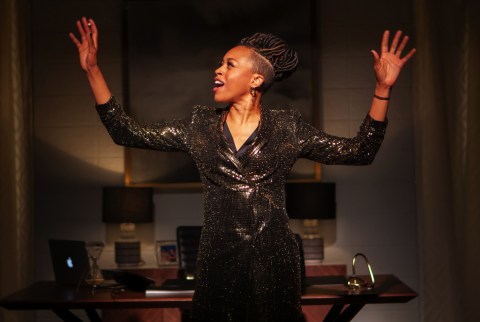
‘FABULATION, OR THE RE-EDUCATION OF UNDINE,’ by Lynn Nottage, Review

FABULATION, OR THE RE-EDUCATION OF UNDINE, Lynn Nottage, herise Boothe, Lileana Blain-Cruz, Pershing Square Signature Center, Signature Theatre

Cherise Boothe in FABULATION, OR THE RE-EDUCATION OF UNDINE by Lynn Nottage, directed by Lileana Blain-Cruz (Monique Carboni)

First, Lynn Nottage is a master story teller. Secondly, she is a master playwright, an avid spinner of profound characterizations and themes. With an antic zeal for weaving humor throughout organic dialogue that establishes her unique characters, Nottage continually lays bare the most exasperating and trenchant aspects of the human condition. If one is color blind, which Nottage mightily encourages, you see yourself in the arc of her characters’ inevitable development. For growth is the sum total of where we all are going, is it not?

FABULATION, OR THE RE-EDUCATION OF UNDINE, wonderfully directed by Lileana Blain-Cruz, is typical Nottage in its maverick brilliance and marvelous exploration of the complexities of black culture and identity. Essentially, with sardonic humor and LOL comedic fun, Nottage spirals out the larger-than life evolution, devolution and reaffirmation of the fabulous Undine. This hybrid genre two-act play (satire, “narrative of the life,” comedy-with threads of the macabre fantastic) strikes with irony and hyperbolic authenticity, turning every stereotype on its head to arrive at a satisfying resolution.

Currently at The Pershing Square Signature Center, the production is a must-see for its LMAO wit and profound revelations about class and culture. And tucked carefully away between the guffaws and belly laughs is this universal wisdom. When pursuing wealth and status, sidestep the alluring predations and pitfalls by remaining real. One way or another during your life’s journey, you’re going to get to the end of yourself. So you might as well avoid all the heartache and space shuttle gyrations and keep it soul local! Hyper money and status don’t bring truth unless you pivot, plummet and fall. When you reach bottom, if you’re still alive, you “get it,” and will then appreciate what you’ve learned.

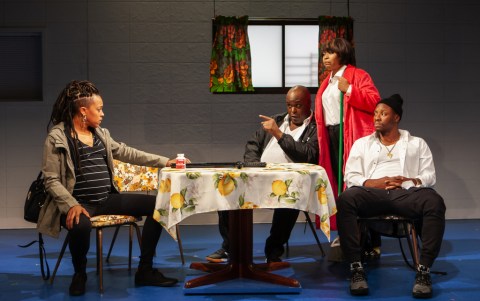
MaYaa Boateng, Dashiell Eaves, Cherise Boothe, Marcuws Callender, FABULATION, OR THE RE-EDUCATION OF UNDINE, Pershing Square Signature enter, Signature Theatre, Lynn Nottage, Lileana Blain-Cruz

MaYaa Boateng, Marcus Callender, Cherise Boothe, Dashielle Eaves in ‘FABULATION, OR THE RE-EDUCATION OF UNDINE by Lynn Nottage, directed by Lileana Blain-Cruz (Monique Carboni)

Importantly, in FABULATION, OR THE-RE-EDUCATION OF UNDINE, Nottage’s protagonist bounces off the most reprehensible and meretricious elements of the nouveau riche who “seduce” the black bourgeoisie into internalizing their corrupted values. Chief among these include the canard that money and celebrity bring personal power and satisfaction. Undine comes across this truth through a divergent, fantastic, incredulous sequence of events that can only be likened to divine comedy. As we follow her on the ride, if our eyes are open, our mouths eventually breathe out a sigh of relief for it will be well for her. But at various twists and egregious turns downward, we believe Undine to be heading to hell with no one to pull her back except Nottage’s deft story telling.

At the outset of the play, we identify an apparently successful Undine. Portrayed with a piquant and vibrant drama queen personality, Cherise Boothe continually astonishes with engaging humor and likability. Her Undine hits all the emotional high notes of comedy with a range of authenticity that keeps the audience laughing. Yet intriguingly we are aware of the seriousness of her wise commentary beneath all of the humorous riot.

Cherise Boothe, Heather Alicia Simms, Nikiya Mathis, FABULATION, OR THE RE-EDUCATION OF UNDINE, Lynn Nottage, Lileana Blain-Cruz, Pershing Square Signature Center

Cherise Boothe, Nikiya Mathis, Heather Alicia Simms in FABULATION, OR THE RE-EDUCATION OF UNDINE, by Lynn Nottage, directed by Lileana Blain-Cruz (Monique Carboni)

From her demeanor and treatment of underlings, we note that Undine’s rabid and rapacious ambition and power has steered her to the top of her game. We discover she owns and manages a PR firm catering to the needs of the black bourgeoisie.  Humorously, we learn this after her accountant and an FBI agent inform her she’s “got some issues to deal with.” Ironically, her success and the lifestyle it precipitates ends up placing her in a situation that she is ill equipped to handle. This noxious situation moves in the form of Hervé (the smooth Ian Lassiter), a slick Argentinian whose fabulous tango moves, hot kisses and an ingenious sleight of hand where her bank account is concerned sweep her up into a two-year marriage. When Hervé absconds with her money and life’s work, this ending initiates Undine’s journey and the dynamic momentum of the play.

Shepherded by the adept directing skills of Blain-Cruz, we watch Undine who Nottage moves from the interaction of this opening scene to an Undine “confidential. Upon the arrival of Agent Duva, Undine breaks the fourth wall and elicits our confidence to explain how she became “Undine.” Eschewing her Brooklyn ways, Undine confabulated herself. Undine is her new identity which she created when she bravely struck out on her own, as many of her race did before she moved “up from slavery.”

Cherise Boothe, J. Bernard Calloway, Marcus Callender, Nikiya Mathis, Pershing Square Signature Center, Lynn Nottage, Lileana Blain-Cruz, Signature Theatre

(L to R): Cherise Boothe, J. Bernard Calloway, Nikiya Mathis, Marcus Callender in FABULATION, OR THE RE-EDUCATION OF UNDINE,’ by Lynn Nottage, directed by Lileana Blain-Cruz (Monique Carboni)

Of course since the play takes place in the present, this metaphor of identity and race improvement stretches to a wonderful and sardonic breadth and length that only Nottage can evoke with clever dialogue and allusions. It seems Undine at thirteen left home on scholarship and morphed herself by attending an Ivy League school. Transformed into a player, Undine internalized upper crust values and negotiated/networked with the upper classes to become an entrepreneur. She achieved success externally.

However, Undine has not done the work internally. And it is this which snares her in the Hervé trap and sets her on a downward momentum externally and inner enlightenment.  As life/fate/consciousness would have it, this all begins when Undine comes to a pivot with a mild physical breakdown at the critical moment. The FBI agent tells her Undine shows up on no records; they cannot find out who Undine is.  (The irony is wonderful.)

With us as her confidantes, Undine shepherds us through her story that evolves with flashback scenes. From hospital to moving out of her office, the scenes quickly pace as Undine steps from the realm of the fantastic Undine “fabulation” closer to the authenticity of self. Ironically, the fantastic follows her and apparently is an integral part of who she is. She seeks a Yoruba priest who tells her she must placate the spirits who are angry with her. To ameliorate their ire it will take a bottle of rum and the last of Undine’s money. The priest informs her there is something she must do to straighten out her life. Of course it is the last thing Undine wants to hear. As if that weren’t extraordinary enough, Undine’s journey takes her to additional and amazing adventures in the “real.”

Cherise Boothe, Mayaa Boateng, Nikiya Mathis, FABULATION, OR THE RE-EDUCATION OF UNDINE, Lynn Nottage, Lileana Blain-Cruz, Pershing Square Signature Center

Nikiya Mathis, Cherise Boothe, Mayaa Boateng in FABULATION, OR THE RE-EDUCATION OF UNDINE, by Lynn Nottage, directed by Lileana Blain-Cruz (Monique Carboni)

Nottage shifts the dynamism alternating the action between Undine’s ironic story telling breaks to flashbacks of illustrative scenes relating her journey back to the fantastic real of Brooklyn. The director beautifully shepherds this ebb and flow and maintains the pace of comedy. We connect with Undine’s ironic comments and eagerly follow the rhythms of development in Undine’s “re-education” to discover who she is. For extreme fun, as fate and the spirits would have it, Undine is forced to confront every situation of Brooklyn street life she attempted to avoid when she ran away to her Ivy League education and “Undine” identity and lifestyle.  Nottage’s sardonic situational humor is precious.

Ian Lassiter, Cherise Boothe, FABULATION, OR THE RE-EDUCATION OF UNDINE, Lynn Nottage, Lileana Blain-Cruz, Pershing Square Signature Center

Ian Lassiter, Cherise Boothe in FABULATION, OR THE RE-EDUCATION OF UNDINE, by Lynn Nottage, directed by Lileana Blain-Cruz (Monique Carboni)

FABULATION, OR THE RE-EDUCATION OF UNDINE is just great for its comedy, complexity, questions about identity and culture, examination of issues about growth, and themes which all of us can take to heart. The  superb ensemble who portray various roles in conveying Undine’s journey include Mayaa Boateng, Dashiell Eaves, Heather Alicia Simms, Ian Lassiter, Nikiya Mathis, J. Bernard Calloway, Marcus Callender.

The director deserves much credit with the actors for breathing life into this enjoyable and shimmering comedy. The staging is excellent, the pacing never drops the humor. Look for the little stereotypic bits which I dare not reveal for fear of spoiling the surprises.

Final kudos go to Adam Rigg (Scenic Design), Montana Levi Blanco (Costume Design), Yi Zhao (Lighting Design), Palmer Hefferan (Sound Design), Cookie Jordan (Hair and Wig Design).

FABULATION, OR THE RE-EDUCATION OF UNDINE  runs with one intermission at The Pershing Square Signature Center until 13 January. You may purchase tickets at their website.

‘The Hard Problem’ by Tom Stoppard at Lincoln Center Theater, Reviewing a Profound Work

Chris Osha'e, Adelaide Clemens, The hard Problem, Tom Stoppard, Jack O'Brien, Lincoln Center Theater, Mitzi E. Newhouse

Chris O’Shea, Adelaide Clemens in ‘The Hard Problem,’ by Tom Stoppard, directed by Jack O’Brien, Lincoln Center Theater (Paul Kolnik)

The Hard Problem by Tom Stoppard initially premiered at London’s National Theatre in 2015. Since then, Stoppard tweaked the play. Director Jack O’Brien has given it another rendering for its New York presentation at the Lincoln Center Theater’s Mitzi E. Newhouse. The production intrigues, heavy with scientific and philosophical intent. When the epiphany arrives at the conclusion, heartfelt emotions stir us. Then we marvel at how Stoppard threaded the interplay of scenes and characterizations into a lovely fabric of hope and the culmination of faith’s efficacy.

As with all Stoppard’s plays, The Hard Problem deals with questions. These include questions about existence, faith, fate vs. coincidence, goodness vs. evil and divinity. He shores up these questions against the backdrop of current scientific debates about the brain vs. consciousness which encompasses what characters refer to as “The Hard Problem.” Indeed, neuroscientists suggest the brain creates consciousness. On the other hand some believe that existence may be characterized by the reverse, that consciousness creates humanity. This latter theory borders on intelligent design, that a greater consciousness formulated the universe and all that it encompasses in its beautifully coherent, complex and infinite display..

Of course much of science opposes the notion of Intelligent Design. And Stoppard presents the thesis antitheses continuum not only in the central questions of the play, but in his extrapolation of themes which playfully present various characters’ “take” on “the hard problem.”

As a result we are led to consider the possibilities of our existence through Stoppard’s sly, humorous perspective. For example one concept posited is that a human being is just a mechanism, a machine whose every cell function can be recorded via empirical data. Thus, after millennia, the evolution of the carbon life forms that currently exist, results from self-dealing and self-interest. Evolution and the idea of machine body survival relies on evolutionary instinct and egocentric action to preserve oneself and one’s species.

Adelaide Clemens, Eshan Bajpay, Robert Petkoff, The Hard Problem, Tom Stoppard, Lincoln Center Theater, Mitzi E. Newhouse, Jack O'Brien

Adelaide Clemens (foreground) with Eshan Bajpay (left) and Robert Petkoff, in’The Hard Problem,’ by Tom Stoppard, directed by Jack O’Brien, Linclon Center Theater (Paul Kolnik)

The response to the computer model of existence can easily be breached by the aspect of consciousness. For example where does feeling and emotion come from, our thoughts brewing in the “mind”? Those do not show up on any brain scan or measurement. Science has no answer for what “the mind” and “consciousness” are. It cannot be measured on brain scans when folks in a coma or death states show no brain activity. Yet, if they have come back from that state (and many have) with incredible stories to tell about what happened “over there,” neuroscientists cannot adequately answer with proof. (For a further discussion of this check out the author Eben Alexander.) Looped into these arguments are discussions of ethics and morality, the desire to be good versus the impulse to trod on others to advance  In consciousness, where do the impulses toward “ethics” and “morality” generate from when they do appear in human behavior? Do any of us act with altruism? Or is self-benefit the sum total of our “machine” behaviors?

The questions are heady. But Stoppard humorously frames them with events which illustrate the arguments as the characters’ behaviors and actions set them in motion.

As the play opens graduate student Hilary (Adelaide Clemens), and her maths tutor, Spike (Chris O’Shea), debate the impulses of egoism versus altruism, as a preamble to her receiving math help. Hilary has applied for a research slot with The Krohl Institute for Brain Science. Spike reviews the maths on the model she plans to submit in her application. After they have sex, Spike notes that Hilary prays. As a scientist and atheist, he remains shocked that she believes in God. Quips fly back and forth with a brief debate of His existence.

Robert Petkoff, Adelaide Clemens, The Hard Problem, Tom Stoppard, Lincoln Center Theater, Mitzi E. Newhouse, Jack O'Brien

Robert Petkoff (foreground) and Adelaide Clemens in ‘The Hard Problem,’ written by Tom Stoppard, directed by Jack O’Brien, Lincoln Center Theater (Paul Kolnik)

Then Hilary raises “the hard problem” of consciousness. Unable to counter argue adequately, Spike diverts the conversation to helping her with her math. However, they continue to quip about morality, goodness, parenting, mother-love as Spike responds to her presentments with scientific Darwinian explanations for each. She leaves Spike with two comments which slide over him, but we remember for future reference. One thing she prays to God for is forgiveness and her prayers help her. Also, she affirms that to get this plum research position at The Krohl Institute, she needs a miracle.

In these initial scenes reside the conflicts and themes of The Hard Problem. As the intriguing events develop, we note how the characters highlight aspects of Spike and Hilary’s arguments. And as situations spool throughout the play, Stoppard demonstrates the callow, self-serving ethics of the scientific set, loosed from morality, ethics and concerns about divinity or consciousness. Indeed, as they unleash themselves upon the culture, we understand the value of their scientific perspective not “looking for” proof or adequate explication of consciousness. For the utility of humans as machine-like forgoes any measure of dealing with them in a way which is “consciously” kind, decent, moral, ethical, etc.

On the other hand, Hilary and those who believe in being good and evolving toward altruistic behavior, act with noble intentions and equanimity toward others. Of course some of the characters appear to manifest both altruistic and egoistic behaviors in a strange schizoid pattern. An acute example of this is in Stoppard’s characterization of Jerry Krohl, the owner of Krohl Capital and the chief founder of non-profit Krohl Institute  for Brain Science.

The Hard Problem, Jack O'Brien, Lincoln Center Theater, Mitzi E. Newhouse, Jon Tenney, Katie Beth Hall

(L to R) Jon Tenney and Katie Beth Hall in ‘The Hard Problem,’ by Tom Stoppard, directed by Jack O’Brien at Lincoln Center Theater, Mitzi E. Newhouse (Paul Kolnik)

Those in agreement with the machine aspect of existence are Amal (Eshan Bajpay), a mathematician, who adheres to Spike’s scientific perspective as does Urusla (Tara Summers). Each shows more than a share of egoism and a lack of fulfillment within. Leo (Robert Petkoff), who selects Hilary for the research position, Bo (Karoline XL), Julia (Nina Grollman) and Cathy (Katie Beth Hall), manifest finer behaviors. Jerry Krohl (Jon Tenney), compartmentalizes both perspectives related to the situation. He remains  the perfect example of a moral relativist.  When it “is required” for him to be cruel and self-serving to make money, he is. When the occasion requires he be loving, he is. Of course Stoppard reveals by the end of the play why Jerry Krohl has spent oodles of money on his non-profit in addition to the tax deductions his tax accountants most probably  set up for him.

Throughout the play, Stoppard develops how Hilary’s perspective and her beliefs eventually lead her to develop as a person who evolves productively toward the moral, social good. We discover why she prays for forgiveness each night. And her ending up for a season to do research at The Krohl Institute for Brain Science leads to a revelation that exceeds coincidence. In a beautiful and satisfying culmination, Stoppard validates Hilary’s assertions about consciousness. Indeed, these manifest in a realm of divine goodness that Hilary seeks. In summation the miraculous finds sway in her life to bring comfort and peace.

That she receives what she prays for appears indeed miraculous against the backdrop of the machine perspectives of science that dismiss a deep understanding of the mind and consciousness. This is no spoiler alert. You will just have to see the production to engage with Stoppards’s humor amidst the profound, the philosophical, the divine.

Karoline Xu, Adelaide Clemens, The Hard Problem, Tom Stoppard, Jack O'Brien, Lincoln Center Theater

(L to R): Karoline Xu and Adelaide Clemens in ‘The Hard Problem,’ written by Tom Stoppard, directed by Jack O’Brien, Lincoln Center Theater (Paul Kolnik)

In portraying Hilary, Adelaide Clemens reveals an iron vulnerability and truthful innocence. She smacks down Spike’s manipulations with assurance. She portrays Stoppard’s characterization of Hilary’s strength of will, her openness to the universe, her belief without religious dogma spilling out obtrusively. Clemens’ Hilary is becoming what she intends to be, an empathetic, good individual. We root for Clemens’ Hilary throughout the production. When the blessings come to Hilary, we celebrate with her and are deeply moved.

The ensemble adroitly shepherded by director Jack O’Brien work admirably as Hilary’s foils. O’Shea’s Spike and Bajpay’s Amal remain as the ballast for the arguments and actions presented.

Tenney’s Krohl intrigues with his perfect admixture of kindness with his daughter and cruelty with his underlings. He epitomizes the dark money forces as the ultimate operator of Krohl Capital whose billions come at the expense of others. As a symbol he represents most of the uber wealthy in our culture and reveals how they function. They compartmentalize morality, ethics, love, family. Finely tuning their rapacious greed and harmful, sweeping policies that impair and destroy the lives of many, they turn a blind eye to the results of their behaviors. Like fascism everywhere, they negotiate their own vacuous logic and get others to “buy in.”

Ironically, the scientific culture absent morality, ethics, goodness, absent the nod of assent toward the greater search for a comprehension of “mind,” and “consciousness” can be used as the very “irrational rationale” which justifies harmful sweeping policies set in motion by the uber wealthy and in the processes they employ to accumulate wealth. The perspective of the “machine” view of humanity nullifies the search for the divine in our lives and the acknowledgement that we can be self-less and evolving toward altruism. Instead, that perspective gives a green light for abuse and every attenuating impulse that foments human rights violations.

Stoppard, once again posits this conundrum of consciousness vs. the machine-body model in a pleasing way. The questions his characters raise manifest “the hard problem,” and exemplify, though some have suggested this is too “talky.” However, Stoppard offsets this by revealing the moral implications of the debate while we watch the characters follow their own journeys. Ultimately, we “get” where the dominoes fall for all for the principals, and we rally for those whose humanity and reliance on the “ethereal” compels us. As Stoppard uplifts us away from mechanical, how can we not empathize with Hilary and embrace her noble impulses. Hers is an affirmation of the soul’s flight toward the divine.

The play is one of Stoppard’s most lucid (I know many may disagree with me on this) and most uplifting. Especially in its final culmination, the power of Hilary’s revelation allows us to soar with her on the wings of joy. Our feelings release into the substance of what we seek with her. And it suits for the season.

Kudos to David Rockwell (Sets), Catherine Zuber (Costumes), Japhy Weideman (Lighting), Marc Salzberg (Sound), Bob James (Original Music).

The Hard Problem runs with no intermission at Lincoln Center Theater Mitzi E. Newhouse Theater, until 6 January. Especially if you appreciate Stoppard, do not miss this revelatory new work. You can purchase tickets at their website.

Save

‘Network’ on Broadway, Starring Bryan Cranston

Bryan Cranston, Lee Hall, Network, Paddy Chayefsky, Ivo Van Hove, Lee Hall

Bryan Cranston and cast in ‘Network,’ adapted by Lee Hall based on the Paddy Chayefsky film, directed by Ivo Van Hove (Jan Versweyveld)

Paddy Chayefsky’s gobsmacking 1976 film satire Network (directed by Sidney Lumet), provides a searing example of the noxious morphing of Broadcast News toward lurid entertainment. Also, its timeless themes about the ubiquity of corruption even in the banal news delivery business cauterize with laser-like precision. In transferring this amazing work to Broadway, only a devilishly adroit director could improve upon an already ingenious rendering of the nullification of the free press by corporate greed.  It takes genius to tackle the already fantastic. Unsurprisingly, Ivo Van Hove has applied his brilliance to bring Network to Broadway after its London run last year.

The innovative Van Hove and the inestimably formidable Bryan Cranston as Howard Beale, the uncanny, knight-errant, news anchor of fictional UBS make Network a mind-blaster. Cranston’s performance leaves one speechless. With humanity and ferocity, Cranston believably renders Beale’s epiphany about his own life. As a result he elicits our compassion and captivates us into astonishment. We watch open-mouthed as he steps into Beale’s cavernous soul-depth. And we feel the emotional pull of Cranston’s Everyman and journey with him to the Beale abyss. Cranston achieves an immediacy and truth that coheres with our own empathetic understanding. We’ve been there! Truly, even if we remain complacent with every privilege in the world, we feel “mad as hell and refuse to take it anymore!”

Exhilarated with wonder after seeing the production, I recall the profound themes Van Hove’s exalted direction and Lee Hall’s succinctly adapted script present. Indeed, these resound for us today in the fake news Trumposphere. Increasingly, the news spills out “shock and awe” entertainment. For the sake of profits, facts, information and sourced material shift to the back burner. Judgment and reason become sacrificed to the audience lust for titillation. The difficulties of divining the differences between truth, reality, lies, obfuscations increase. Content appears subject to media company editors who must carefully negotiate around the mission of profit and not upset advertisers. The confounded viewer eventually stops seeking to be informed as a civil obligation. Notably, viewers have been overwhelmed by the cacophony of lies from the media nexus which depends on advertising dollars.

Sadly, as Network illustrates, if truth and a truth deliverer do somehow break through the confusion of white noise and find a following as Howard Beale seemingly does, he and his opinions, “the truth” are commoditized. Finally, when the truth is hijacked for its profitability, the service of one whose opinions authoritatively voice society’s zeitgeist will be undermined. Truth can never be commoditized, regardless of how much its seekers long to hear it. The once noble concepts of a free press and information sharing to keep the public informed and knowledgeable disintegrate in CEOs bank accounts.

Van Hove and Hall have reconfigured the already brilliant Paddy Chayefsky script to another level of currency with a few modifications. Though the time period and characters appear similar, in the case of Max Schumacher (the fine Tony Goldwyn), and Diana Christensen (Tatiana Maslany distills all we dislike about the rapacious female executive), their self-destruction appears to be more trenchant.

The ironies of Network’s plot development are still precious. The fired Howard Beale whose ratings slump cannot be overcome states on the air that he intends to kill himself on next week’s program. His unauthorized announcement creates a furor and a ratings spike. Indeed, competitor news media make Howard Beale front page headlines. From this point on Beale’s inner unraveling moves to center stage. Beale becomes the stuff of media legend. As the journey of his personal enlightenment grows with power and truth, he and it are commoditized. Enabled by his friend Max Schumacher (Tony Goldwyn), and ambitious up-and-comer Diana Christensen (Tatiana Maslany), who usurps Max Schumacher’s job with seductive abandon, Beale ends up becoming the superlative ratings darling of UBS.

Tony Goldwyn, Tatiana Maslany, Network, Ivo Van Hove, Lee Hall, Paddy Chayefsky

Tony Goldwyn, Tatiana Maslany in ‘Network,’ directed by Ivo Van Hove, adaptation by Lee Hall based on the Paddy Chayefsky film (Jan Versweyveld)

Essentially the dynamic twists of Hall’s adaptation follow Chayefsky’s sardonic overload brought to an absurdist conclusion. Beale’s breakdown drives him to the edge of sanity and a fool’s genius. Notably, as Cranston negotiates Beale’s travels from the hackneyed to sublime revelation, he leaves us spellbound. His “mad as hell” rant arises from Cranston’s core of understanding the human condition. As he explodes with humanity and inner beauty, we align ourselves with his emotion. We marvel at what he has made us feel.

Despite Max’s plea for decency to take Howard off the air and stop exploiting his breakdown, Diana Christensen promotes Beale as the angry “prophet” of the airwaves. As spokesperson for millions of individuals, Beale enamors his fans with unscripted “truths.” On “The Howard Beale Show,” converted into something akin to a game show with us as the live audience, Beale’s ravings resound with passion.

Meanwhile, confounded by his own immorality and dissipation, Max leaves his wife Louise. I love what Alyssa Bresnahan does with Louise’s aria. Going against his own best interests, Max has an affair with the obscenely ambitious Christensen. As their relationship begins to crumble, the climax of the cacophony of chaos peaks. Cannily, Beale crosses a line that must never be crossed. He mucks with the corporate restructuring of debt. And Arthur Jensen, the CEO of CCA, the parent company, gets mightily pissed. Nick Wyman’s subtle, grinning malevolence as Jensen is just great.

Largely due to Bryan Cranston’s fantastic performance as Howard Beale, Network echos in our remembrance. As Howard Beale communicates truth to his television audience, Cranston brings our consciousness into the greater understanding of who we are as human beings. In Beale’s realization of who he can be, he reminds us of our value and our spirit and soul worth. When Cranston’s Beale expresses the anger which is more than anger and rage that is more than rage, it is as if he grasps our being, and we tie in with him forming a collective consciousness.

Indeed, Beale takes us to a level of human sanctity that was unimaginable at the top of the production. When at one point Cranston’s Beale joins the audience and sits next to two individuals for a confidential moment (he’s incredible in delivering the irrevocable ineffability of live theater), Van Hove turns the cameras on us. We see ourselves projected on television. It is impossible to ignore the truths of what we experience in the shadow of Beale’s soul light. Irrevocably, we awake and feel intensely because Cranston trusts Beale’s heart and conjoins himself and us with it.

Bryan ranston, Tony Goldwyn, Network, Ivo Van Hove, Lee Hall, Paddy Chayefsky,

(L to R): Bryan Cranston, Tony Goldwyn and the cast of ‘Network,’ directed by Ivo Van Hove, adaptation by Lee Hall based on the Paddy Chayefsky film (Jan Versweyveld)

For his part Van Hove has rendered the dynamism, artificiality and hyperbolic humming chaos of the TV production newsroom with seamless facility. We watch the recreated TV Studio live! Thus, we see the news projected on the big screen as camera operators live-capture Cranston’s Beale. And we note his various pilot fish (make-up, hair and clothing assistants, etc.), fussing over him. The immediacy of their actions powers up to build suspense about watching the “TV show.” Of course it is a show within a show. And we all become players!

Interestingly, the authenticity and the boardroom scenes reinforce the theme that “profit-motives propel television content” (we think of social media), to addict and brainwash. Media folks need us to appreciate sensationalism over rationality. And their obsession with the bottom line strips and devours the decency of all who work for the CCA company. Most importantly, we note the downward trend away from kindness, generosity and concern for others in Christensen, Frank Hackett (Joshua Boone), Harry Hunter (Julian Elijah Martinez) and others. In fact all who create such entertainment news reflect a craven  amorality.

Additionally, Van Hove’s striking re-imagining of a TV studio and news room as a live play by play brings the action into our laps. We serve a dual function. With sardonic humor, Van Hove makes us a live and interactive, participatory audience as we applaud to “Applause” signs. Yet simultaneously, we watch the action on smaller screens featuring various channels which morph to the large screen for Beale’s news program. We participate, yet we distance ourselves as the voyeurs of TV’s “non-participatory experience.”

Interestingly, this meld of the two roles we play as audience members during “The Howard Beale Show” creates dissonance. For ultimately, we “get” that as the media audience (especially social media), we choose/control the content which is as good as our viewing tastes.

This production and all who create its fever, furor and fabulousness from actors to scene and technical designers impart a momentum that runs like an electric wave which ignites all it touches. The encounter provokes. It is as if by watching the downfall of Howard Beale, UBS, CCA and everything that was once moral and decent in the news business, we watch our own participation/contribution to it.

Chayefsky’s and Hall’s Network is the harbinger of the current social media devolution. “The news” has been atomized to fit every opinion or position based on skewed information and ear tickling “facts.” And it is these statements “of fact” that force us to a site like Snopes for fact-checking. Ironically, the site speaks more credibly of its being relied upon by non-readers and non-researchers than for its accuracy.

Bryan Cranston, Network, Ivo Van Hove, Lee Hall, Paddy Chayefsky

Bryan Cranston and the cast of ‘Network,’ directed by Ivo Van Hove, adaptation by Lee Hall based on the Paddy Chayefsky film (Jan Versweyveld)

The greatness of this production is in its expression as an immersive consciousness-raising satire/comedy/drama. For it compels us to interact with cognition and emotion in a weird connect/disconnect. On one level, Network, especially in its addendum video clips (no spoiler alert-you’ll just have to see it), becomes an intriguing call to action. We can be better if we demand better and do not settle for less. On the other hand, Van Hove shepherds Cranston, the excellent ensemble and the artistic designers to provide an incredible one-of-a-kind entertainment that makes us think long after we’ve left the Belasco Theatre.

Special kudos to Jan Versweyveld (Scenic & Lighting Design), Tal Yarden (Video Design), An D’Huys (Costume Design), Eric Sleichim (Sound & Music).

Don’t miss this one. You will regret not seeing Bryan Cranston and this fiery re-imagining of Network at the Belasco Theatre. The production runs with no intermission at the Belasco Theatre (111 44th Street), through 17 March. You can pick up tickets at their website.


Tulis McCall in ‘At Your Service,’ Directed by Austin Pendleton

Tulis McCall, Pangea, At Your Service: Advice From a Woman Who Knows Better, Austin Pendleton

Tulis McCall at Pangea, ‘At Your Service: Advice From a Woman Who Knows Better,’ directed by Austin Pendleton (Betsyann Faiella)

Whenever Tulis McCall performs I make it a point to stop by and catch her show if I can. I primarily do this for the laughs and the uplift. Watching her top off her crowd work with original riffs and exquisite pacing and delivery, I receive a healing. I completely identify with her wisdom about sex, male machismo, the mirror, hating the “shocking” physicality of aging, and the irresponsibility and obliviousness of youth concerning aging. Her humor about the terrifying impact of being referred to as a “woman of a certain age” stings with truthful riot.

There should be more Tulis McCalls around. Indeed, let’s get real: Boomer women outnumber most generational female groups. And of course, the more hysteria (as in LMAO) we have to assist us with the aging process, the easier the medicinal truth goes down.

Tulis’ latest edition from the consciousness-raising joke-sphere is entitled At Your Service: Advice From a Woman Who Knows Better. It shone, as do all of her performances. On Monday, 3 December, Tulis came out with a drink in her hand and advised all of us to join her. And so we did. Pangea’s back-room features a Cabaret/Dinner Club. It serves a nifty menu and most everything alcoholic your heart may desire. So there we sat and laughed with Tulis about ourselves as once more she “let it rip!”

Tulis’ humor strikes with sublime prickliness. About getting older she quipped and questioned. What happened? Like all of us, first she did a few things here – and then she made some statements there. Then came a few other things over there. Then, all of a sudden, ARGH! She’s facing a number once deemed an impossibility!

Time and age don’t work in tandem. Mental oblivion and time work in tandem. And when something, some pressure, some stress, some blip crosses our path, the revelation of age comes upon us like a tree trunk crashing on our heads. We can never return to our youth. This reality, enough to send folks off a cliff or into a bottle of Wellbutrin, becomes the hammer in Tulis’ toolkit of life-bending hilarity. Better to watch a Tulis performance. The only side effect you’ll sustain is laughter, which is good for your well-being. Especially if you are a thirty-something with “the darkness” of aging approaching.

Austin Pendleton, noted actor, director, playwright, and teacher, directed the show. Under his guidance Tulis’ moments of annoyance at life’s regrets prickled with authenticity. Her emotions of hating what she sees in the mirror seemed more pronounced. And her steely deadpan delivery appeared measured, cool.

The bits throughout were great. Some stood out for me. She shared a story from her teenage years about taking a break from life, and the vitality of doing this often. A shattering moment occurred when she was a teenager. She left school one day with one of the “cool” ones, a teen whose enviable insouciance made her popular and well-liked. When they went to a hamburger joint and ordered, the teen shocked Tulis by ordering “fries and a Coke.” She took a break from the routine, the regular, the sacrosanct marriage of meat and potatoes. In going to the irregular, she refreshed herself. The amazed Tulis didn’t know the possibilities of such a “transgression” until her adventure with the cool girl. Then and there she learned the importance of stepping outside the routine and beyond the box.

Indeed, the idea enthralls. Take a break from running around. What can be gained from the accumulation of anything, including educational degrees (how many lawyers have found this out when they discover they hate their jobs?). Take a break from ambition if you can. Don’t go out and buy something when stressed. And those activities on to-do lists should be thrown out, she quipped, especially if one has yet to do them. They will always be present and turn up on another list. This entire segment wowed us because of its wisdom and the stupidity of us not “breaking away.”

Her sound advice resonates in New York City where everyone’s a climber. The fact remains that the just-around-the-corner prize may be snatched away at any moment by an irrefutable fact that no one easily acknowledges: Immortality isn’t the inevitability we think it is.

Tulis McCall, At Your Service: Advice From a Woman Who Knows Better, Austin Pendleton, Pangea

Tulis McCall at Pangea, ‘At Your Service: Advice From a Woman Who Knows Better,’ directed by Austin Pendleton (Betsyann Faiella)

This became funnier when she asked the lifted hands of those who knew they would die. Of course all hands went up. When she asked how many of us believed it, really? Well, there wasn’t an overwhelming response. For those who fear truth, Tulis has a knack of helping one wrap one’s mind around the ridiculousness of one’s own self-deceptions.

Death is a fascist despot. There is no countermanding him. Thus one must confront one’s own conceptualizations of this despot with courage. So when Tulis cha-chinged this on her subject list to riff about, her funny approach brought miles of laughter. Twerking a blip in pacing, and timing, Tulis walked Death into our consciousness. Then she personified him/her/it with drink in hand, pulling up a a beach chair and sitting next to her. It may be my faulty memory, but Death should come calling with champagne or a martini. However, perhaps it was because I reached the end of my drink that I thought Tulis imagined him with one, too.

In any case that witty personification slays the fear and terror of death’s association. Maybe it’s because I am chilled by the horrors of Death characterized as skulls, gruesome Scream masks, and animated skeletons. So imagining Death in a beach chair suited me fine. And what I loved even more was that Tulis gave Death marching orders. Not ready to go, yet!!! Neither am I. And neither is anyone else, I imagine. The next time fears of Death poke their heads around the corner and try to dominate, I will throw a beach ball at them and picture Tulis’ absurdist personification of Death sipping a gin and tonic.

For a humorous wit and wag, Tulis is no joke, serious about her comedy as all fine comedians should be. She’s won awards including the 2016 Best Standup Award for Are You Serious? – A Woman of a Certain Age Inquires and the 2015 Best Storytelling Script Award from United Solo.

There are only three times the word “awesome” can be used, she told us. Having multiple orgasms is one. She discussed how young people refer to “women of a certain age” as “dear,” like an epithet. She has the perfect solution for correcting the gun problems in our country. I absolutely doubled over with belly laughs as she “took us to the visuals.” Her riffs about mirrors add up to a time in the funhouse. Her observations about our lives being a numbers game ring with wisdom. Indeed, she has become my expert about how to do a Walkabout in our culture as “a woman of a certain age.” This includes an addendum about how we didn’t get there, though everyone else thinks we’re past it.

Tulis McCall’s show at Pangea directed by Austin Pendleton ended the same evening it began, after about an hour and one-half. She will be performing at various venues. Watch out for notifications. In this time of raging White House infirmities, take a Tulis McCall break. You’ll be happy you did.