Category Archives: NYC Theater Reviews

Broadway,

Theater Review (NYC Broadway): ‘The Nap’ by Richard Bean, Directed by Daniel Sullivan

Daniel Sullivan, Richard Bean, Max Gordon Moore, John Ellison Conlee, American premiere, The Nap

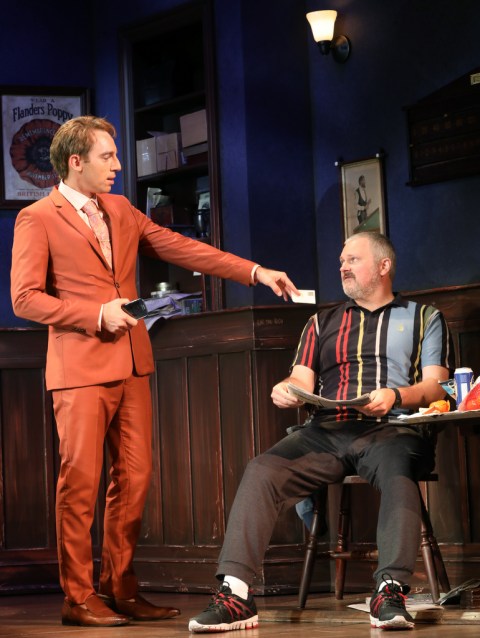
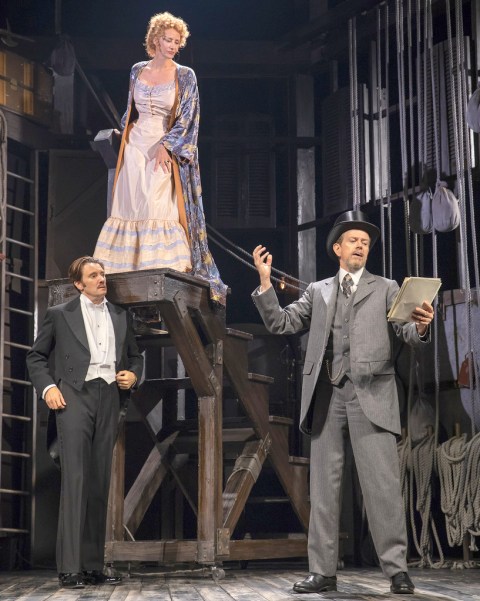
(L to R): Max Gordon Moore, John Ellison Conlee in the American premiere of ‘The Nap’ by Richard Bean, directed by Daniel Sullivan (Joan Marcus)

Playwright Richard Bean stormed Broadway with One Man, Two Guvnors, which familiarized American audiences with James Corden. Writing again for Broadway with The Nap, directed by Daniel Sullivan in its American premiere, Bean chooses a more sportsmanlike subject (snooker). A derivative of pyramid pool and life pool, with different rules, table, and balls, snooker classifies as a cue sport. It originated among British Army officers stationed in India in the latter half of the 19th century.

Bean’s incredible wit populates this play, with an ironic double entendre related to the game name thrown in for good measure. And his symbolism, related to what “the nap” suggests, cleverly stresses the theme of going with the flow of fateful events. The playwright also configures the plot twists with facile, wild characterizations. Daniel Sullivan keeps the action vibrant. As he shepherds his cast, the mix solidifies with humor. Together the ensemble presents an altogether enjoyable evening.

The play references the culture of those who enjoy snooker as aficionados and professionals. Dylan Spokes (Ben Schnetzer) hails from a lower-class background but uses his champion-level snooker skills to better himself and rise up the class ladder. This is no small feat considering his parentage: a former felonious, drug-dealing, alcoholic father and a gambling-addicted live-wire mother. Dylan’s ambitions lead him to become a ranked professional snooker player. And he intends to be number one in the world. With Dad, Bobby Spokes (the humorous John Ellison Conlee), who “coaches” him and mom, Stella Stokes (Johanna Day’s portrayal is too brief), who quietly “nurtures” him, how can he fail to be great? This introduces the primary conflict, as he competes in a major championship match.

The Nap, American Premiere, Daniel Sullivan, Richard Bean, Alexandra Billings, John Ellison Conlee, Johanna Day, Ahmed Aly Elsayed, Ethan Hova, Heather Lind, Max Gordon Moore, Bhavesh Patel, Thomas Jay Ryan, Ben Schnetzer

‘The Nap’ American Premiere by Richard Bean, directed by Daniel Sullivan. With Alexandra Billings, John Ellison Conlee, Johanna Day, Ahmed Aly Elsayed, Ethan Hova, Heather Lind, Max Gordon Moore, Bhavesh Patel, Thomas Jay Ryan, Ben Schnetzer (Joan Marcus)

We learn about the game and protagonists Dylan and Bobby during their humorous by-play at their hometown Sheffield club. As Dylan readies the club’s snooker table with near-obsessive attention to detail, we witness his integrity regarding the game. Considering his background and the opportunities snooker provides for gambling, this irony falls heavily. Bobby even references his son’s morality countering his own history of waywardness. But snooker assures that Dylan will never return him to the grime and squalor of street crime. Consequently, he reveres the game like a religion.

That’s a key problem! But it makes for wonderful comedy. For this character trait becomes the linchpin of the action. All who know Dylan – the highbrows and criminals from his parents’ circle – can count on his assiduous, martinet-like behavior, as he never ever “violates the rules.” Indeed, his moral compass makes everyone blush – everyone except the amoralists, who exploit this sanctity.

Complications arise with Dylan’s upcoming tournament against Abdul Fattah during this snooker practice session. Bean sets the characters against each other. First, coppers Mohammad Butt (Bhavesh Patel) and Eleanor Lavery (Heather Lind) drop by to take Dylan’s urine sample, revealing that they serve the WPBSA (World Snooker Association).

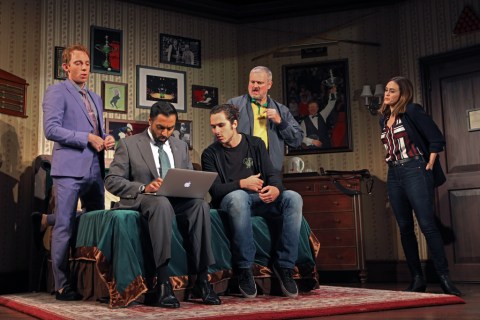
Max Gordon Moore, Bhavesh Patel, Ben Schnetzer, John Ellison Conlee, Heather Lind in ‘The Nap,' Richard Bean, Daniel Sullivan

(L to R): Max Gordon Moore, Bhavesh Patel, Ben Schnetzer, John Ellison Conlee, Heather Lind in the American premiere of ‘The Nap’ by Richard Bean, directed by Daniel Sullivan (Joan Marcus)

Next, they warn Dylan that mischief comes in the form of match fixing and his flamboyant sponsor Waxy Bush, a confederate of his mom’s, who gambles odds against ranked players. The coppers suggest Dylan go undercover for them to set a trap. Along the way Dylan’s manager Tony (the humorous Max Gordon Moore), appears and schmoozes his way around the room, handing out his business cards like candy. As with all his characterizations Bean has given Tony delicious lines, which Gordon Moore takes full and clever advantage of to the audience’s delight.

The NAP, Daniel Sullivan, Richard Bean,Ben Schnetzer, Johanna Day

Ben Schnetzer, Johanna Day in the American premiere of ‘The Nap’ directed by Daniel Sullivan, written by Richard Bean (Joan Marcus)

A love interest develops between Eleanor and Dylan. Not only has snooker paved the way for Dylan’s exciting adventure in assisting the police and World Snooker, his love life blossoms. Can anything be better?

Subsequently, we meet the criminal-turned-innocent, Ms. Waxy Bush herself (the wonderfully spot-on and hysterical Alexandra Billings) and her accomplices (Stella and boyfriend). The plot thickens and confusion reigns. We think we follow the action. But the snookers are being “snookered.” During the chaos, divorced Bobby and Stella exploit Dylan for different reasons, badgering each other in the process. Humorously, Bobby warns Dylan not to give his mother any money. Stella identifies her former husband as a drunk to uplift her current “boyfriend” Danny (the versatile Thomas Jay Ryan), whose stinky smell puts others off. And Eleanor and Dylan continue their affair as he plays his match against the formidable Fattah (bona fide snooker play Ahmed Aly Elsayed). Thrillingly, the match is played live; the screen above the players shows all. Bean wrote in an interactive ending that changes unpredictably.

The Nap, Richard Bean, Daniel Sullivan, Ahmed Aly Elsayed, Ethan Hova, Ben Schnetzer

(L to R): Ahmed Aly Elsayed, Ethan Hova, Ben Schnetzer in the American Premiere of ‘The Nap’ by Richard Bean, directed by Daniel Sullivan (Joan Marcus)

No spoiler follows. Seeing this hysterical production you will find a rainbow of amazement and an intriguing conclusion. Most probably, you will learn the difference between pool and snooker. And your laughter will ring out uproariously as mine did at Waxy Bush and at Bean’s turns of phrase and clever wit characterizing Bobby, Waxy and Tony. You probably will be shocked and startled. You will appreciate the crooked film references and how apt they are to the circumstances. More than that I dare not reveal, for it would spoil the fun.

When I saw the production, a startling technical difficulty delayed the action toward the end of
Act I. Ironically, this mishap right out of The Play Gone Wrong provided me with unending chortles the next day when I learned that the misbehaving large prop hadn’t injured anyone.

On the other hand, that evening, some of the cast’s accents rankled. Actors who took their time to project clearly got the laughs. But some hysterical lines became swallowed up or dropped in the mangling of accents. I wondered, in the mouths of a different cast might things have been different?

For example, in the film Snatch, with Brad Pitt’s back-country UK caravan accent, as rapidly as Pitt’s character spoke his convolutions, I got it. Sadly, this did not hold true with some of the actors in The Nap. My frustration with this is that to lose any of Bean’s humor, and the audience surely did, seems a shame. The humor begins at the top and continues throughout. Indeed, Bean’s writing seeks a glorious level and his characterizations and the ironies that abound with them should strike continual heat-filled laughter from the outset. This play is every bit as LOL-excellent as One Man Two Guvnors. And yet.

Kudos go to the design team of Kaye Voyce (costumes), Justin Townsend (lighting), and David Rockwell (scenic design).

The Manhattan Theatre Club’s The Nap is at the Samuel J. Friedman Theatre (261 West 47th). The Nap closes on 11 November.

Save

Broadway Theater Review (NYC): ‘Bernhardt/Hamlet’ Starring Janet McTeer, a Stunning Portrayal

Dylan Baker, Jason Butler Harner, Janet McTeer, Matthew Saldivar, Bernhardt/Hamlet, Theresa Rebeck, Moritz von Stuelpnagel

(L to R): Dylan Baker, Jason Butler Harner, Janet McTeer, Matthew Saldivar in ‘Bernhardt/Hamlet’ by Theresa Rebeck, directed by Moritz von Stuelpnagel (Joan Marcus)

Theater scholars, dramatists, and actors are familiar with the legend of French actress Sarah Bernhardt (1844-1923), referred to as “The Divine Sarah.” Renowned for her indomitable theatrical greatness, she lived and breathed drama, melding her life and her art so that each informed the other. Alluding to this synergy of living artistry, Theresa Rebeck’s play Bernhardt/Hamlet explores the French actress’s acclaimed reinterpretation of the role of Shakespeare’s Hamlet, which she imbued with her own maverick genius and courage. Examining the actress’s work, the play, thrillingly directed by Moritz von Stuelpnagel, shows us thematic parallels to our times.

As Sarah Bernhardt circa 1897, confronting Shakespeare’s best-known character, Janet McTeer’s dynamism astounds. Her Bernhardt is a whirlwind of delight and shimmering brilliance. She propels the light and dark of human ethos with a range that bounds and swirls and captivates. In short, McTeer infuses her Bernhardt with an infinite variety of emotional hues so that we believe how and why Oscar Wilde referred to her as “the Incomparable One.” Additionally, we appreciate that Bernhardt was not only a visionary in enforcing her will to create opportunities for herself. For women who witnessed her heroism, she drove the platform of freedom, despite and because of a culture and society expressly controlled by men.

Dylan Baker, Janet McTeer, Bernhardt/Hamlet, Roundabout Theatre Company

Dylan Baker, Janet McTeer in ‘Bernhardt/Hamlet,’ Roundabout Theatre Company (Joan Marcus)

Rebeck intimates that Bernhardt accomplished what every female actress covets. The actress intrepidly portrayed the complexity and angst of Hamlet’s human spirit with the realism of the mysterious feminine gone rogue, as only an exotic like Bernhardt could do. From her affairs with some of the crowned heads of Europe, to her re-imagining herself through her relationships with authors and playwrights, Bernhardt proved her exceptionalism. Continually, as she gained power and fame, she pushed the envelope of female propriety. And amazingly, the public adored her for it.

However, when she takes on the role of Hamlet to bring it to a larger, more profitable theater, her closest allies sound warnings. Edmond Rostand is one such ally. Jason Butler Harner skillfully portrays the poetic, conflicted author of Cyrano de Bergerac, who worked with and wrote for Bernhardt. Her lover in the play (a relationship that was rumor in real life), he must choose between his career and hers. Of course this is an irony. Rarely did women have the opportunity to have choices as Bernhardt did. In this instance, the hard choice becomes Rostand’s with regard to their work on Hamlet.

We see that the two consume each other in their relationship, which is a blessing and a curse. Harner’s potent by-play with McTeer when he challenges her “demented idea” of rewriting the iambic poetry in Hamlet’s speeches is particularly striking. His forcefulness stands against McTeer’s indomitable will in Rebeck’s exceptional characterizations. Their equivalent passion reveals the high stakes for each. Thus we appreciate the inevitability of their partnership taking a turn after he becomes famous with Cyrano and she moves on with an interpretation of Hamlet sans poetic rhythm and written by others.

Jason Butler Harner, Janet McTeer, ‘Bernhardt/Hamlet’ directed by Moritz von Stuelpnagel, Theresa Rebeck

Jason Butler Harner, Janet McTeer in ‘Bernhardt/Hamlet’ directed by Moritz von Stuelpnagel, written by Theresa Rebeck (Joan Marcus)

The other ally who opposes Bernhardt’s endeavor is critic Louis, played by the stalwart and stentorian Tony Carlin. He argues with and attempts to influence Rostand in an important scene. Here we see the dangerous, shifting ground Bernhardt must negotiate as Louis questions her Hamlet choice. Perhaps the scene could be less expositional, but it is a necessary one for advancing the stakes and presenting the seeds of themes.

For example, women’s stage roles traditionally remained weak asides to fascinating, dominant male protagonists. Male roles, complex and intelligent, provided the driving dynamic that women’s roles did not. To take on a man’s role, a woman must have the power and even greater acumen and ambition to accomplish it well. Unsurprisingly, both men question whether Bernhardt has the chops to meet the Hamlet challenge.

Jason Butler Harner, Janet McTeer, Dylan Baker, Bernhardt/Hamlet, Theresa Rebeck, Moritz von Stuelpnageln

(L to R): Jason Butler Harner, Janet McTeer, Dylan Baker in ‘Bernhardt/Hamlet’ (Joan Marcus)

Through the real-life characters of Rostand and Louis, the playwright highlights the conflicts and problems McTeer’s Bernhardt faces. Additionally, Rebeck shows us how the staging, costuming, and promotion of this new, interpretative Hamlet must be conquered.

Wonderful in supporting roles are Dylan Baker, Matthew Saldivar, and the fine Brittany Bradford as actress Lysette. Baker portrays Constant Coquelin, Bernhardt’s acting contemporary and friend. Notably, Baker gets to have fun playing Hamlet’s father in a hysterical rehearsal scene. Experienced in the role himself, Coquelin guides Bernhardt as a quasi acting coach. Coquelin’s wisdom and sound judgment reflect his greatness as an actor. Eventually, Coquelin took on the role of Cyrano with great success. Baker’s versatility shines in his speeches as Cyrano, Hamlet’s father, and various roles including the great Coquelin himself.

Saldivar portrays Alphonse Mucha, whose artistic skills must beautify Bernhardt’s poster productions. Humorously, he expresses his upset with the task at hand. Indeed, Bernhardt’s hair, her clothing, her stature as Hamlet must enthrall and entice paying customers, a novel feat even for one of his skill. He cannot easily produce advertising artwork that will please Bernhardt, himself, and his public. Thus, as Bernhardt navigates new ground with her incredible decision to play Hamlet, so must Mucha and the others in her circle deal with the “dire” consequences. What a delicious conundrum her “simple” need to play Hamlet creates for these men whom she frustrates yet enthralls!

Janet McTeer, Brittany Bradford, Bernhardt/Hamlet, Theresa Rebeck

(L to R): Janet McTeer, Brittany Bradford in ‘Bernhardt/Hamlet’ (Joan Marcus)

The symbolism presented by Bernhardt’s desire to enforce her will upon the culture electrifies. Subtly, when she donned the pants in Hamlet, Bernhardt symbolically freed all women from fashion folkways. Her pants-wearing signals a needed change. Women’s mores were held fast by paternalism and manifested subtly in binding corsets, bustles, and long sleeved-high collared blouses. Worn even in heat waves, these sometimes smothered the wearers, who died of heat prostration. Fashion trends, as painful as they were, laid subservient female stereotypes at women’s feet. And they dared not transgress them. Do such trends abide even today? Sometimes.

In Rebeck’s characterization of Bernhardt, the more restrictive the “thou shalt not,” the more the actress embraced it, conquering fear. In her revolutionary behavior she dismantled the “double standard.” And because she did this with aplomb, sophistication, joie de vivre, and the audacity of wit and whimsy, who could censure her? As she developed her dramatic art, she empowered herself. Memorably, McTeer takes this characterization and with precision lives it in two acts. She evokes the marvelous “Divine Sarah” and makes her a heroine because she can. How McTeer creates her Bernhardt with adroit skill, subtle intelligence and determination is a Bernhardt-like feat.

What a breathtaking reminder of magnificent women in this twisted, political tide of times. Assuredly, Rebeck’s work (McTeer’s speech to this effect rings out beautifully) remains vital and insistent. With commanding power, McTeer’s Bernhardt corrects the historical record, striking forever at the literary and dramatic canon with a tight phrase. She proclaims to Rostand that she will not play the “flower.” The night I saw the production, the women in the audience applauded these words. “I was never a flower, and no matter how much you loved how beautifully I played the ingenue, it was always beneath me. It is beneath all women.”

This moment electrifies. For though women may be compared to flowers, they are not flowers. And Bernhardt, like all women, understands. For women are power brokers, however hidden, however “passive.” Regardless of how much men nullify this truth, “woke” women grew and grow to learn and champion it. And many achieved and achieve momentous feats even from the position of “second.”

Bernhardt captured opportunity and molded destiny so it served her, not the other way around. Strengthening and illuminating her own identity, she wrote her own history, not the one the culture intended to write for her and but couldn’t. McTeer’s inspiring depiction proclaims this with every card in the deck. Indeed, when Bernhardt says about Hamlet, “I do not play him as a woman! I play him as MYSELF,” we glean the full truth of her meaning.

Rebeck wisely selects the most vital of Hamlet’s speeches. Their themes meld aptly with Bernhardt’s conundrums. Indeed, Bernhardt is “a rogue and peasant slave.” At the time she rehearses that speech, she, like Hamlet, divines how an actor uses his skills to portray a character. The double meanings are ironic. But unlike Hamlet, Bernhardt is active, assertive. As Hamlet struggles with acting crazy to hide the knowledge of the truth of his father’s murder, she struggles with a Hamlet too passive to kill. Indeed, the humor comes in watching Bernhardt’s frustration at portraying an “inactive” Hamlet who comes up with philosophical obstacles to delay killing Claudius.

Moritz von Stuelpnagel, Janet McTeer, Bernhardt/Hamlet, Theresa Rebeck, Roundabout Theatre Company

Janet McTeer in ‘Bernhardt/Hamlet’ by Theresa Rebeck, directed by Moritz von Stuelpnagel (Joan Marcus)

Rebeck interweaves in a complex way Hamlet’s speeches to emphasize Bernhardt’s conflict in deciding how to approach and interpret the role. One must work to catch all the ironies. So revisiting the play to enjoy this profound rendering is worthwhile.

Through active dialogue, we learn of Bernhardt’s promotional savvy and ability to reinvent herself for every decade. Naturally, this excites comparisons to today’s long-lasting actresses and others who could learn a thing or two from Bernhardt. Without fear, she capitalizes on rumor, innuendo, and extraordinary behavior that’s verboten for women. Cleverly, she makes critics her friends and generously remembers those who might have turned enemies.

Never an invisible woman, she will play men’s roles. In an affirmation about playing Hamlet and being a woman, she states to Rostand: “Where is his greatness? Where? Is it not in his mind, his soul, his essence? Where is mine? What is it about me you love? Because if in our essence we are the same, why am I otherwise less?”

Thus, Rebeck’s choice of this pivotal, “make or break” moment in Bernhardt’s career is an inspired, complicated one. The turning point reveals the grist, bravery, and revolutionary fervor Bernhardt required of herself to overturn centuries of dramatic tradition. Bernardt’s choice to conquer the greatest role written for men propels her to theatrical heaven. It is sheer artistic genius in a time when women were the “incapable,” “inferior” ones mastered by man’s sham invincibility. Bernardt/Hamlet through the seminal performances of McTeer and the ensemble informs and encourages us to realize that Shakespeare also speaks of women when Hamlet says, “What a piece of work is man. How noble in reason…”

Assuredly, kudos go to the spectacular artistic team. I particularly loved the sets (Beowulf Boritt), costumes (Toni-Leslie James), and hair (wig design by Matthew B. Armentrout). Lighting is by Bradley King and original music and sound design by Fitz Patton.

Bernhardt/Hamlet will be a multiple award winner. It is a must-see TWICE! This Roundabout Theatre Company production runs at the American Airlines Theatre on 42nd Street. The show until 11 November. Visit the Roundabout website for schedule and tickets.

Theater Review (NYC): ‘A Lovely Sunday For Creve Coeur,’ by Tennessee Williams, Starring Kristine Nielsen, Annette O’Toole, Jean Lichty

Jean Lihty, Annette O'Toole, Kristine Nielsen, Polly McKie, A Lovely Sunday For Creve Coeur, Austin Pendleton

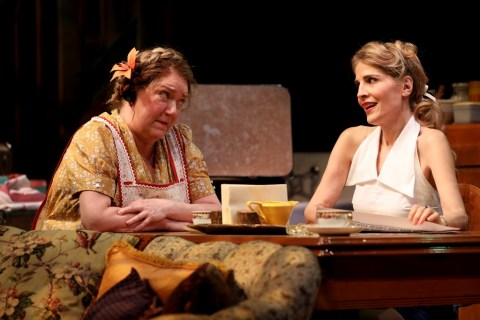
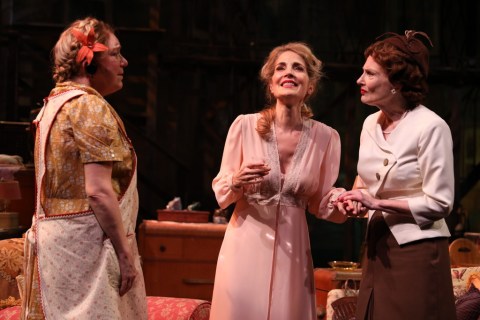
(L to R): Jean Lichty, Annette O’Toole, Kristine Nielsen, Polly McKie in ‘A Lovely Sunday For Creve Coeur,’ directed by Austin Pendleton (Joan Marcus)

Tennessee Williams dramatized women’s quiet lives of desperation. Indeed, his characterizations ping  from the haunting, tragic-comedic melodies of emotion he experienced with his family growing up in St. Louis, Missouri. In A Lovely Sunday For Creve Coeur, directed with measured grace by Austin Pendleton, one of Williams’ last plays receives a sterling, masterful presentation. Assuredly, the excellent ensemble of actors provides the poignant atmospheric intensity.

Currently running at Theatre at St. Clement’s, the production deserves a visit for its adroit performances and direction. Pendleton’s nuanced and gradual unfolding of Williams’ dramatic climax at once captivates with its beauty, delicacy, and plaintiveness. Delivered with a less astute balance in shepherding the actors’ portrayals than Pendleton’s, Williams’ complicated play would not deliver the power and heart-break that this production evokes at the conclusion.

A Lovely Sunday For Creve Coeur,' Tennessee Williams, Austin Pendleton, Kristine Nielsen, Annette O'Toole, Jean Lichty, Polly McKie

(L to R): Kristine Nielsen, Jean Lichty, ‘A Lovely Sunday For Creve Couer,’ Tennessee Williams, directed by Austin Pendleton (Joan Marcus)

Throughout the play we witness three single women’s wants and desires. A fourth, who becomes a foil for the other three, provides the background theme which motivates them to desperation. Each longs for happiness away from her current day to day lower class existence in depression era St. Louis, Missouri. In order to achieve this happiness, they place their hopes in others to deliver it. Ultimately, the women deceive themselves. Clearly, they set themselves up for disappointment after disappointment.

At the opening we note that maternal, nurturing Bodey (Kristine Nielsen in a superb, layered, and profound rendering), chides Dorothea. With precision Jean Lichty portrays the teacher, a fading Southern belle from Tennessee. Lichty’s somewhat frivolous Dorothea spends her entire morning waiting upon Mr. Ralph Ellis’s phone call. Because Bodey is “deaf” and didn’t hear the phone ring when it did, we become persuaded by Dorothea’s view. Initially we believe her relationship with Ralph remains solidly founded. Meanwhile, Bodey prepares food for a lovely outing at Creve Coeur with her twin brother Buddy, anticipating that Dorothea will join them. She insists she will not, for Ralph Ellis has important information to tell her about their lives together.

Strikingly, we see that neither women really listens to the other as each drives forward to achieve their own goals. Dorothea yearns for Ralph, a principal who associates with the country club set. Because of her recent tryst with him, she anticipates that her charms have overwhelmed him romantically as she has been overwhelmed. The inevitability remains clear for her, though Bodey warns her against these notions.

Bodey’s reaction to Dotty’s relationship with Ellis appears questionable. We wonder at Bodey’s potential jealousy of “their love.” The feminine, sweet, pretty Dorothea surely will leave her and get married, a frightening prospect for Bodey. Indeed, Dotty believes that eventually, Ralph will spirit her into a well positioned marriage away from the squalid, spare lifestyle she leads teaching, and renting from Bodey. For her part Bodey, a spinster devoted to caring for others, least of all herself, has given up on her own prospects of marriage. Instead, she believes that her overweight, reliable, unromantic, hearty twin Buddy would be perfect for Dorothea.  And if they married, she would be the dependable aunt who would raise their brood and have a vital purpose in their family life.

Jean Lichty, Annette O'Toole, Kristine Nielsen, Polly McKie, Austin Pendleton, A Lovely Sunday For Creve Coeur

(L to R): Jean Lichty, Annette O’Toole, Kristine Nielsen in ‘A Lovely Sunday For Creve Coeur,’ directed by Austin Pendleton (Joan Marcus)

During the course of the play, two other spinsters join into this group of women who appear unloved and unwanted. Miss Gluck, a German neighbor who has lost her mother and who grieves incessantly. Most probably not only does she grieve the close relationship loss. But she probably grieves that she will be alone. Thus, she must give herself her own solace daily. Indeed, how much can Miss Gluck rely on the friendship of her neighbor Bodey with whom she communicates only in German? Polly McKie as the mournful Miss Gluck is humorous and believable. Thematically, the character portends what happens to women who do not marry well economically or congenially, or whose husbands abandon them to loneliness and despair.

Annette O'Toole, Polly McKie, A Lovely Sunday For Dreve Coeur, Austin Pendleton, Tennessee Williams, La Femme Theatre Productions

Annette O’Toole and Polly McKie in ‘A Lovely Sunday For Creve Coeur,’ directed by Austin Pendleton, written by Tennessee Williams, La Femme Theatre Productions (Joan Marcus)

Helena is the fourth spinster who intrudes into the lives of Bodey and Dotty. During the course of her visit, she suggests the monstrous end which awaits the unfortunate Miss Gluck. Incisively portrayed by Annette O’Toole, Helena represents the cruel and bitter archetype of the most miserable of the spinsters. These yearn to escape themselves and falling short, grow venomous and predatory toward other women. Arrogant, acerbic, biting she manipulates with sarcasm. And she bullies and demeans Bodey and Dotty with female cultural mores and the pretense of good breeding. In irony she implies that unless Dotty takes actions to lift herself into an upscale arrangement with her, she will fall into the same despair as Bodey. And with finality, poor Dotty will eventually become a social anathema, the greying, unwanted, depressive Miss Gluck.

As the day unfolds, we learn Helena, too, has wants. A fellow teacher in the same school, she intends for Dotty to be her roommate and share the expensive rent and utilities. Her concern for Dotty’s life path concludes with self-dealing. Her own. She covets the monthly expenses Dotty will hand to her. And she intends Dotty to partner up at their bridge games twice a week for companionship. When Dotty inquires whether the bridge will be mixed, we see the fullness of Dotty’s fear anguish of discouragement.

For Dotty, there is no hope without a man. She cannot define herself in any other terms. Nor can she settle for a kind of contentment or resignation as Bodey, Helena and even Miss Gluck have. For her it’s a man, or it’s the abyss. That her designs fall upon Ralph Ellis and certainly not the overweight, unappealing Buddy, who accompanies his sister to Creve Coeur, is her tragic misfortune.

Tennessee Williams’ ironies and humor seek a fine level in this satisfying and heartfelt production. Notably, the Rolling Stones anthem to humanity rings out loudly in this play’s themes of disappointment and finding one’s courage to move past despair. No, “You Can’t Always Get What You Want!” However, for some of the characters, especially the ones who nurture and look out for each other, they do “get what they need.” Perhaps. Indeed, they may even enjoy a lovely Sunday at Creve Coeur.

Kudos to the artistic team Harry Feiner (Scenic & Lighting Design), Beth Goldenberg (Costumes), Ryan Rumery (Sound Design & Original Music), and the other artists.

A Lovely Sunday For Creve Coeur presented by La Femme Theatre Productions runs without an intermission at Theatre at St. Clement’s (423 West 46th St) until 21 October. Interestingly, the theater was founded by Tennessee William’s cousin Reverend Sidney Lanier. You may purchase tickets at LaFemmeTheatreProductions.org. 

Save

Edie Falco and Michael McKean as Rumored Lovers in ‘The True’ by Sharr White, Directed by Scott Elliott

Michael McKean, Edie Falco, Peter Scolari, The True, Scott Elliot, Sharr White, The New Group, Pershing Square Signature Center

(L to R): Michael McKean, Edie Falco, Peter Scolari in ‘The True’ by Sharr White, directed by Scott Elliott for The New Group, Pershing Square Signature Center (Michelle Carboni)

During my undergraduate and graduate college days and afterward (1970s), I lived in Albany, New York, the setting of The True. Familiarizing myself with the city during those years, I learned about Albany’s political and social structure. Friends who were aides to state congressmen used to discuss the corruption problems in Albany’s Democratic machine. Other friends, some of them Black Panthers, discussed the white communities’ racial discrimination and local government injustices. In those years, the Irish controlled Albany city and county. And Dan O’Connell as Party Chairman helped Mayor Erastus Corning II govern the city for decades.

On one level I knew about the background of Sharr White’s subject matter and characters in The True. There were no surprises. He based the characters on research about real personalities. On the other hand, the playwright’s perspective on the characters held many surprises. Indeed, his exploration of how power and the ties that solidify power bathe in loyalty appear fascinating in the backdrop of today’s leaking political climate. As a result, The True, ably directed by Scott Elliott and impeccably acted by Edie Falco, Michael McKean, and the ensemble, ignites with humor and intrigue.

Michael McKean, Edie Falco, The True, Sharr White, Scott Elliot, Pershing Square Signature Center, The New Group

Michael McKean, Edie Falco, ‘The True,’ by Sharr White, directed by Scott Elliott for The New Group, Pershing Square Signature Center (Monique Carboni)

White mostly depicts Albany’s machine politics with a positive twist. Ostensibly, hooked-in communities backed the Democrats for good old-fashioned patronage. Their loyalty was rewarded with various types of assistance and employment. The Democratic Party took care of widows and orphans. They got jobs for those who needed help. In exchange the voters listened to their committeemen. And they formed a solid community. Furthermore, they remained loyal to the party until death. As for those who wanted a political career, they worked their way up the ladder, moved from position to position until they achieved glory. Of course they had to live in Albany for all of their lives. Erastus Corning II was such an individual.

But Republicans struggled. They received higher tax bills and other infelicities. Meanwhile, the outsider black community feared Corning’s police. Though injustices raged, they kept their heads down except for a few attempts at protest (by The Brothers). From my outsiders’ perspective a negative mythology about O’Connell’s machine and Mayor Corning II swirled around the capital of New York State. White’s The True rounded out my perspective and brought additional considerations into view.

Peter Scolari, Austin Cauldwell, Edie Falco, The True, Scott Elliott, Sharr White, The New Group, Pershing Square Signature Center

(L to R): Peter Scolari, Austin Cauldwell, Edie Falco in ‘The True,’ written by Sharr White, directed by Scott Elliott for The New Group, Pershing Square Signature Center (Monique Carboni)

Interestingly, no clouds of malfeasance penetrate Sharr White’s world of Albany politics, though characters discuss or deny rumors. Instead, White provides a human portrait of individuals. He particularly focuses on the relationship between Corning II (Michael McKean) and secretary and close friend Peggy Noonan (Edie Falco). Though Albany social circles intimated they had a love relationship, White’s play concentrates on their bonds surrounding politics. The ferocious loyalty Noonan has to Corning II as the do-gooding Mayor of Albany is the centerpiece of the play. Yet, questions about their relationship serve as the conflict. When a wedge develops between Corning II and Noonan, their reactions drive the action and stir the characterizations.

Ingeniously, White gives us the insider’s perspective “in the rooms where loyalties happened.” The play opens after Dan O’Connell’s funeral (1977), at friends Peter and Peggy Noonan’s home where Erastus Corning II frequently hangs for comfort and advice. With humorous interplay, Edie Falco portrays Peggy Noonan’s vibrance, determination, and foul-mouthed, steely brilliance. Her political acumen appears greater than that of her male counterparts. Supported by her affable, agreeable, clever, non-political husband Peter (Peter Scolari), they discuss Corning II’s options.

John Pankow, Edie Falco, The True, Sharr White, Scott Elliott, The New Group, Pershing Square Signature Center

John Pankow, Edie Falco, ‘The True,’ by Sharr White, directed by Scott Elliott, The New Group, Pershing Square Signature Center (Monique Carboni)

Because Corning II is not O’Connell’s pronounced heir apparent, he is swimming in dark waters after the party boss’s death. We divine that the entire organization (machine) and reins of power are up for grabs. Indeed, Peggy stirs the pot by reminding “Rasty” that the tough O’Connell operative Charlie Ryan (John Pankow) will kick Corning II, whom he dislikes, to the curb. When McKean’s Corning II appears to wobble, Falco clobbers him with the truth of the loss of power that will occur and why and how it will occur. The changing of the guard (few politicians will care about their constituents) will sink Corning II. The lack of loyalty will give others a wedge to undermine the Democratic party’s strength at nurturing its communities.

Falco’s Noonan cajoles with logic, wit, and sarcasm. She delivers quips with sass and spunk and verve. As we note her determination in stirring McKean’s “Rasty” we note their closeness. For his part McKean’s portrait of Corning II remains measured, thoughtful, avuncular. No stench of corruption, rapacious ambition, or ruthlessness follows this likable mayor. Indeed, the portrayal reveals an emotional, deep individual. We note he stays because he yearns for the companionship of his trusted friends. Rather than go home to his wife Betty as Polly suggests, he receives sustenance from them, especially Polly. For his part, Peter listens and participates, generously pouring drinks and good will.

Edie Falco, Michael McKean, The True, The New Group, Scott Elliott, Sharr White, Pershing Square Signature Center

Edie Falco, MIchael McKean in ‘The True,’ The New Group, Pershing Square Signature Center until 28 October (Monique Carboni)

Yet, we question. Why would another man’s wife curate so vehemently the political career of a friend? Why not his own wife? Noonan as Corning’s former secretary means so much more to him than his wife Betty does. Indeed, she appears to be the finest political advisor a politician could have. On closer inspection we understand that this politician is married to his party and career. By design, Polly comes with the package. Thoughtfully, White lightly suggests that their bond did or may sneak beyond the elusive depths of his political career toward intimacy.

Sharr White develops this intriguing notion throughout. Notably, he presents a complex answer by degrees underneath various personality layers and sharp Noonan retorts to Rasty’s rivals. One obvious theme concerns Noonan’s gender. Undoubtedly, at a different time and place, Peggy Noonan would have stepped from behind the scenes to make a grand committeewoman or state congresswoman herself. However, because of gender limitations, she must settle for being Rasty’s brilliant adviser, counselor, and cattle prod, which she adores being. Also, she must wear the filthy smear of the “other woman,” in infamy. For decades it remains a slander from which she receives no benefit.

(

White shows us the turning point when McKean’s Corning II must give up his association with Peggy “to stop people from talking.” However, that does not stop Noonan’s persistence. She remains “the true.” Loyal to Corning II, she fights for him against his adversaries. And she properly divines the polls where others fail, even Rasty. Finally with only days to spare, we follow her intrigues as she puts together a deal which saves Rasty’s career and convinces a remorseful McKean’s Rasty he should never have left her association.

What a woman! A political wheeler-dealer bar none! In fact White reveals that Erastus Corning II might have languished in the graveyard of failed politicians without her help and Peter’s friendship. By comparison, Corning II’s own family situation appears worse than bleak, isolated and friendless. No forthcoming career help there.

Edie Falco, Michael McKean, Peter Scolari, The True, Sharr White, Scott Elliott, The New Group, Pershing Square Signature Center

L to R): Edie Falco, Michael McKean, Peter Scolari in ‘The True,’ by Sharr White, directed by Scott Elliott for The New Group, Pershing Square Signature Center (Monique Carboni)

The True succeeds on many levels: the fascinating characters, the acting, the directing. Though the individuals are factual, White teases out the emotional tenor between and among the Noonans and Corning II. Importantly, the playwright depicts an incredible force in Noonan. And Falco portrays her with that particularity inherent in one who is wise, ferocious, logical, politically savvy, and street smart. Also, she happens to be a woman who cares about people, as she suggests that O’Connell and Corning II and the Democratic Party cared about the “have nots.” For me this refreshing inside revelation about a vital and unlikely conductor politically leading a symphony of men strikes with authenticity.

The production is a must-see for Falco’s dogged portrayal, with adroit assists by McKean, Scolari and the rest of the cast. Austin Caldwell portrays Bill McCormick, Glenn Fitzgerald depicts Howard C. Nolan, and John Pankow portrays Charlie Ryan. Kudos go to the creative team: Derek McLane (scenic design), Clint Ramos (costume design), Jeff Croiter (lighting design), Rob Milburn & Michael Bodeen (sound design & music composition). The True runs at The Pershing Square Signature Center until 28 October. If you don’t purchase tickets soon, it will be sold out. For tickets Click HERE.

‘Agnes’ by Catya McMullen (AMC’s ‘Dietland’), at 59E59 Theaters, NYC Review

Hiram Delgado, Mykal Monroe, Laura RamadeiAgnes, Jenna Worsham, 59E59 Theaters,Catya McMullen

(L to R): Hiram Delgado, Mykal Monroe, Laura Ramadei in ‘Agnes,’ presented by Lesser America in association with Hugh Hayes, written by Catya McMullen, directed by Jenna Worsham at 59E59 Theaters (Hunter Canning)

With hurricane season upon us, the intriguing production of Agnes appears timely, ably directed by Jenna Worsham at 59E59 Theaters.

Four New York City 20-somethings burrow in their apartment and into each other while weathering the titular hurricane. Invited by zany Ronan to crash with former friends since her “A” evacuation zone leaves her homeless for the night, Anna joins the reunion/party, where hidden emotions and jealousies collide, and confrontations reveal secrets aching for revelation.

As the characters reformulate their mutual relationships, they develop new relationships with themselves too. Though satisfying resolutions never come easily, the process of getting there presents itself. And like all storms, eventually the hurricanes within and without dissolve, with clearer weather ahead.

The 90-minute one-act opens after dynamic, rocking music subsides. Charlie enters a cluttered, homely, shared apartment. John Edgar Barker portrays the emotionally complex and Asperger-challenged Charlie with sustained believability. His performance throughout is well-executed, thoughtful, and finely tuned.

Charlie carefully pulls out a box from the shelf above the bed, flips through the audio tapes inside and selects one. As he listens to “Subject 37, Lorraine,” the taped interview soothes him. Stepping into the light as the tape plays, “Lorraine” (Claire Siebers) relates her experiences in a physical storm which symbolically aligns with her personal troubles. Though we don’t realize it yet, one of McMullen’s themes is unwinding as, inevitably, these quirky individuals fall over each other as they struggle with their own internal hurricanes.

John Edgar Barker, Mykal Monroe, Hiram Delgado, Laura Ramadei, Agnes, Catya McMullen, 59E59 Theaters

L to R): John Edgar Barker, Mykal Monroe, Hiram Delgado, Laura Ramadei in ‘Agnes’ by Catya McMullen at 59E59 Theaters (Hunter Canning)

Upon seeing that Charlie has returned from parts unknown, his younger sister June ferociously welcomes him back. As June, Laura Ramadei adheres with precision to apt emotional modulations and delivers an overall spot-on, nuanced performance. Though June remains on tenterhooks questioning Charlie’s whereabouts, her expressions of mild outrage reveal heavy concern. Obviously, she has cast herself as his caretaker, a role Charlie’s older self chafes at.

Nevertheless, Charlie’s vacant, aloof responses to her and rebuffs of physical affection indicate familiar ground. Their relationship is strained. The pull and twists of sibling love combined with intense overprotectiveness grates on Charlie. Finally, we learn through McMullen’s quippy, well-crafted dialogue that Charlie’s Asperger’s locks him away from normal behavior, social interactions, and intimacy. Indeed, the syndrome predisposes him from easily relating to others, including sister June. By degrees the playwright, director, and excellent ensemble reveal the rationality of June’s behavior toward her brother. Yet we also realize that her dependence on being the nurturer stifles both of their individuality and autonomy. Where will their struggle end?

laire Siebers, John Edgar Barker, Agnes, Catya McMullen, Jenna Worsham, 59E59 Theaters

Claire Siebers, John Edgar Barker in ‘Agnes’ written by Catya McMullen, directed by Jenna Worsham at 59E59 Theaters (Hunter Canning)

This conflict and other issues explode in the presence of Anna, June’s former lover. Delightfully portrayed by Claire Siebers, Anna lures all around her, with moment-to-moment emotional content that shines from within, outward. As Anna seduces us and the others, June’s current lover, the feisty Elle (Mykal Monroe), becomes outraged fearing she’ll lose June. As the brilliant medical student, Monroe is Ramadei’s foil. Their interactions ring with authenticity.

Threatened by Anna’s beauty, seductiveness, and joy, Elle confronts June. When June ameliorates her rage with affection and sex, Elle succumbs. The storm subsides momentarily. But dark clouds still fly overhead, for June will most likely not move to another state with Elle as Elle completes her studies. Anna, who has just moved near them, threatens the end of June’s and Elle’s relationship if June stays in New York.

The conflict climaxes when Charlie expresses his attraction to Anna. Intriguingly, the ancient story of experienced lover shepherding the inexperienced acolyte unfolds. Charlie asks her for help in expressing his loving emotions for her sexually. Will she rebuff one who makes his need and innocence so sweet, so insistent? What of her former relationship with June and perception of herself? How will Charlie feel if she rejects him, or loves him then leaves him?

The situation becomes the powderkeg that blows open June’s underlying feelings about her relationships with Charlie, Elle, Anna, and herself. It explodes Charlie’s relationship with June and sets it on a different course. Anna is the catalyst and change agent. Blown back into their lives via the necessity of finding a haven (this symbolism thrums), she adds her unique complexity to their human dynamic. However, being with them throws open the doors to the random. Like the random effects of the weather, she may break, and the relationships between and among the individuals may be destroyed. Only empathy and communication will salve the wounds.
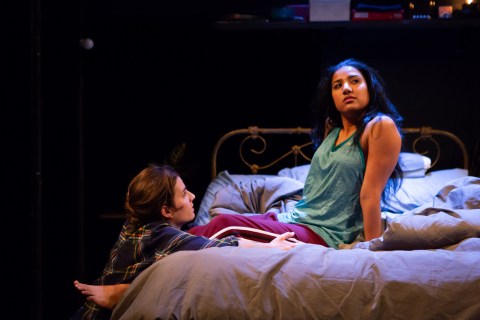
Laura Ramadei, Mykal Monroe, Agnes, 59E59 Theaters

(L to R): Laura Ramadei, Mykal Monroe, ‘Agnes,’ 59E59 Theaters (Hunter Canning)

Ironically, Charlie who yearns for meaningful connection does communicate with Anna. But June waits in the wings seemingly without the understanding or the ability to “let her older brother grow up on his own.” In a confusing flood of emotions, Anna is evicted from June’s safe haven into Hurricane Agnes the next day. Though the air clears, it is time to survey the damage. Indeed, the situation among June, Elle, and Charlie will never be the same.

As for Ronan, who attempts to negotiate his own breakup with his wife, that remains for the sunshine. Hiram Delgado’s Ronan effervesces with vibrancy and pathos. As the peacemaker who cannot attain peace with his own wife, he introduces the catalyst (Anna). However, he cannot halt the chain of events. Nevertheless, his humor steers the group and provides some measure of riotous sanity. Delgado’s is a stand-up performance.
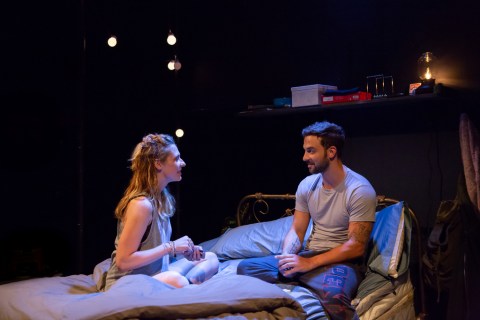
Claire Siebers, John Edgar Barker, Agnes, Catya McMullen, Jenna Worsham, 59E59 Theaters

Claire Siebers, John Edgar Barker in ‘Agnes’ written by Catya McMullen, directed by Jenna Worsham at 59E59 Theaters (Hunter Canning)

The play’s centerpiece message is that Charlie’s condition represents in exaggerated form the human condition. Especially in these times, one of humanity’s failures centers on crippled relationships and the lack of meaningful connections. With inflexibility comes the inability to stand in another’s shoes or perceive the sanctity of another’s viewpoint. The brilliant yet socially “backward” Charlie recognizes these failings within himself and seeks to correct them. The others only reflect their incapacity to empathize with those closest to them. The hard truth of communication necessitates that one listen and put aside one’s own needs. Charlie appears to be the only one in Agnes who fervently tries. And through their fears, he attempts to lead his sister to understand.

Ironically too, Charlie symbolizes the best of humanity. Indeed, he does this despite his stilted, abrupt, truth-blurting observations (many of them humorous). Despite his social inadequacies, he is brutally aware of himself. Though he doesn’t readily show emotional connection and appears without emotional tenor, his awareness of others is acute. Finally, we note the importance of openness and empathetic listening.

In this tour-de-force, which is sometimes humorous, sometimes spellbindingly real, Worsham and the cast riffing on McMullen’s deft writing remind us of underestimated human verities. It is a pleasant irony that the character who appears most socially dysfunctional recognizes and explores the greatest of human truths.

Not to give too much away, do look for thematic connections with the characters Charlie interviews. The metaphors and symbolism are particularly apt. Agnes is a must-see.

Kudos to the design team: Angelica Borrero (sets), Cheyenne Sykes (lighting), Daniel Melnick (sound), and Nicole Slaven (costumes). Agnes runs at 59E59 Theaters until 29 September. Visit the website for tickets.
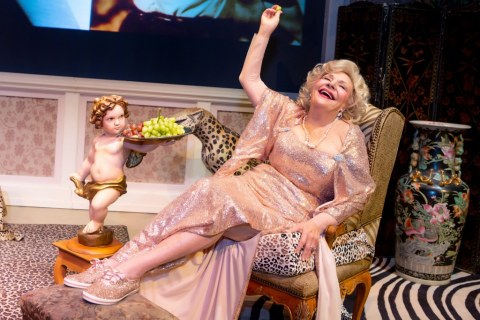
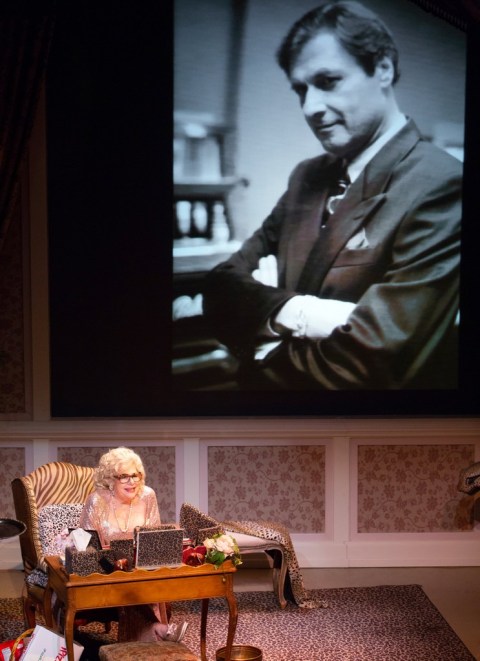
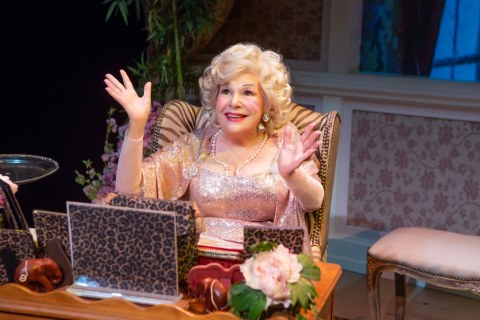
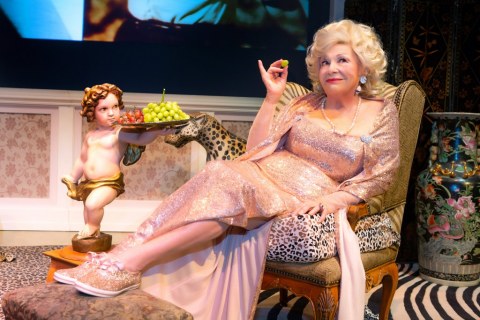
‘My Life on a Diet’ Starring Renée Taylor, a Laugh Fest You Don’t Want to Miss

Renée Taylor, My Life on a Diet, Joe Bologna, Theatre at St. Clement's

Renée Taylor in ‘My Life on a Diet.’ directed by Joe Bologna, Theatre at St. Clement’s, (Jeremy Daniel)

Every woman who has ever gone on a diet should either run to the Theatre at St. Clement’s to see My Life on a Diet or read Renée Taylor’s titular memoir. Taylor and Joseph Bologna, her husband of 52 years (now deceased), wrote her one-woman show, and as live performances go Taylor’s is just sumptuous.

Bologna, who directed the show, and Taylor have been a brilliant comedy writing and acting duo for decades, garnering Emmy Awards, a Writer’s Guild Award and nominations, and Academy Award nominations. Both have prodigious credits spanning TV, film, and Broadway. Together they collaborated on 22 plays, four films, and nine TV movies and series. Taylor acted with Bologna in plays they wrote for Broadway and Off Broadway, some later adapted for film, such as Lovers and Other Strangers, which they also starred in.

Taylor’s most recent exploits have been in recurring TV roles in How I met Your Mother, Bob’s Burgers, and Happily Divorced. Renowned for her portrayal of Sylvia Fine in The Nanny with Fran Drescher, Taylor developed comedic bits throughout based on her own eating binges. Overeating and dieting have been a Renée Taylor obsession her entire life. Thankfully, her story of dieting woe and skinny happiness has blossomed into this uplifting and marvelous show at St. Clement’s.

Indeed, with every well-timed joke, the production shimmers with riotous, rollicking fun. From beginning to end, the story scintillates with irony. From this historical reminiscence of Taylor’s childhood and adult years in New York City, Miami, and Hollywood, we glean an indelible portrait of the celebrity frenzy of dieting and weight loss. Enhanced and elucidated with personal archival black-and-white photos, film clips, diets, anecdotes, and fabulous humor, the story of her life through the decades makes us empathize as we laugh at her deadpan delivery. With every line and precept of weight loss, Bologna and Taylor authenticate Taylor’s show-business life as she struggles and fails to maintain “weight” even to this day.

Renée Taylor, My Life on a Diet, Joe Bologna, Theatre at St. Clement's

Renée Taylor in ‘My Life on a Diet,’ directed by Joe Bologna, Theatre at St. Clement’s (Jeremy Daniel)

Not only does the writing sparkle and effervesce, Taylor’s impeccable delivery and beautifully paced riffs leave no time for you to breathe. Your sides will be splitting and you’ll double over with joyful hysteria. For Taylor absolutely crushes it as she obsesses about appearance and historical trending diets (more than 25 including the Master Cleanse), with zaniness and LMAO humor.

The first examples she lists include individuals who died while on their own self-created and -touted diets. One even committed suicide. You may recognize the names. However, messages and themes eventually sneak through the crashing laughter. The fascism of slimness and appearance which Hollywood once embraced with fury can be wild, if not fatal.
Renée Taylor, My Life on a Diet, Joe Bologna, Theatre at St. Clement's

Renée Taylor in ‘My Life on a Diet,’ directed by Joe Bologna, Theatre at St. Clement’s ( Jeremy Daniel)

Though Taylor doesn’t reference Judy Garland, one may recall Garland’s drug addictions that began with diet doctors’ heavy prescriptions. Thus, when Taylor discusses weight loss via a diet of expensive Cristal champagne, and her addiction to amphetamines, we realize her journey was heading toward a dangerous cliff. Thanks to an intriguing, no-nonsense female doctor, and to meeting Bologna, Taylor’s life took an upswing into love and away from the dieting morass. One may arrive at emotional health and happiness with generous dollops of love, humility and humor. And so what if there are always a few pounds to shed? Wellbeing becomes paramount; that, and the ability not to take one’s obsessions too seriously.

One does not have to be overweight or diet-challenged to appreciate Taylor’s history of Hollywood stars and their diet manias. Even anorexics will enjoy her beautifully delivered jokes. For they highlight Taylor’s other obsessions: becoming and being “star-bright famous,” and meeting “star icons.” Notably, Taylor formed relationships with Orson Welles and Lenny Bruce. She became friends with Grace Kelly and Barbra Streisand on their way to stardom. When she discusses her poignant and close relationship with Marilyn Monroe, whom she met at the Actor’s Studio where both studied with Lee Strasberg, she breaks your heart.

In each instance Taylor lists food habits amidst delicious tidbits of humor. For example, Joan Crawford neglected to eat the bread part of raisin bread, eating only the raisins. Marilyn Monroe’s grape diet didn’t work for Taylor. On Lou Costello’s diet, the first diet Taylor went on (at age 11), she began to look like Costello.

Renée Taylor, Joe Bologna, Theatre at St. Clement's, My Life on a Diet

Renée Taylor in ‘My Life on a Diet,’ directed by Joe Bologna, Theatre at St. Clement’s (Jeremy Daniel)

As she attempted to combat the eternal problem of all dieters, “cheating,” she found that no diet worked, not even the diet plans given her by doctors her mom took her to. Then came a turning point in her “dieting life.” No one forced her to go on a diet; she had made that decision herself prompted by a first love. “Applause.” And her yo-yo dieting journey began. Priceless! I identify completely.

Regardless of whether one is young or old, male or female, overweight, buff, sylph-like, or curvy, Taylor’s war on fat rings true for us today. Indeed, for young folks in elementary school through high school and beyond, weight and identity is a critical issue, even for males. Fat shaming can be a social media bullying problem. Taylor reveals that humor, wit and irony can slay bullying insults at their roots.

Finally, kudos go to Harry Feiner (Scenic Design), Pol Atteu (Costume Design), Stefanie Risk (Lighting Director), Jay Risk (Sound Engineer), and Michael Redman (Projections Designer) for their efforts in making this a completely entertaining and gobsmacking must-see show.

My Life on a Diet is at Theatre at St. Clement’s (423 West 46th St. between 9th and 10th). Visit the website for tickets or call Telecharge, 212-239-6200. But hurry! The show runs until 19 August. Update: the show was extended a number of times. It should tour or come back. So many women struggle with losing even one pound, they will love Renée Taylor’s hysterical perspective.

NYC Theater: ‘On a Clear Day You Can See Forever’ Starring Melissa Errico at The Irish Rep

Charlotte Moore, On a Clear Day You Can See Forever, John Cudia, Melissa Errico, Irish Repertory Theatre

John Cudia, Melissa Errico in the Irish Repertory Theatre’s ‘On a Clear Day You Can See Forever,’ directed by Charlotte Moore (Carol Rosegg)

I did not see the Broadway versions (1965, 2011) of the musical On a Clear Day You Can See Forever by Burton Lane (music) and Alan Jay Lerner (book and lyrics). Paramount Studio made a film of the musical starring Barbra Streisand and Yves Montand, which has been listed by the American Film Institute as one of the 100 greatest musical films ever. Unfamiliar with the theater versions and the film, I did have a passing recognition of the more tuneful, memorable songs.

Thus, I came to Charlotte Moore’s adaptation of the show, currently running at the Irish Repertory Theatre, with a fresh perspective. The musical for years has been incorrectly (to my mind) characterized as “odd,” but I could not disagree more. I appreciated the Irish Rep’s revival and the lyrical, lovely music conducted by Gary Adler, engendered by music director John Bell and orchestrated by Josh Clayton. And I loved Moore’s canny direction and the accomplished, thrilling lead performances of Melissa Errico and Stephen Bogardus. Furthermore, the fine ensemble, also headed up by John Cudia as Edward Moncrief, strongly undergirded the dynamism of the revival/adaptation. Indeed, this production soars as a delightful theatrical experience full of whimsy, joy, and charm.

Melissa Errico, Stephen Bogardus, Irish Repertory Theatre, On a Clear Day You Can See Forever, Charlotte Moore

Melissa Errico, Stephen Bogardus in the Irish Repertory Theatre’s ‘On a Clear Day You Can See Forever’ (Carol Rosegg)

If one finds it difficult to accept the possibility of other realms of consciousness and making contact with past lives, the plot may appear inconsistently fantastic. Might we recall past identities, floating in our conscious or unconscious minds and impacting us in the present? Dr. Mark Bruckner (the gorgeously resonant-voiced Bogardus) through hypnosis regresses Daisy Gamble (played with energetic grace and verve by Errico). This premise, that we can recall past lives through hypnosis – an idea especially popular in the 1960s – grounds the play’s structure.

The regression occurs with Daisy’s permission after Dr. Bruckner discovers her amazing psychic gifts of precognition and telepathy. Threaded into her personality is a healthy dose of prescience. She predicts when the phone will ring. She communicates psychically and receives others’ thoughts. Of course, who communicates with her telepathically makes a difference, and why she receives their thoughts and not those of others conveys one of the play’s themes.

To say Daisy manifests the flexibility to suspend the culture’s rational materialism remains an understatement. And Errico handles Daisy’s gifts with authenticity and humor. For example, when she sings “Hurry It’s Lovely Up Here” to illustrate to Dr. Bruckner that her plants blossom speedily with her love talk, her luscious singing provokes our belief in Daisy’s extrasensory powers. With Errico’s magical, musical show-woman-ship, such feats of telepathy, etc., become humorous and matter-of-fact realistic.

Melissa Errico, Stephen Bogardus, On a Clear Day You Can See Forever, Charlotte Moore, Irish Repertory Theatre

Stephen Bogardus, Melissa Errico, the Irish Repertory Theatre’s ‘On a Clear Day You Can See Forever’ (Carol Rosegg)

It’s when Daisy and friends attend a group hypnosis session to stop smoking that the doctor notes her unusual susceptibility to hypnosis. Intrigued, he regresses her. With few props, clever costumes, and elusive painted projections, Moore and her artistic team stage 1960s New York City and 18th-century England adroitly. Somehow, the team’s artistry effects Daisy’s/Melinda’s environments and consciousness with appropriate, minimalistic fanfare. After all, this is a play about the mind, the intellect, and one’s ability to receive glimpses of the forever in the here and now. The small stage and pared-down sets and casting at The Irish Rep seem appropriately intimate for the overarching themes about the mysteries of life’s incorporeal beauty and spiritual grace in all living creation.

John Cudia, Melissa Errico, Irish Repertory Theatre, On a Clear Day You Can See Forever, Charlotte Moore

John Cudia, Melissa Errico in the Irish Repertory Theatre’s ‘On a Clear Day You Can See Forever’ (Carol Rosegg)

Under regression, Daisy transforms into elegant, well-healed Melinda Welles, replete with British accent and cool impassioned femininity. When her lover becomes her philandering husband Edward Moncrief (Cudia’s rich operatic voice melds beautifully with Errico’s in “She Wasn’t You”), and pursues many dalliances, unlike women of her time she revolts. To escape her misery and begin a new life, she books a passage to America. But her physical body never makes it. Perhaps her spiritual desire manifests through someone else? Regardless, Melinda, in Daisy’s unconscious, has arrived in Brooklyn and shows up when the time to manifest becomes appropriate. This notion teases with ironic humor.

Dr. Bruckner falls for the exotic, elusive Melinda (Bogardus impeccably renders the lovely song “Melinda”).  We understand his amazement at this other woman who appears when Daisy falls into unconsciousness under hypnosis. Melinda represents Daisy in a mysterious connection to the present which has yet to be revealed at this point.

Stephen Bogardus, Irish Repertory Theatre, On a Clear Day You Can See Forever, Charlotte Moore

Stephen Bogardus in Irish Repertory Theatre’s ‘On a Clear Day You Can See Forever’ (Carol Rosegg)

Errico exquisitely portrays the dual opposites, Daisy and Melinda, as head and tail of the same coin. She slips from cool Brit to zany New Yorker smoothly, but the transformation remains a cipher. Daisy’s bubbly exuberance, Brooklyn-accented loquaciousness, and peculiar comfort with her psychic gifts belies insecurity and self-debasement. And Errico’s poised, mannered, suppressed Melinda belies the broiling, impolitic, rash female maverick. For she erupts, revolts against the cultural limitations of her sex, and sets out on a fateful voyage of doom.

But when Daisy discovers the tape of her regression sessions and realizes she loves Bruckner, she becomes jealous of the aspect of herself beloved by the doctor – Melinda. The amazing “What Did I Have That I Don’t Have?” that Daisy sings in anger and hurt is ultimately ironic, because she doesn’t realize that her past consciousness of Melinda is an element of her own character and ethos. Yet the song through Errico’s instrument becomes transcendent, a universal song of lost love after initial passion has faded. That both Daisy and Melinda are ultimately one she cannot realize until Bruckner evolves to understand his love for all of her.

On a Clear Day You Can See Forever, Charlotte Moore, Melissa Errico, Irish Repertory Theatre

Melissa Errico and ensemble in Irish Repertory Theatre’s ‘On a Clear Day You Can See Forever,’ directed by Charlotte Moore (Carol Rosegg)

That one character (Daisy) encompasses and feeds into the other (Melinda) reveals Alan Lerner’s depth in flirting with the complexity and intricacy of consciousness. And the depth with which the writer characterizes the evolution of Dr. Bruckner’s self-transformations also reveals his flirtation with novel, profound ideas.

The love Dr. Bruckner feels – first for Melinda – evolves into the knowledge that Daisy and Melinda inhabit the being of the same woman. Thus, at a crucial moment he saves her and assists in her own evolution as a modern woman who loves a worthier man than the one left behind in another time and place. Bogardus renders the gradual evolution of Bruckner’s love beautifully in his ironic comments to Melinda when she and Moncrief show affection to one another. Then it gloriously bursts out in his incredible, full-throttle rendition of “Come Back to Me” after his revelation that he has grown to love Daisy/Melinda as one.

Melissa Errio, Irish Repertory Theatre, On a Clear Day You Can See Forever, Charlotte Moore

Melissa Errico and the cast of the Irish Repertory Theatre’s revival, ‘On a Clear Day You Can See Forever’ (Carol Rosegg)

Clearly, in helping her connect the present with the past in her own consciousness, Bruckner frees himself to love. And he helps free Daisy to return his love without jeopardizing her own psychic integrity. Finally, they solve how the mystery of Melinda’s death links to the present in a vital, uncanny way. The union of Daisy’s and Melinda’s consciousnesses binds Bruckner and Daisy in an incomparable clarity of vision, a way of seeing that gives them and their friends a glimpse into their interconnectedness with forever, the spirit, the eternal.

At the crux of Lerner’s and Lane’s work remains the theme that life encompasses more than materialism and empiricism. And in everpresent time, the past, present, and future may conjoin in the spiritual plane. We may be too distracted with the corporeal realm to understand how. Yet perhaps there are indeed realms of forever to which all of us are attached, whether we realize it or not. Finally, as Daisy Gamble learns, for those who have a gift of “second sight,” life is expansive. Used beneficially, such gifts may allow one to enjoy life’s beauties more fully and help others do the same. And in that expansiveness, one will probably discover the true meaning of love. The title song, “On a Clear Day You Can See Forever,” best represents this theme.

In her adaptation of this musical Moore reconfigures the action and characters concisely and adriotly. With the help of music director John Bell, choreographer Barry McNabb, scenic designer/projection artist James Morgan, costume designer Whitney Locher, lighting designer Mary Jo Dondlinger, sound designer M. Florian Staab, projection designer Ryan Belock, the musicians, the ensemble, and the leads, this version of On a Clear Day You Can See Forever shines like a beacon of truth.

Do you yearn to  get away from the current news cycles and our country’s present turmoils? If so this is a must-see. For you will have an extraordinary and uplifting time watching the team beautifully, seamlessly render the illusive with authenticity. The cast’s ebullience and the show’s ironic twists of humor will remind you of goodness. And you will feel embraced by the airiness of light. It would be a pity to miss the fun and romance, layered with an ethereal message we need to be reminded of.

The Irish Repertory Theatre’s On a Clear Day You Can See Forever runs until 12 August. Tickets are available online.

Save

Save

Off Broadway Theater Review: ‘Wood Calls Out to Wood’ at The Tank

Hieronymous Bosch, Garden of Earthly Delights, panel# 1, Wood Calls Out to Wood

Hieronymous Bosch’s ‘Garden of Earthly Delights,’ panel #1, courtesy of this site.

Hieronymus Bosch’s 15th century triptych “The Garden of Earthly Delights,” never fails to amaze and intrigue. In Fisher Stevens’ exceptional Before The Flood which examines global warming/climate change and shadows Leonardo DiCaprio’s quest as United Nations Messenger of Peace on climate change, Stevens references Bosch’s work.

Hieronymous Bosch, Garden of Earthly Delight, panel #2

Hieronymous Bosch’s ‘Garden of Earthly Delights,’ panel #2, courtesy of the site.

The Garden of Earthly Delights which hung over DiCaprio’s bed when he was a kid becomes a the monumentally symbolic metaphor at the central point of Before the Flood.. The director elucidates the triptych and reveals Bosch’s progression from panel to panel. Mankind was given the power of the beautiful Garden (our planet Earth) and in seeking forbidden knowledge of good and evil, created a nightmare world that his very nihilism and self-hate (sin) currently is effecting the destruction of his own species, every other species and the eco-systems of the planet, which results in a hellish state (panel three).

Hieronymous Bosch, Garden of Earthly Delights, panel # 3

Hieronymous Bosch’s ‘Garden of Earthly Delights,’ panel #3, courtesy of the site.

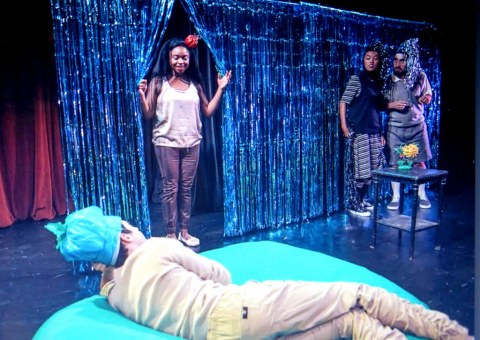
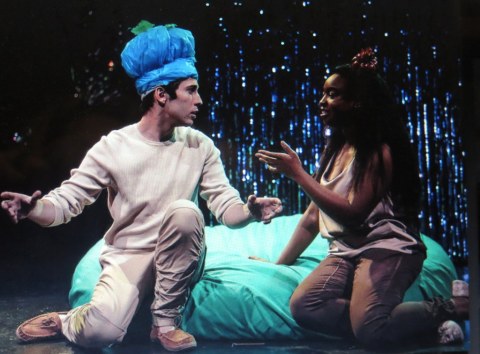
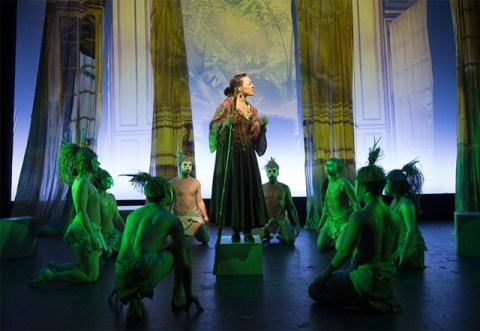
Corinne Donly’s Wood Calls Out to Wood, directed by Sarah Hughes currently at The Tank until 12 November presents a different interpretation of Bosch’s work. However, before one travels to The Tank to see the production which translates Bosch’s work from wood and paint into a live play creation, shimmering, colorful, fanciful and more, acutely review the Bosch triptych.

The assumption the playwright makes is that the audience carries around the detailed visual memory of the three panels and with that prodigious knowledge can correlate the dialogue, actors, sets, costumes and objects used with the various panels. I admit my own failing. Without nary a projection of Bosch’s triptych, I became hard pressed to recognize various associations. However, I gather, that was one theme of this work, as abstruse, opaque and self-possessed as it was.

Connor James Sheridan, Tanyamaria, Lanxing Fu, Will Dagger, Sarah Hughes, Corinne Donly

Foreground: Connor James Sheridan, L to R background: Tanyamaria, Lanxing Fu, Will Dagger in ‘Wood Calls Out to Wood,’ by Corinne Donly, directed by Sarah Hughes (Sasha Arulyunova)

The often poetic dialogue and nonsensical ramblings of the characters inspired by a few figures in Bosch’s work kept one interested by its sheer dense ridiculousness. Experimental theater reaching out for someone to make sense of it, to hang a truth on? OK. I can move with surrealism and absurdism. But even surreal, “out-there” work hangs on a point of revelation throughout and most importantly at its conclusion. Indeed, if the production was meant to end in a whimper, or a fabulous new insight, I confess, I missed it.

I do appreciate the exertions of the actors who seemed to have their sense memories and in-the-moment behaviors lined up appropriately. And the couple who love and comfort one another were adorable.

Connor James Sheridan, Tanyamaria, Wood Calls Out to Wood, Corinne Donly, Sarah Hughes

Connor James Sheridan, Tanyamaria in ‘Wood Calls Out to Wood,’ by Corinne Donly, directed by Sarah Hughes (Sasha Arulyunova)

Of course the irony in all of this remains that Bosch’s triptych replete with spiritual symbolic significance of man’s own inhumanity to himself was no where to be viscerally found. Wood Calling Out to Wood exists as an exercise. It is an exercise in the fun, lively, innovative, experimental, weird, often incompletely executed extrapolation of the three panels because that is what it is attempting. In the attempt it becomes the esoteric for esoteric’s sake. A Foucault for those who would attempt to make meaning of it and get tripped up on their own inadequate philosophies. It perches on the edge of Fuzzy Thinking as a mind blowout for those who will go there. If one will, make sure to have enough rest. It may be a flip to follow along. But you may also flip into the unconscious and post haste, fall asleep. Have coffee beforehand, and preferably not decaf.

My reading of the script helped me to understand what the playwright had intended. If the production could be given a proper mounting, with visual projections of Bosch’s work for those like this obtuse writer, I do think that Corinne Donly’s Wood Calls Out to Wood might find itself marvelous.

As it is, if you enjoy supporting The Tank (312 West 36th St), and favor the sheer nonsensical fun of attempting to make heavy-duty meaning out of the curious, you will enjoy the silly, frenetic quality of Wood Calls Out to Wood which runs for 50 minutes without an intermission. As for Bosch? Well, don’t expect any of his magnificent visuals, so review his works, exercise your memory and go prepared.

‘A Wall Apart,’ A New York Musical Festival Theater Review

A Wall Apart, nYMF, Lord Graham Russell, Sam Goldstein, Craig Clyde, Keith Andrews

‘A Wall Apart’ at the NYMF, Music & Lyrics by Lord Graham Russell, Book by Sam Goldstein & Craig Clyde, directed/choreographed by Keith Andrews (Michael Schoenfeld)

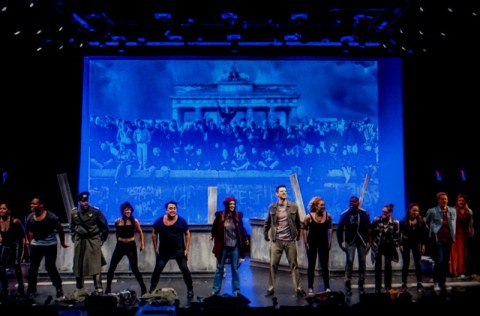
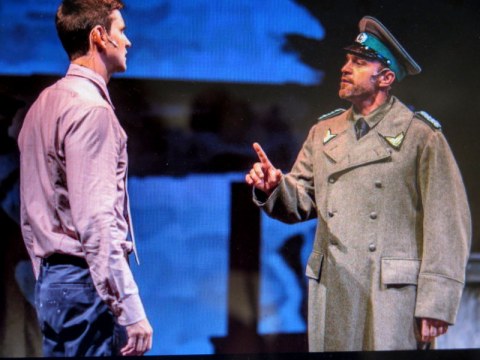
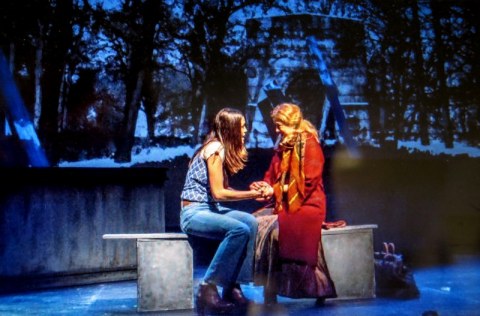
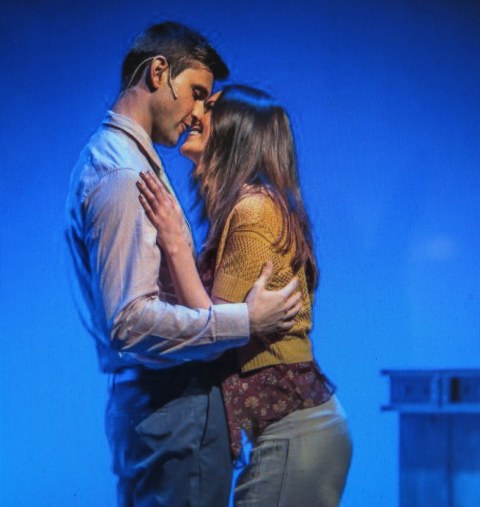
It was a frightening time, the height of the Cold War! It was the division of Berlin into two sectors divided by a mammoth wall of concrete and barbed wire. West Berlin embraced everything economically viable through a market economy representative of Western culture.  East Berlin was controlled by the East German police (the hated Stasi) who were the engines of the government of the German Democratic Republic, a repressive communist country beholden to U.S.S.R. ideologies. How does one resist oppression and the repression of personal freedoms? How does one deny adherence t and subservience to the state? A Wall Apart reveals that the resistance was established prominently in two ways: rock music and love.

In A Wall Apart, a thrilling production which premiered at the New York Musical Festival (Music and Lyrics by Lord Graham Russell of Air Supply; Book by Sam Goldstein and Craig Clyde), we recognize that in the twenty-eight years which spanned the time of the Berlin Wall and the oppression it represented, that  rock music promoted the resistance against Communist tyranny. It did this subtly through its brash sounds and clashing, free-wheeling lyrics. Rock music expressed the yearned for liberty already inherent in the minds and souls of the younger generation. Its expression was life itself and in its clanging, smashing vibrations there could be heard the clarion call to revolt.

Maddie Shea Baldwin, A Wall Apart, NYMF

Maddie Shea Baldwin and the company of ‘A Wall Apart,’ NYMF (Michael Schoenfeld)

Perhaps more importantly, this production also reveals the power in resisting with love. In A Wall Apart we see that love and family unity ultimately triumph over allegiance to an oppressive government and the acceptance of its lies that subvert one’s humanity. From the opening song “Our City” we are reminded of the dreams of liberty that are inherent in every soul and which are the driving force that cannot be overthrown ,despite the attempt of governments to control that force through external structures and the threat of destruction.

Emily Behny, Josh Telle, Jordan Bondurant, Maddie Shea Baldwin, A Wall Apart, NYMF

(L to R): Emily Behny, Josh Tolle, Jordan Bondurant, Maddie Shea Baldwin in ‘A Wall Apart,’ NYMF (Michael Schoenfeld)

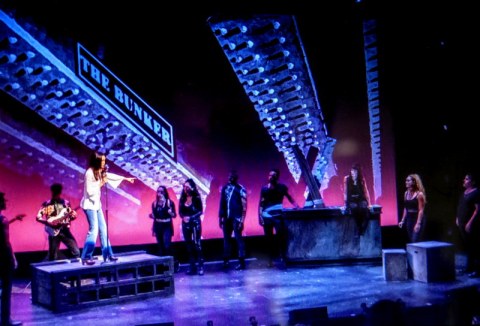
This force is manifested in each of the characters, perhaps most symbolically through Mickey (Josh Tolle gives a powerful sustained performance throughout) whose rock band plays at The Bunker in West Berlin. The Bunker is the place of symbolic birth, life and hope in the liberty of the rock music of the West. Mickey’s band, The Angels, represents all the goodness of Mickey’s own character. It has led him to a loving relationship with Suzanne (Emily Behny’s portrayal is soulfully rendered) and collaboration with his brother Kurt (the excellent Jordan Bondurant). It is at The Bunker where the bond between Kurt and Esther (the superb Maddie Shea Baldwin) is initiated, and all seems to be going swimmingly except for the rumors that Berlin is being divided, revealed to Kurt by their brother Hans (Darren Ritchie gives a bravura performance as the Stasi who must negotiate the conflict between love and obligation to the state in his own heart).

Jordan Bondurant, A Wall Apart, NYMF

Jordan Bondurant and company in ‘A Wall Apart,’ NYMF (Michael Schoenfeld)

The most stalwart and loving of the characters is Tante (Leslie Backer is nothing short of astonishing). She is the glue that holds the family together; she mediates the troubles among the brothers and provides wisdom when Kurt and Mickey are caught in the East after the Berlin Wall is built and there is no getting out. Kurt and Mickey cannot abandon Tante who raised them when their parents were killed. Kurt especially is pressured by circumstances for he has left Esther in the West and will not join her but instead, joins the Stasi with Hans so that together they can put food on the table and obtain greater stockpiles of coal for heating. It is a devil’s bargain.

Jordan Bondurant, Darren Ritchie, A Wall Apart, NYMF

(L to R): Jordan Bondurant, Darren Ritchie in ‘A Wall Apart,’ NYMF (Michael Schoenfeld)

Material safety and support are not enough for Mickey who has to be free to express his being though his artistry and music. With Kurt’s information about which routes to take to get over the Wall, Mickey and a pregnant Suzanne make an escape attempt. What happens is irrevocable. And once again, we are reminded that individuals are willing to take grave risks when freedoms and personal identity are at stake. Ultimately, the risk is worth it for a difference is made in the lives touched by sacrifice.

Josh Tolle Jordan Bondurant, A Wall Apart, NYMF

(L to R) Josh Tolle, Jordan Bondurant in ‘A Wall Apart,’ NYMF (Michael Schoenfeld)

A Wall Apart follows the resistance of the family and Hans’ conflict at having to perform the obligations of being a Stasi when his heart is elsewhere. It journeys with Kurt’s resignation from the Stasi and his affirmation to join the revolt from within East Germany to bring down the totalitarian structures external and internal which would oppress individuals’ rights to follow their own path. And somehow, the love between Kurt and Esther finds a way to grow though the wall divides them physically. It is intriguing how this occurs and as there is no spoiler alert here, you will just have to see the production when it moves to another venue (which it should) at some point in the future.

Maddie Shea Baldwin, Leslie Becker, A Wall Apart, NYMF

(L to R) Maddie Shea Baldwin, Leslie Becker in ‘A Wall Apart,’ NYMF (Michael Schoenfeld)

This is a finely wrought production whose music (Lord Graham Russell of Air Supply created the music and lyrics) is gobsmackingly good in its variety, its power and its touching poignancy.  The book by Sam Goldstein and Craig Clyde highlights the period. It is aptly enhanced through the staging, sets, props and visual projections of archived black and white photographs, and video newsreel clips of the time. The fictionalized chronicle of one family’s struggles through tremendous economic and social upheaval is not only a vital remembrance of the past, it is a reminder of the tyranny of walls and what might happen in the future if fascism (in the guise of communism or any ism) is allowed to rear its ugly head.

A Wall Apart, NYMF

The company of ‘A Wall Apart,’ NYMF (Michael Schoenfeld)

The production is incredibly current. As we understand the uselessness of the Berlin Wall to serve its mission, we acknowledge that the inhuman, fascist separation of humanity is fear for fear’s sake. Fear is counterproductive, restriction retards innovation and stops the move toward progress. Regardless, freedom will triumph, love will triumph whether the resistance be through music or any means possible. Walls are symbolic of powerlessness in the face of humankind’s indelible desire for freedom and betterment. Barricades don’t work. Indeed, they inspire others to seek freedom despite the risk to themselves.

Jordan Bondurant, Maddie Shea Baldwin, A Wall Apart, NYMF

Jordan Bondurant, Maddie Shea Baldwin in ‘A Wall Apart,’ NYMF (Michael Schoenfeld)

I would hope that this production sees a continuation elsewhere. It is that good especially in that its themes presented through the music and book are profoundly transcendent. Kudos to the skillful, adroit and versatile musicians (Jonathan Ivie, Matt Brown, Lavondo Thomas, Daniel Ryan, T-Bone Motta), exceptional ensemble and the uber talented Keith Andrews, whose direction and choreography was insightful and spot-on great. I loved this production, for what it says and how the design team, ensemble, musicians all shepherded by the director collaborated to say it! A resounding yes, you get my vote!  A must-see which I am counting on seeing again.


‘Temple of The Souls’ a New York Musical Festival Review

Temple of The Souls, NYMF, Multistages, Dr. Judy Kuriansky, Lorca Peress

‘Temple of the Souls’ at NYMF a Multistages and Dr. Judy Kuriansky production (John Quilty)

The New York Musical Festival is one of the most anticipated theater festivals in the city for good reason. The musical productions are top drawer, professional from start to finish. People enjoy seeing which shows are shepherded along to eventually make it to Off Broadway, Los Angeles, and Regional Theater. And sometimes Broadway producers are interested, though considering what it takes to mount a Broadway production these days, it would seem to be an incredible dream. But dreams do come true.

One offering that I do hope will be shepherded in this fashion is the profoundly moving musical Temple of The Souls which ran from July 17-  23rd at the Acorn Theater, one of the venues where the New York Musical Festival is taking place until 6 August. The multiple award winning Temple of The Souls is absolutely smashing. I don’t want to even consider that this production may not not continue to garner a wide audience.  It is superb.

The Temple of The Souls, Multistages, Dr. Judy Kuriansky, NYMF, Lorca Peress, Anita Velez-Mitchell, Anika Paris, Dean Landon

‘The Temple of The Souls’ presented by Multistages and Dr. Judy Kuriansky at the NYMF, directed by Lorca Peress (John Quilty)

The stirring, enlightened book by Anita Velez-Mitchell, Lorca Peress and Anika Paris and entrancing, vibrant and hypnotic score (music by Dean Landon & Anika Paris, lyrics by Anita Velez-Mitchell & Anika Paris) warrants support beyond its New York City run at the NYMF. The time for such a production to gain a larger audience is fast upon us because of  interest in the historical record of North America’s beginnings and the influences that have helped to shape our nation’s  and its territories’  greatness.

Temple of The Souls is not only grounded in historical fact, the iconic, forbidden love story between a man and a woman of two disparate cultures, is reminiscent of love stories through the ages. Indeed from Scotland to Rome, the people of various tribes and societies have been joined together with offspring from forbidden love arrangements. Such stories resonate for us today because of their inherent truths. Love does not see with the materialistic eye, it sees with the heart. Unbounded, love seeks an exalted level away from embedded social folkways that encourage hatred and violence. The triumph of love to unify nations and dispel racism, discrimination and hatred is the key theme of this incredible musical. How worthy, how wise, how current for our times.

Danny Bolero, Lorraine Velez, Jacob Gutierrez, Temple of The Souls, NYMF, Lorca Peress

‘The Temple of The Souls’ company with Danny Bolero, Lorraine Velez, Jacob Gutierrez at NYMF, directed by Lorca Peress (John Quilty)

Temple of The Souls begins in the present on a tour of the mysterious El Yunque, the magical and gorgeous rain forest in Puerto Rico at whose top on an outcropping of rock and a high cliff, there exists a cave and area known as the Temple of The Souls. The tour guide (Lorraine Velez), explains the significance of the area. Lorraine Velez also portrays Nana and as the symbolic earth mother encapsulates beautifully the movement of this production in her presence from its beginning to its conclusion. She is breathtaking, exquisite, poignant, brilliant.

As the guide, Velez tells of the legend of love between Guario, a Taino (an indigenous native of the island) and Amada, a nubile sixteen-year-old, whose Spanish father represents all the abuses of Colonial Spain and its goodness as well. When Guario and Amada fall in love, taboos are broken, folkways are destroyed, and the spirits of the island who oversee the history of Spain’s horrific murders, rapes and enslavements, encourage the melding between old and new: the culture of violent bondage and the culture of pacific freedom, the paternalistic society and the gender friendly Taino society of men and women as partners.

Lorraine Velez, Temple of The Souls, NYMF, Lorca Peress

Lorraine Velez and the company of ‘Temple of The Souls,’ NYMF, directed by Lorca Peress (John Quilty)

The guide shares the history which underscores that many Tainos refused to bow to the oppression of the Spanish and instead committed suicide by jumping from the cliffs to their deaths in the sea. Suddenly, the scene is transformed. We no longer hear the echoes of the Tainos’ music and drums or see the spirits of the Tainos watching the guide and tourists. We are flashed back to the historic time of  the 15th century in a Spanish colonial settlement on the verge of El Yunque.

It is a colorful, joyful day, the first day of celebration of La Fiesta de San Juan Bautista (St. John the Baptist announced and Baptized Christ as the embodiment of love). The celebration is ironic for the oppressive culture and religion do not represent the alleged Christian values in their discrimination, abuse and violence toward the Tainos. However, the production reveals the turning point when things begin to change and hope arrives in the union of love between Guario (Andres Quintero’s singing and acting talent establish him as a rising star; he’s just great)  and Amada (Noellia Hernandez’s superb performance, sustained with power and lyricism throughout, is his equal).

Andres Quintero, Temple of The Souls, NYMF, Lorca Peress

Andres Quintero in ‘Temple of The Souls,’ at NYMF, directed by Lorca Peress (John Quilty)

Quintero’s Guario is part of the oppressed class who rejects his servitude and goes to El Yunque and the Temple of the Souls to discover who he is. During his travels through the town to eventually get to his destination, he runs into Nemesio (the excellent Jacob Gutierrez), and his cabal of repressive, abusive and discriminatory Spanish overlords. They threaten Guario and warn him not to return, a command reaffirmed by Amada’s father, Don Severo (the amazing Danny Bolero), the conquistador who governs the town. However, as Guario leaves, he and Amada see one another; it is “love at first sight,” or at the least curiosity at first sight. Nevertheless, the spark is ignited and the burning passion which grows between them creates a cataclysm that engulfs Guario’s, Nemesio’s, Amada’s, Don Severo’s and Nana’s lives and brings about the recompense of innocent bloodshed, the blood which cries out for a cessation which can only be delivered by love.

Noellia Hernandez, Temple of The Souls, NYMF, Lorca Peress

Noellia Hernandez in ‘Temple of The Souls,’ at NYMF, directed by Lorca Peress (John Quilty)

The next hour and one-half flies as we watch the characters struggle with themselves and against each other in conflicts still being experienced today between indigenous populations and “the colonials”-us! From moment to moment we are enthralled with the acting and voices of the fine ensemble, the gorgeous music, the theatrical spectacle and the intensity of the story’s dynamic between love and hate, lies and truth, oppression and freedom, lasciviousness and genuine, sincere love.

Temple of The Souls, NYMF, Lorca Peress

The company of ‘Temple of The Souls,’ at the NYMF, directed by Lorca Peress (John Quilty)

The director and artistic team have filled our senses and one cannot help but be moved to empathy, even to feel for Don Severo (Danny Bolero is commanding, vibrant, appropriately wicked, yet loving in his redemption) and Nemesio (Jacob Guitierrez’s “Nobody Makes a Fool of Me” is superb) who are the chief architects of evil, yet who reveal that they too, have compassion and are human.

Andres Quintero, Noellia Hernandez, Temple of The Souls, Lorca Peress, NYMF

Andres Quintero and Noellia Hernandez and the company of ‘Temple of The Souls,’ directed by Lorca Peress at the NYMF (John Quilty)

The sterling balance of humanity which the writers crafted for these characters so that the actors might more easily breathe life into them captures us. We readily identify with them as people we know and take to heart.  Each character is rich, each manifests complex shadows of multifaceted good and evil.

A fallout of this great writing of the book and lyrics and attendant music scoring is that the multiple themes are clearly, simply revealed. One theme is that oppressors ultimately destroy themselves with their own oppression. An additional theme is that there is no lie that should be allowed to separate familial relationships, because of the sickness and wickedness of the external culture. A third is that there should be no room for divisiveness which embitters and destroys everyone it touches.

These are indelible themes the audience recognizes. Thus, they are able to walk away inspired but chastened, moved but counseled to reaffirm the love within their own lives.  The production above all reminds us of our ancestry and whether it is colonial or indigenous native, all of us are related if not by blood, by empathy as human beings.

I can only capstone this review by suggesting that the production is in hiatus until the next time. Look for it and if it is produced in another venue which is anywhere near you, see it. You will be uplifted and enlightened and reminded of all that is a blessing in your own life. The Temple of The Souls is wonderful entertainment with a vital message that all of us need to hear and see again and again.