Blog Archives
‘Birthright’ at MCC is Exceptional
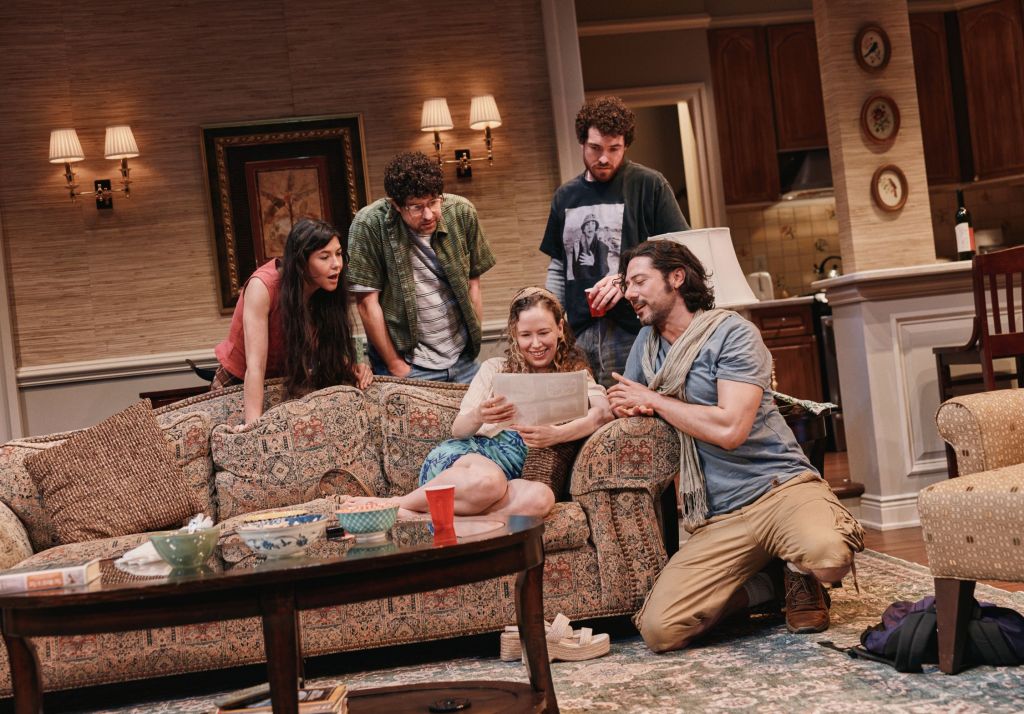
In Birthright writer Jonathan Spector tackles Jewish identity through the viewpoints of six friends as they evolve their relationship with each other after they return from a “Birthright” trip to Israel. Examining each of the characters over an extended time frame from 2006 through 2024, Spector reveals their psychic and spiritual growth as they confront the ever-changing dynamic of the political state of Israel, an increasingly violent and unsafe country.
Spector brilliantly integrates their emotional and personal backgrounds initially as twenty-somethings during the presidency of George Bush Jr. in 2006. After highlighting specific turning points he fast forwards to 2016 ten years later, during Hillary Clinton’s momentous campaign. The last segment settles on the salient points of their journey as they are still in touch with each other. The time quickly forwards through eight years to land in 2024, during the backdrop of President Joe Biden’s campaign, before he moved aside for Kamala Harris to run as the Democratic candidate.
Complex, insightful, philosophical, humorous, fascinating and profoundly human, Spector’s play strikes theatrical gold. Directed by TeddyBergman, Drama Desk nominated director, producer, actor, Birthright currently runs in an extension at MCC through August 23, 2026.
As he did with Eureka Day, the Tony Award-winning playwright presents controversies and explores various cultural opinions. His distinct characters, portrayed almost to near perfection by the ensemble, reveal perspectives that deepen and change over time. Each individual, raised in the cultural background of Judaism with its holiday traditions, foods, behaviors, language and concentration on identity, expresses their own brand of personal and political liberalism. Together, they eschew American conservatism and the Republican Party. In the last segment, we understand that they all deplore Benjamin Netanyahu’s leadership and AIPAC’s (wealthy Jewish donors) influence over congress.
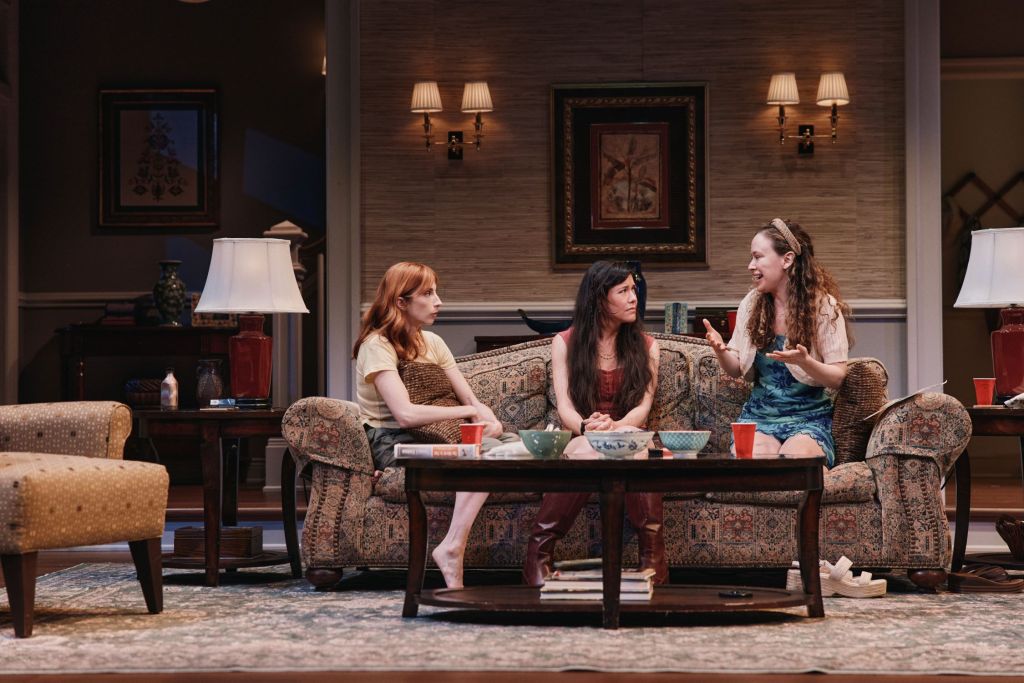
Indeed, some of the play’s humor derives from advancing political ironies cleverly using the flashbacks against our present as a medium. For example one of the characters comments that when “Hillary’s administration gets in, there will be job opportunities.” In another, an anecdote about a conservative father who voted Republican tells his son he may vote Democratic based on Kanye West’s comment that “Bush doesn’t care for Blacks,” evidenced by his dilatory response to Hurricane Katrina. The audience never loses track of the ironies of both statements and others. Indeed, years later West supports Republican Trump, then campaigns to divide Black votes from Biden to help Trump in the 2020 election. Throughout, Spector makes use of the characters’ assumptions about the future which blow up in their faces later in the play as “impossibilities” happen again and again, i.e. “one-third of the nation votes for Trump.”
The play opens at the reunion party that Chaya (Zoe Winters) holds for friends who recently returned from their trip to Israel. Birthright Israel gives Jewish adults between 18 and 26 years old an all expenses paid educational and fun trip to experience Israel as a “journey of a lifetime.” At Chaya’s parents’ house in a suburb of Washington, D.C. (with fine period appropriate set designs by Scott Pask), we first meet the brilliant, Israel-aware, gay Izzy (Molly Bernard), Chaya’s long-time friend. Next, we meet politically-minded blogger Noah (Eli Gelb), then drug-fueled musician Emerson (Nate Mann), recently expelled from his band for drinking. Arriving last, comes the philosophical, searching, profound Lev (Hale Appleman),
Also, we discover Chaya’s ulterior motive for the gathering; to dissuade Alona (Molly Ranson) from her rash decision to immigrate to Israel (“making aliyah”). Chaya spills that Alona lost her virginity to an IDF soldier during the trip. As Chaya tries to discourage her in front of the others, Emerson reveals the soldier sexually hooked up with a number of the other young women. Though this devastates Alona, we learn later the trip probably had the greatest impact on her because of her future decision to move there.
Interestingly, we learn the friends’ various attitudes about the trip’s inauthentic, unreal nature. The friends see through the propaganda about Israel to persuade young Jewish people to leave their birth countries. With the exception of Ranson’s Alona, all agree to one degree or another their established camaraderie fostered a bond with each other greater than any loyalty to Israel. Lev, who left the tour, felt, “it was all this like crafted Styrofoam,” like “seeing The Matrix.” Lev tells Izzy (who also felt the unreal situation), if I “wanted any kind of authentic experience, I had to get away from the trip.” After Lev disappears, he visits Jordan’s Petra, and Egypt. Also, he doesn’t miss the significance of the hours long lines for Palestinians to cross borders versus the fifteen minute line white tourists and others easily wait on. If Lev had not left the tour, he wouldn’t have seen this other alarming experience of Israel which he shares with Izzy.
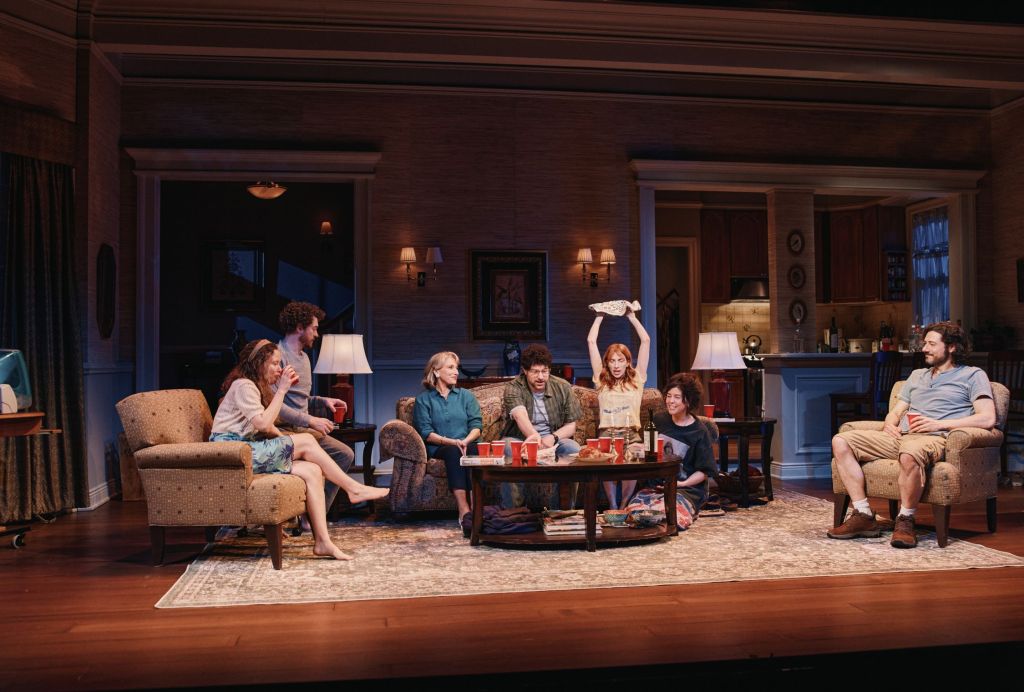
In the 2016 segment during another reunion at Chaya’s as they plan their toast for Alona’s wedding celebration the next day, we discover Alona and her husband are moving to Israel. From this meeting we understand the characters’ progress in search of something to strengthen their sense of purpose, despite personal successes or failures. For example married lawyer Izzy, at polar opposites with Alona, passionately speaks out against Israel’s apartheid. Chaya and Izzy question Alona’s Israel move in light of its moral ambiguity. As a citizen she will take part in the oppression and abuse of the Palestinians through her complicity by simply moving and living there. Will she stand for justice for Palestinians, or walk obliviously over their trail of tears?
Lev, who had spoken of his desire to become a rabbi years before drops out of school, gets married, divorced and beats himself up about not seeing his child as often as he likes. Noah quits The Washington Post and reinforces his online presence as a political influencer which eventually morphs into podcasting by 2024. Noah’s interest in Chaya which began after a brief affair on the trip continues despite Chaya’s marriage which heads toward divorce. Her work with the Obama administration ends and she takes on an organization to help Hillary get elected. Emerson seems the most lost at this point; unmarried, composing a few solo albums. But he stumbles into keeping kosher in spite of himself. All look forward to the hope of the first female president, some more avidly than others.
In the last segment, the downturn from hope and light into confusion and darkness becomes symbolized in the death of one of their number. Consequently, his loss raises the stakes of their relationships. The original bonds fostered during the trip have developed into love and an emotional concern and closeness which sustains them. Likewise, on another cultural, personal level, the devastating attack of Hamas on October7th, and the subsequent turmoil and chaos of finding the hostages amidst the daily bombing of the people of Gaza causes emotional devastation for Izzy, Chaya and Alona. And to various degrees, each friend questions the well-meaning values of the Judaism they were raised in versus Netanyahu’s bloody, never-ending punishment of Palestinian women and children.
What is the right path? Can the initial massacre justify the piles of bodies and annihilation and ethnic cleansing implicating the US government’s complicity supplying aid which includes weapons to Israel? Where did this begin? In Zionism as Izzy suggests or in the foundation of the state of Israel as a safe haven for outcast Jews in search of their birthright? And arguing whether the bloody slaughtering is or isn’t a genocide becomes a distraction while the incessant murdering continues. As Noah attempts to mitigate Izzy and Chaya’s arguments, Emerson arrives. He missed the funeral service. As it turns out he has arrived just in time for some food and community. And his surprising presence brings gasps from the audience.
As it turns out after years of wandering, in this 2024 reunion, the friends are brought together once again in a new way. And maybe just maybe Chaya and Noah will see their way clear to be with each other after all is said and done.
Birthright runs 3 hours 20 minutes through August 23, 2026 at MCC Theater; mcctheater.org.
‘Little Women,’ Kate Hamill’s Riveting Update of Louisa May Alcott’s Feminist Classic
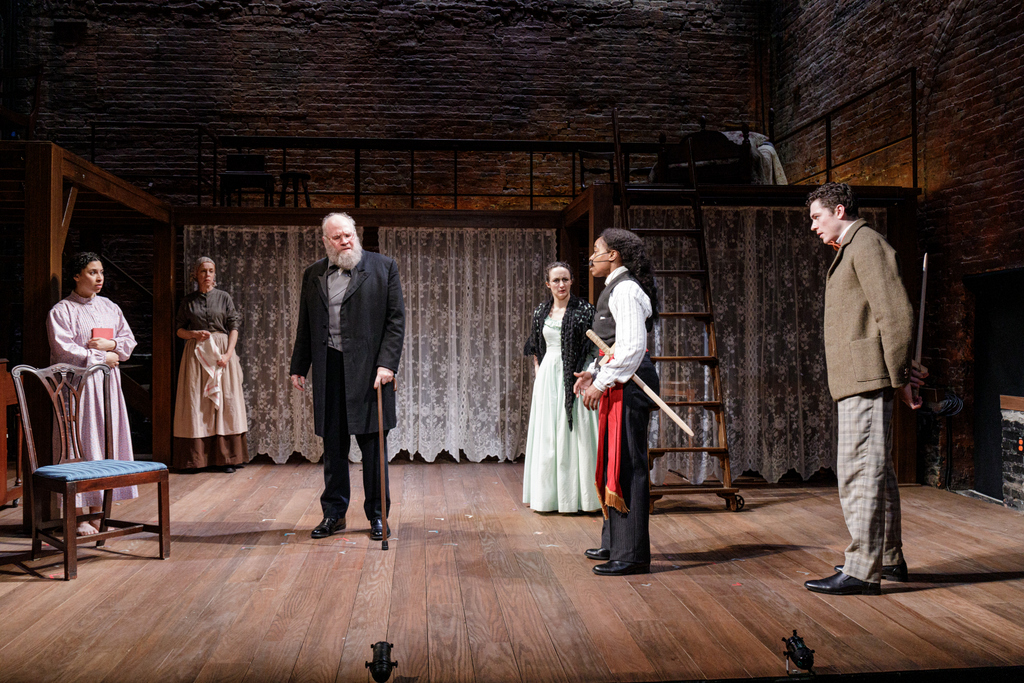
(L to R): Paola Sanchez Abreu, Ellen Harvey, John Lenartz, Kate Hamill, Kristolyn Lloyd, Nate Mann in Primary Stages production of Kate Hamill’s adaption of Louisa May Alcott’s ‘Little Women’ (James Leynse)
Oh the tragedy of being a brilliant woman out of her time and place who must, with probity, slip into “becoming” without making too many waves! Kate Hamill’s profound update of Louisa May Alcott’s Little Women is presented by Primary Stages at The Cherry Lane Theatre as a two act comedy/drama that reveals how the March sisters adapt or transform the gender roles that the culture dictates for them. The play focuses on Alcott’s view of women during the Civil War when hardship was plentiful and economic pressures were acutely felt by families such as the financially strapped Marches.
Hamill’s update speaks with currency for our time revitalizing the novel with forward-thinking elements as it highlights the 4 sisters and draws comparisons between and among them. Interestingly, Hamill develops their personalities revisiting Alcott’s plot structure and character foundation. But her characterizations gain breadth when she teases out themes and traits relevant to woman today.
The play parallels the salient turn of events in the novel and examines the “little women” as they age into their own perceptions of “womanhood” with regard to the role limitations afforded to women when the only careers available to them were as governesses, caretakers, wives and mothers. Women could not vote, were considered mental inferiors to men who could have them committed to an asylum if they “got out of line.” As wives they were men’s property, chattel to do with them as they pleased, command them as they would under the law. Fortunate are the Marches whose father is an abolitionist and a pastor who is loving toward his wife and children and does not batter them.
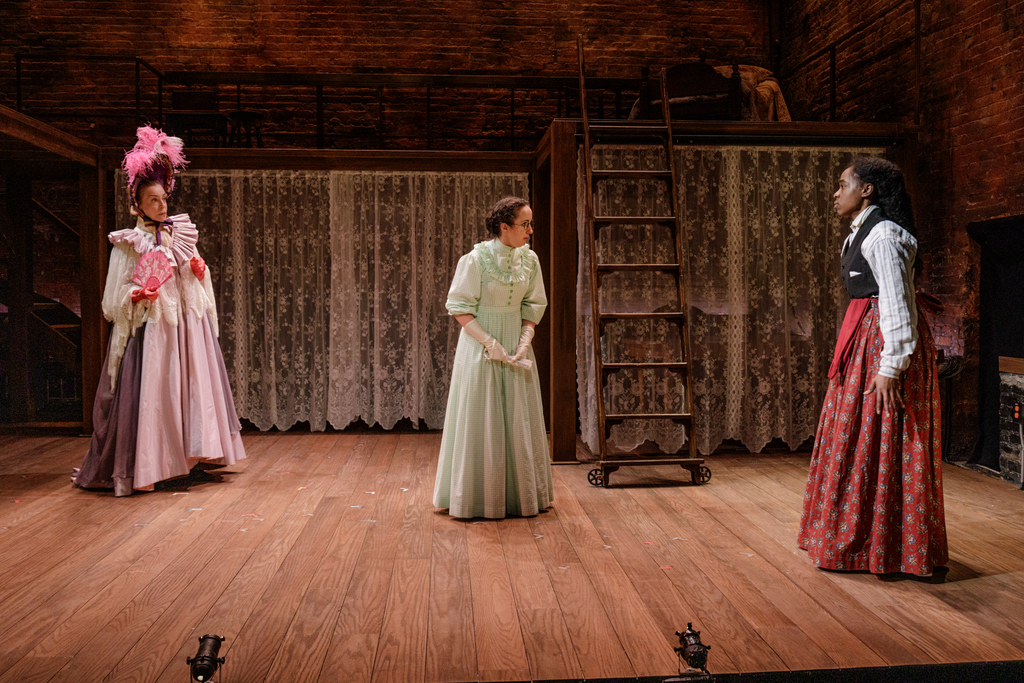
(L to R): Ellen Harvey, Kate Hamill, Kristolyn Lloyd, in Primary Stages production of Kate Hamill’s adaptation of Louisa May Alcott’s ‘Little Women’ (James Leynse)
In Hamill’s reconfiguration there is an understanding of each of the sisters with an eye on the present. The play’s development concerns how Meg, Jo, Beth, Amy adopt the roles that they will choose and perhaps inhabit for life. In this Hamill has extracted key concepts and fleshed them out to examine the underlying threads of what Alcott inferred but could not write about extensively in order to negotiate the accepted folkways and mores of her culture at the time.
The playwright highlights Beth (a heartfelt performance by Paola Sanchez Abreu) as the spiritual one whose physical weakness and confrontation with the death of the Hummel baby impact her understanding of life’s mutability. As Jo (Kristolyn Lloyd) dubs her “the conscience.” Beth is the one who speaks truth to power quietly, solidly, steadfastly. Bravely, she alone visits Mr. Laurence (John Lenartz) and softens his heart toward allowing Laurie (Nate Mann) to become a part of their family. Wisely, she soothes Laurie’s wounds when Joe spurns his marriage offer. Insistently, she encourages Jo to write from her heart’s core, not from fantastic plots that glorify the male gender and make women into weak creatures. She reconciles the family during quarrels, especially the final explosive argument between the two most antithetical women in the family, Jo and Amy (Carmen Zilles).
In her adaptation Hamill enhances Beth’s wisdom and beauty and highlights the strength of her soul. This is a wonderful teasing out of the characteristics of who she is, the first to be herself and eschew female “type” changing for no one, not even Jo who changes for her. That all the family accept Beth, even Amy, clearly emphasizes her dominion.
The costume design by Valerie Therese Bart superbly reflects each of the characters as Hamill has drawn them. Jo is forever in pants; in polite company, she wears a skirt over her pants. Beth doesn’t wear the outfits the others wear. She is more soul and spirit and thus, she wears invalid gowns of her physical weakness throughout the play. Of all the sisters Beth is perhaps the most actualized. She has “become” before our eyes and thus, is the strong woman which we might take for granted as weak or inconsequential.
Following Hamill’s characterization and apt direction by Sarna Lapine, Abreu’s Beth is subtle strength and quiet wisdom. Yet, she is vibrant and determined when she needs to be in Act II, forcefully chiding Jo (the vibrant, exquisite Kristolyn Lloyd) to shake off self-pity and stir herself to her life’s work as a mature writer with a unique, personal style. She is the sister that is “the rock,” not Jo who is a performer, writer, actor, but mush within, less “together” than the Jo of the novel. This is especially so when her novel is rejected and Beth gives her the resolve and courage to persist and write about what she knows best, the wonderful memories of her family.
The characterization of Meg enacted with with precision and humor by Kate Hamill who portrays Meg, provides the view of womanhood as poised perfection, feminine and graceful. She is the “perfect lady.” Indeed, Meg’s putting on airs at the dance and reminding a bored Jo by coughing to alert her to correct her unlady-like behavior is one of the hysterical highpoints of the production. But her poise at the dance is shattered when she takes off her glasses and becomes dislocated, having to be led around by Brooks (Michael Crane) Laurie’s tutor whom she eventually marries.
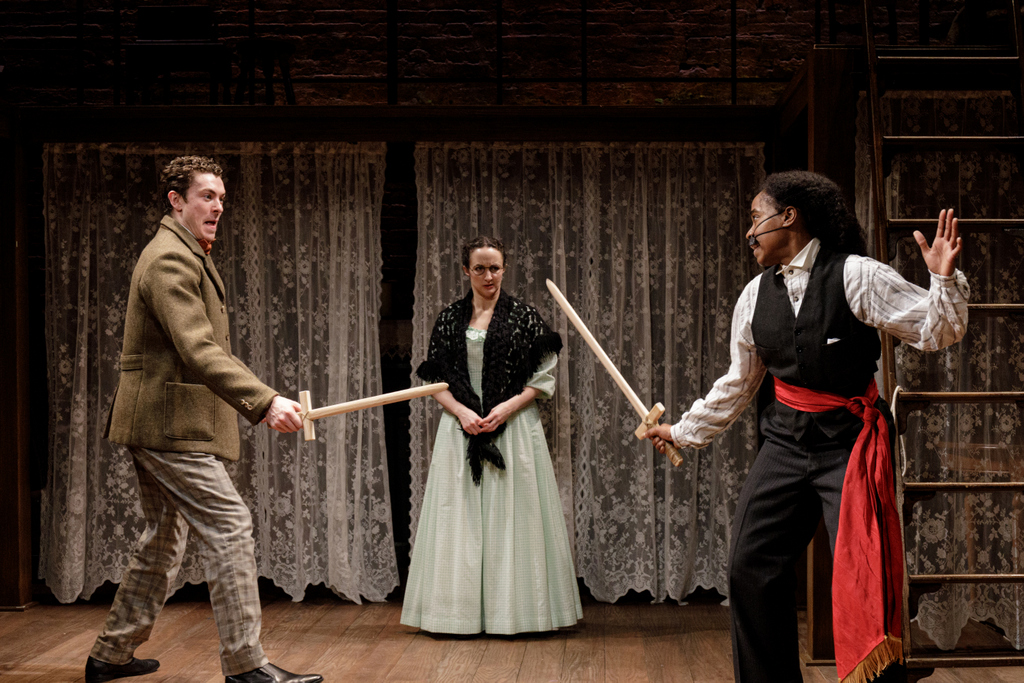
(L to R): Nate Mann, Kate Hamill, Kristolyn Lloyd, Primary Stages production of Kate Hamill’s adaptation of Louisa May Alcott’s ‘Little Women’ (James Leynse)
The irony of having to be led around by a man because of her myopia is symbolic of what ails women who too easily swallow the culture’s gender roles. Meg has proudly fit herself into the wifely mold until she collapses hammered by the reality of the role’s oppression in a superbly portrayed scene by Hamill, Crane and Lloyd. Meg leaves Brooks and returns home, confiding to Jo her desperation because she is overcome by the impossible reality of domestic life, motherhood and male expectations that the household be run in perfect order every day.
Hamill’s “freak-out” as Meg is both humorous and dramatic. Her fine performance of the scene first with Jo and then with Brooks who is contrite and apologetic, strikes like lightening. Meg goes back to him after she has asserted what she will and won’t put up with and we sense he is a reasonable man; thus, the development of a relationship that is the hope of a partnership of give and take forms. Michael Crane is excellent as Brooks and authentic in his portrayal of the retiring, erudite tutor who, too, falls prey to the gender roles of the time to not fully recognize that he needs to “man up” and help out Meg.
For her part Jo has witnessed in Meg’s and Brook’s quarreling, what she will never put herself through. Her identity, encouraged by Beth, Marmie (the wonderful Mary Bacon) and Meg’s trials with Brooks convince her she must forge her own sense of self and career path that is equivalent to those men which men achieve. Meg’s troubles assure her that her decision not to flirt with, capture a man’s heart then be oppressed and saddled with drudgery the rest of her life as his handmaid will never be her portion.
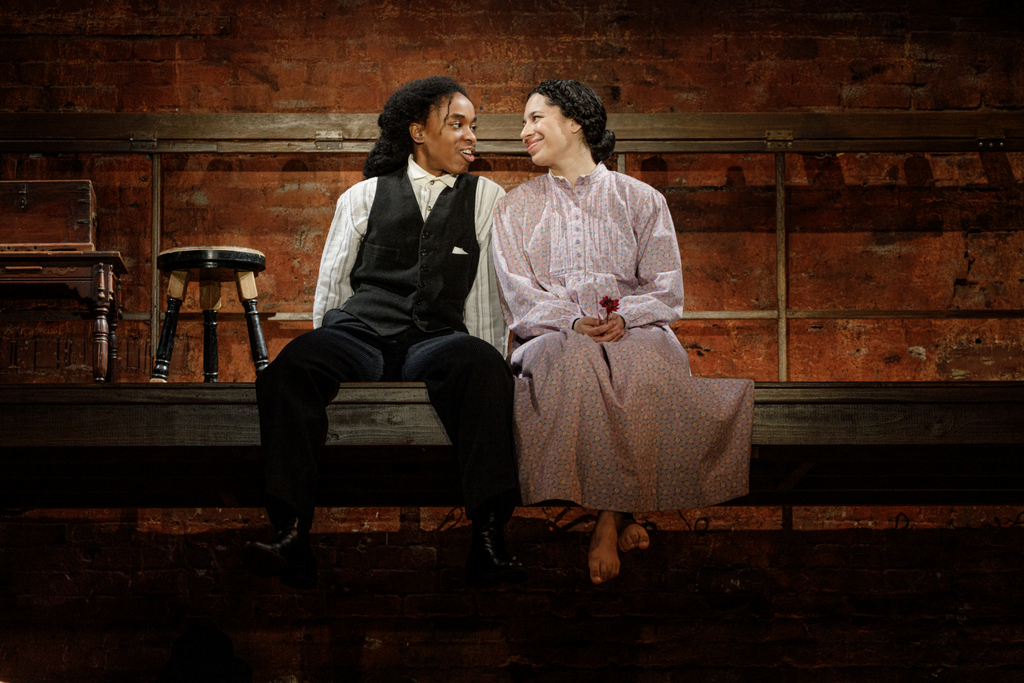
(L to R): Kristolyn Lloyd, Paola Sanchez Abreu, Primary Stages production of Kate Hamill’s adaptation of ‘Little Women’ (James Leynse)
Kristolyn Lloyd’s Jo is a dominant force, a powerhouse who is driven to express herself. With her soul, will and determination throughout the play again and again, Lloyd succinctly portrays how it is Jo’s nature to eschew being the passive, demure, “lady” who must portray an illusion to catch a man, then spend the rest of her life with him overthrowing that lie. Unlike Amy and Meg, she and Beth reject the repressive folkways which dictate how women must act, how they must look, what they must wear and do, as they take their final “resting place” at the bottom of society, absent power and authority, never to be heard from again. That is a death Jo and Beth will never die!
Initially, when Laurie (the vibrant Nate Mann makes the character charming, endearing, sensitive and adorable) joins the family and takes part as a swashbuckler in Jo’s plays, he accepts Jo’s strong identity though she continually throws off “being” the passive feminine. Laurie finds her enthralling and exciting company and adjusts his growing friendship by being real and loving. He notes that Joe sees herself like him and he appears to understand that she covets male power, authority and the freedom to take women’s freedom from them. This is why she revels acting the preeminent roles in her plays with Meg as the “damsel in distress” that she fights Laurie for.
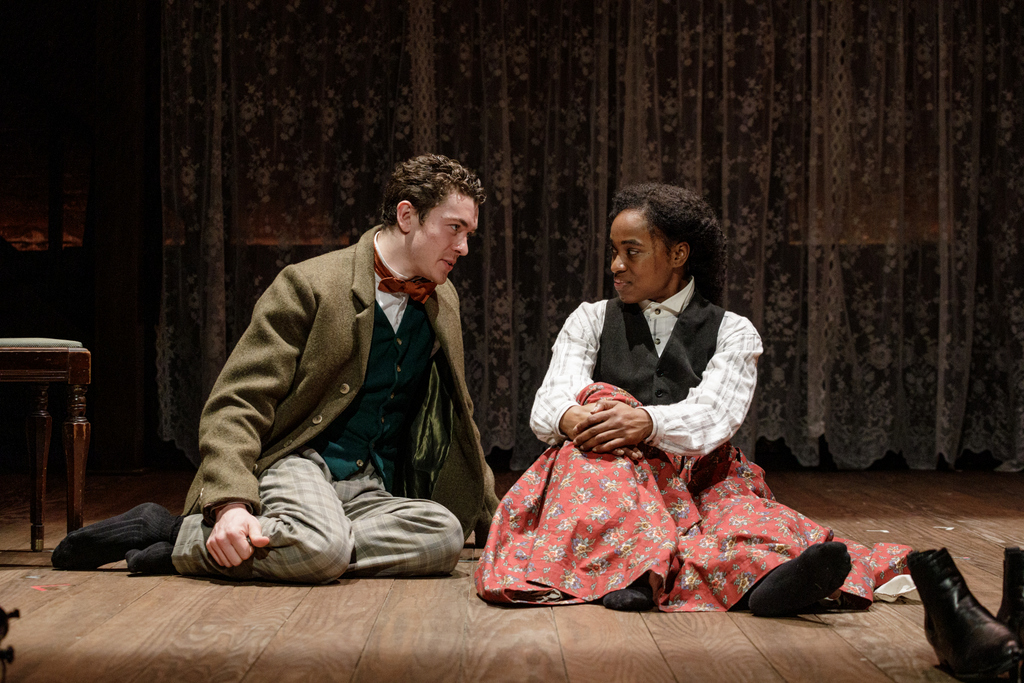
Nate Mann, Kristolyn Lloyd, Primary Stages production of Kate Hamill’s adaptation of Louisa May Alcott’s ‘Little Women’ (James Leynse)
The “play” scenes are humorous and cogently, precisely directed by Sarna Lapine and well-acted by Mann, Hamill, Abreu, Lloyd and Carmen Zilles as Amy who largely is their audience. These scenes establish each of the characters and reveal the undercurrents of why Jo must take on the dominant parts. We understand it is an attempt to work through what she finds completely obnoxious in the gender role of the passive, submissive, weak and helpless little lady that men find so alluring for they can come to their rescue and be the macho man. The artificiality and unreality of these roles annoys Jo, though Mann’s Laurie, inculcated to them since boyhood attempts to get Jo to play the damsel when Meg gets married. Her refusal is telling in another superb scene by Mann and Lloyd which foreshadows their maturation and Laurie’s love for her which Jo will never return as a lover. (Mann’s heartfelt upset when Lloyd’s Jo rejects him is beautifully rendered.)
The reversals are hysterical, as is Jo’s need to change the fake male-female dynamic. The humor in the overacting of Hamill’s Meg and Lloyd’s Jo to heighten the fake gender displacement is priceless and profound. That the enactment of the plays serves to reveal that Jo defines herself as equal to a man. Indeed, she intends to have the same notoriety and authority by making herself “someone recognized.” Though the culture would deny her, she will find a way, something Marmie, Meg (she is agreeable to join in the acting) and Beth encourage her to do with their acceptance and support. These scenes are powerful and filled with moment!

Kate Hamill, Michael Crane in the Primary Stages production of Kate Hamill’s adaptation of ‘Little Women’ (James Leynse)
The only one who does not accept Jo’s definition of herself and her way of being is Amy. Carmen Zilles convincingly portrays Amy as a spoiled, insistent, victim of Jo. Their disagreements not only move beyond rivalry, they represent opposing forces of womanhood. Amy has no ambition beyond marriage; and in a few funny bits aptly staged by Lapine, we see how she sets her designs on Laurie as she tries to get him to kiss her by standing under the mistletoe. At the conclusion of the play Amy insults Jo’s entire being and encourages her to give up her ambitions. We side with Jo’s anger against Amy; the burning of Jo’s book is tantamount to a blasphemy.
Amy brings to mind conservative women who marry well and stand by their man without a clue, staunchly upholding him regardless of the incorrectness of his position. She is Jo’s foil and their fights are inevitable so convinced are they of their definitions of themselves as women: Amy traditional, Jo a maverick forward thinker who wishes equality with men.
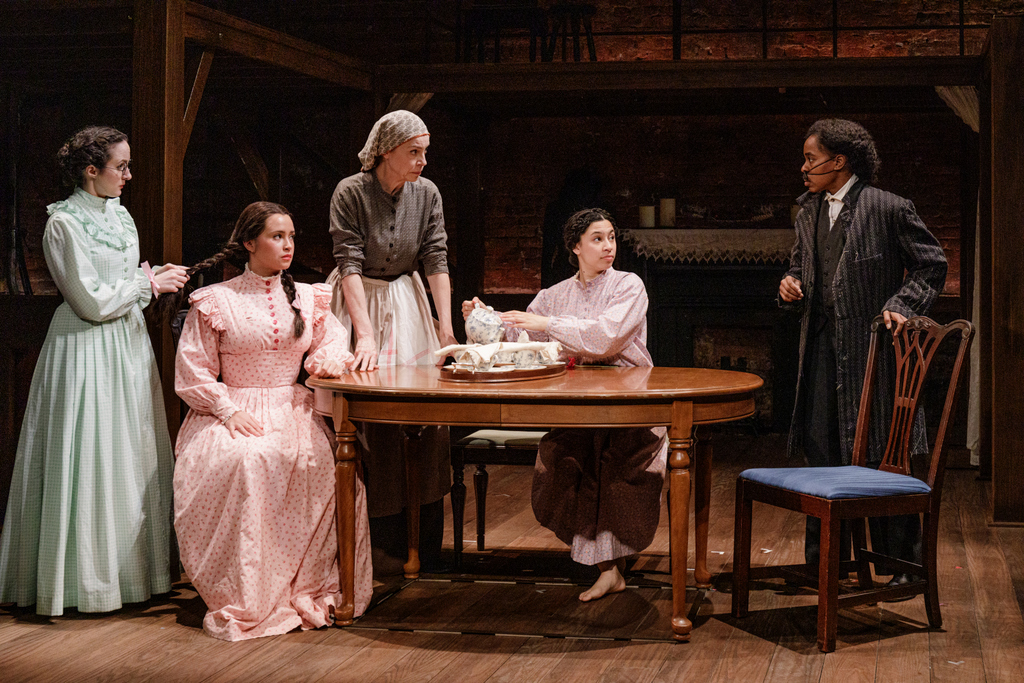
(L to R): Kate Hamill, Carmen Zilles, Ellen Harvey, Paola Sanchez Abreu, Kristolyn Lloyd in Primary Stages, ‘Little Women,’ Kate Hamill’s adaptation of Louisa May Alcott’s novel (James Leynse)
Jo’s behavior at Aunt March’s (Mary Bacon is superb as the crotchety old woman) causes Amy to be taken to Europe instead of Jo. Amy’s vengeful burning of Jo’s only copy of her novel is the perfect raison d’etre for Jo to launch out on a new endeavor and succeed. Zilles and Lloyd shine in these dynamic scenes of argument and insult. Amy and Jo’s sustained oppositions spur each other on in the paths they’ve chosen with irony and humor. Without Jo, Amy would not be who she is; likewise for Jo. Their’s is a perfect match brought into focus in this fine rendering of Hamill’s Little Women whose elucidations of the themes and characterizations are revelatory and uniquely realized. Just marvelous.
Hamill’s adaptation of Little Women and Lloyd’s portrayal of Jo, Abreu’s Beth, Hamill’s Meg and Zilles’ Amy enlighten us to the power of entrenched gender roles whose folkways and stereotypes we wrestle with our entire lives. The ironies and themes of how each sister deals with these mores is incredible and found in no other adaptation of the novel that I have seen. Gobsmacking! Whether viewing for the depth of understanding or the pure fun and enjoyment and in Act II pathos of the family March, Little Women is a wondrous must see.
Special kudos to Mikiko Suzuki MacAdams for the functional and minimalistic set design. Much praise goes to Valerie Therese Bart’s superbly thought-out costumes and Paul Whitaker’s lighting design whose candles in Act II are heartfelt and atmospheric. Additional kudos to Leon Rothenberg for sound design, Dave Bova for wig and hair design, Michael G. Chin’s fight direction. Deborah Abramson’s original music between scenes is exceptional, atmospheric, lyrical. Without it the action would not have achieved such a seamless flow. The exuberance of Act I and the mellow seriousness of Act II would have been diminished in tone and tenor.
Little Women runs with one intermission at Cherry Lane Theatre (Commerce St.) until 29th June. Get your tickets before it is too late by CLICKING HERE.

